 NL
NL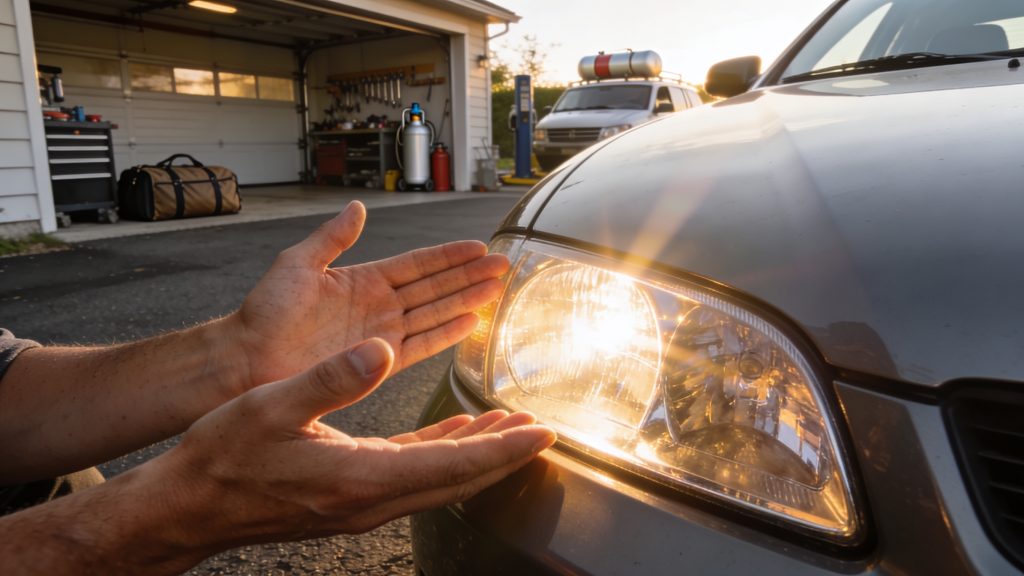
Faulty lighting on your motorhome is a direct safety risk and a common reason for failing the MOT. So check all headlights, brake lights, indicators and interior lights every month. Replace broken bulbs immediately. This article explains which lights you need to check. You will also read how to do this. Finally, you will discover what you need to fix faults quickly while you are on the road.
Why regular light checks are essential
Working lights ensure that you are visible to other traffic and that you yourself can see well. Faulty lighting increases the risk of accidents, especially in the dark or in bad weather. Lighting is checked strictly during the MOT. A broken bulb can lead to a fail and extra costs.
In addition, problems with lighting indicate underlying electrical faults, such as poor contacts, blown fuses or voltage problems. If you detect these faults in time, you prevent major repairs during your trip. A well-maintained lighting system is part of motorhome checks and maintenance. It also makes your trip more comfortable and safer.
So plan a fixed time each month to check all lights. Before setting off on holiday, an extra check is sensible so you are not confronted with surprises on the road.
Which lights do you need to check?
A motorhome has several types of lighting, both inside and out. Each type has its own function and requires specific attention.
Exterior lighting
The exterior lighting is the most important for road safety. Check the following components:
- Headlights: dipped and main beam must work properly and be correctly adjusted so you do not dazzle other road users
- Brake lights: should come on as soon as you brake and must be a bright red
- Indicators: front and rear, including the side repeaters if your motorhome has them
- Fog lights: front and rear, if fitted to your motorhome
- Reversing light: comes on when reversing and illuminates the area behind you
- Number plate light: must always light the number plate clearly
- Side lights: also called parking lights, front and rear
- Marker lights: mandatory on longer motorhomes to indicate the overall size
Interior lighting
Interior lighting contributes to comfort and safety in the motorhome. Pay attention to these components:
- Ceiling lights in the living and sleeping area
- Reading lights by seating areas and beds
- Kitchen lighting above the worktop or hob
- Emergency lighting near escape routes, if fitted
- Lighting in storage spaces and the garage compartment
- Light above the door at the entrance
Interior lighting often runs on 12 volts via the battery (leisure battery in your motorhome). Flickering lights can indicate a weak battery or a poor connection.
How do you check the lighting step by step?
Carry out the check in a structured way so you do not miss anything. Follow a fixed order so you test all the lights.
Checking exterior lighting
- Start the engine and switch on dipped beam, main beam, fog lights and side lights one after the other
- Walk around the motorhome and check whether all the lights are on and give a bright light
- Ask someone to press the brake pedal and check the brake lights
- Switch on the left and right indicators and check the flash rate and brightness
- Put the gearbox into reverse and see whether the reversing light works
- Check the number plate lighting in the dark
Checking interior lighting
- Switch on all interior lights one by one
- Check whether the light is stable and does not flicker
- Test switches and dimmers to see if they work properly
- Check the emergency lighting by briefly switching off the main power supply
Carry out these checks first with the engine off. Then repeat them with the engine running. Finally, test again with other electrical consumers switched on. This way you can detect voltage problems that only occur under load. Also check the lights after driving on bumpy roads, because vibrations can cause contact problems.
What should you do if the lights are faulty?
When a light does not work, you first track down the cause. You then solve the problem. Work in a systematic way.
Replace faulty bulbs
Always buy a bulb with the correct fitting. Pay attention to the electrical specifications too, such as voltage (12 or 24 volts) and wattage. The fitting is the screw or push-in system that allows the bulb to fit into the fixture (lamp housing or lamp base). Common fittings in motorhomes are H4, H7, P21W and BA15S. Check in the manual or on the old bulb which type you need. Incorrect fittings do not fit or cause faults.
Only replace LED bulbs (energy-saving bulbs with diodes) with the same type. For traditional filament bulbs, pay attention to the voltage: usually 12 volts for interior lights and 12 or 24 volts for exterior lights, depending on your installation.
Check fuses and contacts
If several lights fail at the same time, a fuse may have blown. Locate the fuse box. It is usually near the dashboard. Sometimes you will find it in a technical compartment. Replace a blown fuse with a new one of the same amp rating.
Also check whether the electrical connection points are clean and dry. Dirt, corrosion or moisture cause poor connections and flickering lights. Clean the contact points with contact cleaner spray or a fine scouring pad.
Test the voltage
With persistent problems, measure the voltage with a multimeter (a measuring device for voltage and current). The voltage must be stable. For a normal battery this is around 12 volts. With the engine running you should measure around 14 volts. Low or fluctuating voltage indicates battery problems or a faulty alternator.
What should you take with you for repairs on the road?
Take a practical set of spare parts and tools with you. That way you avoid delays. You can fix minor problems yourself while travelling.
- Spare bulbs for all common fittings in your motorhome
- Spare fuses in different amp ratings
- A small inspection lamp or work lamp with a powerful beam
- Contact cleaner spray for cleaning and maintaining contact points
- Multimeter to measure voltage and check that current flows properly through the cables
- Small tools such as screwdrivers and pliers
- Instruction booklet or notes listing the fittings used for each light
Store everything in a clearly labelled toolbox. Before you leave, check that all parts are present and working.

Common problems and solutions
Certain faults occur more often and have recognisable causes. Here you will find the most common situations.
Flickering lights
Flickering lights indicate a poor contact or a loose mounting. Low voltage is also a common cause. Check whether the bulb is firmly seated in the fitting. Clean the contact points and measure the voltage. With LED lighting, the driver may also be faulty.
Discoloured or cloudy lenses
Discolouration reduces light output and makes you less visible in traffic. Clean the lenses with a mild cleaner. In case of severe discolouration or damage, replace the lens or the entire fixture (lamp housing or lamp base).
Moisture in light units
Moisture in exterior lights leads to short circuits and corrosion. Check whether the seal is intact. Dry the fixture and replace damaged seals. During installation, make sure the connection is properly watertight.
Bulb blows quickly
A bulb that regularly fails suggests too high a voltage or excessive vibration. Overheating is another possible cause. Check the voltage. Secure the fixture firmly. Use bulbs that are suitable for vibration and temperature fluctuations.
Pay attention to fitting and quality when buying
Not every bulb fits every fixture (lamp housing or lamp base). The fitting determines whether a bulb fits physically. It also ensures the bulb works electrically. Always use the fitting specified by the manufacturer. Incorrect fittings lead to faults, damage or dangerous situations.
Choose quality bulbs from reliable brands. Cheap bulbs often fail sooner and give less light. For LED bulbs, pay attention to the number of lumens (a measure of light output): the higher the value, the brighter the light. For inspection work and work lighting, choose bulbs with cooler, bright light for better visibility of details.
Additional checks related to lighting
Your motorhome has more components than just the lights. These components affect how your lighting works.
- Check that all switches and dimmers operate smoothly and do not stick
- Inspect the wiring for damage or wear. Also check for any loose connections.
- Make sure fixtures are firmly mounted and not loose due to vibrations
- Test the battery regularly for capacity and charge level
- Look for signs of overheating, such as a melting smell or discoloured plastic
If in doubt, or with persistent problems, consult a professional. Electrical problems can worsen and cause damage to other parts.
Find out more about motorhome maintenance
Lighting is only one part of the maintenance your motorhome requires. On the Traveler Tips website you will find much more practical information about technical checks, trip preparation and tips for travelling comfortably. Explore the other topics and make sure you are optimally prepared for your next adventure.
Frequently asked questions
Check all mandatory exterior lights: dipped beam (headlights), side lights, rear lights, brake lights, number plate lighting and indicators (including side repeaters). Also check the rear fog light (and front fog lights if you have them), reversing light and the third brake light strip. Make sure all reflectors at the rear and on the sides are clean and undamaged. Finally, it is sensible to check dashboard lighting and interior lighting, especially if you will be driving at night.
Park your vehicle on a flat surface, switch on the ignition and walk around the car while first switching on dipped and main beam, then rear lights and number plate lighting, and visually checking them. Ask a helper to press the brake pedal and check behind the car whether both brake lights (and the third brake light if fitted) come on at the same time. Then have the indicators and hazard lights switched on and see whether all indicators at the front, rear and in the side/mirrors work and flash at the same rate. Finally, check that there are no cracks, moisture or heavy discolouration in the light units, and clean dirty lenses.
The basic rule in almost all European countries is that all mandatory vehicle lights (headlights, rear lights, brake lights, indicators, number plate and fog lights where required) must always work and be correctly adjusted. Driving with dipped beam or daytime running lights switched on during the day is compulsory in countries such as the Scandinavian states, Italy, Croatia, Slovenia and parts of Eastern Europe (depending on the season), while in other countries it is strongly recommended. Driving with faulty lighting is considered unsafe everywhere and can usually be fined on the spot; amounts vary roughly from about €20–€50 (for example for one broken bulb) to several hundred euros in the case of multiple or dangerous defects or repeat offences. In serious cases (for example no lighting in the dark) the police may forbid you to continue your journey until the fault has been fixed.
Always take a strong head torch with you so that you have both hands free if you break down. In addition, a compact, powerful torch is useful as a backup or for quick checks around the motorhome.