 NL
NL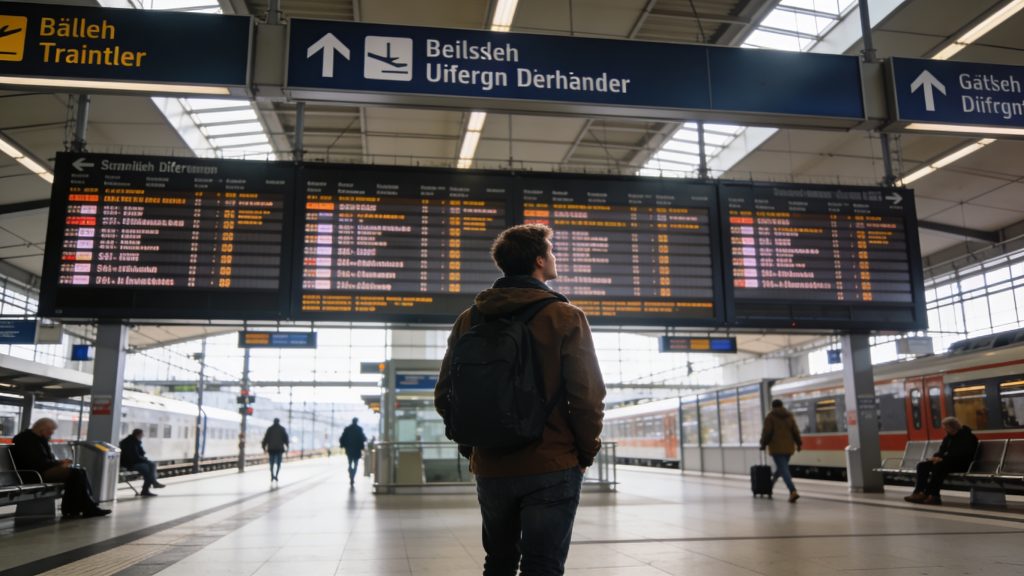
German train stations and trains are surprisingly accessible for Dutch-speaking travellers, even if you don’t speak German. Most information is available in English, staff are happy to help, and with the right apps you can arrange everything in your own language. If you know a few basic words and know what to look out for, you can travel through Germany without stress.
So what exactly makes communication at German train stations so accessible? And which tools really make the difference?
Language at the stations is less complicated than you might expect
At major German train stations such as Berlin Hauptbahnhof or München Hauptbahnhof you’ll find plenty of information boards with English text. Electronic screens often show train numbers, destinations, departure and arrival times in both languages. Smaller regional stations offer less English, but the information remains clear thanks to the use of pictograms and logical symbols.
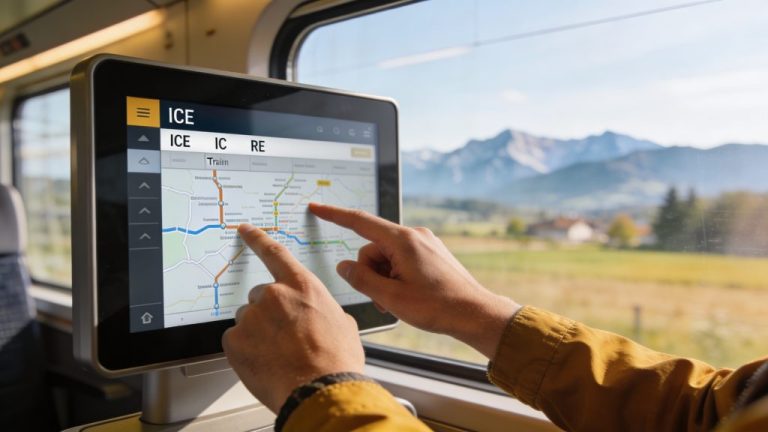
Announcements are usually in German, sometimes supplemented with English at busy hubs. For those who don’t speak German, apps such as DB Navigator are a reliable back-up. The app shows real-time updates in Dutch and English, so you don’t miss any important messages.
Staff at German stations generally speak English. At ticket offices and information desks you can easily ask questions about routes, tickets or timetable changes. Conductors on the train will also help you in English when needed.
These German words make travelling easier
At stations and on trains you will see a limited number of German terms everywhere. If you recognise these words, you’ll find your way more quickly and avoid confusion:
- Gleis – track or platform
- Bahnsteig – platform
- Abfahrt – departure
- Ankunft – arrival
- Fahrschein – train ticket
- Verspätung – delay
- Ausgefallen – cancelled
- Umsteigen – to change trains / transfer
- Wagenreihungsplan – diagram showing where each carriage stops along the platform
The Wagenreihungsplan is an important tool at German stations. This diagram shows where each carriage of your train will stop along the platform. Large stations are divided into sections such as A, B, C or D. Check in advance where your carriage will arrive so you’re standing in the right place. That way you don’t have to run with your luggage.
Planning a train holiday in Germany? Write these terms down beforehand or save them on your phone. It reduces stress in unexpected situations.
Apps provide real-time information in Dutch
Deutsche Bahn’s DB Navigator app is the most important tool for train travellers in Germany. The app is available in Dutch and offers extensive functionality:
- Real-time timetables and delay information
- Digital tickets you can show directly to the conductor
- Information about platform layout and Wagenreihungsplan
- Notifications about platform changes
- Route planner for combinations of regional and long-distance trains
In addition to DB Navigator, apps such as Google Translate help you read signs and menus. The camera function translates texts directly on your screen. Want to be able to work offline? Then download maps and routes in advance in apps such as Maps.me or Citymapper.
Rome2Rio is useful for comparing different routes and travel options. The app shows alternatives and gives you an overview of journey times and costs. Combining several modes of transport? You’ll see all the options there too.
Buying tickets is simple in English
Ticket machines at German train stations have an English language option. Select the British or American flag in the menu and follow the on-screen steps. The machines accept credit cards, cash and EC cards. Staff at the ticket office usually speak English, although it can be busier there than at the machines.
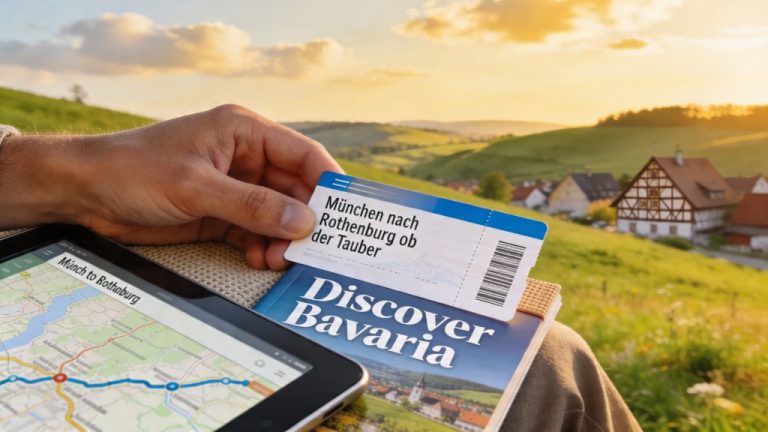
Buying tickets online via the DB Navigator app is the quickest option. You can book up to ten minutes before departure and receive a digital ticket you can show on your phone. Travelling with a group or going on a day trip? Then special tickets are worth a look. One example is the Länder-Ticket, a day ticket valid for an entire federal state, which is cost-effective if you’re travelling with several people.
If you book early, you can benefit from discounted Sparpreis tickets. These tickets are tied to a specific train. With flexible travel plans, you can save tens of euros.
Note: if you travel without a valid ticket, you risk a fine of more than 60 euros if you’re checked.
‘ German train passengers are generally helpful and direct in the way they communicate. ’
Communication on the train runs smoothly
Conductors on German trains check tickets and help with questions about connections or seats. A polite greeting in German is appreciated, but the rest of the conversation often continues in English. Sentences such as “Guten Tag, hier ist mein Ticket” make a good impression and are easy to remember.
If you want to know whether a seat is free, ask “Ist dieser Platz frei?” Fellow passengers are happy to help. Be polite and use words such as “bitte” and “danke”. German train passengers are generally helpful and direct in the way they communicate.
Need help along the way? Station staff in red or orange uniforms are ready to assist at major stations. On regional trains there are no reserved seats, so it’s first come, first served.
Regional differences mean a bit of preparation helps
Large hub stations offer plenty of information in English. At places like Frankfurt Hauptbahnhof or Köln Hauptbahnhof you’ll find escalators, toilets and shops with multilingual staff. Smaller regional stations offer less English information. However, information remains clear thanks to pictograms and symbols. Toilets at stations usually cost one euro.
Smaller stations are easier to find your way around, but offer fewer facilities. Regional trains such as RB and RE stop more often and have a simpler layout. You’ll find less English here, but journeys are shorter and the set-up is more straightforward.
Travelling with limited mobility? You can recognise lifts by the pictogram Aufzug. Wheelchair spaces on trains are indicated with the Rollstuhlplatz symbol. Check in advance in the app whether your train is accessible, and where these facilities are located.
Trains are busier during peak hours on Friday afternoons and Sunday evenings. In that case, book a seat in advance via the app or website. Want to travel sustainably? Night trains are an alternative to short flights. These Nachtzug connections, for example, run between Berlin and Munich or to the Alps.
Practical preparation makes all the difference
Download the DB Navigator app before you leave and set the language to Dutch. Save offline maps and write down the most important German words in a notes app on your phone. Check in advance whether your credit card supports contactless payments, as it speeds up buying tickets from machines.
Learn a handful of basic phrases. “Wo ist…?” means “Where is…?” “Ein Ticket nach…” means “A ticket to…”. You’ll come across these phrases in almost every situation, and they give you more confidence. Apps such as Duolingo or Babbel can help you learn the basics within a few days.
Pay attention to the Wagenreihungsplan on electronic boards or in the app. This diagram has already been explained earlier. It shows where your carriage will stop, so you don’t have to run along the platform. At large stations with long platforms this saves a lot of time and stress.
‘ The rail network is well organised and the infrastructure supports independent travellers. ’
Independent travel through Germany is very accessible
Information in English is widely available, and helpful apps support you along the way. With a few basic German words you can travel comfortably through Germany. The rail network is well organised and the infrastructure supports independent travellers. Whether you’re travelling between cities or heading out into nature, communication won’t hold you back.
On the Traveler Tips website you’ll find more practical information about train journeys, routes and destinations in Europe. You can also discover tips on planning, regulations and preparation to help you organise your next trip more smartly and consciously. For your first train journey in Germany, download the DB Navigator app and save the list of German terms on your phone so you start out well prepared.
Frequently asked questions
Essential words include: “Gleis” (platform/track), “Abfahrt” (departure), “Ankunft” (arrival), “Fahrschein/Ticket” (ticket), “Verspätung” (delay) and “ausgefallen” (cancelled). Useful basic phrases at the station: “Entschuldigung, wo ist Gleis …?” (Excuse me, where is platform …?), “Wann fährt der Zug nach …?” (When does the train to … leave?), “Ich möchte ein Ticket nach …” (I would like a ticket to …). On the train, phrases such as “Ist dieser Platz frei?” (Is this seat free?), “Können Sie mir bitte helfen?” (Could you please help me?) and “Fährt dieser Zug ohne Umsteigen nach …?” (Does this train go to … without changing?) are handy. Polite forms such as “Guten Tag”, “bitte” and “danke” also make communication much easier.
At large German stations (such as Berlin Hbf and München Hbf) many signs and information panels are also available in English, and you can choose an English interface at ticket machines. At regional or smaller stations, information is usually only in German, supported by international pictograms. Announcements are mainly in German and only sometimes in English at important hubs. On the trains themselves, basic information (route, next stop on screens) is sometimes bilingual on long-distance trains, but on regional trains usually only in German.
Speak English slowly and clearly and, if necessary, ask straight away to switch to English: “Do you speak English?” – many DB employees speak at least basic English. Use the DB Navigator app in English for travel information and show your ticket and route on your phone instead of explaining everything. Prepare a few key German phrases, such as “Entschuldigung, welcher Zug fährt nach …?” (Excuse me, which train goes to …?) and “Ich spreche nur wenig Deutsch” (I only speak a little German). Point to signs, your ticket or the platform number when you ask a question so staff can understand you more quickly.
Top recommendations are first and foremost the official DB Navigator app from Deutsche Bahn for real-time information on departure times, delays, platform changes and tickets. For translation and understanding signs and announcements, Google Translate (with camera function) and similar translation apps are useful. You can also use additional route apps such as Rome2Rio to plan connections and alternatives. Download these apps, and preferably the relevant data as well, for offline use before you depart.
Use the DB Navigator app (or another travel app such as NS International or Bahn.de in English) for real-time information about disruptions, delays and platform changes. Pay close attention to the electronic boards at the station: words such as “Verspätung” (delay), “Ausfall” (cancellation) and “Gleisänderung” (platform change) are the most important ones to recognise. If in doubt, ask staff at the DB information desk or on the platform for help in English. You can also ask fellow passengers a simple question in English; many Germans are happy to help translate.