 NL
NL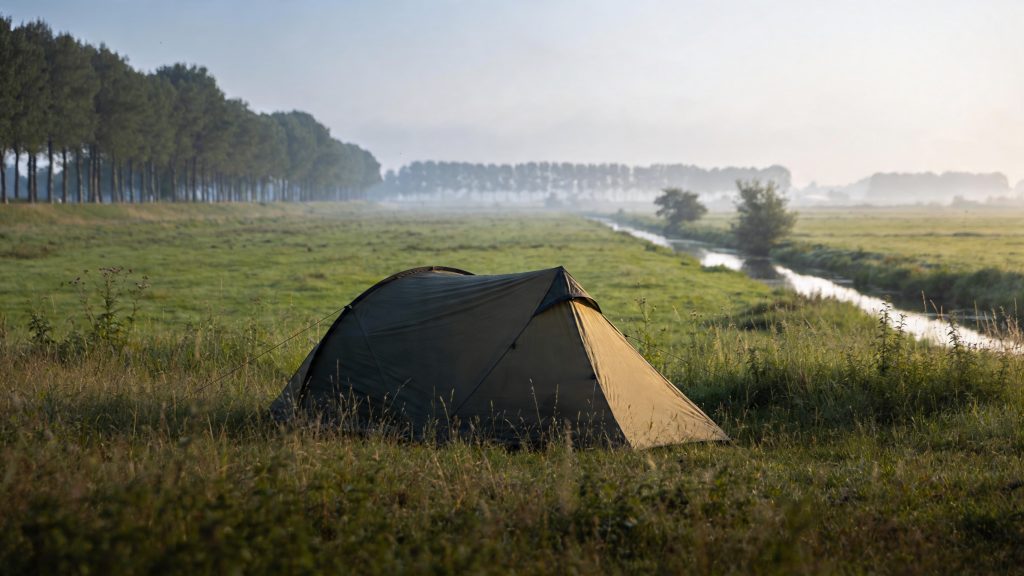
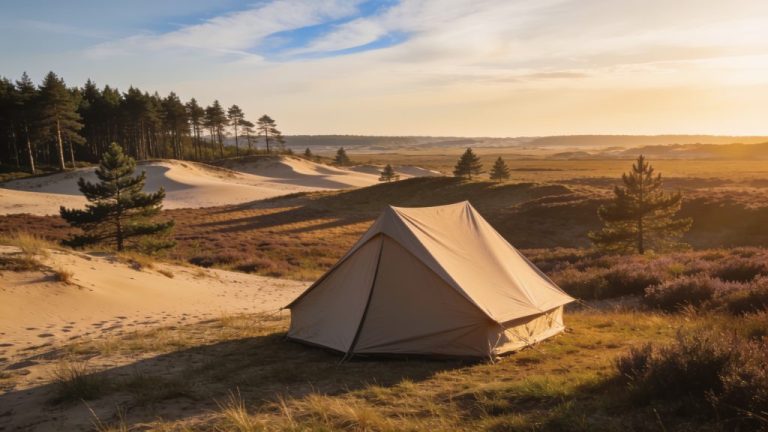
Wild camping is completely prohibited in the Netherlands, with one official exception: pole camping at a maximum of 27 designated spots where you may pitch your tent within 10 metres of a wooden pole. For anyone dreaming of spending the night in the middle of nature, these pole campsites are the only legal option. Read on and discover how you can sleep outdoors safely and legally without risking a fine.
Why is wild camping banned in the Netherlands?
The Netherlands has a blanket ban on wild camping, regardless of whether you pitch your tent in a forest, on a dune or on private land without permission. This ban applies to all forms of free camping. It also applies to bivouacking with a campervan or tarp. The reason is simple: the Netherlands is densely populated and has limited wilderness. Free camping quickly leads to damage from litter, fire scars and disturbance of vulnerable plants and animals.
Anyone who wild camps anyway risks a fine of €140 to €170 per person. During checks you will often first receive a warning to leave immediately. If it happens again, rangers can confiscate equipment or impose higher penalties. Checks are stricter in summer and in nature reserves, where wardens patrol regularly.
In countries such as Sweden or Norway there is the right of public access. There you may camp at least 150 metres away from buildings. In France, temporary camping is sometimes allowed. In the Netherlands, no such exemption applies. Even night fishing with a simple shelter requires a special fishing permit and does not allow a full tent.
‘ You’re surrounded by nature, with no facilities such as running water or toilets. ’
Where are you allowed to wild camp legally in the Netherlands?
In the Netherlands you may only wild camp legally by using pole campsites. There are about 27 designated locations with a special wooden pole. You may pitch your tent within 10 metres of that pole. A foundation manages these spots. You may pitch a maximum of 3 tents and stay for a maximum of 72 hours at each spot.
Pole camping offers an experience that comes close to real wild camping. You’re surrounded by nature, with no facilities such as running water or toilets. The water on site is not drinkable, so take enough drinking water with you. There are about 27 official pole campsites spread across the Netherlands, each with GPS coordinates and a physical pole marking the location.
What are the rules for pole camping in the Netherlands?
Pole camping has strict rules. These rules protect nature. If you do not comply with these conditions, spots may be removed from the system. The most important rules are:
- Pitch your tent within 10 metres of the wooden pole
- Maximum of 3 tents per pole
- Stay a maximum of 72 consecutive hours in the same spot
- No fires, including campfires or gas stoves with an open flame
- Take all your rubbish with you, including organic waste
- Do not bury toilet waste and leave no traces
- Respect the peace and do not disturb flora and fauna
These rules are based on the Leave No Trace principle. You leave no trace behind. Anyone who ignores this causes spots to be closed. Rangers and site managers regularly check compliance.
How to find pole campsites with GPS coordinates
You can find pole campsites via a special map. The managing foundation provides this map. This map shows all official locations in the Netherlands and Belgium, including exact GPS coordinates. It is wise to book in advance or check whether a spot is available, especially in summer when pole campsites are popular.
Use the GPS coordinates in combination with a navigation app. That way you can find the pole. The poles are often in remote places, far from car parks. You walk to the spot with your rucksack and tent. Check in advance whether the location is publicly accessible. Also check whether there are any temporary closures.
Not all spots are accessible all year round. Some areas close during the breeding season or in periods of extreme drought. In that case there is a temporary closure due to fire risk. Check this in advance to avoid disappointment.
‘ Boondocking in nature is explicitly forbidden. ’
Alternatives to wild camping in the Netherlands
There are other ways to camp close to nature. This way you can camp without risking fines. These options offer more freedom than a regular campsite. For some options you do need permission.
Camping with private landowners
Ask farmers or landowners for permission. Many owners are open to travellers who treat their land with respect. Make clear arrangements with the owner. Leave early the next morning and leave the spot clean. This option works well for cycling holidays.
Boondocking with campervans
Boondocking means overnighting discreetly in a campervan outside campsites. This can be in cities, on industrial estates or quiet car parks. Never do this in nature reserves or on beaches. Arrive late. Leave early. Do not put chairs outside and do not light fires. You risk fines starting at €150. Boondocking in nature is explicitly forbidden. This is strictly enforced.
Night fishing with a fishing permit
On waters where it is allowed, you may use a shelter against rain while fishing at night. However, you do need a valid fishing permit. This is not an alternative to camping. A full tent is not allowed. The primary purpose must be fishing.
Practical tips for responsible camping in nature
Whether you choose pole camping or an alternative, it is essential to treat nature with care. These tips help you camp legally and respectfully:
- Arrive late and leave early at non-official spots, so you attract less attention.
- Take all rubbish with you, including banana skins and cigarette butts
- Use biodegradable soap. Wash yourself at least 50 metres away from water.
- Do not light fires, even in places where it seems to be allowed
- Store food in sealed containers so as not to attract animals
- Use a bag for toilet waste and take it with you to a bin.
- Respect property and close any gates you open
In some areas, enforcement officers use drones or camera surveillance to detect illegal camping. Be aware of this risk. Choose legal options. Fines vary by municipality, but are usually between €140 and €170 per person.
Regional differences and local rules
The national ban on wild camping applies everywhere. However, there are regional differences in enforcement and in the availability of pole campsites. In provinces such as Drenthe and Zeeland, the countryside is often more welcoming to travellers. Travellers more often ask landowners there for permission. Local apps and websites sometimes offer up-to-date information on available pole camping spots.
Some municipalities enforce more strictly than others. Find out in advance about local regulations. Check whether there are any temporary closures in the area. This way you avoid disappointment at your camping location.
On the Traveler Tips website you will find much more information about nature holidays and camping routes. Discover practical tips for planning your trip so you can travel smarter and more sustainably.
Frequently asked questions
Wild camping is completely prohibited in the Netherlands, both in nature reserves and on private land without the explicit permission of the owner. Violations can lead to fines of around €140 to €170 per person and immediate removal from the camping spot. As an alternative, you can use pole camping sites, camp with private landowners or choose regular nature campsites. Always respect nature and take all your rubbish back with you.
Wild camping is in principle banned in the Netherlands, both in nature reserves and on private land without the owner’s permission. Fines are roughly between €140 and €170 per person and you can be ordered to leave immediately. Legal alternatives include pole camping (where still allowed), small-scale nature campsites and camping with private landowners who give explicit permission.
Wild camping is prohibited in the Netherlands, both in nature reserves and on private land without the owner’s permission. Violations can lead to a fine of around €140 to €170 per person. As an alternative, you can legally camp close to nature by using, among other options, pole camping sites or by camping with private landowners.
Wild camping is completely prohibited in the Netherlands, both in nature reserves and on private land without permission. This ban applies to all forms of camping, including bivouacking with a tent, tarp or campervan. Fines are roughly between €140 and €170 per person. Legal alternatives include, among others, pole camping (where still available) and camping with private landowners who give permission.
Wild camping is prohibited in the Netherlands, both in nature reserves and on private land without the explicit permission of the owner. This ban applies to all forms of camping (tent, tarp, campervan, bivouac). Fines are usually around €140 to €170 per person and you may be ordered to leave or, in case of repeat offences, face tougher penalties. Legal alternatives include remaining pole camping spots, small nature campsites and camping with private landowners who give permission.