NL
NL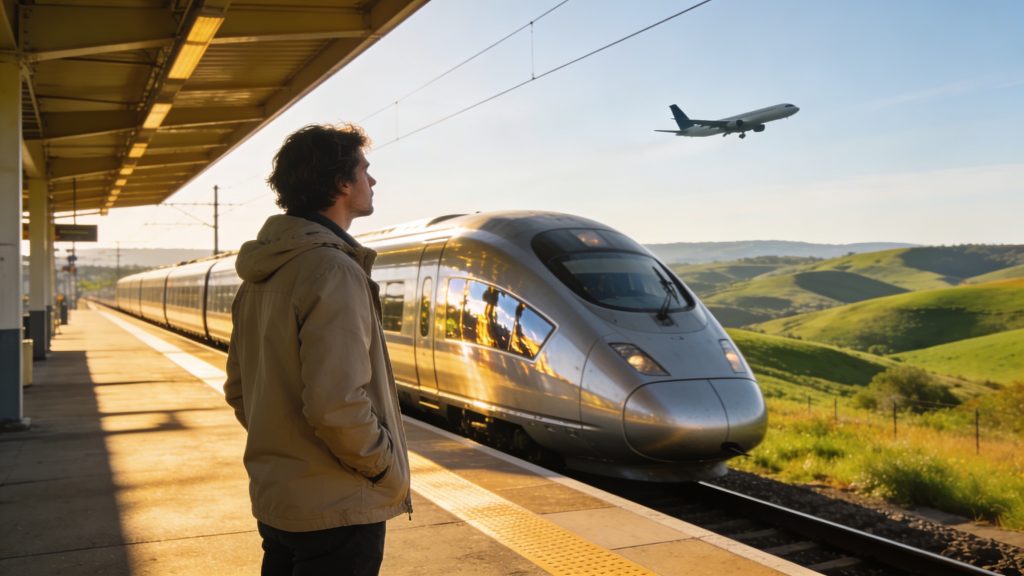
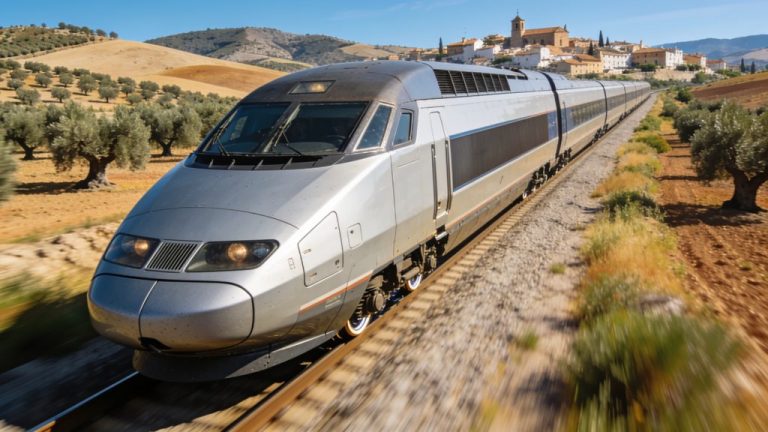
On medium distances, high-speed trains save five to ten times more CO2 than planes, and they already replace more than 550 flights a week in Europe. Sustainable travel with high-speed trains versus flying is not an all-or-nothing choice. It calls for smart trade-offs. Read on to discover when the train is the most sustainable and most practical choice for your trip.
Why high-speed trains emit less CO2 than flying
On medium distances, high-speed trains perform better than planes because direct emissions per passenger kilometre are significantly lower. On routes such as Amsterdam to Barcelona, taking the train can emit five to ten times less CO2 than flying. The exact savings depend on the load factor and the total travel distance including access and onward transport. The energy source also plays a role.
An important advantage of the train is that many European rail networks run on electricity from renewable sources. As a result, the climate impact per passenger is on average lower than for a flight, where kerosene is burned. At distances of around 400 to 500 kilometres, the train is not only more sustainable, but often also competitive in terms of travel time and comfort. The European Union is actively expanding the high-speed rail network in order to halve transport-related CO2 emissions compared with car and air travel.
Want to know more about the options? On the page about high-speed trains in Europe you will find extensive information on routes, connections and journey times.
CO2 savings in practice
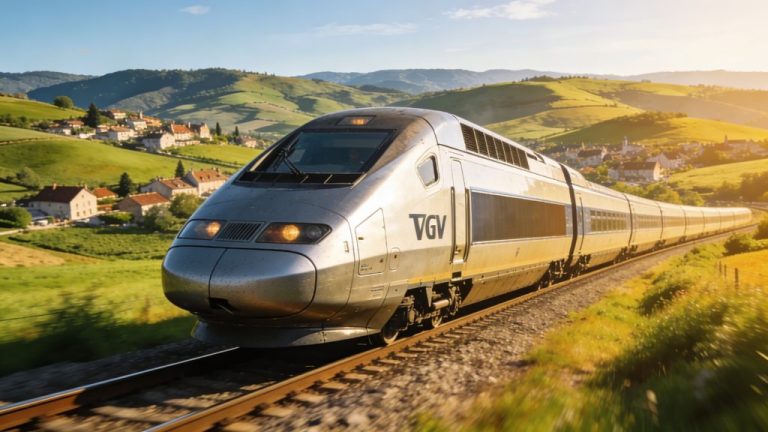
An example makes the savings tangible. A flight from Paris to Barcelona emits on average around 150 kilograms of CO2 per person. The same journey by TGV or AVE cuts this to roughly 15 to 30 kilograms. That is a saving of 80 to 90 per cent.
The environmental gains depend on several factors:
- Energy source of the train: electric traction on green power produces lower emissions than diesel trains.
- Load factor: a full high-speed train performs better than a half-full flight.
- Access and onward transport: arriving in the city centre often saves extra taxi or bus rides.
- Behaviour change: the savings only count if travellers actually switch from plane to train instead of making additional trips.
It is important not only to look at each mode of transport, but at each route. A rail link with high frequency brings extra environmental benefits. A flight with long transfer times and extra ground transfers scores less well in terms of sustainability.
When is the train a better alternative than flying?
The high-speed train is especially sustainable and practical between two cities with a good rail connection (city pairs). Think of routes within the Netherlands, Belgium, France, Germany, the United Kingdom and northern Spain. Door-to-door travel time on these routes is often comparable with flying, because you don’t have to check in, go through security or wait for luggage.
You usually arrive by train directly in or near the city centre. This saves time and additional transport, which also contributes to lower total CO2 emissions. What’s more, you can work, read or sleep en route without the hassle of cabin baggage rules and liquids.
Practical advantages of travelling by train
- Central arrival with no extra transfers to the city.
- No long waiting times for boarding and security.
- More luggage space and freedom of movement during the journey.
- Reliable services with few delays on well-maintained lines.
- The chance to work or relax en route with more legroom.
The high-speed train is the best choice if sustainability matters to you. This applies to all routes with a direct or logical connection. At distances over 800 kilometres, the time advantage of flying increases, but even there the total travel time including waiting and transfers can tip the balance in favour of the train.
When does flying remain the practical choice?
Sometimes flying is still the only realistic option. Some routes do not have a good rail connection. The travel time by train is then more than twice as long. Most travellers therefore choose the plane. Price also plays a role: on many routes, plane tickets are cheaper than train tickets, especially when booking very early or very late.
Research shows that only 2.5 to 5 per cent of current flights can realistically be replaced by train journeys. Fast direct connections are often lacking. Frequency also remains limited on many lines. Total travel time ends up being longer. For long distances outside the major European rail corridors, flying therefore remains the most commonly used option.
That does not mean that flying is always irresponsible. The key is to choose consciously. On some routes, the train offers a good alternative. There you can gain environmental benefits without compromising on comfort or time. Where that is not the case, flying remains more practical.
Environmental tips for greener travel by high-speed train
Smart choices when planning and while travelling increase the sustainability of your train journey. Below are practical tips to support conscious travel:
- Choose routes with direct connections to avoid unnecessary changes and extra travel time.
- Compare the total CO2 impact per route rather than only per mode of transport.
- Book in good time to get lower fares and avoid crowds.
- Use night trains where possible: you save on accommodation and travel peacefully while you sleep.
- Bring a reusable water bottle and your own snacks to reduce waste.
- Check whether the train runs on green electricity; many rail networks state this online.
- Combine train journeys with city breaks to make the most of local accessibility.
Bear in mind that sustainability does not depend solely on the mode of transport. The way you plan, the destination you choose and the number of trips you make all influence your overall footprint.
Which routes offer the best combination of sustainability and convenience?
Europe has an extensive network of high-speed lines. These lines connect cities quickly and sustainably. The following routes score highly on both environmental friendliness and ease of travel:
- Amsterdam – Paris: under 3.5 hours with direct Thalys services.
- Paris – Lyon: less than 2 hours by TGV.
- Madrid – Barcelona: around 2.5 hours by AVE.
- Brussels – London: around 2 hours via Eurostar.
- Frankfurt – Cologne: around 1 hour by ICE.
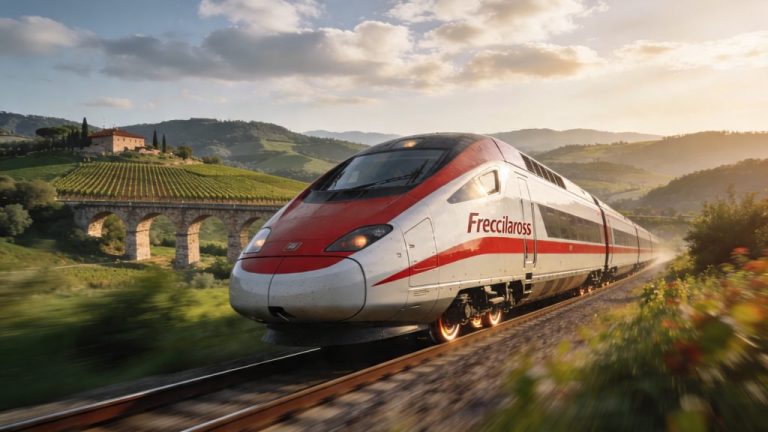
- Milan – Rome: around 3 hours by Frecciarossa.
These connections offer frequent services and short journey times. They also deliver substantial CO2 savings compared to flying. They are well connected to local rail services, meaning you can often travel from smaller towns without an extra change.
The future of sustainable travel in Europe
The European Union is investing heavily in expanding the high-speed network. New connections, more night trains and better links between countries are making rail travel more attractive. The aim is to halve CO2 emissions from transport on medium distances compared with car and air travel.
At the same time, the aviation sector is working on innovations such as electric aircraft and more sustainable fuels. The balance between train and plane will therefore shift in future. This will mainly affect medium distances. For now, however, the high-speed train remains the most sustainable option on well-served routes.
Travellers who choose consciously can already benefit from the advantages. Plan in good time and combine routes smartly. Make use of the connections that already exist. That way you travel comfortably, sustainably and without major loss of time.
‘ It’s about making a realistic comparison. ’
How do you make the smartest choice for your trip?
Your priorities determine the choice between high-speed train and plane. For those who value sustainability and travel on routes with good rail connections, the train is the best option. The CO2 savings are substantial, total travel time is often comparable and comfort is higher.
For those who attach more weight to time or price, flying sometimes remains the practical choice. It’s about comparing realistically. Include check-in time, waiting times and transfers. Look beyond the ticket price. Also take total travel costs into account.
A smart strategy is to use the train for the outward or return journey on short and medium distances, and reserve flying only for routes where the train genuinely offers no good alternative. In this way you combine sustainability with practical ease of travel.
On the Traveler Tips website you will find much more information about sustainable travel, convenient routes, regulations and practical tips for your next holiday. Discover more and plan your trip in a smarter, more conscious way.
Frequently asked questions
The actual door-to-door travel time depends heavily on your point of departure, destination and connections, but for distances up to roughly 400–500 km, high-speed trains are often comparable with or faster than planes once you factor in all access and onward journeys. Trains usually depart from city centres and require less early arrival, fewer security checks and less waiting, so your total end-to-end trip may be shorter than the pure journey time suggests. For longer distances, or where there is no good high-speed connection, flying usually remains faster, even when you add in travel time to and from the airport and check-in time. For a realistic comparison you therefore need to include every stage for each route: travel time to the station/airport, waiting times, changes, and time from your front door to your final destination in the city.
On a high-speed train you generally have more legroom, you can move around freely and the atmosphere is calmer than on a plane, where your seat space is more limited and you are more often restricted by seatbelt rules. Luggage rules are usually more relaxed on trains: there is no strict weight control and you can often take several suitcases or large items without paying extra, whereas airlines are strict on weight, size and surcharges. The travel experience on the train is more relaxed, with boarding without extensive security procedures, a gradual journey with views and arrival in the city centre. When flying, you are more likely to experience stress due to early check-in, security checks, queues and transfers to and from the airport.
The total costs of a high-speed train journey are often competitive with, or lower than, flying once you include hidden costs such as travel to and from often more distant airports, waiting times and check-in time. With the train you usually depart from and arrive in the centre, so you spend less on transfers and lose less time. In addition, luggage costs are usually included in train travel, whereas airlines often charge extra for hold luggage and sometimes even for cabin baggage. As a result, a plane ticket that looks cheaper at first glance can in practice be more expensive than a high-speed train ticket.
Use a reliable CO₂ calculator (for example from the rail or airline company or an independent organisation) and compare emissions per passenger kilometre for your specific route, including access and onward transport. In Europe, a high-speed train on medium distances will usually emit five to ten times less CO₂ than a flight, especially with good occupancy and if the train runs on green electricity. Reduce your impact further by choosing direct connections, travelling in economy/2nd class, avoiding unnecessary luggage and limiting needless changes with extra transfers. Choose the train wherever possible, and only fly on routes for which there is no realistic or efficient rail alternative.
For a comfortable and efficient train journey, the best options are well-developed high-speed corridors, such as between the Netherlands/Belgium and France (including Paris, Lille, Lyon), Germany (including Cologne, Frankfurt) and the UK (London via Eurostar). Medium distances of around 400–500 km within these networks are the most suitable, because here the train can compete with the plane in terms of total travel time. Destinations with direct connections to city centres – such as Paris, London, Brussels and Cologne – offer extra comfort thanks to fewer changes and less waiting. This makes these European cities ideal alternatives to short and medium-haul European flights.