NL
NL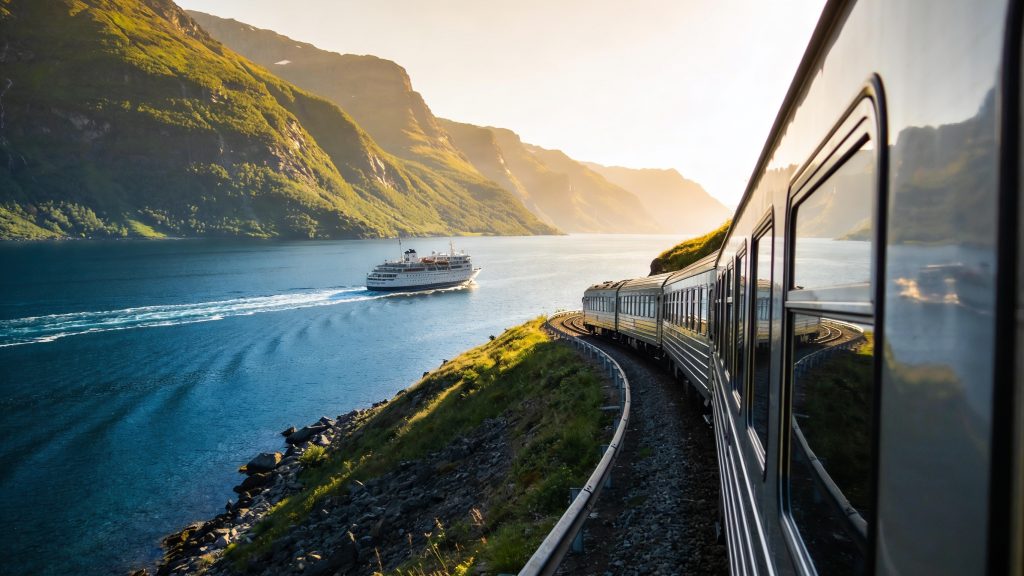
Travelling through Norway by train, ferry and boat is a tried and tested way to experience the best of Scandinavia without flying. This combination gives you access to dramatic fjords, coastal scenery and mountain passes, bringing comfort and immersion in nature together. For travellers who like to plan their own holidays, this is a feasible and beautiful route. Discover how to combine these modes of travel smartly for a complete round trip.
How to combine train with ferry and boat
The combination of train, ferry and boat in Norway works via connected routes that link public transport over land and water. This system makes it possible to travel from coast to fjord without a car. You plan your trip by booking different modes of transport one after another, with transfer times often being short.
Popular departure points are Amsterdam, Hamburg and Kolding, from where you travel by train to port cities such as Hirtshals or Kiel. From there you take an overnight ferry to Bergen or Stavanger. Once in Norway you continue on iconic rail routes such as the Bergensbanen and Flåmsbana, often combined with fjord boats. A train holiday Scandinavia offers plenty of opportunities to combine these modes of transport into one coherent route.
For smooth planning you can use platforms such as Norway in a Nutshell, which bundle train, bus and ferry tickets into one package. This way you avoid hassle with separate bookings and you do not miss any connections. Packages usually start at 200 euros per person for a one-day route, depending on the season and the route chosen.
‘ This mountain railway, with a gradient of 5.5 per cent, is one of the steepest in the world. ’
Main routes for train–boat combinations
Several routes through Norway combine train and boat in a well-thought-out way. These routes are tried and tested and are used by thousands of travellers every year. Below you will find the most practical options.
Amsterdam to Bergen via Hirtshals
Travel by train from Amsterdam via Hamburg and Denmark to Hirtshals. From this Danish port, a Fjord Line night ferry departs daily to Bergen, leaving at 14:00 and arriving the next morning at 08:00. From Bergen you can take the Bergensbanen, one of the most beautiful rail routes in the world. This journey takes seven hours and passes through more than 200 tunnels and over mountain passes up to 1,222 metres in altitude at Finse.
For an extra fjord experience, travel from Bergen to Flåm via Gudvangen. The Nærøyfjord ferry sails for two hours through UNESCO World Heritage fjords, followed by the Flåmsbana. This mountain railway, with a gradient of 5.5 per cent, is one of the steepest in the world. The combination of these routes takes 2 to 3 days, depending on your stops.
Oslo, Trondheim and Bergen in a loop
From Oslo you travel on the Dovrebanen to Trondheim in 6 to 7 hours. This route leads through the Gudbrandsdalen valley and the Dovrefjell mountains. From Trondheim you can opt for a two-day coastal cruise with Havila Kystruten to Bergen, sailing past picturesque coastal towns. This cruise includes overnight stays on board and meals, so you do not need to book hotels separately.
An alternative is to travel from Oslo to Myrdal via the Bergensbanen, then take the Flåmsbana to Flåm and sail by boat across the Sognefjord to Balestrand. This section over water takes an hour and a half and offers views of the steep walls of the fjord. For a complete round trip, plan 4 to 9 days, depending on your pace.
Southern Norway with ferry and train
Travel by train to Kolding in Denmark and from there take the ferry to Stavanger or Bergen. From these port cities you can continue on to Geilo in the mountains or directly to Oslo. Along the way you can stop in Kristiansand, where electric boats sail between the fjords. This route is suitable for families and typically takes 12 days with several stops.
Heading north with Hurtigruten and train
Start in Bergen or Trondheim with a coastal cruise to Kirkenes in the far north. Hurtigruten and Havila both offer this route, with Havila operating more modern ships with panoramic cabins. The cruise lasts several days and combines transport with overnight stays and meals on board. For the return journey you take the train from Kirkenes or Trondheim to Oslo. Variants of this route last 18 days and cover a large part of the Norwegian coast.
What are all-in-one train–ferry holidays
All-in-one train–ferry holidays are travel packages in which train, ferry, boat, overnight stays and meals are included in a single arrangement. You book everything in advance and only need to board along the way. This type of holiday eliminates a lot of planning and gives you certainty about costs and logistics.
Norway in a Nutshell offers these packages for routes such as the Bergen–Flåm–Gudvangen combination. Havila Kystruten and Hurtigruten have all-in-one coastal cruises with rail connections from Oslo or Trondheim. These packages usually include:
- Train tickets for routes such as the Bergensbanen and Flåmsbana
- Ferry tickets for fjord boats and night ferries
- Overnight stays in cabins on board or hotels at fixed locations
- Meals during the cruise or ferry, ranging from breakfast to three-course dinners
- Luggage transport between some transfer points
The price for an all-in-one package ranges from 800 to 2,500 euros per person, depending on the duration, the season and the level of comfort. High season runs from May to September, when departures are available daily. In low season some ferries run only three times a week.
Practical tips for a smart trip
A successful train–ferry holiday requires preparation in terms of luggage, transfer times and choice of season. With the right approach your journey will be comfortable and free of surprises.
Booking and keeping costs under control
Book your trip 3 to 6 months in advance, especially if you are travelling in summer. Popular routes such as the Flåmsbana and Nærøyfjord ferry sell out quickly in July and August. For flexibility, choose flexi tickets, which allow you to change your travel date without extra costs. An Interrail Scandinavia Pass (a rail pass that lets you travel multiple routes across Scandinavia) combines well with ferry deals and saves you money if you take several routes.
Luggage and transfers
Most trains and ferries have a luggage limit of 20 kilograms per person. Pack layered clothing, as the weather in Norway changes quickly. When changing in Flåm or Gudvangen you have 15 to 30 minutes between train and boat. Download the Entur app (a Norwegian public transport journey planner) for real-time travel information and delay notifications, so you can quickly anticipate changes.
Best time to travel
May to September is the best time for train–ferry journeys, with the most daylight and the full timetable for ferries. In winter fewer boats run, but you can see the Northern Lights during coastal cruises. Expect temperatures between 10 and 20 degrees in summer and between -5 and 5 degrees in winter, depending on your location.
Travelling sustainably and in comfort
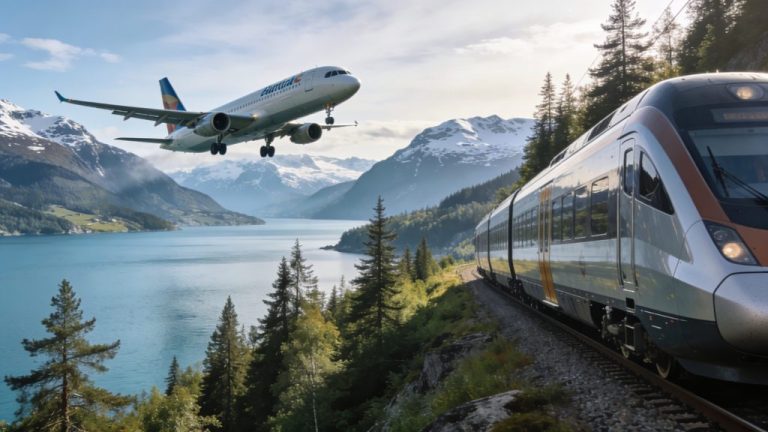
Trains in Norway often have panoramic carriages with large windows for views of the landscape. Ferries offer buffets, Wi-Fi and comfortable seating areas. Electric fjord boats are quiet and reduce CO2 emissions compared with traditional motorboats. Travelling by train and ferry significantly reduces your ecological footprint compared with flying.
‘ Bear in mind that the weather at sea can be rough, especially between October and March. ’
Special places and extra tips
In addition to the main routes, there are stops that enrich your journey. At Finse, the highest station on the Bergensbanen at 1,222 metres, you can get off for walks in glacial landscapes. In Trondheim you can visit Nidaros Cathedral, an important cultural monument. Geilo offers mountain hiking trails and is a good stopover between Oslo and Bergen.
On fjord boats you often see waterfalls plunging straight down from the rock walls. On coastal cruises in the north, whale watching is a possibility, especially in autumn. Bear in mind that the weather at sea can be rough, especially between October and March.
On the Traveler Tips website you will find much more information about train travel in Europe, routes in Scandinavia, practical preparation and the most beautiful destinations for self-organised holidays. Discover more tips and plan your next trip with confidence.
Frequently asked questions
The combination Oslo–Myrdal–Flåm with the Flåmsbana and the ferry through the Nærøyfjord (Gudvangen–Flåm) offers both the most spectacular views and very short, well-organised connections. The Bergensbanen between Oslo and Bergen combined with fjord ferries around the Sognefjord is also known for its panoramic mountain and fjord landscapes with smooth, well-timed connections.
Use the Norwegian journey planner Entur (app/website) to see train and boat connections on a single route map, and first plan the fjord boats that run infrequently, then fit the trains around them. Choose fixed hubs such as Oslo–Myrdal–Flåm–Gudvangen–Bergen or Oslo–Trondheim–Bodø, and for each leg look for connecting ferries (Norled, Fjord Line, Havila/Hurtigruten). Allow at least 30–60 minutes transfer time in ports and, for smaller routes (Flåm–Gudvangen), preferably 60–90 minutes due to weather and altitude differences. In high season book combination tickets or packages (such as “Norway in a Nutshell”) so that train, bus and boat are already coordinated.
Yes, there are combination tickets and discount passes available that make train and boat journeys in Norway cheaper and more flexible. Well-known examples are the “Norway in a Nutshell” packages, which combine train, ferry and bus in one flexibly bookable arrangement. Interrail or Scandinavia passes can also be used in combination with discounts on certain ferry routes. In addition, some ferry companies and railways offer joint packages for routes such as Bergen–Flåm–Gudvangen.
Take light, easy-to-carry luggage (max. approx. 20 kg), preferably a suitcase or rucksack that you can easily move yourself when changing between train and boat. Make sure you pack layered clothing because of changeable weather on deck and in the mountains. On board most ferries and cruises in Norway you will find lounge seating, a buffet restaurant, Wi-Fi and sometimes cabins for overnight journeys. If possible, reserve a seat or cabin for longer crossings so you can really rest in comfort.
A few lesser-known combinations include, for example, travelling by train on the Dovrebanen from Oslo to Trondheim, followed by a short coastal journey with Havila Kystruten towards less touristy ports. Another option is the route by train to Myrdal, continuing on the Flåmsbana to Flåm and then a quiet boat trip across the Sognefjord to smaller places such as Balestrand, which offers an authentic experience. In addition, combinations of travelling by train to Kolding in Denmark with a ferry to Stavanger or Bergen, and from there quiet regional trains inland, are a way to avoid the crowds. These routes take you along smaller fjords, villages and coastal towns where far fewer tourists come than on the classic “Norway in a Nutshell” routes.