 NL
NL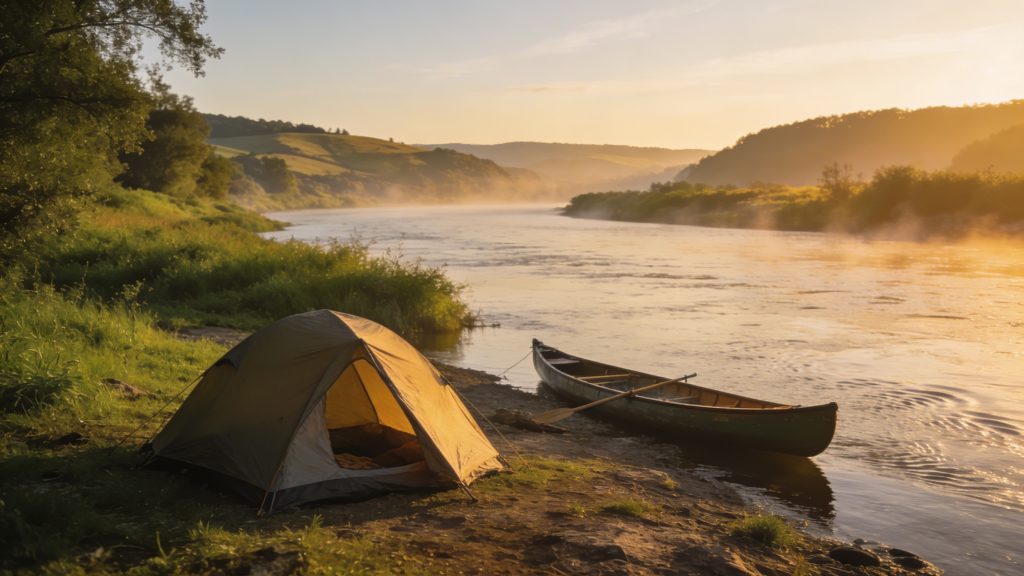
Wild camping during a canoe trip combines exercise, nature and freedom in a way that few other types of holiday can offer. You paddle during the day along winding rivers and in the evening you pitch your tent on the riverbank, far away from busy campsites. But wild camping is subject to strict rules in most European countries, and the banks of rivers such as the Dordogne and Soča are no exception. With the right preparation, an understanding of local laws and respect for nature, you can create an unforgettable journey and avoid problems along the way.
Why wild camping on a canoe trip is so appealing
A canoe and kayak holiday is ideal for wild camping because by boat you can reach places that are not accessible by road. Rivers take you through forests, gorges and nature reserves where the hustle and bustle of tourist centres feels far away. You decide for yourself when you stop, where you cook and how long you stay. That freedom makes this type of trip particularly popular with travellers who like to plan their own route independently.
At the same time, wild camping requires a sense of responsibility. Not all banks are suitable or permitted for overnight stays, and local regulations vary greatly from country to country and even from region to region. It is important to find out in advance what is and is not allowed.
‘ Fines for illegal camping can reach several hundred euros, and in high season rangers actively patrol along the river. ’
Rules for wild camping on riverbanks in Europe
Wild camping is regulated by law in many European countries. In France, where the Dordogne flows, wild camping is in principle prohibited on public land and on private land without the owner’s permission. Along the Dordogne, the rules are strictly enforced, especially in nature reserves and protected areas. Camping on gravel banks, small islands or banks is usually not allowed unless there are clear signs indicating that it is permitted.
In Slovenia, where the Soča flows, the same principle applies: wild camping is officially prohibited. Much of the Soča runs through Triglav National Park, where camping is only allowed on designated campsites. Fines for illegal camping can reach several hundred euros, and in high season rangers actively patrol along the river.
It is a good idea to obtain local information from kayak rental companies, tourist offices or nature reserve managers. They can tell you where you are and are not allowed to camp, and whether there are bivouac spots or tolerated zones.
Bivouac spots and tolerated locations
In some areas, bivouac spots are tolerated for emergencies or short stops. Bivouacking means staying for one night only, without setting up full facilities and without leaving any trace. This is often allowed above the tree line in mountain areas, but the situation is different along rivers such as the Dordogne and Soča. Here it is wise to check in advance whether there are designated places for canoeists, such as basic nature campsites or bivouac zones along the route.
Best places to camp along the Dordogne
If you want to camp along the Dordogne, it is better to choose small campsites and bivouac spots that are specially set up for canoeists. Many kayak rental companies have partnerships with campsites along the river, where you can pitch your tent for a small fee. This offers a legal and comfortable solution, often with access to toilets, drinking water and sometimes even showers.
Popular stretches such as the section from Argentat to Beaulieu-sur-Dordogne or the classic route from Vitrac to Beynac offer several intermediate stops. Here you will find campsites geared towards passers-by, where you can stay for one night without a reservation. These places are often directly on the river, so you can easily moor your canoe.
For those still looking for a wilder experience: ask locally about gravel banks or small islands where camping is tolerated, but do not expect this to be possible everywhere. In the summer months checks are stepped up due to the risk of wildfires and increased visitor numbers.
Camping along the Soča in Slovenia
The Soča is known for its clear turquoise water and spectacular surroundings, but strict rules make wild camping difficult. However, there are campsites along the river that are specially designed for kayakers and outdoor enthusiasts. Places such as Kamp Liza, Kamp Klin and Kamp Kobarid are located directly on the Soča and offer space for tents, with facilities such as sanitary blocks and cooking areas.
For multi-day trips, you can use these campsites as a base camp or plan to sleep at a different campsite every night. Booking in high season is recommended, as the Soča is popular with water sports enthusiasts from all over Europe.
‘ Always use a camping stove for preparing meals. ’
Campfire rules and safety
For many people, making campfires is part of the camping experience, but in many nature areas open fires are strictly prohibited. In France there is often a total fire ban in forests and nature reserves from mid-June to mid-September because of the risk of wildfires. Along the Dordogne it is therefore wise to cook on a camping stove and not to light open fires.
In Slovenia, lighting fires outside designated spots is prohibited, especially in Triglav National Park. Campsites often have fire pits where you are allowed to make a campfire, provided you follow the instructions and supervise the fire properly.
Always use a camping stove for preparing meals. These are safer, more efficient and leave no traces. Take enough fuel with you and check that your stove is working properly before you leave.
Leave no trace principles for canoeists
Leave no trace is a philosophy focused on minimising your impact on nature. For canoeists who want to camp on riverbanks, these principles are important to keep nature clean and accessible for others.
- Plan ahead and prepare: check whether camping is allowed, take the right equipment with you and know where you can dispose of your rubbish.
- Camp on durable sites: choose places that are already in use, such as designated bivouac zones or campsites. Avoid fragile vegetation and banks that are prone to erosion.
- Remove all your rubbish: take all your waste with you, including food scraps and toilet paper. Use a rubbish bag that you can attach to your canoe.
- Leave what you find: do not pick plants, stones or other natural objects. Do not disturb animals or nests.
- Minimise campfire impact: only make fires where it is permitted and use existing fire pits. Extinguish the fire completely and leave no ash or charcoal behind.
- Respect other visitors: keep noise to a minimum and give other canoeists plenty of space.
- Take care with sanitation: if there are no toilets, dig a hole at least 15 centimetres deep and at least 70 metres from the water’s edge. Take used toilet paper with you in a plastic bag.
Practical equipment for wild camping by canoe
A canoe trip with wild camping calls for light, compact gear that can withstand moisture. Pack your belongings in waterproof bags or drybags so everything stays dry, even if your canoe takes on water or it rains.
Take a lightweight tent that is quick to pitch. A two-person trekking tent often weighs between 1.5 and 2.5 kilograms and provides enough space for two people with luggage. Choose a tent with good waterproofing, especially if you are paddling in areas with a lot of rainfall.
For cooking, a camping stove with a gas canister is the most practical option. Take enough fuel for the entire trip, as you will not always come across a shop along the way. A lightweight pan and cutlery complete your cooking set.
Other useful items include:
- Sleeping bag suitable for the expected temperatures
- Sleeping mat for insulation and comfort
- Head torch or torch with extra batteries
- Water filter bottle or pump if you want to use river water
- First aid kit and personal medication
- Map, compass or GPS device for navigation
- Repair kit for your canoe or kayak
‘ Rivers can rise quickly after heavy rain, which can lead to dangerous situations. ’
Season and weather conditions
The best period for a canoe trip with camping along the Dordogne is from May to September. During these months the water level is usually stable and temperatures are pleasant. July and August are the busiest months, with full campsites and many other canoeists on the water. June and September are quieter and often offer better availability of camping spots.
Along the Soča the season is shorter. From June to early September the weather conditions are best, with July and August being the warmest months. Bear in mind that the water of the Soča remains cold, even in summer, due to its glacial source. At the beginning and end of the season you may encounter rain showers and cooler nights, so take suitable clothing and sleeping gear.
Always check the weather forecast before you set off and be prepared for sudden changes. Rivers can rise quickly after heavy rain, which can create dangerous situations.
Responsible and conscious camping
Wild camping along canoe routes offers a unique way to experience nature, but only if you respect the rules and treat the environment with care. Find out about local laws in advance, choose legal camping spots wherever possible, and apply leave no trace principles. In this way you help preserve beautiful natural areas and keep this form of travel accessible for others.
On the Traveler Tips website you will find much more information about canoe and kayak holidays, nature trips and practical tips for planning your next adventure. Discover routes, destinations and everything you need to know to prepare for your trip properly.
Frequently asked questions
Where is ‘wild camping’ along ‘canoe routes’ legally permitted and which specific rules do I need to be aware of?
Wild camping along canoe routes in the Netherlands is only legal at designated spots, such as pole camping sites in the Biesbosch (including De Bevert, Jong Deen), special canoe camping spots in the Wieden (Kluitenberg, Walengracht, Giethoorn-Oost) and some Marrekrite moorings in Friesland. In Sweden and Norway you may wild camp along canoe routes under the right of public access (allemansrätt), usually 1–2 nights per spot, at a sufficient distance from houses (around 150 m), not on fields/gardens and sometimes with local exceptions around certain lakes. Basic rules apply everywhere: leave no rubbish, do not damage nature, only make fires where permitted and follow any notification or reservation requirements for official sites. Always check the current local regulations for each route, as details and permitted locations can change.
Which essential equipment do I need in order to ‘comfortably’ and ‘safely’ go ‘wild camping’ during a ‘canoe trip’?
At a minimum you need: a stable canoe with paddle, a well-fitting buoyancy aid/life jacket and waterproof barrels or drybags for your gear. For comfortable camping: a lightweight, reliable tent, warm sleeping bag and mat, suitable layered clothing and waterproofs. For cooking and eating: a compact stove with fuel, pan/set, lighter, sufficient water or a water filter and high-energy food. Don’t forget a map/GPS (offline), first aid kit, light (head torch), repair kit for the canoe and strict leave no trace items (rubbish bags).
How do I plan a ‘canoe route’ that is suitable for ‘wild camping’, including finding suitable and permitted ‘campsites’?
Start by choosing an area and check the local rules around wild camping (for example pole camping in the Netherlands or the right of public access in Scandinavia) via official mapping and nature authority sites. Then use interactive canoe/water maps and apps from nature organisations to find legal canoe camping spots, Marrekrite moorings or pole camping locations along the water and to plan your daily distances. Plan short stages (10–20 km per day), with back-up options such as canoe campsites in case wild camping turns out not to be possible. Take safety into account (weather, life jacket, map/GPS) and always follow leave no trace principles when choosing and using your campsite.
Which ‘practical tips’ are there for ‘food supplies’, ‘water purification’ and ‘waste management’ when ‘wild camping’ along ‘canoe routes’?
Take low-perishable, calorie-rich food (dry food, rice/pasta, nuts, freeze-dried meals) in waterproof bags and cook on a stove instead of a campfire. Purify water with a combination of pre-filter (cloth or coffee filter), boiling (at least 3 minutes) and/or a certified water filter or chlorine drop system, and preferably draw from running water. Collect all your waste in sturdy bags and take it with you to the next official waste point; do not leave food scraps behind and, if there is no toilet, use a cat hole (15–20 cm deep, at least 60 m from water). Use biodegradable soap sparingly and always at a distance from open water.
How do I ensure a ‘sustainable’ and ‘environmentally friendly’ ‘wild camping experience’ along ‘canoe routes’?
Choose official pole or canoe camping spots and follow local rules so that you respect nature and property rights. Strictly apply leave no trace: take all your rubbish back with you, use existing tent and fire sites and leave nature and wildlife undisturbed. Use reusable materials (water bottles, cooking gear, no single-use plastics) and biodegradable soap well away from the water. Plan modest daily distances so that you do not have to push on into fragile bank zones in search of a campsite.