 NL
NL
The best cabin location on a cruise ship is midships, on a mid deck, away from lifts and entertainment areas. That’s where stability, comfort and peace and quiet come together. Higher decks do offer better views, but in rough seas you can feel more movement. Lower decks are more stable, but sometimes suffer from engine noise or vibration. So the choice of cabin depends on more than just the price or the view. Where do you sleep best? Where do you experience the least crowds? And how do you find the right balance between comfort and practical use?
Which deck is best for a cruise cabin?
The ideal deck choice differs for every traveller. Higher decks often offer a beautiful sea view and are further away from the engine room, which means less noise. But they are also often close to busy places like the pool, buffet or evening entertainment. On lower decks it’s usually cheaper and quieter, but you may feel more engine vibration. Mid decks combine stability with convenience and are the best choice for most travellers.
In addition to height, the position on the ship also plays a major role. Midship cabins move less than cabins right at the bow or stern. That’s especially important if you’re prone to seasickness. A central location also gives you shorter walking distances to restaurants, lifts and facilities. You can read more about the layout and types of cabins in our article on cabins and accommodation on board.
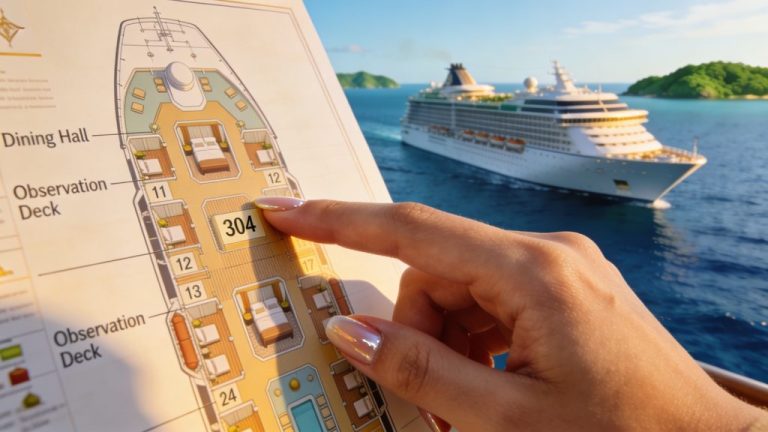
When choosing your cabin, also consider what’s above and below you. A cabin under the pool or buffet can be noisy early in the morning. A cabin above a theatre or bar can be restless late at night. That’s why you should always study the deck plan carefully before you book.
‘ So it depends on how you travel. ’
Do cabin locations on higher decks have a view?
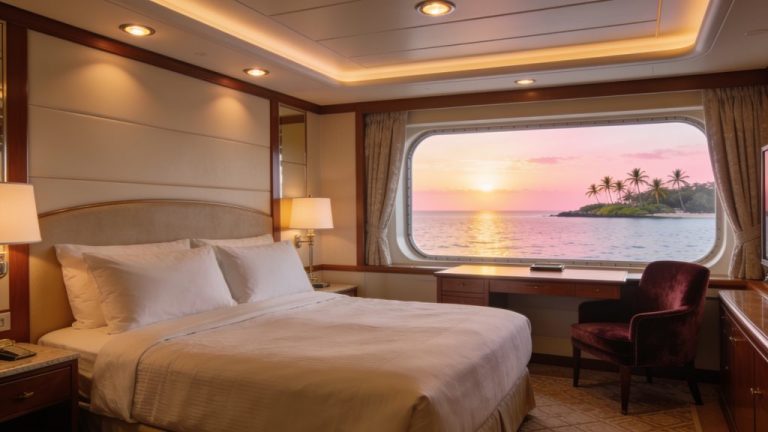
Yes, higher decks usually offer a better view of the sea and the coast. Balcony cabins on mid or higher decks in particular give a panoramic perspective. That’s great if you like looking outside from your cabin or want to have breakfast with a view. But not every cabin on a high deck has a balcony. Ocean-view cabins have a window, inside cabins have no daylight at all.
A balcony also has practical drawbacks. On higher decks it can be very windy at sea. That can make your balcony less usable than you might expect. You also usually pay more for a cabin with a view, while you may spend little time in the cabin. So ask yourself how important that view really is to you.
Many travellers opt for a well-located ocean-view cabin instead of a poorly located balcony cabin. A cabin with daylight but without a balcony is comfortable enough if you’re mainly out and about. For people seeking peace and quiet or those who like to relax in private, a balcony is valuable. It really does depend on how you travel.
Is there more noise on lower decks?
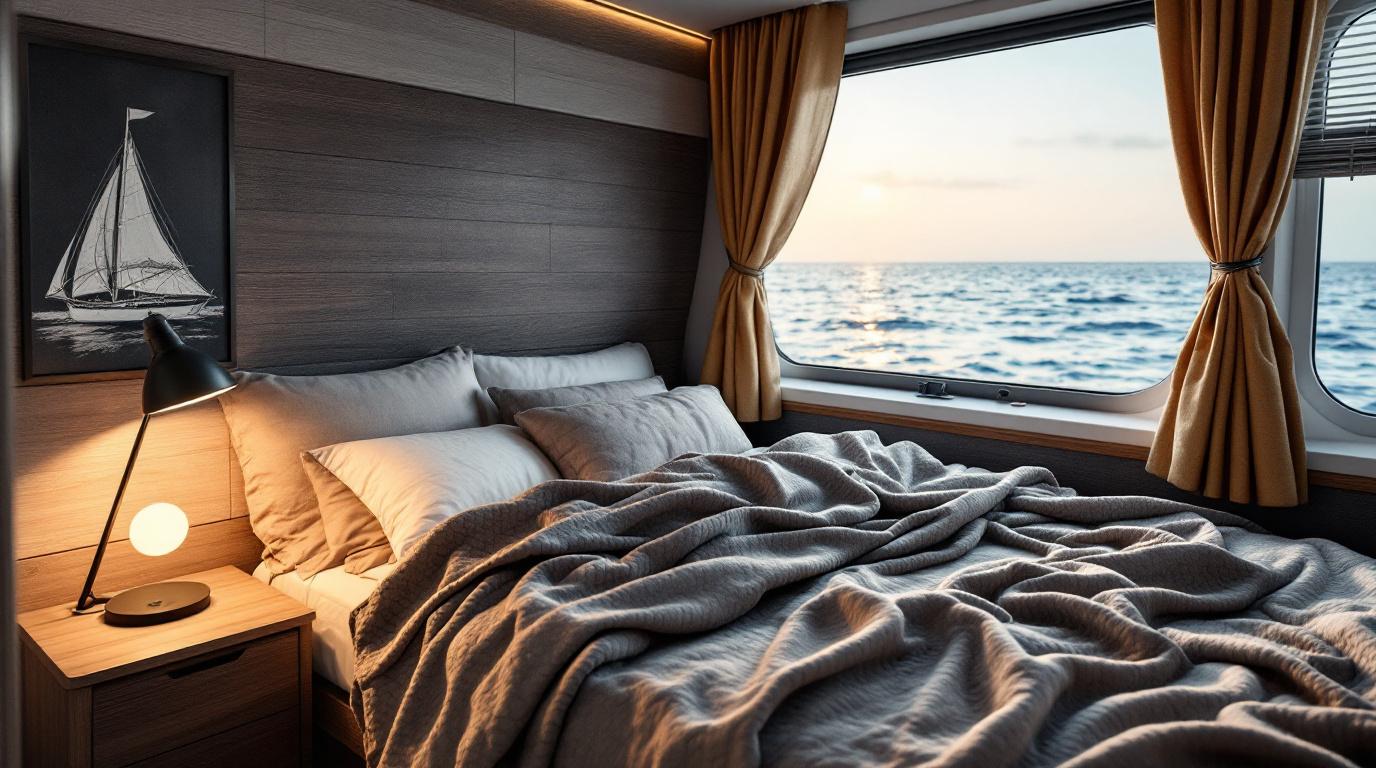
That depends on the location. Lower decks close to the engines or technical areas can indeed generate more noise and vibration. You’ll notice this particularly at the stern or near the engine room. But not all cabins on lower decks suffer from this. Midship cabins on lower decks are often actually quiet, because they’re further away from public areas and lifts.
Noise on cruise ships doesn’t usually just come from the engines. It’s often produced by public spaces. Think of pools, restaurants, bars, casinos and theatres. If your cabin is directly above or below such a space, you’ll experience more disturbance from that than from the engines. That applies to all decks, not just the lower ones.
So avoid cabins next to lifts, stairwells or at the end of busy corridors. Cabins close to anchor spaces can also be noisy early in the morning when the ship is docking. So read the deck plan carefully and look for a quiet spot, not just the lowest price tag.
The ergonomics of a cruise cabin
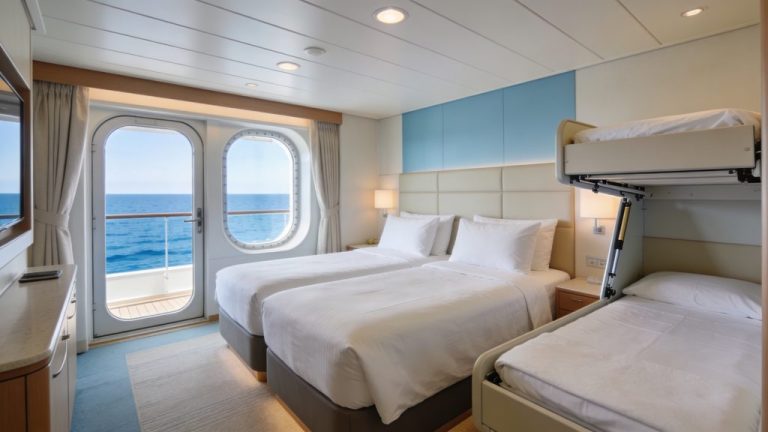
A cruise cabin is compact. That means clever layout and storage space are important. Most cabins have wardrobes, drawers and shelves. You need to use these efficiently. Suitcases often fit under the bed. That’s the best place for them to keep the living area free.
The walking space around the bed also makes a difference, especially if you’re travelling as a couple. In many cabins the beds can be pushed together or separated. That affects how comfortable the room feels. Also pay attention to the bathroom layout. Many cabins have a small shower area with a raised shower tray. That can be difficult for people with limited mobility.
Sockets are another point to consider. You often have several devices that need charging. Think of your phone, tablet, camera and e-reader. Not all cabins have enough facilities for this. Consider taking a travel adaptor or small multi-socket. Access to lifts and stairs is also important. Long corridors can make it harder to get around with wheeled suitcases or pushchairs. Tight corners can also be an obstacle.
‘ That’s where the movement of the ship is least noticeable. ’
Best cabin location by traveller type
For peace seekers, a centrally located cabin away from lifts and public areas is the best choice. Avoid locations above or below restaurants, bars, pools or theatres. Choose a cabin in a quieter part of the ship, not right at the bow or stern.
Travellers who are prone to seasickness are best off with a midship cabin on a lower or mid deck. That’s where the ship’s movement is least noticeable. Avoid extreme positions, as the ship rocks more there.
Families benefit from cabins with a smart layout and plenty of storage space. Short walking distances to children’s facilities are also useful. Make sure you don’t have to walk too far with pushchairs, toys or beach gear.
Couples looking for privacy usually choose a balcony cabin or a spacious ocean-view cabin. Pick a location that’s not directly next to busy zones and not at the end of a corridor with lots of foot traffic. That way you create peace and space for the two of you.

Balcony, sea view or inside cabin?
An inside cabin has no windows, but is often the cheapest option. The cabin is dark and quiet, which is nice if you want to sleep well. The downside is that you have no sense of time or weather. Some travellers find that oppressive, others really appreciate the peace.
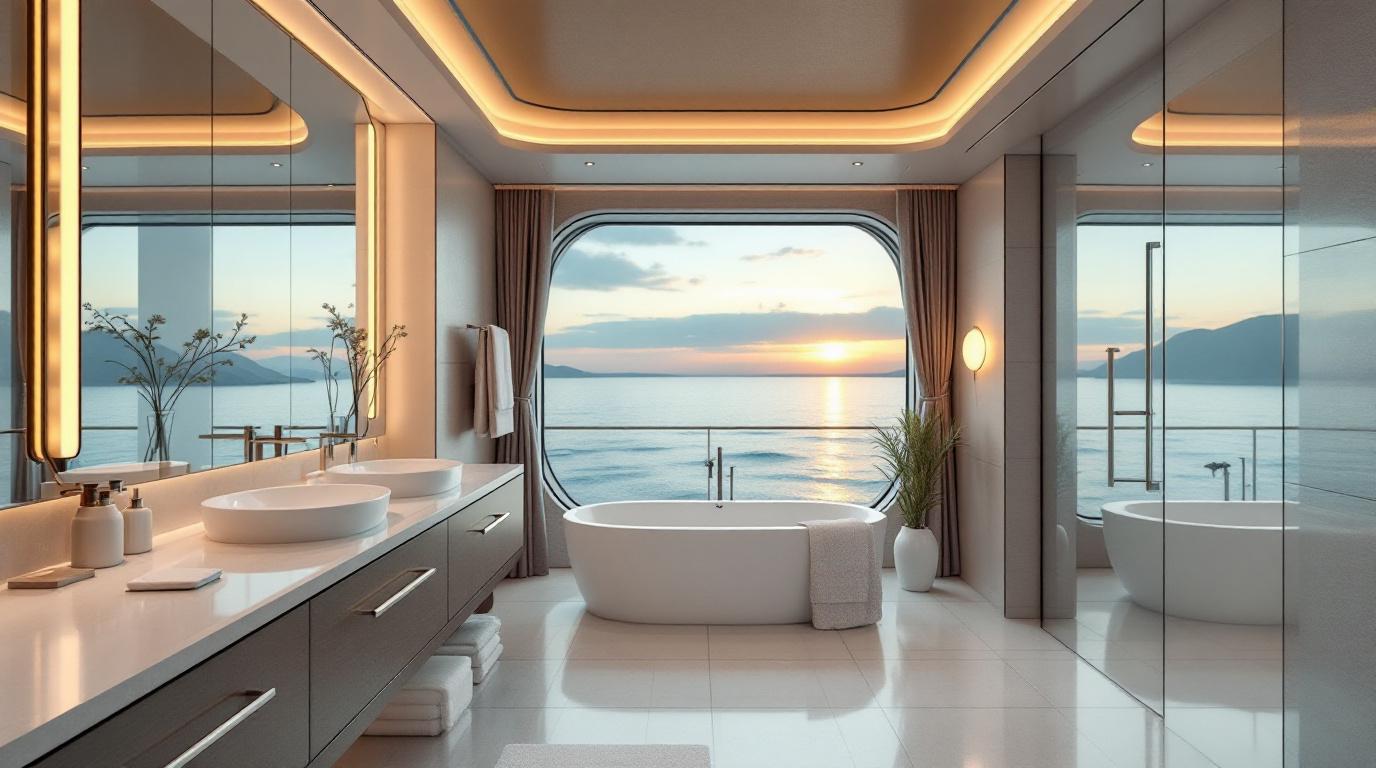
An ocean-view cabin has daylight and a view of the sea. That creates more sense of space and makes the cabin more pleasant to stay in. The window doesn’t open, but you do have a fresh view outside. This is often a good middle ground between price and comfort.
A balcony cabin offers your own outdoor space. That’s great for privacy, reading, breakfast or enjoying the fresh air. But balconies are more expensive and can be windy at sea. If you don’t spend much time in the cabin, a balcony is less valuable than it seems. So think carefully about how you want to spend your time on board.
Movement of the ship and stability
Modern cruise ships have stabilisation systems that limit movement. Even so, you can feel a difference depending on position. Midships on a lower or mid deck you feel the least movement. Right at the bow or stern you feel more rolling, especially in rough weather.
If you’re prone to nausea, choose a cabin as central as possible. Avoid the ends of the ship and don’t go too high. Higher decks move more than lower ones. For many travellers, stability is more important than view or luxury.
‘ A good cabin choice makes your cruise more comfortable and calmer. ’
Practical selection tips for booking
Start with the question: do you mainly want peace and quiet or convenience? Peace and quiet require a cabin away from the crowds. Convenience calls for a central location, but not directly next to lifts or stairwells. If you’re prone to seasickness, choose midships and avoid the ends.
Also think about how much time you’ll spend in the cabin. Spending a lot of time there means an ocean-view or balcony cabin is worthwhile. Spending little time there means a cheaper inside cabin can work perfectly well. Are you a light sleeper? Then avoid locations above or below entertainment areas, buffet, bar or pool.
Are you travelling with children or do you have mobility needs? Then choose short walking distances, straightforward routes and a practical layout. Always study the deck plan carefully and ask questions if in doubt. A good cabin choice makes your cruise more comfortable and calmer.
Discover more on Traveler Tips
A smart cabin choice is an important step in preparing for your cruise. But there’s much more to take into account. On the Traveler Tips website you’ll find extensive information about cruise routes, preparation, packing lists, excursions and practical tips for on board. Whether you’re cruising for the first time or already have experience, there’s always something new to discover. Explore more and plan your next trip with confidence.
Frequently asked questions
To minimise the chance of seasickness, choose a cabin in the middle of the ship on a low to mid deck, because movement is smallest there. For maximum peace and comfort, avoid cabins directly above or below busy areas such as pool, buffet, bars, theatre and technical rooms, and also cabins right next to lifts or stairwells. A quiet central section of the ship, surrounded by other cabins (both above and below you), usually offers the most silence. An ocean-view or balcony cabin in such a location adds extra comfort, but is less important than the position on the ship.
Choose a mid deck in the middle of the ship, because there you have both less movement and a central position in relation to most facilities. Go for a cabin that is reasonably close to the lifts, but not directly next to or opposite them, to limit noise. Avoid cabins directly above or below busy areas such as pool, buffet, theatre, bar or kids club. For extra privacy and peace, an (ocean-view or balcony) cabin in a quiet central part of the corridor is better than one at the end or near service areas.
Important ergonomic aspects are the bed (mattress firmness, bed configuration and enough walking space around it), practical seating (chairs/sofa with good back support and a table at a working/eating height) and clever storage space so the cabin doesn’t feel cluttered. Also pay attention to the bathroom layout, clear walking routes and the position of sockets. Compare this in advance using deck plans and the cruise line’s photos, supplemented with recent reviews in which guests specifically mention bed comfort, noise and living space. Ideally use search terms such as “bed comfortable”, “cabin layout”, “noise” and your cabin category to find targeted experiences.
The choice of a particular deck determines how often you automatically pass bars, pools and restaurants, which makes your overall experience busier or calmer. Higher decks are often closer to the pool and entertainment areas and therefore give a lively, holiday atmosphere with quick access to activities. Mid and lower decks are generally quieter and feel more like a place to retreat, with less foot traffic and noise. The position on the deck (middle vs bow/stern) also affects peace and quiet, due to differences in footfall, noise and ship movement.
Yes, the layout of public areas and the walking routes between decks can clearly affect your comfort. Cabins close to lifts, stairs, theatres, buffet or pool have more through-traffic and therefore more noise and people passing by. A centrally located cabin is ergonomically pleasant in terms of walking distances, but ideally not directly next to lift shafts or under/above busy public spaces. It’s better to choose a quiet central part of a deck with a short, but not the very busiest, route to the main facilities.