 NL
NL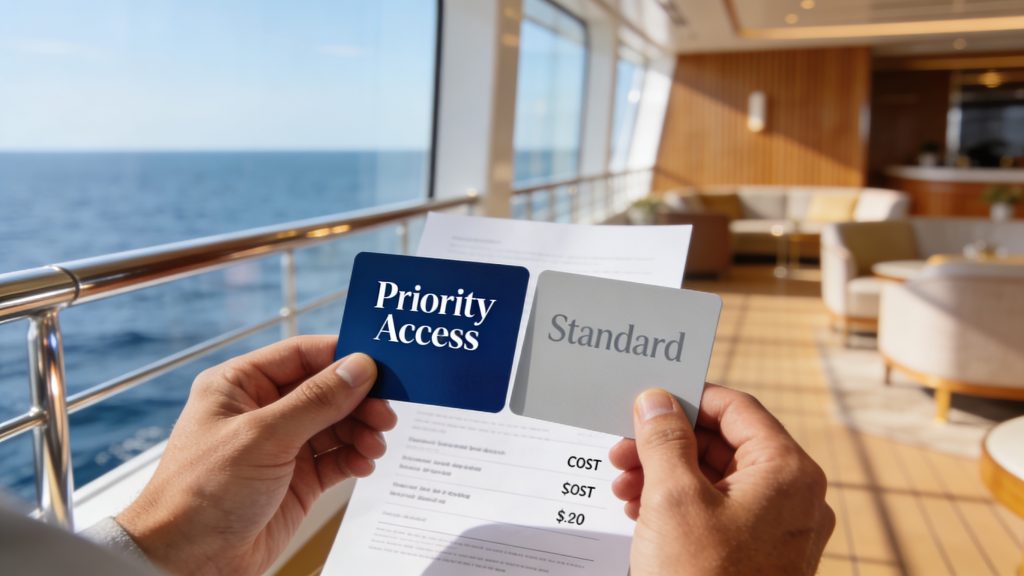
Priority boarding, fast lane access and lounge services on cruises are popular, but they often cost more than you expect in advance. Especially on busy ships, the extra charges can add up quickly. A package like this can make your trip more pleasant, but you need to know beforehand exactly what you are paying for. Also weigh up whether the time savings outweigh the price. Because just like with cruise prices and hidden costs, the challenge is often in the details that are not immediately visible.
Priority services on a cruise: what types are there
Priority services give you preference when boarding, dining or accessing facilities on board. The aim is always the same: to make your trip more comfortable by cutting down on waiting time. Think of faster boarding at the start of the cruise, priority at the restaurant or access to lounges that are normally not available. These services are often part of a larger package, but can sometimes be booked separately.
On many cruise ships, priority services are offered under names such as priority check-in, fast lane boarding or premium dining. Usually the package applies for the entire trip. Sometimes it is only available on specific travel days. It may also only apply to certain cabin categories.
‘ Note: priority boarding is almost always priced per traveller, not per cabin. ’
Priority boarding on a cruise: the costs
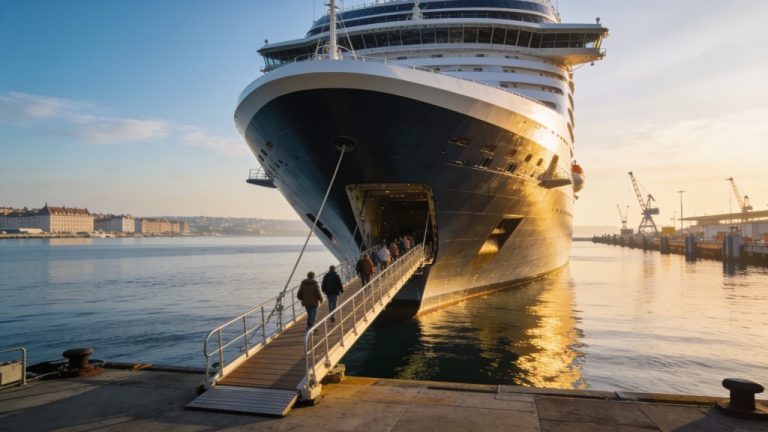
Priority boarding is one of the most commonly booked services. It means you can board earlier, before regular passengers. Depending on the cruise line and the duration of the cruise, you pay between €30 and €100 per person. On more luxurious cruises or longer trips the price can rise to €150 per person.
Note: priority boarding is almost always priced per traveller, not per cabin. A family of four therefore pays the surcharge four times. For an average cruise this quickly amounts to a surcharge of €120 to €400. The price also varies depending on when you book. Booking early is often cheaper, adding it last minute usually costs more.

Fast lane services and lounge access: the benefits
Fast lane services on cruises go beyond priority boarding. They include more than that. They often also cover priority when leaving the ship and access to a separate lounge at departure. Sometimes you also get a welcome drink or snack. Some cruise lines also offer faster customs and baggage handling. These services are often bundled under names such as VIP package or Premium Experience.
Lounge access is usually part of such a package. You then get access to a separate area with comfortable seating, Wi‑Fi and refreshments. The added value depends heavily on how busy the ship is. The expected waiting time without priority also plays a role. On ships with more than 3,000 passengers, the boarding queue can stretch to an hour and a half.
Prices of fast lane packages
The costs for a full fast lane package are usually between €50 and €200 per person. This depends on the cruise line and the duration of the cruise. Some luxury cruise companies charge a percentage of the cruise fare. On an expensive trip this can rise to more than €300. Pay close attention to what is and is not included.
Priority dining: priority at the restaurant
Priority dining gives you priority when reserving a table in speciality restaurants. You also have priority at certain time slots in the main dining room. It does not always mean you eat earlier, but it does mean you have more choice of times and locations. Booking restaurants can be highly competitive on some cruises. In those situations this is an advantage.
Some cruise lines charge a supplement of €20 to €75 per person for this. With other companies, priority dining is only available as part of a larger package. Check in advance whether you still pay extra for speciality restaurants with priority dining. That is not always included in the price. This is an important detail to be aware of.
When is a priority package really worth it
A priority package is especially valuable if you are travelling on a busy ship. It can also make sense in high season. Do you want to lose as little time as possible to queues? Then it is a good option. For families with young children, it can also bring peace of mind. You board faster, have more control over your schedule and experience less stress when embarking and disembarking.
Such a package is less interesting if you are travelling on a small cruise ship with fewer than 1,000 passengers. Have you already booked a suite or higher cabin category? Then it is often unnecessary. In those cases, many priority services are already included. And if you travel at a relaxed pace and are not in a hurry, the extra cost often does not outweigh the benefits.
Situations in which priority makes sense
- You are travelling with children or older people and want to minimise waiting time
- You have a connecting flight or transfer and little time after disembarkation
- Your cruise is fully booked or departs in high season
- You really want a specific time slot in a popular restaurant
- You have an inside cabin but still want access to premium facilities
Hidden costs and conditions of priority services
Not all costs are immediately visible when you book a priority package. You only see them later in the booking process. A common pitfall is that the price applies per person, not per cabin. In addition, many packages are non-refundable if you cancel. If you cancel or move your cruise, you lose the extra amount.
Also, not every package applies for the whole trip. Some cruise lines only offer priority boarding at the first embarkation. It does not apply at intermediate ports. Lounge access may only be available at certain times. Priority dining also does not always guarantee a table at the most popular restaurant on board.
Conditions to pay attention to
- Is the price per person or per cabin
- Does the package apply to all port days or only on departure
- Are speciality restaurants included or do you still pay for them separately
- Can you cancel or change the package
- Is lounge access available throughout your stay or only for embarkation and disembarkation
Compare priority services with what is already included
Before you pay extra for priority, it is sensible to check what you already get with your booked cabin category. On many cruises, if you have a suite or mini‑suite you automatically get priority boarding. Often you also have access to a separate lounge. Sometimes priority dining is included as well. In that case, you are paying twice if you still buy a separate package.
Read your booking conditions carefully. Some cruise lines do not list the included services very prominently on your confirmation. They do appear in the general terms and conditions. If you are unsure, contact customer service or your travel agent.
‘ That not only saves stress, but also money. ’
Alternatives to priority packages
If you do not want to buy a priority package, there are other ways to cut down on waiting time. For example, complete your online check‑in for boarding. Then choose an early or late time slot. This way you avoid the crowds without extra costs. It also helps to eat at quieter times, such as early or later in the evening.
Also consider booking your cruise outside peak season. In April, May, September and October ships are often less full. The need for priority services is then smaller. That not only saves stress, but also money.

Practical tips for booking priority services
Book priority services as early as possible. Prices often rise as the departure date gets closer. In addition, some packages sell out, especially on popular cruises. Also look out for combination offers. Sometimes you get a discount if you combine priority boarding with a drinks package or an excursion bundle.
Finally, check whether the extra cost matches the expected time savings. A package of €150 per person for 20 minutes less waiting time is usually expensive. For an hour or more of saved time, on the other hand, it can be a good investment, especially if you are travelling with several people.
On the Traveler Tips website you will find much more information about cruises, travel costs, planning and what to expect on board. Discover handy tips and comparisons that help you prepare better for your trip and avoid unwelcome surprises.
Frequently asked questions
The most valuable priority services are those that directly reduce waiting time and stress: fast lane/fast track at security and priority boarding. For car and road trips, the most useful are fast access to ferries, toll tags (for example electronic toll passes) and priority check‑in at car hire desks. For train journeys, seat reservations, flexible tickets (easier to change trains) and, where available, priority lanes at international terminals are the most helpful. These services are especially worthwhile on peak days, when you have tight connections and when travelling with children or a lot of luggage.
The cost of a fast lane is mainly worth it if you are travelling at peak times, via a busy airport or with a tight connection. Roughly speaking: if you can save at least 30–60 minutes of waiting time and a lot of stress for around £10–£25 per person, it is usually worthwhile. If you travel with plenty of time, on a quiet day or you already have status/a premium ticket, it often adds too little extra value. Also look at the total amount for your whole group; with several people the price mounts up quickly.
First estimate the expected waiting time (for example using reviews, busy periods and peak times) and compare it with the cost per person: how many pounds you pay per minute saved. Check whether you already have benefits through your ticket class, loyalty status or bundles, so you do not pay twice. Factor in your situation: travelling with children, limited mobility, tight connections or a packed itinerary all increase the value of fast lane access. If the airport or attraction is usually quiet or you have plenty of time, fast lane rarely brings real added value.
Yes, priority services mainly make a difference during peak crowds, for example in school holidays, at weekends and at popular departure times in the morning or evening. They are especially valuable if you have a short connection or arrive late at the airport but still want to depart in a relaxed way. When travelling with (young) children or a lot of luggage, shorter queues and faster processing can also noticeably improve your travel experience. If you travel outside rush hours and arrive in good time, the impact is usually limited.
You can often avoid queues by travelling outside peak hours, planning generous connection times and arriving early at the airport or terminal. Where possible, choose less busy airports, trains or departure times (for example very early morning or late evening). An upgrade to a higher class or joining a status programme can give you priority without buying a separate fast lane. Travelling with hand luggage only and checking in online also helps you move through the airport faster and more comfortably.
Set aside a separate line in your budget in advance for priority services (for example “time and comfort extras”) with a clear maximum amount. Decide for each travel day whether the time saved is really worth it, for instance only on peak days or when you have tight connections. Compare the cost of priority (usually per person) with what you would otherwise spend on an extra experience, and make a conscious choice. Stick strictly to your total budget: if you spend more on priority, you cut back elsewhere, or you deliberately skip priority to keep room for experiences.