
 NL
NL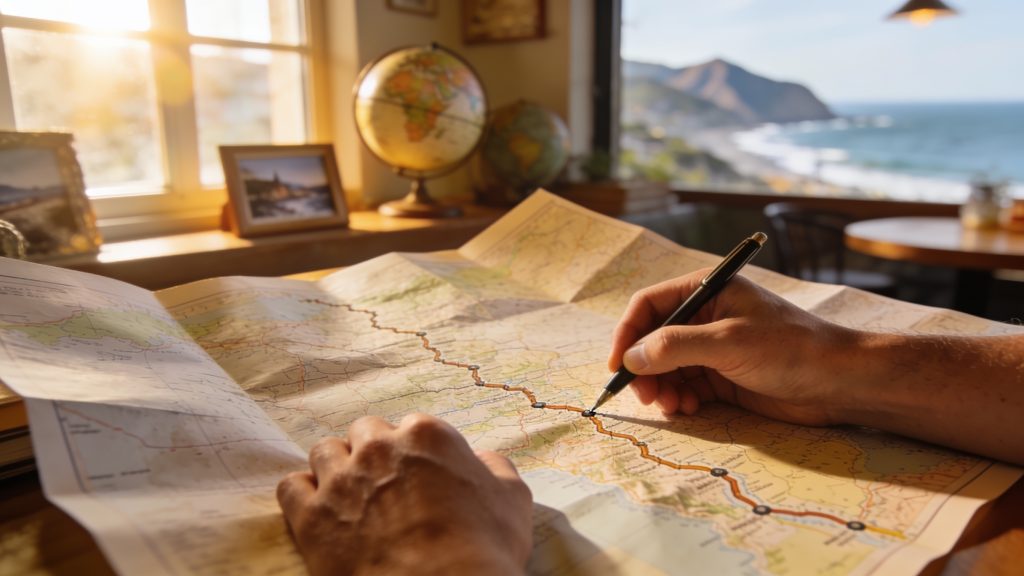
Route planning and driving times for long road trips go beyond just counting kilometres. A realistic schedule with sufficient rest moments, stops, and considerations for tolls, petrol stations, and traffic rules makes the difference between an exhausting race and a comfortable journey. Driving in a relaxed manner to the South of France, Spain, or other destinations starts with good preparation.
Many travellers underestimate how much time a long car journey requires. Mountain roads in the Alps take longer than flat motorways, border checks cost time, and toll roads can influence your route. That is why it is wise not only to look at distance, but especially at driving time, breaks, and practical matters like petrol stations and overnight stay locations.
For a healthy and safe trip, travel sources advise limiting daily distances to approximately 200 to 300 kilometres per day. Those travelling with children often choose even shorter stretches. The maximum driving time per day is also important: stay under eight hours and build in regular breaks. A commonly used rule of thumb is to drive for two hours, then rest for fifteen minutes. When travelling internationally, it is also useful to check in advance which traffic rules and driving regulations apply abroad, so you do not encounter any surprises along the way.
How do you plan a realistic daily distance?
The distance on the map does not tell the whole story. A journey of 250 kilometres through the mountains or via cities takes much longer than the same distance on a motorway in a flat landscape. Therefore, take into account the type of roads, traffic density, and any tolls or low-emission zones.
For a relaxed road trip, it is wise to assume a daily distance of between 200 and 300 kilometres. This gives you time to enjoy the journey, make stops, and arrive without feeling rushed. If you want to cover mainly long distances, you can choose one or two more intensive driving days, but alternate these with quiet days where you focus on exploring the surroundings.
Travellers with children often choose shorter daily distances of a maximum of 200 kilometres. This prevents restlessness in the back seat and makes the trip more pleasant for everyone. When travelling with children, plan extra stops, for example at playgrounds, restaurants, or places of interest.
‘ Driving while tired increases the risk of accidents, especially on unfamiliar roads or in heavy traffic. ’
What are safe driving times per day?
A commonly mentioned guideline from travel advice is to drive no more than eight hours a day. Driving while tired increases the risk of accidents, especially on unfamiliar roads or in heavy traffic. When planning, take into account the time you spend on petrol stops, toilet breaks, eating, and any border crossings.
The rule of thumb of driving for two hours and then resting for fifteen minutes works well for many travellers. These short stops help you stay focused and give you the chance to stretch your legs. For longer trips, you can also consider planning a longer break of half an hour to an hour every three to four hours, for example for lunch or a walk.
Plan your overnight stays strategically. In any case, arrange the first few nights or sleeping places on busy routes in advance, so you do not have to search for accommodation late in the day. This prevents you from continuing to drive while tired or having to improvise in an unfamiliar place.
How do you avoid toll roads to Spain or France?
Many motorways in France and Spain are toll roads. Those who want to avoid toll costs can choose alternative routes via national roads or secondary routes. These are often slower, but offer more variety and beautiful views.
Use a route planner that offers the option to avoid toll roads. This provides immediate insight into the extra travel time and the different route options. Keep in mind that a toll-free route can sometimes take hours longer and lead through smaller towns with lower speed limits.
For a trip to the South of France, for example, you can choose the route via smaller roads along the Atlantic coast or through the Vosges. This takes more time, but often results in beautiful stops. To Spain, there are alternative routes via the Pyrenees that are toll-free, but they are mountainous and technically more challenging.
Advantages and disadvantages of toll-free routes
- Cost savings: no toll fees mean more budget for other things
- More experience: smaller roads take you through villages and landscapes
- Longer travel time: expect at least 20 to 30 per cent extra time
- More bends and stops: this requires more concentration and is more tiring
Which apps help with route planning in Europe?
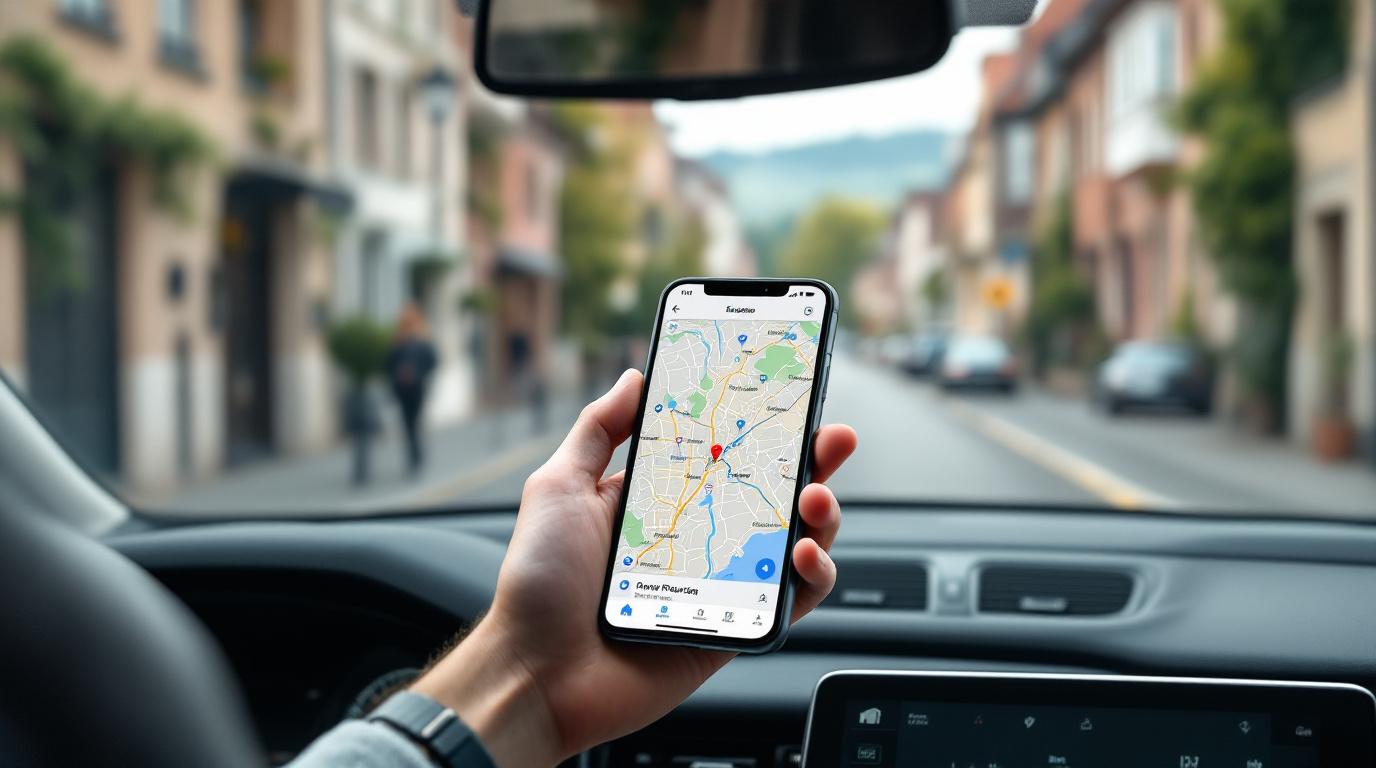
Various apps can support you when planning a route through Europe. Consider navigation apps that offer offline maps, apps with information about tolls and low-emission zones, and apps that help you find petrol stations and parking spaces.
Well-known navigation apps like Google Maps and Waze offer route calculations including toll roads and alternative options. For offline use, you can use apps that allow maps to be downloaded in advance. This is useful in areas with limited internet connection or if you want to avoid roaming costs.
Specific apps for European trips help with information about traffic rules, vignette requirements, and toll systems per country. Some apps also provide real-time traffic information, warnings for traffic jams, and up-to-date information about petrol stations and rest areas.
How do you plan rest breaks and petrol stops?
Good planning of rest breaks and petrol stops prevents surprises along the way. Check in advance where petrol stations are located, especially in sparsely populated areas or on routes through the mountains. In some countries, motorway petrol stations are more expensive than those in villages or cities.
Plan your breaks around mealtimes and places of interest. This makes the trip more pleasant and prevents you from stopping only to rest. Consciously choose places where you can take a walk or see something, such as a viewpoint, a charming village, or a picnic area.
For long drives, take the weather into account. During hot periods, it is better to drive early in the morning or later in the evening to avoid heat and traffic. In winter, it is wise to plan enough time for snow, slippery conditions, and shorter days with less daylight.
Practical tips for breaks and stops
- Plan a short break of at least 15 minutes every two hours
- Check in advance where petrol stations and good rest areas are located
- Combine breaks with food, a walk, or a place of interest
- Avoid driving for too long without a break, even if the destination is in sight
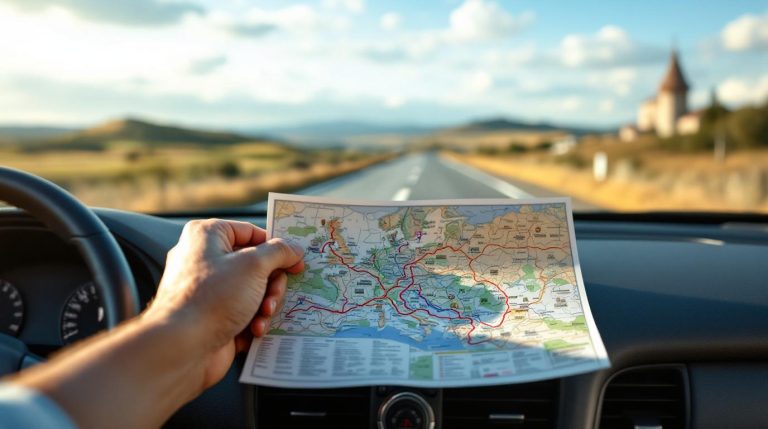
- Download offline maps so you can navigate without internet
What should you check before a long car journey?
A vehicle check before departure prevents problems along the way. Check the tyre pressure and tread, check the oil and coolant, and test the lights. If possible, bring a spare tyre and basic tools, especially when travelling outside Western Europe.
Ensure you know which equipment is mandatory in the countries you are travelling through. In some countries, reflective vests, warning triangles, or fire extinguishers are mandatory. The requirements for winter tyres, snow chains, or vignettes can also vary by country.
Check your insurance and travel documents. Ensure you have a green card or European liability insurance if you are travelling outside the EU. Also, check that your driving licence and vehicle documents are valid and easily accessible during the trip.
How do you build flexibility into your planning?
A rigid schedule can cause stress if there are delays due to traffic jams, roadworks, or weather conditions. Therefore, leave room for unexpected situations. This means you do not overfill every day and you build in a buffer for important stops or overnight stays.
Many travellers indicate that a shorter daily distance ultimately provides more peace and enjoyment than chasing as many kilometres as possible. By staying flexible, you can also stop spontaneously at beautiful places or take a detour if you want to stay somewhere longer.
Do not plan everything down to the minute. Arrange the first overnight stays and important stops, but leave room for adjustments. This allows you to respond along the way to the weather, your own energy levels, and fun discoveries you make.
‘ Make sure you know how this works to avoid fines. ’
What should you pay attention to with international routes?
When travelling through multiple countries, it is important to take different traffic systems into account. Consider vignette requirements in Austria and Switzerland, electronic toll systems in France and Spain, and low-emission zones in German and Italian cities.
Check in advance which documents and equipment are mandatory. Some countries require a vignette that you must purchase in advance; others work with automatic toll collection via licence plate registration. Make sure you know how this works to avoid fines.
Border crossings within the EU are usually quick, but at busy times or during checks, delays can occur. Outside the EU, checks can take longer. Keep this in mind when planning your time and ensure your passport, insurance papers, and vehicle documents are easily accessible.
Discover more about smart travel planning
Good route planning makes a long road trip more comfortable, safer, and more fun. By choosing realistic daily distances, building in enough rest, and checking beforehand what you need to pay attention to, you prevent stress and enjoy your journey optimally. On the Traveler Tips website, you will find much more information about routes, destinations, traffic rules, and practical tips for your next trip. Discover what options are available and plan your next adventure with confidence.
Frequently asked questions
Good route planning for a long road trip revolves around realistic daily distances, sufficient rest moments, and flexibility in your stops. Generally, estimate 200–300 kilometres per day and a maximum of about eight hours of driving per day, with a short break every two hours. Build in some slack in your planning for traffic jams, tolls, weather, and spontaneous sightseeing. Before you depart, check your vehicle, plan critical overnight stays in advance, and download offline maps.
For long road trips, it is wise to drive a maximum of about 8 hours a day, with a short break of about 15 minutes every 2 hours. Aim for daily distances of approximately 200–300 kilometres if you want to keep the journey relaxed. Also, plan for enough extra time for traffic jams, diversions, and spontaneous stops.
Realistic planning for a long road trip takes into account both distance and driving time, with a guideline of approximately 200–300 km and a maximum of about 8 hours of driving per day. Plan a break of at least 15 minutes every 2 hours or so to stay fit and focused. Build in extra time for traffic jams, tolls, weather, and spontaneous stops, so your schedule doesn’t become too tight. Covering fewer kilometres per day usually provides more peace of mind and travel enjoyment than trying to get as far as possible.
The recommended maximum driving time per day for a long road trip is about eight hours, with regular breaks. A widely used guideline is to rest for about fifteen minutes for every two hours of driving. For a relaxed journey, 200–300 kilometres per day is often recommended. Also, plan extra time for traffic jams, toll roads, and spontaneous stops.