 NL
NL
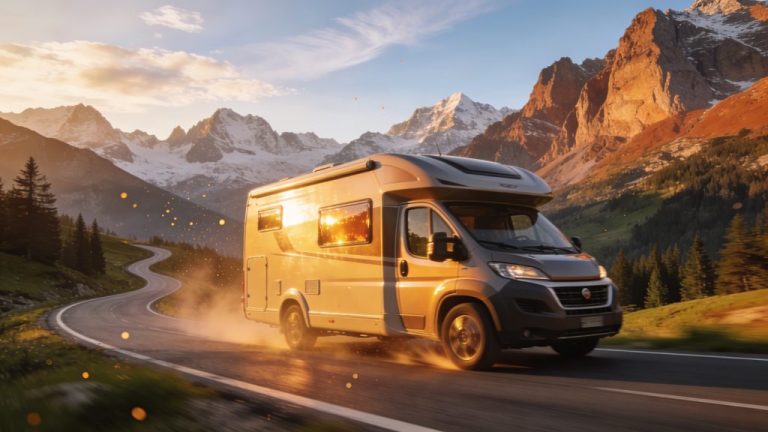
Campervans are the most economical, using 1 litre per 11 to 13 kilometres, while large overcab models use up to twice as much diesel. For travellers planning a motorhome holiday, fuel costs per motorhome type are a decisive factor in the budget. Read on to discover what each type consumes and how you can make substantial savings.
Fuel consumption per motorhome type at a glance
The fuel costs of a motorhome are directly linked to the type you choose. Smaller motorhomes consistently use less than larger models because of their lower weight and better aerodynamics. Diesel is the most common fuel and is up to 25 percent more economical than petrol. This is especially true on long distances and in mountainous areas.
Travellers who compare all motorhome types quickly see that weight and shape are decisive. The table below gives an overview of the average fuel consumption per type and the corresponding costs for 5,000 kilometres per year, based on a diesel price of €2.06 per litre.
- Campervan: 1 litre per 11 to 13 kilometres, around €900 per year
- Semi-integrated and integrated motorhome: 1 litre per 10 kilometres, around €1,040 per year
- Overcab motorhome: 1 litre per 7 to 8 kilometres, around €1,480 per year
- Large motorhome or truck camper: 1 litre per 3 to 6 kilometres, €2,000 or more per year
The difference between an economical campervan and a large overcab motorhome is more than €500 per year. A campervan is ideal for longer trips and allows you to travel efficiently, while an overcab model offers more comfort but also demands more fuel.
‘ Those who need more living comfort must take higher costs at the pump into account. ’
Which motorhome type is the most economical on diesel?
The campervan is the most economical motorhome type on diesel. With a consumption of 1 litre per 11 to 13 kilometres, this type is noticeably more efficient than larger motorhomes. This is due to its lower weight and compact, aerodynamic design.
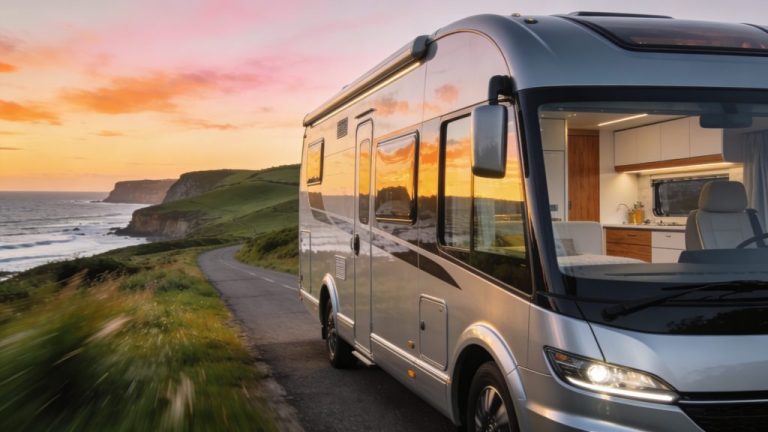
Semi-integrated and integrated motorhomes come second, with a consumption of 1 litre per 10 kilometres. These models are heavier and higher, so wind and weight play a greater role. For those who regularly drive longer distances, a campervan is the smartest choice financially. Those who need more living comfort must take higher costs at the pump into account.
How many litres per 100 kilometres does an integrated motorhome use?
An integrated motorhome consumes an average of 10 litres of diesel per 100 kilometres. This consumption can rise to 12 litres. Heavy loading, mountainous routes or speeds above 100 kilometres per hour increase consumption. Fuel consumption is higher than with campervans due to the greater weight and the less streamlined shape.
Modern integrated models with a Euro 6 engine perform better than older versions and are more reliable on longer journeys. Travellers report on forums that a consumption of 10 litres per 100 kilometres is realistic for medium-weight integrated motorhomes under normal use.
Factors that influence fuel consumption
The type of motorhome determines a large part of the fuel consumption, but there are other factors that can significantly increase or reduce your fuel costs. By handling these consciously, you can save hundreds of euros per year.
Weight and loading
Every extra kilogram costs fuel. Empty the waste-water tank before departure and only take what you really need. A full water tank can easily mean 50 to 100 kilos of extra weight. This immediately increases fuel consumption.
Driving style and speed
Drive a maximum of 90 kilometres per hour instead of 110 kilometres per hour. This can save up to 20 percent. Motorhomes are large and heavy. Higher speeds therefore cost disproportionately more fuel. Looking ahead in traffic and accelerating gently also help.
Engine and fuel type
Diesel is more economical than petrol, especially for heavy vehicles and long distances. Ideally choose a motorhome with a Euro 6 engine for optimum efficiency and lower emissions. Older engines consume more and are usually more expensive to maintain.
Regional differences in fuel prices
Fuel along motorways is more expensive than at supermarkets or in villages. Plan your refuelling stops smartly. In countries such as Canada, prices range between €0.90 and €1.10 per litre. For 2,000 kilometres this yields savings of around €350 to €500. That is considerably less than in Western Europe.
Tips to save on fuel costs
With smart choices you can save a lot on fuel. The following tips are easy to apply and give immediate results.
- Check tyre pressure weekly: Low pressure increases fuel consumption by 5 to 10 percent and wears out the tyres faster.
- Refuel at discount stations: Avoid filling stations along motorways and use apps to find cheap stations.
- Plan routes with fewer hills: Motorhomes are sensitive to height differences and crosswinds. Choose flat routes where possible.
- Consider LPG conversion: For intensive use, an LPG system can save considerably. LPG is cheaper than diesel and is widely available in many European countries.
- Drive smoothly and predictably: Hard braking and rapid acceleration use more fuel than driving at a steady pace.
Experienced motorhome travellers recommend choosing diesel models for intensive use. Forums report that a realistic consumption of 10 litres per 100 kilometres is achievable for medium-weight motorhomes with a good driving style. For longer trips through several countries, it is smart to check current fuel prices per region. Adjust your budget accordingly.
‘ For intensive use, the system pays for itself within a few years. ’
LPG conversion as an alternative
An LPG system can be interesting for those who drive many kilometres per year. LPG is cheaper than diesel and petrol. For intensive use, the system pays for itself within a few years. Do bear in mind that not all motorhomes are suitable for conversion, and that the installation must be properly carried out by an approved specialist.
In countries such as France, the Netherlands and Poland, LPG is widely available. In Scandinavia and the United Kingdom, supply is more limited. Check in advance whether your route has enough LPG stations and, if necessary, plan additional stops.
Discover more about travelling by motorhome
Fuel costs are just one part of a well-planned motorhome holiday. On the Traveler Tips website, you will find much more information about routes, preparation, regulations and the most beautiful destinations for your next trip. Find out more and plan your journey smartly and consciously.
Frequently asked questions
The question contains only the text “[object Object]” and is therefore empty in terms of content. As a result, it is impossible to determine what is actually being asked or which topic is meant.