 NL
NL
The Netherlands and Belgium offer surprising walking routes all year round, provided you choose based on the season. In spring, blossom and bird‑rich nature reserves dominate; in summer you head for coastal paths and shady forests; autumn guarantees impressive colours in beech woods and country estates; and winter offers space and tranquillity on open heathland and along the coast. If you plan well in advance, you can make the most of every season. Read on and discover which routes are perfect for your travel period.
Why the Netherlands and Belgium are ideal for walking holidays
Both countries offer a surprisingly strong walking network with plenty of variety over short distances. You will find dunes, coast, polders, forests, hills and historic villages, often within a radius of just a few dozen kilometres. The junction system and waymarked routes make planning easy, and many routes start at railway stations or bus and tram stops. This makes it possible to organise walking holidays without a car.
Spreading your trips across the seasons is an extra advantage. Each season has its own characteristics, so you can walk all year round. If you choose your period carefully, you avoid disappointment and enhance the experience.
Spring walking on the Veluwe and beyond
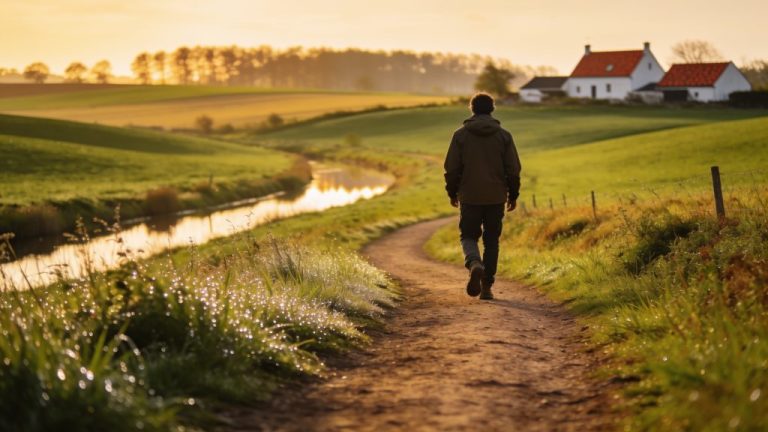
Spring is the season of blossom, young vegetation and bird activity. Temperatures are pleasant and nature awakens after winter. This season is ideal for routes through open landscapes, bulb fields and blossom, but also for woodland routes and stream valleys where spring flora is developing.
Which routes are ideal for spring walking on the Veluwe
In spring, the Veluwe offers excellent walking routes through forests and along sandy paths that dry quickly after rainfall. The Veluwe Zwerfpad trail and routes around De Hoge Veluwe National Park combine variety with good accessibility. You will see early blossom, bird activity and plenty of peace and quiet.
In addition, the Utrechtse Heuvelrug and the area around the Grebbelinie are well suited to peaceful spring walks. The landscape is varied, with woodland, grasslands and historic heritage. For those looking for a longer route, stages of the Pieterpad in the north and east are a good option.
Spring routes in Belgium
In Belgium, Haspengouw and the Voerstreek are well-known spring destinations. Haspengouw is known for its blossoms and rolling landscape, while the Voerstreek combines valleys, slopes and quiet villages. The Kempen offer extensive nature reserves with sandy soil and a well-developed network of walking routes.
Practical spring tips
- On changeable days, choose routes with open terrain in the morning and forest in the afternoon.
- Start early in blossom areas to avoid crowds and parking problems.
- Check whether paths are accessible after periods of rain, especially in stream valleys and polders.
Summer: coastal paths and shady forests
In summer, shade, wind and water determine how pleasant a walk will be. Coastal areas and wooded routes on sandy soils are favourites. This is also the season for longer day stages and walking weekends with several overnight stays.
Summer routes in the Netherlands
The Dutch Coastal Path (Nederlands Kustpad) offers long stretches with sea views, dunes and beach crossings. Zuid-Kennemerland combines dunes, beach and forest, and is comfortable thanks to the ever-present breeze. The Veluwe Zwerfpad trail provides shade in woodland, heath and drifting sands. Those looking for more elevation can try the N70 route near Nijmegen, a short but tough option.
Summer routes in Belgium
The Belgian coast and dunes offer wind and cooler walking conditions. The Kempen and forest areas are more pleasant than open farmland on hot days. The Flemish Ardennes provide more elevation, but be mindful of heat and sun exposure.
Practical summer tips
- In hot spells, plan walks early in the morning or late in the afternoon.
- Take enough water; on dune and heathland paths shade is scarce.
- For multi-day hikes, choose routes with railway stations, bus connections and hospitality options.
Autumn: colourful forests and lookout towers on the Heuvelrug
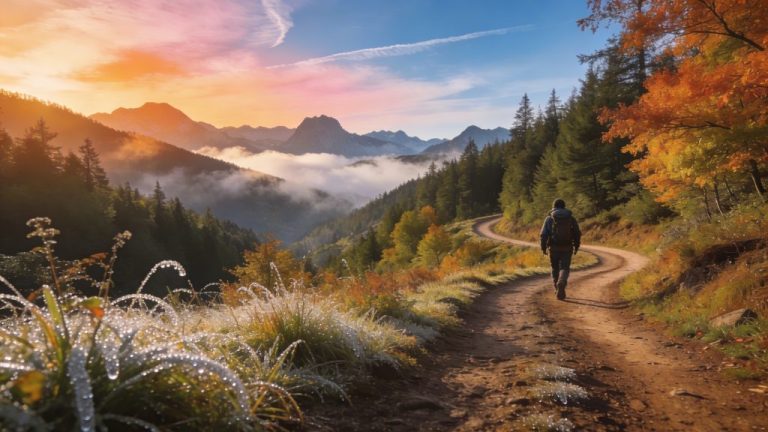
Autumn is a peak season for walkers. Colour, tranquillity and cooler air create stable walking weather. Broadleaf forests, country estates and ridges really come into their own. Lookout towers offer extra views over extensive nature reserves.
Autumn walks in the Netherlands
The Utrechtse Heuvelrug is known for its autumn colours, avenues and country estates. The Veluwe combines woodland and heathland with changing colours and is suitable for multi-day walking holidays. The Pieterpad is popular because of its variety and long walking season. The Limburg hills offer extra enjoyment thanks to the elevation changes.
Autumn walks in Belgium
The Ardennes are a top choice for autumn walks with forests, rivers and elevation. The Hoge Venen (High Fens) offer dramatic landscapes and vast open nature. The Sonian Forest (Zoniënwoud) lies close to cities and is particularly beautiful in autumn light.
Practical autumn tips
- Choose routes with clear waymarking; leaves on the path can make junction markers and posts harder to see.
- Take waterproof footwear; woodland and clay paths quickly become muddy.
- Check whether country estates and nature reserves have specific opening hours.
What are the most beautiful winter walking routes in the Netherlands
Winter is unpredictable, but offers peace and space in open landscapes. Short, well‑planned routes with options to cut things short work best. Dunes, coast and polders are favourites because of their openness and generally well‑walkable paths.
Winter routes in the Netherlands
Coastal paths and dunes provide wind, space and often well‑passable tracks. The Bulb Region (Bollenstreek) outside the flowering season offers quiet walks with wide views. Zuid-Kennemerland National Park is pleasant thanks to its variety and relatively mild conditions. ‘Groene Wissels’ and short circular walks offer flexibility on short winter days. Easier stages of long‑distance trails are suitable as winter day walks using public transport.
Winter routes in Belgium
The coast and dunes are usually milder in climate than inland areas. Polders and canal routes are open and easy to navigate when daylight hours are short. Fringe nature around cities such as Antwerp, Ghent or Brussels is convenient for short winter walks.
Practical winter tips
- Choose short routes with options to cut the walk short.
- Plan around daylight hours, hospitality opening times and public transport.
- Check whether paths are not waterlogged, closed or slippery.
Which walks are ideal for late‑summer walking in Belgium
Late summer is an excellent period for walking in Belgium. Temperatures are pleasant, nature has finished flowering and the first hints of autumn can be felt. Woodland routes in the Kempen and the Ardennes are comfortable to walk. The Voerstreek and Haspengouw offer gentle slopes and open landscapes without extreme heat.
In late summer, opt for routes with good hospitality options and accessibility, so you can respond flexibly to changeable weather conditions. Long‑distance trails such as GR routes are very suitable for multi‑day trips.
Best types of route for a walking holiday
Not every type of route is equally suitable for a walking holiday. Anyone wanting to walk for several days benefits from routes with logical overnight stops, waymarking and good accessibility.
Long‑distance trails
Long‑distance trails are ideal for multi‑day trips. Examples in the Netherlands include the Pieterpad, Kustpad, Trekvogelpad, Pelgrimspad, Zuiderzeepad and Waterliniepad. In Belgium, GR trails and comparable long‑distance routes are interesting options.
Regional trails and themed walks
Regional trails combine landscape, culture and heritage. Think of historic defence lines, country estates, river landscapes and dune and coastal paths. These routes offer variety and are ideal for walkers who want more than “just” walking.
Circular walks
Circular walks are perfect for weekend breaks or day trips. They are easy to combine with overnight stays and do not require complicated logistics to get back to your starting point. In changeable weather they offer flexibility.
Public transport and station‑to‑station routes
Routes that start and end at railway stations or stops are ideal for travellers who want to make conscious choices. They reduce parking pressure, offer flexibility and make it easy to vary your route each day.
Practical tips for walking by season
If you choose walking routes based on the season, you increase the chances of a successful walking holiday. Match the distance, type of ground and available facilities to the period in which you are walking.
- Choose your season consciously: blossom in spring, shade in summer, colour in autumn, shorter routes in winter.
- Combine walks with logical overnight stops such as station villages, small towns and popular nature hubs.
- Pay attention to soil type; sandy ground is often better in wet periods than clay or peat.
- Use public transport where possible; this makes linear routes easier.
- Check route maintenance and waymarking, especially on longer routes and in areas with many junctions.
- Adjust the distance to the season; in winter, 8 to 15 kilometres is often more pleasant than 20‑plus kilometres.
- Plan food and water carefully; in nature sections, facilities may be limited.
On the Traveler Tips website you will find much more information on nature holidays, walking routes and practical tips for planning your trip. Discover more routes, seasonal advice and travel tips that help you prepare your walking holiday more smartly and more consciously.
Frequently asked questions
Which walking routes in the Netherlands and Belgium are most recommended per season, and why?
In spring, Haspengouw and the Voerstreek (blossom) and the Bollenstreek, Meinweg and sections of the Pieterpad in the Netherlands are ideal because of blossom and tranquillity. In summer, the Dutch Coastal Path, Zuid-Kennemerland, Veluwe (and Veluwezoom) and the Belgian coast and Kempen are recommended for their coolness, shade and wind. In autumn, the Veluwe, Utrechtse Heuvelrug, Limburg hills, the Ardennes and Hoge Venen really excel thanks to forest colours and varied relief. In winter, coastal and dune areas such as Zuid-Kennemerland, the Dutch and Belgian coasts, plus open polder and canal routes around cities are the most pleasant thanks to well‑passable paths and a milder climate.
Are the walking routes easy to reach by car or public transport, and are there sufficient parking facilities?
Most of the routes described are easy to reach by both car and public transport, and often start at or close to a station, bus stop or village. In popular nature areas (such as the coast, Veluwe, Heuvelrug and Ardennes) there are usually sufficient parking facilities, although it can get busy at peak times. For blossom and coastal regions it is advisable to arrive early because of parking pressure. At public‑transport‑focused routes, parking can sometimes be more limited, but the idea there is precisely to travel by train or bus.
Which practical tips and essentials are key for a comfortable and safe walk on these routes, taking the season into account?
Wear layered clothing adapted to the season, waterproof (or at least well broken‑in) walking boots and always take enough water, snacks and a charged phone with route information. In spring and autumn, a lightweight waterproof jacket and possibly gaiters are useful due to changeable and muddy weather. In summer, sun protection (hat or cap, sun cream), extra water and routes with shade or wind (forest, coast) are essential. In winter, choose shorter, easily accessible routes and take warm clothing, possibly a hat and gloves, and check in advance for ice, waterlogged paths and any closures.
Which sights, hospitality options and accommodation are located along or near the walking routes to make the trip more complete?
Along many walking routes you will find atmospheric villages and historic small towns with sights such as country estates, fortifications, churches and small museums, especially around the Utrechtse Heuvelrug, Veluwe, Limburg hills and in the Belgian Ardennes and Voerstreek. In coastal and dune areas (such as Zuid-Kennemerland, the Dutch and Belgian coasts) and in popular nature regions you will usually find beach pavilions, cafés and restaurants at access points and in nearby seaside resorts. Around larger nature parks and along long‑distance trails (such as the Pieterpad, Kustpad and GR routes) there are numerous B&Bs, small‑scale hotels, campsites and holiday cottages within walking distance or a short public‑transport ride from the route. Accommodation is often concentrated in station villages, regional centres and tourist hubs, making multi‑day walking trips easy to plan.
What is the difficulty level and length of the walking routes, and are they suitable for different experience levels?
Most of the walking routes described range from short loops of around 8–15 km to longer day stages of 20+ km and multi‑day sections on long‑distance trails. In general, routes in the Netherlands and Belgium are not technically difficult, but elevation in, for example, the Ardennes, Limburg and the N70 route can make them more challenging. As a result, there are options for both beginners (short, fairly flat circular walks and public‑transport routes) and more experienced walkers (hillier or longer LAW/GR stages). By adjusting your choice of season and distance, the routes can be well tailored to different experience levels.