 NL
NL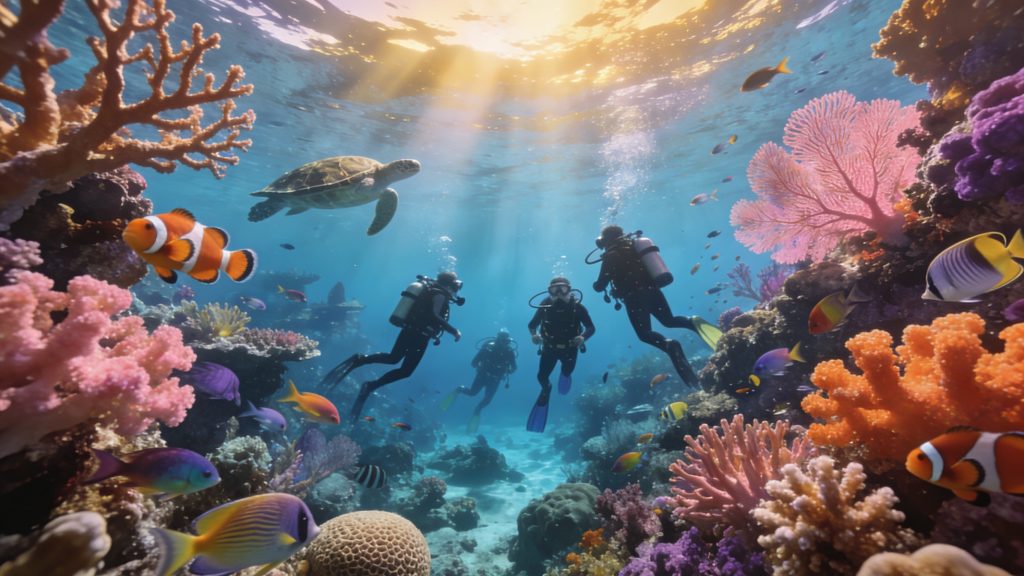
Scuba diving as a group trip is the ideal solution for anyone wanting to discover the underwater world without worrying about logistics or finding a fixed dive buddy. Group trips combine structure, safety and social connections with pre-planned dives at top locations, often guided by certified instructors and with shared equipment. You gain access to special sites, meet like-minded people and benefit from cost savings. For solo travellers or divers who prefer to plan their diving holidays consciously and in an organised way, this type of trip offers a complete package with minimal risks. Discover how group diving holidays can make your next trip to places such as the Azores or the Red Sea simpler and richer in experience.
Why choose an organised group diving trip
A group diving trip removes practical barriers. You do not have to arrange boat transport yourself, look for accommodation near dive sites or find a buddy. The organiser provides inclusive packages with diving equipment such as tanks, BCDs and regulators, plus transfers and hotels close to the water. This often makes group trips more affordable than travelling independently, because costs are shared.
In addition, group trips offer structure and certainty. Professional supervision minimises risks under water, which is especially reassuring for beginners. You dive at set times and locations with experienced instructors who know the area. For advanced divers this means access to exclusive sites and sometimes even special activities such as night dives or photography workshops.
The social side is a major advantage. You travel with people who share the same passion, which makes it easy to make friends. For singles or divers without a partner this is ideal: you always have a buddy available. Non-divers can often join and enjoy snorkelling or beach activities while the group is diving.
‘ This type of trip combines rare sightings with a well-organised travel programme and local guides who know the waters. ’
Popular destinations for group diving holidays
The choice of destinations for group diving trips is extensive. Each region has its own highlights and suitable difficulty level. The Red Sea in Egypt attracts divers all year round with colourful coral reefs, sharks and dolphins. Groups range from 8 to 20 people and trips last on average 7 to 10 days. This destination is suitable for beginners through to advanced divers.
The Maldives are a favourite for advanced divers who want to see mantas and whale sharks. The water is crystal clear, especially between December and April. Groups here consist of around 10 to 15 people and trips last about 8 days. Thailand, particularly the Similan Islands, offers a mix of wrecks and tropical fish. Liveaboards are popular here, with trips of 7 to 14 days for groups of 12 to 18 people. This destination is suitable for all levels.
For European travellers, Croatia is an accessible option. The Adriatic Sea has Second World War wrecks and caves, ideal for beginners. Groups are smaller, often 6 to 12 people, and trips last 6 nights. The Philippines, such as Moalboal, are known for sardine runs and sea turtles. This destination requires experience and groups stay around 10 people for 10 days.
A special trip is planned for July 2026 to the Azores. Divers can expect blue sharks and mobulas there. This type of trip combines rare sightings with a well-organised travel programme and local guides who know the waters.
How to find a reliable group trip organiser
Choosing a good organiser requires research. Check whether the operator is affiliated with PADI (Professional Association of Diving Instructors, a globally recognised diving organisation) or a similar certification body. This provides assurance about the quality of the instructors and equipment. Read reviews from previous participants on forums or travel platforms. Pay attention to comments about safety, group size and personal attention.
Ask about the details of the package. A transparent operator will state what is included: equipment, meals, number of dives, insurance and transfers. Check whether there are extra costs for things such as night dives or special equipment. Smaller groups often provide more personal guidance, which is especially an advantage for beginners. Large groups can feel like a herd, making the experience less intimate.
Ask about the policy on environmentally friendly diving and protection of nature. Operators with a no-touch policy and reef-friendly practices protect the underwater world. Avoid trips to overcrowded sites that are vulnerable. This contributes to responsible tourism and preserves the quality of dive locations for the future.
What does an average group diving trip cost?
The price of a group diving trip varies depending on the destination, duration and what is included. Count on €800 to €2,000 per person, excluding flights. This amount usually covers 10 to 16 dives, accommodation, meals and sometimes lessons or workshops. More expensive trips to exotic locations such as the Maldives or the Philippines are at the upper end of this range.
Shared costs often make group trips more economical than booking individually. Transfers, boat transport and equipment hire are split across the group. In addition, you often get a discount for early bookings. Book 3 to 6 months in advance for popular destinations or dates.
Additional expenses may arise for special activities such as night dives or photography guidance. Also factor in the cost of a diving medical examination, travel insurance with diving cover and any personal equipment such as masks or computers. These investments significantly increase your comfort and safety.
‘ Jet lag can affect your diving performance. ’
Preparing for your first group diving trip
Good preparation starts with your certification. For most group trips you need at least a PADI Open Water certificate. Make sure it is up to date and take your logbook with you to show your experience. If you are not yet certified, some trips offer courses for beginners.
A diving medical examination is compulsory. You must be in good condition and have no colds or ear problems. Take out travel insurance that explicitly covers diving activities, including any evacuation. Check that your travel documents are valid and whether you need a visa for your destination.
Pack smart. Take your own mask, fins and dive computer if you have them. That increases comfort under water. Roll up your diving equipment to save space in your luggage. Choose accommodation with drying rooms so that your gear can dry properly between dives. Hotels within 1 kilometre of the beach or harbour are ideal.
Prepare your body by staying well hydrated and getting enough rest, especially on long flights. Jet lag can affect your diving performance. Consider planning a rest day before departure or after arrival.
How group trips differ from individual diving
Group trips offer structure that individual travel lacks. You have a fixed programme with scheduled dives, which removes the stress of organising. Local guides know the best spots and seasonal patterns of marine life. This increases the chance of special sightings such as eagle rays or sardine runs.
Independent travel offers more freedom in planning and pace, but also requires more preparation. You have to arrange accommodation, boat transport and equipment yourself. For beginner divers or solo travellers without a buddy this is a challenge. Group trips take care of that logistics and provide instant social connections.
Group dynamics are reinforcing. Participants share stories about their dives and learn from each other’s experiences. For non-divers there is often an alternative programme, which makes group trips suitable for couples where one person does not dive. Snorkelling from the boat or beach activities ensure that everyone has a good time.
Checklist for your group diving trip
Before you book, go through these points to make sure you are well prepared:
- Check that your PADI certificate or equivalent qualification is valid and up to date
- Arrange a diving medical examination and keep the certificate
- Take out travel insurance with explicit diving cover
- Check the validity of your passport and apply for a visa if necessary
- Take your logbook to show your experience
- Pack your own equipment such as mask, fins and dive computer for comfort
- Practise the buddy system beforehand if you have not dived for a long time
- Take an underwater camera if you want to do photography
- Contact the operator to discuss availability and any specific wishes
‘ adventures that are well organised and stay with you. ’
Planned group trips for 2026
Various operators have already announced trips for 2026. A standout trip goes to the Azores in July 2026, focused on blue sharks and mobulas. This destination attracts advanced divers looking for rare species. The travel programme is fully planned with local guides who know the migration routes of these animals.
Other popular trips for 2026 are liveaboards in the Red Sea and trips to the Similan Islands. Book early for these destinations, as places fill up quickly. Operators often filter their offers by location, travel time and desired marine life, which makes it easier to choose the right trip.
On the Traveler Tips website you will find much more information about nature holidays, travel inspiration and practical tips for organising your next trip. Discover which destinations suit you, learn about local regulations and read how to plan more smartly. Explore the site and get ready for adventures that are well organised and stay with you.
Frequently asked questions
Align your own travel route and transport with the fixed arrival and departure times of the group trip and communicate these clearly to the organiser in advance. Plan your flights and local transport so that you are on site at least one day before the first scheduled dive for acclimatisation and equipment checks. Fix the group diving activities (boat dives, courses, excursions) as fixed anchor points in your schedule and fill the free time around them with your own outings. Use one central means of communication (app group or email) to coordinate changes in transport or planning directly with the group and dive operator.
Suitable European diving destinations that are easy to reach by car or train and offer facilities for mixed levels include, for example, the Croatian Adriatic coast (including Istria and the Dalmatian coast) with many dive centres and training options. The coast of France (Côte d’Azur) and Spain (Costa Brava, Costa Blanca) also offers well-equipped dive schools, house reefs and guided boat dives for both beginners and advanced divers. Furthermore, the Dutch and Belgian North Sea coast and Zeeland are popular with groups, with dive shops, rental and training at various levels. Finally, some Italian coastal regions (Liguria, Tuscan coast) are easy to reach by train or car and are set up for dive groups with varying experience.
Ensure there is enough luggage space (car with a large boot or roof box; on trains use rucksacks or wheeled suitcases) and protect fragile items such as regulators and computers in hand luggage or padded bags. Distribute heavy items (weights, cylinders) fairly between people and take into account maximum luggage and weight limits of train companies or fuel consumption for the car. Use mesh bags or crates to keep wet and dry items separate and to organise equipment clearly per person. Schedule time for loading and getting off, especially on train journeys with changes, so that no one has to rush around with heavy and awkward bags.
Draw up a realistic budget by first determining the total travel duration, desired destination and the number of planned dives per person, and then calculating a guideline amount per day and per dive. Essential cost items are transport (flights, transfers, luggage fees for equipment), accommodation (hotel, any liveaboard) and the dive package (number of dives, courses, guides, boat costs and equipment hire). Also factor in insurance with diving cover, any medical examination, meals and drinks, tips for crew and instructors, and an emergency buffer (for example 10–15% of the total). Finally, compare package prices of organised group trips with a self-assembled trip to see which option offers the best value within your budget.
Set clear limits for each diving trip based on the lowest level of experience and certification in the group, and plan dives that fit within those limits. Work with an experienced dive leader or instructor who assigns buddy pairs (preferably pairing experienced with less experienced divers) and gives a thorough briefing in advance about the plan, depth and emergency procedures. Strictly adhere to the buddy system, maximum depths and no-decompression limits, and only allow divers to dive within their own certification level and recent experience. Also ensure a relaxed atmosphere with room for debriefing, sharing photos and doing things together, so that everyone feels safe and involved.