 NL
NL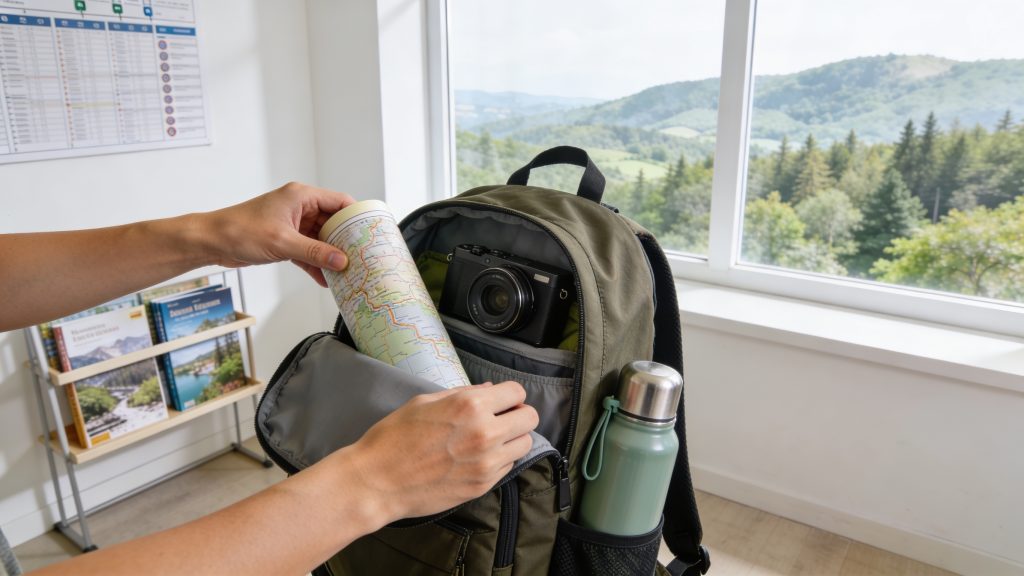
A train journey into nature calls for a carefully thought-out packing list: compact items you can carry by yourself and that fit easily into a luggage rack. The difference between a smooth trip and lugging chaos lies in what you do – and especially do not – take with you. What are the true essentials for a comfortable holiday under your own steam?
A nature holiday by public transport offers the freedom of car-free travel. That does place demands on your luggage. You have to carry everything yourself. You also change trains on platforms. Sometimes you walk kilometres to your destination as well. A 40 to 60 litre backpack therefore forms the basis. Choose a model with a hip belt and ventilated back, so you can walk comfortably with a weight of up to 15 kilograms.
Choosing lightweight gear is not a luxury. It is a necessity. Every extra ounce is noticeable after an hour of climbing stairs or waiting for a regional bus. Ideally, test your packing on a day trip by public transport. Can you carry everything yourself? Does the backpack fit in a standard luggage rack? This way you quickly discover whether your kit is realistic for several days on the road.
What basic gear should you take?
Besides your main backpack, a small daypack is handy for essentials you want to keep within reach while travelling. Think of your public transport card, ID, a 10,000 mAh power bank and offline maps on your phone. Waterproof maps and a compass give extra security in areas with limited network coverage.
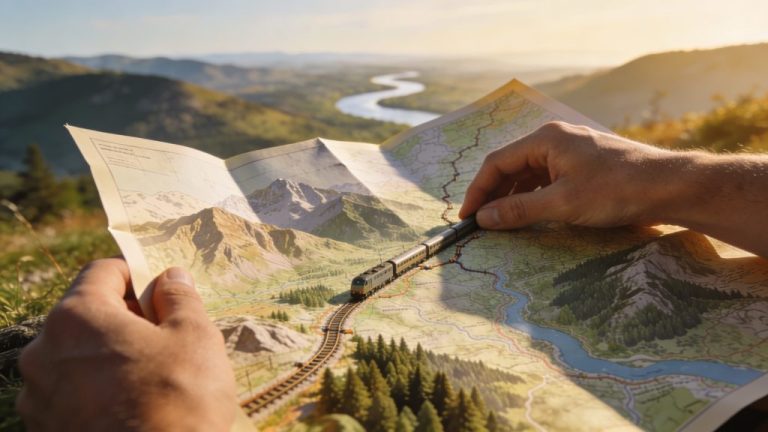
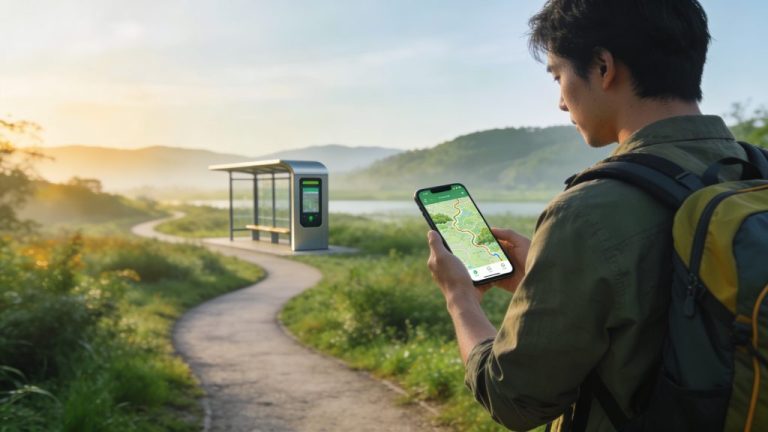
For navigation, it is best to combine digital and paper tools. An offline GPS app helps you find train connections and walking trails. In mountainous or remote nature areas, a physical map gives an overview without relying on a battery. A rain cover for your backpack protects your belongings during sudden storms on the platform or while hiking.
‘ They do offer less protection from the elements. ’
What to pack for camping without a car?
A tent forms the basis of your sleep system. Choose an ultralight one- or two-person model that weighs less than 1.5 kilograms. Do not forget the groundsheet, pegs, poles and guy lines. Alternatives such as a bivy bag are even lighter and take up less space. They do, however, offer less protection from the elements.
When choosing a sleeping bag, pay attention to the comfort range. For most nature holidays in Europe, a mummy-style model is sufficient. The comfort temperature will then be between 5 and 10 degrees Celsius. The pack size should be small so you can easily attach it in or on your backpack. An inflatable or foam sleeping mat insulates you from the cold ground and significantly improves your sleep quality.
Check the rules of public transport in advance for carrying tent poles and other gear. Some regional trains have restrictions on the size of luggage. Always pack your tent down compactly and distribute the parts smartly across your backpack. In countries such as Sweden, Norway and parts of Scotland you benefit from the right to roam. This makes wild camping possible.
What clothing is suitable for a train journey into nature?
The layering system gives flexibility in changeable weather. This means wearing several layers of clothing on top of each other. Start with two to three merino wool T-shirts as a base layer. This material dries quickly, does not smell even after days of wear and insulates even when damp. On top of that you wear a fleece or jumper as a mid layer and a waterproof jacket with hood as an outer layer.
Limit yourself to three or four sets of underwear and socks, preferably made from merino wool. Wash en route with biodegradable soap to avoid heavy luggage. One pair of walking trousers, a pair of shorts and thermal underwear will cover most situations. For your head, take a cap, hat and gloves, depending on the season.
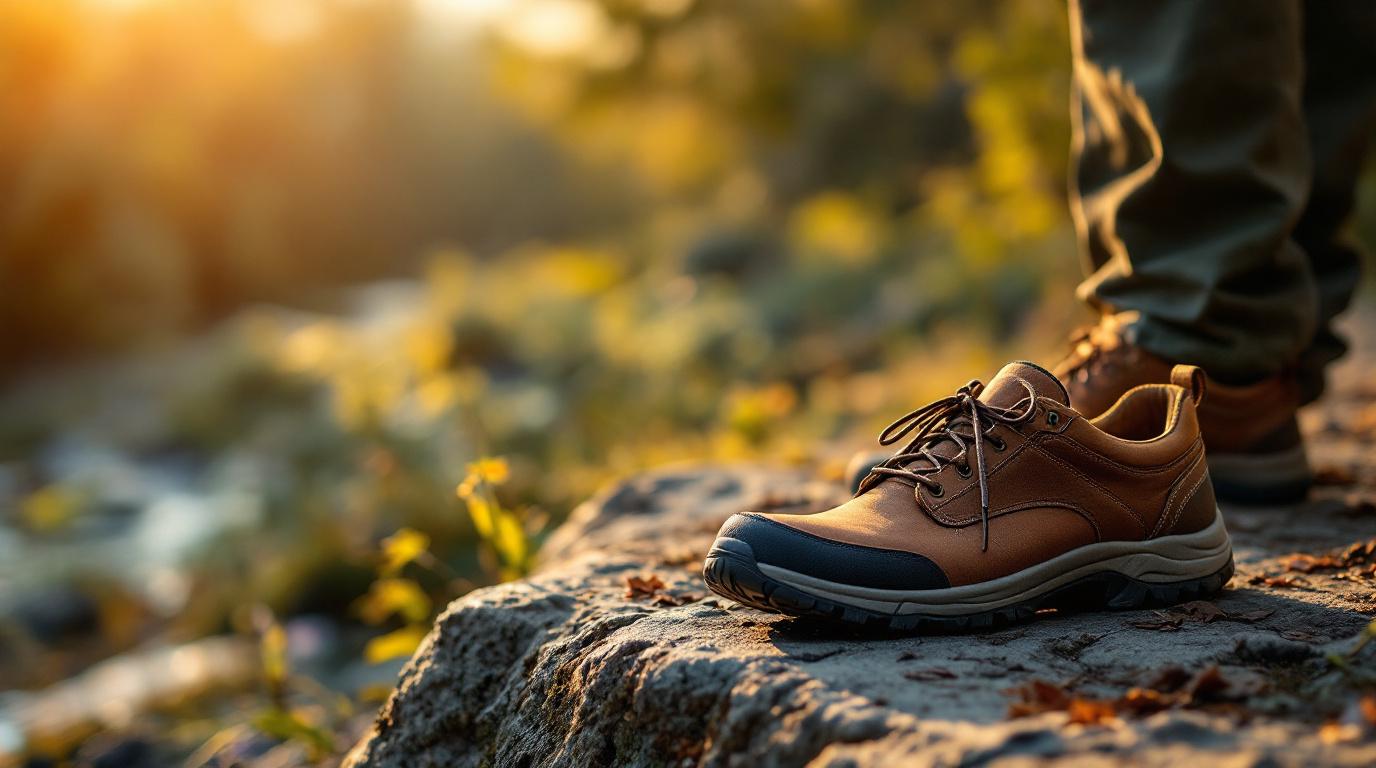
Waterproof hiking boots are your most important investment. Make sure you break them in properly beforehand to prevent blisters. Well broken-in shoes are essential for comfortable hikes. Spare laces and flip-flops or sandals for the campsite complete your kit. Also pack extra socks, as changing socks greatly reduces the risk of blisters on long walks.
How do you organise cooking and food on the road?
A compact gas stove with refillable canisters fits within public transport rules and is easy to use. Combine it with a titanium cooking pot, lightweight cutlery, a mug and a small chopping board. This set is enough for most meals on the road. Take two to three gas canisters and keep matches or a lighter in a waterproof container.
For food, focus on dried meals, nuts, energy bars and basics such as tea, coffee and spices. Plan food for two to three days and top up at local supermarkets near public transport stops. This limits weight and keeps you flexible. A water filter pump or filter straw provides safe drinking water in nature. Also take a 2 litre bottle or jerrycan.
Tips for minimal packaging
- Buy locally at supermarkets near public transport stops to keep weight down
- Choose products with minimal packaging
- Use reusable bags for loose ingredients
- Consider an alcohol burner as an alternative when gas is hard to get
‘ This approach is in line with Leave No Trace principles. ’
What do you need for hygiene and personal care?
A compact toiletry bag with biodegradable toilet paper in a ziplock bag, soap, toothbrush, toothpaste and a small comb is enough. Add nail scissors, lip balm and any menstrual products. A quick-drying microfibre towel takes up hardly any space and dries within a few hours.
Wet wipes give you a freshen-up when there is no shower available. Sun cream, aftersun and petroleum jelly protect your skin during long days outdoors. When you are in nature, dig holes at least 20 centimetres deep for waste. Take your used paper with you in a ziplock bag. This approach is in line with Leave No Trace principles.
Luggage tips for safety and first aid
A small first-aid kit belongs on every nature holiday. Pack scissors, tweezers, blister plasters, sports tape, Betadine, gauze, dressings, tick remover, paracetamol and insect repellent. Add personal medication. Check that your tetanus jab and, if relevant, tick-borne encephalitis vaccination are up to date. This is especially important for forested areas.
A head torch with spare batteries, a multitool and a whistle complete your safety kit. The head torch offers hands-free light when camping or for early morning journeys. The whistle can be life-saving in emergencies, especially in remote nature areas where mobile coverage is limited.
Which extras make your public transport nature trip more comfortable?
Electronics require a charger, a travel adapter for European sockets and a reliable power bank. For longer train journeys, a neck pillow and a sleep mask greatly increase your comfort. Download offline route planner apps, weather apps and save emergency numbers on your phone in advance.
A washing line with pegs, a fabric dustpan and brush, and a repair kit solve small problems on the road. The repair kit contains duct tape, needle and thread. Wherever possible, travel early in the morning by public transport so you reach quiet nature areas before they get busy. A tarp provides shade while waiting on platforms or when camping.
Essential public transport-specific points
- Book train journeys in peak periods in advance to avoid disappointment
- Keep your total weight under 12 kilograms for effortless transfers
- Test your packing on a short trip before you set off on a longer journey
- Check that your gear complies with public transport luggage rules
‘ When buying gear, focus on multifunctional items: a buff can serve as a headband, scarf or face covering, while a multitool saves you carrying separate tools. ’
Why is lightweight gear so important?
Every gram counts when you carry everything yourself. Experienced travellers recommend limiting your clothing to a single pair of trousers. You wash these on the way in streams or with biodegradable soap. Merino wool stays smelling fresh for days and reduces the need for extra sets of clothing. Ultralight quilts save up to 500 grams compared to traditional sleeping bags. A quilt is a light blanket or sleeping bag designed especially for backpackers.
Second-hand gear that is particularly suitable for travelling by public transport can be found via various apps and websites. This lowers your costs and is more environmentally friendly. When buying, focus on multifunctional items: a buff can serve as a headband, scarf or face covering, while a multitool saves you carrying separate tools.
On the Traveler Tips website you will find much more practical information about planning nature holidays, the best routes by public transport and tips for comfortable camping on the way. Discover which destinations are best suited to car-free trips and how to organise your journey even more thoughtfully and efficiently.
Frequently asked questions
Minimise by only taking multifunctional, lightweight items (layered clothing system, one pair of trousers, limited change of clothes) and fitting everything into a backpack of max. 40–60 litres. Use a fixed checklist with categories (clothing, sleeping, cooking, first aid, documents/public transport, hygiene) so you don’t forget any essentials. Test your packing list in advance on a day trip by public transport: if something remains unused or the weight is too high (>12–15 kg), leave it at home. Choose merino clothing and quick-drying fabrics so you can wash things on the way and need fewer items.
Indispensable basics are a well-fitting backpack (40–60L), broken-in waterproof hiking boots and a layering system with quick-drying clothing (merino shirts, fleece, waterproof jacket with hood). For wet and cold weather you need a waterproof jacket and trousers, hat, gloves, thermal underwear and an extra pair of socks. In warm and sunny weather, light long trousers, a cap/buff, UV-protective shirts, sunglasses and sunscreen are enough. For multi-day trips you also need a light tent/tarp, sleeping bag and mat, plus a compact cooking set and water filter.
Multifunctional items include, for example, a buff/multi-purpose cloth that works as a scarf, hat, sleep mask and small towel, and a lightweight waterproof jacket that doubles as a windproof layer and extra warmth in the cold. You can use a compact microfibre towel as a towel, pillowcase or small blanket on public transport. A sturdy multitool replaces separate tools such as knife, scissors and pliers both when camping and on the move. Finally, you save space with merino wool clothing, which you can wear for several days without washing, both on long travel days and hikes.
Use a sturdy backpack or suitcase with good zips and preferably small locks, and make sure no loose items are sticking out. Divide your luggage into smaller compartments or packing cubes so you can quickly reach important items without having to empty everything. Always keep valuables (passport, money, phone) in a separate bag or hip pouch worn close to your body. Label your luggage clearly with your name and contact details, and on public transport keep your bag preferably on your lap or secured with a strap around your arm or leg.