 NL
NL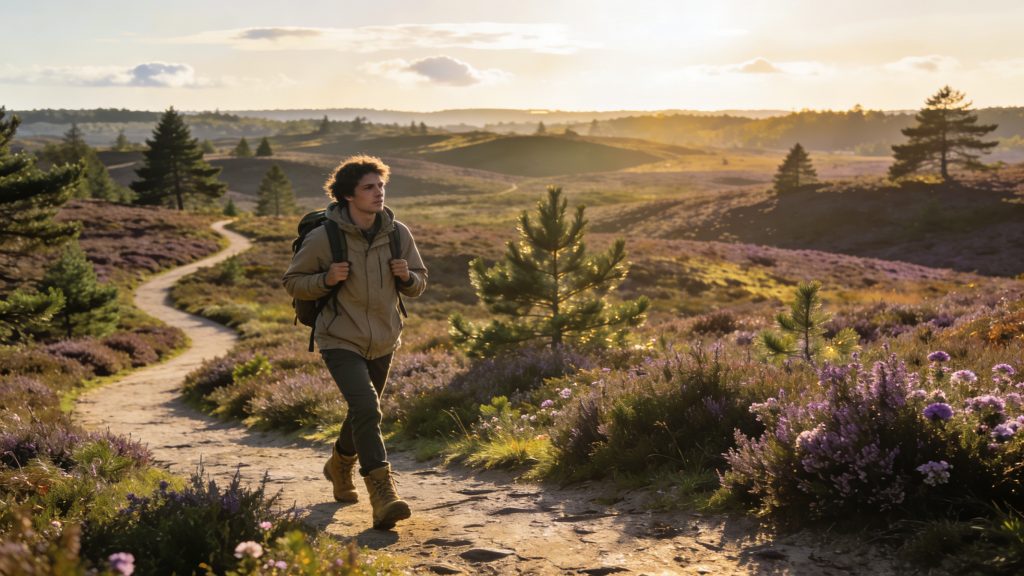
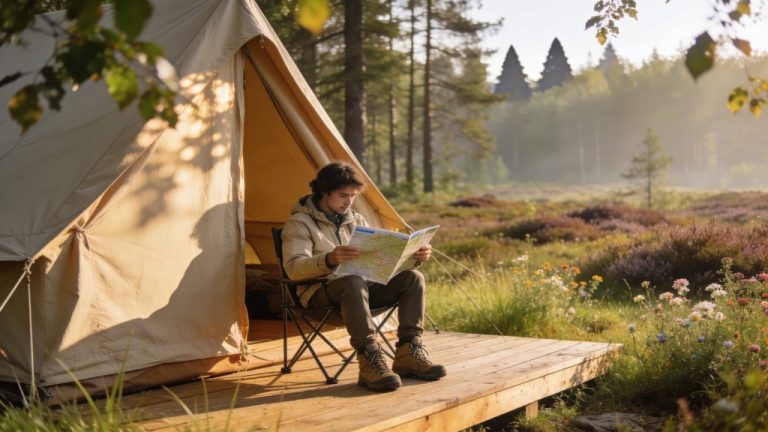
A campsite located directly on a waymarked walking trail is the ideal base for an active holiday. Instead of first having to drive kilometres to a starting point, you can step straight into nature from your tent or campervan. This combination of camping and walking gives you the freedom to choose flexibly between short day walks and multi-day hikes, without having to move your belongings each time. The Netherlands has various campsites that border directly on woodland, heath or river valleys, where you can be on a signposted path within minutes. Discover which regions and campsites are worth a visit and how to plan your stay in the best possible way.
Why choose a campsite as a walking base
Campsites offer practical advantages for walkers who prepare their holiday carefully. You can see your tent, campervan or rental accommodation as a home base where you can dry wet clothes, store walking gear and recover after a long hike. Many walker-friendly campsites have facilities such as washing machines, drying rooms and a bread delivery service for an early start.
In addition, you decide for yourself the length and intensity of your walks. From the same campsite you can choose a short loop of an hour, or a full day hike of fifteen kilometres. This makes a walking campsite suitable both for families with young children and for experienced hikers who want to walk on several days in a row.
Sallandse Heuvelrug: campsites in a hilly landscape
The Sallandse Heuvelrug offers one of the most varied walking areas in the east of the Netherlands. The area combines woodland, heath and rolling hills up to over 70 metres above sea level. Several campsites are located directly on or within Sallandse Heuvelrug National Park, allowing you to start walking without any detours.
From campsites in Holten or Hellendoorn you can reach waymarked routes within minutes, running through deciduous woodland and across heathland. Popular hikes include:
- The Holterberg route: a medium-length loop of around 11 kilometres over slopes and through pine forests
- Haarlerberg loop: 8 kilometres with panoramic views towards the IJssel valley
- Short family loops: between 3 and 5 kilometres through varied landscapes
Make sure the campsite really borders the walking area. Some places to stay are just outside the nature reserve, meaning you still have to walk a stretch on tarmac before you reach the forest.
Vechtdal: walking along river and woodland
The Vechtdal stretches across the border between Overijssel and Drenthe and is characterised by a tranquil river landscape with wide banks, small-scale nature and wooded areas. Campsites on the River Vecht give access to both short walks along the water and longer hikes through surrounding nature reserves.
From campsites in Ommen, Gramsbergen or Hardenberg you can start directly on walking networks with numbered junctions. The routes in this region are often flat or gently undulating, which makes them accessible to all levels. Well-known walks include:
- Vechtoever walk: a route of around 9 kilometres through peatland and forest
- Lutterzand loop: 6 kilometres through pine forest and past pools
- Ommen–Vilsteren route: 12 kilometres via the river park and village centre
One advantage of the Vechtdal is the combination of walking and cycling. Many campsites hire out bikes and are located on long-distance cycle routes, which adds extra variety.
Other walking regions with campsites on waymarked trails
Besides the Sallandse Heuvelrug and the Vechtdal there are several other areas where campsites are located directly on walking paths. Think of the Veluwe, the Utrechtse Heuvelrug, the dune areas near Schoorl or the forests around Dwingelderveld National Park. These regions offer similar advantages: a short distance from campsite to starting point, well-waymarked networks and plenty of variety in distance and terrain.
When choosing a campsite it helps to check on a map whether walking junctions connect directly. Some campsites indicate on their website which routes start at the entrance or can be reached within a few hundred metres.
What really makes a campsite walker-friendly
Not every campsite that calls itself a nature campsite is automatically suitable as a walking base. You can recognise a walker-friendly campsite by concrete features:
- Direct location on a waymarked path or walking network
- Availability of up-to-date route maps or GPX files via reception
- Early bread service or breakfast options for early starts
- Space to store and dry wet or muddy gear
- Possibility of short stays for section walkers without a minimum booking period
- Open in spring and autumn, outside the busy summer season
When you book or make a reservation, explicitly ask about the distance to the nearest walking path. Some campsites say “near walking area” when in practice that means a five-kilometre drive.
Tips for combining camping and walking
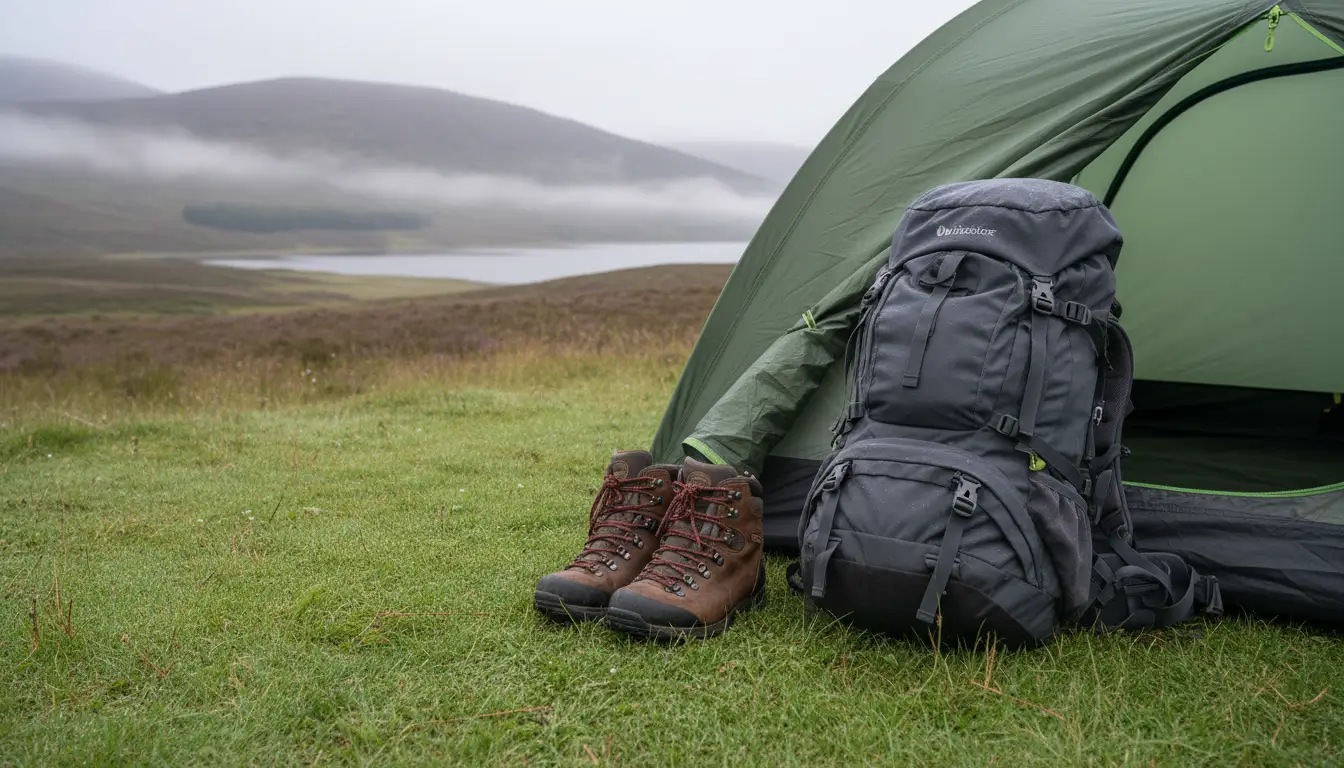
Good preparation leads to more walking enjoyment and helps prevent disappointment. Before you set off, check whether the routes are suitable for your level. Pay attention to gradients, surface and waymarking. In areas with sandy paths or heathland, walking can feel more strenuous than on hard forest tracks.
Take enough water and snacks with you. Especially in nature reserves, shops or cafés can be few and far between. Use offline maps or download GPX tracks in advance, as mobile internet is not reliable everywhere. At the campsite, ask for short loops for rest days or arrival days, so you do not have to start with a long hike straight away.
Take the season into account. In spring and autumn the nature reserves are quieter and walking is often more pleasant than in summer. However, you may encounter mud, closed paths due to wildlife management or limited opening hours of campsite facilities.
Circular walks versus section routes
Many campsites in the Netherlands are located on circular walks, where you return to your starting point after a few hours. This is convenient for families or shorter holidays. You do not need to arrange transport and you can flexibly decide how long you want to walk.
In addition, some campsites are suitable as a stopover on long-distance trails. Long-distance paths are multi-day walking routes that run through different regions, such as the Pieterpad, the Marskramerpad or the Veluwerandmeer route. Are you walking for several days in a row and do not want to move the car each time? Then such a campsite offers extra flexibility. Do check whether the campsite provides shuttle services or is close to public transport, so you can easily get back to your base.
‘ If in doubt, ask for a small map showing how the campsite links onto the walking network. ’
Practical points to watch from real-life experience
Experiences from camping walkers show that the description “on walking routes” sometimes turns out differently than expected. A campsite may formally be located in a walking area, but the first few hundred metres sometimes run along a main road or through a residential area. If in doubt, ask for a small map showing how the campsite links onto the walking network.
The level of busyness at the campsite itself is also important. Campsites that are popular with families with young children sometimes have more recreation facilities but less peace and quiet. For walkers who want to set off early or seek peace after a long hike, a small-scale nature campsite can be more pleasant.
For multi-day walking holidays, pay attention to storage options for extra luggage. Ask whether the campsite has lockers or lockable storage spaces. This is useful if you are travelling with valuable equipment or personal documents.
Discover more on Traveler Tips
On the Traveler Tips website you will find extensive information about nature holidays, routes and practical preparation tips for camping in different seasons. Whether you are looking for cycle routes, campervan sites or the best times of year to experience nature in Europe, there is much more to discover. Explore the website and plan your next trip with reliable, practical information that genuinely helps you on your way.
Frequently asked questions
Campsites that offer direct access to a varied range of walking routes, differing in difficulty level and length, are usually those located on a walking network or long-distance trail and that have several short and long circular walks starting from the site. They are often situated right next to nature areas such as forests, heathland, river valleys or national parks, making both easy family walks and tougher day hikes possible. They also offer extensive route information on site (maps, GPX files, themed routes), so you can choose your preferred length and level of challenge. This makes them an ideal base for both recreational and keen walkers.
Use a fixed checklist for each campsite: direct location on walking networks, variety of short and long routes, availability of GPX/maps, and public transport or shuttle options for linear walks. For car holidays, give priority to campsites with several day loops starting from the site, so you can leave the car and keep driving distances short. For train trips or road trips, link campsites to stage locations on long-distance routes and check connections (train/bus/taxi) between stage finish and campsite in advance. Collect all selected routes in one tool (for example a map app with layers per travel day), so you can see them directly alongside your travel and accommodation schedule and easily rearrange them.
Specific features that make walking routes from campsites unique include direct access to special natural environments (forests, heathland, dunes, river valleys, mountains) and routes with clear highlights such as viewpoints, observation towers or striking landscape features. Cultural and historical elements also play a role, for example walks past villages, castles, old railway lines or border routes, and themed trails with educational information. You can find reliable information about these at the campsite itself (reception, route booklets, GPX files), via regional walking networks and at nearby nature or national parks. (Local) walking maps, official long-distance routes and tourist information centres also usually provide reliable and up-to-date route descriptions.
Important practical considerations include whether the route starts directly from the campsite and matches the level and fitness of your group, including children. Check for the presence of water points and cafés along the way, or take enough water and provisions if there are none. Make sure whether you need any special equipment, such as sturdy walking boots, waterproofs, walking poles or navigation aids (map/GPX). For families it is important that the route is not too long or technically demanding, offers variety (play area, point of interest) and is safe in terms of traffic and gradients.