 NL
NL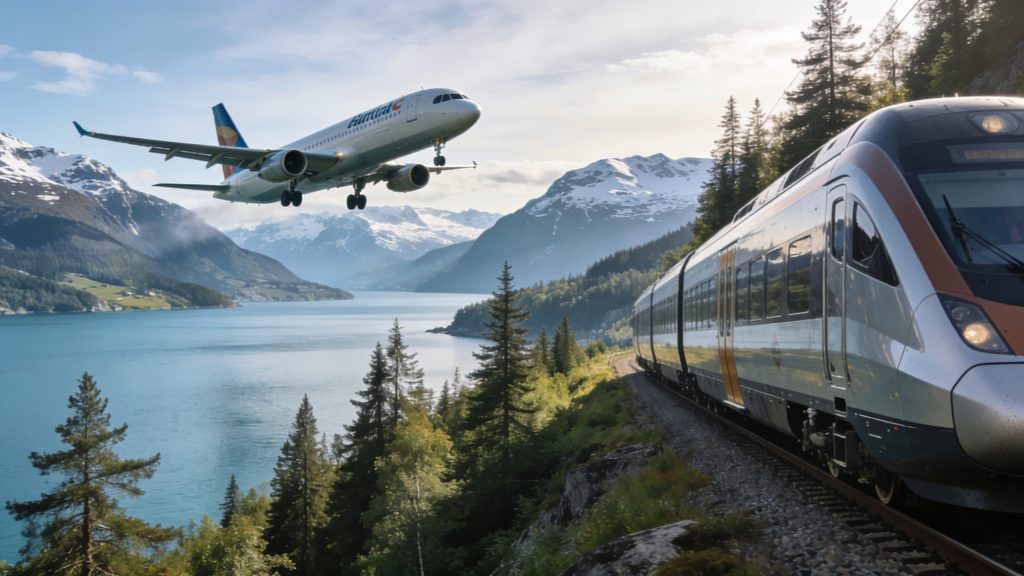
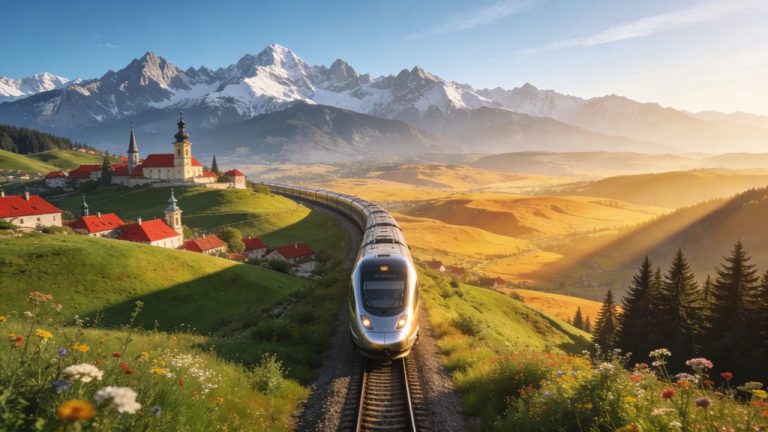
The train to Scandinavia reduces your CO₂ emissions by 5 to 15 times compared with flying. For a conscious traveller, this makes it a logical choice: comfortable journeys through Northern Europe, time for sights along the way and a smaller climate impact. The question is not whether the train is more sustainable, but whether it is also practically feasible for your route.
Why the train is generally more sustainable
Per passenger, trains emit significantly less CO₂ than planes, especially over European distances. An international train journey causes around 5 times less CO₂ than travelling by car and up to 15 times less than flying. That difference is greatest over short and medium distances, because take-off and landing require relatively large amounts of fuel.
Flying also has additional climate effects due to emissions at high altitude. This means the total climate impact is higher than just the direct fuel emissions. These effects do not occur with trains, certainly not if you travel on electric trains running on green electricity. In countries with a clean electricity mix this advantage is even greater.
For travellers who take sustainable travel seriously, the train is therefore in most cases the best choice. Especially if you want to make the journey part of your holiday. You can find more about routes and planning on our page about train holidays to Scandinavia.
‘ For those who travel consciously, this makes the train more than just transport. ’
How travel time and comfort differ between train and plane
Flying is faster, but that picture changes when you look at travel time realistically. A flight to Stockholm takes around two hours. You need to be at the airport at least two hours before departure. On top of that come transfers to the airport and from the airport to the city centre. In total you will easily be on the road for five to six hours.
A train journey to Stockholm takes longer. However, you board and get off in the city centre. Along the way you can read, work or sleep. There is no strict security and you have more legroom. Many travellers therefore find the train more pleasant, especially if you opt for a night train. Then you sleep during the journey and start your holiday well rested.
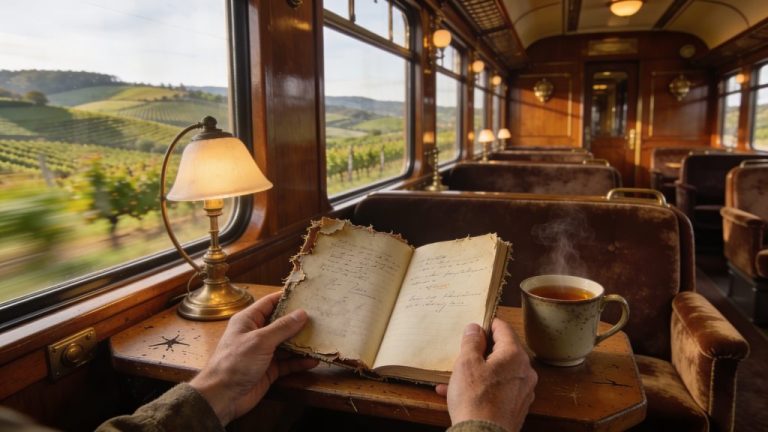
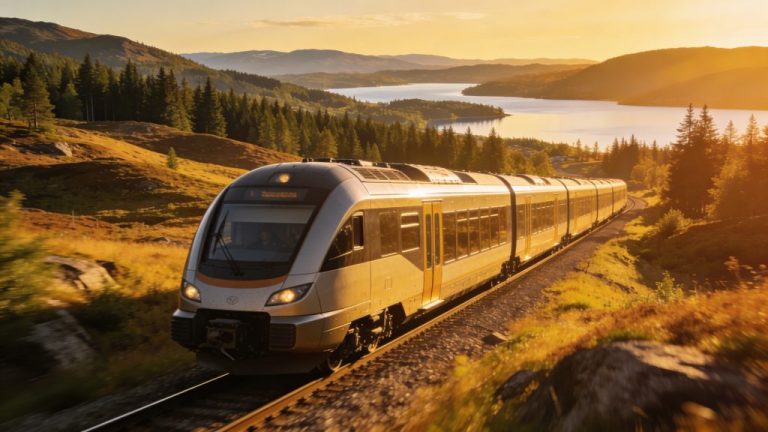
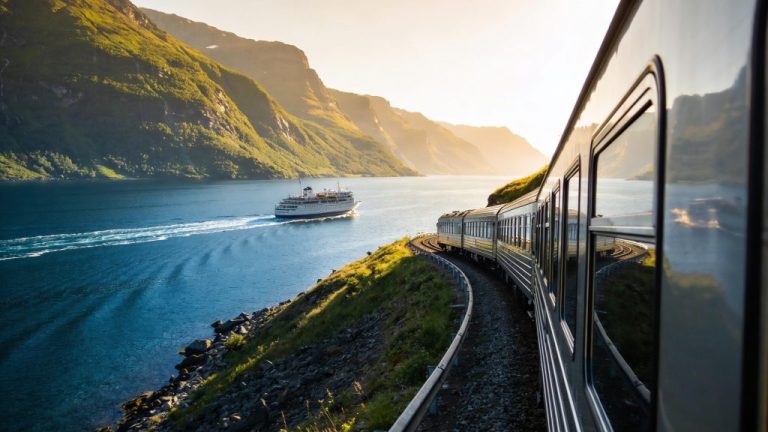
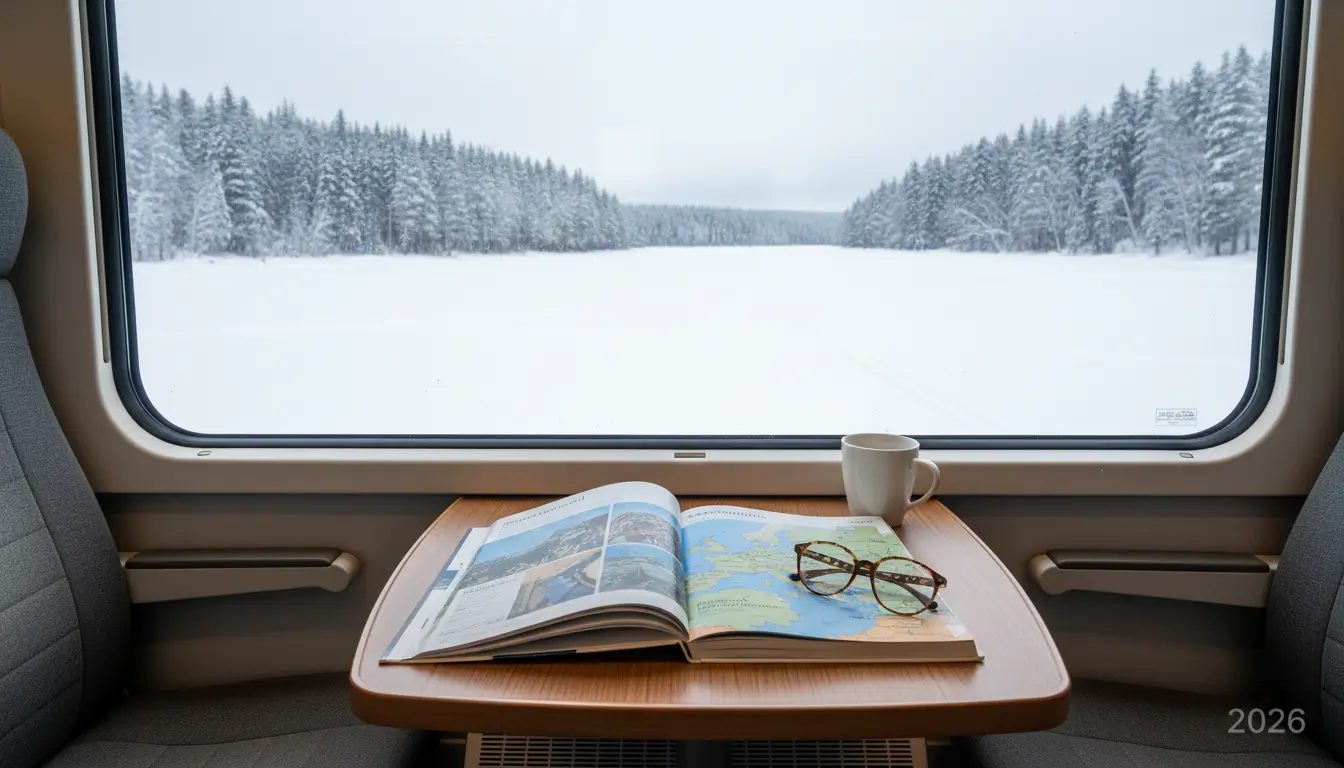
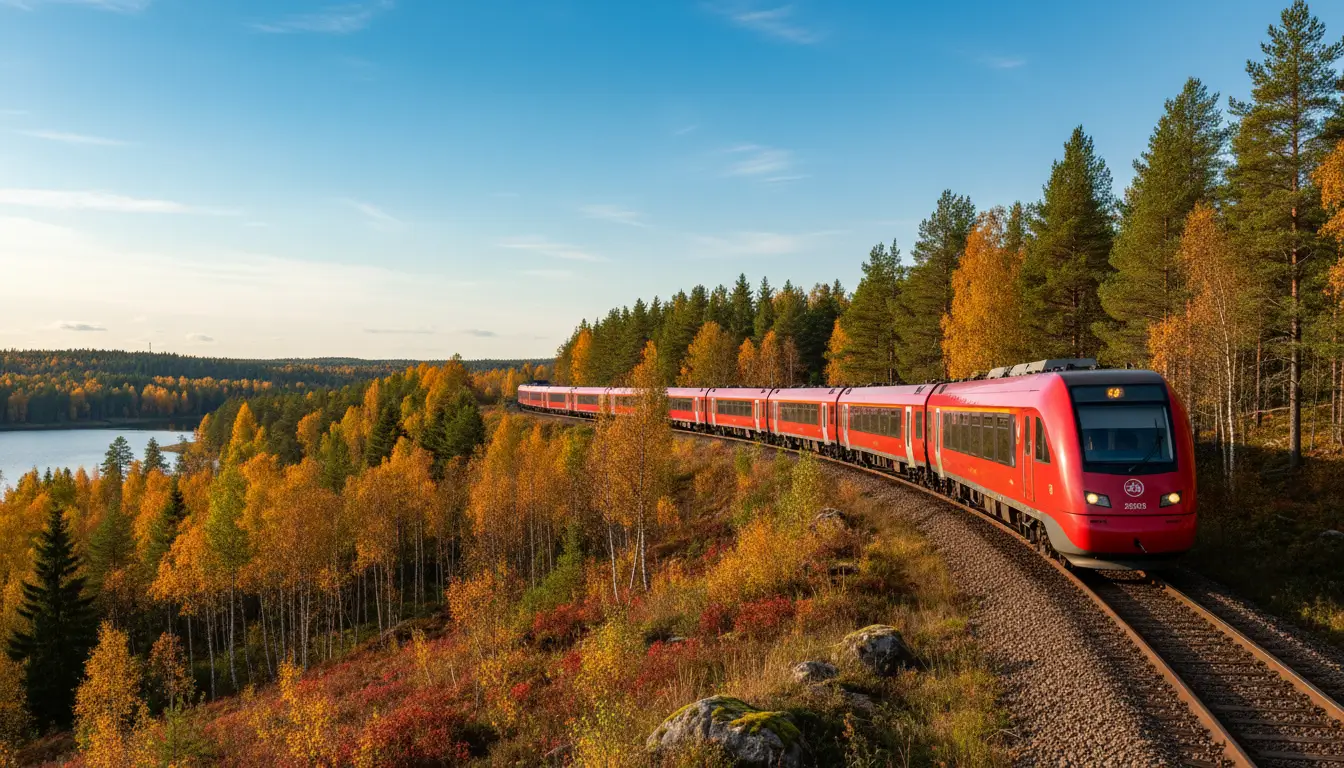
In addition, the train offers something that flying cannot: views of the landscape. The route through Germany, Denmark and southern Sweden is often experienced as beautiful and calming. For those who travel consciously, this makes the train more than just transport.
Which Scandinavian cities are easy to reach by train
Not all destinations in Scandinavia are equally easy to reach by train. Cities with good rail connections include Oslo, Stockholm, Gothenburg and Copenhagen. These cities lie on international train routes and have regular services from the Netherlands, Germany and other European countries.
Copenhagen is an important hub and often serves as a transfer station towards Sweden and Norway. From the Netherlands you travel via Germany to Copenhagen and from there on to Stockholm or Oslo. The journey usually requires one or two changes, depending on your departure point.
For destinations in central and northern Sweden, taking the train is less obvious. The same applies to remote areas in Norway. Here you often need several changes or combinations of train, bus and ferry. This requires more planning. For many travellers it is still more sustainable than flying.
What you need to know about costs and booking
Train journeys to Scandinavia are not always cheaper than flying. Cheap flights booked early during promotions sometimes cost less than an international train journey. The difference mainly lies in how and when you book.
Train tickets are cheaper when you book early. International ticket prices rise as the travel date approaches. Also look out for combination tickets or passes such as Interrail. For longer journeys, these are more economical than separate tickets. Booking directly via the railway companies usually gives the best overview of options and prices.
Transfers and connection times also influence total travel time. Where possible, choose direct connections or logical transfers with sufficient time between connections. This reduces stress and lowers the risk of missed trains.
‘ Here, flying is sometimes the only realistic option. ’
When flying is still a practical choice
There are situations in which flying is more practical than the train. If you are travelling to a remote northern destination without a good train connection, flying can save time and stress. If you have few days of annual leave and do not want to spend several days travelling, flying is often the more logical option as well.
For destinations above the Arctic Circle or in inland Norway, train connections are scarce. Here, flying is sometimes the only realistic option. You can also combine a train journey with a domestic flight or bus.
If you do fly, limit the impact by flying direct instead of with a stopover. Choose economy class, as it has lower emissions per passenger than business class. Stay longer at your destination so that the emissions per holiday day are lower.
Tips for a sustainable train holiday to Scandinavia
Choose a destination that is easy to reach by train. That makes the journey simpler and increases the chance that you will actually find travelling by train pleasant. Oslo, Stockholm, Gothenburg and Copenhagen are excellent choices for a first train trip to Scandinavia.
Make the train journey part of your holiday. Choose a night train or plan stopovers. This makes travelling feel less like lost time and enhances the experience. Cities such as Hamburg or Copenhagen are logical places for an overnight stay or a short exploration.
Plan transfers carefully for remote areas. A mix of train, bus and ferry can be more sustainable than flying the entire way. In some parts of Scandinavia, buses and ferries are well organised and connect to train services.
What travellers say about the train to Scandinavia
Travellers appreciate the calm and sense of space on the train. You can read, work or sleep without the hustle and bustle of an airport. The route through Germany and Denmark is often seen as scenically beautiful, especially in spring and summer.
What travellers like less are the sometimes long transfer times and the risk of delays. On international train journeys, delays can lead to missed connections. This makes the journey longer. Good planning and leaving enough time between transfers help to prevent this.
Price is also a point of attention. Some travellers find the train more expensive than expected, especially with last-minute bookings. Those who book early and see the journey as part of the holiday experience this less as a disadvantage.
‘ More weight means higher energy use, even for trains. ’
How to reduce your impact even further
Sustainable travel does not stop with choosing the train. Pack light to keep weight down. More weight means higher energy use, even for trains. Choose reusable water bottles and avoid single-use plastic on the way.
Stay longer in one place instead of making many short stops. This reduces the number of journeys and lowers the total emissions of your holiday. Scandinavia offers enough to spend several days in one destination.
Use local public transport or a bicycle once you have arrived at your destination. Many Scandinavian cities have excellent cycling infrastructure and well-organised public transport. This fits with a sustainable travel choice and gives you more opportunity to explore the surroundings.
Find out more about travelling to Scandinavia
On the Traveler Tips website you will find much more information about routes, destinations and practical tips for your journey to Scandinavia. Whether you choose the train, the car or a combination of transport modes, there is always a way to travel more consciously and smartly. Explore the website and discover what suits your preparation and travel plans.
Frequently asked questions
A train journey to Scandinavia usually takes (depending on destination and transfers) one to two full travel days, while flying often only takes a few hours, but with extra time for check-in, security and transfers to and from the airports. Door-to-door, total travel time is therefore clearly higher by train, but thanks to night trains and less waiting time it can feel calmer and like more “productive travel time”. In terms of the direct ticket price, flying is often cheaper, especially with early-bird fares or promotions, while international train tickets are usually more expensive. However, if you include all additional factors – such as transport to and from the airport, extra waiting time, a possible hotel stay for early/late flights and the much higher climate costs of flying – then the train is sometimes financially comparable and, for society, considerably “cheaper” than flying.
Comfortable routes to Scandinavia often run via Germany and Denmark, with Copenhagen as a logical hub towards Gothenburg, Oslo and Stockholm. A more experience-rich option is to take a night train on (part of) the route so that you travel at night and can enjoy the landscape during the day. You can also break up the journey with one or two comfortable stopovers, for example in Hamburg and Copenhagen, and stay there for a night. This way the journey itself becomes part of the holiday, with enough rest and time to read or walk in the cities along the way.
First plan your main routes along easily accessible hubs such as Copenhagen, Gothenburg, Oslo and Stockholm, and use these cities as bases for day trips or regional trains further into Scandinavia. Buy your long-distance legs (e.g. the Netherlands–Hamburg–Copenhagen–Stockholm/Oslo) in advance from major rail platforms, but keep regional tickets open or flexible (for example, Interrail or flexible fares) so that you can adjust your route on the spot. Where possible, choose night trains for the longest stretches so you save time and accommodation costs and can more easily add an extra stop. Build in generous transfer times at major hubs so that delays do not immediately disrupt your schedule and you still have the flexibility to switch destinations.
The train to Scandinavia emits up to 10–15 times less CO₂ per traveller than the plane and also causes fewer additional climate effects because there are no high-altitude emissions. As a result, the climate impact of your train journey is in practice just a fraction of the impact of the same journey by plane. If you do have to fly, you can limit the damage by flying direct, staying longer and, if you wish, offsetting your flight emissions through certified CO₂ offset projects (such as forest restoration or renewable energy projects). Even better is “prevention is better than offsetting”: choosing the train, possibly combined with bus or ferry, remains the most effective “offset”.
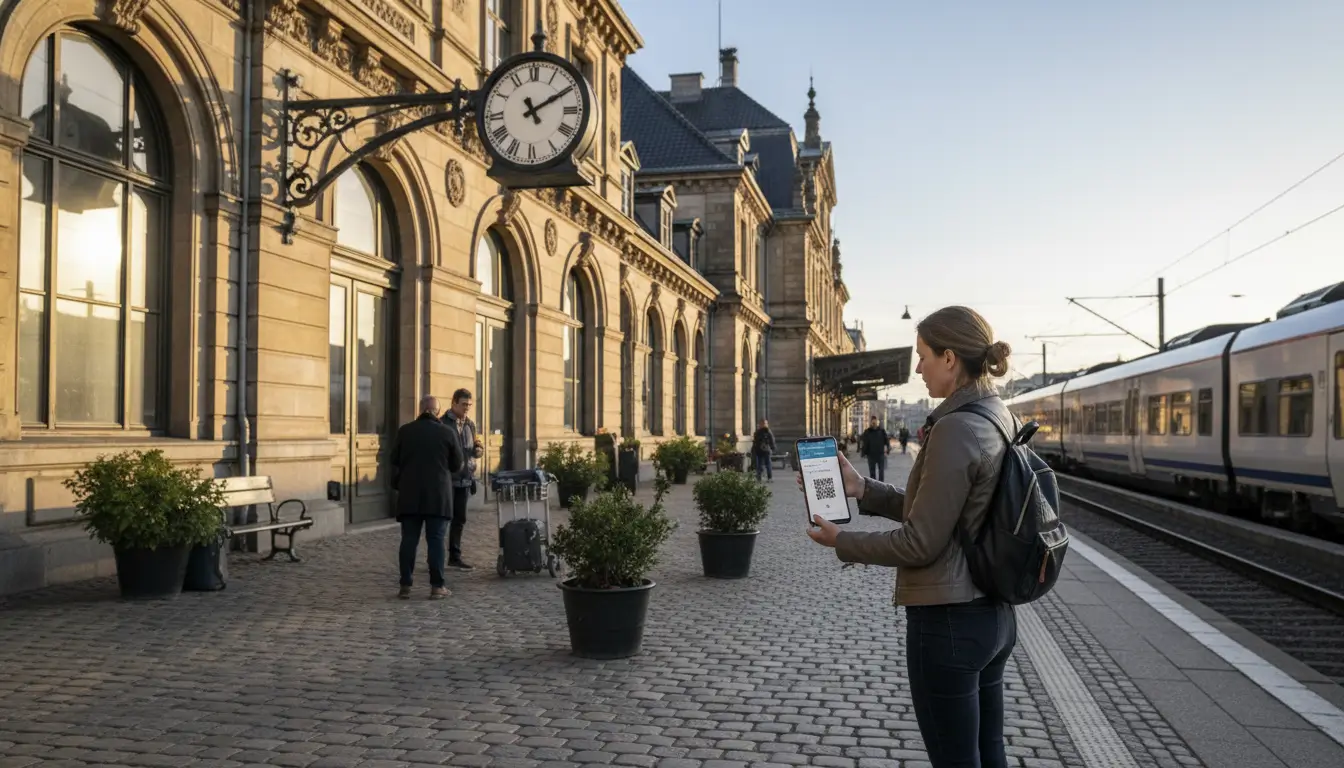
Travel with as little but as well-organised luggage as possible (ideally a rucksack or suitcase that you can easily carry and roll, plus a small daypack with valuables and travel documents). Plan your connections with sufficient transfer time (especially for international trains) and note down alternative routes in case of delays. Check in advance whether reservations are compulsory or strongly recommended, particularly for international high-speed and night trains. Print or download all your tickets and reservations for offline use so you have everything to hand even without internet access.