 NL
NL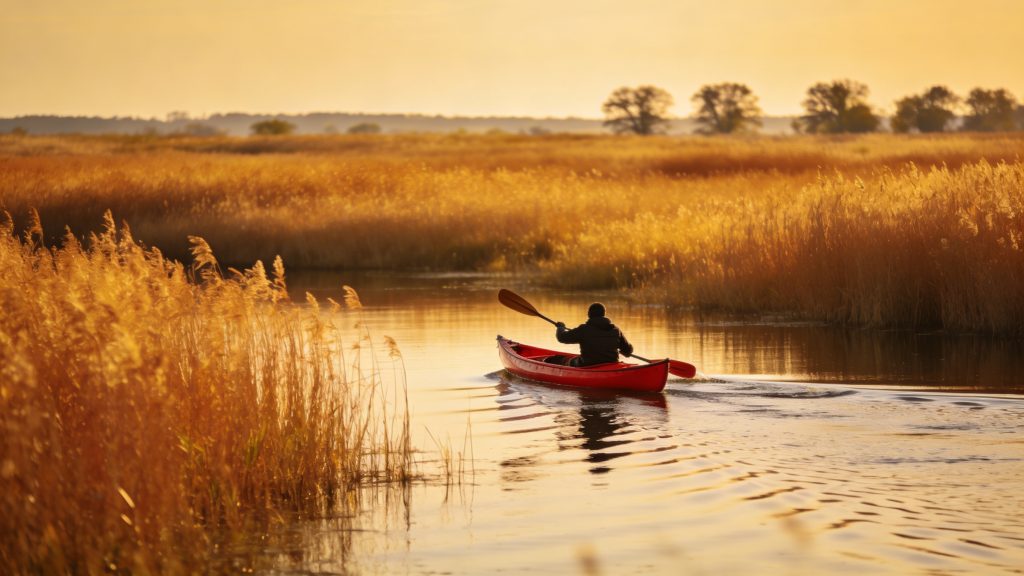
The Biebrza marshes in north-eastern Poland offer one of the quietest and most untouched canoeing experiences in Europe. You paddle through vast wetland areas, between river branches and peat landscapes, surrounded by a silence you will not find anywhere else. The area is suitable for both beginners and experienced paddlers. You combine active travel with birdwatching while experiencing pure nature at the same time. Want to know how to plan a trip like this?
Why go canoeing in Biebrza National Park
Biebrza National Park is the largest national park in Poland and is internationally known as an important bird area. The Biebrza River flows gently through the park, forming a natural network of marshes, river branches and forests. This makes the area accessible to recreational canoeists without whitewater experience.
While paddling you constantly move from one type of landscape to another. In some stretches you paddle through open marsh plains. A little further on you glide between reed beds and creeks. Nature takes the lead here. You share the water with heron colonies, birds of prey and roe deer grazing along the banks. It is a destination that suits anyone looking for a canoe and kayak holiday with peace, space and a slow pace.
The Biebrza is often recommended as part of a multi-day trip. Organised packages combine canoeing with hiking and cycling, including overnight stays in small guesthouses or campsites. Self-guided routes are also possible, as long as you take the park rules and permit requirements into account.
‘ The tranquillity that creates makes this trip ideal for anyone wanting to combine an active holiday with a genuine nature experience. ’
What to expect on the water
The Biebrza River flows calmly and does not have a strong current, so you do not need technical skills. Routes range from short day trips to multi-day journeys of several days up to a week. A typical daily distance is around 20 kilometres, depending on your pace and the type of route.
You paddle through a landscape with little human influence, with hardly any buildings or roads. There are no bridges or houses in sight and you do not hear any engine noise at all. The resulting calm makes this trip ideal for anyone wanting to combine an active holiday with a genuine nature experience.
The area is predominantly marshland, so conditions can vary widely. In spring the water level is often high and parts of the park are flooded. In summer the water level can be lower, which affects which routes are navigable. Check in advance with local providers or the park information centre for current water levels.
Birdwatching from your canoe
Biebrza is an internationally recognised bird area and attracts thousands of birdwatchers every year. From your canoe you have a unique vantage point. You can observe birds without disturbing them, sitting low on the water and making very little noise. This allows you to get close to colonies and breeding areas.
The park is home to more than 270 bird species. Some of the most striking include:
- Herons and storks foraging in the marshes
- Birds of prey such as marsh harriers and ospreys
- Cranes, which breed here in small numbers
- Snipes, lapwings and other marshland birds during the breeding season
The best period for birdwatching is from April to June, during the breeding season. Be aware that stricter rules apply to canoeists during this period due to the sensitivity of the natural environment. From January to June you need a permit to paddle in certain parts of the park, to prevent disturbance of breeding birds.
When you need a permit
Specific rules apply to canoeing in Biebrza National Park. From January to June a permit is compulsory for all canoeists because of the vulnerability of the breeding season. You can apply for the permit from the park authority or arrange it through local tour operators who offer packages.
The text mentions that the breeding season runs from July to December, but in practice the key breeding period is in spring and early summer. Outside the permit period you can paddle freely without a permit, though general park rules still apply. Wild camping outside designated sites is prohibited, and leaving rubbish behind is not allowed. Respect the natural values of the park and be considerate of other users.
If you book an organised trip, the permit is usually arranged for you. This also applies when you hire canoes and kayaks through local providers, but always check this in advance, especially if you are travelling in spring.
How to plan a canoe trip through the marshes
A canoe trip through the Biebrza marshes requires some preparation, especially if you are going to paddle independently. Start by choosing a route. The most commonly used sections run from the village of Lipsk to Goniadz, or further on to Wizna. These routes differ in both distance and duration.
The following steps will help with planning:
- Decide whether you want an organised trip or to paddle independently
- Check whether you need a permit based on your travel period
- Book overnight stays in guesthouses, on farms or at campsites if needed
- Arrange canoe or kayak hire with a local provider
- Check current water levels and the weather forecast
- Bring a waterproof bag for your belongings and food
If you have little experience of canoeing in marshland, a guided trip is recommended. Local guides know the area and the routes, as well as the best birdwatching spots. They can also help with logistics, such as transport to and from the starting and finishing points.
What to take with you on your canoe trip
There are no facilities in the marshes along the way, so you need to be self-sufficient and take everything you need for the day. Bring plenty of water and food. Sun protection and waterproofs are also important, as the weather can change quickly and the sun reflects strongly off the water.
Practical items you should not forget:
- Waterproof bag for clothing and electronic equipment
- Binoculars for birds and other wildlife
- Sun cream and a cap or hat
- Mosquito repellent, especially in the summer months
- Life jacket, even if you are a confident swimmer
- Map or GPS device
The area is vast and there are few obvious landmarks to navigate by.
Make sure you take all your rubbish back out with you. The park has strict nature conservation rules and waste management is taken seriously. Plastic and other pollution are harmful to the birds and the wider ecosystem.
Combining your trip with other activities in the region
Many travellers include a canoe trip through the Biebrza as part of a wider nature-focused journey in north-eastern Poland. The nearby Białowieża primeval forest is one of the last ancient forests in Europe and is famous for its wild bison. This area is about a two-hour drive from the Biebrza.
Hiking and cycling are also excellent options in and around the park. There are waymarked walking routes running along the marshes, and you can also walk through the surrounding forests. Some packages offer multi-day programmes in which you alternate canoeing with walking and cycling.
If you enjoy birdwatching, it is worth visiting the observation points in the park. These are strategically located near important breeding areas and offer wide views over the marshes.
‘ Here you will find a rare pocket of untouched nature in Europe. ’
Who this destination is suitable for
The Biebrza marshes are ideal for travellers who love peace, nature and slow travel. You do not need to be an experienced canoeist to paddle here, although some basic skills are helpful. The gentle current and flat water make the river accessible to beginners.
This destination is well suited to people who consciously choose small-scale tourism and are drawn to ecotourism. The area is not touristy at all – and that is precisely its strength. You will not find large groups, noisy jet skis or beach bars here. Instead you experience a rare patch of untouched nature in Europe.
If you are looking for spectacle, adrenaline or technical challenges on the water, Biebrza is less suitable. This destination is for people who value silence, birds and the slow rhythm of a marsh landscape.
On the Traveler Tips website you will find more information about nature holidays and self-planned travel routes, as well as practical tips for active trips around Europe. Discover other destinations where you can canoe and camp, practise nature photography and travel entirely at your own pace.
Frequently asked questions
How do I plan the trip to the Biebrza marshes in a ‘smart’ way, and which ‘routes’ are most suitable for a ‘self-organised’ ‘canoe trip’ with ‘more experience’?
Plan smart by travelling in spring or early summer, arranging a permit for Biebrza National Park in good time (compulsory from Jan–Jun) and keeping your daily stages to around 15–20 km so you have plenty of time for breaks and birdwatching stops. For a self-organised trip, stretches along the calm main channel of the Biebrza are most suitable, as the river is slow-flowing and easy to read for beginners. For more immersion, choose routes that combine marsh, open peat and forest, and allow extra time for short walks from the landing spots. Ideally, stay overnight in small-scale accommodation (campsites or guesthouses along the river) so you can also experience the peace and wildlife in the early morning and evening.
Which ‘preparations’ are essential for a ‘comfortable’ and ‘safe’ ‘canoe holiday’ in the Biebrza marshes, including ‘equipment’ and ‘required permits’?
Essential items include a stable canoe or kayak with paddles, a life jacket, waterproof barrels or drybags, warm and waterproof clothing, sun protection, a first-aid kit and, if you are camping, suitable gear such as a tent, sleeping mat, sleeping bag and stove. Take good maps or a GPS and familiarise yourself in advance with the route, water levels and weather, or choose an organised trip with a guide and equipment hire. In Biebrza National Park you must follow the park rules and apply for a permit for the period from January to June due to the breeding season. Also check with the park or a local provider whether you need any additional local access or navigation permits.
When is the ‘best time to travel’ for canoeing in the Biebrza marshes for optimum ‘nature experience’ and spotting ‘wildlife’, and are there any ‘local tips’ for ‘authentic encounters’?
The best time to travel for canoeing in the Biebrza marshes, with optimal nature experience and wildlife spotting, is roughly between spring and early summer, when the area is rich in water and birds but still reasonably accessible. Bear in mind that from January to June you need a permit due to the breeding season, which makes this period both sensitive and very special. For authentic encounters it is advisable to go with local guides or small-scale providers, who often take you to quiet observation spots as well. Ideally, combine canoeing with walks and birdwatching sessions to experience the marshland nature as intensely as possible.
Are there ‘accommodation options’ and ‘places to eat’ around the Biebrza marshes that suit a ‘conscious’ and ‘self-organised’ style of travel?
Yes, around the Biebrza marshes you will find small-scale guesthouses, campsites and other accommodation that fit well with a conscious, nature-focused style of travel. There are also local places to eat and stay that often serve simple regional dishes and are geared towards peace and nature experiences. These options are ideal for a self-organised trip, where you set your own pace and route.