NL
NL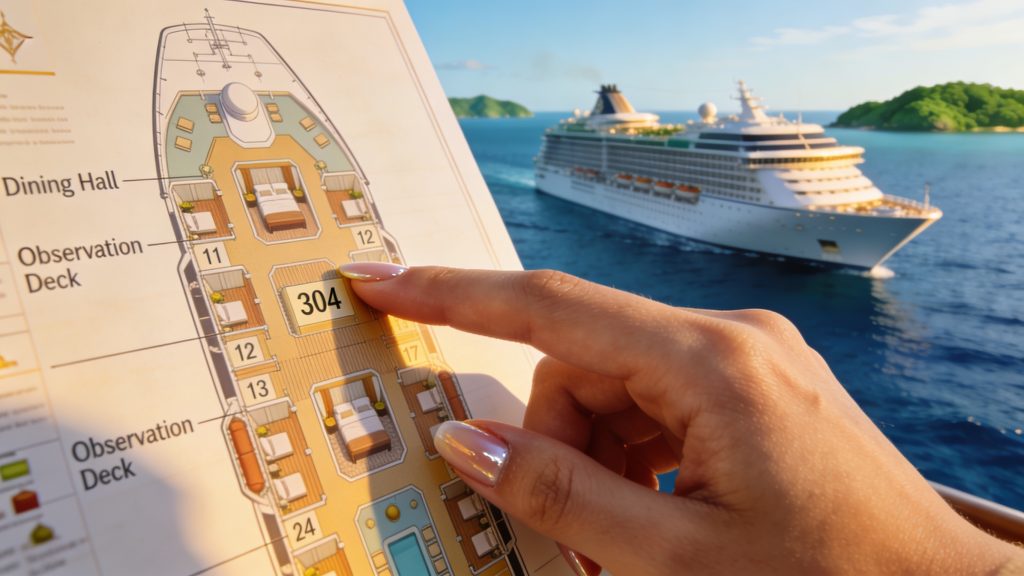
The climate at your cruise destination directly determines how comfortable your cabin feels. A balcony cabin in the Caribbean offers little cooling during the day, while the same cabin on a Norwegian fjord cruise combines fresh air with spectacular views. The best cabin choice does not only depend on budget, but above all on itinerary and season. Read on and discover how to match your cabin to the climate at your destination.
Warm itineraries require different cabin features
On tropical and subtropical cruises, such as to the Caribbean, the Bahamas or Canary Islands, temperature plays a major role in your cabin comfort. These destinations are popular from December to April, when the climate is sunny and often humid. A properly working air conditioning system is then more essential than extra square metres.
A balcony cabin sounds attractive. In practice, many travellers seek shade indoors in the middle of the day. The outside temperature and direct sunlight make the balcony less usable during the day. You often expect more from it. So choose a cabin with adjustable climate control and ventilation. The combination of fresh air and shade provides more comfort than a large balcony without cooling.
The cabins & accommodation on board vary greatly per ship type and cruise line. For warm itineraries there is a clear rule of thumb: check whether the air conditioning can be controlled individually and whether the cabin is well insulated against external heat sources. An inside cabin can even be cooler and quieter on sunny itineraries. In that case, an outside cabin with lots of sun exposure is less comfortable.
‘ The practical use depends heavily on wind, rain and outside temperature. ’
Northern itineraries offer different cabin comfort
Cruises to Northern Europe, Scandinavia and Alaska usually take place from May to September. The climate is cooler, more changeable and often windy. A balcony is popular here because of the views of fjords, glaciers and coastal landscapes. The practical use depends heavily on wind, rain and outside temperature.
On these itineraries, a well-positioned outside cabin with a large window is often a comfortable middle ground. You enjoy the view without being dependent on the outside temperature. A centrally located cabin in the middle of the ship also offers more stability in rougher sea conditions. This is especially noticeable on open water.
Inside cabins are often pleasantly stable in terms of temperature on cooler itineraries. They offer a quiet, dark environment that feels good after active shore excursions. Some travellers mainly use the ship as a base. They place less value on a direct view. For them this can be a sensible choice.
Cabin location affects temperature and comfort
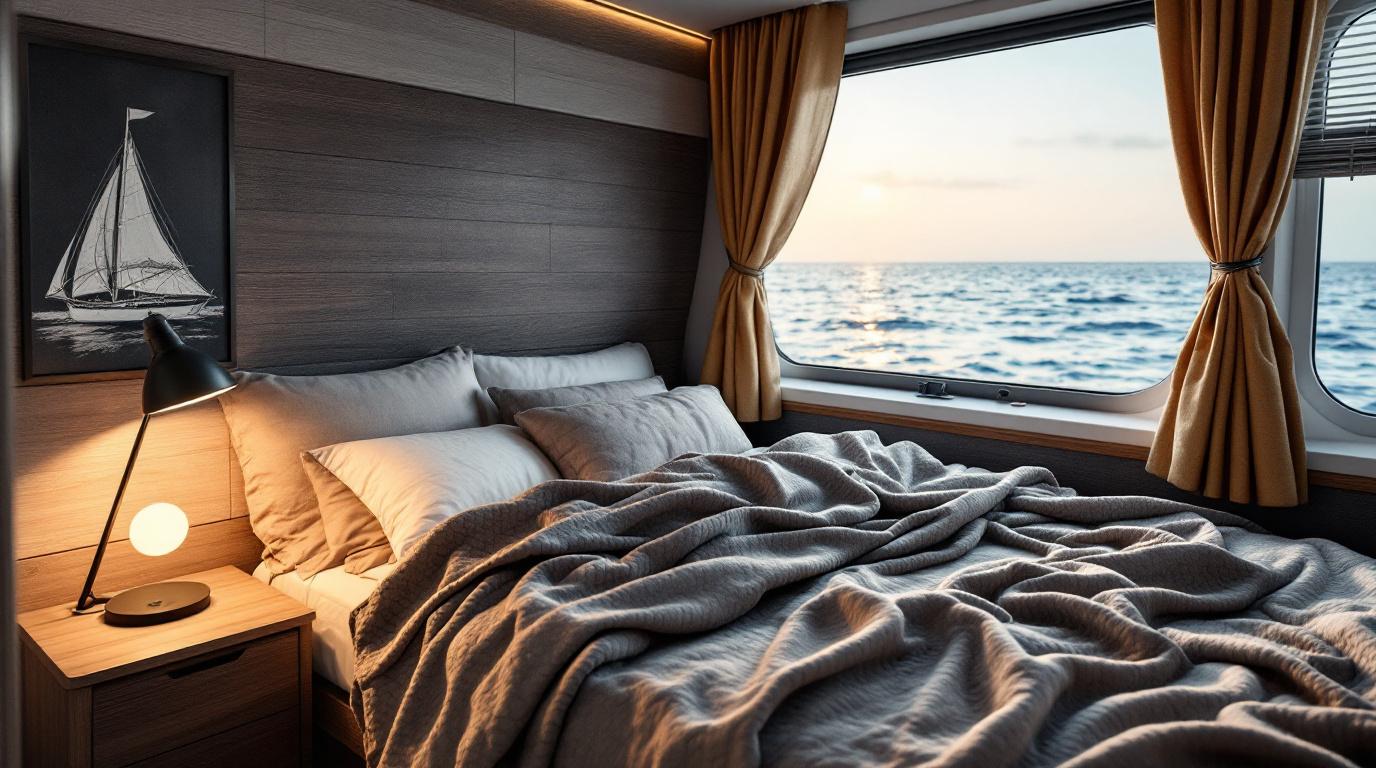
The position of your cabin on the ship influences the interior climate. Cabins on the sunny side of the ship get warmer, especially on itineraries with prolonged sun exposure. On warm cruises this may mean that the air conditioning has to work harder, which increases noise and energy consumption.
Cabins higher up on the ship, closer to the deck, receive more direct heat from above. Cabins lower down in the ship often stay cooler. In some cases they may experience more noise or vibration from the engine room. So pay attention to the location in relation to technical areas and busy facilities. Examples include theatres, restaurants and lifts.
Is a balcony necessary in the Caribbean?
A balcony on a Caribbean cruise mainly adds value early in the morning and late in the evening. The morning air is fresher and the evening temperature more pleasant. During the day the balcony can be too hot and sunny to use comfortably. Many travellers later say they used the balcony less than expected.
Choose a balcony cabin if you value outdoor space – for breakfast, a quiet moment or views while sailing. Do not expect the balcony to become a fully-fledged extra living area. Shade, wind and privacy all play a part. These factors determine how much you actually use it.
Ventilation and air circulation matter more than floor space
On warm itineraries, good air circulation makes more difference than a large cabin. A smaller cabin with effective air conditioning and thoughtful layout is pleasant. A spacious cabin with draughts or poor temperature control often is not. Before you book, check which ventilation systems are standard on board and whether you can set the temperature yourself.
‘ Wind and cold limit comfort, but that often does not outweigh the visual benefits. ’
Fjords and Alaska offer different balcony advantages
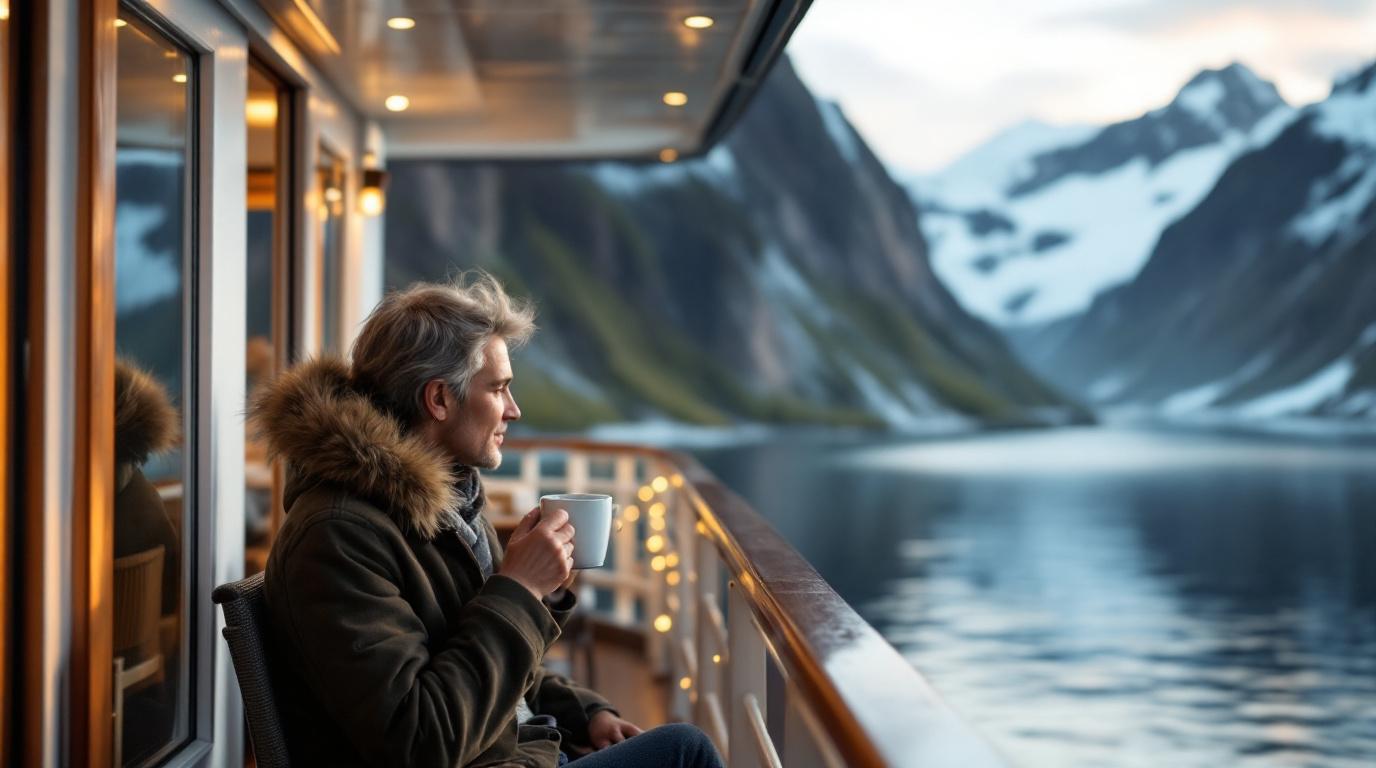
On northern itineraries, balcony use is mainly about views and experience, not sunbathing or outdoor living. The scenery is spectacular, and many travellers want to see fjords, waterfalls and glaciers from their own cabin. Wind and cold limit comfort, but that often does not outweigh the visual benefits.
A balcony cabin is especially valuable here during passages with lots of scenic highlights. Think of the Geirangerfjord or Sognefjord. Does your itinerary mainly include port cities and short sailings? In that case an outside cabin with a window may be sufficient. The price difference often works out more favourably. Actual balcony time remains limited.
Choice of season directly affects your cabin experience
The best time to travel varies greatly by region, and this has consequences for your cabin comfort. Caribbean cruises are popular in winter, when the climate is pleasant and the chance of hurricanes is low. The Mediterranean and Northern Europe are most visited from April to October. The warmest months are July and August.
Winter cruises to sun destinations such as the Canary Islands offer pleasantly spring-like weather, ideal if you want to escape the cold at home. During this period a balcony cabin is often usable and the outside temperature is less extreme than in summer. Shoulder seasons in spring and autumn often combine lower prices with more pleasant outdoor temperatures. The weather is more changeable.
Sea conditions and cabin location for peace and sleep
On itineraries with more open sea, such as transatlantic cruises or sailings to the Canary Islands, you notice the swell more quickly. Cabins in the middle of the ship are more stable. They are located on lower decks. These cabins move less with the waves. Cabins at the front or rear experience more pitching and rolling. They can feel more restless.
For a good night’s sleep, a quiet cabin environment is essential. Avoid cabins directly under decks with swimming pools, sports facilities or bars. Examples of busy locations include swimming pools, sports facilities and bars. Also check how close you are to engine rooms and lifts. Noise and vibrations can disturb your sleep. Travellers regularly say that peace and quiet are more important than extra space or views.
Central location offers stability
A cabin in the middle of the ship offers stability. In addition, walking distances to the main facilities are short. This is particularly pleasant on longer cruises or itineraries with rougher seas. Price differences are often limited, while the added value for comfort is considerable.
‘ It is the practical details that really make the difference. ’
Book consciously based on itinerary and climate
The smartest booking strategy takes your destination, travel period and personal preferences into account. Together these aspects determine your choice. For sunny itineraries, do not automatically pick the cheapest outside cabin. Compare the specifications for air conditioning, location and ventilation. For northern itineraries, the view plays a role. Also think about how usable the balcony will actually be.
Read other travellers’ experiences of temperature, noise and ventilation per ship type before making your final choice. It is the practical details that really make the difference. They determine whether a cabin is acceptable. They also determine whether a cabin is comfortable. Also consider when you book. Early booking discounts can free up budget for a higher cabin category. Last-minute deals sometimes make upgrades possible. Both options have their advantages.
Discover more about cruises and planning
Climate and cabin comfort are only two aspects of a well-planned cruise. On the Traveler Tips website you will find extensive information about itineraries, destinations, trip preparation and practical tips. This information helps you with every journey. The right knowledge helps you plan more smartly. You also travel more comfortably – whether on a sunny Caribbean itinerary or an adventurous fjord cruise. Discover more on the website and prepare for your next cruise in the best possible way.
Frequently asked questions
Start by looking at the climate zones: choose the Caribbean/Bahamas preferably between December and April, the Mediterranean and Northern Europe between April and October, Alaska/Scandinavia between May and September, and many Asia/Australia itineraries from November to March. Avoid the hottest and most humid months in each region if you are sensitive to heat, and instead pick the shoulder seasons (spring and autumn) for milder temperatures and calmer weather. Match the itinerary to your wishes ashore (beach vs nature/city) and on board: tropical itineraries call for good air conditioning and possibly a cool inside cabin, while cooler nature itineraries are ideal with a balcony or large window for the views. Finally, check the average temperatures, chance of rain and wind for each port in your chosen month so that both sea days and excursions feel comfortable.
Cabin comfort is mainly defined by the location (midship is quieter and more stable), the cabin type (inside, outside, balcony), the level of sound insulation and the influence of climate/itinerary on temperature, wind and the usability of your balcony or window. For peace and quiet, choose a cabin far away from lifts, theatre, pool and engine rooms, ideally mid-deck and midship. If you want views and outdoor space, a balcony or outside cabin is ideal on scenery-rich itineraries (fjords, Alaska, Norway), while a well-priced inside cabin is sufficient if you spend most of your time on deck or ashore. Align your choice with your budget by first setting your minimum comfort requirements (quiet, enough space, window/balcony) and then, within that category, looking for the most central and quiet location possible.
The local climate determines whether you need more light, breathable clothing, sun protection and a hat (warm, tropical destinations) or rather layers, a rain jacket and closed shoes (cool, windy or wet destinations), and this directly affects what you pack for shore excursions. Take shoulder seasons and changeable weather into account: always carry an extra layer or thin rain jacket in your day pack, especially in Northern Europe, the fjords and Alaska. On board it is often cooler due to air conditioning than outside, so use layers that you can easily put on and take off to handle temperature differences between ship and shore. For excursions, choose comfortable shoes, a small foldable bag and, if needed, a dry set of clothes so that after a wet or hot day ashore you can feel comfortable on board again quickly.
Yes, cabins midship and on lower decks usually move the least and are therefore more suitable if you are sensitive to motion at sea. For those who easily suffer from heat or cold, inside cabins are often the most stable in terms of temperature, while outside and balcony cabins are more affected by sun, wind and outside temperatures. If you are sensitive to noise and vibrations, it is best to avoid cabins right at the front or back and directly above/next to busy areas (theatre, disco, engine room). When booking, use the deck plans and cabin descriptions and filter reviews for phrases such as “quiet location”, “little movement” and “good air conditioning” to find a location that suits you.