 NL
NL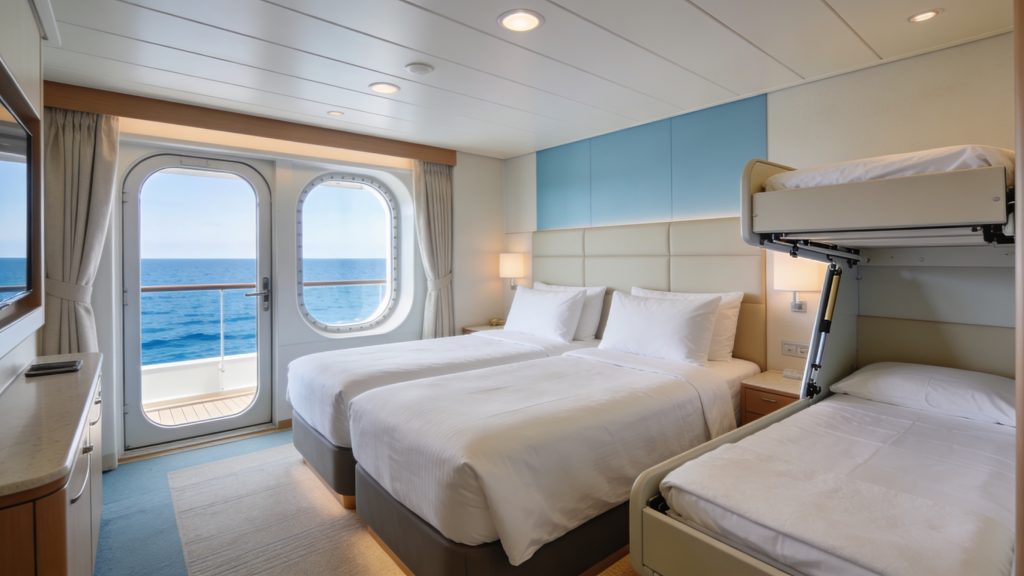
The cabin you choose for your cruise largely determines how comfortable you will be during your trip. Cabin size ranges from compact inside cabins of around 14 square metres to spacious suites of more than 40 square metres, and bed configurations vary from double beds to bunk beds and convertible sofas. If you choose well, you sleep better and feel more at ease on board. But what exactly should you pay attention to?
How many square metres does an average cruise cabin have?
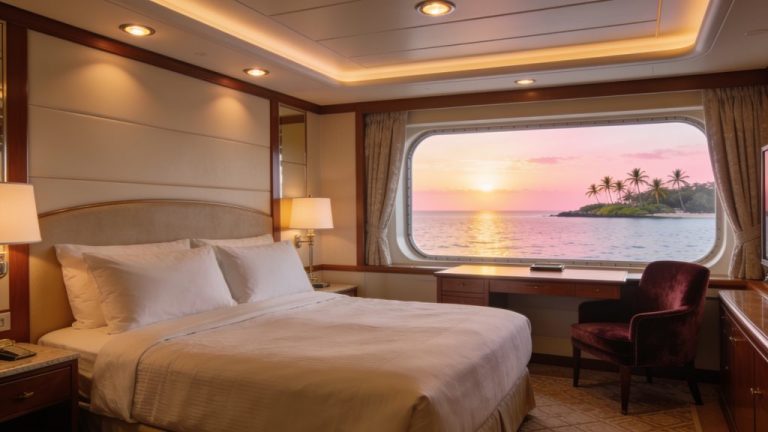
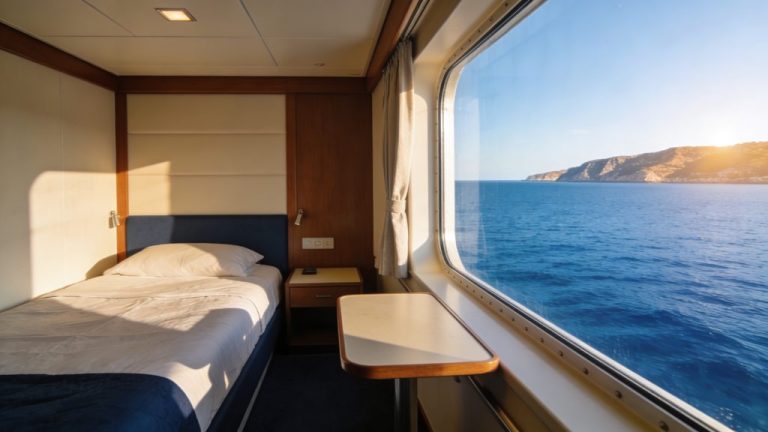
A standard inside cabin is usually between 12 and 16 square metres. That is compact, comparable to a small hotel room. Outside cabins are often similar in size, but feel more spacious because of the window or porthole.
Balcony cabins offer more living space. The inside of the cabin is on average 16 to 20 square metres, plus a balcony of around 4 to 6 square metres. For those who like to sit outside without having to go straight to the public decks, this is a comfortable choice.
Suites are clearly more spacious and often start at 30 square metres. Larger versions go above 40 square metres. They come with a sitting area and sometimes additional facilities. On the Traveler Tips website you can read more about the different cabins and accommodation options on board.
‘ Not every cabin has a double bed as standard, and it is important to check this in advance. ’
What bed configurations are available on cruise ships?
Cruise lines offer various bed layouts. Not every cabin has a double bed as standard, and it is important to check this in advance.
Double bed or two single beds
Many cabins are supplied as standard with two single beds that can be pushed together or kept separate. This is called a twin configuration. Some cruise lines offer the option to join the beds together to form a double bed, but this is not always arranged automatically. Check this when booking.
Bunk beds and extra sleeping places
Families with children can often choose cabins with extra sleeping places such as bunk beds, fold-down upper berths or a sofa bed. These layouts are practical for families, but do bear in mind the limited room to move around.
Single beds
For solo travellers there are also cabins with a single bed. These cabins are rare and often smaller than standard double cabins. Many solo travellers therefore choose a compact inside cabin with a twin configuration.
Are beds on cruise ships comfortable?
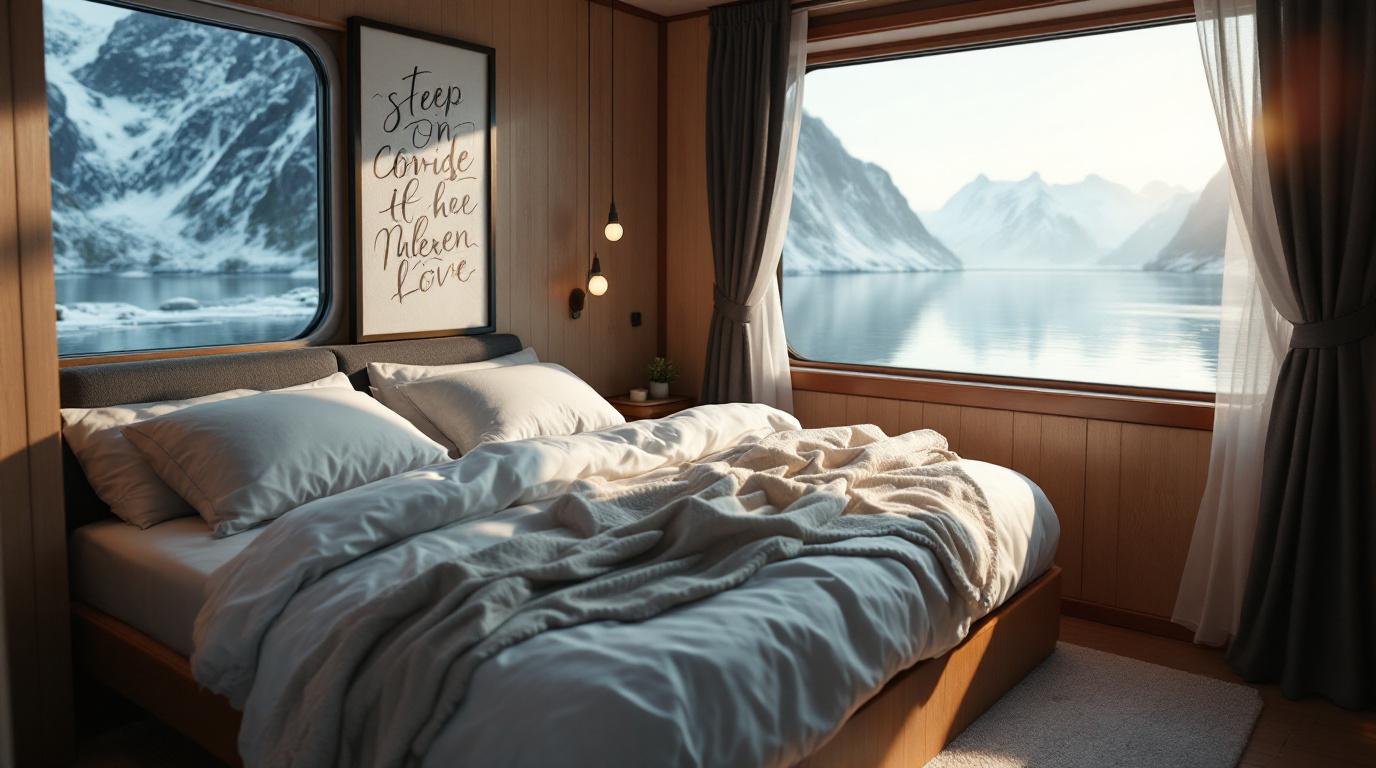
Most cruise ships provide beds with standard mattresses comparable to those in mid-range hotels. The quality varies. It depends on the cruise line and the type of ship. More upmarket cruise lines often use better mattresses and bedding.
Bed dimensions are generally standard. A double bed is usually about 150 to 160 centimetres wide. Single beds are often 90 to 100 centimetres wide. For taller travellers this can sometimes feel a bit tight, especially in compact cabins.
Those who are sensitive to a hard or soft mattress may experience problems. Some cruise lines therefore offer an extra mattress topper. This is not always free and differs per company. Ask about this beforehand if it is important to you.
Which cabin category suits your travel party?
The type of cabin you choose depends on who you are travelling with and how much time you spend in the cabin. Not every traveller has the same need for space or light.
Inside cabin for budget-conscious travellers
An inside cabin has no window and is the most affordable option. This type of cabin is suitable for travellers who mainly use the cabin for sleeping and spend a lot of time on deck or in the public areas. For people who quickly feel confined, an inside cabin is less suitable.
Outside cabin for more daylight
An outside cabin has a window or porthole and offers daylight. This gives a greater sense of space without the higher costs of a balcony. For those who like to look outside but do not necessarily need their own outdoor space, this is a good middle ground.
Balcony cabin as an all-round choice
Balcony cabins are popular because they offer a private outdoor space where you can sit quietly. This is pleasant on routes with beautiful views or for anyone who likes to sit outside alone for a while. The surcharge compared with an outside cabin is often limited and, for many travellers, worth the investment.
Suite for extra comfort
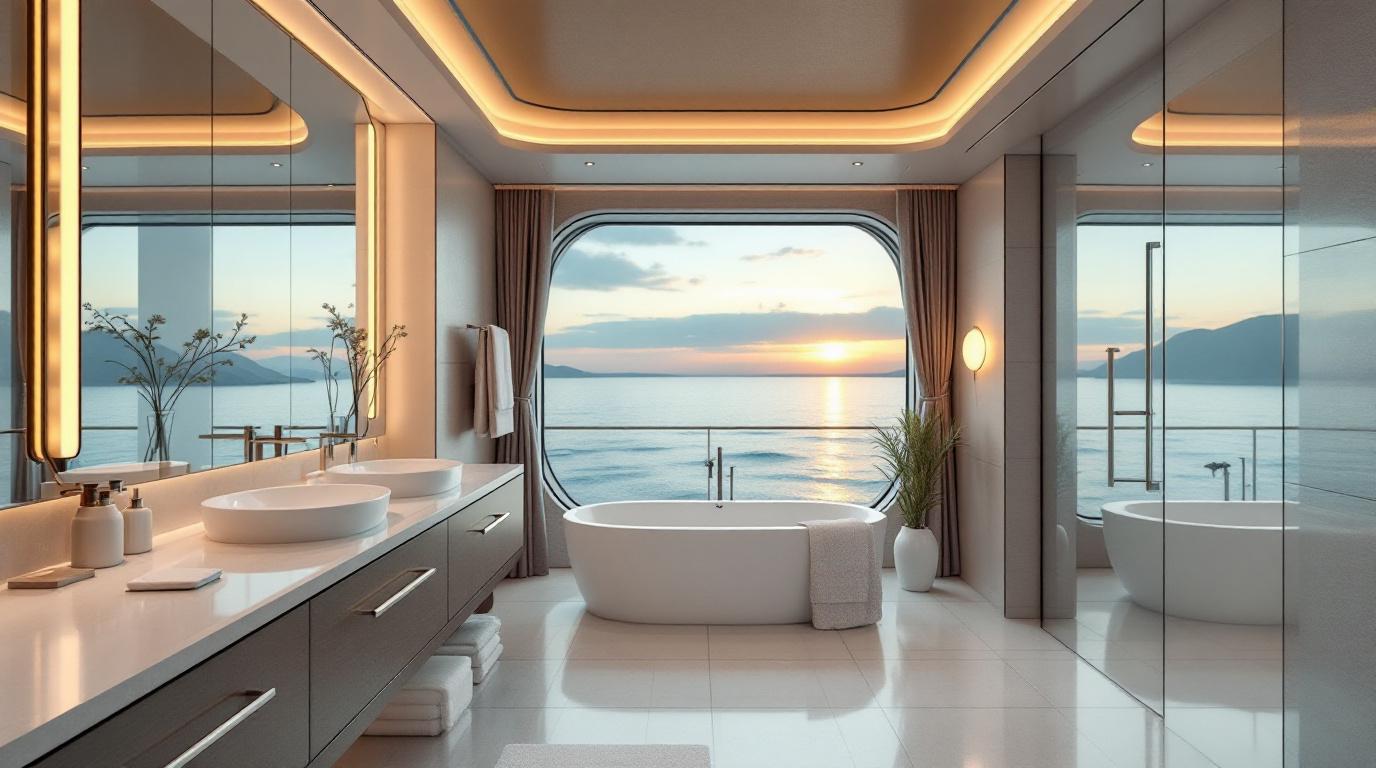
Suites offer more living space, a separate sitting area and sometimes extra facilities such as a bath or a larger balcony. They are more expensive, but interesting for longer cruises, families with children or travellers who want to spend a lot of time in their cabin.
‘ A larger cabin is not automatically better if it is in a poor location. ’
How important is the location of the cabin?
The location of the cabin on the ship influences your experience at least as much as the size. A larger cabin is not automatically better if it is in a poor location.
Noise and movement
Avoid cabins directly above or below busy areas such as theatres, bars, restaurants or swimming pools. Cabins close to lifts can also be noisy. Those sensitive to movement are better off choosing a cabin lower down and more towards the middle of the ship. The front and back move more, especially in rougher weather.
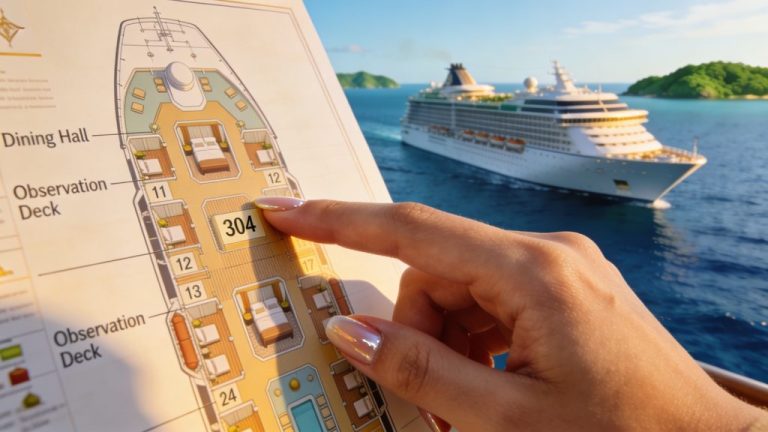
Check the deck plan before you book
Always look at the deck plan before choosing a cabin number. This helps you see exactly where the cabin is located and what facilities are nearby. Many cruise lines show this information on their website or via the booking system.
What is a guarantee cabin and when should you choose one?
With a guarantee cabin, you book a cabin category without choosing a specific cabin number yourself. The cruise line later assigns a specific cabin within the category you selected.
The advantages of a guarantee cabin are the lower price and the chance of an upgrade if the ship is full. Disadvantages are less control over the exact location and less certainty about the layout. For travellers who mainly focus on price, this is a convenient option. Travellers with specific wishes regarding location or bed configuration are better off choosing a cabin number themselves.
Practical checklist for choosing a cruise cabin
To make a good choice, it helps to answer a number of questions before you book:
- How much time do you expect to spend in the cabin?
- Are you travelling alone, with your partner or with children?
- Do you need daylight or an outdoor space?
- Are noise or movement concerns for you?
- Which bed configuration suits your situation?
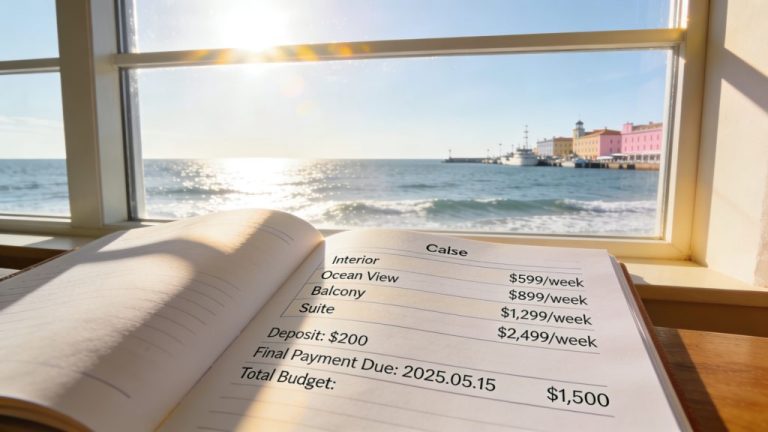
- What is your budget and what are you unwilling to cut back on?
By answering these questions, you get a clearer picture of which cabin category and location suits you best. Also remember to look at the deck plan in advance and check whether the cabin is suitable for the number of people and the desired bed layout.
‘ Discover what options are available and how to choose smartly for maximum comfort during your cruise. ’
Want to know more about cruises and accommodation on board?
On the Traveler Tips website you will find extensive information about cruises, cabin types, facilities on board and tips for planning your trip. Discover what options are available and how to choose smartly for maximum comfort during your cruise.
Frequently asked questions
A balcony cabin usually offers the most comfort: enough space, your own outdoor area and plenty of daylight, without the extremely high price of a suite. For two adults, a double bed (or two beds joined together as one) is generally the most comfortable, whereas for friends or family members two separate beds are often better. With children, a cabin with an extra sofa bed or upper berth(s) is more practical than just a larger standard cabin. In addition to the cabin type, also pay attention to the location on the ship (preferably midships and on a quieter deck) for extra comfort.
Check in advance the exact square metres of the cabin and the floor plan, so you can see how much free floor and wardrobe space there is besides the beds. Count your suitcases and bags and check reviews to see whether there is enough storage space under the bed or in the wardrobe. If you have a lot of luggage or expect to spend a lot of time in the cabin, it is better to choose a slightly larger category (for example a balcony cabin instead of an inside cabin). Finally, check whether extra beds (sofa bed, pull-down bed) do not take up so much space that walking around or getting dressed becomes difficult.
First look at how you will be travelling: if you use the cabin mainly for sleeping, you can go cheaper with a smaller (inside) cabin and reserve more budget for excursions or food and drink upgrades. For comfort, a balcony cabin is often the best value-for-money choice: more light, a private outdoor area and still more affordable than a suite. Functionally, you can choose smartly by matching the bed configuration to your party (twin vs double, extra upper berth or sofa bed) instead of automatically paying for a larger cabin. Finally, a favourable location (quiet deck, not above/below busy venues, preferably midships) often delivers more travel comfort than just extra square metres.
Check in advance the exact dimensions of the cabin and the beds (length, width and free space around them) and compare these with the floor plan or photos of the ship. Make sure the bed configuration suits your party: can beds be joined or separated, and are there extra sleeping places such as an upper berth or sofa bed. Also check whether the cabin remains practical when all beds are folded out, so you still have enough room to move around. Finally, if you have special requirements (for example limited mobility), explicitly check accessibility and turning space around the beds.
For multi-day trips, choose a cabin with a bed configuration that matches your sleeping habits: for example two separate beds if you want to be less disturbed by each other’s movements, or a double if you also sleep together at home. Check in advance whether beds can be joined or separated and whether there are any awkward extra upper berths that restrict movement or headroom. Also pay attention to the cabin location (ideally midships and lower down on the ship, away from bars and theatres) to minimise noise and movement. For longer trips it is worth choosing a slightly more spacious cabin (for example an outside or balcony cabin), so that your bed does not dominate the whole space and you can relax more easily.