 NL
NL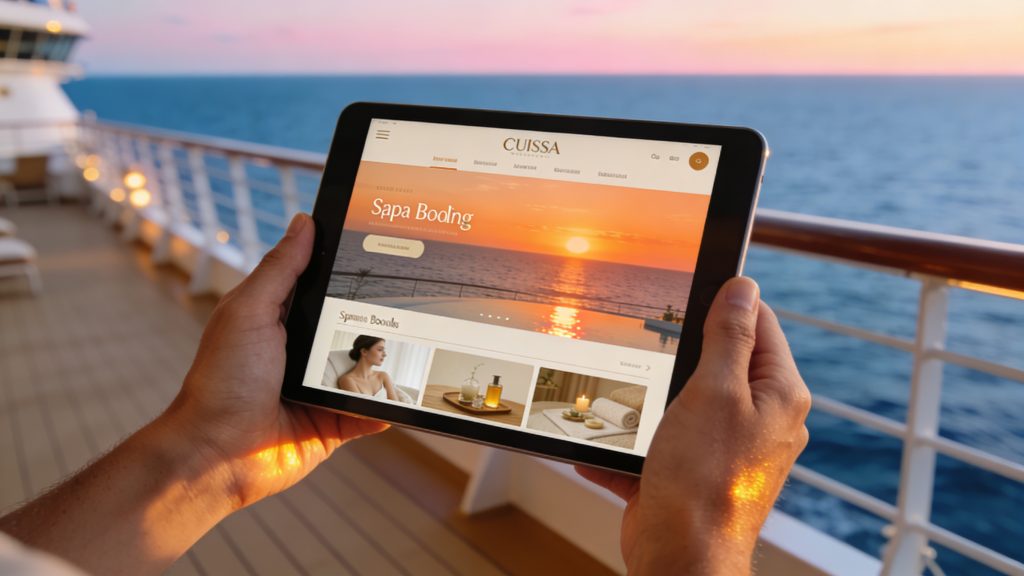
Spa treatments on board are often fully booked within a few hours of departure, especially on sea days. Anyone who doesn’t book in advance will regularly find closed doors, or only have the least popular time slots left. With the right timing and approach, you greatly increase your chances of getting a spot for your favourite massage or facial. That way, your cruise really does become a relaxing experience.
Why spa appointments get booked up so quickly
On a cruise with thousands of passengers, the spa is relatively small. Most ships have between four and ten treatment rooms. Only a limited number of appointments is possible per day. Popular treatments such as hot stone massage, couples’ treatments and anti-ageing facials are often fully booked within a few hours of departure.
The demand is especially high on sea days. Passengers are free all day and want to enjoy a relaxing treatment. If you are going on your first cruise, it’s important to know this. The price of a massage is on average between 130 and 180 euros for a 50-minute session. This is comparable to prices ashore.
‘ This is the best option if you want to be sure of getting a spot. ’
Book as soon as you get on board
The most effective strategy is to go to the spa immediately after check-in. On many ships, you can make an appointment from the moment of embarkation. Don’t wait until you have seen your cabin or explored the ship first. Go straight to the spa on deck 11 or 12 and reserve your desired treatment and time.
Some cruise lines offer the option to reserve online before departure. This can be done via the cruise app or website. This is the best option if you want to be sure of getting a spot. So check as soon as you book your cruise whether this option is available. Note: booking early usually means paying early, and cancelling may involve charges.
Which treatments are the most popular
Not all treatments book up at the same speed. Some options are snapped up first, so it’s wise to anticipate availability. The following treatments are usually the first to sell out:
- Hot stone massage
- Couples’ massage
- Deep tissue massage
- Anti-ageing facials
- Body treatments with scrub and wrap
Less popular, and therefore available for longer, are foot and hand treatments, basic manicures and shorter 25-minute facials. Are you flexible in your choice? Then you’ll have a better chance of finding a good slot.
Sea days versus port days
On sea days, when the ship is sailing to the next destination, almost all passengers want to stay on board and look for relaxation in the spa. This makes sea days the busiest days for treatments. Port days, on the other hand, are quieter because many passengers go ashore.
Want to save money and have more choice? Then book an appointment on a port day. The chances are high that you’ll get a better time slot and sometimes there are even promotions. Expect that treatments on a sea day can be fully booked within an hour of departure.
How to make a reservation in practice
Most cruise ships use three ways to book a spa appointment:
- In advance online via the cruise line’s app or website
- Directly upon arrival on board at the spa reception
- By phone from your cabin during the cruise
The spa reception is usually open daily from 8:00 to 22:00. You can walk in. You can also call via the intercom system in your cabin. Some ships have a digital overview of availability on the TV screen in your cabin. This is not standard with all cruise lines.
Note that a reservation is only final once it has been confirmed. Enter your details. Check the time. Receive a paper or digital confirmation. Keep it until after your treatment.

Special requests and medical considerations
When you book a treatment, you are often asked for medical information. This is for good reason. Some treatments are not suitable during pregnancy, with high blood pressure or skin conditions. After recent surgery, certain treatments are also not recommended. Always provide this information honestly.
Many on-board spas also offer pregnancy massages. These are specially adapted for expectant mothers. These treatments are safe and comfortable, but must be booked explicitly. Ask about the options and any restrictions when making your reservation.
Couples’ treatments and group bookings
Couples’ treatments are popular with partners. They are carried out in a separate suite with two treatment beds. These rooms are scarce and are often the first to be booked up. Ideally, reserve this type of treatment online in advance or otherwise immediately upon arrival on board.
For group bookings, it’s best to contact the spa by phone before you travel. This applies, for example, to a hen do or birthday. This allows the staff to take your group into account and, if necessary, schedule multiple treatments back-to-back.
How much does a spa treatment on board cost
Prices vary by cruise line and type of treatment. On average, they range between 100 and 200 euros. A standard 50-minute massage often costs around 140 euros, a facial between 110 and 160 euros. Longer treatments or combinations can reach 250 euros or more.
Some ships offer package deals, such as a combination of massage and facial at a discount. These packages are often cheaper than separate bookings. Ask at the spa reception about any special offers or daily deals.
Bear in mind that gratuities are often added to your bill automatically. This is usually 15 to 18 per cent. It is charged directly to your cruise card, just like other services on board.
Tips to avoid disappointment
Even with good preparation, it can happen that your preferred treatment is already fully booked. So keep the following advice in mind:
- Choose a second and third option in case your first choice is full
- Book early in the morning or late in the evening as an alternative time
- Ask if you can be put on a waiting list for cancellations
- Consider a treatment on a port day
- Ask about less well-known treatments that are similar
It regularly happens that passengers cancel or reschedule their appointment. Are you on a waiting list? Then there is a good chance you will still be called. When you check in, clearly indicate that you are interested in any slots that become available.

Using spa facilities without a treatment
In addition to treatments, most ships also offer spa facilities with free access. Think of a sauna, steam room and thermal areas. These are often accessible free of charge. With some cruise lines, there is a small daily fee of 20 to 30 euros for a day pass.
This is a good alternative if you haven’t managed to book a treatment or if you simply want to relax without major costs. The thermal suite is usually quieter than the pool. It offers a calm environment with sea views.
Final check before departure
Make a plan before you board. Look at your cruise itinerary. Identify the sea days. Decide on which day you would most like a spa treatment. Note down alternatives. Check whether your cruise line offers online reservations. Sign up for the cruise app.
Want to learn more about how to prepare for a cruise? Then also read our guide to your first cruise for complete preparation tips, packing lists and practical advice on what you can and cannot expect on board.
Frequently asked questions
It’s sensible to book spa treatments as soon as your travel dates are fixed, especially if the treatment is an important part of your trip. Do this extra early at weekends, during holidays and public holidays, because popular time slots fill up quickly then. Ideally, book before departure, so you can plan your route and stopovers around the treatment. If you are flexible or like to book spontaneously en route, you can still call on the spot or on the day itself, but availability is then not guaranteed.
Use your travel route as a starting point: first look for spas in or near the places you are visiting anyway, and filter by distance/walking time from your accommodation or public transport stop. Then compare prices, duration and included facilities (sauna, baths, towels) via the website or booking platforms, and look out for weekday or morning rates, which are often cheaper. Check reviews specifically for hygiene, how busy it gets and the competence of therapists, so you don’t compromise on quality. Finally, book well in advance and call the resort if you are unsure or to ask about package deals, which often give better value than separate treatments.
Essential are flexible cancellation conditions that allow you to change or cancel at no cost up to shortly before the appointment, for example up to 24–48 hours in advance. It’s important that if your route or timing changes, you can move your treatment free of charge to another day or location if it’s part of a chain. Also pay attention to clear rules regarding no-show fees, partial refunds and any exceptions at weekends or during holidays. Finally, check whether cancellation can easily be arranged online or by phone during your road trip.
Use local sources: ask at your accommodation or locals about small, non-touristy bathhouses, hammams or wellness centres they go to themselves. Search in the local language plus terms such as “public bath”, “onsen”, “thermal spa” or “hammam” on Google Maps and filter for a low number of reviews with high scores; these are often hidden gems. Also look at local blogs or Instagram/TikTok location tags to find places mainly shared by residents. Book well in advance, but keep one morning or evening free to spontaneously try a neighbourhood spa that you discover during your stay.
Compare treatments, duration and included facilities at different spas online in advance, and check what is and isn’t included in the price (entry, robe, drinks). Read recent reviews to assess the quality of treatments, hygiene and service in relation to the price. If possible, book a package (entry + treatment) if that works out cheaper than paying for everything separately, and avoid the most expensive peak hours if you can be flexible. Confirm your reservation in writing and check the cancellation conditions so you don’t pay unnecessarily if your plans change.