
 NL
NL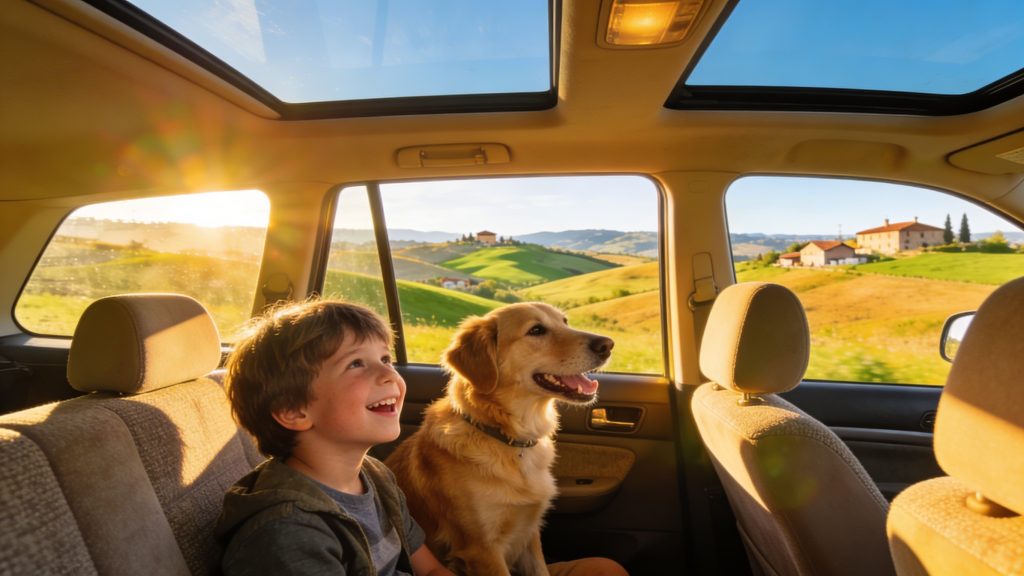
European countries apply strict rules for transporting children and pets in the car. From mandatory pet seatbelts and child seats that comply with EU standards to country-specific fines and requirements for rest breaks. With good preparation you can avoid unpleasant checks and ensure the safety of your family and your faithful four-legged friend. This article gives you all the practical information you need to make your road trip through Europe both correct and comfortable.
Which documents and requirements apply for pets
For dogs, cats and ferrets within the EU a harmonised system applies. Your pet needs a valid EU pet passport, issued by an authorised vet. This contains the microchip identification and the compulsory rabies vaccination, which must have been administered at least 21 days before departure.
All animals must have an electronic microchip with a unique number that is recorded in the passport. Puppies and kittens may only travel from 15 weeks of age. They must first be 12 weeks old for vaccination. After that there is a waiting period of 21 days. Belgium, Germany and the Netherlands do not accept animals younger than 15 weeks without full immunity.
Specific countries impose additional requirements. For Finland, Ireland, Malta, Norway and Northern Ireland, treatment against fox tapeworm is compulsory. You may take a maximum of 5 animals with you. More animals are only allowed for competitions. In that case you must be able to show an official confirmation of participation or competition registration. For a complete overview of all traffic rules, also check the page about traffic rules and driving abroad.
‘ Loose animals in the car are prohibited and can lead to heavy fines. ’
How to transport pets safely in the car
In Germany and the United Kingdom your dog must be secured. This can be done with a special car seatbelt, in a crate, or behind a safety barrier. This prevents the animal from being thrown around the car in an accident or sudden stop. Loose animals in the car are prohibited and can lead to heavy fines.
In Hungary you must use a muzzle and lead during transport. This applies to all dogs. Italy and Austria require dogs to be on a lead in public spaces, which also applies during breaks on the road. A secure crate or travel kennel provides protection and comfort, especially on longer journeys. For cats, a sturdy travel crate with good ventilation is the best solution.
Preferably use ISOFIX fastenings for pet seatbelts. ISOFIX is a standard attachment system in modern cars. Make sure the crate stands firmly and cannot slide in bends or when braking. Plan fuel stops en route with dog parks. At these stops your pet can move around and drink. Avoid travelling during the hottest hours of the day and ensure sufficient ventilation in the car.

What fines do you risk for incorrect transport of animals
Fines for not securing pets correctly vary by country. In Germany you risk fines of up to 60 euros for a loose dog in the car. Southern European countries apply higher amounts, especially during checks on motorways and at border crossings.
If a valid pet passport, chip documentation or rabies vaccination is missing, you run a greater risk. When entering the EU, authorities may place your pet in quarantine. They can also send the animal back to the country of origin. In extreme cases they may have the animal put down. Always check before departure that all documents are complete and up to date.
What are the child seat requirements in Europe
EU Directive 2003/20/EC makes approved child seats compulsory for all children from birth up to 150 centimetres or 36 kilograms. Seats must comply with the ECE R44/04 standard or the newer i-Size R129 standard. These are European safety standards for car seats. These standards determine that the seat is suitable for the child’s height and weight. Each seat is suitable for a specific weight or height category.
Each country has additional rules:
- Germany: Children younger than 12 years or shorter than 150 centimetres must sit in the back seat in an approved seat. Fines can go up to 60 euros for using an incorrect seat.
- France: Child seat compulsory up to 10 years. The fine for violations is 135 euros.
- Spain: Child seat compulsory up to 135 centimetres. Children above this height may sit in the back with a seatbelt.
- Italy: Seat compulsory up to 150 centimetres. Fines range between 80 and 300 euros.
- Switzerland and Norway: i-Size is recommended. No strict obligation to sit in the back, but it is strongly advised.
The German police carry out strict checks on motorways. They pay particular attention to the correct securing of children and pets. Preferably use your own child seats so they are compatible with your car. When hiring a car, check in advance whether approved seats are available. ISOFIX fastenings make installation easier and safer.
‘ Children need to move and pets need to be able to wee and drink. ’
How to combine pets and children in one car
The layout of the car requires extra attention if you take both children and a pet with you. Ideally, place the animal in a crate in the back. Put the child in a child seat in the front. This way you maintain a clear view and prevent distractions while driving.
With a larger car or estate, use the boot space for the crate. Install a safety barrier between the boot and the back seat. This way, children can sit safely in the back and the pet has enough space without contact with the passengers.
Take sufficient breaks at least every two hours. Children need to move and pets need to be able to wee and drink. Plan stops at service stations with green areas or special dog parks. Make sure snacks, toys and water bowls are quickly accessible during breaks.
Which special points of attention apply for young animals
Vets advise against taking puppies younger than six months. Young animals become stressed by long car journeys. Unfamiliar environments also cause tension. The risk of illness during the trip is greater because their immune system is not yet fully developed.
For cats, pheromone spray helps to reduce stress. Pheromone spray contains synthetic scent substances that calm cats. Spray the crate half an hour before departure. At home, leave the crate open gradually with a blanket inside so your cat can get used to it. Start with short trips so the animal gets used to the car.
Do not feed your pet shortly before departure. This helps prevent travel sickness. Do take enough water and food with you for the journey. Also take water and food for when you reach your destination. Stick to the usual feeding schedule to disrupt the routine as little as possible.
What you need to know about transit and return
When transiting through several countries you must follow the rules of each country. If you drive from the Netherlands via Belgium to Spain, the requirements of all three countries apply. Check before departure whether transit countries impose additional requirements.
Since Brexit, the United Kingdom requires tapeworm treatment for dogs. This is a specific deworming treatment against a particular parasite. Scandinavian countries have strict checks on tapeworm treatments. Tapeworm treatments are deworming courses against tapeworm infections. Balkan countries are generally more lenient, but they still check the microchip and passport at the border.
The return journey is sometimes subject to stricter requirements than the outbound journey. Some countries, for example, require an additional health certificate from a local vet. Some countries require a blood test when returning from non-EU areas. This blood test checks whether your pet has contracted rabies or other infections. Have a vet check all documentation before departure. Check the passport, vaccinations and chip details. This prevents problems at border crossings and ensures a smooth journey.
Handy checklist for your road trip with family and pet
Good preparation prevents problems on the road and at border crossings. Before departure, make a checklist with the following points:
- EU pet passport with microchip number and valid rabies vaccination
- Approved child seats in accordance with ECE R44/04 or i-Size R129
- Pet seatbelt, crate or safety barrier for in the car
- Travel first-aid kit with medicines for people and animals
- Water bowls, food and snacks for on the road
- Toys and blankets to reduce stress
- Contact details of vets along the route and at your destination
Register dogs on arrival in the destination country if required. Check before departure whether the destination country requires registration. This information is usually available on the country’s official government website. Plan your route with sufficient stops. Avoid travelling during extreme heat. Preferably drive in the morning or evening when it is cooler. Make sure there is air conditioning and shade in the car. Children and animals are particularly sensitive to heat.
On the Traveler Tips website you will find much more information about routes through Europe, practical tips for travelling by car and detailed info about specific destinations. Discover how to plan your holiday more smartly. Also check which specific rules apply in your destination country.
Frequently asked questions
The text is about rules and tips for driving with pets and children in the car in Europe. It sets out EU-wide requirements, such as microchip, passport and rabies vaccination for pets and approved child seats for children. It also mentions additional rules and fines per country, plus practical travel tips (safe securing, breaks, avoiding heat).
The answer discusses driving with pets or children in Europe. For pets you need, among other things, an EU pet passport, microchip and rabies vaccination, and sometimes additional treatments (such as for tapeworm), depending on the country. Children must use an approved child seat (ECE R44/04 or i-Size R129) up to around 150 cm/36 kg, with country-specific differences in fines and details. In many countries, having animals and children loose in the car is prohibited and there are extra rules for safety, where they sit in the car and which documents you must have.
The document “[object Object]” is about travelling safely and legally with pets and children by car within Europe. It describes the EU rules on microchip, EU pet passport, rabies vaccination and sometimes extra deworming, plus country-specific requirements such as compulsory seatbelt/crate for dogs in countries including Germany and the UK. For children it explains that approved child seats (ECE R44/04 or i-Size R129) are compulsory up to around 150 cm or 36 kg, with different age limits and fines per country. It also gives practical tips for preparation, safety on the road and travellers’ experiences.
The answer cannot be determined because “[object Object]” does not contain a substantive question or topic.