NL
NL
A round trip through Heidelberg, Rothenburg, Garmisch, and Munich offers a complete experience of Southern Germany: from medieval city walls and academic charm to alpine nature and royal castles. By train, you can travel relaxed between these destinations and discover the region’s most beautiful contrasts in eight to ten days. Ideal for those who consciously choose comfortable travel without the stress of traffic jams or searching for parking spaces.
Why this route is logical for a train journey
The four destinations are geographically aligned from west to east. Heidelberg forms the starting point on the western side of Baden-Württemberg, Rothenburg is more central in Franconia, Garmisch-Partenkirchen marks the Alpine border, and Munich concludes the trip as a metropolis. This order makes optimal use of the extensive Deutsche Bahn network without long detours or annoying transfers.
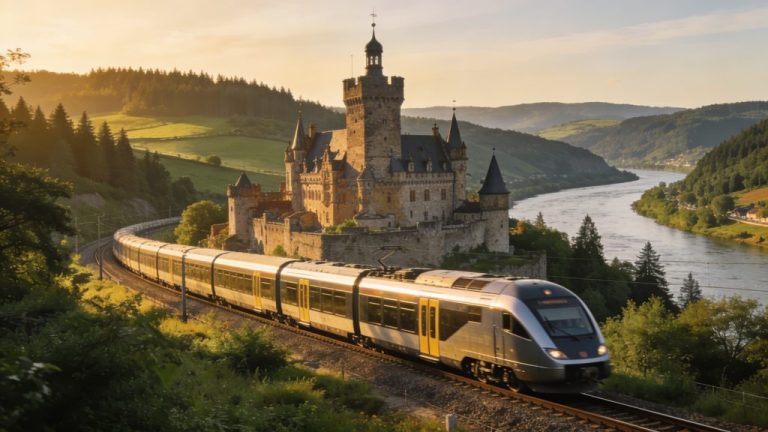
All cities are accessible by direct or regional trains. Heidelberg and Munich are major hubs. You can connect to Rothenburg and Garmisch-Partenkirchen via regional lines. One of these is the Bayerische Oberlandbahn. A train holiday in Germany with this route offers you the freedom to travel at your own pace and enjoy the landscape along the way.
With nine to ten days, you can divide your time logically: two to three days per city. This leaves room for day trips to Neuschwanstein, the Eibsee, or the surrounding wine regions. You experience every destination without feeling rushed.
‘ The Heidelberg Castle towers above the city and offers one of the most beautiful panoramic views over the Neckar. ’
Heidelberg as the starting point of your journey
Heidelberg is a city with a rich history, and also home to a vibrant student culture. The Heidelberg Castle towers above the city and offers one of the most beautiful panoramic views over the Neckar. The castle itself is a mix of Gothic and Renaissance styles, with ruins that give it a unique atmosphere.
Walk across the Alte Brücke (Old Bridge), the historic bridge with copper statues and a bridge gate tower. The tower dates back to the Middle Ages. On the other side of the river begins the Philosophenweg (Philosophers’ Walk). Professors and thinkers used this trail in the past for their contemplations. The path offers a quiet climb with sweeping views over the city and the castle.
Heidelberg is located in the Baden wine region. Visit a local wine tasting or sample regional wines at one of the traditional wine houses in the city centre. Plan on two full days to explore the city and its immediate surroundings.
Rothenburg ob der Tauber and medieval charm
Rothenburg ob der Tauber is one of the best-preserved medieval cities in Germany. The city wall is completely intact and runs for approximately 3.5 kilometres around the centre. You can walk along the wall. Via the 40 towers, you will discover various views of the city and the surrounding landscape.
The Marktplatz forms the central point, featuring the town hall and historic rows of facades. The square is surrounded by half-timbered houses, which are characteristic of the architecture of this region. Visit the Mittelalterliches Kriminalmuseum (Medieval Crime Museum). The museum showcases justice and punishment methods from earlier centuries.
Rothenburg is located on the Romantic Road, a tourist route through Southern Germany. The route is known for its picturesque small towns. Plan at least two days for this city, leaving space for a leisurely exploration of the narrow streets and an evening walk along the illuminated city wall.
Garmisch-Partenkirchen between mountain and lake
Garmisch-Partenkirchen is the gateway to the Bavarian Alps. The twin town lies at the foot of the Zugspitze, the highest mountain in Germany. The Ludwigstraße showcases traditional Bavarian architecture. You will see painted facades and wooden balconies.
The Eibsee is a crystal-clear mountain lake about ten kilometres away, accessible by bus or local train. The lake is nestled between cliffs and forest, with clear green-blue water that is popular with hikers. The walking circuit around the lake takes about two hours.
From Garmisch-Partenkirchen, you can easily depart for a day trip to Füssen, where you can visit Neuschwanstein Castle. The train journey takes 55 minutes. Neuschwanstein is the most photographed castle in Germany and served as inspiration for fairy-tale castles worldwide. Book your tickets online in advance, as they are often sold out on site.
Plan two to three days for Garmisch-Partenkirchen, depending on how many hikes or excursions you wish to take. The area offers many routes for both beginner and experienced hikers.
‘ The city offers more than you can see in that time. ’
Munich as the conclusion of the route
Munich is a city full of royal splendour. At the same time, you can feel a modern metropolitan energy. The Marienplatz is the beating heart of the city, with the Neues Rathaus (New Town Hall) and the daily Glockenspiel that plays at 11:00 and 12:00. The square serves as the starting point for exploring the city centre.
The Viktualienmarkt is within walking distance and is an open-air market where local products, sausage, cheese, and beer are sold. It is a great place to taste the Bavarian food culture. Try traditional dishes such as Schweinshaxe (pork knuckle) or Weißwurst with sweet mustard.
Schloss Nymphenburg (Nymphenburg Palace) is located just outside the centre and is reachable by tram 17. The Baroque palace was the summer residence of the Bavarian kings. It features extensive gardens with pavilions and fountains. A visit takes about three hours on average.
Plan three days for Munich. The city offers more than you can see in that time, but you will get a good impression of the most important sights, museums, and the atmosphere of the various districts.
Practical planning for this train journey
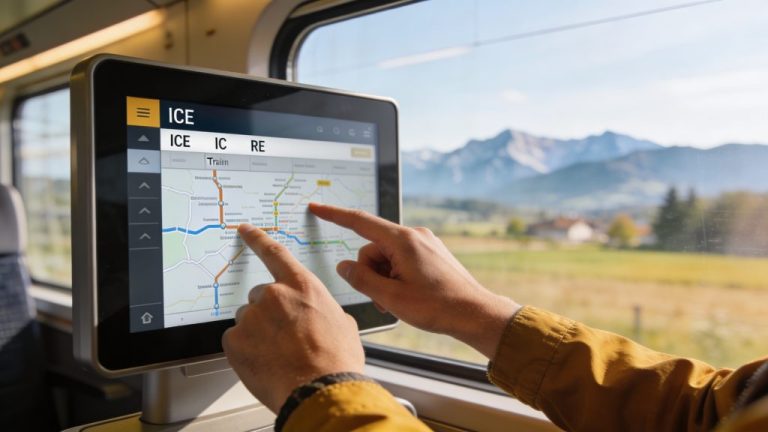
Use the DB Navigator app for current train connections, departure times, and ticket purchases. This is the official app of Deutsche Bahn. The app shows real-time delays and alternative routes. Buy tickets in advance for cheaper fares, especially for journeys between major cities.
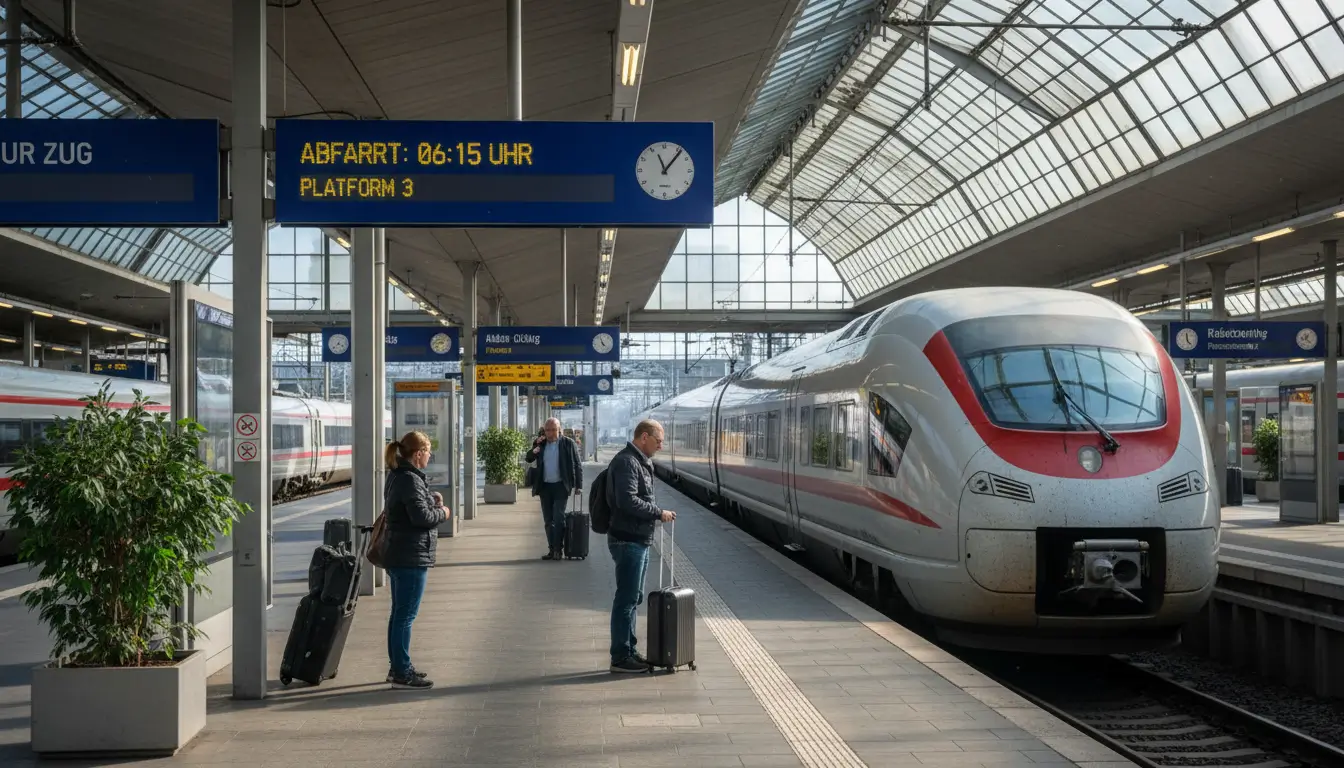
An Interrail pass (a rail pass that allows you unlimited train travel) is often advantageous in many cases. This is especially true when you plan multiple travel days within a short period. Compare the costs of individual tickets with a rail pass before you decide. Regional trains do not require a reservation. For high-speed connections such as the IC and ICE (both types of Deutsche Bahn high-speed trains), seat reservations are recommended during busy periods.
Divide the nights logically across the four cities:
- Heidelberg: 2 nights
- Rothenburg: 2 nights
- Garmisch-Partenkirchen: 2 nights
- Munich: 3 nights
This distribution gives you enough time per destination without moving every day. Book accommodation close to the train station for easy check-in and check-out with luggage.
What you should know about travelling in this region
Southern Germany has a well-developed public transport system. Trains run punctually, and stations are usually well signposted. Buy a local transport ticket in Munich for tram, metro, and bus if you are making multiple trips per day.
German trains have strict regulations for luggage. In practice, you can take suitcases with you without any problems. Ensure that your luggage does not block the aisles and use the racks above the seats or the luggage areas near the doors.
Be aware of German public holidays and local events such as Oktoberfest in Munich, which takes place in September and early October. Accommodations and trains are booked up faster and are more expensive during these times. Plan further ahead during Oktoberfest and on German public holidays.
‘ On the Traveler Tips website, you will find extensive articles on destinations, preparation, and smart planning for your next trip. ’
Discover more on Traveler Tips
This round trip provides you with a solid introduction to the diversity of Southern Germany. Would you like to know more about other train routes through Europe, practical tips for travelling by train, or sights in adjacent regions? On the Traveler Tips website, you will find extensive articles on destinations, preparation, and smart planning for your next trip. Discover more inspiration and useful information that will help you prepare for your next holiday.
Frequently asked questions
The most efficient and rewarding route is west–east: Heidelberg → Rothenburg ob der Tauber → Garmisch-Partenkirchen → Munich. In this way, you follow a logical geographical line, limit travel times between the cities, and build the trip up from wine city through medieval charm to Alpine landscape, concluding with a large metropolis. This sequence fits well with the German rail network, with smooth connections between all stages.
For this specific route (Heidelberg – Rothenburg ob der Tauber – Garmisch-Partenkirchen – Munich), the train offers the best balance between flexibility, comfort, and cost, thanks to good connections, no parking stress, and competitive (regional) tickets. The most scenic train routes are particularly the section along the Tauber towards Rothenburg, the ride through Bavaria to Garmisch-Partenkirchen, and further through the Alpine region (e.g., towards Füssen/Neuschwanstein and Eibsee).
In Heidelberg, outside of the castle and the Alte Brücke, you can walk the Philosophenweg and discover small wine bars in the Baden wine region. In Rothenburg ob der Tauber, the city wall walk at sunset and an evening in a traditional Rat-Keller are typical hidden gems. Around Garmisch-Partenkirchen, quiet walks around the Eibsee and through the traditional streets of old Partenkirchen are very authentic. In Munich, you will experience local life especially at the Viktualienmarkt and in less touristy beer gardens in residential areas outside the centre.
Plan 2–3 full days per city, so that you have one day for the absolute highlights and one (or more) for leisurely wandering, a day trip, or spontaneous discoveries. Schedule the longest travel stages early in the day or in the evening, so you do not lose valuable middle-of-the-day hours. Use the DB app (or similar train apps) in Germany for real-time travel information, reservations, and platform changes, and travel with as few transfers as possible to limit stress. Travel bags instead of large suitcases, accommodation close to stations or in the centre, and pre-saved offline maps (Google Maps/Maps.me) make navigating between cities and within the city noticeably more comfortable.
In Heidelberg and Rothenburg, many city centres are low-traffic or have limited parking; you usually park in parking garages or P+R areas just outside the centre. Munich has extensive environmental zones (Umweltzone) where only cars with a valid environmental sticker may drive, plus busy, often expensive parking garages in and around the Altstadt (Old Town). In Garmisch-Partenkirchen and the Alpine region, seasonal traffic rules sometimes apply, such as mandatory snow chains or restrictions on mountain roads and parking lots near popular lakes and cable cars. In all cities, you must take into account clear signage around pedestrian zones, maximum speeds in residential areas, and any local entry bans for campers and larger vehicles.