 NL
NL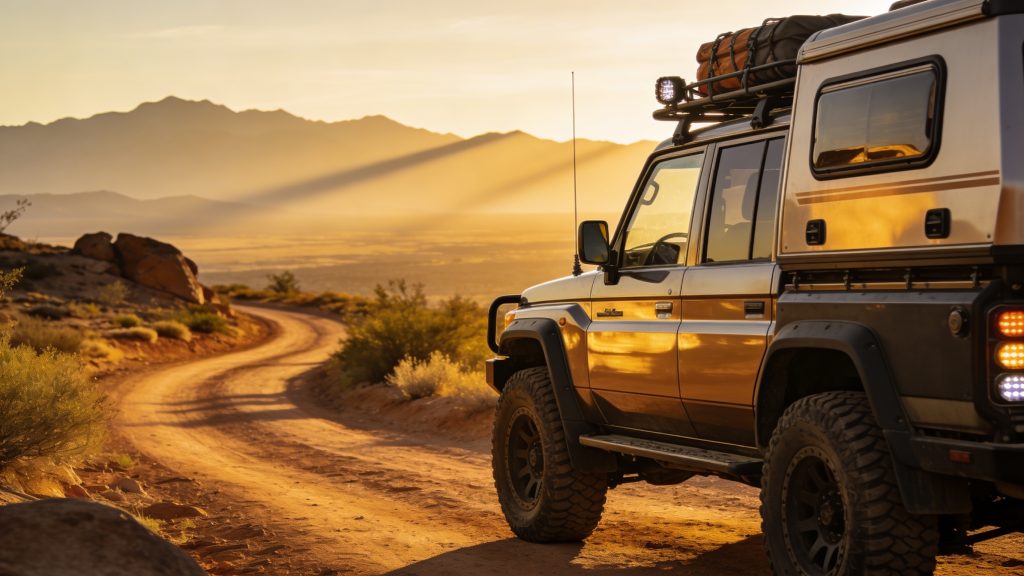
A 4×4 camper with a raised chassis and all-terrain tyres opens the door to remote destinations that standard motorhomes simply can’t reach. These specialised vehicles combine four-wheel drive with full camping functionality. You can explore gravel tracks in the Balkans, tackle mountain passes in the Alps or drive rugged routes in Scandinavia – without giving up your comfort. Discover which camper types are suitable for off-road use and how to maintain your 4×4 camper for long trips through challenging terrain.
What makes a 4×4 camper suitable for off-road use
A 4×4 camper stands out thanks to the technical specifications needed for driving away from paved roads. Four-wheel drive provides grip on mud, gravel and steep inclines. The raised chassis gives you the ground clearance you need to drive over rocks and uneven surfaces without damaging the underbody.
Besides the drivetrain, the build itself plays an important role. Off-road campers have reinforced chassis frames that absorb shocks and impacts better. All-terrain tyres with a deep tread provide grip on a range of surfaces, from rocks to sand. The bodywork needs to remain compact to keep the centre of gravity low, which increases stability on sloping ground.
Modern 4×4 campers are often equipped with off-grid systems such as solar panels, large battery packs and water purification systems. These features make it possible to stay for long periods in locations without facilities. Want to know more about the different layouts? Check the overview of all camper types to see which models offer four-wheel drive.
‘ The downside is higher weight and a higher centre of gravity, which means you need to take extra care when cornering. ’
Which 4×4 camper types are best for off-road
Different platforms form the basis for off-road campers, each with specific characteristics. Your choice depends on the type of trip you are planning and the terrain you want to explore.
Expedition campers on commercial vehicle platforms
MAN TGE and Mercedes Sprinter 4×4 variants are popular bases for camper converters. These vehicles combine powerful engines with industrial durability. A MAN TGE base, for example, delivers 177 hp and high torque, suitable for steep mountain roads with a lot of weight on board. The cab offers room for a fully fitted living area with insulated walls for four-season use.
Ford Transit and Fiat Ducato are also converted into off-road campers, although their standard four-wheel-drive systems are less robust than those of German commercial vehicles. Specialists often add reinforcement to the suspension and fit larger tyres to improve capability.
Pick-up trucks with camper unit
RAM, Toyota Hilux and Ford Ranger form another category. Here, a separate camper unit is placed on the load bed. This setup gives you flexibility: you can remove the unit and use the pick-up separately. RAM platforms are often combined with AEV Prospector kits. These are complete conversion kits that further increase ground clearance and add specific off-road components.
This configuration is suitable for extreme terrain conditions because the chassis frame of a pick-up can handle higher loads than that of a van. The downside is higher weight and a higher centre of gravity, which means you need to take extra care when cornering.
Compact overland vehicles
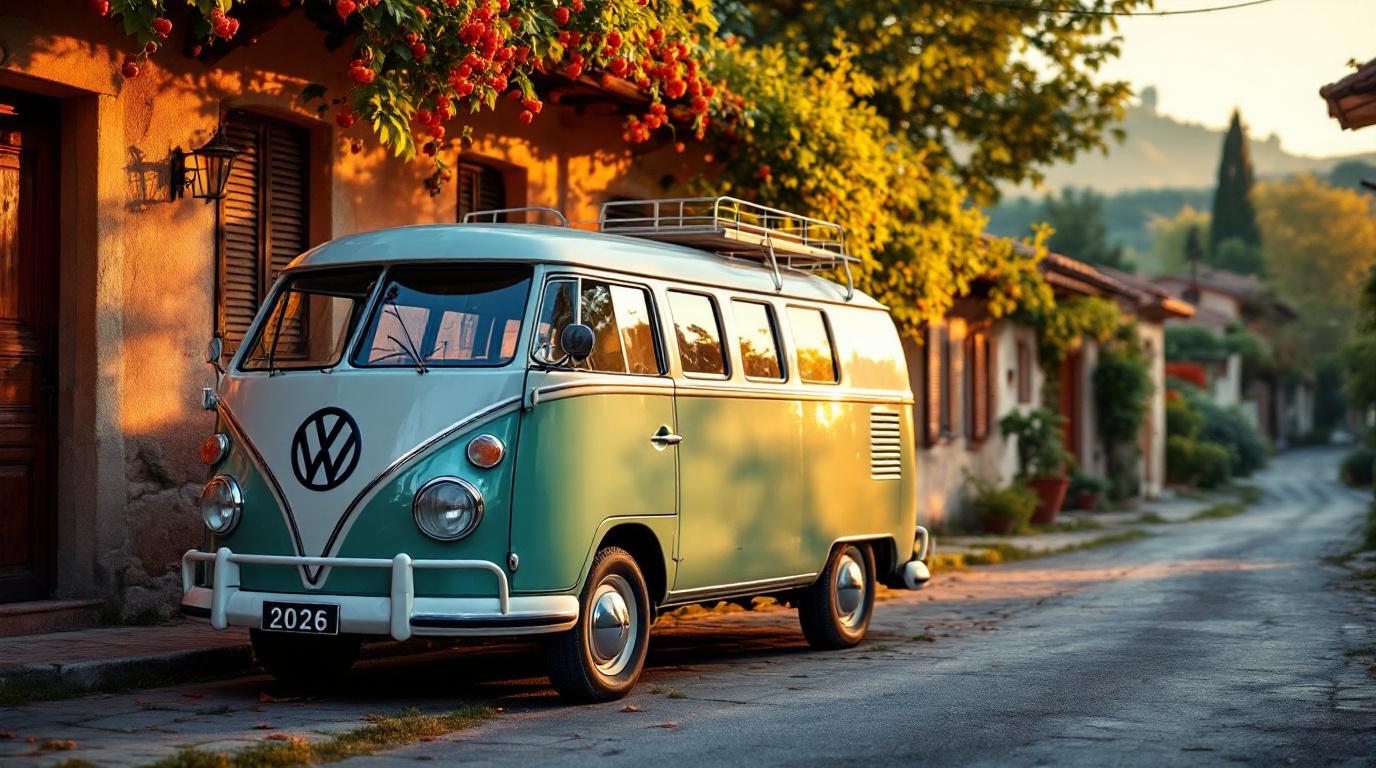
Land Rover Defender and Volkswagen T3 Syncro represent smaller off-road campers. These vehicles are more manoeuvrable on narrow mountain roads and forest tracks. Interior space is limited, so you need to opt for a minimalist layout, suitable for one or two people.
Key features for long-term off-road use
When selecting a 4×4 camper for extended trips through rough terrain, certain technical features are essential.
Power supply and insulation
Solar panels with a capacity of at least 300 watts provide an independent power supply. Combine these with lithium batteries of 200 ampere-hours or more for sufficient storage. This system allows you to run fridges, heating and lighting without an external hook-up.
Four-season insulation keeps the camper warm during Scandinavian winters and cool in summer heat in southern Europe. Double-glazed windows prevent condensation and heat loss. Floor, wall and roof insulation of at least 30 millimetres thick is standard on expedition models.
Water and storage
Fresh water tanks of 100 litres or more are necessary for multi-day trips without facilities. A separate grey-water tank prevents you from having to discharge waste water into nature. Some systems include filters that make river water drinkable, which is useful in areas with natural water sources.
Storage space needs to be well organised to keep weight evenly distributed. Convertible furniture such as dinettes makes efficient use of limited space, turning into beds at night. Secure all loose items firmly to prevent them from shifting while driving off-road.
Maintaining your 4×4 camper for rugged trips
Regular maintenance prevents breakdowns in remote locations, where help is often far away. This requires more attention than with standard motorhomes.
Checks before departure
Test all off-grid systems a few weeks before departure. Check whether the solar panels are charging correctly, the water pump is working and the heating functions properly. Inspect tyre tread and pressure, taking into account the weight of full supplies. All-terrain tyres wear faster on tarmac, so replace them in good time if you plan to drive many unpaved roads.
Check the condition of the shock absorbers and suspension. These components take a lot of punishment on rough terrain and may need replacing after intensive use. Lubricate all pivots and hinges to prevent squeaking noises and wear.
Maintenance during the trip
Clean the underbody regularly, especially after driving through mud or salt water. Caked-on mud can cause rust and hide any damage to components. Check oil level and coolant daily, as harsh conditions increase consumption.
Keep an eye on tyre pressure. On soft surfaces such as sand you lower the pressure for more grip, but raise it again on paved roads. Inspect tyres for cracks or embedded stones that could cause a puncture.
Supplies and spare parts
Always take spare oil, coolant and windscreen washer fluid with you. A spare wheel is a given; consider taking a second one for long trips through areas without facilities. Basic tools such as a jack, tyre inflator and repair kit for small punctures are indispensable.
Specific spare parts such as belts, fuses and bulbs are difficult to find in remote regions. Make a list based on your vehicle type and bring the most vulnerable parts. A small stock of cable ties and duct tape often solves temporary problems until you reach a garage.
‘ Facilities are limited, so self-sufficiency is important. ’
Suitable destinations for 4×4 campers in Europe
Europe offers plenty of opportunities for off-road travel with a camper. Some regions are particularly suitable thanks to their infrastructure and types of terrain.
Balkan gravel routes
Albania, Montenegro and North Macedonia have extensive networks of unpaved mountain roads. These routes connect remote villages and give access to pristine natural areas. The roads are often narrow with steep gradients, where four-wheel drive and good ground clearance are essential.
Facilities are limited, so self-sufficiency is important. Plan routes in advance and check local information on road conditions, especially after rainfall when roads can become difficult or impossible to drive.
Scandinavian wilderness tracks
Norway, Sweden and Finland have extensive forest tracks and mountain passes that are suitable for off-road campers. The right to roam gives you access to many areas for wild camping, provided you treat nature with respect.
Being prepared for changeable weather is crucial here. Even in summer, temperatures can drop sharply, especially in northern regions above the Arctic Circle. Good insulation and reliable heating are therefore essential.
Alpine mountain passes
Austria, Switzerland and Italy offer high mountain passes with spectacular views. Some routes are only accessible in summer because of snow during other seasons. The steep inclines and hairpin bends demand good traction and engine power.
Pay attention to restrictions on vehicle weight and length on certain mountain roads. Not all passes are suitable for heavier expedition campers, so check this in advance.
Practical preparation for your first off-road trip
Your first off-road trip requires careful planning. Start with shorter trips close to home to get familiar with the vehicle.
Test your camper’s capabilities on different surfaces. Practise on gravel roads, in muddy conditions and on steep inclines before setting off on long journeys. Learn how the vehicle responds and where its limits lie.
Make both digital and paper maps available. GPS systems sometimes fail in remote areas, so a physical map is a reliable backup. Download offline maps on your smartphone for areas without mobile coverage.
Inform others of your route and expected arrival times. This is a safety measure in case you get stuck or need help. Consider a satellite communication device for areas without mobile reception.
Discover more on Traveler Tips
A 4×4 camper gives you the freedom to reach destinations that most travellers never see. Good preparation and regular maintenance ensure you travel safely and comfortably, even in challenging terrain.
On the Traveler Tips website you’ll find extensive information on route planning, camping regulations in different countries and tips for organising your trip. From practical checklists to detailed destination guides: discover all the information you need to make your next trip a success.
Frequently asked questions
First determine your off-road plans: how extreme will the terrain be, how long will you stay away from paved roads and how much autonomy do you need (fuel, water, power). Next, choose a 4×4 base with sufficient ground clearance, a robust chassis and a drivetrain that suits that use (light gravel tracks vs truly rough terrain). Then translate your comfort requirements into concrete demands such as insulation, bed size, kitchen and toilet/shower, interior height and storage space. Finally, create a shortlist and carefully weigh up, for each model, the trade-off between off-road performance (weight, simplicity) and comfort options (luxury equipment, interior space).
Essential preparations include thoroughly getting to know and testing your vehicle and off-grid systems, planning your route (including weather, terrain and fallback options) and estimating your water, fuel and food needs. Important equipment includes four-season insulation, solid all-terrain tyres and a robust chassis with high ground clearance for safe off-road driving. For comfort, you need well-organised storage, convertible furniture, sufficient sleeping space and your own water supply and toilet/shower. Solar panels with a reliable battery system also provide long-term, comfortable off-grid stays.
Use specialised off-road maps and apps (such as Komoot, Gaia GPS or local 4×4 guides) to analyse unpaved roads, difficulty levels and elevation profiles, and match them to the capabilities of your 4×4 camper. Combine these with satellite imagery (Google Earth) and topographic maps to check the surface, width of tracks and turning points. Look for regions known for off-road routes (for example the Alps, Scandinavia or rugged coastal and mountain areas) and consult local 4×4 clubs, forums and trip reports for specific coordinates and up-to-date information. Always plan alternative routes and check regulations, seasonal closures and permitted wild camping zones in advance to avoid problems.
Ensure sufficient self-sufficiency with a reliable energy supply (solar panels, good batteries), generous water tanks and cleverly organised storage for food, tools and spare parts. Choose a robust 4×4 vehicle with high ground clearance, good tyres and four-season insulation, and test all off-grid systems before you leave. Plan routes and seasons carefully, including emergency scenarios and alternative tracks, especially in remote areas. Travel sustainably by driving efficiently, avoiding off-road tracks outside permitted routes, and taking all your rubbish back with you.
Rules and permits for off-road driving vary greatly from country to country: in many European countries, unpaved tracks are only accessible if they are explicitly open to motor vehicles, while in, for example, Scandinavia and parts of Eastern Europe there is more freedom but nature reserves are strictly protected. Always check national and regional legislation (forest management, nature parks, hunting areas) and whether you need separate access permits, environmental stickers or parking permits. Take local customs into account, such as avoiding noise at night, respecting wildlife and livestock, and not entering private land without permission. Before you go, ask local off-road clubs, park rangers or tourist information offices about permitted routes and seasonal restrictions.