 NL
NL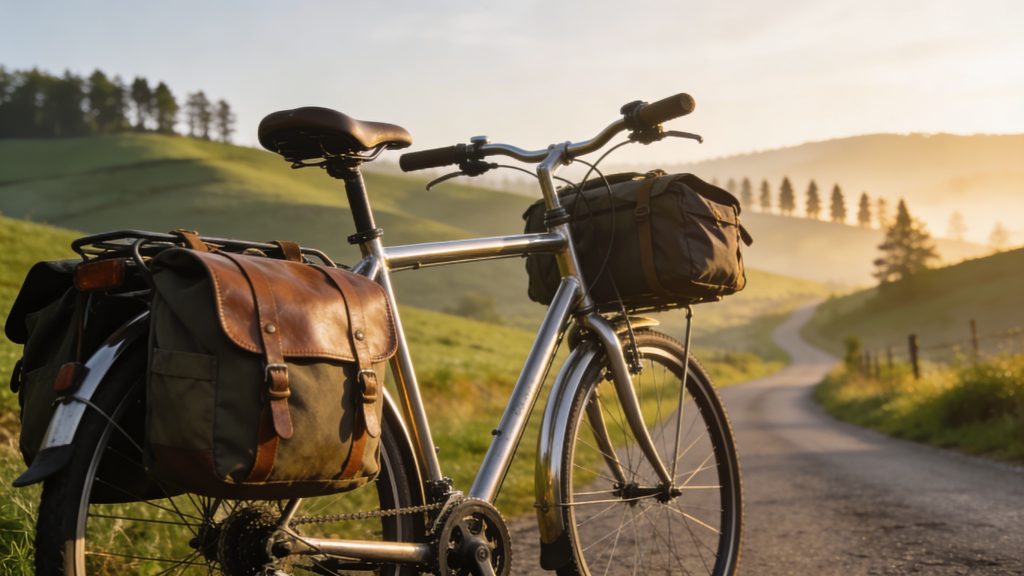
A first cycling holiday is not a success by pedalling harder, but by planning smartly and starting realistically. With a targeted build-up of your fitness, well-considered gear and a feasible route, you can avoid many beginner’s mistakes. Discover below how to work step by step towards a successful first multi-day cycling trip.
Start close to home with a realistic route
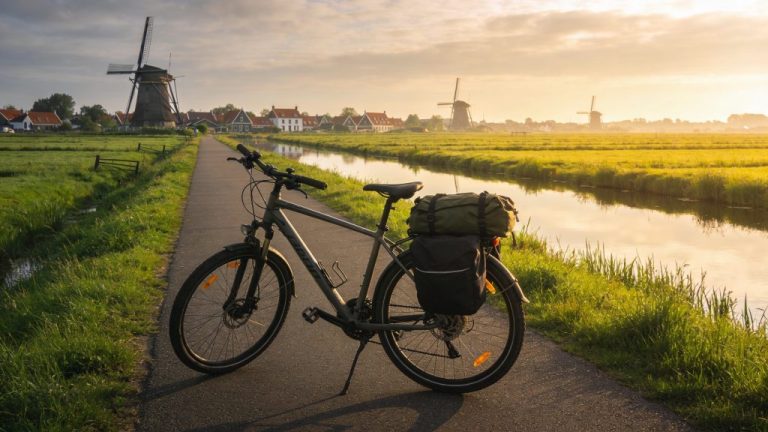
For your first multi-day cycling trip you do not need to go far away straight away. A route close to home or in a familiar region actually offers plenty of advantages. It is easier to adjust if something does not go as planned, and the mental barrier remains low. What matters is getting used to longer days in the saddle, cycling with luggage and sleeping in different places.
Choose a route with a realistic number of kilometres per day. For beginners, 40 to 60 kilometres a day is a good starting distance. That depends on your fitness and the terrain. Also pay attention to elevation gain and type of surface. People who plan cycling holidays often underestimate how much time navigation, breaks and shopping take. So plan not only cycling hours, but also time for rest and unexpected detours.
Test your route in advance on a map or with an app. Check where accommodation is located, where you can eat and whether there are alternative routes in case of bad weather or mechanical issues. This preparation will make you feel much more confident on the road.
Build up your fitness specifically for multi-day trips
Cycling with luggage over several days requires a targeted build-up of your fitness. This build-up is different from just casual recreational cycling. It is about riding longer distances. In addition, you need to get used to extra weight and several days of exertion in a row. Changing conditions such as wind and elevation differences also play a role.
Train with several rides per week. Increase the distance gradually. It is important not only to do long rides, but also to cycle on consecutive days. That way your body gets used to the load. That load continues for several days in a row. Test your bike during these training rides with the luggage you will also take on your trip.
During your training, pay attention to signals from your body. Typical points to watch are:
- Saddle area and saddle: regular cycling helps you get used to the saddle
- Wrists and shoulders: prolonged strain calls for a good riding position
- Legs and knees: gradual build-up helps prevent injuries
- Breathing and stamina: build this up with several rides
Start at least six weeks before your cycling holiday with targeted training. Begin with three to four rides per week of 20 to 30 kilometres and gradually expand this.
Use digital tools for planning and navigation
Modern planning tools make preparing your cycling holiday much easier. Apps such as Komoot offer bike-specific routes, information on surface and elevation profile. You can also make routes available offline. That is handy if you do not have an internet connection on the road.
When using navigation apps, it is sensible to:
- Download routes in advance for offline use
- Fully charge your phone before departure
- Take a power bank with you for longer days
- Carry a simple paper map or route description as a back-up
Do not rely entirely on one device. A phone can run out of battery or break. With a simple paper back-up you avoid getting lost.
Check your bike and skills before departure
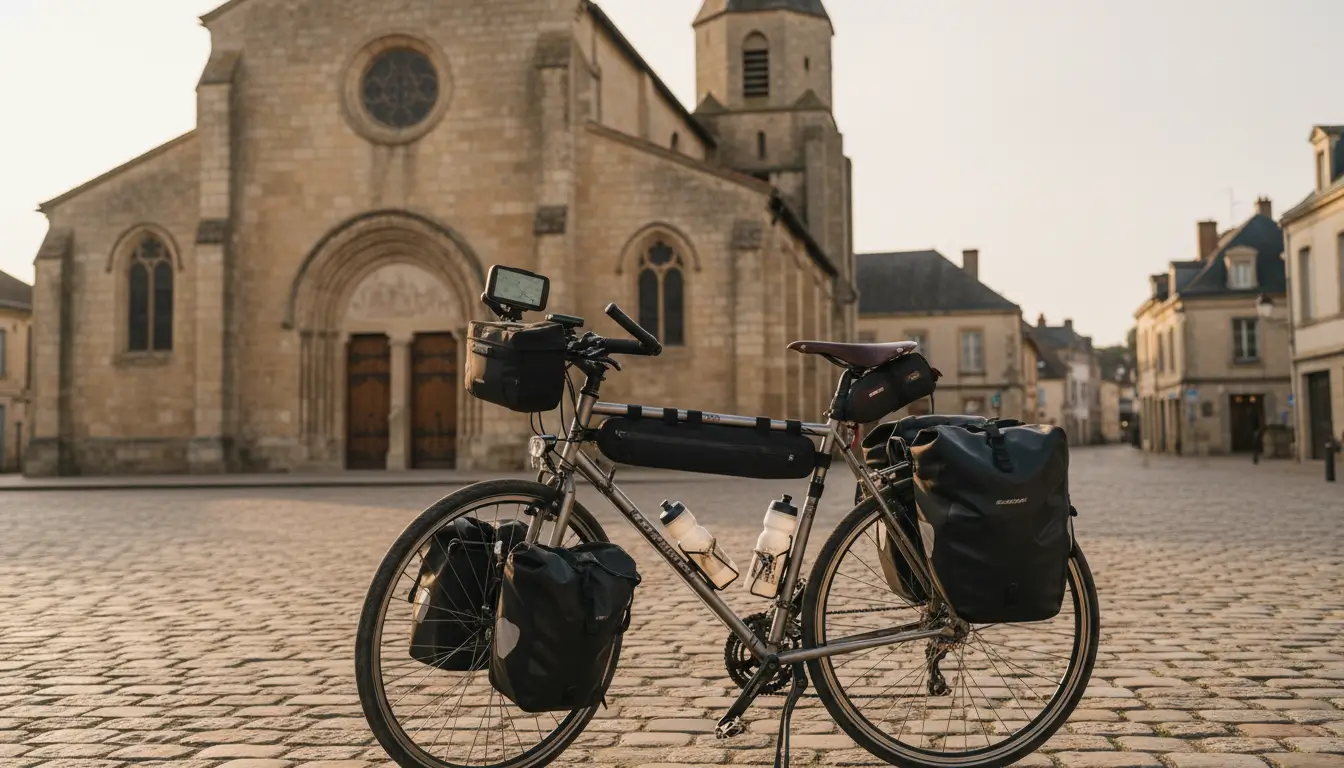
You do not need an expensive bike, but you do need a reliable one. Before you leave, a thorough check is important. Check the brakes, tyres and tyre pressure, gears, chain and lights. Also check whether the luggage rack is firmly attached and whether saddle and handlebars are properly adjusted.
Test your bike fully loaded during a trial ride. A bike that feels fine unloaded can steer, brake and climb very differently with luggage. This helps you spot any problems in time.
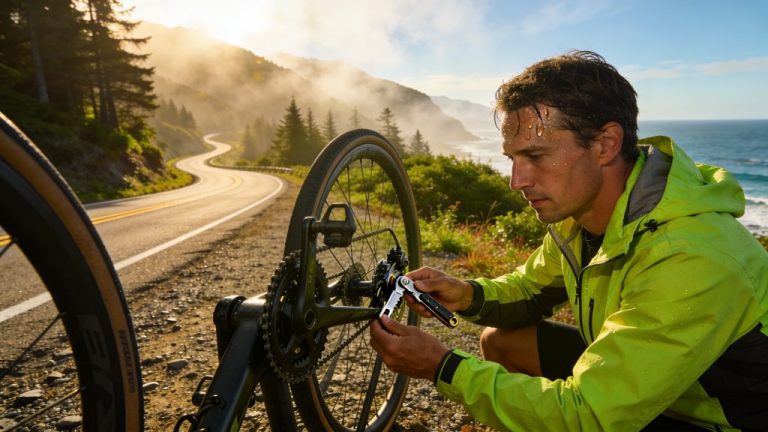
Take a basic repair kit with you containing:
- One or two inner tubes
- Tyre levers
- Mini pump or CO2 cartridge
- Multitool
- Puncture repair kit
- Cable ties and tape for emergency repairs
Learn in advance how to patch or replace an inner tube. Also learn how to put a chain back on and how to make small adjustments to saddle and handlebars. These basic skills can save you a lot of time and stress on the road.
Create a practical gear checklist
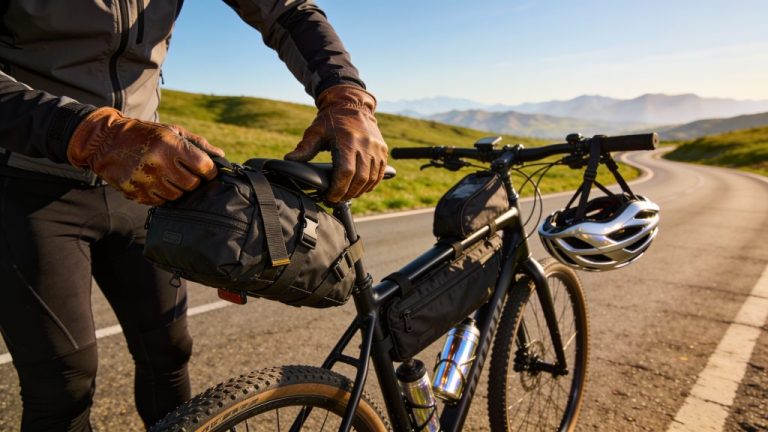
On a first cycling holiday, many people take too much with them. Travelling light makes cycling easier, reduces the chance of damage and leads to less stress on the road. Think in layers and essentials.
When it comes to clothing, the layering principle works best:
- Breathable base layer that wicks away moisture
- Warm mid layer for cooler moments
- Waterproof and windproof outer layer against rain and wind
- Cycling gloves and spare socks
- Comfortable cycling shorts
In addition, you will need practical items. Think of a rain jacket, basic toiletries, charger or power bank, water and snacks. Also take a simple first aid kit and your ID card with you. Lay everything out on the floor before you pack and then remove another quarter. Everything that is not really necessary stays at home.
Make sure you have enough food and drink on the road
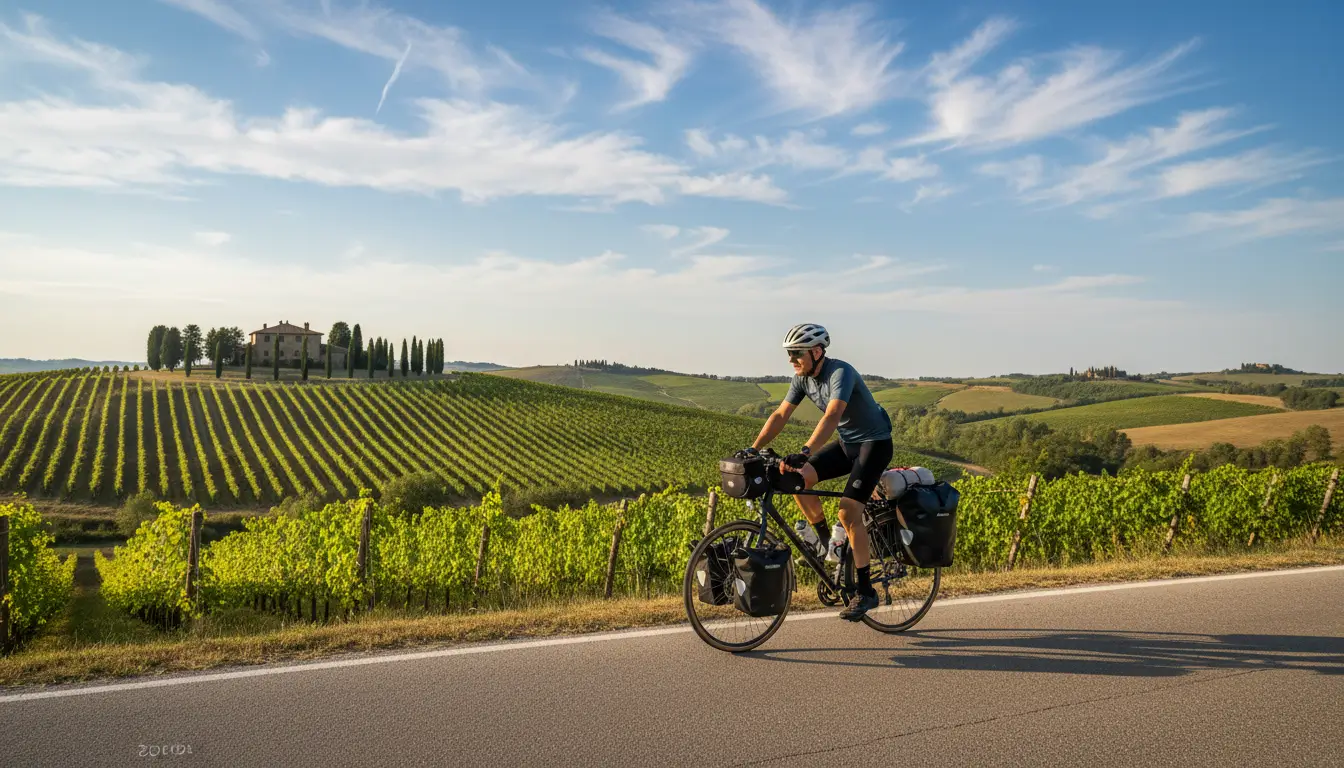
Cycling with luggage over longer distances uses a lot of energy. So always take something with you that you can eat quickly during short breaks. Think of energy bars, a sandwich, banana or nuts. Also make sure you have enough water or isotonic drink.
Do not wait until you are hungry or thirsty. Eat and drink small amounts regularly. That way your energy and concentration will stay at a good level. Plan your route so you know where you can fill up or do some shopping along the way.
Prepare mentally for unexpected situations
A first multi-day cycling trip is new and exciting. That also makes it a mental challenge. It is normal that not everything goes perfectly straight away. Typical beginner’s mistakes are overly ambitious daily distances, too much luggage and too few test kilometres in advance. People also often bring gear that they then use for the first time on the road.
So assume that you will learn things along the way. If something is disappointing, you can adjust the next day. Be flexible. That way you do not turn setbacks into disasters. If possible, plan rest days or shorter stages so that you have room to recover.
Also expect the weather to change. Take rain seriously and make sure you have good protection. If you stay dry and warm, you will have much more fun and energy on the road.
‘ Practising lowers the threshold and prevents surprises on your first evening. ’
Test your accommodation and camping gear in advance
Are you going to camp along the way? Then practise pitching your tent beforehand. Also practise packing your luggage and using your sleeping mat and sleeping bag. Anyone who is cycling and camping for the first time combines two unfamiliar elements. Practising lowers the threshold and prevents surprises on your first evening.
Check that your tent is complete and that the sleeping mat insulates well. Make sure you know how to pack everything quickly. Also test how you keep your things dry in the rain and where you place your bags on the bike.
Think about safety and comfort during your trip
Safety and comfort ensure that your first cycling holiday stays enjoyable. Wear a helmet if you find that comfortable or sensible. Make sure you have good lights, especially for early starts or late arrivals. Take reflective items with you so that you remain visible.
Use plenty of sun cream. Do this even on cloudy days. Take sunglasses and make sure you have sufficient rain protection. For many cyclists, saddle comfort is the biggest challenge. Good cycling shorts, the right saddle height and regular breaks already help a lot.
On the Traveler Tips website you will find many more useful tips on routes, destinations and smart trip planning. Discover more and make your next trip even better prepared.
Frequently asked questions
For your first cycling holiday, choose a relatively short route in a familiar, not too hilly region and plan realistic daily distances (for example 40–70 km, depending on your current training rides). When choosing, look at the elevation profile, type of surface (prefer quiet cycle paths rather than busy roads) and enough villages or towns along the way for breaks, food and accommodation. In advance, test a few days in a row with similar distances and luggage to feel what is comfortable for you. Build generous margins into your planning for headwinds, rain and extra rest moments so the trip remains relaxed.
Essential gear for a first trip: a well-adjusted and well-maintained bike, waterproof panniers, basic repair kit (inner tube, pump, multitool, puncture kit), lights, layered clothing including a rain jacket and comfortable cycling shorts, plus enough water, snacks, ID and a means of payment. Keep your luggage minimalist by only taking multifunctional clothing, limiting toiletries to a small basic set and limiting electronics to what you really use (phone + possibly a small power bank). Lay your full packing list out on the floor once and deliberately remove 25–30% that is not strictly necessary. Test your luggage beforehand on a day or weekend ride and cut everything you did not use (except first aid kit, rain gear and repair items).
Drink small sips regularly and make sure your bottles are topped up all the time; do not wait until you are really thirsty, because then you are actually already too late. Always take compact, energy-rich snacks such as bananas, nuts, energy bars or filled rolls so that you can eat something small every 60–90 minutes. Plan your daily stages along villages or supermarkets so that you can buy fresh food every day and do not have to take everything from the start. Choose simple one-pot meals (if camping) or set menus in local eateries if you prefer not to cook.
The most reliable and user-friendly combination is a bike GPS or navigation app (such as Komoot, BRouter or Fietsersbond route planner) with pre-downloaded offline maps, plus a simple paper map as a back-up. Preferably choose existing LF routes or other well-known cycling routes, as these are often well signposted and bike-friendly. For daily stages, 60–80 km per day is achievable for most recreational cyclists, slightly less in hills/mountains and with heavy luggage. Plan time each day for breaks, shopping and detours, and make sure your accommodation options (campsite, B&B) are within the last hour of cycling of your day’s target.
In the 6–8 weeks before departure, gradually build up your kilometres with several rides per week, including a few consecutive days, preferably with (partial) luggage so that your body gets used to the load. Pay attention to a good riding position, a suitable saddle and good-quality cycling shorts, and already get into the habit during your training of taking regular breaks, drinking and eating small snacks. Also do light strength exercises for your core, back and legs (for example squats, bridges, planks) to support your posture and relieve your joints. Finally, test a “mini cycling holiday” of two days once or twice to experience how your kit, route and recovery work for you, so you set off with more confidence and enjoyment.