 NL
NL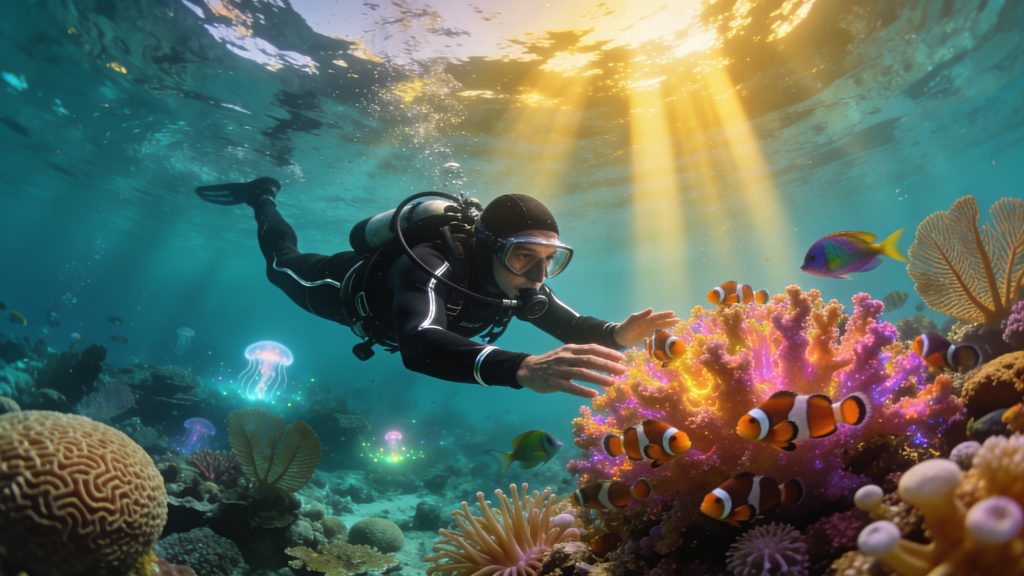
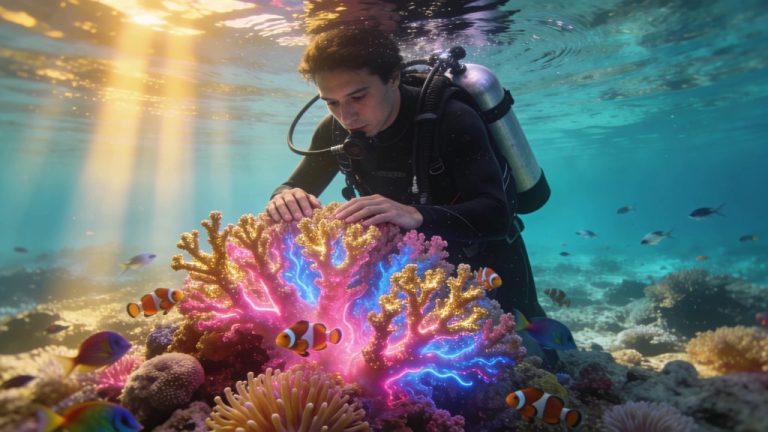
As a diver, you come face to face with the beauty of the underwater world, but also with how fragile it is. Environmental awareness under water means protecting coral reefs, sea creatures and ecosystems through conscious behaviour: don’t touch anything, maintain neutral buoyancy and respect local nature regulations. You can already make a difference in the preparation phase. How can you make sure that your dive actually helps restoration instead of contributing to degradation?
Why environmentally conscious diving matters
Dive tourism has a direct impact on the underwater environment. Every year, millions of divers visit vulnerable reefs, and that number is growing. Physical damage is caused by fins hitting coral, hands touching structures, and anchors scraping the seabed. Stirred-up sediment can also reduce visibility and disrupt ecosystems.
Coral reefs are extremely sensitive. A single touch can disrupt growth cycles that took years. Repeated contact leads to shifts in coral composition and a loss of biodiversity. Pollution also plays a major role: wastewater, plastic and chemicals from sunscreen (oxybenzone) damage reef structures and marine life.
You choose diving holidays. You share responsibility for what happens under water. The way you dive, the equipment you use, and where you book, determines whether you contribute to protection or to deterioration.
How to reduce your impact as a diver
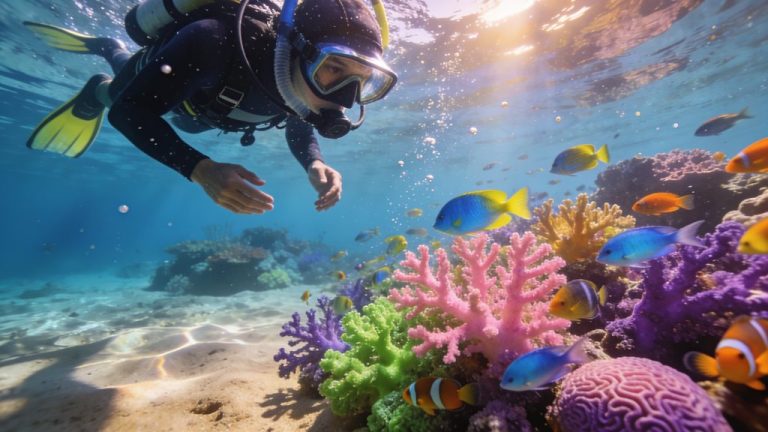
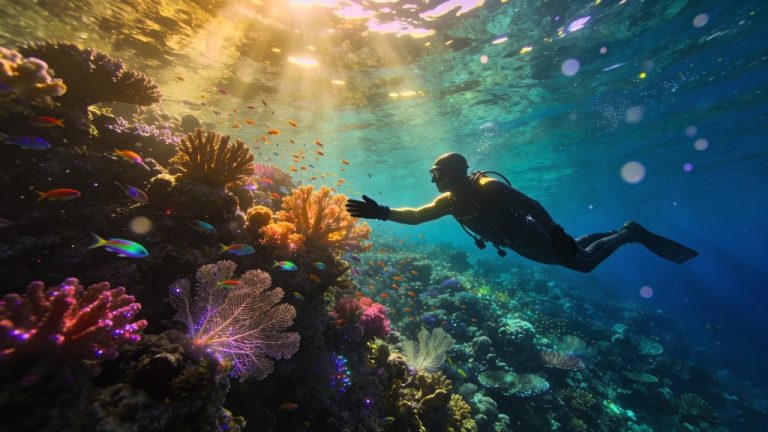
The biggest step is taking the step towards perfecting your buoyancy. Neutral buoyancy allows you to move through the water while hovering. You don’t touch the seabed or coral. According to divers, trim, calmness and routine are the most important habits for sustainable diving.
While diving, pay attention to the following practical rules of behaviour:
- Don’t touch anything: no coral, no animals, no seabed
- Keep your fins under control and avoid stirring up sediment
- Stay on the designated route and avoid sensitive zones
- Use lights and cameras sparingly, bright light can disturb animals
- Check on your buddy regularly to prevent stress, rushing and poor trim
- Only enter the water at fixed access points
Good preparation helps. You dive comfortably and in control. Those who remain calm make less unintentional contact with the environment. Build up your diving skills. Only then move on to vulnerable or heavily visited dive sites.

Which sunscreen you can safely use
Many sunscreens contain chemical filters (oxybenzone and octinoxate). These substances are harmful to coral. They disrupt the hormone system of coral polyps and speed up bleaching. Worldwide, an estimated 14,000 tonnes of sunscreen wash into the oceans every year.
Choose reef-safe sunscreen. This type of cream is free from these chemicals. Products with mineral filters (zinc oxide or titanium dioxide) are a good alternative. These alternatives create a physical barrier against UV radiation without harming the underwater environment.
Apply sunscreen at least 15 minutes before going into the water so it can absorb properly. Where possible, wear protective clothing (rash guard or wetsuit) to reduce the amount of sunscreen you need.
How to reduce your plastic footprint
Plastic heavily pollutes the oceans. On diving holidays, waste is generated by disposable bottles, packaging, straws and bags. Once in the water, plastic remains for hundreds of years and is mistaken for food by marine life.
Reduce your plastic use with these steps:
- Bring a reusable water bottle and refill it on site
- Use a washable dry bag instead of plastic bags
- Bring your own toiletries in refillable containers
- Say no to plastic straws, cups and cutlery
- Take a cloth bag for your shopping
On many diving destinations there are now local initiatives in place. These initiatives reduce plastic. Support them. Deliberately choose providers who take sustainability seriously. Ask about the waste policy of your dive centre or resort in advance.
‘ Regenerative tourism is about initiatives that restore ecosystems rather than just protect them. ’
Contributing to coral reef restoration
Besides preventing damage, you can actively contribute to restoration. Regenerative tourism is about initiatives that restore ecosystems rather than just protect them. Various diving organisations offer programmes where you can help with coral restoration, remove invasive species, and place artificial reef structures.
Participation usually requires a basic diving certificate and additional training. You learn how to collect coral fragments, cultivate them and reattach them to damaged reefs. These projects measurably restore biodiversity.
Bear in mind: clean-up actions under water come with risks. Only join well-organised initiatives. These initiatives put safety first. Check whether the organisation works together with local authorities. They should also collaborate with marine biologists.
How to choose a sustainable dive centre
You book with a dive centre. This centre largely determines how sustainable your diving visit will be. Choose an organisation that actively enforces nature regulations and informs divers about local conservation measures. Many reputable centres work according to international standards and provide briefings on responsible diving.
When booking, look out for the following characteristics:
- The centre operates within protected zones with established rules
- Groups are kept small to reduce pressure on dive sites
- You receive a briefing on environmental protection before the dive
- The centre uses mooring points or floating buoys to prevent reef damage
- The centre is affiliated with recognised sustainability initiatives
- Equipment is well maintained and cleaned in an environmentally friendly way
Travellers value destinations with visible nature conservation. Clearly marked access points are important. Temporary closures during breeding seasons and active protection of vulnerable reefs are part of this. Local authorities and diving organisations take nature seriously, and these measures show it.
Which rules apply at diving destinations
At many diving destinations, specific rules are in place to protect underwater nature. These differ per region and are often set locally by marine parks, conservation organisations or governments. Find out in advance which rules apply at your destination.
Examples of regulations include:
- No-go zones where diving is not allowed in order to protect sensitive habitats
- A ban on gloves to prevent divers from touching coral
- Fixed entry and exit points to limit damage to shallow zones
- Maximum group sizes per dive
- Temporary closures during spawning periods or recovery periods
- Permits or access restrictions for certain dive sites
Respect these rules. They are not drawn up at random. They are based on scientific research and many years of observation of the impact of dive tourism on local ecosystems. Violations can lead to fines. More importantly, you contribute to further damage.
‘ It unintentionally transports organisms, algae or bacteria from one location to another. ’
Clean equipment prevents the spread of species
Invasive species threaten underwater ecosystems. They can displace native species and upset the balance. When diving equipment is not properly cleaned, it unintentionally transports organisms, algae or bacteria from one location to another.
Rinse your equipment thoroughly with fresh water after every dive. Make sure all parts, including BCD, regulator, mask and fins, are completely dry before travelling to a new destination. This significantly reduces the risk of spreading species.
Some diving destinations have strict rules regarding used equipment. Check with the dive centre in advance whether additional cleaning measures are required. Not sure? Contact the local authorities.
The right mindset makes the difference
The right attitude is the foundation. See yourself as a guest in a fragile environment, not just as a tourist. Take time to observe calmly without disturbing anything. Respect for underwater nature also means something else: accepting that some places are not always accessible and that some moments are unsuitable for a visit.
Plan your dives wisely. Avoid peak times. Travel outside the high season. Choose less-visited dive sites. This lowers the pressure on popular reefs and often gives you a richer diving experience thanks to more unspoilt nature.
Conscious divers inspire others. Share your knowledge with fellow divers. Gently point out harmful behaviour. Show that sustainable diving is still fun. Respect for the ocean deepens the experience.
On the Traveler Tips website, you’ll find more information about nature holidays and sustainable travel destinations. We share practical tips for responsible travel. Discover how to plan your next trip more consciously and learn what you can do to protect nature.
Frequently asked questions
Choose destinations and providers that protect nature, for example with protected diving or snorkelling zones, limited group sizes and clear environmental rules. Plan activities where you don’t touch anything, don’t chase or feed animals, and where your buoyancy or swimming technique is good enough to avoid touching the seabed or coral. Avoid peak crowds and sensitive areas outside designated routes and entry and exit points. Clean and dry your equipment thoroughly to prevent the spread of invasive species and don’t leave any litter or cigarette ends behind.
Sustainable water activities are activities with as little direct impact on aquatic life as possible, such as gentle snorkelling or diving without touching anything, kayaking or paddleboarding without a motor, and guided eco-tours that put nature conservation first. You can recognise them by small group sizes, clear nature rules (no touching, no feeding, keeping distance), well-trained guides and the avoidance of vulnerable or closed-off zones. Organisations that take sustainability seriously focus on “look, don’t touch”, neutral buoyancy under water and following fixed routes and entry/exit points. Also look for certifications or partnerships with nature or marine organisations, and for initiatives such as litter clean-ups or contributions to local conservation management.
Choose sun cream, shampoo, soap and lotions that are biodegradable and reef-safe (without oxybenzone, octinoxate, microplastics, parabens and strong synthetic fragrances). Avoid disposable wipes, glitter, harsh insect sprays and standard sunscreen with the filters mentioned, as they dissolve into the water. Use reusable bottles, containers and washable cotton pads, and limit miniatures and sachets that easily end up in the environment. Rinse off care products as much as possible on land, not in the sea or a lake.
Yes, there are diving destinations and routes that explicitly focus on underwater conservation, for example through protected diving zones, limits on the number of divers and strict rules of conduct under water. They often work together with conservation organisations on reef restoration, clean-up actions and biodiversity monitoring. You can usually find reliable information about their efforts via official diving organisations (such as PADI and national diving federations), local marine parks and the websites of recognised, eco-certified dive centres at the destination. Check whether they mention concrete projects, measurable goals and partnerships with recognised conservation or research institutions.
Choose small-scale operators that work with small groups, fixed routes and do not drop anchors on vulnerable seabeds, and keep your own distance from animals, coral and plants. Don’t use single-use plastic on board and take all your rubbish back to shore. Ask local providers whether they follow conservation rules (for example protected zones, no disturbance of wildlife, limited group sizes) and whether their boats are equipped to prevent leaks and wastewater discharge into the water. Also ask about their participation in local conservation projects or clean-ups and whether their guides are trained in environmentally friendly sailing and snorkelling.