 NL
NL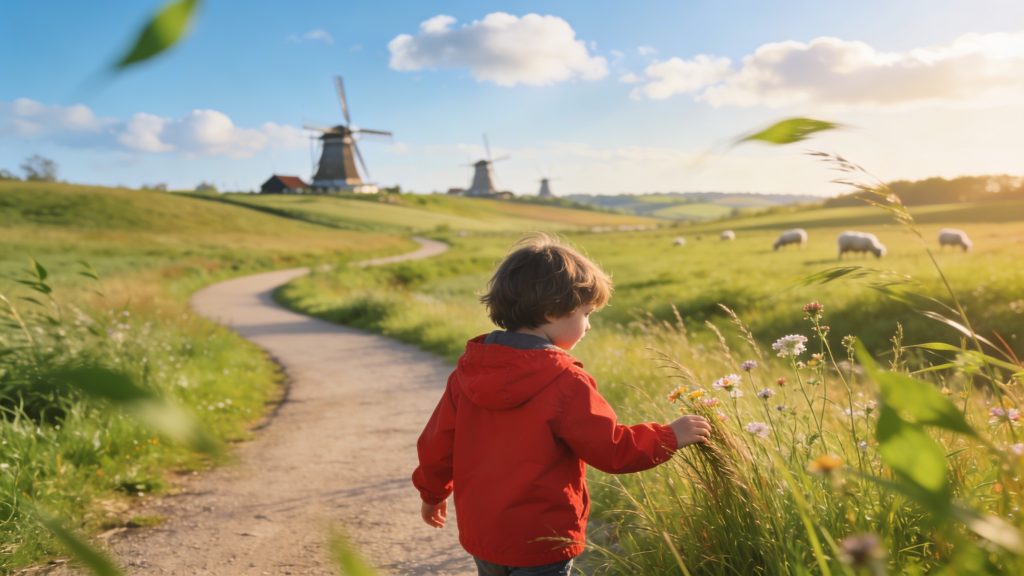
Dutch nature reserves offer ideal walking routes for families: easy to navigate, varied and full of playful elements such as treasure hunts, gnome trails and chances to spot animals. With short routes from 2 to 10 kilometres, even young children can fully enjoy the dunes, forests and heathlands. Whether you are out with toddlers or active teenagers, there is always a route to suit your family.
Child-friendly walking routes: what to look out for
A route is successful with children if it is short and varied. Young children usually do not last long on monotonous paths, but get enthusiastic when there is variety between forest, sand and water. Safety and clarity are also important. Avoid busy roads and unmarked paths where you can easily get lost.
The ideal family walk also has practical facilities such as toilets and parking. Many Dutch nature reserves offer this. That makes organising a nature holiday with children easier. Play elements along the way, such as viewing towers or climbing trunks, also make a real difference.
Short routes are also ideal. With children up to 5 years you can assume 1 to 3 kilometres; with children from 6 to 10 years, routes of 3 to 7 kilometres are very doable. Older children often walk further, especially if there is plenty to discover along the way.
Veluwe: forests, sand and wildlife spotting
The Veluwe is child-friendly and diverse. With extensive forests, sand drifts and wildlife watching spots, the area offers plenty of variety. You will find routes of various lengths, often with the opportunity to see deer, wild boar or roe deer along the way.
Areas such as De Hoge Veluwe and the surroundings of Arnhem have specially designed family routes. There you will find treasure hunts where children complete tasks or look for animal tracks. This keeps young walkers engaged and makes walking less boring.
Another advantage of the Veluwe is the combination of nature and facilities. At many starting points you will find visitor centres with toilets, food and drink, and information. That way you can end the walk with a drink and some playtime.
Tips for walking on the Veluwe with children
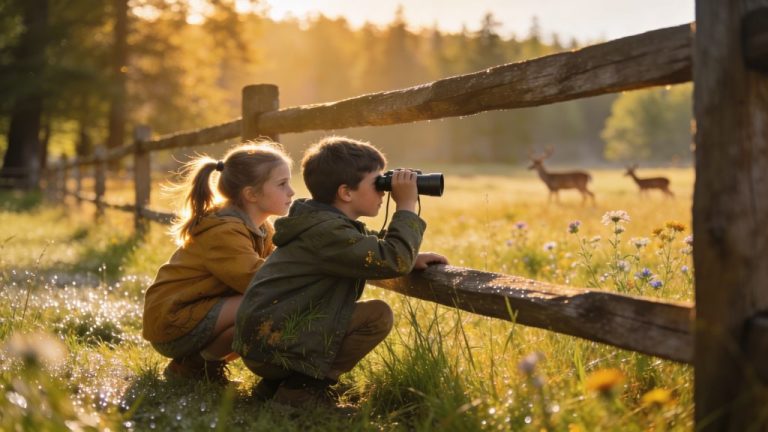
- Choose early in the morning or late in the afternoon for the best chance of spotting wildlife
- Take binoculars to watch animals from a distance
- Use sand drifts as play areas in between
- Check whether the route is well waymarked. Then you will not need navigation.
Dune areas: climbing, sliding and discovering
Dutch dunes are excellent for family walks. The relief makes walking playful: children climb up, run down and play in the sand. At the same time, dune areas often offer short paths where you can cut the route short along the way.
The Schoorlse Duinen are among the highest in the Netherlands and are popular with families. Here you will find a combination of dunes, forest and open plains. Routes are clearly marked and there is plenty of space to step off the path for a while.
The dunes on Terschelling and Texel are also suitable. Combine your walk there with a trip to the beach. That is extra appealing for children. The routes are generally flat and wide, ideal for young children. They often cannot yet manage long distances.
What makes dune walks suitable for toddlers
- Plenty of short loops from 1 to 3 kilometres
- Many natural play opportunities such as sandpits and climbing hills
- Often shade from sea buckthorn and trees in hot weather
- Good accessibility with clear paths
Treasure hunts and gnome trails make walking fun
For children between 4 and 8 years, treasure hunts are ideal. Many nature reserves offer routes with tasks, such as looking for certain trees, birds or tracks. This gives children a goal and holds their attention.
Gnome trails are another popular choice. These themed routes include story elements and small tasks along the way, such as solving riddles or finding gnomes. You will find gnome trails in various places in the Netherlands, for example in the forests of the Utrechtse Heuvelrug and around Apeldoorn.
A good example is the Speulderbos in the Veluwe, where children are actively engaged in searching and discovering as they walk. This type of route is usually no longer than 3 to 5 kilometres. This keeps the walk manageable even for young children.
How to make a hike with children aged 6 to 10 adventurous
Children of this age walk longer distances, but still need variety and challenge. Choose routes with differences in height, water features or special landscapes. This keeps the walk interesting and prevents boredom.
Interaction also helps. Let children navigate themselves with a simple map. Give them a photo challenge. For example, take a photo of something green, something that moves and something that makes a sound. This makes the hike more playful without the route itself having to be complex.
Another option is to choose routes with a clear end point, such as a viewing tower, a lake or a play area. Children then walk with a concrete goal. That boosts motivation. Examples include the viewing tower near Otterlo or the forest viewing hide in De Hoge Veluwe National Park.
Practical measures for longer walks
- Take enough snacks and drinks, and plan a break halfway
- Choose routes with rest points such as benches or picnic tables
- Make sure everyone has good walking shoes, including the children
- Prepare children for mud and wet conditions, take spare clothes with you
- Check the weather and adjust your route in extreme temperatures
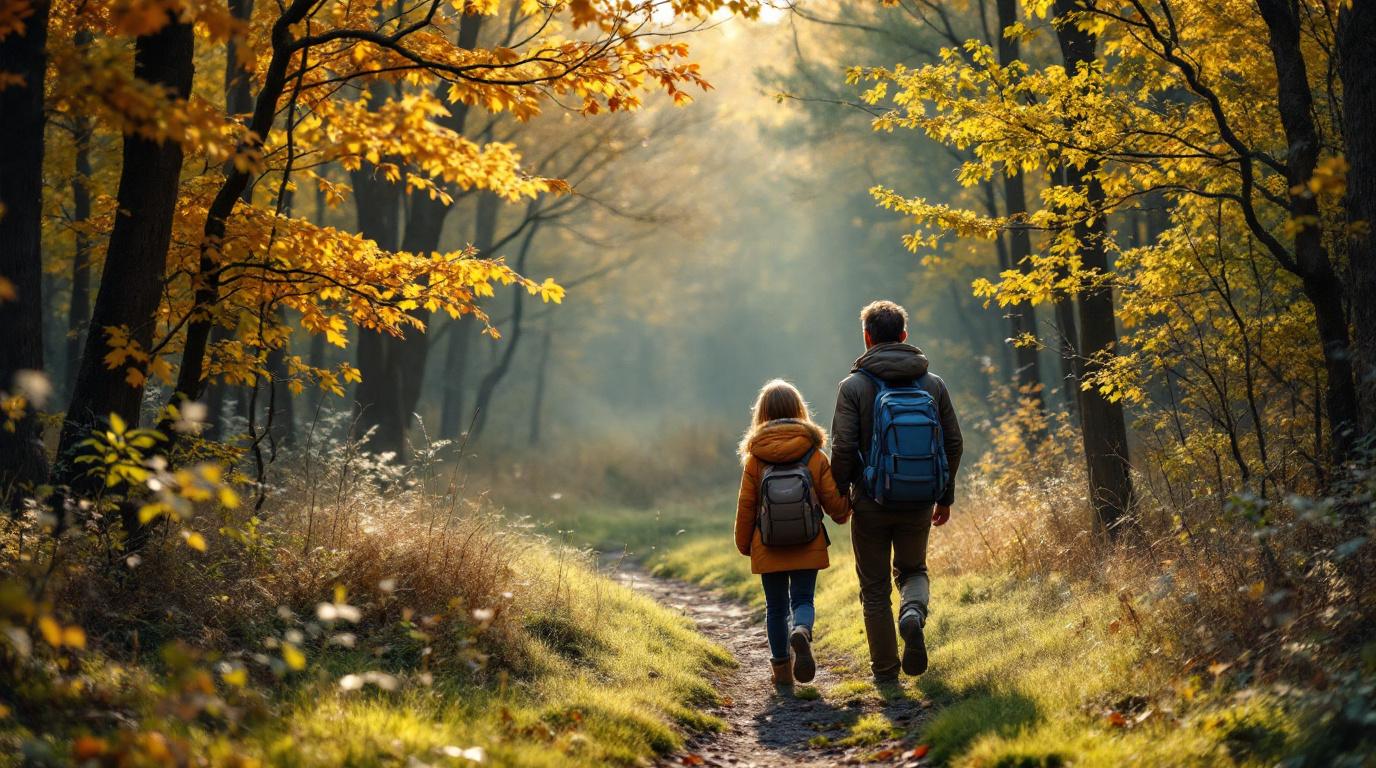
Spotting animals keeps children engaged
A walk becomes extra exciting when you see animals along the way. Dutch nature reserves are home to various animal species, from deer and rabbits to birds and insects. Children are happy to be quiet and look for movement in nature.
On the Veluwe you often spot wild boar and deer, especially in the early morning or evening. In dune areas you will come across rabbits and hares, and at lakes and ponds you will see ducks, herons and sometimes even roe deer. This makes walking more than just putting one foot in front of the other.
Take a simple guidebook or app with you. Children can then identify animals themselves. This adds an educational element, without feeling like school.
Facilities and safety on family walks
Practical facilities make a walk with children much more pleasant. Before you set off, check whether there are toilets at the starting point and whether drinking water is available along the way. Many visitor centres also offer information about the route and current conditions.
Safety is important too. Avoid routes along busy roads or with steep, unsafe sections. Instead choose wide paths in forests or dunes where children can safely leave the path for a moment. Boardwalks are a good option: they are flat, easy to oversee and often suitable for pushchairs.
Always take a small first-aid kit with plasters, disinfectant wipes and a tick remover. Ticks are common in Dutch nature reserves, so check children carefully after the walk and remove any ticks quickly.
‘ This increases engagement and makes the walk more enjoyable. ’
Planning and preparing for a successful family walk
Good preparation prevents problems along the way. Start by choosing a route that suits the age and experience of your children. Check the distance, the terrain and any differences in height via route websites or apps.
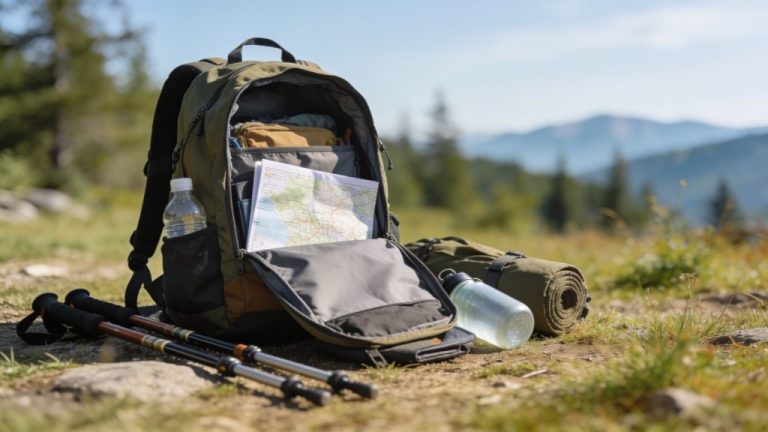
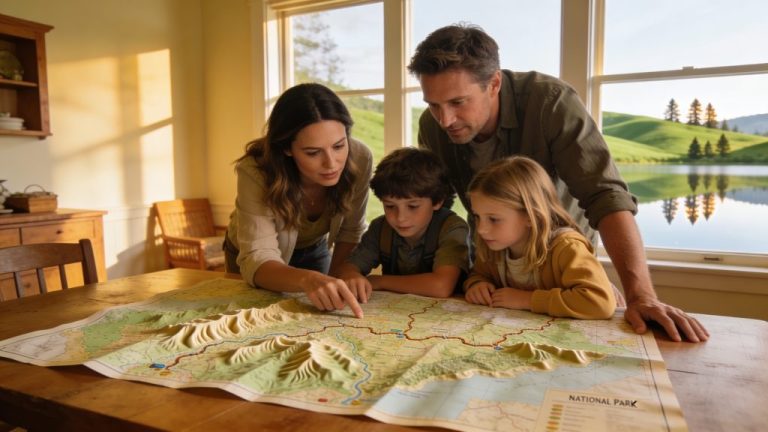
Involve children in the planning. Let them look at photos of the area or tell them what they can expect. This increases their engagement and makes the walk more enjoyable. Packing the rucksack is something you do together too: children can choose their own snacks or take a toy.
Allow plenty of time. Count on a slower pace than you are used to. Children need breaks and sometimes want to play or investigate something. A route of 5 kilometres will then quickly take one and a half to two hours. That is normal and part of the experience.
On the Traveler Tips website you will find extensive information about routes, nature reserves and practical tips for travelling with children. Discover which destinations and activities suit your family best and plan your next adventure in nature.
Frequently asked questions
The child-friendly walking routes usually start at the main car park or visitor centre of the nature reserve and are clearly indicated there with signs or waymarkers. At many of these starting points there are enough parking spaces available, especially outside the very busiest times at weekends and during holidays. You will often also find basic facilities at the start or end points, such as toilets and one or more cafés or restaurants. It is wise to check online in advance which facilities are available in each area.
Along many child-friendly routes you will find themed trails and treasure hunts with tasks, fun animal facts or treasure seeking, which keep children actively involved. Some walks pass through play forests or nature playgrounds, so that walking is interspersed with climbing, scrambling and free play. There are also discovery trails with viewpoints, boardwalks and small challenges such as “find a particular animal or track”. Family paths often offer simple educational boards about plants, animals and the landscape, tailored to different ages.
The route is short to medium-length (about 1–5 kilometres) and runs over mostly flat, easily passable terrain such as forest paths, boardwalks or light sandy paths. The level of difficulty is low: there are no dangerous sections or tough climbs, and the pace can easily be adjusted to suit children. On most sections the route is well suited to pushchairs, especially where the paths are surfaced or flat. For rougher sections or narrower paths, a baby carrier is more practical and recommended.
At the very least, take comfortable walking shoes or wellies, layered clothing, a rain jacket, sun cream, plenty of water, snacks and, if needed, dry spare clothes for the children; in wet periods, wellies and a towel are extra useful. In summer, the early morning or late afternoon/early evening is the most pleasant: it is cooler and quieter than in the middle of the day. In spring and autumn, late morning to early afternoon is often ideal, because it is usually dry and not too cold. Avoid weekends in the middle of the day if you want to escape the biggest crowds.