NL
NL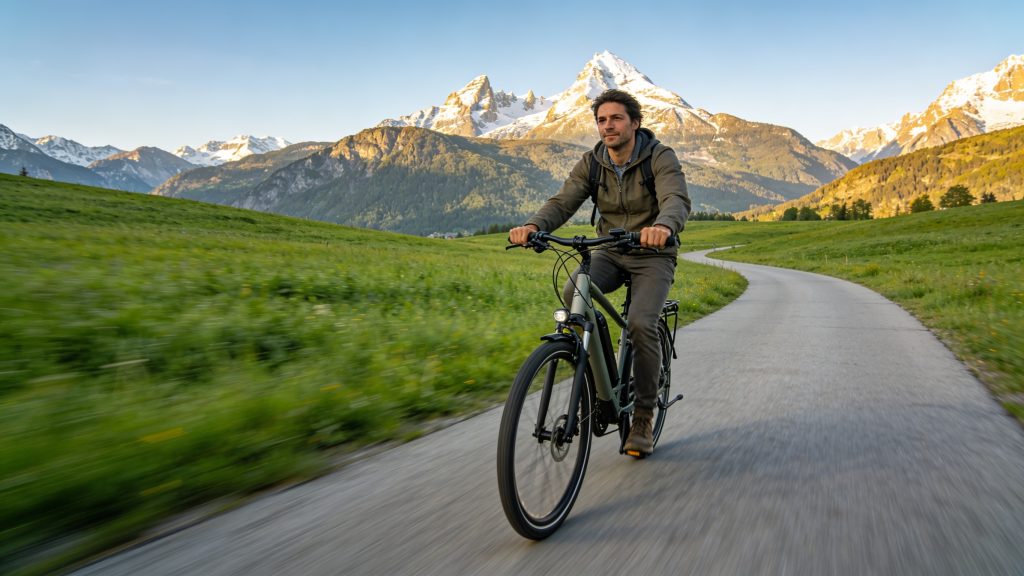
Cycling in the Alps is not reserved for ultra-fit climbers. There are plenty of accessible routes through valleys and along rivers that are perfect for a first introduction to mountain cycling, with limited elevation gain and beautiful scenery. For travellers who want to plan their own Alps holidays and consciously opt for an active itinerary, these cycling routes offer a comfortable way to experience nature without extreme effort. Discover which routes you can reach by car and how, with an e-bike, you can enjoy the most beautiful mountain landscapes even as a beginner.
Why are these cycling routes suitable for beginners?
The routes we describe here in most cases follow natural river valleys. This means you benefit from gradual descents and can avoid tough mountain passes. These routes are also easy to reach by car, so you can bring your own bike or rented e-bike and start at a strategic point.
Most sections are waymarked and have plenty of infrastructure such as rest stops, accommodation and bike rental. For anyone not used to cycling for long periods in a mountainous area, e-bikes provide extra support. Especially on gently hilly sections, an electric bike makes the difference between a pleasant ride and an exhausting day.
‘ They combine flat or gently sloping paths with impressive nature, charming villages and good facilities. ’
Six accessible cycling routes for a first Alpine trip
The following routes are recognised by experienced cyclists and tourist organisations as beginner-friendly. They combine flat or gently sloping paths with impressive nature, charming villages and good facilities.
Murradweg in Austria
The Murradweg stretches over 457 kilometres from the Hohe Tauern National Park to Bad Radkersburg. The route begins with a short climb. After that you follow the River Mur mostly downhill. You cycle past hills, mountain meadows and lakes through a varied landscape. This route is ideal for anyone who wants to make a longer multi-day trip without major elevation gains.
Ennsradweg through Salzburgerland and Styria
The Ennsradweg runs for 263 kilometres along the River Enns from Flachau to the Danube. On the way you pass the Gesäuse and Kalkalpen national parks. The path is largely flat with a few hilly sections. The route is well signposted and suitable for families and beginner cyclists. It is a comfortable route to cycle over several days.
Tauernradweg from Krimml to Passau
This 310-kilometre route starts at the impressive Krimml Waterfalls and ends in Passau on the German border. The Tauernradweg is known as a family-friendly route with gentle descents and varied Alpine scenery. The elevation differences are limited, which makes this route very suitable for beginner cyclists and families with children.
From southern Germany to Lake Garda
This classic introductory route is the first Alpine crossing for many cyclists. The route has been chosen so that the elevation gain remains manageable. The focus is on an enjoyable ride through varied landscapes without extreme effort. This route is often offered as a guided cycling tour, but it is also easy to plan independently.
Ötztal Valley in Tyrol
The Ötztal route covers roughly 60 kilometres from Haiming to Sölden. You cycle along rivers, through green meadows and past charming mountain villages. The gradient is gentle and evenly spread. This route is accessible and scenic, allowing you to experience the nature and culture of Tyrol without overexerting yourself.
Vinschgau route in the Italian Alps
The Vinschgau route starts in Merano and runs towards Mals. You can take the train to the starting point, saving energy for the ride itself. Along the way you pass historic sites such as Juval Castle. The path is flat and combines nature with cultural sights. This route is particularly suitable for anyone who wants to combine cycling with history and architecture.
Practical preparation for your cycling trip
Prepare your cycling trip properly – it makes all the difference. You will enjoy it more and avoid unpleasant situations. Think about the following points in advance to help your trip run smoothly.
Choose routes that follow river valleys
River valleys offer a natural downhill direction and limit the amount of elevation you need to conquer. As a beginner, avoid routes with high mountain passes or steep gradients. Most beginner-friendly routes follow the course of a river and are therefore logical and predictable.
Hire an e-bike for extra support
In regions such as Tyrol and Styria there are plenty of rental points for e-bikes. An electric bike provides support on hilly sections and makes longer distances more accessible. Check in advance whether the battery has enough capacity for the planned distance and ask about charging points along the way.
Use apps for elevation profiles and surfaces
Apps show you the elevation profile of your route in advance. You can see where the gentle climbs are and where the path is flat. In the Alps more than 8,600 waymarked cycling routes are available for all levels, including many flat options for beginners. Also pay attention to the type of surface. Some paths are paved, others are gravel or grass.
Start in lower-lying valleys
Starting points such as Val d’Isère in France offer extensive routes for beginners. Val d’Isère, for example, has 188 kilometres of accessible trails. By starting in a lower-lying valley you build up your fitness and can gradually consider more demanding sections.
Useful tips while you are on the road
There are also practical things to keep in mind while you are on your cycling trip. These tips will help you to cycle comfortably and safely.
Use train or bus for tricky starting sections
On some routes, such as the Vinschgau route, you travel by train to the starting point. That saves energy and time, so you start your ride feeling fresh. Do check in advance whether you are allowed to take your bike on the train and whether you need a separate ticket.
Bring waterproof clothing and spare kit
Weather conditions in the Alps can change quickly. Bring waterproof clothing, even if the forecast looks good. Spare inner tubes and an extra battery (power bank) for your navigation are sensible additions. River paths can become muddy after rain, so prepare for changing surfaces as well.
Combine cycling with relaxing accommodation
Accommodation along rivers and in valleys often provides facilities for cyclists, such as secure storage and repair spaces. Camping or glamping is a pleasant option, allowing you to recover in nature after a day in the saddle. Ideally, book in the shoulder seasons. Paths are quieter then and temperatures are more comfortable for long days of cycling.
Make the most of waymarked routes and local information
From places like Ischgl there are waymarked routes available for all levels. These routes are safe and well maintained. Ask at tourist information offices for up-to-date information on roadworks, events or closed paths. Local knowledge helps you avoid unexpected situations.
‘ The combination of natural beauty, good infrastructure and limited elevation differences makes these areas attractive for different target groups. ’
Beginner-friendly regions and extra options
Besides the routes mentioned, there are several regions in the Alps that are well suited to beginners. Bavaria’s Chiemgau region, for example, offers easy loops such as the Inn Valley tour and the Wildbichl circular route. These sections are designed specifically for starters and give you the chance to include interval training without too much strain.
Most routes are also suitable for families with older children who already have some cycling experience. The combination of natural beauty, good infrastructure and limited elevation differences makes these areas attractive for different types of travellers.
On the Traveler Tips website you will find much more information about cycling routes, practical checklists for cycling trips and tips for organising your own active holiday. Discover more about travelling in the Alps, sights along the way and the best seasons for a cycling holiday.
Frequently asked questions
For absolute beginners looking for comfort and spectacular views, the Murradweg, Tauernradweg and Ennsradweg in Austria are especially suitable, as they mostly follow river valleys with generally gentle gradients and beautiful mountain panoramas. The Vinschgau route in the Italian Alps is also ideal: you can take the train to a higher starting point (e.g. Mals) and then ride downhill at ease through orchards and past castles. Anyone wanting to try a first Alpine crossing without major effort can consider the route from southern Germany to Lake Garda, which is known for its manageable elevation gain and varied scenery.
If you are travelling by car or campervan, choose a valley as your base (e.g. Ötztal, Vinschgau or somewhere along the Murradweg) and make day trips from there on flat riverside cycle paths, with many campsites and hotels offering direct access to the routes. By train you can combine cleverly by riding a route such as the Vinschgau trail: take the train uphill (e.g. to Mals) and cycle back down the valley at your leisure, often with the option of taking your bike in special cycle carriages (do check whether reservations are required). In virtually all Alpine regions, good hire bikes and e-bikes are available at village stations, sports shops and larger campsites, sometimes including luggage transport or one-way rental along long-distance routes. If you bring your own bikes, make sure you have sturdy racks, secure fixing points for train transport (hanging hooks/carriage numbers) and check the rules in advance for each rail company or ferry service.
Make sure you have a well-maintained hybrid or trekking bike, or a reliable e-bike with low step-through, suitable mountain gears, good brakes, mudguards, luggage rack, panniers, repair kit, helmet, waterproof/layered clothing and enough drinking water and first-aid supplies. Build up your fitness in advance with regular rides of 40–60 km on gently hilly terrain and practise longer climbs at an easy pace. Consider an e-bike with sufficient battery capacity (spare or high-capacity battery), pay attention to the range in mountainous areas and plan charging stops at accommodation or huts. Test your luggage set-up, riding position and the level of assistance beforehand on a few day rides so that both your gear and your body can get used to cycling in the mountains.
The best periods for beginner-friendly cycling routes in the Alps are generally the spring shoulder season (May–June) and the autumn shoulder season (September–early October). During these months temperatures are usually pleasant and there is less chance of prolonged heat or severe thunderstorms than in the middle of summer. In addition, the cycle paths and popular valley routes are noticeably quieter than in the peak season of July–August. Do bear in mind that in May some of the higher sections may still be affected by snow or the weather.
Beginners cycling along Alpine routes can choose from campsites, simple guesthouses and gasthöfe directly on the river and valley trails, sometimes supplemented with glamping options. For a self-organised trip it is useful to plan your stages around villages with several accommodation options, so you still have a choice once you arrive. Use cycle route network apps and booking apps to combine elevation profiles with places to stay, and use train or bus where necessary to bypass a difficult section. Bring basic repair tools and waterproof clothing, and if possible choose the shoulder seasons for peace and milder temperatures.