NL
NL
Optimising stopovers is all about balance: choose cities that lie logically along your route, offer enough contrast, and allow a length of stay that matches what you actually want to do there. A well-chosen stopover prevents boredom, breaks up long travel times and lets you start enjoying the trip along the way. When you plan train tours, your choice of stopovers partly determines your travel pace and the experience you gain.
But how many stops make sense? And how do you avoid spending more time changing trains than discovering cities? The trick is to choose fewer cities with more substance. Many short stops are mainly technical interruptions.
Which cities to choose as stopovers
The best stopover is not the most famous city. It is the city that gives you the most value for every hour of travel time. Start with an analysis of the route. Choose cities that lie on the rail line or are easy to reach with a single change. The aim is to find the best sequence of several stops. You base that choice on travel time, distance and practical constraints.
Favour cities with clear rail links and a station close to the centre. You save time and energy if you don’t constantly need local transport. Also select cities that each have their own role in the trip: for example a culture city, a nature city and a food city. That way stopovers become more than just technical breaks.
Take account of service time. That is the time you need to visit a city. Some stops only require a few hours, others a full day or night. You include this service time in your schedule alongside the actual travel time. Too many changes increase the risk of delays, tiredness and travel stress.
How much time to spend per stopover
The length of stay depends on what you want to do in a city and how compact the centre is. A short break of two to four hours works well if the city mainly serves to break up your journey. You can then go for a walk, have lunch and move on. This type of stop is realistic when the station and centre are close together and you don’t have complicated luggage arrangements.
A half day of four to eight hours gives you room for one neighbourhood, a museum, a market or a viewpoint. This is suitable for compact cities with a historic centre, provided the connections are favourable. An overnight stay is wise if you arrive or depart late in the day. It also makes sense if you really want to experience the city. In that case you want more than just a short visit.
For large, varied cities one night is often the minimum. Do you want to combine several neighbourhoods, museums or day trips? Then choose two nights or more. An evening or early-morning visit often makes a city more worthwhile. You then get a different rhythm than during a standard daytime visit.
Overview by type of stop
- Short break (2–4 hours): station, walk through the centre, lunch, brief sight
- Half day (4–8 hours): one neighbourhood, museum, market, viewpoint
- Overnight stay (1 night): nightlife, relaxed morning, less rushed travel
- Full city stop (2+ nights): large cities, several neighbourhoods, day trips, museum days
Practical criteria for selecting stopovers
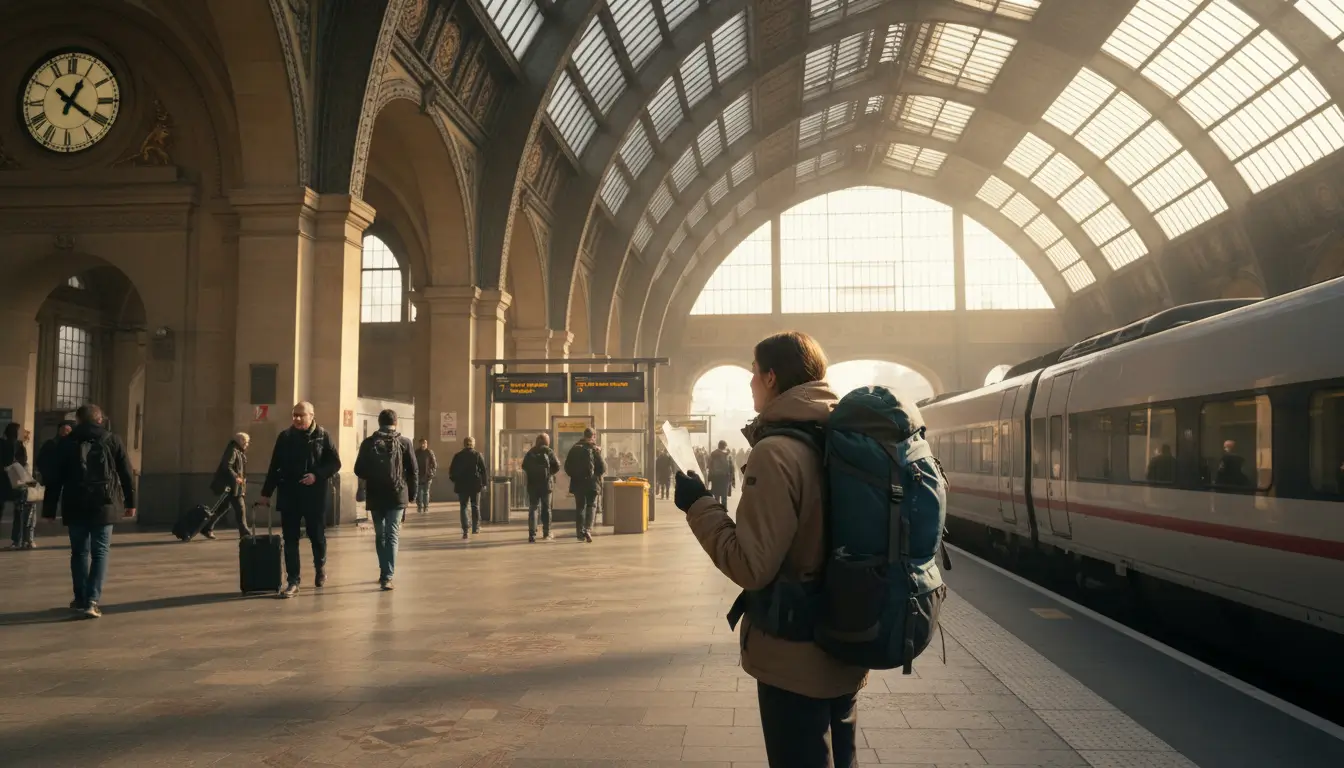
In addition to travel time and length of stay, there are other factors that determine whether a stopover is worthwhile. Travel time between stations directly affects how much time you have left for the city itself. The shorter the transfer, the more you discover. So choose stops that barely deviate from the route.
Public transport connections in the city are important. A central stop or good network prevents time loss. In urban areas, transport and amenities are arranged compactly. That makes short journeys possible. Also pay attention to opening times of sights. On paper a city may fit perfectly. Arriving outside opening hours, however, yields little in practice.
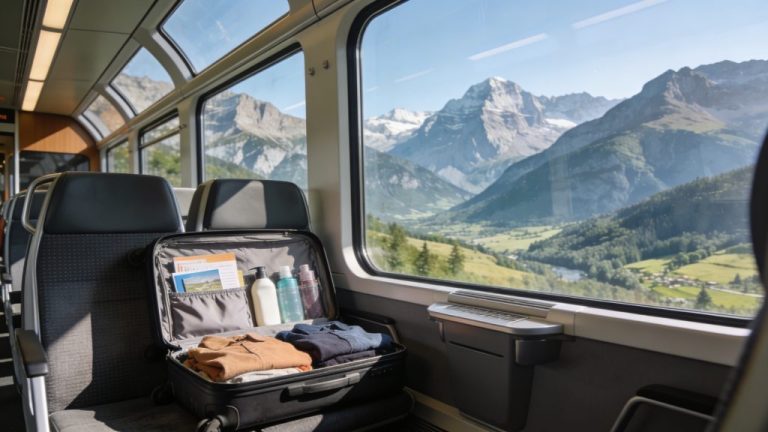
Luggage convenience also plays a role. The less you have to drag suitcases around, the better a short stop works. Some stations offer luggage lockers or left-luggage services. Weather and season are additional factors. In bad weather a brief cultural stop is often more efficient than an outdoor activity.
Smart route choices for train tours
Plan stopovers in cities with intercity or high-speed connections. That keeps you flexible when delays occur. Use a route planner to determine the best order of stops. This prevents illogical detours and unnecessary kilometres.
Put the most demanding or time-consuming city stop at the beginning or end of the journey. That way you can schedule easier stops in between. Combine a busy city with a quieter second stop to keep your travel pace in balance. Consider an overnight stopover in a major city along the route. That’s a stopover: a deliberate break where you spend time. You can also use this approach if you want to add an extra city during a longer trip.
Examples of smart choices
- Plan stops along intercity and high-speed lines for flexibility
- Use a route planner to avoid illogical detours
- Place the most demanding stop at the beginning or end of the journey
- Alternate busy and quiet stops for a balanced pace
- Consider a stopover to include a big city along the way
‘ “Planning too much into a single stopover often backfires.” ’
What travellers see as smart
A stop becomes more valuable when you decide on one main goal in advance: for example the best view, the best lunch spot or the historic centre. Planning too much into a single stopover often backfires. Travellers appreciate a short, clear route through the city. A list of separate highlights often feels busier and less manageable.
On train journeys it is useful to build in some buffer around connections, especially if you also want to visit a city in between. A clear contrast with the previous stop makes a city more worthwhile. For instance, choose a cultural stop after a nature city, or a food city after a busy metropolis.
Useful decision rule for stopovers
Use this simple decision rule to determine how much time to schedule per city. Choose two to three hours if the city is small, the station is central and you mainly want to stretch your legs for a bit. Choose half a day if you want to combine one neighbourhood, a museum or lunch.
Choose one night if you really want to experience the city without feeling rushed. Choose two nights or more if the city itself is a main destination and not just a stopover. This approach helps you to see changes of train not as filler, but as a conscious choice of pace.
Step-by-step plan for your route
- Determine which cities lie logically along the route
- Select one main goal or role per city
- Choose the length of stay based on what you want to do
- Check train connections and opening times
- Build in sufficient buffer time around connections
Regional considerations for stopovers
For French stopovers along a southern route, Metz and Nancy are often mentioned as cities that work well for a cultural break in Lorraine. For German routes, a stop in a city along a clear main axis often works better than a detour to a large metropolis. When planning specific destinations it is useful to consult local sources. They provide information on regional accessibility. Stations, tram networks and walking distances vary greatly from city to city.
The best stopover is not always the most famous one. It is the city that fits logically into the route and delivers enough within the time available. So don’t treat stopovers as filler, but as a conscious choice of pace. Emphasise quality over quantity: a good train tour is often about fewer changes, better timing and smartly chosen cities.
On the Traveler Tips website you’ll find much more inspiration and practical advice on routes, destinations and planning for your next trip. Discover handy guides, checklists and background articles that help you organise your holiday in a smarter and more mindful way.
Frequently asked questions
Start with your route and travel time: choose cities that lie logically along the line, have good connections and a station close to the centre. Then define your ‘travel style’ (e.g. culture, nature, food, nightlife) and give each potential city one clear role: culture city, nature stop, food city or place to relax. Check whether the city matches your personal interests using a few concrete questions: what do you want to do there, what time of day will you be there, and how much time do you really have? Keep the number of intermediate cities low and choose a few places where you stay at least half a day or a night, so the stop actually feels enriching.
For many cities, a stopover of about half a day (4–8 hours) feels ideal to get a sense of the atmosphere without feeling rushed. In compact cities with a central station you can get a first impression in 2–4 hours. If you really want to wander the streets at your leisure, enjoy a proper meal and experience both day and evening, an overnight stay (1 night) is the most comfortable.
Think in advance about your budget per day and per stop: extra nights, city transport, food on the way and any luggage storage can add up quickly. Limit unnecessary travel time by choosing cities that lie logically on your route, with fast connections and a station close to the centre. Compare accommodation not only on price, but also on location near the station and flexible check-in and check-out times, so you don’t lose time going back and forth. Plan fewer stopovers with enough time at each place rather than lots of short stops, to avoid fatigue and extra costs due to detours or delays.
Talk to locals (for example in small cafés, parks or via platforms such as Couchsurfing Hangouts) and ask specifically about their favourite places rather than “must-sees”. Use niche sources such as local blogs, small Instagram or TikTok accounts and Google Maps lists created by locals to find hidden spots. Intentionally schedule one block of “aimless wandering” per day in a specific neighbourhood, without a tight schedule, so you can spontaneously step into places that feel right. Keep your list of sights to one or two fixed anchors per day and leave the rest of the time open for serendipitous discoveries.
Yes, there are a few practical, commonly used methods. A workable rule of thumb is to schedule at most one main activity or highlight per day and consciously build in “empty” blocks of 2–3 hours without obligations. Limit the number of journeys: choose fewer stops with more time rather than many short halts, and after every 2–3 intensive days, plan a quieter day (shorter drive, early check-in, no tight schedule). Match the length of stopovers to the place: 2–4 hours for a short break, half a day for one neighbourhood or museum, and at least one night if you really want to experience the place without feeling rushed.