 NL
NL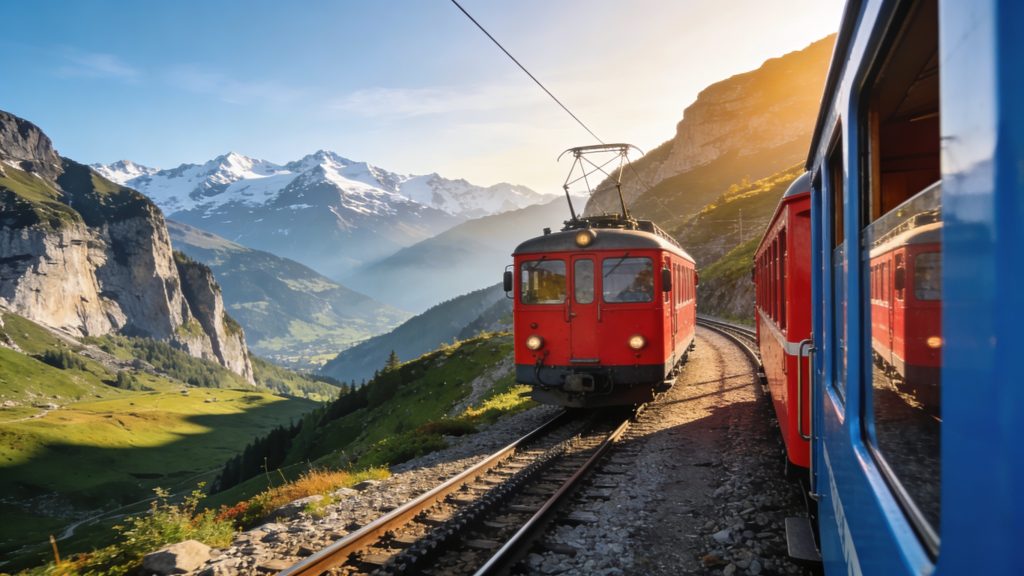
France combines coast, mountains and Provençal valleys in some of the most beautiful rail routes in Europe. The Train des Merveilles, which links Nice with the mountain village of Tende in two hours, is accessible, varied and a highlight of your trip in its own right. But there are more spectacular routes that give you, as a traveller, access to alpine villages, glacial views and Pyrenean valleys without needing a car. Discover which routes fit best with your plans and what you need to know for each line.
Where does the Train des Merveilles run and what makes the route special?
The Train des Merveilles departs from Nice-Ville and ends in Tende, a mountain town in the Roya valley. You travel for roughly two hours through three valleys: Paillon, Bévéra and Roya. The route combines coast, hills and alpine environments with baroque villages, historic viaducts and tunnels that follow in quick succession. The scenery changes a lot and feels less touristy than the better-known coastal trains.
The train runs all year round, but the frequency varies by season. In the morning there are often accompanied services with a guide on board. Summer has the most departures. You do not need to reserve as an individual traveller, but boarding early gives you a better chance of a window seat. Many travellers leave in the morning and return in the afternoon. This works well as a day trip. This rail route is an example of scenic rail: lines that combine train travel with panoramic views and distinctive landscapes. Many of its features are similar to other panoramic trains and most beautiful rail routes in Europe.
On the way you get off in villages such as Sospel, Breil-sur-Roya, Fontan-Saorge or La Brigue. Examples include Sospel, Breil-sur-Roya, Fontan-Saorge and La Brigue. Each village has its own character. Many travellers stop to go for a walk, have lunch or take photos. The right-hand side of the train towards Tende is often recommended for views. Because of bends and tunnels, both sides are worthwhile.
‘ It is an iconic train experience and is often described as a highlight. ’
How does the Train des Merveilles differ from the Train Jaune?
Both trains are mountain lines. The differences are considerable. The Train des Merveilles links the coast and the Alps in the south of France. The Petit Train Jaune runs between Villefranche-de-Conflent and Latour-de-Carol, in the Pyrenees. That route lies higher, with a more alpine feel and longer stretches of views.
The Train Jaune stands out for its yellow carriages and open panoramic coaches that run in summer. It is an iconic train experience and is often described as a highlight. The Train des Merveilles is quieter, more practical and less touristy, but offers that combination of coast and mountains in a single journey. For many travellers this makes it more accessible and easy to combine with a stay in Nice.
Are you looking for an intensely mountainous experience where the journey itself is centre stage? Then the Train Jaune is more suitable. The Train des Merveilles works better if you are planning a day trip, want to visit several villages or prefer to travel without crowds.
Which other French panoramic train routes are worth it?
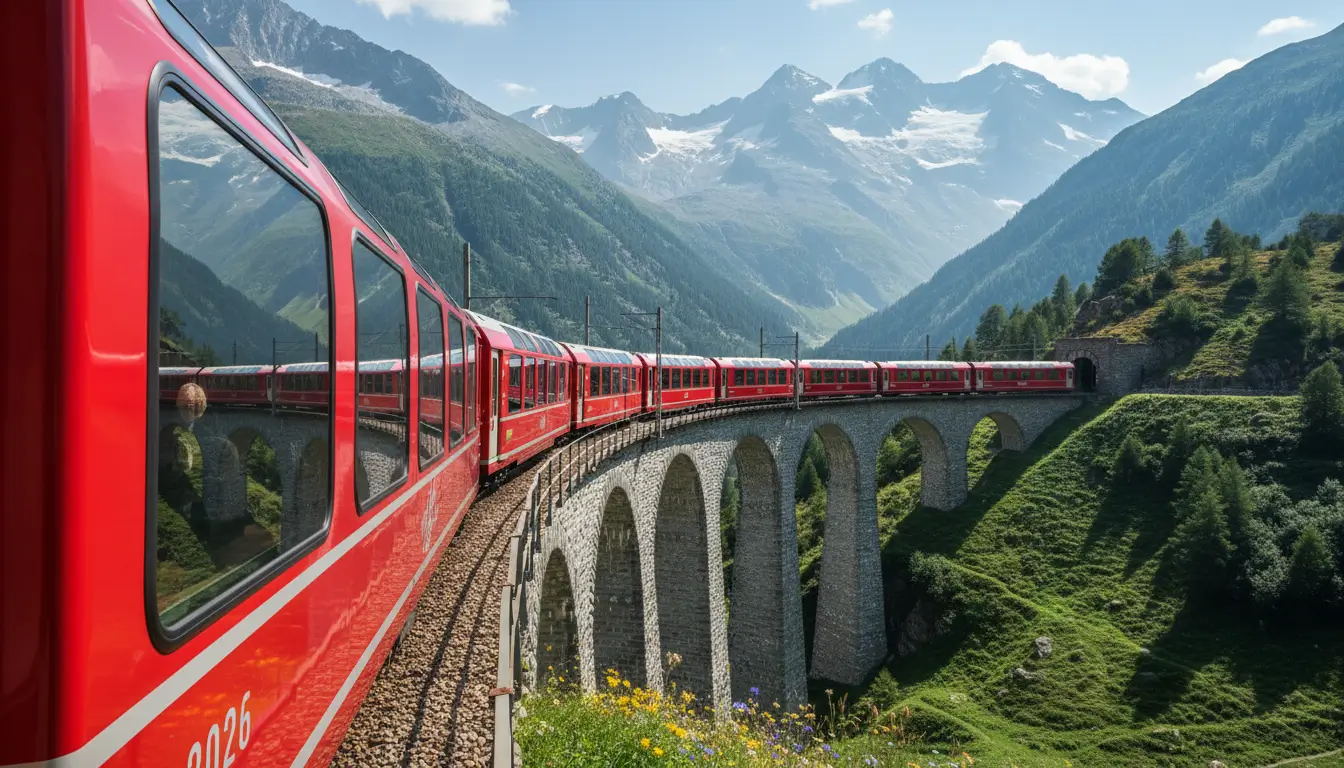
France has several mountain rail routes. They take you to places that are much harder to reach without a train. Below are the most relevant ones for independently organising travellers.
Nice to Digne-les-Bains: Ligne des Alpes
Also known as the Train des Pignes. This line runs through the inland of Provence and the Alpes-de-Haute-Provence. The pace is relaxed and the scenery alternates between green valleys, villages and mountain areas. The line is popular with travellers who mainly value the journey itself and want to walk or get off along the way.
The route works well as a day trip. You can also use it as a base for longer stays in a mountain village. Frequency outside the peak season is limited, so check the timetable well in advance.
Grenoble to La Mure: Ligne de la Mure
A short historic mountain line in the French Alps. The route is recreational and combines well with a visit to Grenoble or the surrounding mountains. This trip is less well-known than the Train Jaune or the Train des Merveilles, but it does offer a memorable mountain impression in a short time.
Chamonix to Mer de Glace: Train du Montenvers
This is not a long regional line, but it is one of the most famous mountain railway routes in France. The train takes you from Chamonix to the viewpoint by the Mer de Glace glacier. The route is short, steep and has a distinctly alpine character. Go early in the day. This way you avoid crowds at the viewpoint. You also have more time to walk or take photos.
What determines whether a mountain rail route is truly beautiful?
Scenic rail means travelling by train through special landscapes with far-reaching views. It is about more than the view alone. A good mountain rail route has varied scenery. You see gradual transitions between city and nature: coast, river valleys, forests and mountain villages alternate. Historic engineering such as viaducts, loops and hairpin bends makes the journey more tangible.
Many of these routes take you to remote places without a car. They connect villages that would otherwise only be reachable by car, or where parking is difficult or expensive. Along the way you see places you would otherwise only drive past. This makes the journey feel local and authentic.
‘ This way you combine coast, Alps and Pyrenees in a single route. ’
How can I combine several French train journeys in one trip?
Combining several mountain rail routes requires planning. That applies especially outside the peak season. Some lines do not run daily. Others have limited connections. First check the seasonal timetable for each route. Then choose your base points: Nice is a good starting point for the Train des Merveilles and the Train des Pignes. Villefranche-de-Conflent works as a base for the Petit Train Jaune. Grenoble and Chamonix are convenient departure points for Alpine lines.
Do you want peace and quiet during your trip? Then plan your travel days on weekdays outside rush hours. Take enough water and snacks with you. Some lines have limited food and drink options. Many stations have no facilities. Want to go hiking? Then check whether a station connects to a marked route. Not every station has direct access to trails.
A classic combination starts in Nice. Day one: a day trip on the Train des Merveilles. Day two: a ride on the Train des Pignes. After that you travel to the Pyrenees for the Train Jaune. This way you combine coast, Alps and Pyrenees in a single route. This requires at least five to seven days. You travel with a mix of train and bus or a single car journey between regions.
Practical tips for mountain train journeys in France
Window seats are more important than on ordinary routes. On some routes one specific side of the train is more attractive. Bends and tunnels create changing views. In busy periods, boarding early can make a big difference. If you are hiking or staying longer in a village, take a rucksack with an extra layer, water and possibly a light waterproof jacket. Mountain weather changes quickly.
Check whether you need a separate ticket or a pass. Interrail passes often work on regional lines. They are not always valid on tourist mountain railways such as the Train du Montenvers. Some routes require a supplement. Others require a separate ticket. Read the conditions for each line.
Clear weather is ideal. Mountains and valleys stand out better without cloud or mist. In summer, opt for an open carriage. A window seat also works well. In that case take sun protection and possibly a windproof jacket, even on warm days.
Who are these routes best suited to?
Mountain rail routes are a good match for travellers who love landscapes. They give you time to travel at a relaxed pace and to stop along the way. They are suitable for families who want to plan a day without a car, hikers who want to combine villages and trailheads, and photographers who want time for views without the pressure of parking.
Are you considering your first rail trip through exceptional scenery? This type of trip is called a scenic rail experience. The strongest options are the Train des Merveilles, the Petit Train Jaune and the Train du Montenvers. Do you prefer quiet, local lines? Then Nice to Digne-les-Bains is suitable. Grenoble to La Mure offers a similar experience. The Train Jaune and the Train des Merveilles are the best choices for landscape photography.
‘ Discover more about how to plan your trip in a smarter and more conscious way. ’
Discover more about train journeys and routes
On the Traveler Tips website you will find more information about travelling by train, routes across Europe, preparing for a rail holiday and practical tips for slow travel. Discover more about how to plan your trip in a smarter and more conscious way.
Frequently asked questions
Plan your road trip so that you stay a few nights in or around Nice, and there choose a morning train on the Train des Merveilles to Tende (or an intermediate stop such as Breil-sur-Roya) as a full day trip. Use Nice as a hinge point: before or after the train ride you drive on by car to Provence (via the A8 towards Cannes/Draguignan) or the Alps (via the A8/A51 towards Digne-les-Bains or Grenoble). Choose a flexible plan: fix your overnight stays in Nice and your next region, but keep the exact train day open until you know the weather forecast and timetable. Combine the train with a short walk or village visit along the way, so that the journey really feels like part of your road trip rather than a separate outing.
Picturesque villages for a longer stop are mainly Sospel, Breil-sur-Roya, Fontan-Saorge, La Brigue and terminus Tende. Choose one or two villages as your main stops (for example Sospel on the outward journey and Tende or La Brigue as the final destination), so that you have time for a walk, a village stroll and lunch. Take an early morning train from Nice, plan a fixed return journey in the late afternoon and allow at least 1.5–2 hours per main stop. Use the villages in between mainly as short photo stops from the train, so that your day plan remains realistic.
For the best nature experience and light for photos, a journey in late spring (May–June) or early autumn (September–early October) is ideal, with clear days and valleys that are still green or already showing autumn colours. Choose preferably a morning train from Nice, so that the light falls beautifully into the valleys and you can still get off along the way to walk or take photos. In July–August, weekends and days with a guide on board are especially busy; in that period choose a weekday and avoid the first really popular morning train. Outside holiday periods, weekdays are generally the quietest, with the greatest chance of an almost “private” mountain line experience.
Yes, there are regional passes and combination options, but these vary by region and type of mountain railway. For the Train des Merveilles you generally use standard TER tickets or regional discount passes (for example the PACA region), which are cheapest if you book them online or via the SNCF/TER app, preferably as a return or with day pass promotions. Other mountain trains such as the Petit Train Jaune, Montenvers or La Mure often use their own (day) return tickets or tourist passes, which you are best off booking directly via their official website or local tourist offices. For comfort: travel outside rush hours, reserve in advance where possible and allow enough time between connections so that you are not on the most crowded trains.
Other French mountain trains with a similarly unique experience include the Petit Train Jaune in the Pyrenees and the Nice – Digne-les-Bains line (Train des Pignes), both easy to fit into a tour of the south of France. The Ligne de la Mure near Grenoble also offers a spectacular but shorter mountain experience that you can easily combine with an Alpine route. In addition, the Train du Montenvers from Chamonix to the Mer de Glace is an iconic mountain train that fits perfectly into a tour of the French Alps.