 NL
NL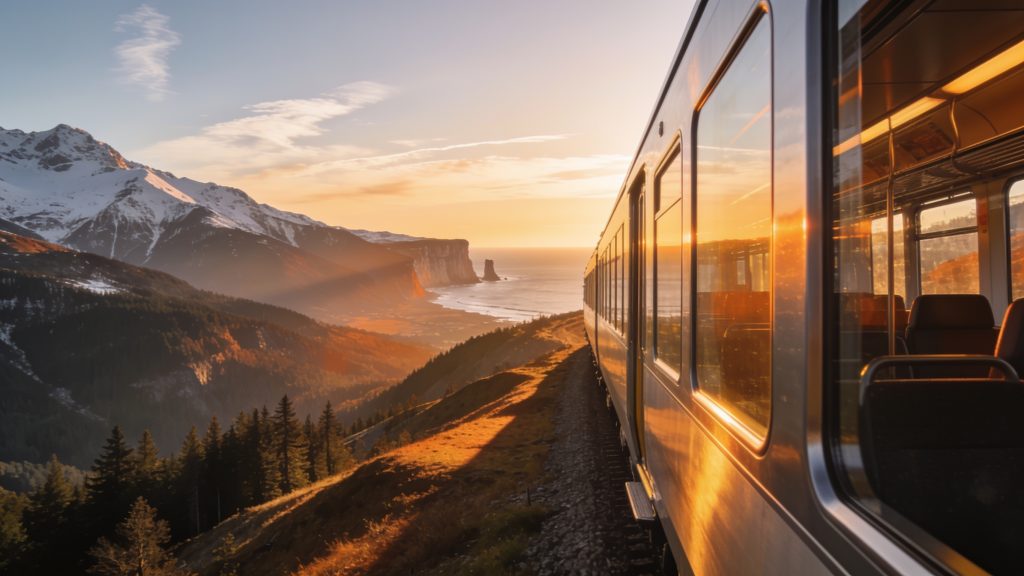
Winter: snowy landscapes and limited schedules
Winter offers a unique experience with snow-covered mountains and winter silence. The Bernina Express runs all year round, which means you can travel from Chur to Tirano in winter as well. The route passes the highest point at 2,253 metres, where you look out over a snowy mountain landscape.
The Glacier Express has a more limited schedule in winter. The train runs from 6 December 2025 to 10 October 2026, which means there are several weeks in November when no panoramic carriages are available. Outside this period, only regular trains run on the same route, without the special panoramic windows.
Winter travel requires more planning. Snow sometimes causes delays. Not all hiking trails near stations are accessible. At the same time, winter offers peace and a fairy-tale landscape. You don’t see this in other seasons.
When winter travel is suitable
- The Bernina Express is fully available in winter
- Combine your train journey with winter sports in Zermatt or St. Moritz
- December offers a Christmas atmosphere in mountain villages along the route
- There is no guarantee of snow, but high-altitude stretches usually have snow from December to March
Availability by route and season
Not every scenic train has a year-round schedule. Availability differs by route and partly determines when you can travel.
Glacier Express
This train runs from 6 December 2025 to 10 October 2026. Outside this period, no panoramic carriages are available. June to October are ideal for greenery and autumn colours. December to March are suitable for snowy landscapes. Reservations are mandatory.
Bernina Express
The Bernina Express runs all year round, giving you flexibility in your travel planning. Reservations are mandatory. June to October are ideal for greenery and autumn colours. December to March are suitable for snowy landscapes.
Gotthard Panorama Express
This route is available from 18 April to 18 October 2026. The route combines boat and train. The boat only sails during the tourist season. The best months are May, June, September, and October for pleasant weather and fewer crowds.
How to choose the right travel time
Your choice is personal. For example, do you want a clear view of mountain peaks and green landscapes? Then choose July or August. Are you looking for peace and colourful nature? September and October are then the best options. Do you love winter silence and snow? Plan your trip between December and March. Be sure to check the availability of panoramic carriages.
Take transfer times into account when planning. Travel schedules often show 10 minutes. This is optimistic. Plan at least 30 minutes after a train ride of up to 2.5 hours. Plan 60 minutes after longer rides. This prevents stress and missed connections.
Reserve in time, especially for the summer and autumn months. Full means full, and popular routes such as the Glacier Express and Bernina Express sell out quickly.
On the Traveler Tips website, you will find more information about routes, destinations, and practical tips for train travel through Europe. Discover what preparations you need to make, which passes are advantageous, and how to combine your trip with other activities.
Frequently asked questions
Essential seasonal tips are: tailor the route to your desired landscape (summer for green mountains and clear visibility, autumn for colourful valleys and peace, winter for snow but with more limited schedules). Check the exact travel period for each scenic train, as some routes only run between spring and autumn or have specific dates. Take crowds into account: July–August are the most popular and require timely booking, while September–October are quieter. If time is limited, choose the period where your favourite route and type of landscape coincide.
Travel outside of school holidays and avoid weekends; preferably choose September–October or the shoulder season. Plan your train ride early in the morning or late in the afternoon, when it is quieter than in the middle of the day. Consider weekdays (Mon–Thu) and book well in advance so you can choose a window seat on the mountain or valley side. Check the sun position and weather forecasts in advance so you can enjoy the most beautiful panoramas on clear days with good light.
Yes, there are clear seasonal preferences for each scenic train route. For routes like the Glacier Express and Bernina Express, blooming alpine meadows and green mountain landscapes are most visible in the summer months of July and August. Colourful autumn landscapes with relatively quiet trains are best seen in September and October. For snow-capped mountain peaks and pronounced winter landscapes, the winter schedule of these same routes is most suitable, although the frequency is more limited.
In the low season, tickets and mandatory reservations are often cheaper and the train is less crowded, which provides more comfort, space, and peace, but there may be fewer connections and lower frequencies. In the peak season, more trains generally run, and there is a greater chance of stable schedules and optimal panoramic carriages, but the prices for tickets and reservations are higher. Furthermore, it is busier in the peak season, which may reduce comfort due to full carriages and more noise. In the low season, you also run a higher risk of less-than-ideal weather conditions or shorter days, which can slightly limit the viewing comfort.
For a winter trip, the Glacier Express and the Bernina Express are particularly suitable, as their routes run through high-alpine areas where you have a continuous view of snow-capped mountain peaks and white valleys. In summer, these same routes – Glacier Express, Bernina Express, and Gotthard Panorama Express – come into their own precisely because of the clear visibility, green mountain meadows, and the possibility of hiking along the way. The Bernina Express is especially attractive in winter because it crosses significant changes in altitude, allowing you to see different snowy landscapes in a short time. The Gotthard Panorama Express is typically a summer route, as the contrast between the sunny Ticino region and the mountain passes is strongest then.
Winter: snowy landscapes and limited schedules
Winter offers a unique experience with snow-covered mountains and winter silence. The Bernina Express runs all year round, which means you can travel from Chur to Tirano in winter as well. The route passes the highest point at 2,253 metres, where you look out over a snowy mountain landscape.
The Glacier Express has a more limited schedule in winter. The train runs from 6 December 2025 to 10 October 2026, which means there are several weeks in November when no panoramic carriages are available. Outside this period, only regular trains run on the same route, without the special panoramic windows.
Winter travel requires more planning. Snow sometimes causes delays. Not all hiking trails near stations are accessible. At the same time, winter offers peace and a fairy-tale landscape. You don’t see this in other seasons.
When winter travel is suitable
- The Bernina Express is fully available in winter
- Combine your train journey with winter sports in Zermatt or St. Moritz
- December offers a Christmas atmosphere in mountain villages along the route
- There is no guarantee of snow, but high-altitude stretches usually have snow from December to March
Availability by route and season
Not every scenic train has a year-round schedule. Availability differs by route and partly determines when you can travel.
Glacier Express
This train runs from 6 December 2025 to 10 October 2026. Outside this period, no panoramic carriages are available. June to October are ideal for greenery and autumn colours. December to March are suitable for snowy landscapes. Reservations are mandatory.
Bernina Express
The Bernina Express runs all year round, giving you flexibility in your travel planning. Reservations are mandatory. June to October are ideal for greenery and autumn colours. December to March are suitable for snowy landscapes.
Gotthard Panorama Express
This route is available from 18 April to 18 October 2026. The route combines boat and train. The boat only sails during the tourist season. The best months are May, June, September, and October for pleasant weather and fewer crowds.
How to choose the right travel time
Your choice is personal. For example, do you want a clear view of mountain peaks and green landscapes? Then choose July or August. Are you looking for peace and colourful nature? September and October are then the best options. Do you love winter silence and snow? Plan your trip between December and March. Be sure to check the availability of panoramic carriages.
Take transfer times into account when planning. Travel schedules often show 10 minutes. This is optimistic. Plan at least 30 minutes after a train ride of up to 2.5 hours. Plan 60 minutes after longer rides. This prevents stress and missed connections.
Reserve in time, especially for the summer and autumn months. Full means full, and popular routes such as the Glacier Express and Bernina Express sell out quickly.
On the Traveler Tips website, you will find more information about routes, destinations, and practical tips for train travel through Europe. Discover what preparations you need to make, which passes are advantageous, and how to combine your trip with other activities.
Frequently asked questions
Essential seasonal tips are: tailor the route to your desired landscape (summer for green mountains and clear visibility, autumn for colourful valleys and peace, winter for snow but with more limited schedules). Check the exact travel period for each scenic train, as some routes only run between spring and autumn or have specific dates. Take crowds into account: July–August are the most popular and require timely booking, while September–October are quieter. If time is limited, choose the period where your favourite route and type of landscape coincide.
Travel outside of school holidays and avoid weekends; preferably choose September–October or the shoulder season. Plan your train ride early in the morning or late in the afternoon, when it is quieter than in the middle of the day. Consider weekdays (Mon–Thu) and book well in advance so you can choose a window seat on the mountain or valley side. Check the sun position and weather forecasts in advance so you can enjoy the most beautiful panoramas on clear days with good light.
Yes, there are clear seasonal preferences for each scenic train route. For routes like the Glacier Express and Bernina Express, blooming alpine meadows and green mountain landscapes are most visible in the summer months of July and August. Colourful autumn landscapes with relatively quiet trains are best seen in September and October. For snow-capped mountain peaks and pronounced winter landscapes, the winter schedule of these same routes is most suitable, although the frequency is more limited.
In the low season, tickets and mandatory reservations are often cheaper and the train is less crowded, which provides more comfort, space, and peace, but there may be fewer connections and lower frequencies. In the peak season, more trains generally run, and there is a greater chance of stable schedules and optimal panoramic carriages, but the prices for tickets and reservations are higher. Furthermore, it is busier in the peak season, which may reduce comfort due to full carriages and more noise. In the low season, you also run a higher risk of less-than-ideal weather conditions or shorter days, which can slightly limit the viewing comfort.
For a winter trip, the Glacier Express and the Bernina Express are particularly suitable, as their routes run through high-alpine areas where you have a continuous view of snow-capped mountain peaks and white valleys. In summer, these same routes – Glacier Express, Bernina Express, and Gotthard Panorama Express – come into their own precisely because of the clear visibility, green mountain meadows, and the possibility of hiking along the way. The Bernina Express is especially attractive in winter because it crosses significant changes in altitude, allowing you to see different snowy landscapes in a short time. The Gotthard Panorama Express is typically a summer route, as the contrast between the sunny Ticino region and the mountain passes is strongest then.
Autumn: colourful splendour and quiet routes
September and October are ideal months for scenic trains. Autumn offers warm colours in the valleys, quiet trains, and pleasant weather. The crowds of summer are gone, which means you find a seat more easily and have more space to take photos.
The colours of autumn vary by altitude. Trees and plants in lower areas change colour earlier. Higher areas retain their green colour longer. This means that in October you see a beautiful colour spectrum ranging from green to golden yellow and reddish-brown. During this period, you see beautiful contrasts on the Bernina Express. Green mountain meadows alternate with coloured larch forests.
The weather in autumn is more stable than in spring, with less precipitation and often clear days. Temperatures are pleasant, making comfortable train journeys possible without the summer heat.
Advantages of travelling in autumn
- Less crowded, making reservations easier
- Colourful landscapes that change every week
- More stable weather than in spring
- Better prices for accommodation near train routes
Winter: snowy landscapes and limited schedules
Winter offers a unique experience with snow-covered mountains and winter silence. The Bernina Express runs all year round, which means you can travel from Chur to Tirano in winter as well. The route passes the highest point at 2,253 metres, where you look out over a snowy mountain landscape.
The Glacier Express has a more limited schedule in winter. The train runs from 6 December 2025 to 10 October 2026, which means there are several weeks in November when no panoramic carriages are available. Outside this period, only regular trains run on the same route, without the special panoramic windows.
Winter travel requires more planning. Snow sometimes causes delays. Not all hiking trails near stations are accessible. At the same time, winter offers peace and a fairy-tale landscape. You don’t see this in other seasons.
When winter travel is suitable
- The Bernina Express is fully available in winter
- Combine your train journey with winter sports in Zermatt or St. Moritz
- December offers a Christmas atmosphere in mountain villages along the route
- There is no guarantee of snow, but high-altitude stretches usually have snow from December to March
Availability by route and season
Not every scenic train has a year-round schedule. Availability differs by route and partly determines when you can travel.
Glacier Express
This train runs from 6 December 2025 to 10 October 2026. Outside this period, no panoramic carriages are available. June to October are ideal for greenery and autumn colours. December to March are suitable for snowy landscapes. Reservations are mandatory.
Bernina Express
The Bernina Express runs all year round, giving you flexibility in your travel planning. Reservations are mandatory. June to October are ideal for greenery and autumn colours. December to March are suitable for snowy landscapes.
Gotthard Panorama Express
This route is available from 18 April to 18 October 2026. The route combines boat and train. The boat only sails during the tourist season. The best months are May, June, September, and October for pleasant weather and fewer crowds.
How to choose the right travel time
Your choice is personal. For example, do you want a clear view of mountain peaks and green landscapes? Then choose July or August. Are you looking for peace and colourful nature? September and October are then the best options. Do you love winter silence and snow? Plan your trip between December and March. Be sure to check the availability of panoramic carriages.
Take transfer times into account when planning. Travel schedules often show 10 minutes. This is optimistic. Plan at least 30 minutes after a train ride of up to 2.5 hours. Plan 60 minutes after longer rides. This prevents stress and missed connections.
Reserve in time, especially for the summer and autumn months. Full means full, and popular routes such as the Glacier Express and Bernina Express sell out quickly.
On the Traveler Tips website, you will find more information about routes, destinations, and practical tips for train travel through Europe. Discover what preparations you need to make, which passes are advantageous, and how to combine your trip with other activities.
Frequently asked questions
Which ‘seasonal tips’ are essential for choosing the ‘best travel time’ per ‘scenic train route’?
Essential seasonal tips are: tailor the route to your desired landscape (summer for green mountains and clear visibility, autumn for colourful valleys and peace, winter for snow but with more limited schedules). Check the exact travel period for each scenic train, as some routes only run between spring and autumn or have specific dates. Take crowds into account: July–August are the most popular and require timely booking, while September–October are quieter. If time is limited, choose the period where your favourite route and type of landscape coincide.
How do I avoid the ‘busiest periods’ and still enjoy the ‘most beautiful views’ during my ‘scenic train trip’?
Travel outside of school holidays and avoid weekends; preferably choose September–October or the shoulder season. Plan your train ride early in the morning or late in the afternoon, when it is quieter than in the middle of the day. Consider weekdays (Mon–Thu) and book well in advance so you can choose a window seat on the mountain or valley side. Check the sun position and weather forecasts in advance so you can enjoy the most beautiful panoramas on clear days with good light.
Are there ‘specific months’ in which ‘natural phenomena’ such as ‘blooming alpine meadows’ or ‘snow-capped mountain peaks’ are optimally visible per ‘train route’?
Yes, there are clear seasonal preferences for each scenic train route. For routes like the Glacier Express and Bernina Express, blooming alpine meadows and green mountain landscapes are most visible in the summer months of July and August. Colourful autumn landscapes with relatively quiet trains are best seen in September and October. For snow-capped mountain peaks and pronounced winter landscapes, the winter schedule of these same routes is most suitable, although the frequency is more limited.
What are the ‘advantages’ and ‘disadvantages’ of travelling with a ‘scenic train’ in the ‘low season’ versus the ‘peak season’ with regard to ‘comfort’ and ‘costs’?
In the low season, tickets and mandatory reservations are often cheaper and the train is less crowded, which provides more comfort, space, and peace, but there may be fewer connections and lower frequencies. In the peak season, more trains generally run, and there is a greater chance of stable schedules and optimal panoramic carriages, but the prices for tickets and reservations are higher. Furthermore, it is busier in the peak season, which may reduce comfort due to full carriages and more noise. In the low season, you also run a higher risk of less-than-ideal weather conditions or shorter days, which can slightly limit the viewing comfort.
Which ‘scenic train routes’ are particularly suitable for a ‘winter trip’ and which for a ‘summer trip’, and why?
For a winter trip, the Glacier Express and the Bernina Express are particularly suitable, as their routes run through high-alpine areas where you have a continuous view of snow-capped mountain peaks and white valleys. In summer, these same routes – Glacier Express, Bernina Express, and Gotthard Panorama Express – come into their own precisely because of the clear visibility, green mountain meadows, and the possibility of hiking along the way. The Bernina Express is especially attractive in winter because it crosses significant changes in altitude, allowing you to see different snowy landscapes in a short time. The Gotthard Panorama Express is typically a summer route, as the contrast between the sunny Ticino region and the mountain passes is strongest then.
Summer: green mountains and optimal visibility
July and August are the busiest months for scenic trains. In summer, you see green mountain landscapes and clear skies. Hiking trails and mountain activities are optimally accessible. The Glacier Express runs on a full schedule during this period with panoramic carriages, which guarantees an optimal view on the route from Chur to Zermatt.
Visibility of mountain peaks is generally better in summer than in other seasons. Clouds form in the afternoon and sometimes limit the view. The morning hours often provide the clearest visibility. Summer is also the period when high-altitude alpine meadows are fully green and grazing livestock creates a typical Swiss image.
A downside of the summer season is the crowds. Reservations are mandatory for the Glacier Express and Bernina Express, and trains are often fully booked. Therefore, book at least several weeks in advance to avoid disappointment.
Why summer remains popular
- All scenic trains are available with a full schedule
- Optimal combination with hiking and mountain activities
- Longer days offer more daylight for your journey
- Station facilities and restaurants along the route are fully open
Autumn: colourful splendour and quiet routes
September and October are ideal months for scenic trains. Autumn offers warm colours in the valleys, quiet trains, and pleasant weather. The crowds of summer are gone, which means you find a seat more easily and have more space to take photos.
The colours of autumn vary by altitude. Trees and plants in lower areas change colour earlier. Higher areas retain their green colour longer. This means that in October you see a beautiful colour spectrum ranging from green to golden yellow and reddish-brown. During this period, you see beautiful contrasts on the Bernina Express. Green mountain meadows alternate with coloured larch forests.
The weather in autumn is more stable than in spring, with less precipitation and often clear days. Temperatures are pleasant, making comfortable train journeys possible without the summer heat.
Advantages of travelling in autumn
- Less crowded, making reservations easier
- Colourful landscapes that change every week
- More stable weather than in spring
- Better prices for accommodation near train routes
Winter: snowy landscapes and limited schedules
Winter offers a unique experience with snow-covered mountains and winter silence. The Bernina Express runs all year round, which means you can travel from Chur to Tirano in winter as well. The route passes the highest point at 2,253 metres, where you look out over a snowy mountain landscape.
The Glacier Express has a more limited schedule in winter. The train runs from 6 December 2025 to 10 October 2026, which means there are several weeks in November when no panoramic carriages are available. Outside this period, only regular trains run on the same route, without the special panoramic windows.
Winter travel requires more planning. Snow sometimes causes delays. Not all hiking trails near stations are accessible. At the same time, winter offers peace and a fairy-tale landscape. You don’t see this in other seasons.
When winter travel is suitable
- The Bernina Express is fully available in winter
- Combine your train journey with winter sports in Zermatt or St. Moritz
- December offers a Christmas atmosphere in mountain villages along the route
- There is no guarantee of snow, but high-altitude stretches usually have snow from December to March
Availability by route and season
Not every scenic train has a year-round schedule. Availability differs by route and partly determines when you can travel.
Glacier Express
This train runs from 6 December 2025 to 10 October 2026. Outside this period, no panoramic carriages are available. June to October are ideal for greenery and autumn colours. December to March are suitable for snowy landscapes. Reservations are mandatory.
Bernina Express
The Bernina Express runs all year round, giving you flexibility in your travel planning. Reservations are mandatory. June to October are ideal for greenery and autumn colours. December to March are suitable for snowy landscapes.
Gotthard Panorama Express
This route is available from 18 April to 18 October 2026. The route combines boat and train. The boat only sails during the tourist season. The best months are May, June, September, and October for pleasant weather and fewer crowds.
How to choose the right travel time
Your choice is personal. For example, do you want a clear view of mountain peaks and green landscapes? Then choose July or August. Are you looking for peace and colourful nature? September and October are then the best options. Do you love winter silence and snow? Plan your trip between December and March. Be sure to check the availability of panoramic carriages.
Take transfer times into account when planning. Travel schedules often show 10 minutes. This is optimistic. Plan at least 30 minutes after a train ride of up to 2.5 hours. Plan 60 minutes after longer rides. This prevents stress and missed connections.
Reserve in time, especially for the summer and autumn months. Full means full, and popular routes such as the Glacier Express and Bernina Express sell out quickly.
On the Traveler Tips website, you will find more information about routes, destinations, and practical tips for train travel through Europe. Discover what preparations you need to make, which passes are advantageous, and how to combine your trip with other activities.
Frequently asked questions
Which ‘seasonal tips’ are essential for choosing the ‘best travel time’ per ‘scenic train route’?
Essential seasonal tips are: tailor the route to your desired landscape (summer for green mountains and clear visibility, autumn for colourful valleys and peace, winter for snow but with more limited schedules). Check the exact travel period for each scenic train, as some routes only run between spring and autumn or have specific dates. Take crowds into account: July–August are the most popular and require timely booking, while September–October are quieter. If time is limited, choose the period where your favourite route and type of landscape coincide.
How do I avoid the ‘busiest periods’ and still enjoy the ‘most beautiful views’ during my ‘scenic train trip’?
Travel outside of school holidays and avoid weekends; preferably choose September–October or the shoulder season. Plan your train ride early in the morning or late in the afternoon, when it is quieter than in the middle of the day. Consider weekdays (Mon–Thu) and book well in advance so you can choose a window seat on the mountain or valley side. Check the sun position and weather forecasts in advance so you can enjoy the most beautiful panoramas on clear days with good light.
Are there ‘specific months’ in which ‘natural phenomena’ such as ‘blooming alpine meadows’ or ‘snow-capped mountain peaks’ are optimally visible per ‘train route’?
Yes, there are clear seasonal preferences for each scenic train route. For routes like the Glacier Express and Bernina Express, blooming alpine meadows and green mountain landscapes are most visible in the summer months of July and August. Colourful autumn landscapes with relatively quiet trains are best seen in September and October. For snow-capped mountain peaks and pronounced winter landscapes, the winter schedule of these same routes is most suitable, although the frequency is more limited.
What are the ‘advantages’ and ‘disadvantages’ of travelling with a ‘scenic train’ in the ‘low season’ versus the ‘peak season’ with regard to ‘comfort’ and ‘costs’?
In the low season, tickets and mandatory reservations are often cheaper and the train is less crowded, which provides more comfort, space, and peace, but there may be fewer connections and lower frequencies. In the peak season, more trains generally run, and there is a greater chance of stable schedules and optimal panoramic carriages, but the prices for tickets and reservations are higher. Furthermore, it is busier in the peak season, which may reduce comfort due to full carriages and more noise. In the low season, you also run a higher risk of less-than-ideal weather conditions or shorter days, which can slightly limit the viewing comfort.
Which ‘scenic train routes’ are particularly suitable for a ‘winter trip’ and which for a ‘summer trip’, and why?
For a winter trip, the Glacier Express and the Bernina Express are particularly suitable, as their routes run through high-alpine areas where you have a continuous view of snow-capped mountain peaks and white valleys. In summer, these same routes – Glacier Express, Bernina Express, and Gotthard Panorama Express – come into their own precisely because of the clear visibility, green mountain meadows, and the possibility of hiking along the way. The Bernina Express is especially attractive in winter because it crosses significant changes in altitude, allowing you to see different snowy landscapes in a short time. The Gotthard Panorama Express is typically a summer route, as the contrast between the sunny Ticino region and the mountain passes is strongest then.
Spring: blooming landscapes and thaw in the mountains
Spring, from April to June, marks the transition from winter calm to active nature. Lower areas turn green, flowers appear in the meadows, and mountain streams swell with meltwater. This season offers a fresh experience. High-altitude routes sometimes still have snow and are limited in accessibility.
The Gotthard Panorama Express is available from 18 April, which coincides with the start of the tourist season in Switzerland. This route combines a boat trip on Lake Lucerne with a train journey to Lugano. In spring, you see the contrasts on this route between the still-snowy mountain landscape and the first blossoms in the lower valleys.
The Bernina Express is ideal in spring for transitioning from the northern climate to the southern climate of Tirano. You start your journey in a bright alpine landscape and end it among palm trees and Mediterranean vegetation.
Practical considerations for spring
- Lower crowds than in summer, especially in April and May
- Variable weather: prepare for both sun and rain
- Some hiking trails near train stations are closed
- Train travel in this period is often more affordable than in July and August
Summer: green mountains and optimal visibility
July and August are the busiest months for scenic trains. In summer, you see green mountain landscapes and clear skies. Hiking trails and mountain activities are optimally accessible. The Glacier Express runs on a full schedule during this period with panoramic carriages, which guarantees an optimal view on the route from Chur to Zermatt.
Visibility of mountain peaks is generally better in summer than in other seasons. Clouds form in the afternoon and sometimes limit the view. The morning hours often provide the clearest visibility. Summer is also the period when high-altitude alpine meadows are fully green and grazing livestock creates a typical Swiss image.
A downside of the summer season is the crowds. Reservations are mandatory for the Glacier Express and Bernina Express, and trains are often fully booked. Therefore, book at least several weeks in advance to avoid disappointment.
Why summer remains popular
- All scenic trains are available with a full schedule
- Optimal combination with hiking and mountain activities
- Longer days offer more daylight for your journey
- Station facilities and restaurants along the route are fully open
Autumn: colourful splendour and quiet routes
September and October are ideal months for scenic trains. Autumn offers warm colours in the valleys, quiet trains, and pleasant weather. The crowds of summer are gone, which means you find a seat more easily and have more space to take photos.
The colours of autumn vary by altitude. Trees and plants in lower areas change colour earlier. Higher areas retain their green colour longer. This means that in October you see a beautiful colour spectrum ranging from green to golden yellow and reddish-brown. During this period, you see beautiful contrasts on the Bernina Express. Green mountain meadows alternate with coloured larch forests.
The weather in autumn is more stable than in spring, with less precipitation and often clear days. Temperatures are pleasant, making comfortable train journeys possible without the summer heat.
Advantages of travelling in autumn
- Less crowded, making reservations easier
- Colourful landscapes that change every week
- More stable weather than in spring
- Better prices for accommodation near train routes
Winter: snowy landscapes and limited schedules
Winter offers a unique experience with snow-covered mountains and winter silence. The Bernina Express runs all year round, which means you can travel from Chur to Tirano in winter as well. The route passes the highest point at 2,253 metres, where you look out over a snowy mountain landscape.
The Glacier Express has a more limited schedule in winter. The train runs from 6 December 2025 to 10 October 2026, which means there are several weeks in November when no panoramic carriages are available. Outside this period, only regular trains run on the same route, without the special panoramic windows.
Winter travel requires more planning. Snow sometimes causes delays. Not all hiking trails near stations are accessible. At the same time, winter offers peace and a fairy-tale landscape. You don’t see this in other seasons.
When winter travel is suitable
- The Bernina Express is fully available in winter
- Combine your train journey with winter sports in Zermatt or St. Moritz
- December offers a Christmas atmosphere in mountain villages along the route
- There is no guarantee of snow, but high-altitude stretches usually have snow from December to March
Availability by route and season
Not every scenic train has a year-round schedule. Availability differs by route and partly determines when you can travel.
Glacier Express
This train runs from 6 December 2025 to 10 October 2026. Outside this period, no panoramic carriages are available. June to October are ideal for greenery and autumn colours. December to March are suitable for snowy landscapes. Reservations are mandatory.
Bernina Express
The Bernina Express runs all year round, giving you flexibility in your travel planning. Reservations are mandatory. June to October are ideal for greenery and autumn colours. December to March are suitable for snowy landscapes.
Gotthard Panorama Express
This route is available from 18 April to 18 October 2026. The route combines boat and train. The boat only sails during the tourist season. The best months are May, June, September, and October for pleasant weather and fewer crowds.
How to choose the right travel time
Your choice is personal. For example, do you want a clear view of mountain peaks and green landscapes? Then choose July or August. Are you looking for peace and colourful nature? September and October are then the best options. Do you love winter silence and snow? Plan your trip between December and March. Be sure to check the availability of panoramic carriages.
Take transfer times into account when planning. Travel schedules often show 10 minutes. This is optimistic. Plan at least 30 minutes after a train ride of up to 2.5 hours. Plan 60 minutes after longer rides. This prevents stress and missed connections.
Reserve in time, especially for the summer and autumn months. Full means full, and popular routes such as the Glacier Express and Bernina Express sell out quickly.
On the Traveler Tips website, you will find more information about routes, destinations, and practical tips for train travel through Europe. Discover what preparations you need to make, which passes are advantageous, and how to combine your trip with other activities.
Frequently asked questions
Which ‘seasonal tips’ are essential for choosing the ‘best travel time’ per ‘scenic train route’?
Essential seasonal tips are: tailor the route to your desired landscape (summer for green mountains and clear visibility, autumn for colourful valleys and peace, winter for snow but with more limited schedules). Check the exact travel period for each scenic train, as some routes only run between spring and autumn or have specific dates. Take crowds into account: July–August are the most popular and require timely booking, while September–October are quieter. If time is limited, choose the period where your favourite route and type of landscape coincide.
How do I avoid the ‘busiest periods’ and still enjoy the ‘most beautiful views’ during my ‘scenic train trip’?
Travel outside of school holidays and avoid weekends; preferably choose September–October or the shoulder season. Plan your train ride early in the morning or late in the afternoon, when it is quieter than in the middle of the day. Consider weekdays (Mon–Thu) and book well in advance so you can choose a window seat on the mountain or valley side. Check the sun position and weather forecasts in advance so you can enjoy the most beautiful panoramas on clear days with good light.
Are there ‘specific months’ in which ‘natural phenomena’ such as ‘blooming alpine meadows’ or ‘snow-capped mountain peaks’ are optimally visible per ‘train route’?
Yes, there are clear seasonal preferences for each scenic train route. For routes like the Glacier Express and Bernina Express, blooming alpine meadows and green mountain landscapes are most visible in the summer months of July and August. Colourful autumn landscapes with relatively quiet trains are best seen in September and October. For snow-capped mountain peaks and pronounced winter landscapes, the winter schedule of these same routes is most suitable, although the frequency is more limited.
What are the ‘advantages’ and ‘disadvantages’ of travelling with a ‘scenic train’ in the ‘low season’ versus the ‘peak season’ with regard to ‘comfort’ and ‘costs’?
In the low season, tickets and mandatory reservations are often cheaper and the train is less crowded, which provides more comfort, space, and peace, but there may be fewer connections and lower frequencies. In the peak season, more trains generally run, and there is a greater chance of stable schedules and optimal panoramic carriages, but the prices for tickets and reservations are higher. Furthermore, it is busier in the peak season, which may reduce comfort due to full carriages and more noise. In the low season, you also run a higher risk of less-than-ideal weather conditions or shorter days, which can slightly limit the viewing comfort.
Which ‘scenic train routes’ are particularly suitable for a ‘winter trip’ and which for a ‘summer trip’, and why?
For a winter trip, the Glacier Express and the Bernina Express are particularly suitable, as their routes run through high-alpine areas where you have a continuous view of snow-capped mountain peaks and white valleys. In summer, these same routes – Glacier Express, Bernina Express, and Gotthard Panorama Express – come into their own precisely because of the clear visibility, green mountain meadows, and the possibility of hiking along the way. The Bernina Express is especially attractive in winter because it crosses significant changes in altitude, allowing you to see different snowy landscapes in a short time. The Gotthard Panorama Express is typically a summer route, as the contrast between the sunny Ticino region and the mountain passes is strongest then.
Why the season defines your travel experience
The timing of your train journey has a direct influence on what you see along the way. A route through the Swiss Alps reveals vast green meadows with grazing livestock in July, while the same route in October showcases golden-yellow larch and birch forests. The Lavaux line along Lake Geneva is a great example: in spring, you see the first buds on the vineyards; in summer, the grapes grow; in autumn, the vineyards turn reddish-brown; and in winter, bare vines dominate the view.
Each season has different accessibility. Some high-altitude stretches are limited in availability during winter due to snow and restricted timetables. Other routes, such as the scenic rail: panoramic trains and most beautiful train routes, are specifically built to operate year-round. Special panoramic carriages offer an optimal view of the landscape.
The choice of season depends on your personal preference. What is important to you? Do you want quiet stretches with few fellow travellers? Then choose autumn. Are you looking for a clear view of mountain peaks and optimal hiking opportunities? Then summer is the best choice.
Spring: blooming landscapes and thaw in the mountains
Spring, from April to June, marks the transition from winter calm to active nature. Lower areas turn green, flowers appear in the meadows, and mountain streams swell with meltwater. This season offers a fresh experience. High-altitude routes sometimes still have snow and are limited in accessibility.
The Gotthard Panorama Express is available from 18 April, which coincides with the start of the tourist season in Switzerland. This route combines a boat trip on Lake Lucerne with a train journey to Lugano. In spring, you see the contrasts on this route between the still-snowy mountain landscape and the first blossoms in the lower valleys.
The Bernina Express is ideal in spring for transitioning from the northern climate to the southern climate of Tirano. You start your journey in a bright alpine landscape and end it among palm trees and Mediterranean vegetation.
Practical considerations for spring
- Lower crowds than in summer, especially in April and May
- Variable weather: prepare for both sun and rain
- Some hiking trails near train stations are closed
- Train travel in this period is often more affordable than in July and August
Summer: green mountains and optimal visibility
July and August are the busiest months for scenic trains. In summer, you see green mountain landscapes and clear skies. Hiking trails and mountain activities are optimally accessible. The Glacier Express runs on a full schedule during this period with panoramic carriages, which guarantees an optimal view on the route from Chur to Zermatt.
Visibility of mountain peaks is generally better in summer than in other seasons. Clouds form in the afternoon and sometimes limit the view. The morning hours often provide the clearest visibility. Summer is also the period when high-altitude alpine meadows are fully green and grazing livestock creates a typical Swiss image.
A downside of the summer season is the crowds. Reservations are mandatory for the Glacier Express and Bernina Express, and trains are often fully booked. Therefore, book at least several weeks in advance to avoid disappointment.
Why summer remains popular
- All scenic trains are available with a full schedule
- Optimal combination with hiking and mountain activities
- Longer days offer more daylight for your journey
- Station facilities and restaurants along the route are fully open
Autumn: colourful splendour and quiet routes
September and October are ideal months for scenic trains. Autumn offers warm colours in the valleys, quiet trains, and pleasant weather. The crowds of summer are gone, which means you find a seat more easily and have more space to take photos.
The colours of autumn vary by altitude. Trees and plants in lower areas change colour earlier. Higher areas retain their green colour longer. This means that in October you see a beautiful colour spectrum ranging from green to golden yellow and reddish-brown. During this period, you see beautiful contrasts on the Bernina Express. Green mountain meadows alternate with coloured larch forests.
The weather in autumn is more stable than in spring, with less precipitation and often clear days. Temperatures are pleasant, making comfortable train journeys possible without the summer heat.
Advantages of travelling in autumn
- Less crowded, making reservations easier
- Colourful landscapes that change every week
- More stable weather than in spring
- Better prices for accommodation near train routes
Winter: snowy landscapes and limited schedules
Winter offers a unique experience with snow-covered mountains and winter silence. The Bernina Express runs all year round, which means you can travel from Chur to Tirano in winter as well. The route passes the highest point at 2,253 metres, where you look out over a snowy mountain landscape.
The Glacier Express has a more limited schedule in winter. The train runs from 6 December 2025 to 10 October 2026, which means there are several weeks in November when no panoramic carriages are available. Outside this period, only regular trains run on the same route, without the special panoramic windows.
Winter travel requires more planning. Snow sometimes causes delays. Not all hiking trails near stations are accessible. At the same time, winter offers peace and a fairy-tale landscape. You don’t see this in other seasons.
When winter travel is suitable
- The Bernina Express is fully available in winter
- Combine your train journey with winter sports in Zermatt or St. Moritz
- December offers a Christmas atmosphere in mountain villages along the route
- There is no guarantee of snow, but high-altitude stretches usually have snow from December to March
Availability by route and season
Not every scenic train has a year-round schedule. Availability differs by route and partly determines when you can travel.
Glacier Express
This train runs from 6 December 2025 to 10 October 2026. Outside this period, no panoramic carriages are available. June to October are ideal for greenery and autumn colours. December to March are suitable for snowy landscapes. Reservations are mandatory.
Bernina Express
The Bernina Express runs all year round, giving you flexibility in your travel planning. Reservations are mandatory. June to October are ideal for greenery and autumn colours. December to March are suitable for snowy landscapes.
Gotthard Panorama Express
This route is available from 18 April to 18 October 2026. The route combines boat and train. The boat only sails during the tourist season. The best months are May, June, September, and October for pleasant weather and fewer crowds.
How to choose the right travel time
Your choice is personal. For example, do you want a clear view of mountain peaks and green landscapes? Then choose July or August. Are you looking for peace and colourful nature? September and October are then the best options. Do you love winter silence and snow? Plan your trip between December and March. Be sure to check the availability of panoramic carriages.
Take transfer times into account when planning. Travel schedules often show 10 minutes. This is optimistic. Plan at least 30 minutes after a train ride of up to 2.5 hours. Plan 60 minutes after longer rides. This prevents stress and missed connections.
Reserve in time, especially for the summer and autumn months. Full means full, and popular routes such as the Glacier Express and Bernina Express sell out quickly.
On the Traveler Tips website, you will find more information about routes, destinations, and practical tips for train travel through Europe. Discover what preparations you need to make, which passes are advantageous, and how to combine your trip with other activities.
Frequently asked questions
Which ‘seasonal tips’ are essential for choosing the ‘best travel time’ per ‘scenic train route’?
Essential seasonal tips are: tailor the route to your desired landscape (summer for green mountains and clear visibility, autumn for colourful valleys and peace, winter for snow but with more limited schedules). Check the exact travel period for each scenic train, as some routes only run between spring and autumn or have specific dates. Take crowds into account: July–August are the most popular and require timely booking, while September–October are quieter. If time is limited, choose the period where your favourite route and type of landscape coincide.
How do I avoid the ‘busiest periods’ and still enjoy the ‘most beautiful views’ during my ‘scenic train trip’?
Travel outside of school holidays and avoid weekends; preferably choose September–October or the shoulder season. Plan your train ride early in the morning or late in the afternoon, when it is quieter than in the middle of the day. Consider weekdays (Mon–Thu) and book well in advance so you can choose a window seat on the mountain or valley side. Check the sun position and weather forecasts in advance so you can enjoy the most beautiful panoramas on clear days with good light.
Are there ‘specific months’ in which ‘natural phenomena’ such as ‘blooming alpine meadows’ or ‘snow-capped mountain peaks’ are optimally visible per ‘train route’?
Yes, there are clear seasonal preferences for each scenic train route. For routes like the Glacier Express and Bernina Express, blooming alpine meadows and green mountain landscapes are most visible in the summer months of July and August. Colourful autumn landscapes with relatively quiet trains are best seen in September and October. For snow-capped mountain peaks and pronounced winter landscapes, the winter schedule of these same routes is most suitable, although the frequency is more limited.
What are the ‘advantages’ and ‘disadvantages’ of travelling with a ‘scenic train’ in the ‘low season’ versus the ‘peak season’ with regard to ‘comfort’ and ‘costs’?
In the low season, tickets and mandatory reservations are often cheaper and the train is less crowded, which provides more comfort, space, and peace, but there may be fewer connections and lower frequencies. In the peak season, more trains generally run, and there is a greater chance of stable schedules and optimal panoramic carriages, but the prices for tickets and reservations are higher. Furthermore, it is busier in the peak season, which may reduce comfort due to full carriages and more noise. In the low season, you also run a higher risk of less-than-ideal weather conditions or shorter days, which can slightly limit the viewing comfort.
Which ‘scenic train routes’ are particularly suitable for a ‘winter trip’ and which for a ‘summer trip’, and why?
For a winter trip, the Glacier Express and the Bernina Express are particularly suitable, as their routes run through high-alpine areas where you have a continuous view of snow-capped mountain peaks and white valleys. In summer, these same routes – Glacier Express, Bernina Express, and Gotthard Panorama Express – come into their own precisely because of the clear visibility, green mountain meadows, and the possibility of hiking along the way. The Bernina Express is especially attractive in winter because it crosses significant changes in altitude, allowing you to see different snowy landscapes in a short time. The Gotthard Panorama Express is typically a summer route, as the contrast between the sunny Ticino region and the mountain passes is strongest then.
The experience of a scenic train is largely determined by the season in which you travel. While summer showcases green mountain landscapes and autumn spreads warm colours across the valleys, winter offers snowy scenery and spring features blooming meadows. The Bernina Express runs all year round. The Glacier Express has a limited schedule outside the peak season. Discover when your favourite route is at its most beautiful.
Why the season defines your travel experience
The timing of your train journey has a direct influence on what you see along the way. A route through the Swiss Alps reveals vast green meadows with grazing livestock in July, while the same route in October showcases golden-yellow larch and birch forests. The Lavaux line along Lake Geneva is a great example: in spring, you see the first buds on the vineyards; in summer, the grapes grow; in autumn, the vineyards turn reddish-brown; and in winter, bare vines dominate the view.
Each season has different accessibility. Some high-altitude stretches are limited in availability during winter due to snow and restricted timetables. Other routes, such as the scenic rail: panoramic trains and most beautiful train routes, are specifically built to operate year-round. Special panoramic carriages offer an optimal view of the landscape.
The choice of season depends on your personal preference. What is important to you? Do you want quiet stretches with few fellow travellers? Then choose autumn. Are you looking for a clear view of mountain peaks and optimal hiking opportunities? Then summer is the best choice.
Spring: blooming landscapes and thaw in the mountains
Spring, from April to June, marks the transition from winter calm to active nature. Lower areas turn green, flowers appear in the meadows, and mountain streams swell with meltwater. This season offers a fresh experience. High-altitude routes sometimes still have snow and are limited in accessibility.
The Gotthard Panorama Express is available from 18 April, which coincides with the start of the tourist season in Switzerland. This route combines a boat trip on Lake Lucerne with a train journey to Lugano. In spring, you see the contrasts on this route between the still-snowy mountain landscape and the first blossoms in the lower valleys.
The Bernina Express is ideal in spring for transitioning from the northern climate to the southern climate of Tirano. You start your journey in a bright alpine landscape and end it among palm trees and Mediterranean vegetation.
Practical considerations for spring
- Lower crowds than in summer, especially in April and May
- Variable weather: prepare for both sun and rain
- Some hiking trails near train stations are closed
- Train travel in this period is often more affordable than in July and August
Summer: green mountains and optimal visibility
July and August are the busiest months for scenic trains. In summer, you see green mountain landscapes and clear skies. Hiking trails and mountain activities are optimally accessible. The Glacier Express runs on a full schedule during this period with panoramic carriages, which guarantees an optimal view on the route from Chur to Zermatt.
Visibility of mountain peaks is generally better in summer than in other seasons. Clouds form in the afternoon and sometimes limit the view. The morning hours often provide the clearest visibility. Summer is also the period when high-altitude alpine meadows are fully green and grazing livestock creates a typical Swiss image.
A downside of the summer season is the crowds. Reservations are mandatory for the Glacier Express and Bernina Express, and trains are often fully booked. Therefore, book at least several weeks in advance to avoid disappointment.
Why summer remains popular
- All scenic trains are available with a full schedule
- Optimal combination with hiking and mountain activities
- Longer days offer more daylight for your journey
- Station facilities and restaurants along the route are fully open
Autumn: colourful splendour and quiet routes
September and October are ideal months for scenic trains. Autumn offers warm colours in the valleys, quiet trains, and pleasant weather. The crowds of summer are gone, which means you find a seat more easily and have more space to take photos.
The colours of autumn vary by altitude. Trees and plants in lower areas change colour earlier. Higher areas retain their green colour longer. This means that in October you see a beautiful colour spectrum ranging from green to golden yellow and reddish-brown. During this period, you see beautiful contrasts on the Bernina Express. Green mountain meadows alternate with coloured larch forests.
The weather in autumn is more stable than in spring, with less precipitation and often clear days. Temperatures are pleasant, making comfortable train journeys possible without the summer heat.
Advantages of travelling in autumn
- Less crowded, making reservations easier
- Colourful landscapes that change every week
- More stable weather than in spring
- Better prices for accommodation near train routes
Winter: snowy landscapes and limited schedules
Winter offers a unique experience with snow-covered mountains and winter silence. The Bernina Express runs all year round, which means you can travel from Chur to Tirano in winter as well. The route passes the highest point at 2,253 metres, where you look out over a snowy mountain landscape.
The Glacier Express has a more limited schedule in winter. The train runs from 6 December 2025 to 10 October 2026, which means there are several weeks in November when no panoramic carriages are available. Outside this period, only regular trains run on the same route, without the special panoramic windows.
Winter travel requires more planning. Snow sometimes causes delays. Not all hiking trails near stations are accessible. At the same time, winter offers peace and a fairy-tale landscape. You don’t see this in other seasons.
When winter travel is suitable
- The Bernina Express is fully available in winter
- Combine your train journey with winter sports in Zermatt or St. Moritz
- December offers a Christmas atmosphere in mountain villages along the route
- There is no guarantee of snow, but high-altitude stretches usually have snow from December to March
Availability by route and season
Not every scenic train has a year-round schedule. Availability differs by route and partly determines when you can travel.
Glacier Express
This train runs from 6 December 2025 to 10 October 2026. Outside this period, no panoramic carriages are available. June to October are ideal for greenery and autumn colours. December to March are suitable for snowy landscapes. Reservations are mandatory.
Bernina Express
The Bernina Express runs all year round, giving you flexibility in your travel planning. Reservations are mandatory. June to October are ideal for greenery and autumn colours. December to March are suitable for snowy landscapes.
Gotthard Panorama Express
This route is available from 18 April to 18 October 2026. The route combines boat and train. The boat only sails during the tourist season. The best months are May, June, September, and October for pleasant weather and fewer crowds.
How to choose the right travel time
Your choice is personal. For example, do you want a clear view of mountain peaks and green landscapes? Then choose July or August. Are you looking for peace and colourful nature? September and October are then the best options. Do you love winter silence and snow? Plan your trip between December and March. Be sure to check the availability of panoramic carriages.
Take transfer times into account when planning. Travel schedules often show 10 minutes. This is optimistic. Plan at least 30 minutes after a train ride of up to 2.5 hours. Plan 60 minutes after longer rides. This prevents stress and missed connections.
Reserve in time, especially for the summer and autumn months. Full means full, and popular routes such as the Glacier Express and Bernina Express sell out quickly.
On the Traveler Tips website, you will find more information about routes, destinations, and practical tips for train travel through Europe. Discover what preparations you need to make, which passes are advantageous, and how to combine your trip with other activities.
Frequently asked questions
Which ‘seasonal tips’ are essential for choosing the ‘best travel time’ per ‘scenic train route’?
Essential seasonal tips are: tailor the route to your desired landscape (summer for green mountains and clear visibility, autumn for colourful valleys and peace, winter for snow but with more limited schedules). Check the exact travel period for each scenic train, as some routes only run between spring and autumn or have specific dates. Take crowds into account: July–August are the most popular and require timely booking, while September–October are quieter. If time is limited, choose the period where your favourite route and type of landscape coincide.
How do I avoid the ‘busiest periods’ and still enjoy the ‘most beautiful views’ during my ‘scenic train trip’?
Travel outside of school holidays and avoid weekends; preferably choose September–October or the shoulder season. Plan your train ride early in the morning or late in the afternoon, when it is quieter than in the middle of the day. Consider weekdays (Mon–Thu) and book well in advance so you can choose a window seat on the mountain or valley side. Check the sun position and weather forecasts in advance so you can enjoy the most beautiful panoramas on clear days with good light.
Are there ‘specific months’ in which ‘natural phenomena’ such as ‘blooming alpine meadows’ or ‘snow-capped mountain peaks’ are optimally visible per ‘train route’?
Yes, there are clear seasonal preferences for each scenic train route. For routes like the Glacier Express and Bernina Express, blooming alpine meadows and green mountain landscapes are most visible in the summer months of July and August. Colourful autumn landscapes with relatively quiet trains are best seen in September and October. For snow-capped mountain peaks and pronounced winter landscapes, the winter schedule of these same routes is most suitable, although the frequency is more limited.
What are the ‘advantages’ and ‘disadvantages’ of travelling with a ‘scenic train’ in the ‘low season’ versus the ‘peak season’ with regard to ‘comfort’ and ‘costs’?
In the low season, tickets and mandatory reservations are often cheaper and the train is less crowded, which provides more comfort, space, and peace, but there may be fewer connections and lower frequencies. In the peak season, more trains generally run, and there is a greater chance of stable schedules and optimal panoramic carriages, but the prices for tickets and reservations are higher. Furthermore, it is busier in the peak season, which may reduce comfort due to full carriages and more noise. In the low season, you also run a higher risk of less-than-ideal weather conditions or shorter days, which can slightly limit the viewing comfort.
Which ‘scenic train routes’ are particularly suitable for a ‘winter trip’ and which for a ‘summer trip’, and why?
For a winter trip, the Glacier Express and the Bernina Express are particularly suitable, as their routes run through high-alpine areas where you have a continuous view of snow-capped mountain peaks and white valleys. In summer, these same routes – Glacier Express, Bernina Express, and Gotthard Panorama Express – come into their own precisely because of the clear visibility, green mountain meadows, and the possibility of hiking along the way. The Bernina Express is especially attractive in winter because it crosses significant changes in altitude, allowing you to see different snowy landscapes in a short time. The Gotthard Panorama Express is typically a summer route, as the contrast between the sunny Ticino region and the mountain passes is strongest then.
Winter: snowy landscapes and limited schedules
Winter offers a unique experience with snow-covered mountains and winter silence. The Bernina Express runs all year round, which means you can travel from Chur to Tirano in winter as well. The route passes the highest point at 2,253 metres, where you look out over a snowy mountain landscape.
The Glacier Express has a more limited schedule in winter. The train runs from 6 December 2025 to 10 October 2026, which means there are several weeks in November when no panoramic carriages are available. Outside this period, only regular trains run on the same route, without the special panoramic windows.
Winter travel requires more planning. Snow sometimes causes delays. Not all hiking trails near stations are accessible. At the same time, winter offers peace and a fairy-tale landscape. You don’t see this in other seasons.
When winter travel is suitable
- The Bernina Express is fully available in winter
- Combine your train journey with winter sports in Zermatt or St. Moritz
- December offers a Christmas atmosphere in mountain villages along the route
- There is no guarantee of snow, but high-altitude stretches usually have snow from December to March
Availability by route and season
Not every scenic train has a year-round schedule. Availability differs by route and partly determines when you can travel.
Glacier Express
This train runs from 6 December 2025 to 10 October 2026. Outside this period, no panoramic carriages are available. June to October are ideal for greenery and autumn colours. December to March are suitable for snowy landscapes. Reservations are mandatory.
Bernina Express
The Bernina Express runs all year round, giving you flexibility in your travel planning. Reservations are mandatory. June to October are ideal for greenery and autumn colours. December to March are suitable for snowy landscapes.
Gotthard Panorama Express
This route is available from 18 April to 18 October 2026. The route combines boat and train. The boat only sails during the tourist season. The best months are May, June, September, and October for pleasant weather and fewer crowds.
How to choose the right travel time
Your choice is personal. For example, do you want a clear view of mountain peaks and green landscapes? Then choose July or August. Are you looking for peace and colourful nature? September and October are then the best options. Do you love winter silence and snow? Plan your trip between December and March. Be sure to check the availability of panoramic carriages.
Take transfer times into account when planning. Travel schedules often show 10 minutes. This is optimistic. Plan at least 30 minutes after a train ride of up to 2.5 hours. Plan 60 minutes after longer rides. This prevents stress and missed connections.
Reserve in time, especially for the summer and autumn months. Full means full, and popular routes such as the Glacier Express and Bernina Express sell out quickly.
On the Traveler Tips website, you will find more information about routes, destinations, and practical tips for train travel through Europe. Discover what preparations you need to make, which passes are advantageous, and how to combine your trip with other activities.
Frequently asked questions
Essential seasonal tips are: tailor the route to your desired landscape (summer for green mountains and clear visibility, autumn for colourful valleys and peace, winter for snow but with more limited schedules). Check the exact travel period for each scenic train, as some routes only run between spring and autumn or have specific dates. Take crowds into account: July–August are the most popular and require timely booking, while September–October are quieter. If time is limited, choose the period where your favourite route and type of landscape coincide.
Travel outside of school holidays and avoid weekends; preferably choose September–October or the shoulder season. Plan your train ride early in the morning or late in the afternoon, when it is quieter than in the middle of the day. Consider weekdays (Mon–Thu) and book well in advance so you can choose a window seat on the mountain or valley side. Check the sun position and weather forecasts in advance so you can enjoy the most beautiful panoramas on clear days with good light.
Yes, there are clear seasonal preferences for each scenic train route. For routes like the Glacier Express and Bernina Express, blooming alpine meadows and green mountain landscapes are most visible in the summer months of July and August. Colourful autumn landscapes with relatively quiet trains are best seen in September and October. For snow-capped mountain peaks and pronounced winter landscapes, the winter schedule of these same routes is most suitable, although the frequency is more limited.
In the low season, tickets and mandatory reservations are often cheaper and the train is less crowded, which provides more comfort, space, and peace, but there may be fewer connections and lower frequencies. In the peak season, more trains generally run, and there is a greater chance of stable schedules and optimal panoramic carriages, but the prices for tickets and reservations are higher. Furthermore, it is busier in the peak season, which may reduce comfort due to full carriages and more noise. In the low season, you also run a higher risk of less-than-ideal weather conditions or shorter days, which can slightly limit the viewing comfort.
For a winter trip, the Glacier Express and the Bernina Express are particularly suitable, as their routes run through high-alpine areas where you have a continuous view of snow-capped mountain peaks and white valleys. In summer, these same routes – Glacier Express, Bernina Express, and Gotthard Panorama Express – come into their own precisely because of the clear visibility, green mountain meadows, and the possibility of hiking along the way. The Bernina Express is especially attractive in winter because it crosses significant changes in altitude, allowing you to see different snowy landscapes in a short time. The Gotthard Panorama Express is typically a summer route, as the contrast between the sunny Ticino region and the mountain passes is strongest then.
Winter: snowy landscapes and limited schedules
Winter offers a unique experience with snow-covered mountains and winter silence. The Bernina Express runs all year round, which means you can travel from Chur to Tirano in winter as well. The route passes the highest point at 2,253 metres, where you look out over a snowy mountain landscape.
The Glacier Express has a more limited schedule in winter. The train runs from 6 December 2025 to 10 October 2026, which means there are several weeks in November when no panoramic carriages are available. Outside this period, only regular trains run on the same route, without the special panoramic windows.
Winter travel requires more planning. Snow sometimes causes delays. Not all hiking trails near stations are accessible. At the same time, winter offers peace and a fairy-tale landscape. You don’t see this in other seasons.
When winter travel is suitable
- The Bernina Express is fully available in winter
- Combine your train journey with winter sports in Zermatt or St. Moritz
- December offers a Christmas atmosphere in mountain villages along the route
- There is no guarantee of snow, but high-altitude stretches usually have snow from December to March
Availability by route and season
Not every scenic train has a year-round schedule. Availability differs by route and partly determines when you can travel.
Glacier Express
This train runs from 6 December 2025 to 10 October 2026. Outside this period, no panoramic carriages are available. June to October are ideal for greenery and autumn colours. December to March are suitable for snowy landscapes. Reservations are mandatory.
Bernina Express
The Bernina Express runs all year round, giving you flexibility in your travel planning. Reservations are mandatory. June to October are ideal for greenery and autumn colours. December to March are suitable for snowy landscapes.
Gotthard Panorama Express
This route is available from 18 April to 18 October 2026. The route combines boat and train. The boat only sails during the tourist season. The best months are May, June, September, and October for pleasant weather and fewer crowds.
How to choose the right travel time
Your choice is personal. For example, do you want a clear view of mountain peaks and green landscapes? Then choose July or August. Are you looking for peace and colourful nature? September and October are then the best options. Do you love winter silence and snow? Plan your trip between December and March. Be sure to check the availability of panoramic carriages.
Take transfer times into account when planning. Travel schedules often show 10 minutes. This is optimistic. Plan at least 30 minutes after a train ride of up to 2.5 hours. Plan 60 minutes after longer rides. This prevents stress and missed connections.
Reserve in time, especially for the summer and autumn months. Full means full, and popular routes such as the Glacier Express and Bernina Express sell out quickly.
On the Traveler Tips website, you will find more information about routes, destinations, and practical tips for train travel through Europe. Discover what preparations you need to make, which passes are advantageous, and how to combine your trip with other activities.
Frequently asked questions
Essential seasonal tips are: tailor the route to your desired landscape (summer for green mountains and clear visibility, autumn for colourful valleys and peace, winter for snow but with more limited schedules). Check the exact travel period for each scenic train, as some routes only run between spring and autumn or have specific dates. Take crowds into account: July–August are the most popular and require timely booking, while September–October are quieter. If time is limited, choose the period where your favourite route and type of landscape coincide.
Travel outside of school holidays and avoid weekends; preferably choose September–October or the shoulder season. Plan your train ride early in the morning or late in the afternoon, when it is quieter than in the middle of the day. Consider weekdays (Mon–Thu) and book well in advance so you can choose a window seat on the mountain or valley side. Check the sun position and weather forecasts in advance so you can enjoy the most beautiful panoramas on clear days with good light.
Yes, there are clear seasonal preferences for each scenic train route. For routes like the Glacier Express and Bernina Express, blooming alpine meadows and green mountain landscapes are most visible in the summer months of July and August. Colourful autumn landscapes with relatively quiet trains are best seen in September and October. For snow-capped mountain peaks and pronounced winter landscapes, the winter schedule of these same routes is most suitable, although the frequency is more limited.
In the low season, tickets and mandatory reservations are often cheaper and the train is less crowded, which provides more comfort, space, and peace, but there may be fewer connections and lower frequencies. In the peak season, more trains generally run, and there is a greater chance of stable schedules and optimal panoramic carriages, but the prices for tickets and reservations are higher. Furthermore, it is busier in the peak season, which may reduce comfort due to full carriages and more noise. In the low season, you also run a higher risk of less-than-ideal weather conditions or shorter days, which can slightly limit the viewing comfort.
For a winter trip, the Glacier Express and the Bernina Express are particularly suitable, as their routes run through high-alpine areas where you have a continuous view of snow-capped mountain peaks and white valleys. In summer, these same routes – Glacier Express, Bernina Express, and Gotthard Panorama Express – come into their own precisely because of the clear visibility, green mountain meadows, and the possibility of hiking along the way. The Bernina Express is especially attractive in winter because it crosses significant changes in altitude, allowing you to see different snowy landscapes in a short time. The Gotthard Panorama Express is typically a summer route, as the contrast between the sunny Ticino region and the mountain passes is strongest then.
Autumn: colourful splendour and quiet routes
September and October are ideal months for scenic trains. Autumn offers warm colours in the valleys, quiet trains, and pleasant weather. The crowds of summer are gone, which means you find a seat more easily and have more space to take photos.
The colours of autumn vary by altitude. Trees and plants in lower areas change colour earlier. Higher areas retain their green colour longer. This means that in October you see a beautiful colour spectrum ranging from green to golden yellow and reddish-brown. During this period, you see beautiful contrasts on the Bernina Express. Green mountain meadows alternate with coloured larch forests.
The weather in autumn is more stable than in spring, with less precipitation and often clear days. Temperatures are pleasant, making comfortable train journeys possible without the summer heat.
Advantages of travelling in autumn
- Less crowded, making reservations easier
- Colourful landscapes that change every week
- More stable weather than in spring
- Better prices for accommodation near train routes
Winter: snowy landscapes and limited schedules
Winter offers a unique experience with snow-covered mountains and winter silence. The Bernina Express runs all year round, which means you can travel from Chur to Tirano in winter as well. The route passes the highest point at 2,253 metres, where you look out over a snowy mountain landscape.
The Glacier Express has a more limited schedule in winter. The train runs from 6 December 2025 to 10 October 2026, which means there are several weeks in November when no panoramic carriages are available. Outside this period, only regular trains run on the same route, without the special panoramic windows.
Winter travel requires more planning. Snow sometimes causes delays. Not all hiking trails near stations are accessible. At the same time, winter offers peace and a fairy-tale landscape. You don’t see this in other seasons.
When winter travel is suitable
- The Bernina Express is fully available in winter
- Combine your train journey with winter sports in Zermatt or St. Moritz
- December offers a Christmas atmosphere in mountain villages along the route
- There is no guarantee of snow, but high-altitude stretches usually have snow from December to March
Availability by route and season
Not every scenic train has a year-round schedule. Availability differs by route and partly determines when you can travel.
Glacier Express
This train runs from 6 December 2025 to 10 October 2026. Outside this period, no panoramic carriages are available. June to October are ideal for greenery and autumn colours. December to March are suitable for snowy landscapes. Reservations are mandatory.
Bernina Express
The Bernina Express runs all year round, giving you flexibility in your travel planning. Reservations are mandatory. June to October are ideal for greenery and autumn colours. December to March are suitable for snowy landscapes.
Gotthard Panorama Express
This route is available from 18 April to 18 October 2026. The route combines boat and train. The boat only sails during the tourist season. The best months are May, June, September, and October for pleasant weather and fewer crowds.
How to choose the right travel time
Your choice is personal. For example, do you want a clear view of mountain peaks and green landscapes? Then choose July or August. Are you looking for peace and colourful nature? September and October are then the best options. Do you love winter silence and snow? Plan your trip between December and March. Be sure to check the availability of panoramic carriages.
Take transfer times into account when planning. Travel schedules often show 10 minutes. This is optimistic. Plan at least 30 minutes after a train ride of up to 2.5 hours. Plan 60 minutes after longer rides. This prevents stress and missed connections.
Reserve in time, especially for the summer and autumn months. Full means full, and popular routes such as the Glacier Express and Bernina Express sell out quickly.
On the Traveler Tips website, you will find more information about routes, destinations, and practical tips for train travel through Europe. Discover what preparations you need to make, which passes are advantageous, and how to combine your trip with other activities.
Frequently asked questions
Which ‘seasonal tips’ are essential for choosing the ‘best travel time’ per ‘scenic train route’?
Essential seasonal tips are: tailor the route to your desired landscape (summer for green mountains and clear visibility, autumn for colourful valleys and peace, winter for snow but with more limited schedules). Check the exact travel period for each scenic train, as some routes only run between spring and autumn or have specific dates. Take crowds into account: July–August are the most popular and require timely booking, while September–October are quieter. If time is limited, choose the period where your favourite route and type of landscape coincide.
How do I avoid the ‘busiest periods’ and still enjoy the ‘most beautiful views’ during my ‘scenic train trip’?
Travel outside of school holidays and avoid weekends; preferably choose September–October or the shoulder season. Plan your train ride early in the morning or late in the afternoon, when it is quieter than in the middle of the day. Consider weekdays (Mon–Thu) and book well in advance so you can choose a window seat on the mountain or valley side. Check the sun position and weather forecasts in advance so you can enjoy the most beautiful panoramas on clear days with good light.
Are there ‘specific months’ in which ‘natural phenomena’ such as ‘blooming alpine meadows’ or ‘snow-capped mountain peaks’ are optimally visible per ‘train route’?
Yes, there are clear seasonal preferences for each scenic train route. For routes like the Glacier Express and Bernina Express, blooming alpine meadows and green mountain landscapes are most visible in the summer months of July and August. Colourful autumn landscapes with relatively quiet trains are best seen in September and October. For snow-capped mountain peaks and pronounced winter landscapes, the winter schedule of these same routes is most suitable, although the frequency is more limited.
What are the ‘advantages’ and ‘disadvantages’ of travelling with a ‘scenic train’ in the ‘low season’ versus the ‘peak season’ with regard to ‘comfort’ and ‘costs’?
In the low season, tickets and mandatory reservations are often cheaper and the train is less crowded, which provides more comfort, space, and peace, but there may be fewer connections and lower frequencies. In the peak season, more trains generally run, and there is a greater chance of stable schedules and optimal panoramic carriages, but the prices for tickets and reservations are higher. Furthermore, it is busier in the peak season, which may reduce comfort due to full carriages and more noise. In the low season, you also run a higher risk of less-than-ideal weather conditions or shorter days, which can slightly limit the viewing comfort.
Which ‘scenic train routes’ are particularly suitable for a ‘winter trip’ and which for a ‘summer trip’, and why?
For a winter trip, the Glacier Express and the Bernina Express are particularly suitable, as their routes run through high-alpine areas where you have a continuous view of snow-capped mountain peaks and white valleys. In summer, these same routes – Glacier Express, Bernina Express, and Gotthard Panorama Express – come into their own precisely because of the clear visibility, green mountain meadows, and the possibility of hiking along the way. The Bernina Express is especially attractive in winter because it crosses significant changes in altitude, allowing you to see different snowy landscapes in a short time. The Gotthard Panorama Express is typically a summer route, as the contrast between the sunny Ticino region and the mountain passes is strongest then.
Summer: green mountains and optimal visibility
July and August are the busiest months for scenic trains. In summer, you see green mountain landscapes and clear skies. Hiking trails and mountain activities are optimally accessible. The Glacier Express runs on a full schedule during this period with panoramic carriages, which guarantees an optimal view on the route from Chur to Zermatt.
Visibility of mountain peaks is generally better in summer than in other seasons. Clouds form in the afternoon and sometimes limit the view. The morning hours often provide the clearest visibility. Summer is also the period when high-altitude alpine meadows are fully green and grazing livestock creates a typical Swiss image.
A downside of the summer season is the crowds. Reservations are mandatory for the Glacier Express and Bernina Express, and trains are often fully booked. Therefore, book at least several weeks in advance to avoid disappointment.
Why summer remains popular
- All scenic trains are available with a full schedule
- Optimal combination with hiking and mountain activities
- Longer days offer more daylight for your journey
- Station facilities and restaurants along the route are fully open
Autumn: colourful splendour and quiet routes
September and October are ideal months for scenic trains. Autumn offers warm colours in the valleys, quiet trains, and pleasant weather. The crowds of summer are gone, which means you find a seat more easily and have more space to take photos.
The colours of autumn vary by altitude. Trees and plants in lower areas change colour earlier. Higher areas retain their green colour longer. This means that in October you see a beautiful colour spectrum ranging from green to golden yellow and reddish-brown. During this period, you see beautiful contrasts on the Bernina Express. Green mountain meadows alternate with coloured larch forests.
The weather in autumn is more stable than in spring, with less precipitation and often clear days. Temperatures are pleasant, making comfortable train journeys possible without the summer heat.
Advantages of travelling in autumn
- Less crowded, making reservations easier
- Colourful landscapes that change every week
- More stable weather than in spring
- Better prices for accommodation near train routes
Winter: snowy landscapes and limited schedules
Winter offers a unique experience with snow-covered mountains and winter silence. The Bernina Express runs all year round, which means you can travel from Chur to Tirano in winter as well. The route passes the highest point at 2,253 metres, where you look out over a snowy mountain landscape.
The Glacier Express has a more limited schedule in winter. The train runs from 6 December 2025 to 10 October 2026, which means there are several weeks in November when no panoramic carriages are available. Outside this period, only regular trains run on the same route, without the special panoramic windows.
Winter travel requires more planning. Snow sometimes causes delays. Not all hiking trails near stations are accessible. At the same time, winter offers peace and a fairy-tale landscape. You don’t see this in other seasons.
When winter travel is suitable
- The Bernina Express is fully available in winter
- Combine your train journey with winter sports in Zermatt or St. Moritz
- December offers a Christmas atmosphere in mountain villages along the route
- There is no guarantee of snow, but high-altitude stretches usually have snow from December to March
Availability by route and season
Not every scenic train has a year-round schedule. Availability differs by route and partly determines when you can travel.
Glacier Express
This train runs from 6 December 2025 to 10 October 2026. Outside this period, no panoramic carriages are available. June to October are ideal for greenery and autumn colours. December to March are suitable for snowy landscapes. Reservations are mandatory.
Bernina Express
The Bernina Express runs all year round, giving you flexibility in your travel planning. Reservations are mandatory. June to October are ideal for greenery and autumn colours. December to March are suitable for snowy landscapes.
Gotthard Panorama Express
This route is available from 18 April to 18 October 2026. The route combines boat and train. The boat only sails during the tourist season. The best months are May, June, September, and October for pleasant weather and fewer crowds.
How to choose the right travel time
Your choice is personal. For example, do you want a clear view of mountain peaks and green landscapes? Then choose July or August. Are you looking for peace and colourful nature? September and October are then the best options. Do you love winter silence and snow? Plan your trip between December and March. Be sure to check the availability of panoramic carriages.
Take transfer times into account when planning. Travel schedules often show 10 minutes. This is optimistic. Plan at least 30 minutes after a train ride of up to 2.5 hours. Plan 60 minutes after longer rides. This prevents stress and missed connections.
Reserve in time, especially for the summer and autumn months. Full means full, and popular routes such as the Glacier Express and Bernina Express sell out quickly.
On the Traveler Tips website, you will find more information about routes, destinations, and practical tips for train travel through Europe. Discover what preparations you need to make, which passes are advantageous, and how to combine your trip with other activities.
Frequently asked questions
Which ‘seasonal tips’ are essential for choosing the ‘best travel time’ per ‘scenic train route’?
Essential seasonal tips are: tailor the route to your desired landscape (summer for green mountains and clear visibility, autumn for colourful valleys and peace, winter for snow but with more limited schedules). Check the exact travel period for each scenic train, as some routes only run between spring and autumn or have specific dates. Take crowds into account: July–August are the most popular and require timely booking, while September–October are quieter. If time is limited, choose the period where your favourite route and type of landscape coincide.
How do I avoid the ‘busiest periods’ and still enjoy the ‘most beautiful views’ during my ‘scenic train trip’?
Travel outside of school holidays and avoid weekends; preferably choose September–October or the shoulder season. Plan your train ride early in the morning or late in the afternoon, when it is quieter than in the middle of the day. Consider weekdays (Mon–Thu) and book well in advance so you can choose a window seat on the mountain or valley side. Check the sun position and weather forecasts in advance so you can enjoy the most beautiful panoramas on clear days with good light.
Are there ‘specific months’ in which ‘natural phenomena’ such as ‘blooming alpine meadows’ or ‘snow-capped mountain peaks’ are optimally visible per ‘train route’?
Yes, there are clear seasonal preferences for each scenic train route. For routes like the Glacier Express and Bernina Express, blooming alpine meadows and green mountain landscapes are most visible in the summer months of July and August. Colourful autumn landscapes with relatively quiet trains are best seen in September and October. For snow-capped mountain peaks and pronounced winter landscapes, the winter schedule of these same routes is most suitable, although the frequency is more limited.
What are the ‘advantages’ and ‘disadvantages’ of travelling with a ‘scenic train’ in the ‘low season’ versus the ‘peak season’ with regard to ‘comfort’ and ‘costs’?
In the low season, tickets and mandatory reservations are often cheaper and the train is less crowded, which provides more comfort, space, and peace, but there may be fewer connections and lower frequencies. In the peak season, more trains generally run, and there is a greater chance of stable schedules and optimal panoramic carriages, but the prices for tickets and reservations are higher. Furthermore, it is busier in the peak season, which may reduce comfort due to full carriages and more noise. In the low season, you also run a higher risk of less-than-ideal weather conditions or shorter days, which can slightly limit the viewing comfort.
Which ‘scenic train routes’ are particularly suitable for a ‘winter trip’ and which for a ‘summer trip’, and why?
For a winter trip, the Glacier Express and the Bernina Express are particularly suitable, as their routes run through high-alpine areas where you have a continuous view of snow-capped mountain peaks and white valleys. In summer, these same routes – Glacier Express, Bernina Express, and Gotthard Panorama Express – come into their own precisely because of the clear visibility, green mountain meadows, and the possibility of hiking along the way. The Bernina Express is especially attractive in winter because it crosses significant changes in altitude, allowing you to see different snowy landscapes in a short time. The Gotthard Panorama Express is typically a summer route, as the contrast between the sunny Ticino region and the mountain passes is strongest then.
Spring: blooming landscapes and thaw in the mountains
Spring, from April to June, marks the transition from winter calm to active nature. Lower areas turn green, flowers appear in the meadows, and mountain streams swell with meltwater. This season offers a fresh experience. High-altitude routes sometimes still have snow and are limited in accessibility.
The Gotthard Panorama Express is available from 18 April, which coincides with the start of the tourist season in Switzerland. This route combines a boat trip on Lake Lucerne with a train journey to Lugano. In spring, you see the contrasts on this route between the still-snowy mountain landscape and the first blossoms in the lower valleys.
The Bernina Express is ideal in spring for transitioning from the northern climate to the southern climate of Tirano. You start your journey in a bright alpine landscape and end it among palm trees and Mediterranean vegetation.
Practical considerations for spring
- Lower crowds than in summer, especially in April and May
- Variable weather: prepare for both sun and rain
- Some hiking trails near train stations are closed
- Train travel in this period is often more affordable than in July and August
Summer: green mountains and optimal visibility
July and August are the busiest months for scenic trains. In summer, you see green mountain landscapes and clear skies. Hiking trails and mountain activities are optimally accessible. The Glacier Express runs on a full schedule during this period with panoramic carriages, which guarantees an optimal view on the route from Chur to Zermatt.
Visibility of mountain peaks is generally better in summer than in other seasons. Clouds form in the afternoon and sometimes limit the view. The morning hours often provide the clearest visibility. Summer is also the period when high-altitude alpine meadows are fully green and grazing livestock creates a typical Swiss image.
A downside of the summer season is the crowds. Reservations are mandatory for the Glacier Express and Bernina Express, and trains are often fully booked. Therefore, book at least several weeks in advance to avoid disappointment.
Why summer remains popular
- All scenic trains are available with a full schedule
- Optimal combination with hiking and mountain activities
- Longer days offer more daylight for your journey
- Station facilities and restaurants along the route are fully open
Autumn: colourful splendour and quiet routes
September and October are ideal months for scenic trains. Autumn offers warm colours in the valleys, quiet trains, and pleasant weather. The crowds of summer are gone, which means you find a seat more easily and have more space to take photos.
The colours of autumn vary by altitude. Trees and plants in lower areas change colour earlier. Higher areas retain their green colour longer. This means that in October you see a beautiful colour spectrum ranging from green to golden yellow and reddish-brown. During this period, you see beautiful contrasts on the Bernina Express. Green mountain meadows alternate with coloured larch forests.
The weather in autumn is more stable than in spring, with less precipitation and often clear days. Temperatures are pleasant, making comfortable train journeys possible without the summer heat.
Advantages of travelling in autumn
- Less crowded, making reservations easier
- Colourful landscapes that change every week
- More stable weather than in spring
- Better prices for accommodation near train routes
Winter: snowy landscapes and limited schedules
Winter offers a unique experience with snow-covered mountains and winter silence. The Bernina Express runs all year round, which means you can travel from Chur to Tirano in winter as well. The route passes the highest point at 2,253 metres, where you look out over a snowy mountain landscape.
The Glacier Express has a more limited schedule in winter. The train runs from 6 December 2025 to 10 October 2026, which means there are several weeks in November when no panoramic carriages are available. Outside this period, only regular trains run on the same route, without the special panoramic windows.
Winter travel requires more planning. Snow sometimes causes delays. Not all hiking trails near stations are accessible. At the same time, winter offers peace and a fairy-tale landscape. You don’t see this in other seasons.
When winter travel is suitable
- The Bernina Express is fully available in winter
- Combine your train journey with winter sports in Zermatt or St. Moritz
- December offers a Christmas atmosphere in mountain villages along the route
- There is no guarantee of snow, but high-altitude stretches usually have snow from December to March
Availability by route and season
Not every scenic train has a year-round schedule. Availability differs by route and partly determines when you can travel.
Glacier Express
This train runs from 6 December 2025 to 10 October 2026. Outside this period, no panoramic carriages are available. June to October are ideal for greenery and autumn colours. December to March are suitable for snowy landscapes. Reservations are mandatory.
Bernina Express
The Bernina Express runs all year round, giving you flexibility in your travel planning. Reservations are mandatory. June to October are ideal for greenery and autumn colours. December to March are suitable for snowy landscapes.
Gotthard Panorama Express
This route is available from 18 April to 18 October 2026. The route combines boat and train. The boat only sails during the tourist season. The best months are May, June, September, and October for pleasant weather and fewer crowds.
How to choose the right travel time
Your choice is personal. For example, do you want a clear view of mountain peaks and green landscapes? Then choose July or August. Are you looking for peace and colourful nature? September and October are then the best options. Do you love winter silence and snow? Plan your trip between December and March. Be sure to check the availability of panoramic carriages.
Take transfer times into account when planning. Travel schedules often show 10 minutes. This is optimistic. Plan at least 30 minutes after a train ride of up to 2.5 hours. Plan 60 minutes after longer rides. This prevents stress and missed connections.
Reserve in time, especially for the summer and autumn months. Full means full, and popular routes such as the Glacier Express and Bernina Express sell out quickly.
On the Traveler Tips website, you will find more information about routes, destinations, and practical tips for train travel through Europe. Discover what preparations you need to make, which passes are advantageous, and how to combine your trip with other activities.
Frequently asked questions
Which ‘seasonal tips’ are essential for choosing the ‘best travel time’ per ‘scenic train route’?
Essential seasonal tips are: tailor the route to your desired landscape (summer for green mountains and clear visibility, autumn for colourful valleys and peace, winter for snow but with more limited schedules). Check the exact travel period for each scenic train, as some routes only run between spring and autumn or have specific dates. Take crowds into account: July–August are the most popular and require timely booking, while September–October are quieter. If time is limited, choose the period where your favourite route and type of landscape coincide.
How do I avoid the ‘busiest periods’ and still enjoy the ‘most beautiful views’ during my ‘scenic train trip’?
Travel outside of school holidays and avoid weekends; preferably choose September–October or the shoulder season. Plan your train ride early in the morning or late in the afternoon, when it is quieter than in the middle of the day. Consider weekdays (Mon–Thu) and book well in advance so you can choose a window seat on the mountain or valley side. Check the sun position and weather forecasts in advance so you can enjoy the most beautiful panoramas on clear days with good light.
Are there ‘specific months’ in which ‘natural phenomena’ such as ‘blooming alpine meadows’ or ‘snow-capped mountain peaks’ are optimally visible per ‘train route’?
Yes, there are clear seasonal preferences for each scenic train route. For routes like the Glacier Express and Bernina Express, blooming alpine meadows and green mountain landscapes are most visible in the summer months of July and August. Colourful autumn landscapes with relatively quiet trains are best seen in September and October. For snow-capped mountain peaks and pronounced winter landscapes, the winter schedule of these same routes is most suitable, although the frequency is more limited.
What are the ‘advantages’ and ‘disadvantages’ of travelling with a ‘scenic train’ in the ‘low season’ versus the ‘peak season’ with regard to ‘comfort’ and ‘costs’?
In the low season, tickets and mandatory reservations are often cheaper and the train is less crowded, which provides more comfort, space, and peace, but there may be fewer connections and lower frequencies. In the peak season, more trains generally run, and there is a greater chance of stable schedules and optimal panoramic carriages, but the prices for tickets and reservations are higher. Furthermore, it is busier in the peak season, which may reduce comfort due to full carriages and more noise. In the low season, you also run a higher risk of less-than-ideal weather conditions or shorter days, which can slightly limit the viewing comfort.
Which ‘scenic train routes’ are particularly suitable for a ‘winter trip’ and which for a ‘summer trip’, and why?
For a winter trip, the Glacier Express and the Bernina Express are particularly suitable, as their routes run through high-alpine areas where you have a continuous view of snow-capped mountain peaks and white valleys. In summer, these same routes – Glacier Express, Bernina Express, and Gotthard Panorama Express – come into their own precisely because of the clear visibility, green mountain meadows, and the possibility of hiking along the way. The Bernina Express is especially attractive in winter because it crosses significant changes in altitude, allowing you to see different snowy landscapes in a short time. The Gotthard Panorama Express is typically a summer route, as the contrast between the sunny Ticino region and the mountain passes is strongest then.
Why the season defines your travel experience
The timing of your train journey has a direct influence on what you see along the way. A route through the Swiss Alps reveals vast green meadows with grazing livestock in July, while the same route in October showcases golden-yellow larch and birch forests. The Lavaux line along Lake Geneva is a great example: in spring, you see the first buds on the vineyards; in summer, the grapes grow; in autumn, the vineyards turn reddish-brown; and in winter, bare vines dominate the view.
Each season has different accessibility. Some high-altitude stretches are limited in availability during winter due to snow and restricted timetables. Other routes, such as the scenic rail: panoramic trains and most beautiful train routes, are specifically built to operate year-round. Special panoramic carriages offer an optimal view of the landscape.
The choice of season depends on your personal preference. What is important to you? Do you want quiet stretches with few fellow travellers? Then choose autumn. Are you looking for a clear view of mountain peaks and optimal hiking opportunities? Then summer is the best choice.
Spring: blooming landscapes and thaw in the mountains
Spring, from April to June, marks the transition from winter calm to active nature. Lower areas turn green, flowers appear in the meadows, and mountain streams swell with meltwater. This season offers a fresh experience. High-altitude routes sometimes still have snow and are limited in accessibility.
The Gotthard Panorama Express is available from 18 April, which coincides with the start of the tourist season in Switzerland. This route combines a boat trip on Lake Lucerne with a train journey to Lugano. In spring, you see the contrasts on this route between the still-snowy mountain landscape and the first blossoms in the lower valleys.
The Bernina Express is ideal in spring for transitioning from the northern climate to the southern climate of Tirano. You start your journey in a bright alpine landscape and end it among palm trees and Mediterranean vegetation.
Practical considerations for spring
- Lower crowds than in summer, especially in April and May
- Variable weather: prepare for both sun and rain
- Some hiking trails near train stations are closed
- Train travel in this period is often more affordable than in July and August
Summer: green mountains and optimal visibility
July and August are the busiest months for scenic trains. In summer, you see green mountain landscapes and clear skies. Hiking trails and mountain activities are optimally accessible. The Glacier Express runs on a full schedule during this period with panoramic carriages, which guarantees an optimal view on the route from Chur to Zermatt.
Visibility of mountain peaks is generally better in summer than in other seasons. Clouds form in the afternoon and sometimes limit the view. The morning hours often provide the clearest visibility. Summer is also the period when high-altitude alpine meadows are fully green and grazing livestock creates a typical Swiss image.
A downside of the summer season is the crowds. Reservations are mandatory for the Glacier Express and Bernina Express, and trains are often fully booked. Therefore, book at least several weeks in advance to avoid disappointment.
Why summer remains popular
- All scenic trains are available with a full schedule
- Optimal combination with hiking and mountain activities
- Longer days offer more daylight for your journey
- Station facilities and restaurants along the route are fully open
Autumn: colourful splendour and quiet routes
September and October are ideal months for scenic trains. Autumn offers warm colours in the valleys, quiet trains, and pleasant weather. The crowds of summer are gone, which means you find a seat more easily and have more space to take photos.
The colours of autumn vary by altitude. Trees and plants in lower areas change colour earlier. Higher areas retain their green colour longer. This means that in October you see a beautiful colour spectrum ranging from green to golden yellow and reddish-brown. During this period, you see beautiful contrasts on the Bernina Express. Green mountain meadows alternate with coloured larch forests.
The weather in autumn is more stable than in spring, with less precipitation and often clear days. Temperatures are pleasant, making comfortable train journeys possible without the summer heat.
Advantages of travelling in autumn
- Less crowded, making reservations easier
- Colourful landscapes that change every week
- More stable weather than in spring
- Better prices for accommodation near train routes
Winter: snowy landscapes and limited schedules
Winter offers a unique experience with snow-covered mountains and winter silence. The Bernina Express runs all year round, which means you can travel from Chur to Tirano in winter as well. The route passes the highest point at 2,253 metres, where you look out over a snowy mountain landscape.
The Glacier Express has a more limited schedule in winter. The train runs from 6 December 2025 to 10 October 2026, which means there are several weeks in November when no panoramic carriages are available. Outside this period, only regular trains run on the same route, without the special panoramic windows.
Winter travel requires more planning. Snow sometimes causes delays. Not all hiking trails near stations are accessible. At the same time, winter offers peace and a fairy-tale landscape. You don’t see this in other seasons.
When winter travel is suitable
- The Bernina Express is fully available in winter
- Combine your train journey with winter sports in Zermatt or St. Moritz
- December offers a Christmas atmosphere in mountain villages along the route
- There is no guarantee of snow, but high-altitude stretches usually have snow from December to March
Availability by route and season
Not every scenic train has a year-round schedule. Availability differs by route and partly determines when you can travel.
Glacier Express
This train runs from 6 December 2025 to 10 October 2026. Outside this period, no panoramic carriages are available. June to October are ideal for greenery and autumn colours. December to March are suitable for snowy landscapes. Reservations are mandatory.
Bernina Express
The Bernina Express runs all year round, giving you flexibility in your travel planning. Reservations are mandatory. June to October are ideal for greenery and autumn colours. December to March are suitable for snowy landscapes.
Gotthard Panorama Express
This route is available from 18 April to 18 October 2026. The route combines boat and train. The boat only sails during the tourist season. The best months are May, June, September, and October for pleasant weather and fewer crowds.
How to choose the right travel time
Your choice is personal. For example, do you want a clear view of mountain peaks and green landscapes? Then choose July or August. Are you looking for peace and colourful nature? September and October are then the best options. Do you love winter silence and snow? Plan your trip between December and March. Be sure to check the availability of panoramic carriages.
Take transfer times into account when planning. Travel schedules often show 10 minutes. This is optimistic. Plan at least 30 minutes after a train ride of up to 2.5 hours. Plan 60 minutes after longer rides. This prevents stress and missed connections.
Reserve in time, especially for the summer and autumn months. Full means full, and popular routes such as the Glacier Express and Bernina Express sell out quickly.
On the Traveler Tips website, you will find more information about routes, destinations, and practical tips for train travel through Europe. Discover what preparations you need to make, which passes are advantageous, and how to combine your trip with other activities.
Frequently asked questions
Which ‘seasonal tips’ are essential for choosing the ‘best travel time’ per ‘scenic train route’?
Essential seasonal tips are: tailor the route to your desired landscape (summer for green mountains and clear visibility, autumn for colourful valleys and peace, winter for snow but with more limited schedules). Check the exact travel period for each scenic train, as some routes only run between spring and autumn or have specific dates. Take crowds into account: July–August are the most popular and require timely booking, while September–October are quieter. If time is limited, choose the period where your favourite route and type of landscape coincide.
How do I avoid the ‘busiest periods’ and still enjoy the ‘most beautiful views’ during my ‘scenic train trip’?
Travel outside of school holidays and avoid weekends; preferably choose September–October or the shoulder season. Plan your train ride early in the morning or late in the afternoon, when it is quieter than in the middle of the day. Consider weekdays (Mon–Thu) and book well in advance so you can choose a window seat on the mountain or valley side. Check the sun position and weather forecasts in advance so you can enjoy the most beautiful panoramas on clear days with good light.
Are there ‘specific months’ in which ‘natural phenomena’ such as ‘blooming alpine meadows’ or ‘snow-capped mountain peaks’ are optimally visible per ‘train route’?
Yes, there are clear seasonal preferences for each scenic train route. For routes like the Glacier Express and Bernina Express, blooming alpine meadows and green mountain landscapes are most visible in the summer months of July and August. Colourful autumn landscapes with relatively quiet trains are best seen in September and October. For snow-capped mountain peaks and pronounced winter landscapes, the winter schedule of these same routes is most suitable, although the frequency is more limited.
What are the ‘advantages’ and ‘disadvantages’ of travelling with a ‘scenic train’ in the ‘low season’ versus the ‘peak season’ with regard to ‘comfort’ and ‘costs’?
In the low season, tickets and mandatory reservations are often cheaper and the train is less crowded, which provides more comfort, space, and peace, but there may be fewer connections and lower frequencies. In the peak season, more trains generally run, and there is a greater chance of stable schedules and optimal panoramic carriages, but the prices for tickets and reservations are higher. Furthermore, it is busier in the peak season, which may reduce comfort due to full carriages and more noise. In the low season, you also run a higher risk of less-than-ideal weather conditions or shorter days, which can slightly limit the viewing comfort.
Which ‘scenic train routes’ are particularly suitable for a ‘winter trip’ and which for a ‘summer trip’, and why?
For a winter trip, the Glacier Express and the Bernina Express are particularly suitable, as their routes run through high-alpine areas where you have a continuous view of snow-capped mountain peaks and white valleys. In summer, these same routes – Glacier Express, Bernina Express, and Gotthard Panorama Express – come into their own precisely because of the clear visibility, green mountain meadows, and the possibility of hiking along the way. The Bernina Express is especially attractive in winter because it crosses significant changes in altitude, allowing you to see different snowy landscapes in a short time. The Gotthard Panorama Express is typically a summer route, as the contrast between the sunny Ticino region and the mountain passes is strongest then.
The experience of a scenic train is largely determined by the season in which you travel. While summer showcases green mountain landscapes and autumn spreads warm colours across the valleys, winter offers snowy scenery and spring features blooming meadows. The Bernina Express runs all year round. The Glacier Express has a limited schedule outside the peak season. Discover when your favourite route is at its most beautiful.
Why the season defines your travel experience
The timing of your train journey has a direct influence on what you see along the way. A route through the Swiss Alps reveals vast green meadows with grazing livestock in July, while the same route in October showcases golden-yellow larch and birch forests. The Lavaux line along Lake Geneva is a great example: in spring, you see the first buds on the vineyards; in summer, the grapes grow; in autumn, the vineyards turn reddish-brown; and in winter, bare vines dominate the view.
Each season has different accessibility. Some high-altitude stretches are limited in availability during winter due to snow and restricted timetables. Other routes, such as the scenic rail: panoramic trains and most beautiful train routes, are specifically built to operate year-round. Special panoramic carriages offer an optimal view of the landscape.
The choice of season depends on your personal preference. What is important to you? Do you want quiet stretches with few fellow travellers? Then choose autumn. Are you looking for a clear view of mountain peaks and optimal hiking opportunities? Then summer is the best choice.
Spring: blooming landscapes and thaw in the mountains
Spring, from April to June, marks the transition from winter calm to active nature. Lower areas turn green, flowers appear in the meadows, and mountain streams swell with meltwater. This season offers a fresh experience. High-altitude routes sometimes still have snow and are limited in accessibility.
The Gotthard Panorama Express is available from 18 April, which coincides with the start of the tourist season in Switzerland. This route combines a boat trip on Lake Lucerne with a train journey to Lugano. In spring, you see the contrasts on this route between the still-snowy mountain landscape and the first blossoms in the lower valleys.
The Bernina Express is ideal in spring for transitioning from the northern climate to the southern climate of Tirano. You start your journey in a bright alpine landscape and end it among palm trees and Mediterranean vegetation.
Practical considerations for spring
- Lower crowds than in summer, especially in April and May
- Variable weather: prepare for both sun and rain
- Some hiking trails near train stations are closed
- Train travel in this period is often more affordable than in July and August
Summer: green mountains and optimal visibility
July and August are the busiest months for scenic trains. In summer, you see green mountain landscapes and clear skies. Hiking trails and mountain activities are optimally accessible. The Glacier Express runs on a full schedule during this period with panoramic carriages, which guarantees an optimal view on the route from Chur to Zermatt.
Visibility of mountain peaks is generally better in summer than in other seasons. Clouds form in the afternoon and sometimes limit the view. The morning hours often provide the clearest visibility. Summer is also the period when high-altitude alpine meadows are fully green and grazing livestock creates a typical Swiss image.
A downside of the summer season is the crowds. Reservations are mandatory for the Glacier Express and Bernina Express, and trains are often fully booked. Therefore, book at least several weeks in advance to avoid disappointment.
Why summer remains popular
- All scenic trains are available with a full schedule
- Optimal combination with hiking and mountain activities
- Longer days offer more daylight for your journey
- Station facilities and restaurants along the route are fully open
Autumn: colourful splendour and quiet routes
September and October are ideal months for scenic trains. Autumn offers warm colours in the valleys, quiet trains, and pleasant weather. The crowds of summer are gone, which means you find a seat more easily and have more space to take photos.
The colours of autumn vary by altitude. Trees and plants in lower areas change colour earlier. Higher areas retain their green colour longer. This means that in October you see a beautiful colour spectrum ranging from green to golden yellow and reddish-brown. During this period, you see beautiful contrasts on the Bernina Express. Green mountain meadows alternate with coloured larch forests.
The weather in autumn is more stable than in spring, with less precipitation and often clear days. Temperatures are pleasant, making comfortable train journeys possible without the summer heat.
Advantages of travelling in autumn
- Less crowded, making reservations easier
- Colourful landscapes that change every week
- More stable weather than in spring
- Better prices for accommodation near train routes
Winter: snowy landscapes and limited schedules
Winter offers a unique experience with snow-covered mountains and winter silence. The Bernina Express runs all year round, which means you can travel from Chur to Tirano in winter as well. The route passes the highest point at 2,253 metres, where you look out over a snowy mountain landscape.
The Glacier Express has a more limited schedule in winter. The train runs from 6 December 2025 to 10 October 2026, which means there are several weeks in November when no panoramic carriages are available. Outside this period, only regular trains run on the same route, without the special panoramic windows.
Winter travel requires more planning. Snow sometimes causes delays. Not all hiking trails near stations are accessible. At the same time, winter offers peace and a fairy-tale landscape. You don’t see this in other seasons.
When winter travel is suitable
- The Bernina Express is fully available in winter
- Combine your train journey with winter sports in Zermatt or St. Moritz
- December offers a Christmas atmosphere in mountain villages along the route
- There is no guarantee of snow, but high-altitude stretches usually have snow from December to March
Availability by route and season
Not every scenic train has a year-round schedule. Availability differs by route and partly determines when you can travel.
Glacier Express
This train runs from 6 December 2025 to 10 October 2026. Outside this period, no panoramic carriages are available. June to October are ideal for greenery and autumn colours. December to March are suitable for snowy landscapes. Reservations are mandatory.
Bernina Express
The Bernina Express runs all year round, giving you flexibility in your travel planning. Reservations are mandatory. June to October are ideal for greenery and autumn colours. December to March are suitable for snowy landscapes.
Gotthard Panorama Express
This route is available from 18 April to 18 October 2026. The route combines boat and train. The boat only sails during the tourist season. The best months are May, June, September, and October for pleasant weather and fewer crowds.
How to choose the right travel time
Your choice is personal. For example, do you want a clear view of mountain peaks and green landscapes? Then choose July or August. Are you looking for peace and colourful nature? September and October are then the best options. Do you love winter silence and snow? Plan your trip between December and March. Be sure to check the availability of panoramic carriages.
Take transfer times into account when planning. Travel schedules often show 10 minutes. This is optimistic. Plan at least 30 minutes after a train ride of up to 2.5 hours. Plan 60 minutes after longer rides. This prevents stress and missed connections.
Reserve in time, especially for the summer and autumn months. Full means full, and popular routes such as the Glacier Express and Bernina Express sell out quickly.
On the Traveler Tips website, you will find more information about routes, destinations, and practical tips for train travel through Europe. Discover what preparations you need to make, which passes are advantageous, and how to combine your trip with other activities.
Frequently asked questions
Which ‘seasonal tips’ are essential for choosing the ‘best travel time’ per ‘scenic train route’?
Essential seasonal tips are: tailor the route to your desired landscape (summer for green mountains and clear visibility, autumn for colourful valleys and peace, winter for snow but with more limited schedules). Check the exact travel period for each scenic train, as some routes only run between spring and autumn or have specific dates. Take crowds into account: July–August are the most popular and require timely booking, while September–October are quieter. If time is limited, choose the period where your favourite route and type of landscape coincide.
How do I avoid the ‘busiest periods’ and still enjoy the ‘most beautiful views’ during my ‘scenic train trip’?
Travel outside of school holidays and avoid weekends; preferably choose September–October or the shoulder season. Plan your train ride early in the morning or late in the afternoon, when it is quieter than in the middle of the day. Consider weekdays (Mon–Thu) and book well in advance so you can choose a window seat on the mountain or valley side. Check the sun position and weather forecasts in advance so you can enjoy the most beautiful panoramas on clear days with good light.
Are there ‘specific months’ in which ‘natural phenomena’ such as ‘blooming alpine meadows’ or ‘snow-capped mountain peaks’ are optimally visible per ‘train route’?
Yes, there are clear seasonal preferences for each scenic train route. For routes like the Glacier Express and Bernina Express, blooming alpine meadows and green mountain landscapes are most visible in the summer months of July and August. Colourful autumn landscapes with relatively quiet trains are best seen in September and October. For snow-capped mountain peaks and pronounced winter landscapes, the winter schedule of these same routes is most suitable, although the frequency is more limited.
What are the ‘advantages’ and ‘disadvantages’ of travelling with a ‘scenic train’ in the ‘low season’ versus the ‘peak season’ with regard to ‘comfort’ and ‘costs’?
In the low season, tickets and mandatory reservations are often cheaper and the train is less crowded, which provides more comfort, space, and peace, but there may be fewer connections and lower frequencies. In the peak season, more trains generally run, and there is a greater chance of stable schedules and optimal panoramic carriages, but the prices for tickets and reservations are higher. Furthermore, it is busier in the peak season, which may reduce comfort due to full carriages and more noise. In the low season, you also run a higher risk of less-than-ideal weather conditions or shorter days, which can slightly limit the viewing comfort.
Which ‘scenic train routes’ are particularly suitable for a ‘winter trip’ and which for a ‘summer trip’, and why?
For a winter trip, the Glacier Express and the Bernina Express are particularly suitable, as their routes run through high-alpine areas where you have a continuous view of snow-capped mountain peaks and white valleys. In summer, these same routes – Glacier Express, Bernina Express, and Gotthard Panorama Express – come into their own precisely because of the clear visibility, green mountain meadows, and the possibility of hiking along the way. The Bernina Express is especially attractive in winter because it crosses significant changes in altitude, allowing you to see different snowy landscapes in a short time. The Gotthard Panorama Express is typically a summer route, as the contrast between the sunny Ticino region and the mountain passes is strongest then.
Autumn: colourful splendour and quiet routes
September and October are ideal months for scenic trains. Autumn offers warm colours in the valleys, quiet trains, and pleasant weather. The crowds of summer are gone, which means you find a seat more easily and have more space to take photos.
The colours of autumn vary by altitude. Trees and plants in lower areas change colour earlier. Higher areas retain their green colour longer. This means that in October you see a beautiful colour spectrum ranging from green to golden yellow and reddish-brown. During this period, you see beautiful contrasts on the Bernina Express. Green mountain meadows alternate with coloured larch forests.
The weather in autumn is more stable than in spring, with less precipitation and often clear days. Temperatures are pleasant, making comfortable train journeys possible without the summer heat.
Advantages of travelling in autumn
- Less crowded, making reservations easier
- Colourful landscapes that change every week
- More stable weather than in spring
- Better prices for accommodation near train routes
Winter: snowy landscapes and limited schedules
Winter offers a unique experience with snow-covered mountains and winter silence. The Bernina Express runs all year round, which means you can travel from Chur to Tirano in winter as well. The route passes the highest point at 2,253 metres, where you look out over a snowy mountain landscape.
The Glacier Express has a more limited schedule in winter. The train runs from 6 December 2025 to 10 October 2026, which means there are several weeks in November when no panoramic carriages are available. Outside this period, only regular trains run on the same route, without the special panoramic windows.
Winter travel requires more planning. Snow sometimes causes delays. Not all hiking trails near stations are accessible. At the same time, winter offers peace and a fairy-tale landscape. You don’t see this in other seasons.
When winter travel is suitable
- The Bernina Express is fully available in winter
- Combine your train journey with winter sports in Zermatt or St. Moritz
- December offers a Christmas atmosphere in mountain villages along the route
- There is no guarantee of snow, but high-altitude stretches usually have snow from December to March
Availability by route and season
Not every scenic train has a year-round schedule. Availability differs by route and partly determines when you can travel.
Glacier Express
This train runs from 6 December 2025 to 10 October 2026. Outside this period, no panoramic carriages are available. June to October are ideal for greenery and autumn colours. December to March are suitable for snowy landscapes. Reservations are mandatory.
Bernina Express
The Bernina Express runs all year round, giving you flexibility in your travel planning. Reservations are mandatory. June to October are ideal for greenery and autumn colours. December to March are suitable for snowy landscapes.
Gotthard Panorama Express
This route is available from 18 April to 18 October 2026. The route combines boat and train. The boat only sails during the tourist season. The best months are May, June, September, and October for pleasant weather and fewer crowds.
How to choose the right travel time
Your choice is personal. For example, do you want a clear view of mountain peaks and green landscapes? Then choose July or August. Are you looking for peace and colourful nature? September and October are then the best options. Do you love winter silence and snow? Plan your trip between December and March. Be sure to check the availability of panoramic carriages.
Take transfer times into account when planning. Travel schedules often show 10 minutes. This is optimistic. Plan at least 30 minutes after a train ride of up to 2.5 hours. Plan 60 minutes after longer rides. This prevents stress and missed connections.
Reserve in time, especially for the summer and autumn months. Full means full, and popular routes such as the Glacier Express and Bernina Express sell out quickly.
On the Traveler Tips website, you will find more information about routes, destinations, and practical tips for train travel through Europe. Discover what preparations you need to make, which passes are advantageous, and how to combine your trip with other activities.
Frequently asked questions
Essential seasonal tips are: tailor the route to your desired landscape (summer for green mountains and clear visibility, autumn for colourful valleys and peace, winter for snow but with more limited schedules). Check the exact travel period for each scenic train, as some routes only run between spring and autumn or have specific dates. Take crowds into account: July–August are the most popular and require timely booking, while September–October are quieter. If time is limited, choose the period where your favourite route and type of landscape coincide.
Travel outside of school holidays and avoid weekends; preferably choose September–October or the shoulder season. Plan your train ride early in the morning or late in the afternoon, when it is quieter than in the middle of the day. Consider weekdays (Mon–Thu) and book well in advance so you can choose a window seat on the mountain or valley side. Check the sun position and weather forecasts in advance so you can enjoy the most beautiful panoramas on clear days with good light.
Yes, there are clear seasonal preferences for each scenic train route. For routes like the Glacier Express and Bernina Express, blooming alpine meadows and green mountain landscapes are most visible in the summer months of July and August. Colourful autumn landscapes with relatively quiet trains are best seen in September and October. For snow-capped mountain peaks and pronounced winter landscapes, the winter schedule of these same routes is most suitable, although the frequency is more limited.
In the low season, tickets and mandatory reservations are often cheaper and the train is less crowded, which provides more comfort, space, and peace, but there may be fewer connections and lower frequencies. In the peak season, more trains generally run, and there is a greater chance of stable schedules and optimal panoramic carriages, but the prices for tickets and reservations are higher. Furthermore, it is busier in the peak season, which may reduce comfort due to full carriages and more noise. In the low season, you also run a higher risk of less-than-ideal weather conditions or shorter days, which can slightly limit the viewing comfort.
For a winter trip, the Glacier Express and the Bernina Express are particularly suitable, as their routes run through high-alpine areas where you have a continuous view of snow-capped mountain peaks and white valleys. In summer, these same routes – Glacier Express, Bernina Express, and Gotthard Panorama Express – come into their own precisely because of the clear visibility, green mountain meadows, and the possibility of hiking along the way. The Bernina Express is especially attractive in winter because it crosses significant changes in altitude, allowing you to see different snowy landscapes in a short time. The Gotthard Panorama Express is typically a summer route, as the contrast between the sunny Ticino region and the mountain passes is strongest then.
The experience of a scenic train is largely determined by the season in which you travel. While summer showcases green mountain landscapes and autumn spreads warm colours across the valleys, winter offers snowy scenery and spring features blooming meadows. The Bernina Express runs all year round. The Glacier Express has a limited schedule outside the peak season. Discover when your favourite route is at its most beautiful.
Why the season defines your travel experience
The timing of your train journey has a direct influence on what you see along the way. A route through the Swiss Alps reveals vast green meadows with grazing livestock in July, while the same route in October showcases golden-yellow larch and birch forests. The Lavaux line along Lake Geneva is a great example: in spring, you see the first buds on the vineyards; in summer, the grapes grow; in autumn, the vineyards turn reddish-brown; and in winter, bare vines dominate the view.
Each season has different accessibility. Some high-altitude stretches are limited in availability during winter due to snow and restricted timetables. Other routes, such as the scenic rail: panoramic trains and most beautiful train routes, are specifically built to operate year-round. Special panoramic carriages offer an optimal view of the landscape.
The choice of season depends on your personal preference. What is important to you? Do you want quiet stretches with few fellow travellers? Then choose autumn. Are you looking for a clear view of mountain peaks and optimal hiking opportunities? Then summer is the best choice.
Spring: blooming landscapes and thaw in the mountains
Spring, from April to June, marks the transition from winter calm to active nature. Lower areas turn green, flowers appear in the meadows, and mountain streams swell with meltwater. This season offers a fresh experience. High-altitude routes sometimes still have snow and are limited in accessibility.
The Gotthard Panorama Express is available from 18 April, which coincides with the start of the tourist season in Switzerland. This route combines a boat trip on Lake Lucerne with a train journey to Lugano. In spring, you see the contrasts on this route between the still-snowy mountain landscape and the first blossoms in the lower valleys.
The Bernina Express is ideal in spring for transitioning from the northern climate to the southern climate of Tirano. You start your journey in a bright alpine landscape and end it among palm trees and Mediterranean vegetation.
Practical considerations for spring
- Lower crowds than in summer, especially in April and May
- Variable weather: prepare for both sun and rain
- Some hiking trails near train stations are closed
- Train travel in this period is often more affordable than in July and August
Summer: green mountains and optimal visibility
July and August are the busiest months for scenic trains. In summer, you see green mountain landscapes and clear skies. Hiking trails and mountain activities are optimally accessible. The Glacier Express runs on a full schedule during this period with panoramic carriages, which guarantees an optimal view on the route from Chur to Zermatt.
Visibility of mountain peaks is generally better in summer than in other seasons. Clouds form in the afternoon and sometimes limit the view. The morning hours often provide the clearest visibility. Summer is also the period when high-altitude alpine meadows are fully green and grazing livestock creates a typical Swiss image.
A downside of the summer season is the crowds. Reservations are mandatory for the Glacier Express and Bernina Express, and trains are often fully booked. Therefore, book at least several weeks in advance to avoid disappointment.
Why summer remains popular
- All scenic trains are available with a full schedule
- Optimal combination with hiking and mountain activities
- Longer days offer more daylight for your journey
- Station facilities and restaurants along the route are fully open
Autumn: colourful splendour and quiet routes
September and October are ideal months for scenic trains. Autumn offers warm colours in the valleys, quiet trains, and pleasant weather. The crowds of summer are gone, which means you find a seat more easily and have more space to take photos.
The colours of autumn vary by altitude. Trees and plants in lower areas change colour earlier. Higher areas retain their green colour longer. This means that in October you see a beautiful colour spectrum ranging from green to golden yellow and reddish-brown. During this period, you see beautiful contrasts on the Bernina Express. Green mountain meadows alternate with coloured larch forests.
The weather in autumn is more stable than in spring, with less precipitation and often clear days. Temperatures are pleasant, making comfortable train journeys possible without the summer heat.
Advantages of travelling in autumn
- Less crowded, making reservations easier
- Colourful landscapes that change every week
- More stable weather than in spring
- Better prices for accommodation near train routes
Winter: snowy landscapes and limited schedules
Winter offers a unique experience with snow-covered mountains and winter silence. The Bernina Express runs all year round, which means you can travel from Chur to Tirano in winter as well. The route passes the highest point at 2,253 metres, where you look out over a snowy mountain landscape.
The Glacier Express has a more limited schedule in winter. The train runs from 6 December 2025 to 10 October 2026, which means there are several weeks in November when no panoramic carriages are available. Outside this period, only regular trains run on the same route, without the special panoramic windows.
Winter travel requires more planning. Snow sometimes causes delays. Not all hiking trails near stations are accessible. At the same time, winter offers peace and a fairy-tale landscape. You don’t see this in other seasons.
When winter travel is suitable
- The Bernina Express is fully available in winter
- Combine your train journey with winter sports in Zermatt or St. Moritz
- December offers a Christmas atmosphere in mountain villages along the route
- There is no guarantee of snow, but high-altitude stretches usually have snow from December to March
Availability by route and season
Not every scenic train has a year-round schedule. Availability differs by route and partly determines when you can travel.
Glacier Express
This train runs from 6 December 2025 to 10 October 2026. Outside this period, no panoramic carriages are available. June to October are ideal for greenery and autumn colours. December to March are suitable for snowy landscapes. Reservations are mandatory.
Bernina Express
The Bernina Express runs all year round, giving you flexibility in your travel planning. Reservations are mandatory. June to October are ideal for greenery and autumn colours. December to March are suitable for snowy landscapes.
Gotthard Panorama Express
This route is available from 18 April to 18 October 2026. The route combines boat and train. The boat only sails during the tourist season. The best months are May, June, September, and October for pleasant weather and fewer crowds.
How to choose the right travel time
Your choice is personal. For example, do you want a clear view of mountain peaks and green landscapes? Then choose July or August. Are you looking for peace and colourful nature? September and October are then the best options. Do you love winter silence and snow? Plan your trip between December and March. Be sure to check the availability of panoramic carriages.
Take transfer times into account when planning. Travel schedules often show 10 minutes. This is optimistic. Plan at least 30 minutes after a train ride of up to 2.5 hours. Plan 60 minutes after longer rides. This prevents stress and missed connections.
Reserve in time, especially for the summer and autumn months. Full means full, and popular routes such as the Glacier Express and Bernina Express sell out quickly.
On the Traveler Tips website, you will find more information about routes, destinations, and practical tips for train travel through Europe. Discover what preparations you need to make, which passes are advantageous, and how to combine your trip with other activities.
Frequently asked questions
Which ‘seasonal tips’ are essential for choosing the ‘best travel time’ per ‘scenic train route’?
Essential seasonal tips are: tailor the route to your desired landscape (summer for green mountains and clear visibility, autumn for colourful valleys and peace, winter for snow but with more limited schedules). Check the exact travel period for each scenic train, as some routes only run between spring and autumn or have specific dates. Take crowds into account: July–August are the most popular and require timely booking, while September–October are quieter. If time is limited, choose the period where your favourite route and type of landscape coincide.
How do I avoid the ‘busiest periods’ and still enjoy the ‘most beautiful views’ during my ‘scenic train trip’?
Travel outside of school holidays and avoid weekends; preferably choose September–October or the shoulder season. Plan your train ride early in the morning or late in the afternoon, when it is quieter than in the middle of the day. Consider weekdays (Mon–Thu) and book well in advance so you can choose a window seat on the mountain or valley side. Check the sun position and weather forecasts in advance so you can enjoy the most beautiful panoramas on clear days with good light.
Are there ‘specific months’ in which ‘natural phenomena’ such as ‘blooming alpine meadows’ or ‘snow-capped mountain peaks’ are optimally visible per ‘train route’?
Yes, there are clear seasonal preferences for each scenic train route. For routes like the Glacier Express and Bernina Express, blooming alpine meadows and green mountain landscapes are most visible in the summer months of July and August. Colourful autumn landscapes with relatively quiet trains are best seen in September and October. For snow-capped mountain peaks and pronounced winter landscapes, the winter schedule of these same routes is most suitable, although the frequency is more limited.
What are the ‘advantages’ and ‘disadvantages’ of travelling with a ‘scenic train’ in the ‘low season’ versus the ‘peak season’ with regard to ‘comfort’ and ‘costs’?
In the low season, tickets and mandatory reservations are often cheaper and the train is less crowded, which provides more comfort, space, and peace, but there may be fewer connections and lower frequencies. In the peak season, more trains generally run, and there is a greater chance of stable schedules and optimal panoramic carriages, but the prices for tickets and reservations are higher. Furthermore, it is busier in the peak season, which may reduce comfort due to full carriages and more noise. In the low season, you also run a higher risk of less-than-ideal weather conditions or shorter days, which can slightly limit the viewing comfort.
Which ‘scenic train routes’ are particularly suitable for a ‘winter trip’ and which for a ‘summer trip’, and why?
For a winter trip, the Glacier Express and the Bernina Express are particularly suitable, as their routes run through high-alpine areas where you have a continuous view of snow-capped mountain peaks and white valleys. In summer, these same routes – Glacier Express, Bernina Express, and Gotthard Panorama Express – come into their own precisely because of the clear visibility, green mountain meadows, and the possibility of hiking along the way. The Bernina Express is especially attractive in winter because it crosses significant changes in altitude, allowing you to see different snowy landscapes in a short time. The Gotthard Panorama Express is typically a summer route, as the contrast between the sunny Ticino region and the mountain passes is strongest then.
Summer: green mountains and optimal visibility
July and August are the busiest months for scenic trains. In summer, you see green mountain landscapes and clear skies. Hiking trails and mountain activities are optimally accessible. The Glacier Express runs on a full schedule during this period with panoramic carriages, which guarantees an optimal view on the route from Chur to Zermatt.
Visibility of mountain peaks is generally better in summer than in other seasons. Clouds form in the afternoon and sometimes limit the view. The morning hours often provide the clearest visibility. Summer is also the period when high-altitude alpine meadows are fully green and grazing livestock creates a typical Swiss image.
A downside of the summer season is the crowds. Reservations are mandatory for the Glacier Express and Bernina Express, and trains are often fully booked. Therefore, book at least several weeks in advance to avoid disappointment.
Why summer remains popular
- All scenic trains are available with a full schedule
- Optimal combination with hiking and mountain activities
- Longer days offer more daylight for your journey
- Station facilities and restaurants along the route are fully open
Autumn: colourful splendour and quiet routes
September and October are ideal months for scenic trains. Autumn offers warm colours in the valleys, quiet trains, and pleasant weather. The crowds of summer are gone, which means you find a seat more easily and have more space to take photos.
The colours of autumn vary by altitude. Trees and plants in lower areas change colour earlier. Higher areas retain their green colour longer. This means that in October you see a beautiful colour spectrum ranging from green to golden yellow and reddish-brown. During this period, you see beautiful contrasts on the Bernina Express. Green mountain meadows alternate with coloured larch forests.
The weather in autumn is more stable than in spring, with less precipitation and often clear days. Temperatures are pleasant, making comfortable train journeys possible without the summer heat.
Advantages of travelling in autumn
- Less crowded, making reservations easier
- Colourful landscapes that change every week
- More stable weather than in spring
- Better prices for accommodation near train routes
Winter: snowy landscapes and limited schedules
Winter offers a unique experience with snow-covered mountains and winter silence. The Bernina Express runs all year round, which means you can travel from Chur to Tirano in winter as well. The route passes the highest point at 2,253 metres, where you look out over a snowy mountain landscape.
The Glacier Express has a more limited schedule in winter. The train runs from 6 December 2025 to 10 October 2026, which means there are several weeks in November when no panoramic carriages are available. Outside this period, only regular trains run on the same route, without the special panoramic windows.
Winter travel requires more planning. Snow sometimes causes delays. Not all hiking trails near stations are accessible. At the same time, winter offers peace and a fairy-tale landscape. You don’t see this in other seasons.
When winter travel is suitable
- The Bernina Express is fully available in winter
- Combine your train journey with winter sports in Zermatt or St. Moritz
- December offers a Christmas atmosphere in mountain villages along the route
- There is no guarantee of snow, but high-altitude stretches usually have snow from December to March
Availability by route and season
Not every scenic train has a year-round schedule. Availability differs by route and partly determines when you can travel.
Glacier Express
This train runs from 6 December 2025 to 10 October 2026. Outside this period, no panoramic carriages are available. June to October are ideal for greenery and autumn colours. December to March are suitable for snowy landscapes. Reservations are mandatory.
Bernina Express
The Bernina Express runs all year round, giving you flexibility in your travel planning. Reservations are mandatory. June to October are ideal for greenery and autumn colours. December to March are suitable for snowy landscapes.
Gotthard Panorama Express
This route is available from 18 April to 18 October 2026. The route combines boat and train. The boat only sails during the tourist season. The best months are May, June, September, and October for pleasant weather and fewer crowds.
How to choose the right travel time
Your choice is personal. For example, do you want a clear view of mountain peaks and green landscapes? Then choose July or August. Are you looking for peace and colourful nature? September and October are then the best options. Do you love winter silence and snow? Plan your trip between December and March. Be sure to check the availability of panoramic carriages.
Take transfer times into account when planning. Travel schedules often show 10 minutes. This is optimistic. Plan at least 30 minutes after a train ride of up to 2.5 hours. Plan 60 minutes after longer rides. This prevents stress and missed connections.
Reserve in time, especially for the summer and autumn months. Full means full, and popular routes such as the Glacier Express and Bernina Express sell out quickly.
On the Traveler Tips website, you will find more information about routes, destinations, and practical tips for train travel through Europe. Discover what preparations you need to make, which passes are advantageous, and how to combine your trip with other activities.
Frequently asked questions
Which ‘seasonal tips’ are essential for choosing the ‘best travel time’ per ‘scenic train route’?
Essential seasonal tips are: tailor the route to your desired landscape (summer for green mountains and clear visibility, autumn for colourful valleys and peace, winter for snow but with more limited schedules). Check the exact travel period for each scenic train, as some routes only run between spring and autumn or have specific dates. Take crowds into account: July–August are the most popular and require timely booking, while September–October are quieter. If time is limited, choose the period where your favourite route and type of landscape coincide.
How do I avoid the ‘busiest periods’ and still enjoy the ‘most beautiful views’ during my ‘scenic train trip’?
Travel outside of school holidays and avoid weekends; preferably choose September–October or the shoulder season. Plan your train ride early in the morning or late in the afternoon, when it is quieter than in the middle of the day. Consider weekdays (Mon–Thu) and book well in advance so you can choose a window seat on the mountain or valley side. Check the sun position and weather forecasts in advance so you can enjoy the most beautiful panoramas on clear days with good light.
Are there ‘specific months’ in which ‘natural phenomena’ such as ‘blooming alpine meadows’ or ‘snow-capped mountain peaks’ are optimally visible per ‘train route’?
Yes, there are clear seasonal preferences for each scenic train route. For routes like the Glacier Express and Bernina Express, blooming alpine meadows and green mountain landscapes are most visible in the summer months of July and August. Colourful autumn landscapes with relatively quiet trains are best seen in September and October. For snow-capped mountain peaks and pronounced winter landscapes, the winter schedule of these same routes is most suitable, although the frequency is more limited.
What are the ‘advantages’ and ‘disadvantages’ of travelling with a ‘scenic train’ in the ‘low season’ versus the ‘peak season’ with regard to ‘comfort’ and ‘costs’?
In the low season, tickets and mandatory reservations are often cheaper and the train is less crowded, which provides more comfort, space, and peace, but there may be fewer connections and lower frequencies. In the peak season, more trains generally run, and there is a greater chance of stable schedules and optimal panoramic carriages, but the prices for tickets and reservations are higher. Furthermore, it is busier in the peak season, which may reduce comfort due to full carriages and more noise. In the low season, you also run a higher risk of less-than-ideal weather conditions or shorter days, which can slightly limit the viewing comfort.
Which ‘scenic train routes’ are particularly suitable for a ‘winter trip’ and which for a ‘summer trip’, and why?
For a winter trip, the Glacier Express and the Bernina Express are particularly suitable, as their routes run through high-alpine areas where you have a continuous view of snow-capped mountain peaks and white valleys. In summer, these same routes – Glacier Express, Bernina Express, and Gotthard Panorama Express – come into their own precisely because of the clear visibility, green mountain meadows, and the possibility of hiking along the way. The Bernina Express is especially attractive in winter because it crosses significant changes in altitude, allowing you to see different snowy landscapes in a short time. The Gotthard Panorama Express is typically a summer route, as the contrast between the sunny Ticino region and the mountain passes is strongest then.
The experience of a scenic train is largely determined by the season in which you travel. While summer showcases green mountain landscapes and autumn spreads warm colours across the valleys, winter offers snowy scenery and spring features blooming meadows. The Bernina Express runs all year round. The Glacier Express has a limited schedule outside the peak season. Discover when your favourite route is at its most beautiful.
Why the season defines your travel experience
The timing of your train journey has a direct influence on what you see along the way. A route through the Swiss Alps reveals vast green meadows with grazing livestock in July, while the same route in October showcases golden-yellow larch and birch forests. The Lavaux line along Lake Geneva is a great example: in spring, you see the first buds on the vineyards; in summer, the grapes grow; in autumn, the vineyards turn reddish-brown; and in winter, bare vines dominate the view.
Each season has different accessibility. Some high-altitude stretches are limited in availability during winter due to snow and restricted timetables. Other routes, such as the scenic rail: panoramic trains and most beautiful train routes, are specifically built to operate year-round. Special panoramic carriages offer an optimal view of the landscape.
The choice of season depends on your personal preference. What is important to you? Do you want quiet stretches with few fellow travellers? Then choose autumn. Are you looking for a clear view of mountain peaks and optimal hiking opportunities? Then summer is the best choice.
Spring: blooming landscapes and thaw in the mountains
Spring, from April to June, marks the transition from winter calm to active nature. Lower areas turn green, flowers appear in the meadows, and mountain streams swell with meltwater. This season offers a fresh experience. High-altitude routes sometimes still have snow and are limited in accessibility.
The Gotthard Panorama Express is available from 18 April, which coincides with the start of the tourist season in Switzerland. This route combines a boat trip on Lake Lucerne with a train journey to Lugano. In spring, you see the contrasts on this route between the still-snowy mountain landscape and the first blossoms in the lower valleys.
The Bernina Express is ideal in spring for transitioning from the northern climate to the southern climate of Tirano. You start your journey in a bright alpine landscape and end it among palm trees and Mediterranean vegetation.
Practical considerations for spring
- Lower crowds than in summer, especially in April and May
- Variable weather: prepare for both sun and rain
- Some hiking trails near train stations are closed
- Train travel in this period is often more affordable than in July and August
Summer: green mountains and optimal visibility
July and August are the busiest months for scenic trains. In summer, you see green mountain landscapes and clear skies. Hiking trails and mountain activities are optimally accessible. The Glacier Express runs on a full schedule during this period with panoramic carriages, which guarantees an optimal view on the route from Chur to Zermatt.
Visibility of mountain peaks is generally better in summer than in other seasons. Clouds form in the afternoon and sometimes limit the view. The morning hours often provide the clearest visibility. Summer is also the period when high-altitude alpine meadows are fully green and grazing livestock creates a typical Swiss image.
A downside of the summer season is the crowds. Reservations are mandatory for the Glacier Express and Bernina Express, and trains are often fully booked. Therefore, book at least several weeks in advance to avoid disappointment.
Why summer remains popular
- All scenic trains are available with a full schedule
- Optimal combination with hiking and mountain activities
- Longer days offer more daylight for your journey
- Station facilities and restaurants along the route are fully open
Autumn: colourful splendour and quiet routes
September and October are ideal months for scenic trains. Autumn offers warm colours in the valleys, quiet trains, and pleasant weather. The crowds of summer are gone, which means you find a seat more easily and have more space to take photos.
The colours of autumn vary by altitude. Trees and plants in lower areas change colour earlier. Higher areas retain their green colour longer. This means that in October you see a beautiful colour spectrum ranging from green to golden yellow and reddish-brown. During this period, you see beautiful contrasts on the Bernina Express. Green mountain meadows alternate with coloured larch forests.
The weather in autumn is more stable than in spring, with less precipitation and often clear days. Temperatures are pleasant, making comfortable train journeys possible without the summer heat.
Advantages of travelling in autumn
- Less crowded, making reservations easier
- Colourful landscapes that change every week
- More stable weather than in spring
- Better prices for accommodation near train routes
Winter: snowy landscapes and limited schedules
Winter offers a unique experience with snow-covered mountains and winter silence. The Bernina Express runs all year round, which means you can travel from Chur to Tirano in winter as well. The route passes the highest point at 2,253 metres, where you look out over a snowy mountain landscape.
The Glacier Express has a more limited schedule in winter. The train runs from 6 December 2025 to 10 October 2026, which means there are several weeks in November when no panoramic carriages are available. Outside this period, only regular trains run on the same route, without the special panoramic windows.
Winter travel requires more planning. Snow sometimes causes delays. Not all hiking trails near stations are accessible. At the same time, winter offers peace and a fairy-tale landscape. You don’t see this in other seasons.
When winter travel is suitable
- The Bernina Express is fully available in winter
- Combine your train journey with winter sports in Zermatt or St. Moritz
- December offers a Christmas atmosphere in mountain villages along the route
- There is no guarantee of snow, but high-altitude stretches usually have snow from December to March
Availability by route and season
Not every scenic train has a year-round schedule. Availability differs by route and partly determines when you can travel.
Glacier Express
This train runs from 6 December 2025 to 10 October 2026. Outside this period, no panoramic carriages are available. June to October are ideal for greenery and autumn colours. December to March are suitable for snowy landscapes. Reservations are mandatory.
Bernina Express
The Bernina Express runs all year round, giving you flexibility in your travel planning. Reservations are mandatory. June to October are ideal for greenery and autumn colours. December to March are suitable for snowy landscapes.
Gotthard Panorama Express
This route is available from 18 April to 18 October 2026. The route combines boat and train. The boat only sails during the tourist season. The best months are May, June, September, and October for pleasant weather and fewer crowds.
How to choose the right travel time
Your choice is personal. For example, do you want a clear view of mountain peaks and green landscapes? Then choose July or August. Are you looking for peace and colourful nature? September and October are then the best options. Do you love winter silence and snow? Plan your trip between December and March. Be sure to check the availability of panoramic carriages.
Take transfer times into account when planning. Travel schedules often show 10 minutes. This is optimistic. Plan at least 30 minutes after a train ride of up to 2.5 hours. Plan 60 minutes after longer rides. This prevents stress and missed connections.
Reserve in time, especially for the summer and autumn months. Full means full, and popular routes such as the Glacier Express and Bernina Express sell out quickly.
On the Traveler Tips website, you will find more information about routes, destinations, and practical tips for train travel through Europe. Discover what preparations you need to make, which passes are advantageous, and how to combine your trip with other activities.
Frequently asked questions
Which ‘seasonal tips’ are essential for choosing the ‘best travel time’ per ‘scenic train route’?
Essential seasonal tips are: tailor the route to your desired landscape (summer for green mountains and clear visibility, autumn for colourful valleys and peace, winter for snow but with more limited schedules). Check the exact travel period for each scenic train, as some routes only run between spring and autumn or have specific dates. Take crowds into account: July–August are the most popular and require timely booking, while September–October are quieter. If time is limited, choose the period where your favourite route and type of landscape coincide.
How do I avoid the ‘busiest periods’ and still enjoy the ‘most beautiful views’ during my ‘scenic train trip’?
Travel outside of school holidays and avoid weekends; preferably choose September–October or the shoulder season. Plan your train ride early in the morning or late in the afternoon, when it is quieter than in the middle of the day. Consider weekdays (Mon–Thu) and book well in advance so you can choose a window seat on the mountain or valley side. Check the sun position and weather forecasts in advance so you can enjoy the most beautiful panoramas on clear days with good light.
Are there ‘specific months’ in which ‘natural phenomena’ such as ‘blooming alpine meadows’ or ‘snow-capped mountain peaks’ are optimally visible per ‘train route’?
Yes, there are clear seasonal preferences for each scenic train route. For routes like the Glacier Express and Bernina Express, blooming alpine meadows and green mountain landscapes are most visible in the summer months of July and August. Colourful autumn landscapes with relatively quiet trains are best seen in September and October. For snow-capped mountain peaks and pronounced winter landscapes, the winter schedule of these same routes is most suitable, although the frequency is more limited.
What are the ‘advantages’ and ‘disadvantages’ of travelling with a ‘scenic train’ in the ‘low season’ versus the ‘peak season’ with regard to ‘comfort’ and ‘costs’?
In the low season, tickets and mandatory reservations are often cheaper and the train is less crowded, which provides more comfort, space, and peace, but there may be fewer connections and lower frequencies. In the peak season, more trains generally run, and there is a greater chance of stable schedules and optimal panoramic carriages, but the prices for tickets and reservations are higher. Furthermore, it is busier in the peak season, which may reduce comfort due to full carriages and more noise. In the low season, you also run a higher risk of less-than-ideal weather conditions or shorter days, which can slightly limit the viewing comfort.
Which ‘scenic train routes’ are particularly suitable for a ‘winter trip’ and which for a ‘summer trip’, and why?
For a winter trip, the Glacier Express and the Bernina Express are particularly suitable, as their routes run through high-alpine areas where you have a continuous view of snow-capped mountain peaks and white valleys. In summer, these same routes – Glacier Express, Bernina Express, and Gotthard Panorama Express – come into their own precisely because of the clear visibility, green mountain meadows, and the possibility of hiking along the way. The Bernina Express is especially attractive in winter because it crosses significant changes in altitude, allowing you to see different snowy landscapes in a short time. The Gotthard Panorama Express is typically a summer route, as the contrast between the sunny Ticino region and the mountain passes is strongest then.
Spring: blooming landscapes and thaw in the mountains
Spring, from April to June, marks the transition from winter calm to active nature. Lower areas turn green, flowers appear in the meadows, and mountain streams swell with meltwater. This season offers a fresh experience. High-altitude routes sometimes still have snow and are limited in accessibility.
The Gotthard Panorama Express is available from 18 April, which coincides with the start of the tourist season in Switzerland. This route combines a boat trip on Lake Lucerne with a train journey to Lugano. In spring, you see the contrasts on this route between the still-snowy mountain landscape and the first blossoms in the lower valleys.
The Bernina Express is ideal in spring for transitioning from the northern climate to the southern climate of Tirano. You start your journey in a bright alpine landscape and end it among palm trees and Mediterranean vegetation.
Practical considerations for spring
- Lower crowds than in summer, especially in April and May
- Variable weather: prepare for both sun and rain
- Some hiking trails near train stations are closed
- Train travel in this period is often more affordable than in July and August
Summer: green mountains and optimal visibility
July and August are the busiest months for scenic trains. In summer, you see green mountain landscapes and clear skies. Hiking trails and mountain activities are optimally accessible. The Glacier Express runs on a full schedule during this period with panoramic carriages, which guarantees an optimal view on the route from Chur to Zermatt.
Visibility of mountain peaks is generally better in summer than in other seasons. Clouds form in the afternoon and sometimes limit the view. The morning hours often provide the clearest visibility. Summer is also the period when high-altitude alpine meadows are fully green and grazing livestock creates a typical Swiss image.
A downside of the summer season is the crowds. Reservations are mandatory for the Glacier Express and Bernina Express, and trains are often fully booked. Therefore, book at least several weeks in advance to avoid disappointment.
Why summer remains popular
- All scenic trains are available with a full schedule
- Optimal combination with hiking and mountain activities
- Longer days offer more daylight for your journey
- Station facilities and restaurants along the route are fully open
Autumn: colourful splendour and quiet routes
September and October are ideal months for scenic trains. Autumn offers warm colours in the valleys, quiet trains, and pleasant weather. The crowds of summer are gone, which means you find a seat more easily and have more space to take photos.
The colours of autumn vary by altitude. Trees and plants in lower areas change colour earlier. Higher areas retain their green colour longer. This means that in October you see a beautiful colour spectrum ranging from green to golden yellow and reddish-brown. During this period, you see beautiful contrasts on the Bernina Express. Green mountain meadows alternate with coloured larch forests.
The weather in autumn is more stable than in spring, with less precipitation and often clear days. Temperatures are pleasant, making comfortable train journeys possible without the summer heat.
Advantages of travelling in autumn
- Less crowded, making reservations easier
- Colourful landscapes that change every week
- More stable weather than in spring
- Better prices for accommodation near train routes
Winter: snowy landscapes and limited schedules
Winter offers a unique experience with snow-covered mountains and winter silence. The Bernina Express runs all year round, which means you can travel from Chur to Tirano in winter as well. The route passes the highest point at 2,253 metres, where you look out over a snowy mountain landscape.
The Glacier Express has a more limited schedule in winter. The train runs from 6 December 2025 to 10 October 2026, which means there are several weeks in November when no panoramic carriages are available. Outside this period, only regular trains run on the same route, without the special panoramic windows.
Winter travel requires more planning. Snow sometimes causes delays. Not all hiking trails near stations are accessible. At the same time, winter offers peace and a fairy-tale landscape. You don’t see this in other seasons.
When winter travel is suitable
- The Bernina Express is fully available in winter
- Combine your train journey with winter sports in Zermatt or St. Moritz
- December offers a Christmas atmosphere in mountain villages along the route
- There is no guarantee of snow, but high-altitude stretches usually have snow from December to March
Availability by route and season
Not every scenic train has a year-round schedule. Availability differs by route and partly determines when you can travel.
Glacier Express
This train runs from 6 December 2025 to 10 October 2026. Outside this period, no panoramic carriages are available. June to October are ideal for greenery and autumn colours. December to March are suitable for snowy landscapes. Reservations are mandatory.
Bernina Express
The Bernina Express runs all year round, giving you flexibility in your travel planning. Reservations are mandatory. June to October are ideal for greenery and autumn colours. December to March are suitable for snowy landscapes.
Gotthard Panorama Express
This route is available from 18 April to 18 October 2026. The route combines boat and train. The boat only sails during the tourist season. The best months are May, June, September, and October for pleasant weather and fewer crowds.
How to choose the right travel time
Your choice is personal. For example, do you want a clear view of mountain peaks and green landscapes? Then choose July or August. Are you looking for peace and colourful nature? September and October are then the best options. Do you love winter silence and snow? Plan your trip between December and March. Be sure to check the availability of panoramic carriages.
Take transfer times into account when planning. Travel schedules often show 10 minutes. This is optimistic. Plan at least 30 minutes after a train ride of up to 2.5 hours. Plan 60 minutes after longer rides. This prevents stress and missed connections.
Reserve in time, especially for the summer and autumn months. Full means full, and popular routes such as the Glacier Express and Bernina Express sell out quickly.
On the Traveler Tips website, you will find more information about routes, destinations, and practical tips for train travel through Europe. Discover what preparations you need to make, which passes are advantageous, and how to combine your trip with other activities.
Frequently asked questions
Which ‘seasonal tips’ are essential for choosing the ‘best travel time’ per ‘scenic train route’?
Essential seasonal tips are: tailor the route to your desired landscape (summer for green mountains and clear visibility, autumn for colourful valleys and peace, winter for snow but with more limited schedules). Check the exact travel period for each scenic train, as some routes only run between spring and autumn or have specific dates. Take crowds into account: July–August are the most popular and require timely booking, while September–October are quieter. If time is limited, choose the period where your favourite route and type of landscape coincide.
How do I avoid the ‘busiest periods’ and still enjoy the ‘most beautiful views’ during my ‘scenic train trip’?
Travel outside of school holidays and avoid weekends; preferably choose September–October or the shoulder season. Plan your train ride early in the morning or late in the afternoon, when it is quieter than in the middle of the day. Consider weekdays (Mon–Thu) and book well in advance so you can choose a window seat on the mountain or valley side. Check the sun position and weather forecasts in advance so you can enjoy the most beautiful panoramas on clear days with good light.
Are there ‘specific months’ in which ‘natural phenomena’ such as ‘blooming alpine meadows’ or ‘snow-capped mountain peaks’ are optimally visible per ‘train route’?
Yes, there are clear seasonal preferences for each scenic train route. For routes like the Glacier Express and Bernina Express, blooming alpine meadows and green mountain landscapes are most visible in the summer months of July and August. Colourful autumn landscapes with relatively quiet trains are best seen in September and October. For snow-capped mountain peaks and pronounced winter landscapes, the winter schedule of these same routes is most suitable, although the frequency is more limited.
What are the ‘advantages’ and ‘disadvantages’ of travelling with a ‘scenic train’ in the ‘low season’ versus the ‘peak season’ with regard to ‘comfort’ and ‘costs’?
In the low season, tickets and mandatory reservations are often cheaper and the train is less crowded, which provides more comfort, space, and peace, but there may be fewer connections and lower frequencies. In the peak season, more trains generally run, and there is a greater chance of stable schedules and optimal panoramic carriages, but the prices for tickets and reservations are higher. Furthermore, it is busier in the peak season, which may reduce comfort due to full carriages and more noise. In the low season, you also run a higher risk of less-than-ideal weather conditions or shorter days, which can slightly limit the viewing comfort.
Which ‘scenic train routes’ are particularly suitable for a ‘winter trip’ and which for a ‘summer trip’, and why?
For a winter trip, the Glacier Express and the Bernina Express are particularly suitable, as their routes run through high-alpine areas where you have a continuous view of snow-capped mountain peaks and white valleys. In summer, these same routes – Glacier Express, Bernina Express, and Gotthard Panorama Express – come into their own precisely because of the clear visibility, green mountain meadows, and the possibility of hiking along the way. The Bernina Express is especially attractive in winter because it crosses significant changes in altitude, allowing you to see different snowy landscapes in a short time. The Gotthard Panorama Express is typically a summer route, as the contrast between the sunny Ticino region and the mountain passes is strongest then.
The experience of a scenic train is largely determined by the season in which you travel. While summer showcases green mountain landscapes and autumn spreads warm colours across the valleys, winter offers snowy scenery and spring features blooming meadows. The Bernina Express runs all year round. The Glacier Express has a limited schedule outside the peak season. Discover when your favourite route is at its most beautiful.
Why the season defines your travel experience
The timing of your train journey has a direct influence on what you see along the way. A route through the Swiss Alps reveals vast green meadows with grazing livestock in July, while the same route in October showcases golden-yellow larch and birch forests. The Lavaux line along Lake Geneva is a great example: in spring, you see the first buds on the vineyards; in summer, the grapes grow; in autumn, the vineyards turn reddish-brown; and in winter, bare vines dominate the view.
Each season has different accessibility. Some high-altitude stretches are limited in availability during winter due to snow and restricted timetables. Other routes, such as the scenic rail: panoramic trains and most beautiful train routes, are specifically built to operate year-round. Special panoramic carriages offer an optimal view of the landscape.
The choice of season depends on your personal preference. What is important to you? Do you want quiet stretches with few fellow travellers? Then choose autumn. Are you looking for a clear view of mountain peaks and optimal hiking opportunities? Then summer is the best choice.
Spring: blooming landscapes and thaw in the mountains
Spring, from April to June, marks the transition from winter calm to active nature. Lower areas turn green, flowers appear in the meadows, and mountain streams swell with meltwater. This season offers a fresh experience. High-altitude routes sometimes still have snow and are limited in accessibility.
The Gotthard Panorama Express is available from 18 April, which coincides with the start of the tourist season in Switzerland. This route combines a boat trip on Lake Lucerne with a train journey to Lugano. In spring, you see the contrasts on this route between the still-snowy mountain landscape and the first blossoms in the lower valleys.
The Bernina Express is ideal in spring for transitioning from the northern climate to the southern climate of Tirano. You start your journey in a bright alpine landscape and end it among palm trees and Mediterranean vegetation.
Practical considerations for spring
- Lower crowds than in summer, especially in April and May
- Variable weather: prepare for both sun and rain
- Some hiking trails near train stations are closed
- Train travel in this period is often more affordable than in July and August
Summer: green mountains and optimal visibility
July and August are the busiest months for scenic trains. In summer, you see green mountain landscapes and clear skies. Hiking trails and mountain activities are optimally accessible. The Glacier Express runs on a full schedule during this period with panoramic carriages, which guarantees an optimal view on the route from Chur to Zermatt.
Visibility of mountain peaks is generally better in summer than in other seasons. Clouds form in the afternoon and sometimes limit the view. The morning hours often provide the clearest visibility. Summer is also the period when high-altitude alpine meadows are fully green and grazing livestock creates a typical Swiss image.
A downside of the summer season is the crowds. Reservations are mandatory for the Glacier Express and Bernina Express, and trains are often fully booked. Therefore, book at least several weeks in advance to avoid disappointment.
Why summer remains popular
- All scenic trains are available with a full schedule
- Optimal combination with hiking and mountain activities
- Longer days offer more daylight for your journey
- Station facilities and restaurants along the route are fully open
Autumn: colourful splendour and quiet routes
September and October are ideal months for scenic trains. Autumn offers warm colours in the valleys, quiet trains, and pleasant weather. The crowds of summer are gone, which means you find a seat more easily and have more space to take photos.
The colours of autumn vary by altitude. Trees and plants in lower areas change colour earlier. Higher areas retain their green colour longer. This means that in October you see a beautiful colour spectrum ranging from green to golden yellow and reddish-brown. During this period, you see beautiful contrasts on the Bernina Express. Green mountain meadows alternate with coloured larch forests.
The weather in autumn is more stable than in spring, with less precipitation and often clear days. Temperatures are pleasant, making comfortable train journeys possible without the summer heat.
Advantages of travelling in autumn
- Less crowded, making reservations easier
- Colourful landscapes that change every week
- More stable weather than in spring
- Better prices for accommodation near train routes
Winter: snowy landscapes and limited schedules
Winter offers a unique experience with snow-covered mountains and winter silence. The Bernina Express runs all year round, which means you can travel from Chur to Tirano in winter as well. The route passes the highest point at 2,253 metres, where you look out over a snowy mountain landscape.
The Glacier Express has a more limited schedule in winter. The train runs from 6 December 2025 to 10 October 2026, which means there are several weeks in November when no panoramic carriages are available. Outside this period, only regular trains run on the same route, without the special panoramic windows.
Winter travel requires more planning. Snow sometimes causes delays. Not all hiking trails near stations are accessible. At the same time, winter offers peace and a fairy-tale landscape. You don’t see this in other seasons.
When winter travel is suitable
- The Bernina Express is fully available in winter
- Combine your train journey with winter sports in Zermatt or St. Moritz
- December offers a Christmas atmosphere in mountain villages along the route
- There is no guarantee of snow, but high-altitude stretches usually have snow from December to March
Availability by route and season
Not every scenic train has a year-round schedule. Availability differs by route and partly determines when you can travel.
Glacier Express
This train runs from 6 December 2025 to 10 October 2026. Outside this period, no panoramic carriages are available. June to October are ideal for greenery and autumn colours. December to March are suitable for snowy landscapes. Reservations are mandatory.
Bernina Express
The Bernina Express runs all year round, giving you flexibility in your travel planning. Reservations are mandatory. June to October are ideal for greenery and autumn colours. December to March are suitable for snowy landscapes.
Gotthard Panorama Express
This route is available from 18 April to 18 October 2026. The route combines boat and train. The boat only sails during the tourist season. The best months are May, June, September, and October for pleasant weather and fewer crowds.
How to choose the right travel time
Your choice is personal. For example, do you want a clear view of mountain peaks and green landscapes? Then choose July or August. Are you looking for peace and colourful nature? September and October are then the best options. Do you love winter silence and snow? Plan your trip between December and March. Be sure to check the availability of panoramic carriages.
Take transfer times into account when planning. Travel schedules often show 10 minutes. This is optimistic. Plan at least 30 minutes after a train ride of up to 2.5 hours. Plan 60 minutes after longer rides. This prevents stress and missed connections.
Reserve in time, especially for the summer and autumn months. Full means full, and popular routes such as the Glacier Express and Bernina Express sell out quickly.
On the Traveler Tips website, you will find more information about routes, destinations, and practical tips for train travel through Europe. Discover what preparations you need to make, which passes are advantageous, and how to combine your trip with other activities.
Frequently asked questions
Which ‘seasonal tips’ are essential for choosing the ‘best travel time’ per ‘scenic train route’?
Essential seasonal tips are: tailor the route to your desired landscape (summer for green mountains and clear visibility, autumn for colourful valleys and peace, winter for snow but with more limited schedules). Check the exact travel period for each scenic train, as some routes only run between spring and autumn or have specific dates. Take crowds into account: July–August are the most popular and require timely booking, while September–October are quieter. If time is limited, choose the period where your favourite route and type of landscape coincide.
How do I avoid the ‘busiest periods’ and still enjoy the ‘most beautiful views’ during my ‘scenic train trip’?
Travel outside of school holidays and avoid weekends; preferably choose September–October or the shoulder season. Plan your train ride early in the morning or late in the afternoon, when it is quieter than in the middle of the day. Consider weekdays (Mon–Thu) and book well in advance so you can choose a window seat on the mountain or valley side. Check the sun position and weather forecasts in advance so you can enjoy the most beautiful panoramas on clear days with good light.
Are there ‘specific months’ in which ‘natural phenomena’ such as ‘blooming alpine meadows’ or ‘snow-capped mountain peaks’ are optimally visible per ‘train route’?
Yes, there are clear seasonal preferences for each scenic train route. For routes like the Glacier Express and Bernina Express, blooming alpine meadows and green mountain landscapes are most visible in the summer months of July and August. Colourful autumn landscapes with relatively quiet trains are best seen in September and October. For snow-capped mountain peaks and pronounced winter landscapes, the winter schedule of these same routes is most suitable, although the frequency is more limited.
What are the ‘advantages’ and ‘disadvantages’ of travelling with a ‘scenic train’ in the ‘low season’ versus the ‘peak season’ with regard to ‘comfort’ and ‘costs’?
In the low season, tickets and mandatory reservations are often cheaper and the train is less crowded, which provides more comfort, space, and peace, but there may be fewer connections and lower frequencies. In the peak season, more trains generally run, and there is a greater chance of stable schedules and optimal panoramic carriages, but the prices for tickets and reservations are higher. Furthermore, it is busier in the peak season, which may reduce comfort due to full carriages and more noise. In the low season, you also run a higher risk of less-than-ideal weather conditions or shorter days, which can slightly limit the viewing comfort.
Which ‘scenic train routes’ are particularly suitable for a ‘winter trip’ and which for a ‘summer trip’, and why?
For a winter trip, the Glacier Express and the Bernina Express are particularly suitable, as their routes run through high-alpine areas where you have a continuous view of snow-capped mountain peaks and white valleys. In summer, these same routes – Glacier Express, Bernina Express, and Gotthard Panorama Express – come into their own precisely because of the clear visibility, green mountain meadows, and the possibility of hiking along the way. The Bernina Express is especially attractive in winter because it crosses significant changes in altitude, allowing you to see different snowy landscapes in a short time. The Gotthard Panorama Express is typically a summer route, as the contrast between the sunny Ticino region and the mountain passes is strongest then.
Why the season defines your travel experience
The timing of your train journey has a direct influence on what you see along the way. A route through the Swiss Alps reveals vast green meadows with grazing livestock in July, while the same route in October showcases golden-yellow larch and birch forests. The Lavaux line along Lake Geneva is a great example: in spring, you see the first buds on the vineyards; in summer, the grapes grow; in autumn, the vineyards turn reddish-brown; and in winter, bare vines dominate the view.
Each season has different accessibility. Some high-altitude stretches are limited in availability during winter due to snow and restricted timetables. Other routes, such as the scenic rail: panoramic trains and most beautiful train routes, are specifically built to operate year-round. Special panoramic carriages offer an optimal view of the landscape.
The choice of season depends on your personal preference. What is important to you? Do you want quiet stretches with few fellow travellers? Then choose autumn. Are you looking for a clear view of mountain peaks and optimal hiking opportunities? Then summer is the best choice.
Spring: blooming landscapes and thaw in the mountains
Spring, from April to June, marks the transition from winter calm to active nature. Lower areas turn green, flowers appear in the meadows, and mountain streams swell with meltwater. This season offers a fresh experience. High-altitude routes sometimes still have snow and are limited in accessibility.
The Gotthard Panorama Express is available from 18 April, which coincides with the start of the tourist season in Switzerland. This route combines a boat trip on Lake Lucerne with a train journey to Lugano. In spring, you see the contrasts on this route between the still-snowy mountain landscape and the first blossoms in the lower valleys.
The Bernina Express is ideal in spring for transitioning from the northern climate to the southern climate of Tirano. You start your journey in a bright alpine landscape and end it among palm trees and Mediterranean vegetation.
Practical considerations for spring
- Lower crowds than in summer, especially in April and May
- Variable weather: prepare for both sun and rain
- Some hiking trails near train stations are closed
- Train travel in this period is often more affordable than in July and August
Summer: green mountains and optimal visibility
July and August are the busiest months for scenic trains. In summer, you see green mountain landscapes and clear skies. Hiking trails and mountain activities are optimally accessible. The Glacier Express runs on a full schedule during this period with panoramic carriages, which guarantees an optimal view on the route from Chur to Zermatt.
Visibility of mountain peaks is generally better in summer than in other seasons. Clouds form in the afternoon and sometimes limit the view. The morning hours often provide the clearest visibility. Summer is also the period when high-altitude alpine meadows are fully green and grazing livestock creates a typical Swiss image.
A downside of the summer season is the crowds. Reservations are mandatory for the Glacier Express and Bernina Express, and trains are often fully booked. Therefore, book at least several weeks in advance to avoid disappointment.
Why summer remains popular
- All scenic trains are available with a full schedule
- Optimal combination with hiking and mountain activities
- Longer days offer more daylight for your journey
- Station facilities and restaurants along the route are fully open
Autumn: colourful splendour and quiet routes
September and October are ideal months for scenic trains. Autumn offers warm colours in the valleys, quiet trains, and pleasant weather. The crowds of summer are gone, which means you find a seat more easily and have more space to take photos.
The colours of autumn vary by altitude. Trees and plants in lower areas change colour earlier. Higher areas retain their green colour longer. This means that in October you see a beautiful colour spectrum ranging from green to golden yellow and reddish-brown. During this period, you see beautiful contrasts on the Bernina Express. Green mountain meadows alternate with coloured larch forests.
The weather in autumn is more stable than in spring, with less precipitation and often clear days. Temperatures are pleasant, making comfortable train journeys possible without the summer heat.
Advantages of travelling in autumn
- Less crowded, making reservations easier
- Colourful landscapes that change every week
- More stable weather than in spring
- Better prices for accommodation near train routes
Winter: snowy landscapes and limited schedules
Winter offers a unique experience with snow-covered mountains and winter silence. The Bernina Express runs all year round, which means you can travel from Chur to Tirano in winter as well. The route passes the highest point at 2,253 metres, where you look out over a snowy mountain landscape.
The Glacier Express has a more limited schedule in winter. The train runs from 6 December 2025 to 10 October 2026, which means there are several weeks in November when no panoramic carriages are available. Outside this period, only regular trains run on the same route, without the special panoramic windows.
Winter travel requires more planning. Snow sometimes causes delays. Not all hiking trails near stations are accessible. At the same time, winter offers peace and a fairy-tale landscape. You don’t see this in other seasons.
When winter travel is suitable
- The Bernina Express is fully available in winter
- Combine your train journey with winter sports in Zermatt or St. Moritz
- December offers a Christmas atmosphere in mountain villages along the route
- There is no guarantee of snow, but high-altitude stretches usually have snow from December to March
Availability by route and season
Not every scenic train has a year-round schedule. Availability differs by route and partly determines when you can travel.
Glacier Express
This train runs from 6 December 2025 to 10 October 2026. Outside this period, no panoramic carriages are available. June to October are ideal for greenery and autumn colours. December to March are suitable for snowy landscapes. Reservations are mandatory.
Bernina Express
The Bernina Express runs all year round, giving you flexibility in your travel planning. Reservations are mandatory. June to October are ideal for greenery and autumn colours. December to March are suitable for snowy landscapes.
Gotthard Panorama Express
This route is available from 18 April to 18 October 2026. The route combines boat and train. The boat only sails during the tourist season. The best months are May, June, September, and October for pleasant weather and fewer crowds.
How to choose the right travel time
Your choice is personal. For example, do you want a clear view of mountain peaks and green landscapes? Then choose July or August. Are you looking for peace and colourful nature? September and October are then the best options. Do you love winter silence and snow? Plan your trip between December and March. Be sure to check the availability of panoramic carriages.
Take transfer times into account when planning. Travel schedules often show 10 minutes. This is optimistic. Plan at least 30 minutes after a train ride of up to 2.5 hours. Plan 60 minutes after longer rides. This prevents stress and missed connections.
Reserve in time, especially for the summer and autumn months. Full means full, and popular routes such as the Glacier Express and Bernina Express sell out quickly.
On the Traveler Tips website, you will find more information about routes, destinations, and practical tips for train travel through Europe. Discover what preparations you need to make, which passes are advantageous, and how to combine your trip with other activities.
Frequently asked questions
Which ‘seasonal tips’ are essential for choosing the ‘best travel time’ per ‘scenic train route’?
Essential seasonal tips are: tailor the route to your desired landscape (summer for green mountains and clear visibility, autumn for colourful valleys and peace, winter for snow but with more limited schedules). Check the exact travel period for each scenic train, as some routes only run between spring and autumn or have specific dates. Take crowds into account: July–August are the most popular and require timely booking, while September–October are quieter. If time is limited, choose the period where your favourite route and type of landscape coincide.
How do I avoid the ‘busiest periods’ and still enjoy the ‘most beautiful views’ during my ‘scenic train trip’?
Travel outside of school holidays and avoid weekends; preferably choose September–October or the shoulder season. Plan your train ride early in the morning or late in the afternoon, when it is quieter than in the middle of the day. Consider weekdays (Mon–Thu) and book well in advance so you can choose a window seat on the mountain or valley side. Check the sun position and weather forecasts in advance so you can enjoy the most beautiful panoramas on clear days with good light.
Are there ‘specific months’ in which ‘natural phenomena’ such as ‘blooming alpine meadows’ or ‘snow-capped mountain peaks’ are optimally visible per ‘train route’?
Yes, there are clear seasonal preferences for each scenic train route. For routes like the Glacier Express and Bernina Express, blooming alpine meadows and green mountain landscapes are most visible in the summer months of July and August. Colourful autumn landscapes with relatively quiet trains are best seen in September and October. For snow-capped mountain peaks and pronounced winter landscapes, the winter schedule of these same routes is most suitable, although the frequency is more limited.
What are the ‘advantages’ and ‘disadvantages’ of travelling with a ‘scenic train’ in the ‘low season’ versus the ‘peak season’ with regard to ‘comfort’ and ‘costs’?
In the low season, tickets and mandatory reservations are often cheaper and the train is less crowded, which provides more comfort, space, and peace, but there may be fewer connections and lower frequencies. In the peak season, more trains generally run, and there is a greater chance of stable schedules and optimal panoramic carriages, but the prices for tickets and reservations are higher. Furthermore, it is busier in the peak season, which may reduce comfort due to full carriages and more noise. In the low season, you also run a higher risk of less-than-ideal weather conditions or shorter days, which can slightly limit the viewing comfort.
Which ‘scenic train routes’ are particularly suitable for a ‘winter trip’ and which for a ‘summer trip’, and why?
For a winter trip, the Glacier Express and the Bernina Express are particularly suitable, as their routes run through high-alpine areas where you have a continuous view of snow-capped mountain peaks and white valleys. In summer, these same routes – Glacier Express, Bernina Express, and Gotthard Panorama Express – come into their own precisely because of the clear visibility, green mountain meadows, and the possibility of hiking along the way. The Bernina Express is especially attractive in winter because it crosses significant changes in altitude, allowing you to see different snowy landscapes in a short time. The Gotthard Panorama Express is typically a summer route, as the contrast between the sunny Ticino region and the mountain passes is strongest then.
The experience of a scenic train is largely determined by the season in which you travel. While summer showcases green mountain landscapes and autumn spreads warm colours across the valleys, winter offers snowy scenery and spring features blooming meadows. The Bernina Express runs all year round. The Glacier Express has a limited schedule outside the peak season. Discover when your favourite route is at its most beautiful.
Why the season defines your travel experience
The timing of your train journey has a direct influence on what you see along the way. A route through the Swiss Alps reveals vast green meadows with grazing livestock in July, while the same route in October showcases golden-yellow larch and birch forests. The Lavaux line along Lake Geneva is a great example: in spring, you see the first buds on the vineyards; in summer, the grapes grow; in autumn, the vineyards turn reddish-brown; and in winter, bare vines dominate the view.
Each season has different accessibility. Some high-altitude stretches are limited in availability during winter due to snow and restricted timetables. Other routes, such as the scenic rail: panoramic trains and most beautiful train routes, are specifically built to operate year-round. Special panoramic carriages offer an optimal view of the landscape.
The choice of season depends on your personal preference. What is important to you? Do you want quiet stretches with few fellow travellers? Then choose autumn. Are you looking for a clear view of mountain peaks and optimal hiking opportunities? Then summer is the best choice.
Spring: blooming landscapes and thaw in the mountains
Spring, from April to June, marks the transition from winter calm to active nature. Lower areas turn green, flowers appear in the meadows, and mountain streams swell with meltwater. This season offers a fresh experience. High-altitude routes sometimes still have snow and are limited in accessibility.
The Gotthard Panorama Express is available from 18 April, which coincides with the start of the tourist season in Switzerland. This route combines a boat trip on Lake Lucerne with a train journey to Lugano. In spring, you see the contrasts on this route between the still-snowy mountain landscape and the first blossoms in the lower valleys.
The Bernina Express is ideal in spring for transitioning from the northern climate to the southern climate of Tirano. You start your journey in a bright alpine landscape and end it among palm trees and Mediterranean vegetation.
Practical considerations for spring
- Lower crowds than in summer, especially in April and May
- Variable weather: prepare for both sun and rain
- Some hiking trails near train stations are closed
- Train travel in this period is often more affordable than in July and August
Summer: green mountains and optimal visibility
July and August are the busiest months for scenic trains. In summer, you see green mountain landscapes and clear skies. Hiking trails and mountain activities are optimally accessible. The Glacier Express runs on a full schedule during this period with panoramic carriages, which guarantees an optimal view on the route from Chur to Zermatt.
Visibility of mountain peaks is generally better in summer than in other seasons. Clouds form in the afternoon and sometimes limit the view. The morning hours often provide the clearest visibility. Summer is also the period when high-altitude alpine meadows are fully green and grazing livestock creates a typical Swiss image.
A downside of the summer season is the crowds. Reservations are mandatory for the Glacier Express and Bernina Express, and trains are often fully booked. Therefore, book at least several weeks in advance to avoid disappointment.
Why summer remains popular
- All scenic trains are available with a full schedule
- Optimal combination with hiking and mountain activities
- Longer days offer more daylight for your journey
- Station facilities and restaurants along the route are fully open
Autumn: colourful splendour and quiet routes
September and October are ideal months for scenic trains. Autumn offers warm colours in the valleys, quiet trains, and pleasant weather. The crowds of summer are gone, which means you find a seat more easily and have more space to take photos.
The colours of autumn vary by altitude. Trees and plants in lower areas change colour earlier. Higher areas retain their green colour longer. This means that in October you see a beautiful colour spectrum ranging from green to golden yellow and reddish-brown. During this period, you see beautiful contrasts on the Bernina Express. Green mountain meadows alternate with coloured larch forests.
The weather in autumn is more stable than in spring, with less precipitation and often clear days. Temperatures are pleasant, making comfortable train journeys possible without the summer heat.
Advantages of travelling in autumn
- Less crowded, making reservations easier
- Colourful landscapes that change every week
- More stable weather than in spring
- Better prices for accommodation near train routes
Winter: snowy landscapes and limited schedules
Winter offers a unique experience with snow-covered mountains and winter silence. The Bernina Express runs all year round, which means you can travel from Chur to Tirano in winter as well. The route passes the highest point at 2,253 metres, where you look out over a snowy mountain landscape.
The Glacier Express has a more limited schedule in winter. The train runs from 6 December 2025 to 10 October 2026, which means there are several weeks in November when no panoramic carriages are available. Outside this period, only regular trains run on the same route, without the special panoramic windows.
Winter travel requires more planning. Snow sometimes causes delays. Not all hiking trails near stations are accessible. At the same time, winter offers peace and a fairy-tale landscape. You don’t see this in other seasons.
When winter travel is suitable
- The Bernina Express is fully available in winter
- Combine your train journey with winter sports in Zermatt or St. Moritz
- December offers a Christmas atmosphere in mountain villages along the route
- There is no guarantee of snow, but high-altitude stretches usually have snow from December to March
Availability by route and season
Not every scenic train has a year-round schedule. Availability differs by route and partly determines when you can travel.
Glacier Express
This train runs from 6 December 2025 to 10 October 2026. Outside this period, no panoramic carriages are available. June to October are ideal for greenery and autumn colours. December to March are suitable for snowy landscapes. Reservations are mandatory.
Bernina Express
The Bernina Express runs all year round, giving you flexibility in your travel planning. Reservations are mandatory. June to October are ideal for greenery and autumn colours. December to March are suitable for snowy landscapes.
Gotthard Panorama Express
This route is available from 18 April to 18 October 2026. The route combines boat and train. The boat only sails during the tourist season. The best months are May, June, September, and October for pleasant weather and fewer crowds.
How to choose the right travel time
Your choice is personal. For example, do you want a clear view of mountain peaks and green landscapes? Then choose July or August. Are you looking for peace and colourful nature? September and October are then the best options. Do you love winter silence and snow? Plan your trip between December and March. Be sure to check the availability of panoramic carriages.
Take transfer times into account when planning. Travel schedules often show 10 minutes. This is optimistic. Plan at least 30 minutes after a train ride of up to 2.5 hours. Plan 60 minutes after longer rides. This prevents stress and missed connections.
Reserve in time, especially for the summer and autumn months. Full means full, and popular routes such as the Glacier Express and Bernina Express sell out quickly.
On the Traveler Tips website, you will find more information about routes, destinations, and practical tips for train travel through Europe. Discover what preparations you need to make, which passes are advantageous, and how to combine your trip with other activities.
Frequently asked questions
Which ‘seasonal tips’ are essential for choosing the ‘best travel time’ per ‘scenic train route’?
Essential seasonal tips are: tailor the route to your desired landscape (summer for green mountains and clear visibility, autumn for colourful valleys and peace, winter for snow but with more limited schedules). Check the exact travel period for each scenic train, as some routes only run between spring and autumn or have specific dates. Take crowds into account: July–August are the most popular and require timely booking, while September–October are quieter. If time is limited, choose the period where your favourite route and type of landscape coincide.
How do I avoid the ‘busiest periods’ and still enjoy the ‘most beautiful views’ during my ‘scenic train trip’?
Travel outside of school holidays and avoid weekends; preferably choose September–October or the shoulder season. Plan your train ride early in the morning or late in the afternoon, when it is quieter than in the middle of the day. Consider weekdays (Mon–Thu) and book well in advance so you can choose a window seat on the mountain or valley side. Check the sun position and weather forecasts in advance so you can enjoy the most beautiful panoramas on clear days with good light.
Are there ‘specific months’ in which ‘natural phenomena’ such as ‘blooming alpine meadows’ or ‘snow-capped mountain peaks’ are optimally visible per ‘train route’?
Yes, there are clear seasonal preferences for each scenic train route. For routes like the Glacier Express and Bernina Express, blooming alpine meadows and green mountain landscapes are most visible in the summer months of July and August. Colourful autumn landscapes with relatively quiet trains are best seen in September and October. For snow-capped mountain peaks and pronounced winter landscapes, the winter schedule of these same routes is most suitable, although the frequency is more limited.
What are the ‘advantages’ and ‘disadvantages’ of travelling with a ‘scenic train’ in the ‘low season’ versus the ‘peak season’ with regard to ‘comfort’ and ‘costs’?
In the low season, tickets and mandatory reservations are often cheaper and the train is less crowded, which provides more comfort, space, and peace, but there may be fewer connections and lower frequencies. In the peak season, more trains generally run, and there is a greater chance of stable schedules and optimal panoramic carriages, but the prices for tickets and reservations are higher. Furthermore, it is busier in the peak season, which may reduce comfort due to full carriages and more noise. In the low season, you also run a higher risk of less-than-ideal weather conditions or shorter days, which can slightly limit the viewing comfort.
Which ‘scenic train routes’ are particularly suitable for a ‘winter trip’ and which for a ‘summer trip’, and why?
For a winter trip, the Glacier Express and the Bernina Express are particularly suitable, as their routes run through high-alpine areas where you have a continuous view of snow-capped mountain peaks and white valleys. In summer, these same routes – Glacier Express, Bernina Express, and Gotthard Panorama Express – come into their own precisely because of the clear visibility, green mountain meadows, and the possibility of hiking along the way. The Bernina Express is especially attractive in winter because it crosses significant changes in altitude, allowing you to see different snowy landscapes in a short time. The Gotthard Panorama Express is typically a summer route, as the contrast between the sunny Ticino region and the mountain passes is strongest then.
The experience of a scenic train is largely determined by the season in which you travel. While summer showcases green mountain landscapes and autumn spreads warm colours across the valleys, winter offers snowy scenery and spring features blooming meadows. The Bernina Express runs all year round. The Glacier Express has a limited schedule outside the peak season. Discover when your favourite route is at its most beautiful.
Why the season defines your travel experience
The timing of your train journey has a direct influence on what you see along the way. A route through the Swiss Alps reveals vast green meadows with grazing livestock in July, while the same route in October showcases golden-yellow larch and birch forests. The Lavaux line along Lake Geneva is a great example: in spring, you see the first buds on the vineyards; in summer, the grapes grow; in autumn, the vineyards turn reddish-brown; and in winter, bare vines dominate the view.
Each season has different accessibility. Some high-altitude stretches are limited in availability during winter due to snow and restricted timetables. Other routes, such as the scenic rail: panoramic trains and most beautiful train routes, are specifically built to operate year-round. Special panoramic carriages offer an optimal view of the landscape.
The choice of season depends on your personal preference. What is important to you? Do you want quiet stretches with few fellow travellers? Then choose autumn. Are you looking for a clear view of mountain peaks and optimal hiking opportunities? Then summer is the best choice.
Spring: blooming landscapes and thaw in the mountains
Spring, from April to June, marks the transition from winter calm to active nature. Lower areas turn green, flowers appear in the meadows, and mountain streams swell with meltwater. This season offers a fresh experience. High-altitude routes sometimes still have snow and are limited in accessibility.
The Gotthard Panorama Express is available from 18 April, which coincides with the start of the tourist season in Switzerland. This route combines a boat trip on Lake Lucerne with a train journey to Lugano. In spring, you see the contrasts on this route between the still-snowy mountain landscape and the first blossoms in the lower valleys.
The Bernina Express is ideal in spring for transitioning from the northern climate to the southern climate of Tirano. You start your journey in a bright alpine landscape and end it among palm trees and Mediterranean vegetation.
Practical considerations for spring
- Lower crowds than in summer, especially in April and May
- Variable weather: prepare for both sun and rain
- Some hiking trails near train stations are closed
- Train travel in this period is often more affordable than in July and August
Summer: green mountains and optimal visibility
July and August are the busiest months for scenic trains. In summer, you see green mountain landscapes and clear skies. Hiking trails and mountain activities are optimally accessible. The Glacier Express runs on a full schedule during this period with panoramic carriages, which guarantees an optimal view on the route from Chur to Zermatt.
Visibility of mountain peaks is generally better in summer than in other seasons. Clouds form in the afternoon and sometimes limit the view. The morning hours often provide the clearest visibility. Summer is also the period when high-altitude alpine meadows are fully green and grazing livestock creates a typical Swiss image.
A downside of the summer season is the crowds. Reservations are mandatory for the Glacier Express and Bernina Express, and trains are often fully booked. Therefore, book at least several weeks in advance to avoid disappointment.
Why summer remains popular
- All scenic trains are available with a full schedule
- Optimal combination with hiking and mountain activities
- Longer days offer more daylight for your journey
- Station facilities and restaurants along the route are fully open
Autumn: colourful splendour and quiet routes
September and October are ideal months for scenic trains. Autumn offers warm colours in the valleys, quiet trains, and pleasant weather. The crowds of summer are gone, which means you find a seat more easily and have more space to take photos.
The colours of autumn vary by altitude. Trees and plants in lower areas change colour earlier. Higher areas retain their green colour longer. This means that in October you see a beautiful colour spectrum ranging from green to golden yellow and reddish-brown. During this period, you see beautiful contrasts on the Bernina Express. Green mountain meadows alternate with coloured larch forests.
The weather in autumn is more stable than in spring, with less precipitation and often clear days. Temperatures are pleasant, making comfortable train journeys possible without the summer heat.
Advantages of travelling in autumn
- Less crowded, making reservations easier
- Colourful landscapes that change every week
- More stable weather than in spring
- Better prices for accommodation near train routes
Winter: snowy landscapes and limited schedules
Winter offers a unique experience with snow-covered mountains and winter silence. The Bernina Express runs all year round, which means you can travel from Chur to Tirano in winter as well. The route passes the highest point at 2,253 metres, where you look out over a snowy mountain landscape.
The Glacier Express has a more limited schedule in winter. The train runs from 6 December 2025 to 10 October 2026, which means there are several weeks in November when no panoramic carriages are available. Outside this period, only regular trains run on the same route, without the special panoramic windows.
Winter travel requires more planning. Snow sometimes causes delays. Not all hiking trails near stations are accessible. At the same time, winter offers peace and a fairy-tale landscape. You don’t see this in other seasons.
When winter travel is suitable
- The Bernina Express is fully available in winter
- Combine your train journey with winter sports in Zermatt or St. Moritz
- December offers a Christmas atmosphere in mountain villages along the route
- There is no guarantee of snow, but high-altitude stretches usually have snow from December to March
Availability by route and season
Not every scenic train has a year-round schedule. Availability differs by route and partly determines when you can travel.
Glacier Express
This train runs from 6 December 2025 to 10 October 2026. Outside this period, no panoramic carriages are available. June to October are ideal for greenery and autumn colours. December to March are suitable for snowy landscapes. Reservations are mandatory.
Bernina Express
The Bernina Express runs all year round, giving you flexibility in your travel planning. Reservations are mandatory. June to October are ideal for greenery and autumn colours. December to March are suitable for snowy landscapes.
Gotthard Panorama Express
This route is available from 18 April to 18 October 2026. The route combines boat and train. The boat only sails during the tourist season. The best months are May, June, September, and October for pleasant weather and fewer crowds.
How to choose the right travel time
Your choice is personal. For example, do you want a clear view of mountain peaks and green landscapes? Then choose July or August. Are you looking for peace and colourful nature? September and October are then the best options. Do you love winter silence and snow? Plan your trip between December and March. Be sure to check the availability of panoramic carriages.
Take transfer times into account when planning. Travel schedules often show 10 minutes. This is optimistic. Plan at least 30 minutes after a train ride of up to 2.5 hours. Plan 60 minutes after longer rides. This prevents stress and missed connections.
Reserve in time, especially for the summer and autumn months. Full means full, and popular routes such as the Glacier Express and Bernina Express sell out quickly.
On the Traveler Tips website, you will find more information about routes, destinations, and practical tips for train travel through Europe. Discover what preparations you need to make, which passes are advantageous, and how to combine your trip with other activities.
Frequently asked questions
Which ‘seasonal tips’ are essential for choosing the ‘best travel time’ per ‘scenic train route’?
Essential seasonal tips are: tailor the route to your desired landscape (summer for green mountains and clear visibility, autumn for colourful valleys and peace, winter for snow but with more limited schedules). Check the exact travel period for each scenic train, as some routes only run between spring and autumn or have specific dates. Take crowds into account: July–August are the most popular and require timely booking, while September–October are quieter. If time is limited, choose the period where your favourite route and type of landscape coincide.
How do I avoid the ‘busiest periods’ and still enjoy the ‘most beautiful views’ during my ‘scenic train trip’?
Travel outside of school holidays and avoid weekends; preferably choose September–October or the shoulder season. Plan your train ride early in the morning or late in the afternoon, when it is quieter than in the middle of the day. Consider weekdays (Mon–Thu) and book well in advance so you can choose a window seat on the mountain or valley side. Check the sun position and weather forecasts in advance so you can enjoy the most beautiful panoramas on clear days with good light.
Are there ‘specific months’ in which ‘natural phenomena’ such as ‘blooming alpine meadows’ or ‘snow-capped mountain peaks’ are optimally visible per ‘train route’?
Yes, there are clear seasonal preferences for each scenic train route. For routes like the Glacier Express and Bernina Express, blooming alpine meadows and green mountain landscapes are most visible in the summer months of July and August. Colourful autumn landscapes with relatively quiet trains are best seen in September and October. For snow-capped mountain peaks and pronounced winter landscapes, the winter schedule of these same routes is most suitable, although the frequency is more limited.
What are the ‘advantages’ and ‘disadvantages’ of travelling with a ‘scenic train’ in the ‘low season’ versus the ‘peak season’ with regard to ‘comfort’ and ‘costs’?
In the low season, tickets and mandatory reservations are often cheaper and the train is less crowded, which provides more comfort, space, and peace, but there may be fewer connections and lower frequencies. In the peak season, more trains generally run, and there is a greater chance of stable schedules and optimal panoramic carriages, but the prices for tickets and reservations are higher. Furthermore, it is busier in the peak season, which may reduce comfort due to full carriages and more noise. In the low season, you also run a higher risk of less-than-ideal weather conditions or shorter days, which can slightly limit the viewing comfort.
Which ‘scenic train routes’ are particularly suitable for a ‘winter trip’ and which for a ‘summer trip’, and why?
For a winter trip, the Glacier Express and the Bernina Express are particularly suitable, as their routes run through high-alpine areas where you have a continuous view of snow-capped mountain peaks and white valleys. In summer, these same routes – Glacier Express, Bernina Express, and Gotthard Panorama Express – come into their own precisely because of the clear visibility, green mountain meadows, and the possibility of hiking along the way. The Bernina Express is especially attractive in winter because it crosses significant changes in altitude, allowing you to see different snowy landscapes in a short time. The Gotthard Panorama Express is typically a summer route, as the contrast between the sunny Ticino region and the mountain passes is strongest then.
The experience of a scenic train is largely determined by the season in which you travel. While summer showcases green mountain landscapes and autumn spreads warm colours across the valleys, winter offers snowy scenery and spring features blooming meadows. The Bernina Express runs all year round. The Glacier Express has a limited schedule outside the peak season. Discover when your favourite route is at its most beautiful.
Why the season defines your travel experience
The timing of your train journey has a direct influence on what you see along the way. A route through the Swiss Alps reveals vast green meadows with grazing livestock in July, while the same route in October showcases golden-yellow larch and birch forests. The Lavaux line along Lake Geneva is a great example: in spring, you see the first buds on the vineyards; in summer, the grapes grow; in autumn, the vineyards turn reddish-brown; and in winter, bare vines dominate the view.
Each season has different accessibility. Some high-altitude stretches are limited in availability during winter due to snow and restricted timetables. Other routes, such as the scenic rail: panoramic trains and most beautiful train routes, are specifically built to operate year-round. Special panoramic carriages offer an optimal view of the landscape.
The choice of season depends on your personal preference. What is important to you? Do you want quiet stretches with few fellow travellers? Then choose autumn. Are you looking for a clear view of mountain peaks and optimal hiking opportunities? Then summer is the best choice.
Spring: blooming landscapes and thaw in the mountains
Spring, from April to June, marks the transition from winter calm to active nature. Lower areas turn green, flowers appear in the meadows, and mountain streams swell with meltwater. This season offers a fresh experience. High-altitude routes sometimes still have snow and are limited in accessibility.
The Gotthard Panorama Express is available from 18 April, which coincides with the start of the tourist season in Switzerland. This route combines a boat trip on Lake Lucerne with a train journey to Lugano. In spring, you see the contrasts on this route between the still-snowy mountain landscape and the first blossoms in the lower valleys.
The Bernina Express is ideal in spring for transitioning from the northern climate to the southern climate of Tirano. You start your journey in a bright alpine landscape and end it among palm trees and Mediterranean vegetation.
Practical considerations for spring
- Lower crowds than in summer, especially in April and May
- Variable weather: prepare for both sun and rain
- Some hiking trails near train stations are closed
- Train travel in this period is often more affordable than in July and August
Summer: green mountains and optimal visibility
July and August are the busiest months for scenic trains. In summer, you see green mountain landscapes and clear skies. Hiking trails and mountain activities are optimally accessible. The Glacier Express runs on a full schedule during this period with panoramic carriages, which guarantees an optimal view on the route from Chur to Zermatt.
Visibility of mountain peaks is generally better in summer than in other seasons. Clouds form in the afternoon and sometimes limit the view. The morning hours often provide the clearest visibility. Summer is also the period when high-altitude alpine meadows are fully green and grazing livestock creates a typical Swiss image.
A downside of the summer season is the crowds. Reservations are mandatory for the Glacier Express and Bernina Express, and trains are often fully booked. Therefore, book at least several weeks in advance to avoid disappointment.
Why summer remains popular
- All scenic trains are available with a full schedule
- Optimal combination with hiking and mountain activities
- Longer days offer more daylight for your journey
- Station facilities and restaurants along the route are fully open
Autumn: colourful splendour and quiet routes
September and October are ideal months for scenic trains. Autumn offers warm colours in the valleys, quiet trains, and pleasant weather. The crowds of summer are gone, which means you find a seat more easily and have more space to take photos.
The colours of autumn vary by altitude. Trees and plants in lower areas change colour earlier. Higher areas retain their green colour longer. This means that in October you see a beautiful colour spectrum ranging from green to golden yellow and reddish-brown. During this period, you see beautiful contrasts on the Bernina Express. Green mountain meadows alternate with coloured larch forests.
The weather in autumn is more stable than in spring, with less precipitation and often clear days. Temperatures are pleasant, making comfortable train journeys possible without the summer heat.
Advantages of travelling in autumn
- Less crowded, making reservations easier
- Colourful landscapes that change every week
- More stable weather than in spring
- Better prices for accommodation near train routes
Winter: snowy landscapes and limited schedules
Winter offers a unique experience with snow-covered mountains and winter silence. The Bernina Express runs all year round, which means you can travel from Chur to Tirano in winter as well. The route passes the highest point at 2,253 metres, where you look out over a snowy mountain landscape.
The Glacier Express has a more limited schedule in winter. The train runs from 6 December 2025 to 10 October 2026, which means there are several weeks in November when no panoramic carriages are available. Outside this period, only regular trains run on the same route, without the special panoramic windows.
Winter travel requires more planning. Snow sometimes causes delays. Not all hiking trails near stations are accessible. At the same time, winter offers peace and a fairy-tale landscape. You don’t see this in other seasons.
When winter travel is suitable
- The Bernina Express is fully available in winter
- Combine your train journey with winter sports in Zermatt or St. Moritz
- December offers a Christmas atmosphere in mountain villages along the route
- There is no guarantee of snow, but high-altitude stretches usually have snow from December to March
Availability by route and season
Not every scenic train has a year-round schedule. Availability differs by route and partly determines when you can travel.
Glacier Express
This train runs from 6 December 2025 to 10 October 2026. Outside this period, no panoramic carriages are available. June to October are ideal for greenery and autumn colours. December to March are suitable for snowy landscapes. Reservations are mandatory.
Bernina Express
The Bernina Express runs all year round, giving you flexibility in your travel planning. Reservations are mandatory. June to October are ideal for greenery and autumn colours. December to March are suitable for snowy landscapes.
Gotthard Panorama Express
This route is available from 18 April to 18 October 2026. The route combines boat and train. The boat only sails during the tourist season. The best months are May, June, September, and October for pleasant weather and fewer crowds.
How to choose the right travel time
Your choice is personal. For example, do you want a clear view of mountain peaks and green landscapes? Then choose July or August. Are you looking for peace and colourful nature? September and October are then the best options. Do you love winter silence and snow? Plan your trip between December and March. Be sure to check the availability of panoramic carriages.
Take transfer times into account when planning. Travel schedules often show 10 minutes. This is optimistic. Plan at least 30 minutes after a train ride of up to 2.5 hours. Plan 60 minutes after longer rides. This prevents stress and missed connections.
Reserve in time, especially for the summer and autumn months. Full means full, and popular routes such as the Glacier Express and Bernina Express sell out quickly.
On the Traveler Tips website, you will find more information about routes, destinations, and practical tips for train travel through Europe. Discover what preparations you need to make, which passes are advantageous, and how to combine your trip with other activities.
Frequently asked questions
Which ‘seasonal tips’ are essential for choosing the ‘best travel time’ per ‘scenic train route’?
Essential seasonal tips are: tailor the route to your desired landscape (summer for green mountains and clear visibility, autumn for colourful valleys and peace, winter for snow but with more limited schedules). Check the exact travel period for each scenic train, as some routes only run between spring and autumn or have specific dates. Take crowds into account: July–August are the most popular and require timely booking, while September–October are quieter. If time is limited, choose the period where your favourite route and type of landscape coincide.
How do I avoid the ‘busiest periods’ and still enjoy the ‘most beautiful views’ during my ‘scenic train trip’?
Travel outside of school holidays and avoid weekends; preferably choose September–October or the shoulder season. Plan your train ride early in the morning or late in the afternoon, when it is quieter than in the middle of the day. Consider weekdays (Mon–Thu) and book well in advance so you can choose a window seat on the mountain or valley side. Check the sun position and weather forecasts in advance so you can enjoy the most beautiful panoramas on clear days with good light.
Are there ‘specific months’ in which ‘natural phenomena’ such as ‘blooming alpine meadows’ or ‘snow-capped mountain peaks’ are optimally visible per ‘train route’?
Yes, there are clear seasonal preferences for each scenic train route. For routes like the Glacier Express and Bernina Express, blooming alpine meadows and green mountain landscapes are most visible in the summer months of July and August. Colourful autumn landscapes with relatively quiet trains are best seen in September and October. For snow-capped mountain peaks and pronounced winter landscapes, the winter schedule of these same routes is most suitable, although the frequency is more limited.
What are the ‘advantages’ and ‘disadvantages’ of travelling with a ‘scenic train’ in the ‘low season’ versus the ‘peak season’ with regard to ‘comfort’ and ‘costs’?
In the low season, tickets and mandatory reservations are often cheaper and the train is less crowded, which provides more comfort, space, and peace, but there may be fewer connections and lower frequencies. In the peak season, more trains generally run, and there is a greater chance of stable schedules and optimal panoramic carriages, but the prices for tickets and reservations are higher. Furthermore, it is busier in the peak season, which may reduce comfort due to full carriages and more noise. In the low season, you also run a higher risk of less-than-ideal weather conditions or shorter days, which can slightly limit the viewing comfort.
Which ‘scenic train routes’ are particularly suitable for a ‘winter trip’ and which for a ‘summer trip’, and why?
For a winter trip, the Glacier Express and the Bernina Express are particularly suitable, as their routes run through high-alpine areas where you have a continuous view of snow-capped mountain peaks and white valleys. In summer, these same routes – Glacier Express, Bernina Express, and Gotthard Panorama Express – come into their own precisely because of the clear visibility, green mountain meadows, and the possibility of hiking along the way. The Bernina Express is especially attractive in winter because it crosses significant changes in altitude, allowing you to see different snowy landscapes in a short time. The Gotthard Panorama Express is typically a summer route, as the contrast between the sunny Ticino region and the mountain passes is strongest then.
Autumn: colourful splendour and quiet routes
September and October are ideal months for scenic trains. Autumn offers warm colours in the valleys, quiet trains, and pleasant weather. The crowds of summer are gone, which means you find a seat more easily and have more space to take photos.
The colours of autumn vary by altitude. Trees and plants in lower areas change colour earlier. Higher areas retain their green colour longer. This means that in October you see a beautiful colour spectrum ranging from green to golden yellow and reddish-brown. During this period, you see beautiful contrasts on the Bernina Express. Green mountain meadows alternate with coloured larch forests.
The weather in autumn is more stable than in spring, with less precipitation and often clear days. Temperatures are pleasant, making comfortable train journeys possible without the summer heat.
Advantages of travelling in autumn
- Less crowded, making reservations easier
- Colourful landscapes that change every week
- More stable weather than in spring
- Better prices for accommodation near train routes
Winter: snowy landscapes and limited schedules
Winter offers a unique experience with snow-covered mountains and winter silence. The Bernina Express runs all year round, which means you can travel from Chur to Tirano in winter as well. The route passes the highest point at 2,253 metres, where you look out over a snowy mountain landscape.
The Glacier Express has a more limited schedule in winter. The train runs from 6 December 2025 to 10 October 2026, which means there are several weeks in November when no panoramic carriages are available. Outside this period, only regular trains run on the same route, without the special panoramic windows.
Winter travel requires more planning. Snow sometimes causes delays. Not all hiking trails near stations are accessible. At the same time, winter offers peace and a fairy-tale landscape. You don’t see this in other seasons.
When winter travel is suitable
- The Bernina Express is fully available in winter
- Combine your train journey with winter sports in Zermatt or St. Moritz
- December offers a Christmas atmosphere in mountain villages along the route
- There is no guarantee of snow, but high-altitude stretches usually have snow from December to March
Availability by route and season
Not every scenic train has a year-round schedule. Availability differs by route and partly determines when you can travel.
Glacier Express
This train runs from 6 December 2025 to 10 October 2026. Outside this period, no panoramic carriages are available. June to October are ideal for greenery and autumn colours. December to March are suitable for snowy landscapes. Reservations are mandatory.
Bernina Express
The Bernina Express runs all year round, giving you flexibility in your travel planning. Reservations are mandatory. June to October are ideal for greenery and autumn colours. December to March are suitable for snowy landscapes.
Gotthard Panorama Express
This route is available from 18 April to 18 October 2026. The route combines boat and train. The boat only sails during the tourist season. The best months are May, June, September, and October for pleasant weather and fewer crowds.
How to choose the right travel time
Your choice is personal. For example, do you want a clear view of mountain peaks and green landscapes? Then choose July or August. Are you looking for peace and colourful nature? September and October are then the best options. Do you love winter silence and snow? Plan your trip between December and March. Be sure to check the availability of panoramic carriages.
Take transfer times into account when planning. Travel schedules often show 10 minutes. This is optimistic. Plan at least 30 minutes after a train ride of up to 2.5 hours. Plan 60 minutes after longer rides. This prevents stress and missed connections.
Reserve in time, especially for the summer and autumn months. Full means full, and popular routes such as the Glacier Express and Bernina Express sell out quickly.
On the Traveler Tips website, you will find more information about routes, destinations, and practical tips for train travel through Europe. Discover what preparations you need to make, which passes are advantageous, and how to combine your trip with other activities.
Frequently asked questions
Essential seasonal tips are: tailor the route to your desired landscape (summer for green mountains and clear visibility, autumn for colourful valleys and peace, winter for snow but with more limited schedules). Check the exact travel period for each scenic train, as some routes only run between spring and autumn or have specific dates. Take crowds into account: July–August are the most popular and require timely booking, while September–October are quieter. If time is limited, choose the period where your favourite route and type of landscape coincide.
Travel outside of school holidays and avoid weekends; preferably choose September–October or the shoulder season. Plan your train ride early in the morning or late in the afternoon, when it is quieter than in the middle of the day. Consider weekdays (Mon–Thu) and book well in advance so you can choose a window seat on the mountain or valley side. Check the sun position and weather forecasts in advance so you can enjoy the most beautiful panoramas on clear days with good light.
Yes, there are clear seasonal preferences for each scenic train route. For routes like the Glacier Express and Bernina Express, blooming alpine meadows and green mountain landscapes are most visible in the summer months of July and August. Colourful autumn landscapes with relatively quiet trains are best seen in September and October. For snow-capped mountain peaks and pronounced winter landscapes, the winter schedule of these same routes is most suitable, although the frequency is more limited.
In the low season, tickets and mandatory reservations are often cheaper and the train is less crowded, which provides more comfort, space, and peace, but there may be fewer connections and lower frequencies. In the peak season, more trains generally run, and there is a greater chance of stable schedules and optimal panoramic carriages, but the prices for tickets and reservations are higher. Furthermore, it is busier in the peak season, which may reduce comfort due to full carriages and more noise. In the low season, you also run a higher risk of less-than-ideal weather conditions or shorter days, which can slightly limit the viewing comfort.
For a winter trip, the Glacier Express and the Bernina Express are particularly suitable, as their routes run through high-alpine areas where you have a continuous view of snow-capped mountain peaks and white valleys. In summer, these same routes – Glacier Express, Bernina Express, and Gotthard Panorama Express – come into their own precisely because of the clear visibility, green mountain meadows, and the possibility of hiking along the way. The Bernina Express is especially attractive in winter because it crosses significant changes in altitude, allowing you to see different snowy landscapes in a short time. The Gotthard Panorama Express is typically a summer route, as the contrast between the sunny Ticino region and the mountain passes is strongest then.
The experience of a scenic train is largely determined by the season in which you travel. While summer showcases green mountain landscapes and autumn spreads warm colours across the valleys, winter offers snowy scenery and spring features blooming meadows. The Bernina Express runs all year round. The Glacier Express has a limited schedule outside the peak season. Discover when your favourite route is at its most beautiful.
Why the season defines your travel experience
The timing of your train journey has a direct influence on what you see along the way. A route through the Swiss Alps reveals vast green meadows with grazing livestock in July, while the same route in October showcases golden-yellow larch and birch forests. The Lavaux line along Lake Geneva is a great example: in spring, you see the first buds on the vineyards; in summer, the grapes grow; in autumn, the vineyards turn reddish-brown; and in winter, bare vines dominate the view.
Each season has different accessibility. Some high-altitude stretches are limited in availability during winter due to snow and restricted timetables. Other routes, such as the scenic rail: panoramic trains and most beautiful train routes, are specifically built to operate year-round. Special panoramic carriages offer an optimal view of the landscape.
The choice of season depends on your personal preference. What is important to you? Do you want quiet stretches with few fellow travellers? Then choose autumn. Are you looking for a clear view of mountain peaks and optimal hiking opportunities? Then summer is the best choice.
Spring: blooming landscapes and thaw in the mountains
Spring, from April to June, marks the transition from winter calm to active nature. Lower areas turn green, flowers appear in the meadows, and mountain streams swell with meltwater. This season offers a fresh experience. High-altitude routes sometimes still have snow and are limited in accessibility.
The Gotthard Panorama Express is available from 18 April, which coincides with the start of the tourist season in Switzerland. This route combines a boat trip on Lake Lucerne with a train journey to Lugano. In spring, you see the contrasts on this route between the still-snowy mountain landscape and the first blossoms in the lower valleys.
The Bernina Express is ideal in spring for transitioning from the northern climate to the southern climate of Tirano. You start your journey in a bright alpine landscape and end it among palm trees and Mediterranean vegetation.
Practical considerations for spring
- Lower crowds than in summer, especially in April and May
- Variable weather: prepare for both sun and rain
- Some hiking trails near train stations are closed
- Train travel in this period is often more affordable than in July and August
Summer: green mountains and optimal visibility
July and August are the busiest months for scenic trains. In summer, you see green mountain landscapes and clear skies. Hiking trails and mountain activities are optimally accessible. The Glacier Express runs on a full schedule during this period with panoramic carriages, which guarantees an optimal view on the route from Chur to Zermatt.
Visibility of mountain peaks is generally better in summer than in other seasons. Clouds form in the afternoon and sometimes limit the view. The morning hours often provide the clearest visibility. Summer is also the period when high-altitude alpine meadows are fully green and grazing livestock creates a typical Swiss image.
A downside of the summer season is the crowds. Reservations are mandatory for the Glacier Express and Bernina Express, and trains are often fully booked. Therefore, book at least several weeks in advance to avoid disappointment.
Why summer remains popular
- All scenic trains are available with a full schedule
- Optimal combination with hiking and mountain activities
- Longer days offer more daylight for your journey
- Station facilities and restaurants along the route are fully open
Autumn: colourful splendour and quiet routes
September and October are ideal months for scenic trains. Autumn offers warm colours in the valleys, quiet trains, and pleasant weather. The crowds of summer are gone, which means you find a seat more easily and have more space to take photos.
The colours of autumn vary by altitude. Trees and plants in lower areas change colour earlier. Higher areas retain their green colour longer. This means that in October you see a beautiful colour spectrum ranging from green to golden yellow and reddish-brown. During this period, you see beautiful contrasts on the Bernina Express. Green mountain meadows alternate with coloured larch forests.
The weather in autumn is more stable than in spring, with less precipitation and often clear days. Temperatures are pleasant, making comfortable train journeys possible without the summer heat.
Advantages of travelling in autumn
- Less crowded, making reservations easier
- Colourful landscapes that change every week
- More stable weather than in spring
- Better prices for accommodation near train routes
Winter: snowy landscapes and limited schedules
Winter offers a unique experience with snow-covered mountains and winter silence. The Bernina Express runs all year round, which means you can travel from Chur to Tirano in winter as well. The route passes the highest point at 2,253 metres, where you look out over a snowy mountain landscape.
The Glacier Express has a more limited schedule in winter. The train runs from 6 December 2025 to 10 October 2026, which means there are several weeks in November when no panoramic carriages are available. Outside this period, only regular trains run on the same route, without the special panoramic windows.
Winter travel requires more planning. Snow sometimes causes delays. Not all hiking trails near stations are accessible. At the same time, winter offers peace and a fairy-tale landscape. You don’t see this in other seasons.
When winter travel is suitable
- The Bernina Express is fully available in winter
- Combine your train journey with winter sports in Zermatt or St. Moritz
- December offers a Christmas atmosphere in mountain villages along the route
- There is no guarantee of snow, but high-altitude stretches usually have snow from December to March
Availability by route and season
Not every scenic train has a year-round schedule. Availability differs by route and partly determines when you can travel.
Glacier Express
This train runs from 6 December 2025 to 10 October 2026. Outside this period, no panoramic carriages are available. June to October are ideal for greenery and autumn colours. December to March are suitable for snowy landscapes. Reservations are mandatory.
Bernina Express
The Bernina Express runs all year round, giving you flexibility in your travel planning. Reservations are mandatory. June to October are ideal for greenery and autumn colours. December to March are suitable for snowy landscapes.
Gotthard Panorama Express
This route is available from 18 April to 18 October 2026. The route combines boat and train. The boat only sails during the tourist season. The best months are May, June, September, and October for pleasant weather and fewer crowds.
How to choose the right travel time
Your choice is personal. For example, do you want a clear view of mountain peaks and green landscapes? Then choose July or August. Are you looking for peace and colourful nature? September and October are then the best options. Do you love winter silence and snow? Plan your trip between December and March. Be sure to check the availability of panoramic carriages.
Take transfer times into account when planning. Travel schedules often show 10 minutes. This is optimistic. Plan at least 30 minutes after a train ride of up to 2.5 hours. Plan 60 minutes after longer rides. This prevents stress and missed connections.
Reserve in time, especially for the summer and autumn months. Full means full, and popular routes such as the Glacier Express and Bernina Express sell out quickly.
On the Traveler Tips website, you will find more information about routes, destinations, and practical tips for train travel through Europe. Discover what preparations you need to make, which passes are advantageous, and how to combine your trip with other activities.
Frequently asked questions
Which ‘seasonal tips’ are essential for choosing the ‘best travel time’ per ‘scenic train route’?
Essential seasonal tips are: tailor the route to your desired landscape (summer for green mountains and clear visibility, autumn for colourful valleys and peace, winter for snow but with more limited schedules). Check the exact travel period for each scenic train, as some routes only run between spring and autumn or have specific dates. Take crowds into account: July–August are the most popular and require timely booking, while September–October are quieter. If time is limited, choose the period where your favourite route and type of landscape coincide.
How do I avoid the ‘busiest periods’ and still enjoy the ‘most beautiful views’ during my ‘scenic train trip’?
Travel outside of school holidays and avoid weekends; preferably choose September–October or the shoulder season. Plan your train ride early in the morning or late in the afternoon, when it is quieter than in the middle of the day. Consider weekdays (Mon–Thu) and book well in advance so you can choose a window seat on the mountain or valley side. Check the sun position and weather forecasts in advance so you can enjoy the most beautiful panoramas on clear days with good light.
Are there ‘specific months’ in which ‘natural phenomena’ such as ‘blooming alpine meadows’ or ‘snow-capped mountain peaks’ are optimally visible per ‘train route’?
Yes, there are clear seasonal preferences for each scenic train route. For routes like the Glacier Express and Bernina Express, blooming alpine meadows and green mountain landscapes are most visible in the summer months of July and August. Colourful autumn landscapes with relatively quiet trains are best seen in September and October. For snow-capped mountain peaks and pronounced winter landscapes, the winter schedule of these same routes is most suitable, although the frequency is more limited.
What are the ‘advantages’ and ‘disadvantages’ of travelling with a ‘scenic train’ in the ‘low season’ versus the ‘peak season’ with regard to ‘comfort’ and ‘costs’?
In the low season, tickets and mandatory reservations are often cheaper and the train is less crowded, which provides more comfort, space, and peace, but there may be fewer connections and lower frequencies. In the peak season, more trains generally run, and there is a greater chance of stable schedules and optimal panoramic carriages, but the prices for tickets and reservations are higher. Furthermore, it is busier in the peak season, which may reduce comfort due to full carriages and more noise. In the low season, you also run a higher risk of less-than-ideal weather conditions or shorter days, which can slightly limit the viewing comfort.
Which ‘scenic train routes’ are particularly suitable for a ‘winter trip’ and which for a ‘summer trip’, and why?
For a winter trip, the Glacier Express and the Bernina Express are particularly suitable, as their routes run through high-alpine areas where you have a continuous view of snow-capped mountain peaks and white valleys. In summer, these same routes – Glacier Express, Bernina Express, and Gotthard Panorama Express – come into their own precisely because of the clear visibility, green mountain meadows, and the possibility of hiking along the way. The Bernina Express is especially attractive in winter because it crosses significant changes in altitude, allowing you to see different snowy landscapes in a short time. The Gotthard Panorama Express is typically a summer route, as the contrast between the sunny Ticino region and the mountain passes is strongest then.
The experience of a scenic train is largely determined by the season in which you travel. While summer showcases green mountain landscapes and autumn spreads warm colours across the valleys, winter offers snowy scenery and spring features blooming meadows. The Bernina Express runs all year round. The Glacier Express has a limited schedule outside the peak season. Discover when your favourite route is at its most beautiful.
Why the season defines your travel experience
The timing of your train journey has a direct influence on what you see along the way. A route through the Swiss Alps reveals vast green meadows with grazing livestock in July, while the same route in October showcases golden-yellow larch and birch forests. The Lavaux line along Lake Geneva is a great example: in spring, you see the first buds on the vineyards; in summer, the grapes grow; in autumn, the vineyards turn reddish-brown; and in winter, bare vines dominate the view.
Each season has different accessibility. Some high-altitude stretches are limited in availability during winter due to snow and restricted timetables. Other routes, such as the scenic rail: panoramic trains and most beautiful train routes, are specifically built to operate year-round. Special panoramic carriages offer an optimal view of the landscape.
The choice of season depends on your personal preference. What is important to you? Do you want quiet stretches with few fellow travellers? Then choose autumn. Are you looking for a clear view of mountain peaks and optimal hiking opportunities? Then summer is the best choice.
Spring: blooming landscapes and thaw in the mountains
Spring, from April to June, marks the transition from winter calm to active nature. Lower areas turn green, flowers appear in the meadows, and mountain streams swell with meltwater. This season offers a fresh experience. High-altitude routes sometimes still have snow and are limited in accessibility.
The Gotthard Panorama Express is available from 18 April, which coincides with the start of the tourist season in Switzerland. This route combines a boat trip on Lake Lucerne with a train journey to Lugano. In spring, you see the contrasts on this route between the still-snowy mountain landscape and the first blossoms in the lower valleys.
The Bernina Express is ideal in spring for transitioning from the northern climate to the southern climate of Tirano. You start your journey in a bright alpine landscape and end it among palm trees and Mediterranean vegetation.
Practical considerations for spring
- Lower crowds than in summer, especially in April and May
- Variable weather: prepare for both sun and rain
- Some hiking trails near train stations are closed
- Train travel in this period is often more affordable than in July and August
Summer: green mountains and optimal visibility
July and August are the busiest months for scenic trains. In summer, you see green mountain landscapes and clear skies. Hiking trails and mountain activities are optimally accessible. The Glacier Express runs on a full schedule during this period with panoramic carriages, which guarantees an optimal view on the route from Chur to Zermatt.
Visibility of mountain peaks is generally better in summer than in other seasons. Clouds form in the afternoon and sometimes limit the view. The morning hours often provide the clearest visibility. Summer is also the period when high-altitude alpine meadows are fully green and grazing livestock creates a typical Swiss image.
A downside of the summer season is the crowds. Reservations are mandatory for the Glacier Express and Bernina Express, and trains are often fully booked. Therefore, book at least several weeks in advance to avoid disappointment.
Why summer remains popular
- All scenic trains are available with a full schedule
- Optimal combination with hiking and mountain activities
- Longer days offer more daylight for your journey
- Station facilities and restaurants along the route are fully open
Autumn: colourful splendour and quiet routes
September and October are ideal months for scenic trains. Autumn offers warm colours in the valleys, quiet trains, and pleasant weather. The crowds of summer are gone, which means you find a seat more easily and have more space to take photos.
The colours of autumn vary by altitude. Trees and plants in lower areas change colour earlier. Higher areas retain their green colour longer. This means that in October you see a beautiful colour spectrum ranging from green to golden yellow and reddish-brown. During this period, you see beautiful contrasts on the Bernina Express. Green mountain meadows alternate with coloured larch forests.
The weather in autumn is more stable than in spring, with less precipitation and often clear days. Temperatures are pleasant, making comfortable train journeys possible without the summer heat.
Advantages of travelling in autumn
- Less crowded, making reservations easier
- Colourful landscapes that change every week
- More stable weather than in spring
- Better prices for accommodation near train routes
Winter: snowy landscapes and limited schedules
Winter offers a unique experience with snow-covered mountains and winter silence. The Bernina Express runs all year round, which means you can travel from Chur to Tirano in winter as well. The route passes the highest point at 2,253 metres, where you look out over a snowy mountain landscape.
The Glacier Express has a more limited schedule in winter. The train runs from 6 December 2025 to 10 October 2026, which means there are several weeks in November when no panoramic carriages are available. Outside this period, only regular trains run on the same route, without the special panoramic windows.
Winter travel requires more planning. Snow sometimes causes delays. Not all hiking trails near stations are accessible. At the same time, winter offers peace and a fairy-tale landscape. You don’t see this in other seasons.
When winter travel is suitable
- The Bernina Express is fully available in winter
- Combine your train journey with winter sports in Zermatt or St. Moritz
- December offers a Christmas atmosphere in mountain villages along the route
- There is no guarantee of snow, but high-altitude stretches usually have snow from December to March
Availability by route and season
Not every scenic train has a year-round schedule. Availability differs by route and partly determines when you can travel.
Glacier Express
This train runs from 6 December 2025 to 10 October 2026. Outside this period, no panoramic carriages are available. June to October are ideal for greenery and autumn colours. December to March are suitable for snowy landscapes. Reservations are mandatory.
Bernina Express
The Bernina Express runs all year round, giving you flexibility in your travel planning. Reservations are mandatory. June to October are ideal for greenery and autumn colours. December to March are suitable for snowy landscapes.
Gotthard Panorama Express
This route is available from 18 April to 18 October 2026. The route combines boat and train. The boat only sails during the tourist season. The best months are May, June, September, and October for pleasant weather and fewer crowds.
How to choose the right travel time
Your choice is personal. For example, do you want a clear view of mountain peaks and green landscapes? Then choose July or August. Are you looking for peace and colourful nature? September and October are then the best options. Do you love winter silence and snow? Plan your trip between December and March. Be sure to check the availability of panoramic carriages.
Take transfer times into account when planning. Travel schedules often show 10 minutes. This is optimistic. Plan at least 30 minutes after a train ride of up to 2.5 hours. Plan 60 minutes after longer rides. This prevents stress and missed connections.
Reserve in time, especially for the summer and autumn months. Full means full, and popular routes such as the Glacier Express and Bernina Express sell out quickly.
On the Traveler Tips website, you will find more information about routes, destinations, and practical tips for train travel through Europe. Discover what preparations you need to make, which passes are advantageous, and how to combine your trip with other activities.
Frequently asked questions
Which ‘seasonal tips’ are essential for choosing the ‘best travel time’ per ‘scenic train route’?
Essential seasonal tips are: tailor the route to your desired landscape (summer for green mountains and clear visibility, autumn for colourful valleys and peace, winter for snow but with more limited schedules). Check the exact travel period for each scenic train, as some routes only run between spring and autumn or have specific dates. Take crowds into account: July–August are the most popular and require timely booking, while September–October are quieter. If time is limited, choose the period where your favourite route and type of landscape coincide.
How do I avoid the ‘busiest periods’ and still enjoy the ‘most beautiful views’ during my ‘scenic train trip’?
Travel outside of school holidays and avoid weekends; preferably choose September–October or the shoulder season. Plan your train ride early in the morning or late in the afternoon, when it is quieter than in the middle of the day. Consider weekdays (Mon–Thu) and book well in advance so you can choose a window seat on the mountain or valley side. Check the sun position and weather forecasts in advance so you can enjoy the most beautiful panoramas on clear days with good light.
Are there ‘specific months’ in which ‘natural phenomena’ such as ‘blooming alpine meadows’ or ‘snow-capped mountain peaks’ are optimally visible per ‘train route’?
Yes, there are clear seasonal preferences for each scenic train route. For routes like the Glacier Express and Bernina Express, blooming alpine meadows and green mountain landscapes are most visible in the summer months of July and August. Colourful autumn landscapes with relatively quiet trains are best seen in September and October. For snow-capped mountain peaks and pronounced winter landscapes, the winter schedule of these same routes is most suitable, although the frequency is more limited.
What are the ‘advantages’ and ‘disadvantages’ of travelling with a ‘scenic train’ in the ‘low season’ versus the ‘peak season’ with regard to ‘comfort’ and ‘costs’?
In the low season, tickets and mandatory reservations are often cheaper and the train is less crowded, which provides more comfort, space, and peace, but there may be fewer connections and lower frequencies. In the peak season, more trains generally run, and there is a greater chance of stable schedules and optimal panoramic carriages, but the prices for tickets and reservations are higher. Furthermore, it is busier in the peak season, which may reduce comfort due to full carriages and more noise. In the low season, you also run a higher risk of less-than-ideal weather conditions or shorter days, which can slightly limit the viewing comfort.
Which ‘scenic train routes’ are particularly suitable for a ‘winter trip’ and which for a ‘summer trip’, and why?
For a winter trip, the Glacier Express and the Bernina Express are particularly suitable, as their routes run through high-alpine areas where you have a continuous view of snow-capped mountain peaks and white valleys. In summer, these same routes – Glacier Express, Bernina Express, and Gotthard Panorama Express – come into their own precisely because of the clear visibility, green mountain meadows, and the possibility of hiking along the way. The Bernina Express is especially attractive in winter because it crosses significant changes in altitude, allowing you to see different snowy landscapes in a short time. The Gotthard Panorama Express is typically a summer route, as the contrast between the sunny Ticino region and the mountain passes is strongest then.
Summer: green mountains and optimal visibility
July and August are the busiest months for scenic trains. In summer, you see green mountain landscapes and clear skies. Hiking trails and mountain activities are optimally accessible. The Glacier Express runs on a full schedule during this period with panoramic carriages, which guarantees an optimal view on the route from Chur to Zermatt.
Visibility of mountain peaks is generally better in summer than in other seasons. Clouds form in the afternoon and sometimes limit the view. The morning hours often provide the clearest visibility. Summer is also the period when high-altitude alpine meadows are fully green and grazing livestock creates a typical Swiss image.
A downside of the summer season is the crowds. Reservations are mandatory for the Glacier Express and Bernina Express, and trains are often fully booked. Therefore, book at least several weeks in advance to avoid disappointment.
Why summer remains popular
- All scenic trains are available with a full schedule
- Optimal combination with hiking and mountain activities
- Longer days offer more daylight for your journey
- Station facilities and restaurants along the route are fully open
Autumn: colourful splendour and quiet routes
September and October are ideal months for scenic trains. Autumn offers warm colours in the valleys, quiet trains, and pleasant weather. The crowds of summer are gone, which means you find a seat more easily and have more space to take photos.
The colours of autumn vary by altitude. Trees and plants in lower areas change colour earlier. Higher areas retain their green colour longer. This means that in October you see a beautiful colour spectrum ranging from green to golden yellow and reddish-brown. During this period, you see beautiful contrasts on the Bernina Express. Green mountain meadows alternate with coloured larch forests.
The weather in autumn is more stable than in spring, with less precipitation and often clear days. Temperatures are pleasant, making comfortable train journeys possible without the summer heat.
Advantages of travelling in autumn
- Less crowded, making reservations easier
- Colourful landscapes that change every week
- More stable weather than in spring
- Better prices for accommodation near train routes
Winter: snowy landscapes and limited schedules
Winter offers a unique experience with snow-covered mountains and winter silence. The Bernina Express runs all year round, which means you can travel from Chur to Tirano in winter as well. The route passes the highest point at 2,253 metres, where you look out over a snowy mountain landscape.
The Glacier Express has a more limited schedule in winter. The train runs from 6 December 2025 to 10 October 2026, which means there are several weeks in November when no panoramic carriages are available. Outside this period, only regular trains run on the same route, without the special panoramic windows.
Winter travel requires more planning. Snow sometimes causes delays. Not all hiking trails near stations are accessible. At the same time, winter offers peace and a fairy-tale landscape. You don’t see this in other seasons.
When winter travel is suitable
- The Bernina Express is fully available in winter
- Combine your train journey with winter sports in Zermatt or St. Moritz
- December offers a Christmas atmosphere in mountain villages along the route
- There is no guarantee of snow, but high-altitude stretches usually have snow from December to March
Availability by route and season
Not every scenic train has a year-round schedule. Availability differs by route and partly determines when you can travel.
Glacier Express
This train runs from 6 December 2025 to 10 October 2026. Outside this period, no panoramic carriages are available. June to October are ideal for greenery and autumn colours. December to March are suitable for snowy landscapes. Reservations are mandatory.
Bernina Express
The Bernina Express runs all year round, giving you flexibility in your travel planning. Reservations are mandatory. June to October are ideal for greenery and autumn colours. December to March are suitable for snowy landscapes.
Gotthard Panorama Express
This route is available from 18 April to 18 October 2026. The route combines boat and train. The boat only sails during the tourist season. The best months are May, June, September, and October for pleasant weather and fewer crowds.
How to choose the right travel time
Your choice is personal. For example, do you want a clear view of mountain peaks and green landscapes? Then choose July or August. Are you looking for peace and colourful nature? September and October are then the best options. Do you love winter silence and snow? Plan your trip between December and March. Be sure to check the availability of panoramic carriages.
Take transfer times into account when planning. Travel schedules often show 10 minutes. This is optimistic. Plan at least 30 minutes after a train ride of up to 2.5 hours. Plan 60 minutes after longer rides. This prevents stress and missed connections.
Reserve in time, especially for the summer and autumn months. Full means full, and popular routes such as the Glacier Express and Bernina Express sell out quickly.
On the Traveler Tips website, you will find more information about routes, destinations, and practical tips for train travel through Europe. Discover what preparations you need to make, which passes are advantageous, and how to combine your trip with other activities.
Frequently asked questions
Which ‘seasonal tips’ are essential for choosing the ‘best travel time’ per ‘scenic train route’?
Essential seasonal tips are: tailor the route to your desired landscape (summer for green mountains and clear visibility, autumn for colourful valleys and peace, winter for snow but with more limited schedules). Check the exact travel period for each scenic train, as some routes only run between spring and autumn or have specific dates. Take crowds into account: July–August are the most popular and require timely booking, while September–October are quieter. If time is limited, choose the period where your favourite route and type of landscape coincide.
How do I avoid the ‘busiest periods’ and still enjoy the ‘most beautiful views’ during my ‘scenic train trip’?
Travel outside of school holidays and avoid weekends; preferably choose September–October or the shoulder season. Plan your train ride early in the morning or late in the afternoon, when it is quieter than in the middle of the day. Consider weekdays (Mon–Thu) and book well in advance so you can choose a window seat on the mountain or valley side. Check the sun position and weather forecasts in advance so you can enjoy the most beautiful panoramas on clear days with good light.
Are there ‘specific months’ in which ‘natural phenomena’ such as ‘blooming alpine meadows’ or ‘snow-capped mountain peaks’ are optimally visible per ‘train route’?
Yes, there are clear seasonal preferences for each scenic train route. For routes like the Glacier Express and Bernina Express, blooming alpine meadows and green mountain landscapes are most visible in the summer months of July and August. Colourful autumn landscapes with relatively quiet trains are best seen in September and October. For snow-capped mountain peaks and pronounced winter landscapes, the winter schedule of these same routes is most suitable, although the frequency is more limited.
What are the ‘advantages’ and ‘disadvantages’ of travelling with a ‘scenic train’ in the ‘low season’ versus the ‘peak season’ with regard to ‘comfort’ and ‘costs’?
In the low season, tickets and mandatory reservations are often cheaper and the train is less crowded, which provides more comfort, space, and peace, but there may be fewer connections and lower frequencies. In the peak season, more trains generally run, and there is a greater chance of stable schedules and optimal panoramic carriages, but the prices for tickets and reservations are higher. Furthermore, it is busier in the peak season, which may reduce comfort due to full carriages and more noise. In the low season, you also run a higher risk of less-than-ideal weather conditions or shorter days, which can slightly limit the viewing comfort.
Which ‘scenic train routes’ are particularly suitable for a ‘winter trip’ and which for a ‘summer trip’, and why?
For a winter trip, the Glacier Express and the Bernina Express are particularly suitable, as their routes run through high-alpine areas where you have a continuous view of snow-capped mountain peaks and white valleys. In summer, these same routes – Glacier Express, Bernina Express, and Gotthard Panorama Express – come into their own precisely because of the clear visibility, green mountain meadows, and the possibility of hiking along the way. The Bernina Express is especially attractive in winter because it crosses significant changes in altitude, allowing you to see different snowy landscapes in a short time. The Gotthard Panorama Express is typically a summer route, as the contrast between the sunny Ticino region and the mountain passes is strongest then.
The experience of a scenic train is largely determined by the season in which you travel. While summer showcases green mountain landscapes and autumn spreads warm colours across the valleys, winter offers snowy scenery and spring features blooming meadows. The Bernina Express runs all year round. The Glacier Express has a limited schedule outside the peak season. Discover when your favourite route is at its most beautiful.
Why the season defines your travel experience
The timing of your train journey has a direct influence on what you see along the way. A route through the Swiss Alps reveals vast green meadows with grazing livestock in July, while the same route in October showcases golden-yellow larch and birch forests. The Lavaux line along Lake Geneva is a great example: in spring, you see the first buds on the vineyards; in summer, the grapes grow; in autumn, the vineyards turn reddish-brown; and in winter, bare vines dominate the view.
Each season has different accessibility. Some high-altitude stretches are limited in availability during winter due to snow and restricted timetables. Other routes, such as the scenic rail: panoramic trains and most beautiful train routes, are specifically built to operate year-round. Special panoramic carriages offer an optimal view of the landscape.
The choice of season depends on your personal preference. What is important to you? Do you want quiet stretches with few fellow travellers? Then choose autumn. Are you looking for a clear view of mountain peaks and optimal hiking opportunities? Then summer is the best choice.
Spring: blooming landscapes and thaw in the mountains
Spring, from April to June, marks the transition from winter calm to active nature. Lower areas turn green, flowers appear in the meadows, and mountain streams swell with meltwater. This season offers a fresh experience. High-altitude routes sometimes still have snow and are limited in accessibility.
The Gotthard Panorama Express is available from 18 April, which coincides with the start of the tourist season in Switzerland. This route combines a boat trip on Lake Lucerne with a train journey to Lugano. In spring, you see the contrasts on this route between the still-snowy mountain landscape and the first blossoms in the lower valleys.
The Bernina Express is ideal in spring for transitioning from the northern climate to the southern climate of Tirano. You start your journey in a bright alpine landscape and end it among palm trees and Mediterranean vegetation.
Practical considerations for spring
- Lower crowds than in summer, especially in April and May
- Variable weather: prepare for both sun and rain
- Some hiking trails near train stations are closed
- Train travel in this period is often more affordable than in July and August
Summer: green mountains and optimal visibility
July and August are the busiest months for scenic trains. In summer, you see green mountain landscapes and clear skies. Hiking trails and mountain activities are optimally accessible. The Glacier Express runs on a full schedule during this period with panoramic carriages, which guarantees an optimal view on the route from Chur to Zermatt.
Visibility of mountain peaks is generally better in summer than in other seasons. Clouds form in the afternoon and sometimes limit the view. The morning hours often provide the clearest visibility. Summer is also the period when high-altitude alpine meadows are fully green and grazing livestock creates a typical Swiss image.
A downside of the summer season is the crowds. Reservations are mandatory for the Glacier Express and Bernina Express, and trains are often fully booked. Therefore, book at least several weeks in advance to avoid disappointment.
Why summer remains popular
- All scenic trains are available with a full schedule
- Optimal combination with hiking and mountain activities
- Longer days offer more daylight for your journey
- Station facilities and restaurants along the route are fully open
Autumn: colourful splendour and quiet routes
September and October are ideal months for scenic trains. Autumn offers warm colours in the valleys, quiet trains, and pleasant weather. The crowds of summer are gone, which means you find a seat more easily and have more space to take photos.
The colours of autumn vary by altitude. Trees and plants in lower areas change colour earlier. Higher areas retain their green colour longer. This means that in October you see a beautiful colour spectrum ranging from green to golden yellow and reddish-brown. During this period, you see beautiful contrasts on the Bernina Express. Green mountain meadows alternate with coloured larch forests.
The weather in autumn is more stable than in spring, with less precipitation and often clear days. Temperatures are pleasant, making comfortable train journeys possible without the summer heat.
Advantages of travelling in autumn
- Less crowded, making reservations easier
- Colourful landscapes that change every week
- More stable weather than in spring
- Better prices for accommodation near train routes
Winter: snowy landscapes and limited schedules
Winter offers a unique experience with snow-covered mountains and winter silence. The Bernina Express runs all year round, which means you can travel from Chur to Tirano in winter as well. The route passes the highest point at 2,253 metres, where you look out over a snowy mountain landscape.
The Glacier Express has a more limited schedule in winter. The train runs from 6 December 2025 to 10 October 2026, which means there are several weeks in November when no panoramic carriages are available. Outside this period, only regular trains run on the same route, without the special panoramic windows.
Winter travel requires more planning. Snow sometimes causes delays. Not all hiking trails near stations are accessible. At the same time, winter offers peace and a fairy-tale landscape. You don’t see this in other seasons.
When winter travel is suitable
- The Bernina Express is fully available in winter
- Combine your train journey with winter sports in Zermatt or St. Moritz
- December offers a Christmas atmosphere in mountain villages along the route
- There is no guarantee of snow, but high-altitude stretches usually have snow from December to March
Availability by route and season
Not every scenic train has a year-round schedule. Availability differs by route and partly determines when you can travel.
Glacier Express
This train runs from 6 December 2025 to 10 October 2026. Outside this period, no panoramic carriages are available. June to October are ideal for greenery and autumn colours. December to March are suitable for snowy landscapes. Reservations are mandatory.
Bernina Express
The Bernina Express runs all year round, giving you flexibility in your travel planning. Reservations are mandatory. June to October are ideal for greenery and autumn colours. December to March are suitable for snowy landscapes.
Gotthard Panorama Express
This route is available from 18 April to 18 October 2026. The route combines boat and train. The boat only sails during the tourist season. The best months are May, June, September, and October for pleasant weather and fewer crowds.
How to choose the right travel time
Your choice is personal. For example, do you want a clear view of mountain peaks and green landscapes? Then choose July or August. Are you looking for peace and colourful nature? September and October are then the best options. Do you love winter silence and snow? Plan your trip between December and March. Be sure to check the availability of panoramic carriages.
Take transfer times into account when planning. Travel schedules often show 10 minutes. This is optimistic. Plan at least 30 minutes after a train ride of up to 2.5 hours. Plan 60 minutes after longer rides. This prevents stress and missed connections.
Reserve in time, especially for the summer and autumn months. Full means full, and popular routes such as the Glacier Express and Bernina Express sell out quickly.
On the Traveler Tips website, you will find more information about routes, destinations, and practical tips for train travel through Europe. Discover what preparations you need to make, which passes are advantageous, and how to combine your trip with other activities.
Frequently asked questions
Which ‘seasonal tips’ are essential for choosing the ‘best travel time’ per ‘scenic train route’?
Essential seasonal tips are: tailor the route to your desired landscape (summer for green mountains and clear visibility, autumn for colourful valleys and peace, winter for snow but with more limited schedules). Check the exact travel period for each scenic train, as some routes only run between spring and autumn or have specific dates. Take crowds into account: July–August are the most popular and require timely booking, while September–October are quieter. If time is limited, choose the period where your favourite route and type of landscape coincide.
How do I avoid the ‘busiest periods’ and still enjoy the ‘most beautiful views’ during my ‘scenic train trip’?
Travel outside of school holidays and avoid weekends; preferably choose September–October or the shoulder season. Plan your train ride early in the morning or late in the afternoon, when it is quieter than in the middle of the day. Consider weekdays (Mon–Thu) and book well in advance so you can choose a window seat on the mountain or valley side. Check the sun position and weather forecasts in advance so you can enjoy the most beautiful panoramas on clear days with good light.
Are there ‘specific months’ in which ‘natural phenomena’ such as ‘blooming alpine meadows’ or ‘snow-capped mountain peaks’ are optimally visible per ‘train route’?
Yes, there are clear seasonal preferences for each scenic train route. For routes like the Glacier Express and Bernina Express, blooming alpine meadows and green mountain landscapes are most visible in the summer months of July and August. Colourful autumn landscapes with relatively quiet trains are best seen in September and October. For snow-capped mountain peaks and pronounced winter landscapes, the winter schedule of these same routes is most suitable, although the frequency is more limited.
What are the ‘advantages’ and ‘disadvantages’ of travelling with a ‘scenic train’ in the ‘low season’ versus the ‘peak season’ with regard to ‘comfort’ and ‘costs’?
In the low season, tickets and mandatory reservations are often cheaper and the train is less crowded, which provides more comfort, space, and peace, but there may be fewer connections and lower frequencies. In the peak season, more trains generally run, and there is a greater chance of stable schedules and optimal panoramic carriages, but the prices for tickets and reservations are higher. Furthermore, it is busier in the peak season, which may reduce comfort due to full carriages and more noise. In the low season, you also run a higher risk of less-than-ideal weather conditions or shorter days, which can slightly limit the viewing comfort.
Which ‘scenic train routes’ are particularly suitable for a ‘winter trip’ and which for a ‘summer trip’, and why?
For a winter trip, the Glacier Express and the Bernina Express are particularly suitable, as their routes run through high-alpine areas where you have a continuous view of snow-capped mountain peaks and white valleys. In summer, these same routes – Glacier Express, Bernina Express, and Gotthard Panorama Express – come into their own precisely because of the clear visibility, green mountain meadows, and the possibility of hiking along the way. The Bernina Express is especially attractive in winter because it crosses significant changes in altitude, allowing you to see different snowy landscapes in a short time. The Gotthard Panorama Express is typically a summer route, as the contrast between the sunny Ticino region and the mountain passes is strongest then.
The experience of a scenic train is largely determined by the season in which you travel. While summer showcases green mountain landscapes and autumn spreads warm colours across the valleys, winter offers snowy scenery and spring features blooming meadows. The Bernina Express runs all year round. The Glacier Express has a limited schedule outside the peak season. Discover when your favourite route is at its most beautiful.
Why the season defines your travel experience
The timing of your train journey has a direct influence on what you see along the way. A route through the Swiss Alps reveals vast green meadows with grazing livestock in July, while the same route in October showcases golden-yellow larch and birch forests. The Lavaux line along Lake Geneva is a great example: in spring, you see the first buds on the vineyards; in summer, the grapes grow; in autumn, the vineyards turn reddish-brown; and in winter, bare vines dominate the view.
Each season has different accessibility. Some high-altitude stretches are limited in availability during winter due to snow and restricted timetables. Other routes, such as the scenic rail: panoramic trains and most beautiful train routes, are specifically built to operate year-round. Special panoramic carriages offer an optimal view of the landscape.
The choice of season depends on your personal preference. What is important to you? Do you want quiet stretches with few fellow travellers? Then choose autumn. Are you looking for a clear view of mountain peaks and optimal hiking opportunities? Then summer is the best choice.
Spring: blooming landscapes and thaw in the mountains
Spring, from April to June, marks the transition from winter calm to active nature. Lower areas turn green, flowers appear in the meadows, and mountain streams swell with meltwater. This season offers a fresh experience. High-altitude routes sometimes still have snow and are limited in accessibility.
The Gotthard Panorama Express is available from 18 April, which coincides with the start of the tourist season in Switzerland. This route combines a boat trip on Lake Lucerne with a train journey to Lugano. In spring, you see the contrasts on this route between the still-snowy mountain landscape and the first blossoms in the lower valleys.
The Bernina Express is ideal in spring for transitioning from the northern climate to the southern climate of Tirano. You start your journey in a bright alpine landscape and end it among palm trees and Mediterranean vegetation.
Practical considerations for spring
- Lower crowds than in summer, especially in April and May
- Variable weather: prepare for both sun and rain
- Some hiking trails near train stations are closed
- Train travel in this period is often more affordable than in July and August
Summer: green mountains and optimal visibility
July and August are the busiest months for scenic trains. In summer, you see green mountain landscapes and clear skies. Hiking trails and mountain activities are optimally accessible. The Glacier Express runs on a full schedule during this period with panoramic carriages, which guarantees an optimal view on the route from Chur to Zermatt.
Visibility of mountain peaks is generally better in summer than in other seasons. Clouds form in the afternoon and sometimes limit the view. The morning hours often provide the clearest visibility. Summer is also the period when high-altitude alpine meadows are fully green and grazing livestock creates a typical Swiss image.
A downside of the summer season is the crowds. Reservations are mandatory for the Glacier Express and Bernina Express, and trains are often fully booked. Therefore, book at least several weeks in advance to avoid disappointment.
Why summer remains popular
- All scenic trains are available with a full schedule
- Optimal combination with hiking and mountain activities
- Longer days offer more daylight for your journey
- Station facilities and restaurants along the route are fully open
Autumn: colourful splendour and quiet routes
September and October are ideal months for scenic trains. Autumn offers warm colours in the valleys, quiet trains, and pleasant weather. The crowds of summer are gone, which means you find a seat more easily and have more space to take photos.
The colours of autumn vary by altitude. Trees and plants in lower areas change colour earlier. Higher areas retain their green colour longer. This means that in October you see a beautiful colour spectrum ranging from green to golden yellow and reddish-brown. During this period, you see beautiful contrasts on the Bernina Express. Green mountain meadows alternate with coloured larch forests.
The weather in autumn is more stable than in spring, with less precipitation and often clear days. Temperatures are pleasant, making comfortable train journeys possible without the summer heat.
Advantages of travelling in autumn
- Less crowded, making reservations easier
- Colourful landscapes that change every week
- More stable weather than in spring
- Better prices for accommodation near train routes
Winter: snowy landscapes and limited schedules
Winter offers a unique experience with snow-covered mountains and winter silence. The Bernina Express runs all year round, which means you can travel from Chur to Tirano in winter as well. The route passes the highest point at 2,253 metres, where you look out over a snowy mountain landscape.
The Glacier Express has a more limited schedule in winter. The train runs from 6 December 2025 to 10 October 2026, which means there are several weeks in November when no panoramic carriages are available. Outside this period, only regular trains run on the same route, without the special panoramic windows.
Winter travel requires more planning. Snow sometimes causes delays. Not all hiking trails near stations are accessible. At the same time, winter offers peace and a fairy-tale landscape. You don’t see this in other seasons.
When winter travel is suitable
- The Bernina Express is fully available in winter
- Combine your train journey with winter sports in Zermatt or St. Moritz
- December offers a Christmas atmosphere in mountain villages along the route
- There is no guarantee of snow, but high-altitude stretches usually have snow from December to March
Availability by route and season
Not every scenic train has a year-round schedule. Availability differs by route and partly determines when you can travel.
Glacier Express
This train runs from 6 December 2025 to 10 October 2026. Outside this period, no panoramic carriages are available. June to October are ideal for greenery and autumn colours. December to March are suitable for snowy landscapes. Reservations are mandatory.
Bernina Express
The Bernina Express runs all year round, giving you flexibility in your travel planning. Reservations are mandatory. June to October are ideal for greenery and autumn colours. December to March are suitable for snowy landscapes.
Gotthard Panorama Express
This route is available from 18 April to 18 October 2026. The route combines boat and train. The boat only sails during the tourist season. The best months are May, June, September, and October for pleasant weather and fewer crowds.
How to choose the right travel time
Your choice is personal. For example, do you want a clear view of mountain peaks and green landscapes? Then choose July or August. Are you looking for peace and colourful nature? September and October are then the best options. Do you love winter silence and snow? Plan your trip between December and March. Be sure to check the availability of panoramic carriages.
Take transfer times into account when planning. Travel schedules often show 10 minutes. This is optimistic. Plan at least 30 minutes after a train ride of up to 2.5 hours. Plan 60 minutes after longer rides. This prevents stress and missed connections.
Reserve in time, especially for the summer and autumn months. Full means full, and popular routes such as the Glacier Express and Bernina Express sell out quickly.
On the Traveler Tips website, you will find more information about routes, destinations, and practical tips for train travel through Europe. Discover what preparations you need to make, which passes are advantageous, and how to combine your trip with other activities.
Frequently asked questions
Which ‘seasonal tips’ are essential for choosing the ‘best travel time’ per ‘scenic train route’?
Essential seasonal tips are: tailor the route to your desired landscape (summer for green mountains and clear visibility, autumn for colourful valleys and peace, winter for snow but with more limited schedules). Check the exact travel period for each scenic train, as some routes only run between spring and autumn or have specific dates. Take crowds into account: July–August are the most popular and require timely booking, while September–October are quieter. If time is limited, choose the period where your favourite route and type of landscape coincide.
How do I avoid the ‘busiest periods’ and still enjoy the ‘most beautiful views’ during my ‘scenic train trip’?
Travel outside of school holidays and avoid weekends; preferably choose September–October or the shoulder season. Plan your train ride early in the morning or late in the afternoon, when it is quieter than in the middle of the day. Consider weekdays (Mon–Thu) and book well in advance so you can choose a window seat on the mountain or valley side. Check the sun position and weather forecasts in advance so you can enjoy the most beautiful panoramas on clear days with good light.
Are there ‘specific months’ in which ‘natural phenomena’ such as ‘blooming alpine meadows’ or ‘snow-capped mountain peaks’ are optimally visible per ‘train route’?
Yes, there are clear seasonal preferences for each scenic train route. For routes like the Glacier Express and Bernina Express, blooming alpine meadows and green mountain landscapes are most visible in the summer months of July and August. Colourful autumn landscapes with relatively quiet trains are best seen in September and October. For snow-capped mountain peaks and pronounced winter landscapes, the winter schedule of these same routes is most suitable, although the frequency is more limited.
What are the ‘advantages’ and ‘disadvantages’ of travelling with a ‘scenic train’ in the ‘low season’ versus the ‘peak season’ with regard to ‘comfort’ and ‘costs’?
In the low season, tickets and mandatory reservations are often cheaper and the train is less crowded, which provides more comfort, space, and peace, but there may be fewer connections and lower frequencies. In the peak season, more trains generally run, and there is a greater chance of stable schedules and optimal panoramic carriages, but the prices for tickets and reservations are higher. Furthermore, it is busier in the peak season, which may reduce comfort due to full carriages and more noise. In the low season, you also run a higher risk of less-than-ideal weather conditions or shorter days, which can slightly limit the viewing comfort.
Which ‘scenic train routes’ are particularly suitable for a ‘winter trip’ and which for a ‘summer trip’, and why?
For a winter trip, the Glacier Express and the Bernina Express are particularly suitable, as their routes run through high-alpine areas where you have a continuous view of snow-capped mountain peaks and white valleys. In summer, these same routes – Glacier Express, Bernina Express, and Gotthard Panorama Express – come into their own precisely because of the clear visibility, green mountain meadows, and the possibility of hiking along the way. The Bernina Express is especially attractive in winter because it crosses significant changes in altitude, allowing you to see different snowy landscapes in a short time. The Gotthard Panorama Express is typically a summer route, as the contrast between the sunny Ticino region and the mountain passes is strongest then.
Spring: blooming landscapes and thaw in the mountains
Spring, from April to June, marks the transition from winter calm to active nature. Lower areas turn green, flowers appear in the meadows, and mountain streams swell with meltwater. This season offers a fresh experience. High-altitude routes sometimes still have snow and are limited in accessibility.
The Gotthard Panorama Express is available from 18 April, which coincides with the start of the tourist season in Switzerland. This route combines a boat trip on Lake Lucerne with a train journey to Lugano. In spring, you see the contrasts on this route between the still-snowy mountain landscape and the first blossoms in the lower valleys.
The Bernina Express is ideal in spring for transitioning from the northern climate to the southern climate of Tirano. You start your journey in a bright alpine landscape and end it among palm trees and Mediterranean vegetation.
Practical considerations for spring
- Lower crowds than in summer, especially in April and May
- Variable weather: prepare for both sun and rain
- Some hiking trails near train stations are closed
- Train travel in this period is often more affordable than in July and August
Summer: green mountains and optimal visibility
July and August are the busiest months for scenic trains. In summer, you see green mountain landscapes and clear skies. Hiking trails and mountain activities are optimally accessible. The Glacier Express runs on a full schedule during this period with panoramic carriages, which guarantees an optimal view on the route from Chur to Zermatt.
Visibility of mountain peaks is generally better in summer than in other seasons. Clouds form in the afternoon and sometimes limit the view. The morning hours often provide the clearest visibility. Summer is also the period when high-altitude alpine meadows are fully green and grazing livestock creates a typical Swiss image.
A downside of the summer season is the crowds. Reservations are mandatory for the Glacier Express and Bernina Express, and trains are often fully booked. Therefore, book at least several weeks in advance to avoid disappointment.
Why summer remains popular
- All scenic trains are available with a full schedule
- Optimal combination with hiking and mountain activities
- Longer days offer more daylight for your journey
- Station facilities and restaurants along the route are fully open
Autumn: colourful splendour and quiet routes
September and October are ideal months for scenic trains. Autumn offers warm colours in the valleys, quiet trains, and pleasant weather. The crowds of summer are gone, which means you find a seat more easily and have more space to take photos.
The colours of autumn vary by altitude. Trees and plants in lower areas change colour earlier. Higher areas retain their green colour longer. This means that in October you see a beautiful colour spectrum ranging from green to golden yellow and reddish-brown. During this period, you see beautiful contrasts on the Bernina Express. Green mountain meadows alternate with coloured larch forests.
The weather in autumn is more stable than in spring, with less precipitation and often clear days. Temperatures are pleasant, making comfortable train journeys possible without the summer heat.
Advantages of travelling in autumn
- Less crowded, making reservations easier
- Colourful landscapes that change every week
- More stable weather than in spring
- Better prices for accommodation near train routes
Winter: snowy landscapes and limited schedules
Winter offers a unique experience with snow-covered mountains and winter silence. The Bernina Express runs all year round, which means you can travel from Chur to Tirano in winter as well. The route passes the highest point at 2,253 metres, where you look out over a snowy mountain landscape.
The Glacier Express has a more limited schedule in winter. The train runs from 6 December 2025 to 10 October 2026, which means there are several weeks in November when no panoramic carriages are available. Outside this period, only regular trains run on the same route, without the special panoramic windows.
Winter travel requires more planning. Snow sometimes causes delays. Not all hiking trails near stations are accessible. At the same time, winter offers peace and a fairy-tale landscape. You don’t see this in other seasons.
When winter travel is suitable
- The Bernina Express is fully available in winter
- Combine your train journey with winter sports in Zermatt or St. Moritz
- December offers a Christmas atmosphere in mountain villages along the route
- There is no guarantee of snow, but high-altitude stretches usually have snow from December to March
Availability by route and season
Not every scenic train has a year-round schedule. Availability differs by route and partly determines when you can travel.
Glacier Express
This train runs from 6 December 2025 to 10 October 2026. Outside this period, no panoramic carriages are available. June to October are ideal for greenery and autumn colours. December to March are suitable for snowy landscapes. Reservations are mandatory.
Bernina Express
The Bernina Express runs all year round, giving you flexibility in your travel planning. Reservations are mandatory. June to October are ideal for greenery and autumn colours. December to March are suitable for snowy landscapes.
Gotthard Panorama Express
This route is available from 18 April to 18 October 2026. The route combines boat and train. The boat only sails during the tourist season. The best months are May, June, September, and October for pleasant weather and fewer crowds.
How to choose the right travel time
Your choice is personal. For example, do you want a clear view of mountain peaks and green landscapes? Then choose July or August. Are you looking for peace and colourful nature? September and October are then the best options. Do you love winter silence and snow? Plan your trip between December and March. Be sure to check the availability of panoramic carriages.
Take transfer times into account when planning. Travel schedules often show 10 minutes. This is optimistic. Plan at least 30 minutes after a train ride of up to 2.5 hours. Plan 60 minutes after longer rides. This prevents stress and missed connections.
Reserve in time, especially for the summer and autumn months. Full means full, and popular routes such as the Glacier Express and Bernina Express sell out quickly.
On the Traveler Tips website, you will find more information about routes, destinations, and practical tips for train travel through Europe. Discover what preparations you need to make, which passes are advantageous, and how to combine your trip with other activities.
Frequently asked questions
Which ‘seasonal tips’ are essential for choosing the ‘best travel time’ per ‘scenic train route’?
Essential seasonal tips are: tailor the route to your desired landscape (summer for green mountains and clear visibility, autumn for colourful valleys and peace, winter for snow but with more limited schedules). Check the exact travel period for each scenic train, as some routes only run between spring and autumn or have specific dates. Take crowds into account: July–August are the most popular and require timely booking, while September–October are quieter. If time is limited, choose the period where your favourite route and type of landscape coincide.
How do I avoid the ‘busiest periods’ and still enjoy the ‘most beautiful views’ during my ‘scenic train trip’?
Travel outside of school holidays and avoid weekends; preferably choose September–October or the shoulder season. Plan your train ride early in the morning or late in the afternoon, when it is quieter than in the middle of the day. Consider weekdays (Mon–Thu) and book well in advance so you can choose a window seat on the mountain or valley side. Check the sun position and weather forecasts in advance so you can enjoy the most beautiful panoramas on clear days with good light.
Are there ‘specific months’ in which ‘natural phenomena’ such as ‘blooming alpine meadows’ or ‘snow-capped mountain peaks’ are optimally visible per ‘train route’?
Yes, there are clear seasonal preferences for each scenic train route. For routes like the Glacier Express and Bernina Express, blooming alpine meadows and green mountain landscapes are most visible in the summer months of July and August. Colourful autumn landscapes with relatively quiet trains are best seen in September and October. For snow-capped mountain peaks and pronounced winter landscapes, the winter schedule of these same routes is most suitable, although the frequency is more limited.
What are the ‘advantages’ and ‘disadvantages’ of travelling with a ‘scenic train’ in the ‘low season’ versus the ‘peak season’ with regard to ‘comfort’ and ‘costs’?
In the low season, tickets and mandatory reservations are often cheaper and the train is less crowded, which provides more comfort, space, and peace, but there may be fewer connections and lower frequencies. In the peak season, more trains generally run, and there is a greater chance of stable schedules and optimal panoramic carriages, but the prices for tickets and reservations are higher. Furthermore, it is busier in the peak season, which may reduce comfort due to full carriages and more noise. In the low season, you also run a higher risk of less-than-ideal weather conditions or shorter days, which can slightly limit the viewing comfort.
Which ‘scenic train routes’ are particularly suitable for a ‘winter trip’ and which for a ‘summer trip’, and why?
For a winter trip, the Glacier Express and the Bernina Express are particularly suitable, as their routes run through high-alpine areas where you have a continuous view of snow-capped mountain peaks and white valleys. In summer, these same routes – Glacier Express, Bernina Express, and Gotthard Panorama Express – come into their own precisely because of the clear visibility, green mountain meadows, and the possibility of hiking along the way. The Bernina Express is especially attractive in winter because it crosses significant changes in altitude, allowing you to see different snowy landscapes in a short time. The Gotthard Panorama Express is typically a summer route, as the contrast between the sunny Ticino region and the mountain passes is strongest then.
The experience of a scenic train is largely determined by the season in which you travel. While summer showcases green mountain landscapes and autumn spreads warm colours across the valleys, winter offers snowy scenery and spring features blooming meadows. The Bernina Express runs all year round. The Glacier Express has a limited schedule outside the peak season. Discover when your favourite route is at its most beautiful.
Why the season defines your travel experience
The timing of your train journey has a direct influence on what you see along the way. A route through the Swiss Alps reveals vast green meadows with grazing livestock in July, while the same route in October showcases golden-yellow larch and birch forests. The Lavaux line along Lake Geneva is a great example: in spring, you see the first buds on the vineyards; in summer, the grapes grow; in autumn, the vineyards turn reddish-brown; and in winter, bare vines dominate the view.
Each season has different accessibility. Some high-altitude stretches are limited in availability during winter due to snow and restricted timetables. Other routes, such as the scenic rail: panoramic trains and most beautiful train routes, are specifically built to operate year-round. Special panoramic carriages offer an optimal view of the landscape.
The choice of season depends on your personal preference. What is important to you? Do you want quiet stretches with few fellow travellers? Then choose autumn. Are you looking for a clear view of mountain peaks and optimal hiking opportunities? Then summer is the best choice.
Spring: blooming landscapes and thaw in the mountains
Spring, from April to June, marks the transition from winter calm to active nature. Lower areas turn green, flowers appear in the meadows, and mountain streams swell with meltwater. This season offers a fresh experience. High-altitude routes sometimes still have snow and are limited in accessibility.
The Gotthard Panorama Express is available from 18 April, which coincides with the start of the tourist season in Switzerland. This route combines a boat trip on Lake Lucerne with a train journey to Lugano. In spring, you see the contrasts on this route between the still-snowy mountain landscape and the first blossoms in the lower valleys.
The Bernina Express is ideal in spring for transitioning from the northern climate to the southern climate of Tirano. You start your journey in a bright alpine landscape and end it among palm trees and Mediterranean vegetation.
Practical considerations for spring
- Lower crowds than in summer, especially in April and May
- Variable weather: prepare for both sun and rain
- Some hiking trails near train stations are closed
- Train travel in this period is often more affordable than in July and August
Summer: green mountains and optimal visibility
July and August are the busiest months for scenic trains. In summer, you see green mountain landscapes and clear skies. Hiking trails and mountain activities are optimally accessible. The Glacier Express runs on a full schedule during this period with panoramic carriages, which guarantees an optimal view on the route from Chur to Zermatt.
Visibility of mountain peaks is generally better in summer than in other seasons. Clouds form in the afternoon and sometimes limit the view. The morning hours often provide the clearest visibility. Summer is also the period when high-altitude alpine meadows are fully green and grazing livestock creates a typical Swiss image.
A downside of the summer season is the crowds. Reservations are mandatory for the Glacier Express and Bernina Express, and trains are often fully booked. Therefore, book at least several weeks in advance to avoid disappointment.
Why summer remains popular
- All scenic trains are available with a full schedule
- Optimal combination with hiking and mountain activities
- Longer days offer more daylight for your journey
- Station facilities and restaurants along the route are fully open
Autumn: colourful splendour and quiet routes
September and October are ideal months for scenic trains. Autumn offers warm colours in the valleys, quiet trains, and pleasant weather. The crowds of summer are gone, which means you find a seat more easily and have more space to take photos.
The colours of autumn vary by altitude. Trees and plants in lower areas change colour earlier. Higher areas retain their green colour longer. This means that in October you see a beautiful colour spectrum ranging from green to golden yellow and reddish-brown. During this period, you see beautiful contrasts on the Bernina Express. Green mountain meadows alternate with coloured larch forests.
The weather in autumn is more stable than in spring, with less precipitation and often clear days. Temperatures are pleasant, making comfortable train journeys possible without the summer heat.
Advantages of travelling in autumn
- Less crowded, making reservations easier
- Colourful landscapes that change every week
- More stable weather than in spring
- Better prices for accommodation near train routes
Winter: snowy landscapes and limited schedules
Winter offers a unique experience with snow-covered mountains and winter silence. The Bernina Express runs all year round, which means you can travel from Chur to Tirano in winter as well. The route passes the highest point at 2,253 metres, where you look out over a snowy mountain landscape.
The Glacier Express has a more limited schedule in winter. The train runs from 6 December 2025 to 10 October 2026, which means there are several weeks in November when no panoramic carriages are available. Outside this period, only regular trains run on the same route, without the special panoramic windows.
Winter travel requires more planning. Snow sometimes causes delays. Not all hiking trails near stations are accessible. At the same time, winter offers peace and a fairy-tale landscape. You don’t see this in other seasons.
When winter travel is suitable
- The Bernina Express is fully available in winter
- Combine your train journey with winter sports in Zermatt or St. Moritz
- December offers a Christmas atmosphere in mountain villages along the route
- There is no guarantee of snow, but high-altitude stretches usually have snow from December to March
Availability by route and season
Not every scenic train has a year-round schedule. Availability differs by route and partly determines when you can travel.
Glacier Express
This train runs from 6 December 2025 to 10 October 2026. Outside this period, no panoramic carriages are available. June to October are ideal for greenery and autumn colours. December to March are suitable for snowy landscapes. Reservations are mandatory.
Bernina Express
The Bernina Express runs all year round, giving you flexibility in your travel planning. Reservations are mandatory. June to October are ideal for greenery and autumn colours. December to March are suitable for snowy landscapes.
Gotthard Panorama Express
This route is available from 18 April to 18 October 2026. The route combines boat and train. The boat only sails during the tourist season. The best months are May, June, September, and October for pleasant weather and fewer crowds.
How to choose the right travel time
Your choice is personal. For example, do you want a clear view of mountain peaks and green landscapes? Then choose July or August. Are you looking for peace and colourful nature? September and October are then the best options. Do you love winter silence and snow? Plan your trip between December and March. Be sure to check the availability of panoramic carriages.
Take transfer times into account when planning. Travel schedules often show 10 minutes. This is optimistic. Plan at least 30 minutes after a train ride of up to 2.5 hours. Plan 60 minutes after longer rides. This prevents stress and missed connections.
Reserve in time, especially for the summer and autumn months. Full means full, and popular routes such as the Glacier Express and Bernina Express sell out quickly.
On the Traveler Tips website, you will find more information about routes, destinations, and practical tips for train travel through Europe. Discover what preparations you need to make, which passes are advantageous, and how to combine your trip with other activities.
Frequently asked questions
Which ‘seasonal tips’ are essential for choosing the ‘best travel time’ per ‘scenic train route’?
Essential seasonal tips are: tailor the route to your desired landscape (summer for green mountains and clear visibility, autumn for colourful valleys and peace, winter for snow but with more limited schedules). Check the exact travel period for each scenic train, as some routes only run between spring and autumn or have specific dates. Take crowds into account: July–August are the most popular and require timely booking, while September–October are quieter. If time is limited, choose the period where your favourite route and type of landscape coincide.
How do I avoid the ‘busiest periods’ and still enjoy the ‘most beautiful views’ during my ‘scenic train trip’?
Travel outside of school holidays and avoid weekends; preferably choose September–October or the shoulder season. Plan your train ride early in the morning or late in the afternoon, when it is quieter than in the middle of the day. Consider weekdays (Mon–Thu) and book well in advance so you can choose a window seat on the mountain or valley side. Check the sun position and weather forecasts in advance so you can enjoy the most beautiful panoramas on clear days with good light.
Are there ‘specific months’ in which ‘natural phenomena’ such as ‘blooming alpine meadows’ or ‘snow-capped mountain peaks’ are optimally visible per ‘train route’?
Yes, there are clear seasonal preferences for each scenic train route. For routes like the Glacier Express and Bernina Express, blooming alpine meadows and green mountain landscapes are most visible in the summer months of July and August. Colourful autumn landscapes with relatively quiet trains are best seen in September and October. For snow-capped mountain peaks and pronounced winter landscapes, the winter schedule of these same routes is most suitable, although the frequency is more limited.
What are the ‘advantages’ and ‘disadvantages’ of travelling with a ‘scenic train’ in the ‘low season’ versus the ‘peak season’ with regard to ‘comfort’ and ‘costs’?
In the low season, tickets and mandatory reservations are often cheaper and the train is less crowded, which provides more comfort, space, and peace, but there may be fewer connections and lower frequencies. In the peak season, more trains generally run, and there is a greater chance of stable schedules and optimal panoramic carriages, but the prices for tickets and reservations are higher. Furthermore, it is busier in the peak season, which may reduce comfort due to full carriages and more noise. In the low season, you also run a higher risk of less-than-ideal weather conditions or shorter days, which can slightly limit the viewing comfort.
Which ‘scenic train routes’ are particularly suitable for a ‘winter trip’ and which for a ‘summer trip’, and why?
For a winter trip, the Glacier Express and the Bernina Express are particularly suitable, as their routes run through high-alpine areas where you have a continuous view of snow-capped mountain peaks and white valleys. In summer, these same routes – Glacier Express, Bernina Express, and Gotthard Panorama Express – come into their own precisely because of the clear visibility, green mountain meadows, and the possibility of hiking along the way. The Bernina Express is especially attractive in winter because it crosses significant changes in altitude, allowing you to see different snowy landscapes in a short time. The Gotthard Panorama Express is typically a summer route, as the contrast between the sunny Ticino region and the mountain passes is strongest then.
The experience of a scenic train is largely determined by the season in which you travel. While summer showcases green mountain landscapes and autumn spreads warm colours across the valleys, winter offers snowy scenery and spring features blooming meadows. The Bernina Express runs all year round. The Glacier Express has a limited schedule outside the peak season. Discover when your favourite route is at its most beautiful.
Why the season defines your travel experience
The timing of your train journey has a direct influence on what you see along the way. A route through the Swiss Alps reveals vast green meadows with grazing livestock in July, while the same route in October showcases golden-yellow larch and birch forests. The Lavaux line along Lake Geneva is a great example: in spring, you see the first buds on the vineyards; in summer, the grapes grow; in autumn, the vineyards turn reddish-brown; and in winter, bare vines dominate the view.
Each season has different accessibility. Some high-altitude stretches are limited in availability during winter due to snow and restricted timetables. Other routes, such as the scenic rail: panoramic trains and most beautiful train routes, are specifically built to operate year-round. Special panoramic carriages offer an optimal view of the landscape.
The choice of season depends on your personal preference. What is important to you? Do you want quiet stretches with few fellow travellers? Then choose autumn. Are you looking for a clear view of mountain peaks and optimal hiking opportunities? Then summer is the best choice.
Spring: blooming landscapes and thaw in the mountains
Spring, from April to June, marks the transition from winter calm to active nature. Lower areas turn green, flowers appear in the meadows, and mountain streams swell with meltwater. This season offers a fresh experience. High-altitude routes sometimes still have snow and are limited in accessibility.
The Gotthard Panorama Express is available from 18 April, which coincides with the start of the tourist season in Switzerland. This route combines a boat trip on Lake Lucerne with a train journey to Lugano. In spring, you see the contrasts on this route between the still-snowy mountain landscape and the first blossoms in the lower valleys.
The Bernina Express is ideal in spring for transitioning from the northern climate to the southern climate of Tirano. You start your journey in a bright alpine landscape and end it among palm trees and Mediterranean vegetation.
Practical considerations for spring
- Lower crowds than in summer, especially in April and May
- Variable weather: prepare for both sun and rain
- Some hiking trails near train stations are closed
- Train travel in this period is often more affordable than in July and August
Summer: green mountains and optimal visibility
July and August are the busiest months for scenic trains. In summer, you see green mountain landscapes and clear skies. Hiking trails and mountain activities are optimally accessible. The Glacier Express runs on a full schedule during this period with panoramic carriages, which guarantees an optimal view on the route from Chur to Zermatt.
Visibility of mountain peaks is generally better in summer than in other seasons. Clouds form in the afternoon and sometimes limit the view. The morning hours often provide the clearest visibility. Summer is also the period when high-altitude alpine meadows are fully green and grazing livestock creates a typical Swiss image.
A downside of the summer season is the crowds. Reservations are mandatory for the Glacier Express and Bernina Express, and trains are often fully booked. Therefore, book at least several weeks in advance to avoid disappointment.
Why summer remains popular
- All scenic trains are available with a full schedule
- Optimal combination with hiking and mountain activities
- Longer days offer more daylight for your journey
- Station facilities and restaurants along the route are fully open
Autumn: colourful splendour and quiet routes
September and October are ideal months for scenic trains. Autumn offers warm colours in the valleys, quiet trains, and pleasant weather. The crowds of summer are gone, which means you find a seat more easily and have more space to take photos.
The colours of autumn vary by altitude. Trees and plants in lower areas change colour earlier. Higher areas retain their green colour longer. This means that in October you see a beautiful colour spectrum ranging from green to golden yellow and reddish-brown. During this period, you see beautiful contrasts on the Bernina Express. Green mountain meadows alternate with coloured larch forests.
The weather in autumn is more stable than in spring, with less precipitation and often clear days. Temperatures are pleasant, making comfortable train journeys possible without the summer heat.
Advantages of travelling in autumn
- Less crowded, making reservations easier
- Colourful landscapes that change every week
- More stable weather than in spring
- Better prices for accommodation near train routes
Winter: snowy landscapes and limited schedules
Winter offers a unique experience with snow-covered mountains and winter silence. The Bernina Express runs all year round, which means you can travel from Chur to Tirano in winter as well. The route passes the highest point at 2,253 metres, where you look out over a snowy mountain landscape.
The Glacier Express has a more limited schedule in winter. The train runs from 6 December 2025 to 10 October 2026, which means there are several weeks in November when no panoramic carriages are available. Outside this period, only regular trains run on the same route, without the special panoramic windows.
Winter travel requires more planning. Snow sometimes causes delays. Not all hiking trails near stations are accessible. At the same time, winter offers peace and a fairy-tale landscape. You don’t see this in other seasons.
When winter travel is suitable
- The Bernina Express is fully available in winter
- Combine your train journey with winter sports in Zermatt or St. Moritz
- December offers a Christmas atmosphere in mountain villages along the route
- There is no guarantee of snow, but high-altitude stretches usually have snow from December to March
Availability by route and season
Not every scenic train has a year-round schedule. Availability differs by route and partly determines when you can travel.
Glacier Express
This train runs from 6 December 2025 to 10 October 2026. Outside this period, no panoramic carriages are available. June to October are ideal for greenery and autumn colours. December to March are suitable for snowy landscapes. Reservations are mandatory.
Bernina Express
The Bernina Express runs all year round, giving you flexibility in your travel planning. Reservations are mandatory. June to October are ideal for greenery and autumn colours. December to March are suitable for snowy landscapes.
Gotthard Panorama Express
This route is available from 18 April to 18 October 2026. The route combines boat and train. The boat only sails during the tourist season. The best months are May, June, September, and October for pleasant weather and fewer crowds.
How to choose the right travel time
Your choice is personal. For example, do you want a clear view of mountain peaks and green landscapes? Then choose July or August. Are you looking for peace and colourful nature? September and October are then the best options. Do you love winter silence and snow? Plan your trip between December and March. Be sure to check the availability of panoramic carriages.
Take transfer times into account when planning. Travel schedules often show 10 minutes. This is optimistic. Plan at least 30 minutes after a train ride of up to 2.5 hours. Plan 60 minutes after longer rides. This prevents stress and missed connections.
Reserve in time, especially for the summer and autumn months. Full means full, and popular routes such as the Glacier Express and Bernina Express sell out quickly.
On the Traveler Tips website, you will find more information about routes, destinations, and practical tips for train travel through Europe. Discover what preparations you need to make, which passes are advantageous, and how to combine your trip with other activities.
Frequently asked questions
Which ‘seasonal tips’ are essential for choosing the ‘best travel time’ per ‘scenic train route’?
Essential seasonal tips are: tailor the route to your desired landscape (summer for green mountains and clear visibility, autumn for colourful valleys and peace, winter for snow but with more limited schedules). Check the exact travel period for each scenic train, as some routes only run between spring and autumn or have specific dates. Take crowds into account: July–August are the most popular and require timely booking, while September–October are quieter. If time is limited, choose the period where your favourite route and type of landscape coincide.
How do I avoid the ‘busiest periods’ and still enjoy the ‘most beautiful views’ during my ‘scenic train trip’?
Travel outside of school holidays and avoid weekends; preferably choose September–October or the shoulder season. Plan your train ride early in the morning or late in the afternoon, when it is quieter than in the middle of the day. Consider weekdays (Mon–Thu) and book well in advance so you can choose a window seat on the mountain or valley side. Check the sun position and weather forecasts in advance so you can enjoy the most beautiful panoramas on clear days with good light.
Are there ‘specific months’ in which ‘natural phenomena’ such as ‘blooming alpine meadows’ or ‘snow-capped mountain peaks’ are optimally visible per ‘train route’?
Yes, there are clear seasonal preferences for each scenic train route. For routes like the Glacier Express and Bernina Express, blooming alpine meadows and green mountain landscapes are most visible in the summer months of July and August. Colourful autumn landscapes with relatively quiet trains are best seen in September and October. For snow-capped mountain peaks and pronounced winter landscapes, the winter schedule of these same routes is most suitable, although the frequency is more limited.
What are the ‘advantages’ and ‘disadvantages’ of travelling with a ‘scenic train’ in the ‘low season’ versus the ‘peak season’ with regard to ‘comfort’ and ‘costs’?
In the low season, tickets and mandatory reservations are often cheaper and the train is less crowded, which provides more comfort, space, and peace, but there may be fewer connections and lower frequencies. In the peak season, more trains generally run, and there is a greater chance of stable schedules and optimal panoramic carriages, but the prices for tickets and reservations are higher. Furthermore, it is busier in the peak season, which may reduce comfort due to full carriages and more noise. In the low season, you also run a higher risk of less-than-ideal weather conditions or shorter days, which can slightly limit the viewing comfort.
Which ‘scenic train routes’ are particularly suitable for a ‘winter trip’ and which for a ‘summer trip’, and why?
For a winter trip, the Glacier Express and the Bernina Express are particularly suitable, as their routes run through high-alpine areas where you have a continuous view of snow-capped mountain peaks and white valleys. In summer, these same routes – Glacier Express, Bernina Express, and Gotthard Panorama Express – come into their own precisely because of the clear visibility, green mountain meadows, and the possibility of hiking along the way. The Bernina Express is especially attractive in winter because it crosses significant changes in altitude, allowing you to see different snowy landscapes in a short time. The Gotthard Panorama Express is typically a summer route, as the contrast between the sunny Ticino region and the mountain passes is strongest then.
Why the season defines your travel experience
The timing of your train journey has a direct influence on what you see along the way. A route through the Swiss Alps reveals vast green meadows with grazing livestock in July, while the same route in October showcases golden-yellow larch and birch forests. The Lavaux line along Lake Geneva is a great example: in spring, you see the first buds on the vineyards; in summer, the grapes grow; in autumn, the vineyards turn reddish-brown; and in winter, bare vines dominate the view.
Each season has different accessibility. Some high-altitude stretches are limited in availability during winter due to snow and restricted timetables. Other routes, such as the scenic rail: panoramic trains and most beautiful train routes, are specifically built to operate year-round. Special panoramic carriages offer an optimal view of the landscape.
The choice of season depends on your personal preference. What is important to you? Do you want quiet stretches with few fellow travellers? Then choose autumn. Are you looking for a clear view of mountain peaks and optimal hiking opportunities? Then summer is the best choice.
Spring: blooming landscapes and thaw in the mountains
Spring, from April to June, marks the transition from winter calm to active nature. Lower areas turn green, flowers appear in the meadows, and mountain streams swell with meltwater. This season offers a fresh experience. High-altitude routes sometimes still have snow and are limited in accessibility.
The Gotthard Panorama Express is available from 18 April, which coincides with the start of the tourist season in Switzerland. This route combines a boat trip on Lake Lucerne with a train journey to Lugano. In spring, you see the contrasts on this route between the still-snowy mountain landscape and the first blossoms in the lower valleys.
The Bernina Express is ideal in spring for transitioning from the northern climate to the southern climate of Tirano. You start your journey in a bright alpine landscape and end it among palm trees and Mediterranean vegetation.
Practical considerations for spring
- Lower crowds than in summer, especially in April and May
- Variable weather: prepare for both sun and rain
- Some hiking trails near train stations are closed
- Train travel in this period is often more affordable than in July and August
Summer: green mountains and optimal visibility
July and August are the busiest months for scenic trains. In summer, you see green mountain landscapes and clear skies. Hiking trails and mountain activities are optimally accessible. The Glacier Express runs on a full schedule during this period with panoramic carriages, which guarantees an optimal view on the route from Chur to Zermatt.
Visibility of mountain peaks is generally better in summer than in other seasons. Clouds form in the afternoon and sometimes limit the view. The morning hours often provide the clearest visibility. Summer is also the period when high-altitude alpine meadows are fully green and grazing livestock creates a typical Swiss image.
A downside of the summer season is the crowds. Reservations are mandatory for the Glacier Express and Bernina Express, and trains are often fully booked. Therefore, book at least several weeks in advance to avoid disappointment.
Why summer remains popular
- All scenic trains are available with a full schedule
- Optimal combination with hiking and mountain activities
- Longer days offer more daylight for your journey
- Station facilities and restaurants along the route are fully open
Autumn: colourful splendour and quiet routes
September and October are ideal months for scenic trains. Autumn offers warm colours in the valleys, quiet trains, and pleasant weather. The crowds of summer are gone, which means you find a seat more easily and have more space to take photos.
The colours of autumn vary by altitude. Trees and plants in lower areas change colour earlier. Higher areas retain their green colour longer. This means that in October you see a beautiful colour spectrum ranging from green to golden yellow and reddish-brown. During this period, you see beautiful contrasts on the Bernina Express. Green mountain meadows alternate with coloured larch forests.
The weather in autumn is more stable than in spring, with less precipitation and often clear days. Temperatures are pleasant, making comfortable train journeys possible without the summer heat.
Advantages of travelling in autumn
- Less crowded, making reservations easier
- Colourful landscapes that change every week
- More stable weather than in spring
- Better prices for accommodation near train routes
Winter: snowy landscapes and limited schedules
Winter offers a unique experience with snow-covered mountains and winter silence. The Bernina Express runs all year round, which means you can travel from Chur to Tirano in winter as well. The route passes the highest point at 2,253 metres, where you look out over a snowy mountain landscape.
The Glacier Express has a more limited schedule in winter. The train runs from 6 December 2025 to 10 October 2026, which means there are several weeks in November when no panoramic carriages are available. Outside this period, only regular trains run on the same route, without the special panoramic windows.
Winter travel requires more planning. Snow sometimes causes delays. Not all hiking trails near stations are accessible. At the same time, winter offers peace and a fairy-tale landscape. You don’t see this in other seasons.
When winter travel is suitable
- The Bernina Express is fully available in winter
- Combine your train journey with winter sports in Zermatt or St. Moritz
- December offers a Christmas atmosphere in mountain villages along the route
- There is no guarantee of snow, but high-altitude stretches usually have snow from December to March
Availability by route and season
Not every scenic train has a year-round schedule. Availability differs by route and partly determines when you can travel.
Glacier Express
This train runs from 6 December 2025 to 10 October 2026. Outside this period, no panoramic carriages are available. June to October are ideal for greenery and autumn colours. December to March are suitable for snowy landscapes. Reservations are mandatory.
Bernina Express
The Bernina Express runs all year round, giving you flexibility in your travel planning. Reservations are mandatory. June to October are ideal for greenery and autumn colours. December to March are suitable for snowy landscapes.
Gotthard Panorama Express
This route is available from 18 April to 18 October 2026. The route combines boat and train. The boat only sails during the tourist season. The best months are May, June, September, and October for pleasant weather and fewer crowds.
How to choose the right travel time
Your choice is personal. For example, do you want a clear view of mountain peaks and green landscapes? Then choose July or August. Are you looking for peace and colourful nature? September and October are then the best options. Do you love winter silence and snow? Plan your trip between December and March. Be sure to check the availability of panoramic carriages.
Take transfer times into account when planning. Travel schedules often show 10 minutes. This is optimistic. Plan at least 30 minutes after a train ride of up to 2.5 hours. Plan 60 minutes after longer rides. This prevents stress and missed connections.
Reserve in time, especially for the summer and autumn months. Full means full, and popular routes such as the Glacier Express and Bernina Express sell out quickly.
On the Traveler Tips website, you will find more information about routes, destinations, and practical tips for train travel through Europe. Discover what preparations you need to make, which passes are advantageous, and how to combine your trip with other activities.
Frequently asked questions
Which ‘seasonal tips’ are essential for choosing the ‘best travel time’ per ‘scenic train route’?
Essential seasonal tips are: tailor the route to your desired landscape (summer for green mountains and clear visibility, autumn for colourful valleys and peace, winter for snow but with more limited schedules). Check the exact travel period for each scenic train, as some routes only run between spring and autumn or have specific dates. Take crowds into account: July–August are the most popular and require timely booking, while September–October are quieter. If time is limited, choose the period where your favourite route and type of landscape coincide.
How do I avoid the ‘busiest periods’ and still enjoy the ‘most beautiful views’ during my ‘scenic train trip’?
Travel outside of school holidays and avoid weekends; preferably choose September–October or the shoulder season. Plan your train ride early in the morning or late in the afternoon, when it is quieter than in the middle of the day. Consider weekdays (Mon–Thu) and book well in advance so you can choose a window seat on the mountain or valley side. Check the sun position and weather forecasts in advance so you can enjoy the most beautiful panoramas on clear days with good light.
Are there ‘specific months’ in which ‘natural phenomena’ such as ‘blooming alpine meadows’ or ‘snow-capped mountain peaks’ are optimally visible per ‘train route’?
Yes, there are clear seasonal preferences for each scenic train route. For routes like the Glacier Express and Bernina Express, blooming alpine meadows and green mountain landscapes are most visible in the summer months of July and August. Colourful autumn landscapes with relatively quiet trains are best seen in September and October. For snow-capped mountain peaks and pronounced winter landscapes, the winter schedule of these same routes is most suitable, although the frequency is more limited.
What are the ‘advantages’ and ‘disadvantages’ of travelling with a ‘scenic train’ in the ‘low season’ versus the ‘peak season’ with regard to ‘comfort’ and ‘costs’?
In the low season, tickets and mandatory reservations are often cheaper and the train is less crowded, which provides more comfort, space, and peace, but there may be fewer connections and lower frequencies. In the peak season, more trains generally run, and there is a greater chance of stable schedules and optimal panoramic carriages, but the prices for tickets and reservations are higher. Furthermore, it is busier in the peak season, which may reduce comfort due to full carriages and more noise. In the low season, you also run a higher risk of less-than-ideal weather conditions or shorter days, which can slightly limit the viewing comfort.
Which ‘scenic train routes’ are particularly suitable for a ‘winter trip’ and which for a ‘summer trip’, and why?
For a winter trip, the Glacier Express and the Bernina Express are particularly suitable, as their routes run through high-alpine areas where you have a continuous view of snow-capped mountain peaks and white valleys. In summer, these same routes – Glacier Express, Bernina Express, and Gotthard Panorama Express – come into their own precisely because of the clear visibility, green mountain meadows, and the possibility of hiking along the way. The Bernina Express is especially attractive in winter because it crosses significant changes in altitude, allowing you to see different snowy landscapes in a short time. The Gotthard Panorama Express is typically a summer route, as the contrast between the sunny Ticino region and the mountain passes is strongest then.
The experience of a scenic train is largely determined by the season in which you travel. While summer showcases green mountain landscapes and autumn spreads warm colours across the valleys, winter offers snowy scenery and spring features blooming meadows. The Bernina Express runs all year round. The Glacier Express has a limited schedule outside the peak season. Discover when your favourite route is at its most beautiful.
Why the season defines your travel experience
The timing of your train journey has a direct influence on what you see along the way. A route through the Swiss Alps reveals vast green meadows with grazing livestock in July, while the same route in October showcases golden-yellow larch and birch forests. The Lavaux line along Lake Geneva is a great example: in spring, you see the first buds on the vineyards; in summer, the grapes grow; in autumn, the vineyards turn reddish-brown; and in winter, bare vines dominate the view.
Each season has different accessibility. Some high-altitude stretches are limited in availability during winter due to snow and restricted timetables. Other routes, such as the scenic rail: panoramic trains and most beautiful train routes, are specifically built to operate year-round. Special panoramic carriages offer an optimal view of the landscape.
The choice of season depends on your personal preference. What is important to you? Do you want quiet stretches with few fellow travellers? Then choose autumn. Are you looking for a clear view of mountain peaks and optimal hiking opportunities? Then summer is the best choice.
Spring: blooming landscapes and thaw in the mountains
Spring, from April to June, marks the transition from winter calm to active nature. Lower areas turn green, flowers appear in the meadows, and mountain streams swell with meltwater. This season offers a fresh experience. High-altitude routes sometimes still have snow and are limited in accessibility.
The Gotthard Panorama Express is available from 18 April, which coincides with the start of the tourist season in Switzerland. This route combines a boat trip on Lake Lucerne with a train journey to Lugano. In spring, you see the contrasts on this route between the still-snowy mountain landscape and the first blossoms in the lower valleys.
The Bernina Express is ideal in spring for transitioning from the northern climate to the southern climate of Tirano. You start your journey in a bright alpine landscape and end it among palm trees and Mediterranean vegetation.
Practical considerations for spring
- Lower crowds than in summer, especially in April and May
- Variable weather: prepare for both sun and rain
- Some hiking trails near train stations are closed
- Train travel in this period is often more affordable than in July and August
Summer: green mountains and optimal visibility
July and August are the busiest months for scenic trains. In summer, you see green mountain landscapes and clear skies. Hiking trails and mountain activities are optimally accessible. The Glacier Express runs on a full schedule during this period with panoramic carriages, which guarantees an optimal view on the route from Chur to Zermatt.
Visibility of mountain peaks is generally better in summer than in other seasons. Clouds form in the afternoon and sometimes limit the view. The morning hours often provide the clearest visibility. Summer is also the period when high-altitude alpine meadows are fully green and grazing livestock creates a typical Swiss image.
A downside of the summer season is the crowds. Reservations are mandatory for the Glacier Express and Bernina Express, and trains are often fully booked. Therefore, book at least several weeks in advance to avoid disappointment.
Why summer remains popular
- All scenic trains are available with a full schedule
- Optimal combination with hiking and mountain activities
- Longer days offer more daylight for your journey
- Station facilities and restaurants along the route are fully open
Autumn: colourful splendour and quiet routes
September and October are ideal months for scenic trains. Autumn offers warm colours in the valleys, quiet trains, and pleasant weather. The crowds of summer are gone, which means you find a seat more easily and have more space to take photos.
The colours of autumn vary by altitude. Trees and plants in lower areas change colour earlier. Higher areas retain their green colour longer. This means that in October you see a beautiful colour spectrum ranging from green to golden yellow and reddish-brown. During this period, you see beautiful contrasts on the Bernina Express. Green mountain meadows alternate with coloured larch forests.
The weather in autumn is more stable than in spring, with less precipitation and often clear days. Temperatures are pleasant, making comfortable train journeys possible without the summer heat.
Advantages of travelling in autumn
- Less crowded, making reservations easier
- Colourful landscapes that change every week
- More stable weather than in spring
- Better prices for accommodation near train routes
Winter: snowy landscapes and limited schedules
Winter offers a unique experience with snow-covered mountains and winter silence. The Bernina Express runs all year round, which means you can travel from Chur to Tirano in winter as well. The route passes the highest point at 2,253 metres, where you look out over a snowy mountain landscape.
The Glacier Express has a more limited schedule in winter. The train runs from 6 December 2025 to 10 October 2026, which means there are several weeks in November when no panoramic carriages are available. Outside this period, only regular trains run on the same route, without the special panoramic windows.
Winter travel requires more planning. Snow sometimes causes delays. Not all hiking trails near stations are accessible. At the same time, winter offers peace and a fairy-tale landscape. You don’t see this in other seasons.
When winter travel is suitable
- The Bernina Express is fully available in winter
- Combine your train journey with winter sports in Zermatt or St. Moritz
- December offers a Christmas atmosphere in mountain villages along the route
- There is no guarantee of snow, but high-altitude stretches usually have snow from December to March
Availability by route and season
Not every scenic train has a year-round schedule. Availability differs by route and partly determines when you can travel.
Glacier Express
This train runs from 6 December 2025 to 10 October 2026. Outside this period, no panoramic carriages are available. June to October are ideal for greenery and autumn colours. December to March are suitable for snowy landscapes. Reservations are mandatory.
Bernina Express
The Bernina Express runs all year round, giving you flexibility in your travel planning. Reservations are mandatory. June to October are ideal for greenery and autumn colours. December to March are suitable for snowy landscapes.
Gotthard Panorama Express
This route is available from 18 April to 18 October 2026. The route combines boat and train. The boat only sails during the tourist season. The best months are May, June, September, and October for pleasant weather and fewer crowds.
How to choose the right travel time
Your choice is personal. For example, do you want a clear view of mountain peaks and green landscapes? Then choose July or August. Are you looking for peace and colourful nature? September and October are then the best options. Do you love winter silence and snow? Plan your trip between December and March. Be sure to check the availability of panoramic carriages.
Take transfer times into account when planning. Travel schedules often show 10 minutes. This is optimistic. Plan at least 30 minutes after a train ride of up to 2.5 hours. Plan 60 minutes after longer rides. This prevents stress and missed connections.
Reserve in time, especially for the summer and autumn months. Full means full, and popular routes such as the Glacier Express and Bernina Express sell out quickly.
On the Traveler Tips website, you will find more information about routes, destinations, and practical tips for train travel through Europe. Discover what preparations you need to make, which passes are advantageous, and how to combine your trip with other activities.
Frequently asked questions
Which ‘seasonal tips’ are essential for choosing the ‘best travel time’ per ‘scenic train route’?
Essential seasonal tips are: tailor the route to your desired landscape (summer for green mountains and clear visibility, autumn for colourful valleys and peace, winter for snow but with more limited schedules). Check the exact travel period for each scenic train, as some routes only run between spring and autumn or have specific dates. Take crowds into account: July–August are the most popular and require timely booking, while September–October are quieter. If time is limited, choose the period where your favourite route and type of landscape coincide.
How do I avoid the ‘busiest periods’ and still enjoy the ‘most beautiful views’ during my ‘scenic train trip’?
Travel outside of school holidays and avoid weekends; preferably choose September–October or the shoulder season. Plan your train ride early in the morning or late in the afternoon, when it is quieter than in the middle of the day. Consider weekdays (Mon–Thu) and book well in advance so you can choose a window seat on the mountain or valley side. Check the sun position and weather forecasts in advance so you can enjoy the most beautiful panoramas on clear days with good light.
Are there ‘specific months’ in which ‘natural phenomena’ such as ‘blooming alpine meadows’ or ‘snow-capped mountain peaks’ are optimally visible per ‘train route’?
Yes, there are clear seasonal preferences for each scenic train route. For routes like the Glacier Express and Bernina Express, blooming alpine meadows and green mountain landscapes are most visible in the summer months of July and August. Colourful autumn landscapes with relatively quiet trains are best seen in September and October. For snow-capped mountain peaks and pronounced winter landscapes, the winter schedule of these same routes is most suitable, although the frequency is more limited.
What are the ‘advantages’ and ‘disadvantages’ of travelling with a ‘scenic train’ in the ‘low season’ versus the ‘peak season’ with regard to ‘comfort’ and ‘costs’?
In the low season, tickets and mandatory reservations are often cheaper and the train is less crowded, which provides more comfort, space, and peace, but there may be fewer connections and lower frequencies. In the peak season, more trains generally run, and there is a greater chance of stable schedules and optimal panoramic carriages, but the prices for tickets and reservations are higher. Furthermore, it is busier in the peak season, which may reduce comfort due to full carriages and more noise. In the low season, you also run a higher risk of less-than-ideal weather conditions or shorter days, which can slightly limit the viewing comfort.
Which ‘scenic train routes’ are particularly suitable for a ‘winter trip’ and which for a ‘summer trip’, and why?
For a winter trip, the Glacier Express and the Bernina Express are particularly suitable, as their routes run through high-alpine areas where you have a continuous view of snow-capped mountain peaks and white valleys. In summer, these same routes – Glacier Express, Bernina Express, and Gotthard Panorama Express – come into their own precisely because of the clear visibility, green mountain meadows, and the possibility of hiking along the way. The Bernina Express is especially attractive in winter because it crosses significant changes in altitude, allowing you to see different snowy landscapes in a short time. The Gotthard Panorama Express is typically a summer route, as the contrast between the sunny Ticino region and the mountain passes is strongest then.
The experience of a scenic train is largely determined by the season in which you travel. While summer showcases green mountain landscapes and autumn spreads warm colours across the valleys, winter offers snowy scenery and spring features blooming meadows. The Bernina Express runs all year round. The Glacier Express has a limited schedule outside the peak season. Discover when your favourite route is at its most beautiful.
Why the season defines your travel experience
The timing of your train journey has a direct influence on what you see along the way. A route through the Swiss Alps reveals vast green meadows with grazing livestock in July, while the same route in October showcases golden-yellow larch and birch forests. The Lavaux line along Lake Geneva is a great example: in spring, you see the first buds on the vineyards; in summer, the grapes grow; in autumn, the vineyards turn reddish-brown; and in winter, bare vines dominate the view.
Each season has different accessibility. Some high-altitude stretches are limited in availability during winter due to snow and restricted timetables. Other routes, such as the scenic rail: panoramic trains and most beautiful train routes, are specifically built to operate year-round. Special panoramic carriages offer an optimal view of the landscape.
The choice of season depends on your personal preference. What is important to you? Do you want quiet stretches with few fellow travellers? Then choose autumn. Are you looking for a clear view of mountain peaks and optimal hiking opportunities? Then summer is the best choice.
Spring: blooming landscapes and thaw in the mountains
Spring, from April to June, marks the transition from winter calm to active nature. Lower areas turn green, flowers appear in the meadows, and mountain streams swell with meltwater. This season offers a fresh experience. High-altitude routes sometimes still have snow and are limited in accessibility.
The Gotthard Panorama Express is available from 18 April, which coincides with the start of the tourist season in Switzerland. This route combines a boat trip on Lake Lucerne with a train journey to Lugano. In spring, you see the contrasts on this route between the still-snowy mountain landscape and the first blossoms in the lower valleys.
The Bernina Express is ideal in spring for transitioning from the northern climate to the southern climate of Tirano. You start your journey in a bright alpine landscape and end it among palm trees and Mediterranean vegetation.
Practical considerations for spring
- Lower crowds than in summer, especially in April and May
- Variable weather: prepare for both sun and rain
- Some hiking trails near train stations are closed
- Train travel in this period is often more affordable than in July and August
Summer: green mountains and optimal visibility
July and August are the busiest months for scenic trains. In summer, you see green mountain landscapes and clear skies. Hiking trails and mountain activities are optimally accessible. The Glacier Express runs on a full schedule during this period with panoramic carriages, which guarantees an optimal view on the route from Chur to Zermatt.
Visibility of mountain peaks is generally better in summer than in other seasons. Clouds form in the afternoon and sometimes limit the view. The morning hours often provide the clearest visibility. Summer is also the period when high-altitude alpine meadows are fully green and grazing livestock creates a typical Swiss image.
A downside of the summer season is the crowds. Reservations are mandatory for the Glacier Express and Bernina Express, and trains are often fully booked. Therefore, book at least several weeks in advance to avoid disappointment.
Why summer remains popular
- All scenic trains are available with a full schedule
- Optimal combination with hiking and mountain activities
- Longer days offer more daylight for your journey
- Station facilities and restaurants along the route are fully open
Autumn: colourful splendour and quiet routes
September and October are ideal months for scenic trains. Autumn offers warm colours in the valleys, quiet trains, and pleasant weather. The crowds of summer are gone, which means you find a seat more easily and have more space to take photos.
The colours of autumn vary by altitude. Trees and plants in lower areas change colour earlier. Higher areas retain their green colour longer. This means that in October you see a beautiful colour spectrum ranging from green to golden yellow and reddish-brown. During this period, you see beautiful contrasts on the Bernina Express. Green mountain meadows alternate with coloured larch forests.
The weather in autumn is more stable than in spring, with less precipitation and often clear days. Temperatures are pleasant, making comfortable train journeys possible without the summer heat.
Advantages of travelling in autumn
- Less crowded, making reservations easier
- Colourful landscapes that change every week
- More stable weather than in spring
- Better prices for accommodation near train routes
Winter: snowy landscapes and limited schedules
Winter offers a unique experience with snow-covered mountains and winter silence. The Bernina Express runs all year round, which means you can travel from Chur to Tirano in winter as well. The route passes the highest point at 2,253 metres, where you look out over a snowy mountain landscape.
The Glacier Express has a more limited schedule in winter. The train runs from 6 December 2025 to 10 October 2026, which means there are several weeks in November when no panoramic carriages are available. Outside this period, only regular trains run on the same route, without the special panoramic windows.
Winter travel requires more planning. Snow sometimes causes delays. Not all hiking trails near stations are accessible. At the same time, winter offers peace and a fairy-tale landscape. You don’t see this in other seasons.
When winter travel is suitable
- The Bernina Express is fully available in winter
- Combine your train journey with winter sports in Zermatt or St. Moritz
- December offers a Christmas atmosphere in mountain villages along the route
- There is no guarantee of snow, but high-altitude stretches usually have snow from December to March
Availability by route and season
Not every scenic train has a year-round schedule. Availability differs by route and partly determines when you can travel.
Glacier Express
This train runs from 6 December 2025 to 10 October 2026. Outside this period, no panoramic carriages are available. June to October are ideal for greenery and autumn colours. December to March are suitable for snowy landscapes. Reservations are mandatory.
Bernina Express
The Bernina Express runs all year round, giving you flexibility in your travel planning. Reservations are mandatory. June to October are ideal for greenery and autumn colours. December to March are suitable for snowy landscapes.
Gotthard Panorama Express
This route is available from 18 April to 18 October 2026. The route combines boat and train. The boat only sails during the tourist season. The best months are May, June, September, and October for pleasant weather and fewer crowds.
How to choose the right travel time
Your choice is personal. For example, do you want a clear view of mountain peaks and green landscapes? Then choose July or August. Are you looking for peace and colourful nature? September and October are then the best options. Do you love winter silence and snow? Plan your trip between December and March. Be sure to check the availability of panoramic carriages.
Take transfer times into account when planning. Travel schedules often show 10 minutes. This is optimistic. Plan at least 30 minutes after a train ride of up to 2.5 hours. Plan 60 minutes after longer rides. This prevents stress and missed connections.
Reserve in time, especially for the summer and autumn months. Full means full, and popular routes such as the Glacier Express and Bernina Express sell out quickly.
On the Traveler Tips website, you will find more information about routes, destinations, and practical tips for train travel through Europe. Discover what preparations you need to make, which passes are advantageous, and how to combine your trip with other activities.
Frequently asked questions
Which ‘seasonal tips’ are essential for choosing the ‘best travel time’ per ‘scenic train route’?
Essential seasonal tips are: tailor the route to your desired landscape (summer for green mountains and clear visibility, autumn for colourful valleys and peace, winter for snow but with more limited schedules). Check the exact travel period for each scenic train, as some routes only run between spring and autumn or have specific dates. Take crowds into account: July–August are the most popular and require timely booking, while September–October are quieter. If time is limited, choose the period where your favourite route and type of landscape coincide.
How do I avoid the ‘busiest periods’ and still enjoy the ‘most beautiful views’ during my ‘scenic train trip’?
Travel outside of school holidays and avoid weekends; preferably choose September–October or the shoulder season. Plan your train ride early in the morning or late in the afternoon, when it is quieter than in the middle of the day. Consider weekdays (Mon–Thu) and book well in advance so you can choose a window seat on the mountain or valley side. Check the sun position and weather forecasts in advance so you can enjoy the most beautiful panoramas on clear days with good light.
Are there ‘specific months’ in which ‘natural phenomena’ such as ‘blooming alpine meadows’ or ‘snow-capped mountain peaks’ are optimally visible per ‘train route’?
Yes, there are clear seasonal preferences for each scenic train route. For routes like the Glacier Express and Bernina Express, blooming alpine meadows and green mountain landscapes are most visible in the summer months of July and August. Colourful autumn landscapes with relatively quiet trains are best seen in September and October. For snow-capped mountain peaks and pronounced winter landscapes, the winter schedule of these same routes is most suitable, although the frequency is more limited.
What are the ‘advantages’ and ‘disadvantages’ of travelling with a ‘scenic train’ in the ‘low season’ versus the ‘peak season’ with regard to ‘comfort’ and ‘costs’?
In the low season, tickets and mandatory reservations are often cheaper and the train is less crowded, which provides more comfort, space, and peace, but there may be fewer connections and lower frequencies. In the peak season, more trains generally run, and there is a greater chance of stable schedules and optimal panoramic carriages, but the prices for tickets and reservations are higher. Furthermore, it is busier in the peak season, which may reduce comfort due to full carriages and more noise. In the low season, you also run a higher risk of less-than-ideal weather conditions or shorter days, which can slightly limit the viewing comfort.
Which ‘scenic train routes’ are particularly suitable for a ‘winter trip’ and which for a ‘summer trip’, and why?
For a winter trip, the Glacier Express and the Bernina Express are particularly suitable, as their routes run through high-alpine areas where you have a continuous view of snow-capped mountain peaks and white valleys. In summer, these same routes – Glacier Express, Bernina Express, and Gotthard Panorama Express – come into their own precisely because of the clear visibility, green mountain meadows, and the possibility of hiking along the way. The Bernina Express is especially attractive in winter because it crosses significant changes in altitude, allowing you to see different snowy landscapes in a short time. The Gotthard Panorama Express is typically a summer route, as the contrast between the sunny Ticino region and the mountain passes is strongest then.
Autumn: colourful splendour and quiet routes
September and October are ideal months for scenic trains. Autumn offers warm colours in the valleys, quiet trains, and pleasant weather. The crowds of summer are gone, which means you find a seat more easily and have more space to take photos.
The colours of autumn vary by altitude. Trees and plants in lower areas change colour earlier. Higher areas retain their green colour longer. This means that in October you see a beautiful colour spectrum ranging from green to golden yellow and reddish-brown. During this period, you see beautiful contrasts on the Bernina Express. Green mountain meadows alternate with coloured larch forests.
The weather in autumn is more stable than in spring, with less precipitation and often clear days. Temperatures are pleasant, making comfortable train journeys possible without the summer heat.
Advantages of travelling in autumn
- Less crowded, making reservations easier
- Colourful landscapes that change every week
- More stable weather than in spring
- Better prices for accommodation near train routes
Winter: snowy landscapes and limited schedules
Winter offers a unique experience with snow-covered mountains and winter silence. The Bernina Express runs all year round, which means you can travel from Chur to Tirano in winter as well. The route passes the highest point at 2,253 metres, where you look out over a snowy mountain landscape.
The Glacier Express has a more limited schedule in winter. The train runs from 6 December 2025 to 10 October 2026, which means there are several weeks in November when no panoramic carriages are available. Outside this period, only regular trains run on the same route, without the special panoramic windows.
Winter travel requires more planning. Snow sometimes causes delays. Not all hiking trails near stations are accessible. At the same time, winter offers peace and a fairy-tale landscape. You don’t see this in other seasons.
When winter travel is suitable
- The Bernina Express is fully available in winter
- Combine your train journey with winter sports in Zermatt or St. Moritz
- December offers a Christmas atmosphere in mountain villages along the route
- There is no guarantee of snow, but high-altitude stretches usually have snow from December to March
Availability by route and season
Not every scenic train has a year-round schedule. Availability differs by route and partly determines when you can travel.
Glacier Express
This train runs from 6 December 2025 to 10 October 2026. Outside this period, no panoramic carriages are available. June to October are ideal for greenery and autumn colours. December to March are suitable for snowy landscapes. Reservations are mandatory.
Bernina Express
The Bernina Express runs all year round, giving you flexibility in your travel planning. Reservations are mandatory. June to October are ideal for greenery and autumn colours. December to March are suitable for snowy landscapes.
Gotthard Panorama Express
This route is available from 18 April to 18 October 2026. The route combines boat and train. The boat only sails during the tourist season. The best months are May, June, September, and October for pleasant weather and fewer crowds.
How to choose the right travel time
Your choice is personal. For example, do you want a clear view of mountain peaks and green landscapes? Then choose July or August. Are you looking for peace and colourful nature? September and October are then the best options. Do you love winter silence and snow? Plan your trip between December and March. Be sure to check the availability of panoramic carriages.
Take transfer times into account when planning. Travel schedules often show 10 minutes. This is optimistic. Plan at least 30 minutes after a train ride of up to 2.5 hours. Plan 60 minutes after longer rides. This prevents stress and missed connections.
Reserve in time, especially for the summer and autumn months. Full means full, and popular routes such as the Glacier Express and Bernina Express sell out quickly.
On the Traveler Tips website, you will find more information about routes, destinations, and practical tips for train travel through Europe. Discover what preparations you need to make, which passes are advantageous, and how to combine your trip with other activities.
Frequently asked questions
Essential seasonal tips are: tailor the route to your desired landscape (summer for green mountains and clear visibility, autumn for colourful valleys and peace, winter for snow but with more limited schedules). Check the exact travel period for each scenic train, as some routes only run between spring and autumn or have specific dates. Take crowds into account: July–August are the most popular and require timely booking, while September–October are quieter. If time is limited, choose the period where your favourite route and type of landscape coincide.
Travel outside of school holidays and avoid weekends; preferably choose September–October or the shoulder season. Plan your train ride early in the morning or late in the afternoon, when it is quieter than in the middle of the day. Consider weekdays (Mon–Thu) and book well in advance so you can choose a window seat on the mountain or valley side. Check the sun position and weather forecasts in advance so you can enjoy the most beautiful panoramas on clear days with good light.
Yes, there are clear seasonal preferences for each scenic train route. For routes like the Glacier Express and Bernina Express, blooming alpine meadows and green mountain landscapes are most visible in the summer months of July and August. Colourful autumn landscapes with relatively quiet trains are best seen in September and October. For snow-capped mountain peaks and pronounced winter landscapes, the winter schedule of these same routes is most suitable, although the frequency is more limited.
In the low season, tickets and mandatory reservations are often cheaper and the train is less crowded, which provides more comfort, space, and peace, but there may be fewer connections and lower frequencies. In the peak season, more trains generally run, and there is a greater chance of stable schedules and optimal panoramic carriages, but the prices for tickets and reservations are higher. Furthermore, it is busier in the peak season, which may reduce comfort due to full carriages and more noise. In the low season, you also run a higher risk of less-than-ideal weather conditions or shorter days, which can slightly limit the viewing comfort.
For a winter trip, the Glacier Express and the Bernina Express are particularly suitable, as their routes run through high-alpine areas where you have a continuous view of snow-capped mountain peaks and white valleys. In summer, these same routes – Glacier Express, Bernina Express, and Gotthard Panorama Express – come into their own precisely because of the clear visibility, green mountain meadows, and the possibility of hiking along the way. The Bernina Express is especially attractive in winter because it crosses significant changes in altitude, allowing you to see different snowy landscapes in a short time. The Gotthard Panorama Express is typically a summer route, as the contrast between the sunny Ticino region and the mountain passes is strongest then.
Why the season defines your travel experience
The timing of your train journey has a direct influence on what you see along the way. A route through the Swiss Alps reveals vast green meadows with grazing livestock in July, while the same route in October showcases golden-yellow larch and birch forests. The Lavaux line along Lake Geneva is a great example: in spring, you see the first buds on the vineyards; in summer, the grapes grow; in autumn, the vineyards turn reddish-brown; and in winter, bare vines dominate the view.
Each season has different accessibility. Some high-altitude stretches are limited in availability during winter due to snow and restricted timetables. Other routes, such as the scenic rail: panoramic trains and most beautiful train routes, are specifically built to operate year-round. Special panoramic carriages offer an optimal view of the landscape.
The choice of season depends on your personal preference. What is important to you? Do you want quiet stretches with few fellow travellers? Then choose autumn. Are you looking for a clear view of mountain peaks and optimal hiking opportunities? Then summer is the best choice.
Spring: blooming landscapes and thaw in the mountains
Spring, from April to June, marks the transition from winter calm to active nature. Lower areas turn green, flowers appear in the meadows, and mountain streams swell with meltwater. This season offers a fresh experience. High-altitude routes sometimes still have snow and are limited in accessibility.
The Gotthard Panorama Express is available from 18 April, which coincides with the start of the tourist season in Switzerland. This route combines a boat trip on Lake Lucerne with a train journey to Lugano. In spring, you see the contrasts on this route between the still-snowy mountain landscape and the first blossoms in the lower valleys.
The Bernina Express is ideal in spring for transitioning from the northern climate to the southern climate of Tirano. You start your journey in a bright alpine landscape and end it among palm trees and Mediterranean vegetation.
Practical considerations for spring
- Lower crowds than in summer, especially in April and May
- Variable weather: prepare for both sun and rain
- Some hiking trails near train stations are closed
- Train travel in this period is often more affordable than in July and August
Summer: green mountains and optimal visibility
July and August are the busiest months for scenic trains. In summer, you see green mountain landscapes and clear skies. Hiking trails and mountain activities are optimally accessible. The Glacier Express runs on a full schedule during this period with panoramic carriages, which guarantees an optimal view on the route from Chur to Zermatt.
Visibility of mountain peaks is generally better in summer than in other seasons. Clouds form in the afternoon and sometimes limit the view. The morning hours often provide the clearest visibility. Summer is also the period when high-altitude alpine meadows are fully green and grazing livestock creates a typical Swiss image.
A downside of the summer season is the crowds. Reservations are mandatory for the Glacier Express and Bernina Express, and trains are often fully booked. Therefore, book at least several weeks in advance to avoid disappointment.
Why summer remains popular
- All scenic trains are available with a full schedule
- Optimal combination with hiking and mountain activities
- Longer days offer more daylight for your journey
- Station facilities and restaurants along the route are fully open
Autumn: colourful splendour and quiet routes
September and October are ideal months for scenic trains. Autumn offers warm colours in the valleys, quiet trains, and pleasant weather. The crowds of summer are gone, which means you find a seat more easily and have more space to take photos.
The colours of autumn vary by altitude. Trees and plants in lower areas change colour earlier. Higher areas retain their green colour longer. This means that in October you see a beautiful colour spectrum ranging from green to golden yellow and reddish-brown. During this period, you see beautiful contrasts on the Bernina Express. Green mountain meadows alternate with coloured larch forests.
The weather in autumn is more stable than in spring, with less precipitation and often clear days. Temperatures are pleasant, making comfortable train journeys possible without the summer heat.
Advantages of travelling in autumn
- Less crowded, making reservations easier
- Colourful landscapes that change every week
- More stable weather than in spring
- Better prices for accommodation near train routes
Winter: snowy landscapes and limited schedules
Winter offers a unique experience with snow-covered mountains and winter silence. The Bernina Express runs all year round, which means you can travel from Chur to Tirano in winter as well. The route passes the highest point at 2,253 metres, where you look out over a snowy mountain landscape.
The Glacier Express has a more limited schedule in winter. The train runs from 6 December 2025 to 10 October 2026, which means there are several weeks in November when no panoramic carriages are available. Outside this period, only regular trains run on the same route, without the special panoramic windows.
Winter travel requires more planning. Snow sometimes causes delays. Not all hiking trails near stations are accessible. At the same time, winter offers peace and a fairy-tale landscape. You don’t see this in other seasons.
When winter travel is suitable
- The Bernina Express is fully available in winter
- Combine your train journey with winter sports in Zermatt or St. Moritz
- December offers a Christmas atmosphere in mountain villages along the route
- There is no guarantee of snow, but high-altitude stretches usually have snow from December to March
Availability by route and season
Not every scenic train has a year-round schedule. Availability differs by route and partly determines when you can travel.
Glacier Express
This train runs from 6 December 2025 to 10 October 2026. Outside this period, no panoramic carriages are available. June to October are ideal for greenery and autumn colours. December to March are suitable for snowy landscapes. Reservations are mandatory.
Bernina Express
The Bernina Express runs all year round, giving you flexibility in your travel planning. Reservations are mandatory. June to October are ideal for greenery and autumn colours. December to March are suitable for snowy landscapes.
Gotthard Panorama Express
This route is available from 18 April to 18 October 2026. The route combines boat and train. The boat only sails during the tourist season. The best months are May, June, September, and October for pleasant weather and fewer crowds.
How to choose the right travel time
Your choice is personal. For example, do you want a clear view of mountain peaks and green landscapes? Then choose July or August. Are you looking for peace and colourful nature? September and October are then the best options. Do you love winter silence and snow? Plan your trip between December and March. Be sure to check the availability of panoramic carriages.
Take transfer times into account when planning. Travel schedules often show 10 minutes. This is optimistic. Plan at least 30 minutes after a train ride of up to 2.5 hours. Plan 60 minutes after longer rides. This prevents stress and missed connections.
Reserve in time, especially for the summer and autumn months. Full means full, and popular routes such as the Glacier Express and Bernina Express sell out quickly.
On the Traveler Tips website, you will find more information about routes, destinations, and practical tips for train travel through Europe. Discover what preparations you need to make, which passes are advantageous, and how to combine your trip with other activities.
Frequently asked questions
Which ‘seasonal tips’ are essential for choosing the ‘best travel time’ per ‘scenic train route’?
Essential seasonal tips are: tailor the route to your desired landscape (summer for green mountains and clear visibility, autumn for colourful valleys and peace, winter for snow but with more limited schedules). Check the exact travel period for each scenic train, as some routes only run between spring and autumn or have specific dates. Take crowds into account: July–August are the most popular and require timely booking, while September–October are quieter. If time is limited, choose the period where your favourite route and type of landscape coincide.
How do I avoid the ‘busiest periods’ and still enjoy the ‘most beautiful views’ during my ‘scenic train trip’?
Travel outside of school holidays and avoid weekends; preferably choose September–October or the shoulder season. Plan your train ride early in the morning or late in the afternoon, when it is quieter than in the middle of the day. Consider weekdays (Mon–Thu) and book well in advance so you can choose a window seat on the mountain or valley side. Check the sun position and weather forecasts in advance so you can enjoy the most beautiful panoramas on clear days with good light.
Are there ‘specific months’ in which ‘natural phenomena’ such as ‘blooming alpine meadows’ or ‘snow-capped mountain peaks’ are optimally visible per ‘train route’?
Yes, there are clear seasonal preferences for each scenic train route. For routes like the Glacier Express and Bernina Express, blooming alpine meadows and green mountain landscapes are most visible in the summer months of July and August. Colourful autumn landscapes with relatively quiet trains are best seen in September and October. For snow-capped mountain peaks and pronounced winter landscapes, the winter schedule of these same routes is most suitable, although the frequency is more limited.
What are the ‘advantages’ and ‘disadvantages’ of travelling with a ‘scenic train’ in the ‘low season’ versus the ‘peak season’ with regard to ‘comfort’ and ‘costs’?
In the low season, tickets and mandatory reservations are often cheaper and the train is less crowded, which provides more comfort, space, and peace, but there may be fewer connections and lower frequencies. In the peak season, more trains generally run, and there is a greater chance of stable schedules and optimal panoramic carriages, but the prices for tickets and reservations are higher. Furthermore, it is busier in the peak season, which may reduce comfort due to full carriages and more noise. In the low season, you also run a higher risk of less-than-ideal weather conditions or shorter days, which can slightly limit the viewing comfort.
Which ‘scenic train routes’ are particularly suitable for a ‘winter trip’ and which for a ‘summer trip’, and why?
For a winter trip, the Glacier Express and the Bernina Express are particularly suitable, as their routes run through high-alpine areas where you have a continuous view of snow-capped mountain peaks and white valleys. In summer, these same routes – Glacier Express, Bernina Express, and Gotthard Panorama Express – come into their own precisely because of the clear visibility, green mountain meadows, and the possibility of hiking along the way. The Bernina Express is especially attractive in winter because it crosses significant changes in altitude, allowing you to see different snowy landscapes in a short time. The Gotthard Panorama Express is typically a summer route, as the contrast between the sunny Ticino region and the mountain passes is strongest then.
The experience of a scenic train is largely determined by the season in which you travel. While summer showcases green mountain landscapes and autumn spreads warm colours across the valleys, winter offers snowy scenery and spring features blooming meadows. The Bernina Express runs all year round. The Glacier Express has a limited schedule outside the peak season. Discover when your favourite route is at its most beautiful.
Why the season defines your travel experience
The timing of your train journey has a direct influence on what you see along the way. A route through the Swiss Alps reveals vast green meadows with grazing livestock in July, while the same route in October showcases golden-yellow larch and birch forests. The Lavaux line along Lake Geneva is a great example: in spring, you see the first buds on the vineyards; in summer, the grapes grow; in autumn, the vineyards turn reddish-brown; and in winter, bare vines dominate the view.
Each season has different accessibility. Some high-altitude stretches are limited in availability during winter due to snow and restricted timetables. Other routes, such as the scenic rail: panoramic trains and most beautiful train routes, are specifically built to operate year-round. Special panoramic carriages offer an optimal view of the landscape.
The choice of season depends on your personal preference. What is important to you? Do you want quiet stretches with few fellow travellers? Then choose autumn. Are you looking for a clear view of mountain peaks and optimal hiking opportunities? Then summer is the best choice.
Spring: blooming landscapes and thaw in the mountains
Spring, from April to June, marks the transition from winter calm to active nature. Lower areas turn green, flowers appear in the meadows, and mountain streams swell with meltwater. This season offers a fresh experience. High-altitude routes sometimes still have snow and are limited in accessibility.
The Gotthard Panorama Express is available from 18 April, which coincides with the start of the tourist season in Switzerland. This route combines a boat trip on Lake Lucerne with a train journey to Lugano. In spring, you see the contrasts on this route between the still-snowy mountain landscape and the first blossoms in the lower valleys.
The Bernina Express is ideal in spring for transitioning from the northern climate to the southern climate of Tirano. You start your journey in a bright alpine landscape and end it among palm trees and Mediterranean vegetation.
Practical considerations for spring
- Lower crowds than in summer, especially in April and May
- Variable weather: prepare for both sun and rain
- Some hiking trails near train stations are closed
- Train travel in this period is often more affordable than in July and August
Summer: green mountains and optimal visibility
July and August are the busiest months for scenic trains. In summer, you see green mountain landscapes and clear skies. Hiking trails and mountain activities are optimally accessible. The Glacier Express runs on a full schedule during this period with panoramic carriages, which guarantees an optimal view on the route from Chur to Zermatt.
Visibility of mountain peaks is generally better in summer than in other seasons. Clouds form in the afternoon and sometimes limit the view. The morning hours often provide the clearest visibility. Summer is also the period when high-altitude alpine meadows are fully green and grazing livestock creates a typical Swiss image.
A downside of the summer season is the crowds. Reservations are mandatory for the Glacier Express and Bernina Express, and trains are often fully booked. Therefore, book at least several weeks in advance to avoid disappointment.
Why summer remains popular
- All scenic trains are available with a full schedule
- Optimal combination with hiking and mountain activities
- Longer days offer more daylight for your journey
- Station facilities and restaurants along the route are fully open
Autumn: colourful splendour and quiet routes
September and October are ideal months for scenic trains. Autumn offers warm colours in the valleys, quiet trains, and pleasant weather. The crowds of summer are gone, which means you find a seat more easily and have more space to take photos.
The colours of autumn vary by altitude. Trees and plants in lower areas change colour earlier. Higher areas retain their green colour longer. This means that in October you see a beautiful colour spectrum ranging from green to golden yellow and reddish-brown. During this period, you see beautiful contrasts on the Bernina Express. Green mountain meadows alternate with coloured larch forests.
The weather in autumn is more stable than in spring, with less precipitation and often clear days. Temperatures are pleasant, making comfortable train journeys possible without the summer heat.
Advantages of travelling in autumn
- Less crowded, making reservations easier
- Colourful landscapes that change every week
- More stable weather than in spring
- Better prices for accommodation near train routes
Winter: snowy landscapes and limited schedules
Winter offers a unique experience with snow-covered mountains and winter silence. The Bernina Express runs all year round, which means you can travel from Chur to Tirano in winter as well. The route passes the highest point at 2,253 metres, where you look out over a snowy mountain landscape.
The Glacier Express has a more limited schedule in winter. The train runs from 6 December 2025 to 10 October 2026, which means there are several weeks in November when no panoramic carriages are available. Outside this period, only regular trains run on the same route, without the special panoramic windows.
Winter travel requires more planning. Snow sometimes causes delays. Not all hiking trails near stations are accessible. At the same time, winter offers peace and a fairy-tale landscape. You don’t see this in other seasons.
When winter travel is suitable
- The Bernina Express is fully available in winter
- Combine your train journey with winter sports in Zermatt or St. Moritz
- December offers a Christmas atmosphere in mountain villages along the route
- There is no guarantee of snow, but high-altitude stretches usually have snow from December to March
Availability by route and season
Not every scenic train has a year-round schedule. Availability differs by route and partly determines when you can travel.
Glacier Express
This train runs from 6 December 2025 to 10 October 2026. Outside this period, no panoramic carriages are available. June to October are ideal for greenery and autumn colours. December to March are suitable for snowy landscapes. Reservations are mandatory.
Bernina Express
The Bernina Express runs all year round, giving you flexibility in your travel planning. Reservations are mandatory. June to October are ideal for greenery and autumn colours. December to March are suitable for snowy landscapes.
Gotthard Panorama Express
This route is available from 18 April to 18 October 2026. The route combines boat and train. The boat only sails during the tourist season. The best months are May, June, September, and October for pleasant weather and fewer crowds.
How to choose the right travel time
Your choice is personal. For example, do you want a clear view of mountain peaks and green landscapes? Then choose July or August. Are you looking for peace and colourful nature? September and October are then the best options. Do you love winter silence and snow? Plan your trip between December and March. Be sure to check the availability of panoramic carriages.
Take transfer times into account when planning. Travel schedules often show 10 minutes. This is optimistic. Plan at least 30 minutes after a train ride of up to 2.5 hours. Plan 60 minutes after longer rides. This prevents stress and missed connections.
Reserve in time, especially for the summer and autumn months. Full means full, and popular routes such as the Glacier Express and Bernina Express sell out quickly.
On the Traveler Tips website, you will find more information about routes, destinations, and practical tips for train travel through Europe. Discover what preparations you need to make, which passes are advantageous, and how to combine your trip with other activities.
Frequently asked questions
Which ‘seasonal tips’ are essential for choosing the ‘best travel time’ per ‘scenic train route’?
Essential seasonal tips are: tailor the route to your desired landscape (summer for green mountains and clear visibility, autumn for colourful valleys and peace, winter for snow but with more limited schedules). Check the exact travel period for each scenic train, as some routes only run between spring and autumn or have specific dates. Take crowds into account: July–August are the most popular and require timely booking, while September–October are quieter. If time is limited, choose the period where your favourite route and type of landscape coincide.
How do I avoid the ‘busiest periods’ and still enjoy the ‘most beautiful views’ during my ‘scenic train trip’?
Travel outside of school holidays and avoid weekends; preferably choose September–October or the shoulder season. Plan your train ride early in the morning or late in the afternoon, when it is quieter than in the middle of the day. Consider weekdays (Mon–Thu) and book well in advance so you can choose a window seat on the mountain or valley side. Check the sun position and weather forecasts in advance so you can enjoy the most beautiful panoramas on clear days with good light.
Are there ‘specific months’ in which ‘natural phenomena’ such as ‘blooming alpine meadows’ or ‘snow-capped mountain peaks’ are optimally visible per ‘train route’?
Yes, there are clear seasonal preferences for each scenic train route. For routes like the Glacier Express and Bernina Express, blooming alpine meadows and green mountain landscapes are most visible in the summer months of July and August. Colourful autumn landscapes with relatively quiet trains are best seen in September and October. For snow-capped mountain peaks and pronounced winter landscapes, the winter schedule of these same routes is most suitable, although the frequency is more limited.
What are the ‘advantages’ and ‘disadvantages’ of travelling with a ‘scenic train’ in the ‘low season’ versus the ‘peak season’ with regard to ‘comfort’ and ‘costs’?
In the low season, tickets and mandatory reservations are often cheaper and the train is less crowded, which provides more comfort, space, and peace, but there may be fewer connections and lower frequencies. In the peak season, more trains generally run, and there is a greater chance of stable schedules and optimal panoramic carriages, but the prices for tickets and reservations are higher. Furthermore, it is busier in the peak season, which may reduce comfort due to full carriages and more noise. In the low season, you also run a higher risk of less-than-ideal weather conditions or shorter days, which can slightly limit the viewing comfort.
Which ‘scenic train routes’ are particularly suitable for a ‘winter trip’ and which for a ‘summer trip’, and why?
For a winter trip, the Glacier Express and the Bernina Express are particularly suitable, as their routes run through high-alpine areas where you have a continuous view of snow-capped mountain peaks and white valleys. In summer, these same routes – Glacier Express, Bernina Express, and Gotthard Panorama Express – come into their own precisely because of the clear visibility, green mountain meadows, and the possibility of hiking along the way. The Bernina Express is especially attractive in winter because it crosses significant changes in altitude, allowing you to see different snowy landscapes in a short time. The Gotthard Panorama Express is typically a summer route, as the contrast between the sunny Ticino region and the mountain passes is strongest then.
The experience of a scenic train is largely determined by the season in which you travel. While summer showcases green mountain landscapes and autumn spreads warm colours across the valleys, winter offers snowy scenery and spring features blooming meadows. The Bernina Express runs all year round. The Glacier Express has a limited schedule outside the peak season. Discover when your favourite route is at its most beautiful.
Why the season defines your travel experience
The timing of your train journey has a direct influence on what you see along the way. A route through the Swiss Alps reveals vast green meadows with grazing livestock in July, while the same route in October showcases golden-yellow larch and birch forests. The Lavaux line along Lake Geneva is a great example: in spring, you see the first buds on the vineyards; in summer, the grapes grow; in autumn, the vineyards turn reddish-brown; and in winter, bare vines dominate the view.
Each season has different accessibility. Some high-altitude stretches are limited in availability during winter due to snow and restricted timetables. Other routes, such as the scenic rail: panoramic trains and most beautiful train routes, are specifically built to operate year-round. Special panoramic carriages offer an optimal view of the landscape.
The choice of season depends on your personal preference. What is important to you? Do you want quiet stretches with few fellow travellers? Then choose autumn. Are you looking for a clear view of mountain peaks and optimal hiking opportunities? Then summer is the best choice.
Spring: blooming landscapes and thaw in the mountains
Spring, from April to June, marks the transition from winter calm to active nature. Lower areas turn green, flowers appear in the meadows, and mountain streams swell with meltwater. This season offers a fresh experience. High-altitude routes sometimes still have snow and are limited in accessibility.
The Gotthard Panorama Express is available from 18 April, which coincides with the start of the tourist season in Switzerland. This route combines a boat trip on Lake Lucerne with a train journey to Lugano. In spring, you see the contrasts on this route between the still-snowy mountain landscape and the first blossoms in the lower valleys.
The Bernina Express is ideal in spring for transitioning from the northern climate to the southern climate of Tirano. You start your journey in a bright alpine landscape and end it among palm trees and Mediterranean vegetation.
Practical considerations for spring
- Lower crowds than in summer, especially in April and May
- Variable weather: prepare for both sun and rain
- Some hiking trails near train stations are closed
- Train travel in this period is often more affordable than in July and August
Summer: green mountains and optimal visibility
July and August are the busiest months for scenic trains. In summer, you see green mountain landscapes and clear skies. Hiking trails and mountain activities are optimally accessible. The Glacier Express runs on a full schedule during this period with panoramic carriages, which guarantees an optimal view on the route from Chur to Zermatt.
Visibility of mountain peaks is generally better in summer than in other seasons. Clouds form in the afternoon and sometimes limit the view. The morning hours often provide the clearest visibility. Summer is also the period when high-altitude alpine meadows are fully green and grazing livestock creates a typical Swiss image.
A downside of the summer season is the crowds. Reservations are mandatory for the Glacier Express and Bernina Express, and trains are often fully booked. Therefore, book at least several weeks in advance to avoid disappointment.
Why summer remains popular
- All scenic trains are available with a full schedule
- Optimal combination with hiking and mountain activities
- Longer days offer more daylight for your journey
- Station facilities and restaurants along the route are fully open
Autumn: colourful splendour and quiet routes
September and October are ideal months for scenic trains. Autumn offers warm colours in the valleys, quiet trains, and pleasant weather. The crowds of summer are gone, which means you find a seat more easily and have more space to take photos.
The colours of autumn vary by altitude. Trees and plants in lower areas change colour earlier. Higher areas retain their green colour longer. This means that in October you see a beautiful colour spectrum ranging from green to golden yellow and reddish-brown. During this period, you see beautiful contrasts on the Bernina Express. Green mountain meadows alternate with coloured larch forests.
The weather in autumn is more stable than in spring, with less precipitation and often clear days. Temperatures are pleasant, making comfortable train journeys possible without the summer heat.
Advantages of travelling in autumn
- Less crowded, making reservations easier
- Colourful landscapes that change every week
- More stable weather than in spring
- Better prices for accommodation near train routes
Winter: snowy landscapes and limited schedules
Winter offers a unique experience with snow-covered mountains and winter silence. The Bernina Express runs all year round, which means you can travel from Chur to Tirano in winter as well. The route passes the highest point at 2,253 metres, where you look out over a snowy mountain landscape.
The Glacier Express has a more limited schedule in winter. The train runs from 6 December 2025 to 10 October 2026, which means there are several weeks in November when no panoramic carriages are available. Outside this period, only regular trains run on the same route, without the special panoramic windows.
Winter travel requires more planning. Snow sometimes causes delays. Not all hiking trails near stations are accessible. At the same time, winter offers peace and a fairy-tale landscape. You don’t see this in other seasons.
When winter travel is suitable
- The Bernina Express is fully available in winter
- Combine your train journey with winter sports in Zermatt or St. Moritz
- December offers a Christmas atmosphere in mountain villages along the route
- There is no guarantee of snow, but high-altitude stretches usually have snow from December to March
Availability by route and season
Not every scenic train has a year-round schedule. Availability differs by route and partly determines when you can travel.
Glacier Express
This train runs from 6 December 2025 to 10 October 2026. Outside this period, no panoramic carriages are available. June to October are ideal for greenery and autumn colours. December to March are suitable for snowy landscapes. Reservations are mandatory.
Bernina Express
The Bernina Express runs all year round, giving you flexibility in your travel planning. Reservations are mandatory. June to October are ideal for greenery and autumn colours. December to March are suitable for snowy landscapes.
Gotthard Panorama Express
This route is available from 18 April to 18 October 2026. The route combines boat and train. The boat only sails during the tourist season. The best months are May, June, September, and October for pleasant weather and fewer crowds.
How to choose the right travel time
Your choice is personal. For example, do you want a clear view of mountain peaks and green landscapes? Then choose July or August. Are you looking for peace and colourful nature? September and October are then the best options. Do you love winter silence and snow? Plan your trip between December and March. Be sure to check the availability of panoramic carriages.
Take transfer times into account when planning. Travel schedules often show 10 minutes. This is optimistic. Plan at least 30 minutes after a train ride of up to 2.5 hours. Plan 60 minutes after longer rides. This prevents stress and missed connections.
Reserve in time, especially for the summer and autumn months. Full means full, and popular routes such as the Glacier Express and Bernina Express sell out quickly.
On the Traveler Tips website, you will find more information about routes, destinations, and practical tips for train travel through Europe. Discover what preparations you need to make, which passes are advantageous, and how to combine your trip with other activities.
Frequently asked questions
Which ‘seasonal tips’ are essential for choosing the ‘best travel time’ per ‘scenic train route’?
Essential seasonal tips are: tailor the route to your desired landscape (summer for green mountains and clear visibility, autumn for colourful valleys and peace, winter for snow but with more limited schedules). Check the exact travel period for each scenic train, as some routes only run between spring and autumn or have specific dates. Take crowds into account: July–August are the most popular and require timely booking, while September–October are quieter. If time is limited, choose the period where your favourite route and type of landscape coincide.
How do I avoid the ‘busiest periods’ and still enjoy the ‘most beautiful views’ during my ‘scenic train trip’?
Travel outside of school holidays and avoid weekends; preferably choose September–October or the shoulder season. Plan your train ride early in the morning or late in the afternoon, when it is quieter than in the middle of the day. Consider weekdays (Mon–Thu) and book well in advance so you can choose a window seat on the mountain or valley side. Check the sun position and weather forecasts in advance so you can enjoy the most beautiful panoramas on clear days with good light.
Are there ‘specific months’ in which ‘natural phenomena’ such as ‘blooming alpine meadows’ or ‘snow-capped mountain peaks’ are optimally visible per ‘train route’?
Yes, there are clear seasonal preferences for each scenic train route. For routes like the Glacier Express and Bernina Express, blooming alpine meadows and green mountain landscapes are most visible in the summer months of July and August. Colourful autumn landscapes with relatively quiet trains are best seen in September and October. For snow-capped mountain peaks and pronounced winter landscapes, the winter schedule of these same routes is most suitable, although the frequency is more limited.
What are the ‘advantages’ and ‘disadvantages’ of travelling with a ‘scenic train’ in the ‘low season’ versus the ‘peak season’ with regard to ‘comfort’ and ‘costs’?
In the low season, tickets and mandatory reservations are often cheaper and the train is less crowded, which provides more comfort, space, and peace, but there may be fewer connections and lower frequencies. In the peak season, more trains generally run, and there is a greater chance of stable schedules and optimal panoramic carriages, but the prices for tickets and reservations are higher. Furthermore, it is busier in the peak season, which may reduce comfort due to full carriages and more noise. In the low season, you also run a higher risk of less-than-ideal weather conditions or shorter days, which can slightly limit the viewing comfort.
Which ‘scenic train routes’ are particularly suitable for a ‘winter trip’ and which for a ‘summer trip’, and why?
For a winter trip, the Glacier Express and the Bernina Express are particularly suitable, as their routes run through high-alpine areas where you have a continuous view of snow-capped mountain peaks and white valleys. In summer, these same routes – Glacier Express, Bernina Express, and Gotthard Panorama Express – come into their own precisely because of the clear visibility, green mountain meadows, and the possibility of hiking along the way. The Bernina Express is especially attractive in winter because it crosses significant changes in altitude, allowing you to see different snowy landscapes in a short time. The Gotthard Panorama Express is typically a summer route, as the contrast between the sunny Ticino region and the mountain passes is strongest then.
Summer: green mountains and optimal visibility
July and August are the busiest months for scenic trains. In summer, you see green mountain landscapes and clear skies. Hiking trails and mountain activities are optimally accessible. The Glacier Express runs on a full schedule during this period with panoramic carriages, which guarantees an optimal view on the route from Chur to Zermatt.
Visibility of mountain peaks is generally better in summer than in other seasons. Clouds form in the afternoon and sometimes limit the view. The morning hours often provide the clearest visibility. Summer is also the period when high-altitude alpine meadows are fully green and grazing livestock creates a typical Swiss image.
A downside of the summer season is the crowds. Reservations are mandatory for the Glacier Express and Bernina Express, and trains are often fully booked. Therefore, book at least several weeks in advance to avoid disappointment.
Why summer remains popular
- All scenic trains are available with a full schedule
- Optimal combination with hiking and mountain activities
- Longer days offer more daylight for your journey
- Station facilities and restaurants along the route are fully open
Autumn: colourful splendour and quiet routes
September and October are ideal months for scenic trains. Autumn offers warm colours in the valleys, quiet trains, and pleasant weather. The crowds of summer are gone, which means you find a seat more easily and have more space to take photos.
The colours of autumn vary by altitude. Trees and plants in lower areas change colour earlier. Higher areas retain their green colour longer. This means that in October you see a beautiful colour spectrum ranging from green to golden yellow and reddish-brown. During this period, you see beautiful contrasts on the Bernina Express. Green mountain meadows alternate with coloured larch forests.
The weather in autumn is more stable than in spring, with less precipitation and often clear days. Temperatures are pleasant, making comfortable train journeys possible without the summer heat.
Advantages of travelling in autumn
- Less crowded, making reservations easier
- Colourful landscapes that change every week
- More stable weather than in spring
- Better prices for accommodation near train routes
Winter: snowy landscapes and limited schedules
Winter offers a unique experience with snow-covered mountains and winter silence. The Bernina Express runs all year round, which means you can travel from Chur to Tirano in winter as well. The route passes the highest point at 2,253 metres, where you look out over a snowy mountain landscape.
The Glacier Express has a more limited schedule in winter. The train runs from 6 December 2025 to 10 October 2026, which means there are several weeks in November when no panoramic carriages are available. Outside this period, only regular trains run on the same route, without the special panoramic windows.
Winter travel requires more planning. Snow sometimes causes delays. Not all hiking trails near stations are accessible. At the same time, winter offers peace and a fairy-tale landscape. You don’t see this in other seasons.
When winter travel is suitable
- The Bernina Express is fully available in winter
- Combine your train journey with winter sports in Zermatt or St. Moritz
- December offers a Christmas atmosphere in mountain villages along the route
- There is no guarantee of snow, but high-altitude stretches usually have snow from December to March
Availability by route and season
Not every scenic train has a year-round schedule. Availability differs by route and partly determines when you can travel.
Glacier Express
This train runs from 6 December 2025 to 10 October 2026. Outside this period, no panoramic carriages are available. June to October are ideal for greenery and autumn colours. December to March are suitable for snowy landscapes. Reservations are mandatory.
Bernina Express
The Bernina Express runs all year round, giving you flexibility in your travel planning. Reservations are mandatory. June to October are ideal for greenery and autumn colours. December to March are suitable for snowy landscapes.
Gotthard Panorama Express
This route is available from 18 April to 18 October 2026. The route combines boat and train. The boat only sails during the tourist season. The best months are May, June, September, and October for pleasant weather and fewer crowds.
How to choose the right travel time
Your choice is personal. For example, do you want a clear view of mountain peaks and green landscapes? Then choose July or August. Are you looking for peace and colourful nature? September and October are then the best options. Do you love winter silence and snow? Plan your trip between December and March. Be sure to check the availability of panoramic carriages.
Take transfer times into account when planning. Travel schedules often show 10 minutes. This is optimistic. Plan at least 30 minutes after a train ride of up to 2.5 hours. Plan 60 minutes after longer rides. This prevents stress and missed connections.
Reserve in time, especially for the summer and autumn months. Full means full, and popular routes such as the Glacier Express and Bernina Express sell out quickly.
On the Traveler Tips website, you will find more information about routes, destinations, and practical tips for train travel through Europe. Discover what preparations you need to make, which passes are advantageous, and how to combine your trip with other activities.
Frequently asked questions
Which ‘seasonal tips’ are essential for choosing the ‘best travel time’ per ‘scenic train route’?
Essential seasonal tips are: tailor the route to your desired landscape (summer for green mountains and clear visibility, autumn for colourful valleys and peace, winter for snow but with more limited schedules). Check the exact travel period for each scenic train, as some routes only run between spring and autumn or have specific dates. Take crowds into account: July–August are the most popular and require timely booking, while September–October are quieter. If time is limited, choose the period where your favourite route and type of landscape coincide.
How do I avoid the ‘busiest periods’ and still enjoy the ‘most beautiful views’ during my ‘scenic train trip’?
Travel outside of school holidays and avoid weekends; preferably choose September–October or the shoulder season. Plan your train ride early in the morning or late in the afternoon, when it is quieter than in the middle of the day. Consider weekdays (Mon–Thu) and book well in advance so you can choose a window seat on the mountain or valley side. Check the sun position and weather forecasts in advance so you can enjoy the most beautiful panoramas on clear days with good light.
Are there ‘specific months’ in which ‘natural phenomena’ such as ‘blooming alpine meadows’ or ‘snow-capped mountain peaks’ are optimally visible per ‘train route’?
Yes, there are clear seasonal preferences for each scenic train route. For routes like the Glacier Express and Bernina Express, blooming alpine meadows and green mountain landscapes are most visible in the summer months of July and August. Colourful autumn landscapes with relatively quiet trains are best seen in September and October. For snow-capped mountain peaks and pronounced winter landscapes, the winter schedule of these same routes is most suitable, although the frequency is more limited.
What are the ‘advantages’ and ‘disadvantages’ of travelling with a ‘scenic train’ in the ‘low season’ versus the ‘peak season’ with regard to ‘comfort’ and ‘costs’?
In the low season, tickets and mandatory reservations are often cheaper and the train is less crowded, which provides more comfort, space, and peace, but there may be fewer connections and lower frequencies. In the peak season, more trains generally run, and there is a greater chance of stable schedules and optimal panoramic carriages, but the prices for tickets and reservations are higher. Furthermore, it is busier in the peak season, which may reduce comfort due to full carriages and more noise. In the low season, you also run a higher risk of less-than-ideal weather conditions or shorter days, which can slightly limit the viewing comfort.
Which ‘scenic train routes’ are particularly suitable for a ‘winter trip’ and which for a ‘summer trip’, and why?
For a winter trip, the Glacier Express and the Bernina Express are particularly suitable, as their routes run through high-alpine areas where you have a continuous view of snow-capped mountain peaks and white valleys. In summer, these same routes – Glacier Express, Bernina Express, and Gotthard Panorama Express – come into their own precisely because of the clear visibility, green mountain meadows, and the possibility of hiking along the way. The Bernina Express is especially attractive in winter because it crosses significant changes in altitude, allowing you to see different snowy landscapes in a short time. The Gotthard Panorama Express is typically a summer route, as the contrast between the sunny Ticino region and the mountain passes is strongest then.
Why the season defines your travel experience
The timing of your train journey has a direct influence on what you see along the way. A route through the Swiss Alps reveals vast green meadows with grazing livestock in July, while the same route in October showcases golden-yellow larch and birch forests. The Lavaux line along Lake Geneva is a great example: in spring, you see the first buds on the vineyards; in summer, the grapes grow; in autumn, the vineyards turn reddish-brown; and in winter, bare vines dominate the view.
Each season has different accessibility. Some high-altitude stretches are limited in availability during winter due to snow and restricted timetables. Other routes, such as the scenic rail: panoramic trains and most beautiful train routes, are specifically built to operate year-round. Special panoramic carriages offer an optimal view of the landscape.
The choice of season depends on your personal preference. What is important to you? Do you want quiet stretches with few fellow travellers? Then choose autumn. Are you looking for a clear view of mountain peaks and optimal hiking opportunities? Then summer is the best choice.
Spring: blooming landscapes and thaw in the mountains
Spring, from April to June, marks the transition from winter calm to active nature. Lower areas turn green, flowers appear in the meadows, and mountain streams swell with meltwater. This season offers a fresh experience. High-altitude routes sometimes still have snow and are limited in accessibility.
The Gotthard Panorama Express is available from 18 April, which coincides with the start of the tourist season in Switzerland. This route combines a boat trip on Lake Lucerne with a train journey to Lugano. In spring, you see the contrasts on this route between the still-snowy mountain landscape and the first blossoms in the lower valleys.
The Bernina Express is ideal in spring for transitioning from the northern climate to the southern climate of Tirano. You start your journey in a bright alpine landscape and end it among palm trees and Mediterranean vegetation.
Practical considerations for spring
- Lower crowds than in summer, especially in April and May
- Variable weather: prepare for both sun and rain
- Some hiking trails near train stations are closed
- Train travel in this period is often more affordable than in July and August
Summer: green mountains and optimal visibility
July and August are the busiest months for scenic trains. In summer, you see green mountain landscapes and clear skies. Hiking trails and mountain activities are optimally accessible. The Glacier Express runs on a full schedule during this period with panoramic carriages, which guarantees an optimal view on the route from Chur to Zermatt.
Visibility of mountain peaks is generally better in summer than in other seasons. Clouds form in the afternoon and sometimes limit the view. The morning hours often provide the clearest visibility. Summer is also the period when high-altitude alpine meadows are fully green and grazing livestock creates a typical Swiss image.
A downside of the summer season is the crowds. Reservations are mandatory for the Glacier Express and Bernina Express, and trains are often fully booked. Therefore, book at least several weeks in advance to avoid disappointment.
Why summer remains popular
- All scenic trains are available with a full schedule
- Optimal combination with hiking and mountain activities
- Longer days offer more daylight for your journey
- Station facilities and restaurants along the route are fully open
Autumn: colourful splendour and quiet routes
September and October are ideal months for scenic trains. Autumn offers warm colours in the valleys, quiet trains, and pleasant weather. The crowds of summer are gone, which means you find a seat more easily and have more space to take photos.
The colours of autumn vary by altitude. Trees and plants in lower areas change colour earlier. Higher areas retain their green colour longer. This means that in October you see a beautiful colour spectrum ranging from green to golden yellow and reddish-brown. During this period, you see beautiful contrasts on the Bernina Express. Green mountain meadows alternate with coloured larch forests.
The weather in autumn is more stable than in spring, with less precipitation and often clear days. Temperatures are pleasant, making comfortable train journeys possible without the summer heat.
Advantages of travelling in autumn
- Less crowded, making reservations easier
- Colourful landscapes that change every week
- More stable weather than in spring
- Better prices for accommodation near train routes
Winter: snowy landscapes and limited schedules
Winter offers a unique experience with snow-covered mountains and winter silence. The Bernina Express runs all year round, which means you can travel from Chur to Tirano in winter as well. The route passes the highest point at 2,253 metres, where you look out over a snowy mountain landscape.
The Glacier Express has a more limited schedule in winter. The train runs from 6 December 2025 to 10 October 2026, which means there are several weeks in November when no panoramic carriages are available. Outside this period, only regular trains run on the same route, without the special panoramic windows.
Winter travel requires more planning. Snow sometimes causes delays. Not all hiking trails near stations are accessible. At the same time, winter offers peace and a fairy-tale landscape. You don’t see this in other seasons.
When winter travel is suitable
- The Bernina Express is fully available in winter
- Combine your train journey with winter sports in Zermatt or St. Moritz
- December offers a Christmas atmosphere in mountain villages along the route
- There is no guarantee of snow, but high-altitude stretches usually have snow from December to March
Availability by route and season
Not every scenic train has a year-round schedule. Availability differs by route and partly determines when you can travel.
Glacier Express
This train runs from 6 December 2025 to 10 October 2026. Outside this period, no panoramic carriages are available. June to October are ideal for greenery and autumn colours. December to March are suitable for snowy landscapes. Reservations are mandatory.
Bernina Express
The Bernina Express runs all year round, giving you flexibility in your travel planning. Reservations are mandatory. June to October are ideal for greenery and autumn colours. December to March are suitable for snowy landscapes.
Gotthard Panorama Express
This route is available from 18 April to 18 October 2026. The route combines boat and train. The boat only sails during the tourist season. The best months are May, June, September, and October for pleasant weather and fewer crowds.
How to choose the right travel time
Your choice is personal. For example, do you want a clear view of mountain peaks and green landscapes? Then choose July or August. Are you looking for peace and colourful nature? September and October are then the best options. Do you love winter silence and snow? Plan your trip between December and March. Be sure to check the availability of panoramic carriages.
Take transfer times into account when planning. Travel schedules often show 10 minutes. This is optimistic. Plan at least 30 minutes after a train ride of up to 2.5 hours. Plan 60 minutes after longer rides. This prevents stress and missed connections.
Reserve in time, especially for the summer and autumn months. Full means full, and popular routes such as the Glacier Express and Bernina Express sell out quickly.
On the Traveler Tips website, you will find more information about routes, destinations, and practical tips for train travel through Europe. Discover what preparations you need to make, which passes are advantageous, and how to combine your trip with other activities.
Frequently asked questions
Which ‘seasonal tips’ are essential for choosing the ‘best travel time’ per ‘scenic train route’?
Essential seasonal tips are: tailor the route to your desired landscape (summer for green mountains and clear visibility, autumn for colourful valleys and peace, winter for snow but with more limited schedules). Check the exact travel period for each scenic train, as some routes only run between spring and autumn or have specific dates. Take crowds into account: July–August are the most popular and require timely booking, while September–October are quieter. If time is limited, choose the period where your favourite route and type of landscape coincide.
How do I avoid the ‘busiest periods’ and still enjoy the ‘most beautiful views’ during my ‘scenic train trip’?
Travel outside of school holidays and avoid weekends; preferably choose September–October or the shoulder season. Plan your train ride early in the morning or late in the afternoon, when it is quieter than in the middle of the day. Consider weekdays (Mon–Thu) and book well in advance so you can choose a window seat on the mountain or valley side. Check the sun position and weather forecasts in advance so you can enjoy the most beautiful panoramas on clear days with good light.
Are there ‘specific months’ in which ‘natural phenomena’ such as ‘blooming alpine meadows’ or ‘snow-capped mountain peaks’ are optimally visible per ‘train route’?
Yes, there are clear seasonal preferences for each scenic train route. For routes like the Glacier Express and Bernina Express, blooming alpine meadows and green mountain landscapes are most visible in the summer months of July and August. Colourful autumn landscapes with relatively quiet trains are best seen in September and October. For snow-capped mountain peaks and pronounced winter landscapes, the winter schedule of these same routes is most suitable, although the frequency is more limited.
What are the ‘advantages’ and ‘disadvantages’ of travelling with a ‘scenic train’ in the ‘low season’ versus the ‘peak season’ with regard to ‘comfort’ and ‘costs’?
In the low season, tickets and mandatory reservations are often cheaper and the train is less crowded, which provides more comfort, space, and peace, but there may be fewer connections and lower frequencies. In the peak season, more trains generally run, and there is a greater chance of stable schedules and optimal panoramic carriages, but the prices for tickets and reservations are higher. Furthermore, it is busier in the peak season, which may reduce comfort due to full carriages and more noise. In the low season, you also run a higher risk of less-than-ideal weather conditions or shorter days, which can slightly limit the viewing comfort.
Which ‘scenic train routes’ are particularly suitable for a ‘winter trip’ and which for a ‘summer trip’, and why?
For a winter trip, the Glacier Express and the Bernina Express are particularly suitable, as their routes run through high-alpine areas where you have a continuous view of snow-capped mountain peaks and white valleys. In summer, these same routes – Glacier Express, Bernina Express, and Gotthard Panorama Express – come into their own precisely because of the clear visibility, green mountain meadows, and the possibility of hiking along the way. The Bernina Express is especially attractive in winter because it crosses significant changes in altitude, allowing you to see different snowy landscapes in a short time. The Gotthard Panorama Express is typically a summer route, as the contrast between the sunny Ticino region and the mountain passes is strongest then.
The experience of a scenic train is largely determined by the season in which you travel. While summer showcases green mountain landscapes and autumn spreads warm colours across the valleys, winter offers snowy scenery and spring features blooming meadows. The Bernina Express runs all year round. The Glacier Express has a limited schedule outside the peak season. Discover when your favourite route is at its most beautiful.
Why the season defines your travel experience
The timing of your train journey has a direct influence on what you see along the way. A route through the Swiss Alps reveals vast green meadows with grazing livestock in July, while the same route in October showcases golden-yellow larch and birch forests. The Lavaux line along Lake Geneva is a great example: in spring, you see the first buds on the vineyards; in summer, the grapes grow; in autumn, the vineyards turn reddish-brown; and in winter, bare vines dominate the view.
Each season has different accessibility. Some high-altitude stretches are limited in availability during winter due to snow and restricted timetables. Other routes, such as the scenic rail: panoramic trains and most beautiful train routes, are specifically built to operate year-round. Special panoramic carriages offer an optimal view of the landscape.
The choice of season depends on your personal preference. What is important to you? Do you want quiet stretches with few fellow travellers? Then choose autumn. Are you looking for a clear view of mountain peaks and optimal hiking opportunities? Then summer is the best choice.
Spring: blooming landscapes and thaw in the mountains
Spring, from April to June, marks the transition from winter calm to active nature. Lower areas turn green, flowers appear in the meadows, and mountain streams swell with meltwater. This season offers a fresh experience. High-altitude routes sometimes still have snow and are limited in accessibility.
The Gotthard Panorama Express is available from 18 April, which coincides with the start of the tourist season in Switzerland. This route combines a boat trip on Lake Lucerne with a train journey to Lugano. In spring, you see the contrasts on this route between the still-snowy mountain landscape and the first blossoms in the lower valleys.
The Bernina Express is ideal in spring for transitioning from the northern climate to the southern climate of Tirano. You start your journey in a bright alpine landscape and end it among palm trees and Mediterranean vegetation.
Practical considerations for spring
- Lower crowds than in summer, especially in April and May
- Variable weather: prepare for both sun and rain
- Some hiking trails near train stations are closed
- Train travel in this period is often more affordable than in July and August
Summer: green mountains and optimal visibility
July and August are the busiest months for scenic trains. In summer, you see green mountain landscapes and clear skies. Hiking trails and mountain activities are optimally accessible. The Glacier Express runs on a full schedule during this period with panoramic carriages, which guarantees an optimal view on the route from Chur to Zermatt.
Visibility of mountain peaks is generally better in summer than in other seasons. Clouds form in the afternoon and sometimes limit the view. The morning hours often provide the clearest visibility. Summer is also the period when high-altitude alpine meadows are fully green and grazing livestock creates a typical Swiss image.
A downside of the summer season is the crowds. Reservations are mandatory for the Glacier Express and Bernina Express, and trains are often fully booked. Therefore, book at least several weeks in advance to avoid disappointment.
Why summer remains popular
- All scenic trains are available with a full schedule
- Optimal combination with hiking and mountain activities
- Longer days offer more daylight for your journey
- Station facilities and restaurants along the route are fully open
Autumn: colourful splendour and quiet routes
September and October are ideal months for scenic trains. Autumn offers warm colours in the valleys, quiet trains, and pleasant weather. The crowds of summer are gone, which means you find a seat more easily and have more space to take photos.
The colours of autumn vary by altitude. Trees and plants in lower areas change colour earlier. Higher areas retain their green colour longer. This means that in October you see a beautiful colour spectrum ranging from green to golden yellow and reddish-brown. During this period, you see beautiful contrasts on the Bernina Express. Green mountain meadows alternate with coloured larch forests.
The weather in autumn is more stable than in spring, with less precipitation and often clear days. Temperatures are pleasant, making comfortable train journeys possible without the summer heat.
Advantages of travelling in autumn
- Less crowded, making reservations easier
- Colourful landscapes that change every week
- More stable weather than in spring
- Better prices for accommodation near train routes
Winter: snowy landscapes and limited schedules
Winter offers a unique experience with snow-covered mountains and winter silence. The Bernina Express runs all year round, which means you can travel from Chur to Tirano in winter as well. The route passes the highest point at 2,253 metres, where you look out over a snowy mountain landscape.
The Glacier Express has a more limited schedule in winter. The train runs from 6 December 2025 to 10 October 2026, which means there are several weeks in November when no panoramic carriages are available. Outside this period, only regular trains run on the same route, without the special panoramic windows.
Winter travel requires more planning. Snow sometimes causes delays. Not all hiking trails near stations are accessible. At the same time, winter offers peace and a fairy-tale landscape. You don’t see this in other seasons.
When winter travel is suitable
- The Bernina Express is fully available in winter
- Combine your train journey with winter sports in Zermatt or St. Moritz
- December offers a Christmas atmosphere in mountain villages along the route
- There is no guarantee of snow, but high-altitude stretches usually have snow from December to March
Availability by route and season
Not every scenic train has a year-round schedule. Availability differs by route and partly determines when you can travel.
Glacier Express
This train runs from 6 December 2025 to 10 October 2026. Outside this period, no panoramic carriages are available. June to October are ideal for greenery and autumn colours. December to March are suitable for snowy landscapes. Reservations are mandatory.
Bernina Express
The Bernina Express runs all year round, giving you flexibility in your travel planning. Reservations are mandatory. June to October are ideal for greenery and autumn colours. December to March are suitable for snowy landscapes.
Gotthard Panorama Express
This route is available from 18 April to 18 October 2026. The route combines boat and train. The boat only sails during the tourist season. The best months are May, June, September, and October for pleasant weather and fewer crowds.
How to choose the right travel time
Your choice is personal. For example, do you want a clear view of mountain peaks and green landscapes? Then choose July or August. Are you looking for peace and colourful nature? September and October are then the best options. Do you love winter silence and snow? Plan your trip between December and March. Be sure to check the availability of panoramic carriages.
Take transfer times into account when planning. Travel schedules often show 10 minutes. This is optimistic. Plan at least 30 minutes after a train ride of up to 2.5 hours. Plan 60 minutes after longer rides. This prevents stress and missed connections.
Reserve in time, especially for the summer and autumn months. Full means full, and popular routes such as the Glacier Express and Bernina Express sell out quickly.
On the Traveler Tips website, you will find more information about routes, destinations, and practical tips for train travel through Europe. Discover what preparations you need to make, which passes are advantageous, and how to combine your trip with other activities.
Frequently asked questions
Which ‘seasonal tips’ are essential for choosing the ‘best travel time’ per ‘scenic train route’?
Essential seasonal tips are: tailor the route to your desired landscape (summer for green mountains and clear visibility, autumn for colourful valleys and peace, winter for snow but with more limited schedules). Check the exact travel period for each scenic train, as some routes only run between spring and autumn or have specific dates. Take crowds into account: July–August are the most popular and require timely booking, while September–October are quieter. If time is limited, choose the period where your favourite route and type of landscape coincide.
How do I avoid the ‘busiest periods’ and still enjoy the ‘most beautiful views’ during my ‘scenic train trip’?
Travel outside of school holidays and avoid weekends; preferably choose September–October or the shoulder season. Plan your train ride early in the morning or late in the afternoon, when it is quieter than in the middle of the day. Consider weekdays (Mon–Thu) and book well in advance so you can choose a window seat on the mountain or valley side. Check the sun position and weather forecasts in advance so you can enjoy the most beautiful panoramas on clear days with good light.
Are there ‘specific months’ in which ‘natural phenomena’ such as ‘blooming alpine meadows’ or ‘snow-capped mountain peaks’ are optimally visible per ‘train route’?
Yes, there are clear seasonal preferences for each scenic train route. For routes like the Glacier Express and Bernina Express, blooming alpine meadows and green mountain landscapes are most visible in the summer months of July and August. Colourful autumn landscapes with relatively quiet trains are best seen in September and October. For snow-capped mountain peaks and pronounced winter landscapes, the winter schedule of these same routes is most suitable, although the frequency is more limited.
What are the ‘advantages’ and ‘disadvantages’ of travelling with a ‘scenic train’ in the ‘low season’ versus the ‘peak season’ with regard to ‘comfort’ and ‘costs’?
In the low season, tickets and mandatory reservations are often cheaper and the train is less crowded, which provides more comfort, space, and peace, but there may be fewer connections and lower frequencies. In the peak season, more trains generally run, and there is a greater chance of stable schedules and optimal panoramic carriages, but the prices for tickets and reservations are higher. Furthermore, it is busier in the peak season, which may reduce comfort due to full carriages and more noise. In the low season, you also run a higher risk of less-than-ideal weather conditions or shorter days, which can slightly limit the viewing comfort.
Which ‘scenic train routes’ are particularly suitable for a ‘winter trip’ and which for a ‘summer trip’, and why?
For a winter trip, the Glacier Express and the Bernina Express are particularly suitable, as their routes run through high-alpine areas where you have a continuous view of snow-capped mountain peaks and white valleys. In summer, these same routes – Glacier Express, Bernina Express, and Gotthard Panorama Express – come into their own precisely because of the clear visibility, green mountain meadows, and the possibility of hiking along the way. The Bernina Express is especially attractive in winter because it crosses significant changes in altitude, allowing you to see different snowy landscapes in a short time. The Gotthard Panorama Express is typically a summer route, as the contrast between the sunny Ticino region and the mountain passes is strongest then.
The experience of a scenic train is largely determined by the season in which you travel. While summer showcases green mountain landscapes and autumn spreads warm colours across the valleys, winter offers snowy scenery and spring features blooming meadows. The Bernina Express runs all year round. The Glacier Express has a limited schedule outside the peak season. Discover when your favourite route is at its most beautiful.
Why the season defines your travel experience
The timing of your train journey has a direct influence on what you see along the way. A route through the Swiss Alps reveals vast green meadows with grazing livestock in July, while the same route in October showcases golden-yellow larch and birch forests. The Lavaux line along Lake Geneva is a great example: in spring, you see the first buds on the vineyards; in summer, the grapes grow; in autumn, the vineyards turn reddish-brown; and in winter, bare vines dominate the view.
Each season has different accessibility. Some high-altitude stretches are limited in availability during winter due to snow and restricted timetables. Other routes, such as the scenic rail: panoramic trains and most beautiful train routes, are specifically built to operate year-round. Special panoramic carriages offer an optimal view of the landscape.
The choice of season depends on your personal preference. What is important to you? Do you want quiet stretches with few fellow travellers? Then choose autumn. Are you looking for a clear view of mountain peaks and optimal hiking opportunities? Then summer is the best choice.
Spring: blooming landscapes and thaw in the mountains
Spring, from April to June, marks the transition from winter calm to active nature. Lower areas turn green, flowers appear in the meadows, and mountain streams swell with meltwater. This season offers a fresh experience. High-altitude routes sometimes still have snow and are limited in accessibility.
The Gotthard Panorama Express is available from 18 April, which coincides with the start of the tourist season in Switzerland. This route combines a boat trip on Lake Lucerne with a train journey to Lugano. In spring, you see the contrasts on this route between the still-snowy mountain landscape and the first blossoms in the lower valleys.
The Bernina Express is ideal in spring for transitioning from the northern climate to the southern climate of Tirano. You start your journey in a bright alpine landscape and end it among palm trees and Mediterranean vegetation.
Practical considerations for spring
- Lower crowds than in summer, especially in April and May
- Variable weather: prepare for both sun and rain
- Some hiking trails near train stations are closed
- Train travel in this period is often more affordable than in July and August
Summer: green mountains and optimal visibility
July and August are the busiest months for scenic trains. In summer, you see green mountain landscapes and clear skies. Hiking trails and mountain activities are optimally accessible. The Glacier Express runs on a full schedule during this period with panoramic carriages, which guarantees an optimal view on the route from Chur to Zermatt.
Visibility of mountain peaks is generally better in summer than in other seasons. Clouds form in the afternoon and sometimes limit the view. The morning hours often provide the clearest visibility. Summer is also the period when high-altitude alpine meadows are fully green and grazing livestock creates a typical Swiss image.
A downside of the summer season is the crowds. Reservations are mandatory for the Glacier Express and Bernina Express, and trains are often fully booked. Therefore, book at least several weeks in advance to avoid disappointment.
Why summer remains popular
- All scenic trains are available with a full schedule
- Optimal combination with hiking and mountain activities
- Longer days offer more daylight for your journey
- Station facilities and restaurants along the route are fully open
Autumn: colourful splendour and quiet routes
September and October are ideal months for scenic trains. Autumn offers warm colours in the valleys, quiet trains, and pleasant weather. The crowds of summer are gone, which means you find a seat more easily and have more space to take photos.
The colours of autumn vary by altitude. Trees and plants in lower areas change colour earlier. Higher areas retain their green colour longer. This means that in October you see a beautiful colour spectrum ranging from green to golden yellow and reddish-brown. During this period, you see beautiful contrasts on the Bernina Express. Green mountain meadows alternate with coloured larch forests.
The weather in autumn is more stable than in spring, with less precipitation and often clear days. Temperatures are pleasant, making comfortable train journeys possible without the summer heat.
Advantages of travelling in autumn
- Less crowded, making reservations easier
- Colourful landscapes that change every week
- More stable weather than in spring
- Better prices for accommodation near train routes
Winter: snowy landscapes and limited schedules
Winter offers a unique experience with snow-covered mountains and winter silence. The Bernina Express runs all year round, which means you can travel from Chur to Tirano in winter as well. The route passes the highest point at 2,253 metres, where you look out over a snowy mountain landscape.
The Glacier Express has a more limited schedule in winter. The train runs from 6 December 2025 to 10 October 2026, which means there are several weeks in November when no panoramic carriages are available. Outside this period, only regular trains run on the same route, without the special panoramic windows.
Winter travel requires more planning. Snow sometimes causes delays. Not all hiking trails near stations are accessible. At the same time, winter offers peace and a fairy-tale landscape. You don’t see this in other seasons.
When winter travel is suitable
- The Bernina Express is fully available in winter
- Combine your train journey with winter sports in Zermatt or St. Moritz
- December offers a Christmas atmosphere in mountain villages along the route
- There is no guarantee of snow, but high-altitude stretches usually have snow from December to March
Availability by route and season
Not every scenic train has a year-round schedule. Availability differs by route and partly determines when you can travel.
Glacier Express
This train runs from 6 December 2025 to 10 October 2026. Outside this period, no panoramic carriages are available. June to October are ideal for greenery and autumn colours. December to March are suitable for snowy landscapes. Reservations are mandatory.
Bernina Express
The Bernina Express runs all year round, giving you flexibility in your travel planning. Reservations are mandatory. June to October are ideal for greenery and autumn colours. December to March are suitable for snowy landscapes.
Gotthard Panorama Express
This route is available from 18 April to 18 October 2026. The route combines boat and train. The boat only sails during the tourist season. The best months are May, June, September, and October for pleasant weather and fewer crowds.
How to choose the right travel time
Your choice is personal. For example, do you want a clear view of mountain peaks and green landscapes? Then choose July or August. Are you looking for peace and colourful nature? September and October are then the best options. Do you love winter silence and snow? Plan your trip between December and March. Be sure to check the availability of panoramic carriages.
Take transfer times into account when planning. Travel schedules often show 10 minutes. This is optimistic. Plan at least 30 minutes after a train ride of up to 2.5 hours. Plan 60 minutes after longer rides. This prevents stress and missed connections.
Reserve in time, especially for the summer and autumn months. Full means full, and popular routes such as the Glacier Express and Bernina Express sell out quickly.
On the Traveler Tips website, you will find more information about routes, destinations, and practical tips for train travel through Europe. Discover what preparations you need to make, which passes are advantageous, and how to combine your trip with other activities.
Frequently asked questions
Which ‘seasonal tips’ are essential for choosing the ‘best travel time’ per ‘scenic train route’?
Essential seasonal tips are: tailor the route to your desired landscape (summer for green mountains and clear visibility, autumn for colourful valleys and peace, winter for snow but with more limited schedules). Check the exact travel period for each scenic train, as some routes only run between spring and autumn or have specific dates. Take crowds into account: July–August are the most popular and require timely booking, while September–October are quieter. If time is limited, choose the period where your favourite route and type of landscape coincide.
How do I avoid the ‘busiest periods’ and still enjoy the ‘most beautiful views’ during my ‘scenic train trip’?
Travel outside of school holidays and avoid weekends; preferably choose September–October or the shoulder season. Plan your train ride early in the morning or late in the afternoon, when it is quieter than in the middle of the day. Consider weekdays (Mon–Thu) and book well in advance so you can choose a window seat on the mountain or valley side. Check the sun position and weather forecasts in advance so you can enjoy the most beautiful panoramas on clear days with good light.
Are there ‘specific months’ in which ‘natural phenomena’ such as ‘blooming alpine meadows’ or ‘snow-capped mountain peaks’ are optimally visible per ‘train route’?
Yes, there are clear seasonal preferences for each scenic train route. For routes like the Glacier Express and Bernina Express, blooming alpine meadows and green mountain landscapes are most visible in the summer months of July and August. Colourful autumn landscapes with relatively quiet trains are best seen in September and October. For snow-capped mountain peaks and pronounced winter landscapes, the winter schedule of these same routes is most suitable, although the frequency is more limited.
What are the ‘advantages’ and ‘disadvantages’ of travelling with a ‘scenic train’ in the ‘low season’ versus the ‘peak season’ with regard to ‘comfort’ and ‘costs’?
In the low season, tickets and mandatory reservations are often cheaper and the train is less crowded, which provides more comfort, space, and peace, but there may be fewer connections and lower frequencies. In the peak season, more trains generally run, and there is a greater chance of stable schedules and optimal panoramic carriages, but the prices for tickets and reservations are higher. Furthermore, it is busier in the peak season, which may reduce comfort due to full carriages and more noise. In the low season, you also run a higher risk of less-than-ideal weather conditions or shorter days, which can slightly limit the viewing comfort.
Which ‘scenic train routes’ are particularly suitable for a ‘winter trip’ and which for a ‘summer trip’, and why?
For a winter trip, the Glacier Express and the Bernina Express are particularly suitable, as their routes run through high-alpine areas where you have a continuous view of snow-capped mountain peaks and white valleys. In summer, these same routes – Glacier Express, Bernina Express, and Gotthard Panorama Express – come into their own precisely because of the clear visibility, green mountain meadows, and the possibility of hiking along the way. The Bernina Express is especially attractive in winter because it crosses significant changes in altitude, allowing you to see different snowy landscapes in a short time. The Gotthard Panorama Express is typically a summer route, as the contrast between the sunny Ticino region and the mountain passes is strongest then.
Spring: blooming landscapes and thaw in the mountains
Spring, from April to June, marks the transition from winter calm to active nature. Lower areas turn green, flowers appear in the meadows, and mountain streams swell with meltwater. This season offers a fresh experience. High-altitude routes sometimes still have snow and are limited in accessibility.
The Gotthard Panorama Express is available from 18 April, which coincides with the start of the tourist season in Switzerland. This route combines a boat trip on Lake Lucerne with a train journey to Lugano. In spring, you see the contrasts on this route between the still-snowy mountain landscape and the first blossoms in the lower valleys.
The Bernina Express is ideal in spring for transitioning from the northern climate to the southern climate of Tirano. You start your journey in a bright alpine landscape and end it among palm trees and Mediterranean vegetation.
Practical considerations for spring
- Lower crowds than in summer, especially in April and May
- Variable weather: prepare for both sun and rain
- Some hiking trails near train stations are closed
- Train travel in this period is often more affordable than in July and August
Summer: green mountains and optimal visibility
July and August are the busiest months for scenic trains. In summer, you see green mountain landscapes and clear skies. Hiking trails and mountain activities are optimally accessible. The Glacier Express runs on a full schedule during this period with panoramic carriages, which guarantees an optimal view on the route from Chur to Zermatt.
Visibility of mountain peaks is generally better in summer than in other seasons. Clouds form in the afternoon and sometimes limit the view. The morning hours often provide the clearest visibility. Summer is also the period when high-altitude alpine meadows are fully green and grazing livestock creates a typical Swiss image.
A downside of the summer season is the crowds. Reservations are mandatory for the Glacier Express and Bernina Express, and trains are often fully booked. Therefore, book at least several weeks in advance to avoid disappointment.
Why summer remains popular
- All scenic trains are available with a full schedule
- Optimal combination with hiking and mountain activities
- Longer days offer more daylight for your journey
- Station facilities and restaurants along the route are fully open
Autumn: colourful splendour and quiet routes
September and October are ideal months for scenic trains. Autumn offers warm colours in the valleys, quiet trains, and pleasant weather. The crowds of summer are gone, which means you find a seat more easily and have more space to take photos.
The colours of autumn vary by altitude. Trees and plants in lower areas change colour earlier. Higher areas retain their green colour longer. This means that in October you see a beautiful colour spectrum ranging from green to golden yellow and reddish-brown. During this period, you see beautiful contrasts on the Bernina Express. Green mountain meadows alternate with coloured larch forests.
The weather in autumn is more stable than in spring, with less precipitation and often clear days. Temperatures are pleasant, making comfortable train journeys possible without the summer heat.
Advantages of travelling in autumn
- Less crowded, making reservations easier
- Colourful landscapes that change every week
- More stable weather than in spring
- Better prices for accommodation near train routes
Winter: snowy landscapes and limited schedules
Winter offers a unique experience with snow-covered mountains and winter silence. The Bernina Express runs all year round, which means you can travel from Chur to Tirano in winter as well. The route passes the highest point at 2,253 metres, where you look out over a snowy mountain landscape.
The Glacier Express has a more limited schedule in winter. The train runs from 6 December 2025 to 10 October 2026, which means there are several weeks in November when no panoramic carriages are available. Outside this period, only regular trains run on the same route, without the special panoramic windows.
Winter travel requires more planning. Snow sometimes causes delays. Not all hiking trails near stations are accessible. At the same time, winter offers peace and a fairy-tale landscape. You don’t see this in other seasons.
When winter travel is suitable
- The Bernina Express is fully available in winter
- Combine your train journey with winter sports in Zermatt or St. Moritz
- December offers a Christmas atmosphere in mountain villages along the route
- There is no guarantee of snow, but high-altitude stretches usually have snow from December to March
Availability by route and season
Not every scenic train has a year-round schedule. Availability differs by route and partly determines when you can travel.
Glacier Express
This train runs from 6 December 2025 to 10 October 2026. Outside this period, no panoramic carriages are available. June to October are ideal for greenery and autumn colours. December to March are suitable for snowy landscapes. Reservations are mandatory.
Bernina Express
The Bernina Express runs all year round, giving you flexibility in your travel planning. Reservations are mandatory. June to October are ideal for greenery and autumn colours. December to March are suitable for snowy landscapes.
Gotthard Panorama Express
This route is available from 18 April to 18 October 2026. The route combines boat and train. The boat only sails during the tourist season. The best months are May, June, September, and October for pleasant weather and fewer crowds.
How to choose the right travel time
Your choice is personal. For example, do you want a clear view of mountain peaks and green landscapes? Then choose July or August. Are you looking for peace and colourful nature? September and October are then the best options. Do you love winter silence and snow? Plan your trip between December and March. Be sure to check the availability of panoramic carriages.
Take transfer times into account when planning. Travel schedules often show 10 minutes. This is optimistic. Plan at least 30 minutes after a train ride of up to 2.5 hours. Plan 60 minutes after longer rides. This prevents stress and missed connections.
Reserve in time, especially for the summer and autumn months. Full means full, and popular routes such as the Glacier Express and Bernina Express sell out quickly.
On the Traveler Tips website, you will find more information about routes, destinations, and practical tips for train travel through Europe. Discover what preparations you need to make, which passes are advantageous, and how to combine your trip with other activities.
Frequently asked questions
Which ‘seasonal tips’ are essential for choosing the ‘best travel time’ per ‘scenic train route’?
Essential seasonal tips are: tailor the route to your desired landscape (summer for green mountains and clear visibility, autumn for colourful valleys and peace, winter for snow but with more limited schedules). Check the exact travel period for each scenic train, as some routes only run between spring and autumn or have specific dates. Take crowds into account: July–August are the most popular and require timely booking, while September–October are quieter. If time is limited, choose the period where your favourite route and type of landscape coincide.
How do I avoid the ‘busiest periods’ and still enjoy the ‘most beautiful views’ during my ‘scenic train trip’?
Travel outside of school holidays and avoid weekends; preferably choose September–October or the shoulder season. Plan your train ride early in the morning or late in the afternoon, when it is quieter than in the middle of the day. Consider weekdays (Mon–Thu) and book well in advance so you can choose a window seat on the mountain or valley side. Check the sun position and weather forecasts in advance so you can enjoy the most beautiful panoramas on clear days with good light.
Are there ‘specific months’ in which ‘natural phenomena’ such as ‘blooming alpine meadows’ or ‘snow-capped mountain peaks’ are optimally visible per ‘train route’?
Yes, there are clear seasonal preferences for each scenic train route. For routes like the Glacier Express and Bernina Express, blooming alpine meadows and green mountain landscapes are most visible in the summer months of July and August. Colourful autumn landscapes with relatively quiet trains are best seen in September and October. For snow-capped mountain peaks and pronounced winter landscapes, the winter schedule of these same routes is most suitable, although the frequency is more limited.
What are the ‘advantages’ and ‘disadvantages’ of travelling with a ‘scenic train’ in the ‘low season’ versus the ‘peak season’ with regard to ‘comfort’ and ‘costs’?
In the low season, tickets and mandatory reservations are often cheaper and the train is less crowded, which provides more comfort, space, and peace, but there may be fewer connections and lower frequencies. In the peak season, more trains generally run, and there is a greater chance of stable schedules and optimal panoramic carriages, but the prices for tickets and reservations are higher. Furthermore, it is busier in the peak season, which may reduce comfort due to full carriages and more noise. In the low season, you also run a higher risk of less-than-ideal weather conditions or shorter days, which can slightly limit the viewing comfort.
Which ‘scenic train routes’ are particularly suitable for a ‘winter trip’ and which for a ‘summer trip’, and why?
For a winter trip, the Glacier Express and the Bernina Express are particularly suitable, as their routes run through high-alpine areas where you have a continuous view of snow-capped mountain peaks and white valleys. In summer, these same routes – Glacier Express, Bernina Express, and Gotthard Panorama Express – come into their own precisely because of the clear visibility, green mountain meadows, and the possibility of hiking along the way. The Bernina Express is especially attractive in winter because it crosses significant changes in altitude, allowing you to see different snowy landscapes in a short time. The Gotthard Panorama Express is typically a summer route, as the contrast between the sunny Ticino region and the mountain passes is strongest then.
Why the season defines your travel experience
The timing of your train journey has a direct influence on what you see along the way. A route through the Swiss Alps reveals vast green meadows with grazing livestock in July, while the same route in October showcases golden-yellow larch and birch forests. The Lavaux line along Lake Geneva is a great example: in spring, you see the first buds on the vineyards; in summer, the grapes grow; in autumn, the vineyards turn reddish-brown; and in winter, bare vines dominate the view.
Each season has different accessibility. Some high-altitude stretches are limited in availability during winter due to snow and restricted timetables. Other routes, such as the scenic rail: panoramic trains and most beautiful train routes, are specifically built to operate year-round. Special panoramic carriages offer an optimal view of the landscape.
The choice of season depends on your personal preference. What is important to you? Do you want quiet stretches with few fellow travellers? Then choose autumn. Are you looking for a clear view of mountain peaks and optimal hiking opportunities? Then summer is the best choice.
Spring: blooming landscapes and thaw in the mountains
Spring, from April to June, marks the transition from winter calm to active nature. Lower areas turn green, flowers appear in the meadows, and mountain streams swell with meltwater. This season offers a fresh experience. High-altitude routes sometimes still have snow and are limited in accessibility.
The Gotthard Panorama Express is available from 18 April, which coincides with the start of the tourist season in Switzerland. This route combines a boat trip on Lake Lucerne with a train journey to Lugano. In spring, you see the contrasts on this route between the still-snowy mountain landscape and the first blossoms in the lower valleys.
The Bernina Express is ideal in spring for transitioning from the northern climate to the southern climate of Tirano. You start your journey in a bright alpine landscape and end it among palm trees and Mediterranean vegetation.
Practical considerations for spring
- Lower crowds than in summer, especially in April and May
- Variable weather: prepare for both sun and rain
- Some hiking trails near train stations are closed
- Train travel in this period is often more affordable than in July and August
Summer: green mountains and optimal visibility
July and August are the busiest months for scenic trains. In summer, you see green mountain landscapes and clear skies. Hiking trails and mountain activities are optimally accessible. The Glacier Express runs on a full schedule during this period with panoramic carriages, which guarantees an optimal view on the route from Chur to Zermatt.
Visibility of mountain peaks is generally better in summer than in other seasons. Clouds form in the afternoon and sometimes limit the view. The morning hours often provide the clearest visibility. Summer is also the period when high-altitude alpine meadows are fully green and grazing livestock creates a typical Swiss image.
A downside of the summer season is the crowds. Reservations are mandatory for the Glacier Express and Bernina Express, and trains are often fully booked. Therefore, book at least several weeks in advance to avoid disappointment.
Why summer remains popular
- All scenic trains are available with a full schedule
- Optimal combination with hiking and mountain activities
- Longer days offer more daylight for your journey
- Station facilities and restaurants along the route are fully open
Autumn: colourful splendour and quiet routes
September and October are ideal months for scenic trains. Autumn offers warm colours in the valleys, quiet trains, and pleasant weather. The crowds of summer are gone, which means you find a seat more easily and have more space to take photos.
The colours of autumn vary by altitude. Trees and plants in lower areas change colour earlier. Higher areas retain their green colour longer. This means that in October you see a beautiful colour spectrum ranging from green to golden yellow and reddish-brown. During this period, you see beautiful contrasts on the Bernina Express. Green mountain meadows alternate with coloured larch forests.
The weather in autumn is more stable than in spring, with less precipitation and often clear days. Temperatures are pleasant, making comfortable train journeys possible without the summer heat.
Advantages of travelling in autumn
- Less crowded, making reservations easier
- Colourful landscapes that change every week
- More stable weather than in spring
- Better prices for accommodation near train routes
Winter: snowy landscapes and limited schedules
Winter offers a unique experience with snow-covered mountains and winter silence. The Bernina Express runs all year round, which means you can travel from Chur to Tirano in winter as well. The route passes the highest point at 2,253 metres, where you look out over a snowy mountain landscape.
The Glacier Express has a more limited schedule in winter. The train runs from 6 December 2025 to 10 October 2026, which means there are several weeks in November when no panoramic carriages are available. Outside this period, only regular trains run on the same route, without the special panoramic windows.
Winter travel requires more planning. Snow sometimes causes delays. Not all hiking trails near stations are accessible. At the same time, winter offers peace and a fairy-tale landscape. You don’t see this in other seasons.
When winter travel is suitable
- The Bernina Express is fully available in winter
- Combine your train journey with winter sports in Zermatt or St. Moritz
- December offers a Christmas atmosphere in mountain villages along the route
- There is no guarantee of snow, but high-altitude stretches usually have snow from December to March
Availability by route and season
Not every scenic train has a year-round schedule. Availability differs by route and partly determines when you can travel.
Glacier Express
This train runs from 6 December 2025 to 10 October 2026. Outside this period, no panoramic carriages are available. June to October are ideal for greenery and autumn colours. December to March are suitable for snowy landscapes. Reservations are mandatory.
Bernina Express
The Bernina Express runs all year round, giving you flexibility in your travel planning. Reservations are mandatory. June to October are ideal for greenery and autumn colours. December to March are suitable for snowy landscapes.
Gotthard Panorama Express
This route is available from 18 April to 18 October 2026. The route combines boat and train. The boat only sails during the tourist season. The best months are May, June, September, and October for pleasant weather and fewer crowds.
How to choose the right travel time
Your choice is personal. For example, do you want a clear view of mountain peaks and green landscapes? Then choose July or August. Are you looking for peace and colourful nature? September and October are then the best options. Do you love winter silence and snow? Plan your trip between December and March. Be sure to check the availability of panoramic carriages.
Take transfer times into account when planning. Travel schedules often show 10 minutes. This is optimistic. Plan at least 30 minutes after a train ride of up to 2.5 hours. Plan 60 minutes after longer rides. This prevents stress and missed connections.
Reserve in time, especially for the summer and autumn months. Full means full, and popular routes such as the Glacier Express and Bernina Express sell out quickly.
On the Traveler Tips website, you will find more information about routes, destinations, and practical tips for train travel through Europe. Discover what preparations you need to make, which passes are advantageous, and how to combine your trip with other activities.
Frequently asked questions
Which ‘seasonal tips’ are essential for choosing the ‘best travel time’ per ‘scenic train route’?
Essential seasonal tips are: tailor the route to your desired landscape (summer for green mountains and clear visibility, autumn for colourful valleys and peace, winter for snow but with more limited schedules). Check the exact travel period for each scenic train, as some routes only run between spring and autumn or have specific dates. Take crowds into account: July–August are the most popular and require timely booking, while September–October are quieter. If time is limited, choose the period where your favourite route and type of landscape coincide.
How do I avoid the ‘busiest periods’ and still enjoy the ‘most beautiful views’ during my ‘scenic train trip’?
Travel outside of school holidays and avoid weekends; preferably choose September–October or the shoulder season. Plan your train ride early in the morning or late in the afternoon, when it is quieter than in the middle of the day. Consider weekdays (Mon–Thu) and book well in advance so you can choose a window seat on the mountain or valley side. Check the sun position and weather forecasts in advance so you can enjoy the most beautiful panoramas on clear days with good light.
Are there ‘specific months’ in which ‘natural phenomena’ such as ‘blooming alpine meadows’ or ‘snow-capped mountain peaks’ are optimally visible per ‘train route’?
Yes, there are clear seasonal preferences for each scenic train route. For routes like the Glacier Express and Bernina Express, blooming alpine meadows and green mountain landscapes are most visible in the summer months of July and August. Colourful autumn landscapes with relatively quiet trains are best seen in September and October. For snow-capped mountain peaks and pronounced winter landscapes, the winter schedule of these same routes is most suitable, although the frequency is more limited.
What are the ‘advantages’ and ‘disadvantages’ of travelling with a ‘scenic train’ in the ‘low season’ versus the ‘peak season’ with regard to ‘comfort’ and ‘costs’?
In the low season, tickets and mandatory reservations are often cheaper and the train is less crowded, which provides more comfort, space, and peace, but there may be fewer connections and lower frequencies. In the peak season, more trains generally run, and there is a greater chance of stable schedules and optimal panoramic carriages, but the prices for tickets and reservations are higher. Furthermore, it is busier in the peak season, which may reduce comfort due to full carriages and more noise. In the low season, you also run a higher risk of less-than-ideal weather conditions or shorter days, which can slightly limit the viewing comfort.
Which ‘scenic train routes’ are particularly suitable for a ‘winter trip’ and which for a ‘summer trip’, and why?
For a winter trip, the Glacier Express and the Bernina Express are particularly suitable, as their routes run through high-alpine areas where you have a continuous view of snow-capped mountain peaks and white valleys. In summer, these same routes – Glacier Express, Bernina Express, and Gotthard Panorama Express – come into their own precisely because of the clear visibility, green mountain meadows, and the possibility of hiking along the way. The Bernina Express is especially attractive in winter because it crosses significant changes in altitude, allowing you to see different snowy landscapes in a short time. The Gotthard Panorama Express is typically a summer route, as the contrast between the sunny Ticino region and the mountain passes is strongest then.
The experience of a scenic train is largely determined by the season in which you travel. While summer showcases green mountain landscapes and autumn spreads warm colours across the valleys, winter offers snowy scenery and spring features blooming meadows. The Bernina Express runs all year round. The Glacier Express has a limited schedule outside the peak season. Discover when your favourite route is at its most beautiful.
Why the season defines your travel experience
The timing of your train journey has a direct influence on what you see along the way. A route through the Swiss Alps reveals vast green meadows with grazing livestock in July, while the same route in October showcases golden-yellow larch and birch forests. The Lavaux line along Lake Geneva is a great example: in spring, you see the first buds on the vineyards; in summer, the grapes grow; in autumn, the vineyards turn reddish-brown; and in winter, bare vines dominate the view.
Each season has different accessibility. Some high-altitude stretches are limited in availability during winter due to snow and restricted timetables. Other routes, such as the scenic rail: panoramic trains and most beautiful train routes, are specifically built to operate year-round. Special panoramic carriages offer an optimal view of the landscape.
The choice of season depends on your personal preference. What is important to you? Do you want quiet stretches with few fellow travellers? Then choose autumn. Are you looking for a clear view of mountain peaks and optimal hiking opportunities? Then summer is the best choice.
Spring: blooming landscapes and thaw in the mountains
Spring, from April to June, marks the transition from winter calm to active nature. Lower areas turn green, flowers appear in the meadows, and mountain streams swell with meltwater. This season offers a fresh experience. High-altitude routes sometimes still have snow and are limited in accessibility.
The Gotthard Panorama Express is available from 18 April, which coincides with the start of the tourist season in Switzerland. This route combines a boat trip on Lake Lucerne with a train journey to Lugano. In spring, you see the contrasts on this route between the still-snowy mountain landscape and the first blossoms in the lower valleys.
The Bernina Express is ideal in spring for transitioning from the northern climate to the southern climate of Tirano. You start your journey in a bright alpine landscape and end it among palm trees and Mediterranean vegetation.
Practical considerations for spring
- Lower crowds than in summer, especially in April and May
- Variable weather: prepare for both sun and rain
- Some hiking trails near train stations are closed
- Train travel in this period is often more affordable than in July and August
Summer: green mountains and optimal visibility
July and August are the busiest months for scenic trains. In summer, you see green mountain landscapes and clear skies. Hiking trails and mountain activities are optimally accessible. The Glacier Express runs on a full schedule during this period with panoramic carriages, which guarantees an optimal view on the route from Chur to Zermatt.
Visibility of mountain peaks is generally better in summer than in other seasons. Clouds form in the afternoon and sometimes limit the view. The morning hours often provide the clearest visibility. Summer is also the period when high-altitude alpine meadows are fully green and grazing livestock creates a typical Swiss image.
A downside of the summer season is the crowds. Reservations are mandatory for the Glacier Express and Bernina Express, and trains are often fully booked. Therefore, book at least several weeks in advance to avoid disappointment.
Why summer remains popular
- All scenic trains are available with a full schedule
- Optimal combination with hiking and mountain activities
- Longer days offer more daylight for your journey
- Station facilities and restaurants along the route are fully open
Autumn: colourful splendour and quiet routes
September and October are ideal months for scenic trains. Autumn offers warm colours in the valleys, quiet trains, and pleasant weather. The crowds of summer are gone, which means you find a seat more easily and have more space to take photos.
The colours of autumn vary by altitude. Trees and plants in lower areas change colour earlier. Higher areas retain their green colour longer. This means that in October you see a beautiful colour spectrum ranging from green to golden yellow and reddish-brown. During this period, you see beautiful contrasts on the Bernina Express. Green mountain meadows alternate with coloured larch forests.
The weather in autumn is more stable than in spring, with less precipitation and often clear days. Temperatures are pleasant, making comfortable train journeys possible without the summer heat.
Advantages of travelling in autumn
- Less crowded, making reservations easier
- Colourful landscapes that change every week
- More stable weather than in spring
- Better prices for accommodation near train routes
Winter: snowy landscapes and limited schedules
Winter offers a unique experience with snow-covered mountains and winter silence. The Bernina Express runs all year round, which means you can travel from Chur to Tirano in winter as well. The route passes the highest point at 2,253 metres, where you look out over a snowy mountain landscape.
The Glacier Express has a more limited schedule in winter. The train runs from 6 December 2025 to 10 October 2026, which means there are several weeks in November when no panoramic carriages are available. Outside this period, only regular trains run on the same route, without the special panoramic windows.
Winter travel requires more planning. Snow sometimes causes delays. Not all hiking trails near stations are accessible. At the same time, winter offers peace and a fairy-tale landscape. You don’t see this in other seasons.
When winter travel is suitable
- The Bernina Express is fully available in winter
- Combine your train journey with winter sports in Zermatt or St. Moritz
- December offers a Christmas atmosphere in mountain villages along the route
- There is no guarantee of snow, but high-altitude stretches usually have snow from December to March
Availability by route and season
Not every scenic train has a year-round schedule. Availability differs by route and partly determines when you can travel.
Glacier Express
This train runs from 6 December 2025 to 10 October 2026. Outside this period, no panoramic carriages are available. June to October are ideal for greenery and autumn colours. December to March are suitable for snowy landscapes. Reservations are mandatory.
Bernina Express
The Bernina Express runs all year round, giving you flexibility in your travel planning. Reservations are mandatory. June to October are ideal for greenery and autumn colours. December to March are suitable for snowy landscapes.
Gotthard Panorama Express
This route is available from 18 April to 18 October 2026. The route combines boat and train. The boat only sails during the tourist season. The best months are May, June, September, and October for pleasant weather and fewer crowds.
How to choose the right travel time
Your choice is personal. For example, do you want a clear view of mountain peaks and green landscapes? Then choose July or August. Are you looking for peace and colourful nature? September and October are then the best options. Do you love winter silence and snow? Plan your trip between December and March. Be sure to check the availability of panoramic carriages.
Take transfer times into account when planning. Travel schedules often show 10 minutes. This is optimistic. Plan at least 30 minutes after a train ride of up to 2.5 hours. Plan 60 minutes after longer rides. This prevents stress and missed connections.
Reserve in time, especially for the summer and autumn months. Full means full, and popular routes such as the Glacier Express and Bernina Express sell out quickly.
On the Traveler Tips website, you will find more information about routes, destinations, and practical tips for train travel through Europe. Discover what preparations you need to make, which passes are advantageous, and how to combine your trip with other activities.
Frequently asked questions
Which ‘seasonal tips’ are essential for choosing the ‘best travel time’ per ‘scenic train route’?
Essential seasonal tips are: tailor the route to your desired landscape (summer for green mountains and clear visibility, autumn for colourful valleys and peace, winter for snow but with more limited schedules). Check the exact travel period for each scenic train, as some routes only run between spring and autumn or have specific dates. Take crowds into account: July–August are the most popular and require timely booking, while September–October are quieter. If time is limited, choose the period where your favourite route and type of landscape coincide.
How do I avoid the ‘busiest periods’ and still enjoy the ‘most beautiful views’ during my ‘scenic train trip’?
Travel outside of school holidays and avoid weekends; preferably choose September–October or the shoulder season. Plan your train ride early in the morning or late in the afternoon, when it is quieter than in the middle of the day. Consider weekdays (Mon–Thu) and book well in advance so you can choose a window seat on the mountain or valley side. Check the sun position and weather forecasts in advance so you can enjoy the most beautiful panoramas on clear days with good light.
Are there ‘specific months’ in which ‘natural phenomena’ such as ‘blooming alpine meadows’ or ‘snow-capped mountain peaks’ are optimally visible per ‘train route’?
Yes, there are clear seasonal preferences for each scenic train route. For routes like the Glacier Express and Bernina Express, blooming alpine meadows and green mountain landscapes are most visible in the summer months of July and August. Colourful autumn landscapes with relatively quiet trains are best seen in September and October. For snow-capped mountain peaks and pronounced winter landscapes, the winter schedule of these same routes is most suitable, although the frequency is more limited.
What are the ‘advantages’ and ‘disadvantages’ of travelling with a ‘scenic train’ in the ‘low season’ versus the ‘peak season’ with regard to ‘comfort’ and ‘costs’?
In the low season, tickets and mandatory reservations are often cheaper and the train is less crowded, which provides more comfort, space, and peace, but there may be fewer connections and lower frequencies. In the peak season, more trains generally run, and there is a greater chance of stable schedules and optimal panoramic carriages, but the prices for tickets and reservations are higher. Furthermore, it is busier in the peak season, which may reduce comfort due to full carriages and more noise. In the low season, you also run a higher risk of less-than-ideal weather conditions or shorter days, which can slightly limit the viewing comfort.
Which ‘scenic train routes’ are particularly suitable for a ‘winter trip’ and which for a ‘summer trip’, and why?
For a winter trip, the Glacier Express and the Bernina Express are particularly suitable, as their routes run through high-alpine areas where you have a continuous view of snow-capped mountain peaks and white valleys. In summer, these same routes – Glacier Express, Bernina Express, and Gotthard Panorama Express – come into their own precisely because of the clear visibility, green mountain meadows, and the possibility of hiking along the way. The Bernina Express is especially attractive in winter because it crosses significant changes in altitude, allowing you to see different snowy landscapes in a short time. The Gotthard Panorama Express is typically a summer route, as the contrast between the sunny Ticino region and the mountain passes is strongest then.
The experience of a scenic train is largely determined by the season in which you travel. While summer showcases green mountain landscapes and autumn spreads warm colours across the valleys, winter offers snowy scenery and spring features blooming meadows. The Bernina Express runs all year round. The Glacier Express has a limited schedule outside the peak season. Discover when your favourite route is at its most beautiful.
Why the season defines your travel experience
The timing of your train journey has a direct influence on what you see along the way. A route through the Swiss Alps reveals vast green meadows with grazing livestock in July, while the same route in October showcases golden-yellow larch and birch forests. The Lavaux line along Lake Geneva is a great example: in spring, you see the first buds on the vineyards; in summer, the grapes grow; in autumn, the vineyards turn reddish-brown; and in winter, bare vines dominate the view.
Each season has different accessibility. Some high-altitude stretches are limited in availability during winter due to snow and restricted timetables. Other routes, such as the scenic rail: panoramic trains and most beautiful train routes, are specifically built to operate year-round. Special panoramic carriages offer an optimal view of the landscape.
The choice of season depends on your personal preference. What is important to you? Do you want quiet stretches with few fellow travellers? Then choose autumn. Are you looking for a clear view of mountain peaks and optimal hiking opportunities? Then summer is the best choice.
Spring: blooming landscapes and thaw in the mountains
Spring, from April to June, marks the transition from winter calm to active nature. Lower areas turn green, flowers appear in the meadows, and mountain streams swell with meltwater. This season offers a fresh experience. High-altitude routes sometimes still have snow and are limited in accessibility.
The Gotthard Panorama Express is available from 18 April, which coincides with the start of the tourist season in Switzerland. This route combines a boat trip on Lake Lucerne with a train journey to Lugano. In spring, you see the contrasts on this route between the still-snowy mountain landscape and the first blossoms in the lower valleys.
The Bernina Express is ideal in spring for transitioning from the northern climate to the southern climate of Tirano. You start your journey in a bright alpine landscape and end it among palm trees and Mediterranean vegetation.
Practical considerations for spring
- Lower crowds than in summer, especially in April and May
- Variable weather: prepare for both sun and rain
- Some hiking trails near train stations are closed
- Train travel in this period is often more affordable than in July and August
Summer: green mountains and optimal visibility
July and August are the busiest months for scenic trains. In summer, you see green mountain landscapes and clear skies. Hiking trails and mountain activities are optimally accessible. The Glacier Express runs on a full schedule during this period with panoramic carriages, which guarantees an optimal view on the route from Chur to Zermatt.
Visibility of mountain peaks is generally better in summer than in other seasons. Clouds form in the afternoon and sometimes limit the view. The morning hours often provide the clearest visibility. Summer is also the period when high-altitude alpine meadows are fully green and grazing livestock creates a typical Swiss image.
A downside of the summer season is the crowds. Reservations are mandatory for the Glacier Express and Bernina Express, and trains are often fully booked. Therefore, book at least several weeks in advance to avoid disappointment.
Why summer remains popular
- All scenic trains are available with a full schedule
- Optimal combination with hiking and mountain activities
- Longer days offer more daylight for your journey
- Station facilities and restaurants along the route are fully open
Autumn: colourful splendour and quiet routes
September and October are ideal months for scenic trains. Autumn offers warm colours in the valleys, quiet trains, and pleasant weather. The crowds of summer are gone, which means you find a seat more easily and have more space to take photos.
The colours of autumn vary by altitude. Trees and plants in lower areas change colour earlier. Higher areas retain their green colour longer. This means that in October you see a beautiful colour spectrum ranging from green to golden yellow and reddish-brown. During this period, you see beautiful contrasts on the Bernina Express. Green mountain meadows alternate with coloured larch forests.
The weather in autumn is more stable than in spring, with less precipitation and often clear days. Temperatures are pleasant, making comfortable train journeys possible without the summer heat.
Advantages of travelling in autumn
- Less crowded, making reservations easier
- Colourful landscapes that change every week
- More stable weather than in spring
- Better prices for accommodation near train routes
Winter: snowy landscapes and limited schedules
Winter offers a unique experience with snow-covered mountains and winter silence. The Bernina Express runs all year round, which means you can travel from Chur to Tirano in winter as well. The route passes the highest point at 2,253 metres, where you look out over a snowy mountain landscape.
The Glacier Express has a more limited schedule in winter. The train runs from 6 December 2025 to 10 October 2026, which means there are several weeks in November when no panoramic carriages are available. Outside this period, only regular trains run on the same route, without the special panoramic windows.
Winter travel requires more planning. Snow sometimes causes delays. Not all hiking trails near stations are accessible. At the same time, winter offers peace and a fairy-tale landscape. You don’t see this in other seasons.
When winter travel is suitable
- The Bernina Express is fully available in winter
- Combine your train journey with winter sports in Zermatt or St. Moritz
- December offers a Christmas atmosphere in mountain villages along the route
- There is no guarantee of snow, but high-altitude stretches usually have snow from December to March
Availability by route and season
Not every scenic train has a year-round schedule. Availability differs by route and partly determines when you can travel.
Glacier Express
This train runs from 6 December 2025 to 10 October 2026. Outside this period, no panoramic carriages are available. June to October are ideal for greenery and autumn colours. December to March are suitable for snowy landscapes. Reservations are mandatory.
Bernina Express
The Bernina Express runs all year round, giving you flexibility in your travel planning. Reservations are mandatory. June to October are ideal for greenery and autumn colours. December to March are suitable for snowy landscapes.
Gotthard Panorama Express
This route is available from 18 April to 18 October 2026. The route combines boat and train. The boat only sails during the tourist season. The best months are May, June, September, and October for pleasant weather and fewer crowds.
How to choose the right travel time
Your choice is personal. For example, do you want a clear view of mountain peaks and green landscapes? Then choose July or August. Are you looking for peace and colourful nature? September and October are then the best options. Do you love winter silence and snow? Plan your trip between December and March. Be sure to check the availability of panoramic carriages.
Take transfer times into account when planning. Travel schedules often show 10 minutes. This is optimistic. Plan at least 30 minutes after a train ride of up to 2.5 hours. Plan 60 minutes after longer rides. This prevents stress and missed connections.
Reserve in time, especially for the summer and autumn months. Full means full, and popular routes such as the Glacier Express and Bernina Express sell out quickly.
On the Traveler Tips website, you will find more information about routes, destinations, and practical tips for train travel through Europe. Discover what preparations you need to make, which passes are advantageous, and how to combine your trip with other activities.
Frequently asked questions
Which ‘seasonal tips’ are essential for choosing the ‘best travel time’ per ‘scenic train route’?
Essential seasonal tips are: tailor the route to your desired landscape (summer for green mountains and clear visibility, autumn for colourful valleys and peace, winter for snow but with more limited schedules). Check the exact travel period for each scenic train, as some routes only run between spring and autumn or have specific dates. Take crowds into account: July–August are the most popular and require timely booking, while September–October are quieter. If time is limited, choose the period where your favourite route and type of landscape coincide.
How do I avoid the ‘busiest periods’ and still enjoy the ‘most beautiful views’ during my ‘scenic train trip’?
Travel outside of school holidays and avoid weekends; preferably choose September–October or the shoulder season. Plan your train ride early in the morning or late in the afternoon, when it is quieter than in the middle of the day. Consider weekdays (Mon–Thu) and book well in advance so you can choose a window seat on the mountain or valley side. Check the sun position and weather forecasts in advance so you can enjoy the most beautiful panoramas on clear days with good light.
Are there ‘specific months’ in which ‘natural phenomena’ such as ‘blooming alpine meadows’ or ‘snow-capped mountain peaks’ are optimally visible per ‘train route’?
Yes, there are clear seasonal preferences for each scenic train route. For routes like the Glacier Express and Bernina Express, blooming alpine meadows and green mountain landscapes are most visible in the summer months of July and August. Colourful autumn landscapes with relatively quiet trains are best seen in September and October. For snow-capped mountain peaks and pronounced winter landscapes, the winter schedule of these same routes is most suitable, although the frequency is more limited.
What are the ‘advantages’ and ‘disadvantages’ of travelling with a ‘scenic train’ in the ‘low season’ versus the ‘peak season’ with regard to ‘comfort’ and ‘costs’?
In the low season, tickets and mandatory reservations are often cheaper and the train is less crowded, which provides more comfort, space, and peace, but there may be fewer connections and lower frequencies. In the peak season, more trains generally run, and there is a greater chance of stable schedules and optimal panoramic carriages, but the prices for tickets and reservations are higher. Furthermore, it is busier in the peak season, which may reduce comfort due to full carriages and more noise. In the low season, you also run a higher risk of less-than-ideal weather conditions or shorter days, which can slightly limit the viewing comfort.
Which ‘scenic train routes’ are particularly suitable for a ‘winter trip’ and which for a ‘summer trip’, and why?
For a winter trip, the Glacier Express and the Bernina Express are particularly suitable, as their routes run through high-alpine areas where you have a continuous view of snow-capped mountain peaks and white valleys. In summer, these same routes – Glacier Express, Bernina Express, and Gotthard Panorama Express – come into their own precisely because of the clear visibility, green mountain meadows, and the possibility of hiking along the way. The Bernina Express is especially attractive in winter because it crosses significant changes in altitude, allowing you to see different snowy landscapes in a short time. The Gotthard Panorama Express is typically a summer route, as the contrast between the sunny Ticino region and the mountain passes is strongest then.
Autumn: colourful splendour and quiet routes
September and October are ideal months for scenic trains. Autumn offers warm colours in the valleys, quiet trains, and pleasant weather. The crowds of summer are gone, which means you find a seat more easily and have more space to take photos.
The colours of autumn vary by altitude. Trees and plants in lower areas change colour earlier. Higher areas retain their green colour longer. This means that in October you see a beautiful colour spectrum ranging from green to golden yellow and reddish-brown. During this period, you see beautiful contrasts on the Bernina Express. Green mountain meadows alternate with coloured larch forests.
The weather in autumn is more stable than in spring, with less precipitation and often clear days. Temperatures are pleasant, making comfortable train journeys possible without the summer heat.
Advantages of travelling in autumn
- Less crowded, making reservations easier
- Colourful landscapes that change every week
- More stable weather than in spring
- Better prices for accommodation near train routes
Winter: snowy landscapes and limited schedules
Winter offers a unique experience with snow-covered mountains and winter silence. The Bernina Express runs all year round, which means you can travel from Chur to Tirano in winter as well. The route passes the highest point at 2,253 metres, where you look out over a snowy mountain landscape.
The Glacier Express has a more limited schedule in winter. The train runs from 6 December 2025 to 10 October 2026, which means there are several weeks in November when no panoramic carriages are available. Outside this period, only regular trains run on the same route, without the special panoramic windows.
Winter travel requires more planning. Snow sometimes causes delays. Not all hiking trails near stations are accessible. At the same time, winter offers peace and a fairy-tale landscape. You don’t see this in other seasons.
When winter travel is suitable
- The Bernina Express is fully available in winter
- Combine your train journey with winter sports in Zermatt or St. Moritz
- December offers a Christmas atmosphere in mountain villages along the route
- There is no guarantee of snow, but high-altitude stretches usually have snow from December to March
Availability by route and season
Not every scenic train has a year-round schedule. Availability differs by route and partly determines when you can travel.
Glacier Express
This train runs from 6 December 2025 to 10 October 2026. Outside this period, no panoramic carriages are available. June to October are ideal for greenery and autumn colours. December to March are suitable for snowy landscapes. Reservations are mandatory.
Bernina Express
The Bernina Express runs all year round, giving you flexibility in your travel planning. Reservations are mandatory. June to October are ideal for greenery and autumn colours. December to March are suitable for snowy landscapes.
Gotthard Panorama Express
This route is available from 18 April to 18 October 2026. The route combines boat and train. The boat only sails during the tourist season. The best months are May, June, September, and October for pleasant weather and fewer crowds.
How to choose the right travel time
Your choice is personal. For example, do you want a clear view of mountain peaks and green landscapes? Then choose July or August. Are you looking for peace and colourful nature? September and October are then the best options. Do you love winter silence and snow? Plan your trip between December and March. Be sure to check the availability of panoramic carriages.
Take transfer times into account when planning. Travel schedules often show 10 minutes. This is optimistic. Plan at least 30 minutes after a train ride of up to 2.5 hours. Plan 60 minutes after longer rides. This prevents stress and missed connections.
Reserve in time, especially for the summer and autumn months. Full means full, and popular routes such as the Glacier Express and Bernina Express sell out quickly.
On the Traveler Tips website, you will find more information about routes, destinations, and practical tips for train travel through Europe. Discover what preparations you need to make, which passes are advantageous, and how to combine your trip with other activities.
Frequently asked questions
Essential seasonal tips are: tailor the route to your desired landscape (summer for green mountains and clear visibility, autumn for colourful valleys and peace, winter for snow but with more limited schedules). Check the exact travel period for each scenic train, as some routes only run between spring and autumn or have specific dates. Take crowds into account: July–August are the most popular and require timely booking, while September–October are quieter. If time is limited, choose the period where your favourite route and type of landscape coincide.
Travel outside of school holidays and avoid weekends; preferably choose September–October or the shoulder season. Plan your train ride early in the morning or late in the afternoon, when it is quieter than in the middle of the day. Consider weekdays (Mon–Thu) and book well in advance so you can choose a window seat on the mountain or valley side. Check the sun position and weather forecasts in advance so you can enjoy the most beautiful panoramas on clear days with good light.
Yes, there are clear seasonal preferences for each scenic train route. For routes like the Glacier Express and Bernina Express, blooming alpine meadows and green mountain landscapes are most visible in the summer months of July and August. Colourful autumn landscapes with relatively quiet trains are best seen in September and October. For snow-capped mountain peaks and pronounced winter landscapes, the winter schedule of these same routes is most suitable, although the frequency is more limited.
In the low season, tickets and mandatory reservations are often cheaper and the train is less crowded, which provides more comfort, space, and peace, but there may be fewer connections and lower frequencies. In the peak season, more trains generally run, and there is a greater chance of stable schedules and optimal panoramic carriages, but the prices for tickets and reservations are higher. Furthermore, it is busier in the peak season, which may reduce comfort due to full carriages and more noise. In the low season, you also run a higher risk of less-than-ideal weather conditions or shorter days, which can slightly limit the viewing comfort.
For a winter trip, the Glacier Express and the Bernina Express are particularly suitable, as their routes run through high-alpine areas where you have a continuous view of snow-capped mountain peaks and white valleys. In summer, these same routes – Glacier Express, Bernina Express, and Gotthard Panorama Express – come into their own precisely because of the clear visibility, green mountain meadows, and the possibility of hiking along the way. The Bernina Express is especially attractive in winter because it crosses significant changes in altitude, allowing you to see different snowy landscapes in a short time. The Gotthard Panorama Express is typically a summer route, as the contrast between the sunny Ticino region and the mountain passes is strongest then.
Spring: blooming landscapes and thaw in the mountains
Spring, from April to June, marks the transition from winter calm to active nature. Lower areas turn green, flowers appear in the meadows, and mountain streams swell with meltwater. This season offers a fresh experience. High-altitude routes sometimes still have snow and are limited in accessibility.
The Gotthard Panorama Express is available from 18 April, which coincides with the start of the tourist season in Switzerland. This route combines a boat trip on Lake Lucerne with a train journey to Lugano. In spring, you see the contrasts on this route between the still-snowy mountain landscape and the first blossoms in the lower valleys.
The Bernina Express is ideal in spring for transitioning from the northern climate to the southern climate of Tirano. You start your journey in a bright alpine landscape and end it among palm trees and Mediterranean vegetation.
Practical considerations for spring
- Lower crowds than in summer, especially in April and May
- Variable weather: prepare for both sun and rain
- Some hiking trails near train stations are closed
- Train travel in this period is often more affordable than in July and August
Summer: green mountains and optimal visibility
July and August are the busiest months for scenic trains. In summer, you see green mountain landscapes and clear skies. Hiking trails and mountain activities are optimally accessible. The Glacier Express runs on a full schedule during this period with panoramic carriages, which guarantees an optimal view on the route from Chur to Zermatt.
Visibility of mountain peaks is generally better in summer than in other seasons. Clouds form in the afternoon and sometimes limit the view. The morning hours often provide the clearest visibility. Summer is also the period when high-altitude alpine meadows are fully green and grazing livestock creates a typical Swiss image.
A downside of the summer season is the crowds. Reservations are mandatory for the Glacier Express and Bernina Express, and trains are often fully booked. Therefore, book at least several weeks in advance to avoid disappointment.
Why summer remains popular
- All scenic trains are available with a full schedule
- Optimal combination with hiking and mountain activities
- Longer days offer more daylight for your journey
- Station facilities and restaurants along the route are fully open
Autumn: colourful splendour and quiet routes
September and October are ideal months for scenic trains. Autumn offers warm colours in the valleys, quiet trains, and pleasant weather. The crowds of summer are gone, which means you find a seat more easily and have more space to take photos.
The colours of autumn vary by altitude. Trees and plants in lower areas change colour earlier. Higher areas retain their green colour longer. This means that in October you see a beautiful colour spectrum ranging from green to golden yellow and reddish-brown. During this period, you see beautiful contrasts on the Bernina Express. Green mountain meadows alternate with coloured larch forests.
The weather in autumn is more stable than in spring, with less precipitation and often clear days. Temperatures are pleasant, making comfortable train journeys possible without the summer heat.
Advantages of travelling in autumn
- Less crowded, making reservations easier
- Colourful landscapes that change every week
- More stable weather than in spring
- Better prices for accommodation near train routes
Winter: snowy landscapes and limited schedules
Winter offers a unique experience with snow-covered mountains and winter silence. The Bernina Express runs all year round, which means you can travel from Chur to Tirano in winter as well. The route passes the highest point at 2,253 metres, where you look out over a snowy mountain landscape.
The Glacier Express has a more limited schedule in winter. The train runs from 6 December 2025 to 10 October 2026, which means there are several weeks in November when no panoramic carriages are available. Outside this period, only regular trains run on the same route, without the special panoramic windows.
Winter travel requires more planning. Snow sometimes causes delays. Not all hiking trails near stations are accessible. At the same time, winter offers peace and a fairy-tale landscape. You don’t see this in other seasons.
When winter travel is suitable
- The Bernina Express is fully available in winter
- Combine your train journey with winter sports in Zermatt or St. Moritz
- December offers a Christmas atmosphere in mountain villages along the route
- There is no guarantee of snow, but high-altitude stretches usually have snow from December to March
Availability by route and season
Not every scenic train has a year-round schedule. Availability differs by route and partly determines when you can travel.
Glacier Express
This train runs from 6 December 2025 to 10 October 2026. Outside this period, no panoramic carriages are available. June to October are ideal for greenery and autumn colours. December to March are suitable for snowy landscapes. Reservations are mandatory.
Bernina Express
The Bernina Express runs all year round, giving you flexibility in your travel planning. Reservations are mandatory. June to October are ideal for greenery and autumn colours. December to March are suitable for snowy landscapes.
Gotthard Panorama Express
This route is available from 18 April to 18 October 2026. The route combines boat and train. The boat only sails during the tourist season. The best months are May, June, September, and October for pleasant weather and fewer crowds.
How to choose the right travel time
Your choice is personal. For example, do you want a clear view of mountain peaks and green landscapes? Then choose July or August. Are you looking for peace and colourful nature? September and October are then the best options. Do you love winter silence and snow? Plan your trip between December and March. Be sure to check the availability of panoramic carriages.
Take transfer times into account when planning. Travel schedules often show 10 minutes. This is optimistic. Plan at least 30 minutes after a train ride of up to 2.5 hours. Plan 60 minutes after longer rides. This prevents stress and missed connections.
Reserve in time, especially for the summer and autumn months. Full means full, and popular routes such as the Glacier Express and Bernina Express sell out quickly.
On the Traveler Tips website, you will find more information about routes, destinations, and practical tips for train travel through Europe. Discover what preparations you need to make, which passes are advantageous, and how to combine your trip with other activities.
Frequently asked questions
Which ‘seasonal tips’ are essential for choosing the ‘best travel time’ per ‘scenic train route’?
Essential seasonal tips are: tailor the route to your desired landscape (summer for green mountains and clear visibility, autumn for colourful valleys and peace, winter for snow but with more limited schedules). Check the exact travel period for each scenic train, as some routes only run between spring and autumn or have specific dates. Take crowds into account: July–August are the most popular and require timely booking, while September–October are quieter. If time is limited, choose the period where your favourite route and type of landscape coincide.
How do I avoid the ‘busiest periods’ and still enjoy the ‘most beautiful views’ during my ‘scenic train trip’?
Travel outside of school holidays and avoid weekends; preferably choose September–October or the shoulder season. Plan your train ride early in the morning or late in the afternoon, when it is quieter than in the middle of the day. Consider weekdays (Mon–Thu) and book well in advance so you can choose a window seat on the mountain or valley side. Check the sun position and weather forecasts in advance so you can enjoy the most beautiful panoramas on clear days with good light.
Are there ‘specific months’ in which ‘natural phenomena’ such as ‘blooming alpine meadows’ or ‘snow-capped mountain peaks’ are optimally visible per ‘train route’?
Yes, there are clear seasonal preferences for each scenic train route. For routes like the Glacier Express and Bernina Express, blooming alpine meadows and green mountain landscapes are most visible in the summer months of July and August. Colourful autumn landscapes with relatively quiet trains are best seen in September and October. For snow-capped mountain peaks and pronounced winter landscapes, the winter schedule of these same routes is most suitable, although the frequency is more limited.
What are the ‘advantages’ and ‘disadvantages’ of travelling with a ‘scenic train’ in the ‘low season’ versus the ‘peak season’ with regard to ‘comfort’ and ‘costs’?
In the low season, tickets and mandatory reservations are often cheaper and the train is less crowded, which provides more comfort, space, and peace, but there may be fewer connections and lower frequencies. In the peak season, more trains generally run, and there is a greater chance of stable schedules and optimal panoramic carriages, but the prices for tickets and reservations are higher. Furthermore, it is busier in the peak season, which may reduce comfort due to full carriages and more noise. In the low season, you also run a higher risk of less-than-ideal weather conditions or shorter days, which can slightly limit the viewing comfort.
Which ‘scenic train routes’ are particularly suitable for a ‘winter trip’ and which for a ‘summer trip’, and why?
For a winter trip, the Glacier Express and the Bernina Express are particularly suitable, as their routes run through high-alpine areas where you have a continuous view of snow-capped mountain peaks and white valleys. In summer, these same routes – Glacier Express, Bernina Express, and Gotthard Panorama Express – come into their own precisely because of the clear visibility, green mountain meadows, and the possibility of hiking along the way. The Bernina Express is especially attractive in winter because it crosses significant changes in altitude, allowing you to see different snowy landscapes in a short time. The Gotthard Panorama Express is typically a summer route, as the contrast between the sunny Ticino region and the mountain passes is strongest then.
Why the season defines your travel experience
The timing of your train journey has a direct influence on what you see along the way. A route through the Swiss Alps reveals vast green meadows with grazing livestock in July, while the same route in October showcases golden-yellow larch and birch forests. The Lavaux line along Lake Geneva is a great example: in spring, you see the first buds on the vineyards; in summer, the grapes grow; in autumn, the vineyards turn reddish-brown; and in winter, bare vines dominate the view.
Each season has different accessibility. Some high-altitude stretches are limited in availability during winter due to snow and restricted timetables. Other routes, such as the scenic rail: panoramic trains and most beautiful train routes, are specifically built to operate year-round. Special panoramic carriages offer an optimal view of the landscape.
The choice of season depends on your personal preference. What is important to you? Do you want quiet stretches with few fellow travellers? Then choose autumn. Are you looking for a clear view of mountain peaks and optimal hiking opportunities? Then summer is the best choice.
Spring: blooming landscapes and thaw in the mountains
Spring, from April to June, marks the transition from winter calm to active nature. Lower areas turn green, flowers appear in the meadows, and mountain streams swell with meltwater. This season offers a fresh experience. High-altitude routes sometimes still have snow and are limited in accessibility.
The Gotthard Panorama Express is available from 18 April, which coincides with the start of the tourist season in Switzerland. This route combines a boat trip on Lake Lucerne with a train journey to Lugano. In spring, you see the contrasts on this route between the still-snowy mountain landscape and the first blossoms in the lower valleys.
The Bernina Express is ideal in spring for transitioning from the northern climate to the southern climate of Tirano. You start your journey in a bright alpine landscape and end it among palm trees and Mediterranean vegetation.
Practical considerations for spring
- Lower crowds than in summer, especially in April and May
- Variable weather: prepare for both sun and rain
- Some hiking trails near train stations are closed
- Train travel in this period is often more affordable than in July and August
Summer: green mountains and optimal visibility
July and August are the busiest months for scenic trains. In summer, you see green mountain landscapes and clear skies. Hiking trails and mountain activities are optimally accessible. The Glacier Express runs on a full schedule during this period with panoramic carriages, which guarantees an optimal view on the route from Chur to Zermatt.
Visibility of mountain peaks is generally better in summer than in other seasons. Clouds form in the afternoon and sometimes limit the view. The morning hours often provide the clearest visibility. Summer is also the period when high-altitude alpine meadows are fully green and grazing livestock creates a typical Swiss image.
A downside of the summer season is the crowds. Reservations are mandatory for the Glacier Express and Bernina Express, and trains are often fully booked. Therefore, book at least several weeks in advance to avoid disappointment.
Why summer remains popular
- All scenic trains are available with a full schedule
- Optimal combination with hiking and mountain activities
- Longer days offer more daylight for your journey
- Station facilities and restaurants along the route are fully open
Autumn: colourful splendour and quiet routes
September and October are ideal months for scenic trains. Autumn offers warm colours in the valleys, quiet trains, and pleasant weather. The crowds of summer are gone, which means you find a seat more easily and have more space to take photos.
The colours of autumn vary by altitude. Trees and plants in lower areas change colour earlier. Higher areas retain their green colour longer. This means that in October you see a beautiful colour spectrum ranging from green to golden yellow and reddish-brown. During this period, you see beautiful contrasts on the Bernina Express. Green mountain meadows alternate with coloured larch forests.
The weather in autumn is more stable than in spring, with less precipitation and often clear days. Temperatures are pleasant, making comfortable train journeys possible without the summer heat.
Advantages of travelling in autumn
- Less crowded, making reservations easier
- Colourful landscapes that change every week
- More stable weather than in spring
- Better prices for accommodation near train routes
Winter: snowy landscapes and limited schedules
Winter offers a unique experience with snow-covered mountains and winter silence. The Bernina Express runs all year round, which means you can travel from Chur to Tirano in winter as well. The route passes the highest point at 2,253 metres, where you look out over a snowy mountain landscape.
The Glacier Express has a more limited schedule in winter. The train runs from 6 December 2025 to 10 October 2026, which means there are several weeks in November when no panoramic carriages are available. Outside this period, only regular trains run on the same route, without the special panoramic windows.
Winter travel requires more planning. Snow sometimes causes delays. Not all hiking trails near stations are accessible. At the same time, winter offers peace and a fairy-tale landscape. You don’t see this in other seasons.
When winter travel is suitable
- The Bernina Express is fully available in winter
- Combine your train journey with winter sports in Zermatt or St. Moritz
- December offers a Christmas atmosphere in mountain villages along the route
- There is no guarantee of snow, but high-altitude stretches usually have snow from December to March
Availability by route and season
Not every scenic train has a year-round schedule. Availability differs by route and partly determines when you can travel.
Glacier Express
This train runs from 6 December 2025 to 10 October 2026. Outside this period, no panoramic carriages are available. June to October are ideal for greenery and autumn colours. December to March are suitable for snowy landscapes. Reservations are mandatory.
Bernina Express
The Bernina Express runs all year round, giving you flexibility in your travel planning. Reservations are mandatory. June to October are ideal for greenery and autumn colours. December to March are suitable for snowy landscapes.
Gotthard Panorama Express
This route is available from 18 April to 18 October 2026. The route combines boat and train. The boat only sails during the tourist season. The best months are May, June, September, and October for pleasant weather and fewer crowds.
How to choose the right travel time
Your choice is personal. For example, do you want a clear view of mountain peaks and green landscapes? Then choose July or August. Are you looking for peace and colourful nature? September and October are then the best options. Do you love winter silence and snow? Plan your trip between December and March. Be sure to check the availability of panoramic carriages.
Take transfer times into account when planning. Travel schedules often show 10 minutes. This is optimistic. Plan at least 30 minutes after a train ride of up to 2.5 hours. Plan 60 minutes after longer rides. This prevents stress and missed connections.
Reserve in time, especially for the summer and autumn months. Full means full, and popular routes such as the Glacier Express and Bernina Express sell out quickly.
On the Traveler Tips website, you will find more information about routes, destinations, and practical tips for train travel through Europe. Discover what preparations you need to make, which passes are advantageous, and how to combine your trip with other activities.
Frequently asked questions
Which ‘seasonal tips’ are essential for choosing the ‘best travel time’ per ‘scenic train route’?
Essential seasonal tips are: tailor the route to your desired landscape (summer for green mountains and clear visibility, autumn for colourful valleys and peace, winter for snow but with more limited schedules). Check the exact travel period for each scenic train, as some routes only run between spring and autumn or have specific dates. Take crowds into account: July–August are the most popular and require timely booking, while September–October are quieter. If time is limited, choose the period where your favourite route and type of landscape coincide.
How do I avoid the ‘busiest periods’ and still enjoy the ‘most beautiful views’ during my ‘scenic train trip’?
Travel outside of school holidays and avoid weekends; preferably choose September–October or the shoulder season. Plan your train ride early in the morning or late in the afternoon, when it is quieter than in the middle of the day. Consider weekdays (Mon–Thu) and book well in advance so you can choose a window seat on the mountain or valley side. Check the sun position and weather forecasts in advance so you can enjoy the most beautiful panoramas on clear days with good light.
Are there ‘specific months’ in which ‘natural phenomena’ such as ‘blooming alpine meadows’ or ‘snow-capped mountain peaks’ are optimally visible per ‘train route’?
Yes, there are clear seasonal preferences for each scenic train route. For routes like the Glacier Express and Bernina Express, blooming alpine meadows and green mountain landscapes are most visible in the summer months of July and August. Colourful autumn landscapes with relatively quiet trains are best seen in September and October. For snow-capped mountain peaks and pronounced winter landscapes, the winter schedule of these same routes is most suitable, although the frequency is more limited.
What are the ‘advantages’ and ‘disadvantages’ of travelling with a ‘scenic train’ in the ‘low season’ versus the ‘peak season’ with regard to ‘comfort’ and ‘costs’?
In the low season, tickets and mandatory reservations are often cheaper and the train is less crowded, which provides more comfort, space, and peace, but there may be fewer connections and lower frequencies. In the peak season, more trains generally run, and there is a greater chance of stable schedules and optimal panoramic carriages, but the prices for tickets and reservations are higher. Furthermore, it is busier in the peak season, which may reduce comfort due to full carriages and more noise. In the low season, you also run a higher risk of less-than-ideal weather conditions or shorter days, which can slightly limit the viewing comfort.
Which ‘scenic train routes’ are particularly suitable for a ‘winter trip’ and which for a ‘summer trip’, and why?
For a winter trip, the Glacier Express and the Bernina Express are particularly suitable, as their routes run through high-alpine areas where you have a continuous view of snow-capped mountain peaks and white valleys. In summer, these same routes – Glacier Express, Bernina Express, and Gotthard Panorama Express – come into their own precisely because of the clear visibility, green mountain meadows, and the possibility of hiking along the way. The Bernina Express is especially attractive in winter because it crosses significant changes in altitude, allowing you to see different snowy landscapes in a short time. The Gotthard Panorama Express is typically a summer route, as the contrast between the sunny Ticino region and the mountain passes is strongest then.
The experience of a scenic train is largely determined by the season in which you travel. While summer showcases green mountain landscapes and autumn spreads warm colours across the valleys, winter offers snowy scenery and spring features blooming meadows. The Bernina Express runs all year round. The Glacier Express has a limited schedule outside the peak season. Discover when your favourite route is at its most beautiful.
Why the season defines your travel experience
The timing of your train journey has a direct influence on what you see along the way. A route through the Swiss Alps reveals vast green meadows with grazing livestock in July, while the same route in October showcases golden-yellow larch and birch forests. The Lavaux line along Lake Geneva is a great example: in spring, you see the first buds on the vineyards; in summer, the grapes grow; in autumn, the vineyards turn reddish-brown; and in winter, bare vines dominate the view.
Each season has different accessibility. Some high-altitude stretches are limited in availability during winter due to snow and restricted timetables. Other routes, such as the scenic rail: panoramic trains and most beautiful train routes, are specifically built to operate year-round. Special panoramic carriages offer an optimal view of the landscape.
The choice of season depends on your personal preference. What is important to you? Do you want quiet stretches with few fellow travellers? Then choose autumn. Are you looking for a clear view of mountain peaks and optimal hiking opportunities? Then summer is the best choice.
Spring: blooming landscapes and thaw in the mountains
Spring, from April to June, marks the transition from winter calm to active nature. Lower areas turn green, flowers appear in the meadows, and mountain streams swell with meltwater. This season offers a fresh experience. High-altitude routes sometimes still have snow and are limited in accessibility.
The Gotthard Panorama Express is available from 18 April, which coincides with the start of the tourist season in Switzerland. This route combines a boat trip on Lake Lucerne with a train journey to Lugano. In spring, you see the contrasts on this route between the still-snowy mountain landscape and the first blossoms in the lower valleys.
The Bernina Express is ideal in spring for transitioning from the northern climate to the southern climate of Tirano. You start your journey in a bright alpine landscape and end it among palm trees and Mediterranean vegetation.
Practical considerations for spring
- Lower crowds than in summer, especially in April and May
- Variable weather: prepare for both sun and rain
- Some hiking trails near train stations are closed
- Train travel in this period is often more affordable than in July and August
Summer: green mountains and optimal visibility
July and August are the busiest months for scenic trains. In summer, you see green mountain landscapes and clear skies. Hiking trails and mountain activities are optimally accessible. The Glacier Express runs on a full schedule during this period with panoramic carriages, which guarantees an optimal view on the route from Chur to Zermatt.
Visibility of mountain peaks is generally better in summer than in other seasons. Clouds form in the afternoon and sometimes limit the view. The morning hours often provide the clearest visibility. Summer is also the period when high-altitude alpine meadows are fully green and grazing livestock creates a typical Swiss image.
A downside of the summer season is the crowds. Reservations are mandatory for the Glacier Express and Bernina Express, and trains are often fully booked. Therefore, book at least several weeks in advance to avoid disappointment.
Why summer remains popular
- All scenic trains are available with a full schedule
- Optimal combination with hiking and mountain activities
- Longer days offer more daylight for your journey
- Station facilities and restaurants along the route are fully open
Autumn: colourful splendour and quiet routes
September and October are ideal months for scenic trains. Autumn offers warm colours in the valleys, quiet trains, and pleasant weather. The crowds of summer are gone, which means you find a seat more easily and have more space to take photos.
The colours of autumn vary by altitude. Trees and plants in lower areas change colour earlier. Higher areas retain their green colour longer. This means that in October you see a beautiful colour spectrum ranging from green to golden yellow and reddish-brown. During this period, you see beautiful contrasts on the Bernina Express. Green mountain meadows alternate with coloured larch forests.
The weather in autumn is more stable than in spring, with less precipitation and often clear days. Temperatures are pleasant, making comfortable train journeys possible without the summer heat.
Advantages of travelling in autumn
- Less crowded, making reservations easier
- Colourful landscapes that change every week
- More stable weather than in spring
- Better prices for accommodation near train routes
Winter: snowy landscapes and limited schedules
Winter offers a unique experience with snow-covered mountains and winter silence. The Bernina Express runs all year round, which means you can travel from Chur to Tirano in winter as well. The route passes the highest point at 2,253 metres, where you look out over a snowy mountain landscape.
The Glacier Express has a more limited schedule in winter. The train runs from 6 December 2025 to 10 October 2026, which means there are several weeks in November when no panoramic carriages are available. Outside this period, only regular trains run on the same route, without the special panoramic windows.
Winter travel requires more planning. Snow sometimes causes delays. Not all hiking trails near stations are accessible. At the same time, winter offers peace and a fairy-tale landscape. You don’t see this in other seasons.
When winter travel is suitable
- The Bernina Express is fully available in winter
- Combine your train journey with winter sports in Zermatt or St. Moritz
- December offers a Christmas atmosphere in mountain villages along the route
- There is no guarantee of snow, but high-altitude stretches usually have snow from December to March
Availability by route and season
Not every scenic train has a year-round schedule. Availability differs by route and partly determines when you can travel.
Glacier Express
This train runs from 6 December 2025 to 10 October 2026. Outside this period, no panoramic carriages are available. June to October are ideal for greenery and autumn colours. December to March are suitable for snowy landscapes. Reservations are mandatory.
Bernina Express
The Bernina Express runs all year round, giving you flexibility in your travel planning. Reservations are mandatory. June to October are ideal for greenery and autumn colours. December to March are suitable for snowy landscapes.
Gotthard Panorama Express
This route is available from 18 April to 18 October 2026. The route combines boat and train. The boat only sails during the tourist season. The best months are May, June, September, and October for pleasant weather and fewer crowds.
How to choose the right travel time
Your choice is personal. For example, do you want a clear view of mountain peaks and green landscapes? Then choose July or August. Are you looking for peace and colourful nature? September and October are then the best options. Do you love winter silence and snow? Plan your trip between December and March. Be sure to check the availability of panoramic carriages.
Take transfer times into account when planning. Travel schedules often show 10 minutes. This is optimistic. Plan at least 30 minutes after a train ride of up to 2.5 hours. Plan 60 minutes after longer rides. This prevents stress and missed connections.
Reserve in time, especially for the summer and autumn months. Full means full, and popular routes such as the Glacier Express and Bernina Express sell out quickly.
On the Traveler Tips website, you will find more information about routes, destinations, and practical tips for train travel through Europe. Discover what preparations you need to make, which passes are advantageous, and how to combine your trip with other activities.
Frequently asked questions
Which ‘seasonal tips’ are essential for choosing the ‘best travel time’ per ‘scenic train route’?
Essential seasonal tips are: tailor the route to your desired landscape (summer for green mountains and clear visibility, autumn for colourful valleys and peace, winter for snow but with more limited schedules). Check the exact travel period for each scenic train, as some routes only run between spring and autumn or have specific dates. Take crowds into account: July–August are the most popular and require timely booking, while September–October are quieter. If time is limited, choose the period where your favourite route and type of landscape coincide.
How do I avoid the ‘busiest periods’ and still enjoy the ‘most beautiful views’ during my ‘scenic train trip’?
Travel outside of school holidays and avoid weekends; preferably choose September–October or the shoulder season. Plan your train ride early in the morning or late in the afternoon, when it is quieter than in the middle of the day. Consider weekdays (Mon–Thu) and book well in advance so you can choose a window seat on the mountain or valley side. Check the sun position and weather forecasts in advance so you can enjoy the most beautiful panoramas on clear days with good light.
Are there ‘specific months’ in which ‘natural phenomena’ such as ‘blooming alpine meadows’ or ‘snow-capped mountain peaks’ are optimally visible per ‘train route’?
Yes, there are clear seasonal preferences for each scenic train route. For routes like the Glacier Express and Bernina Express, blooming alpine meadows and green mountain landscapes are most visible in the summer months of July and August. Colourful autumn landscapes with relatively quiet trains are best seen in September and October. For snow-capped mountain peaks and pronounced winter landscapes, the winter schedule of these same routes is most suitable, although the frequency is more limited.
What are the ‘advantages’ and ‘disadvantages’ of travelling with a ‘scenic train’ in the ‘low season’ versus the ‘peak season’ with regard to ‘comfort’ and ‘costs’?
In the low season, tickets and mandatory reservations are often cheaper and the train is less crowded, which provides more comfort, space, and peace, but there may be fewer connections and lower frequencies. In the peak season, more trains generally run, and there is a greater chance of stable schedules and optimal panoramic carriages, but the prices for tickets and reservations are higher. Furthermore, it is busier in the peak season, which may reduce comfort due to full carriages and more noise. In the low season, you also run a higher risk of less-than-ideal weather conditions or shorter days, which can slightly limit the viewing comfort.
Which ‘scenic train routes’ are particularly suitable for a ‘winter trip’ and which for a ‘summer trip’, and why?
For a winter trip, the Glacier Express and the Bernina Express are particularly suitable, as their routes run through high-alpine areas where you have a continuous view of snow-capped mountain peaks and white valleys. In summer, these same routes – Glacier Express, Bernina Express, and Gotthard Panorama Express – come into their own precisely because of the clear visibility, green mountain meadows, and the possibility of hiking along the way. The Bernina Express is especially attractive in winter because it crosses significant changes in altitude, allowing you to see different snowy landscapes in a short time. The Gotthard Panorama Express is typically a summer route, as the contrast between the sunny Ticino region and the mountain passes is strongest then.
The experience of a scenic train is largely determined by the season in which you travel. While summer showcases green mountain landscapes and autumn spreads warm colours across the valleys, winter offers snowy scenery and spring features blooming meadows. The Bernina Express runs all year round. The Glacier Express has a limited schedule outside the peak season. Discover when your favourite route is at its most beautiful.
Why the season defines your travel experience
The timing of your train journey has a direct influence on what you see along the way. A route through the Swiss Alps reveals vast green meadows with grazing livestock in July, while the same route in October showcases golden-yellow larch and birch forests. The Lavaux line along Lake Geneva is a great example: in spring, you see the first buds on the vineyards; in summer, the grapes grow; in autumn, the vineyards turn reddish-brown; and in winter, bare vines dominate the view.
Each season has different accessibility. Some high-altitude stretches are limited in availability during winter due to snow and restricted timetables. Other routes, such as the scenic rail: panoramic trains and most beautiful train routes, are specifically built to operate year-round. Special panoramic carriages offer an optimal view of the landscape.
The choice of season depends on your personal preference. What is important to you? Do you want quiet stretches with few fellow travellers? Then choose autumn. Are you looking for a clear view of mountain peaks and optimal hiking opportunities? Then summer is the best choice.
Spring: blooming landscapes and thaw in the mountains
Spring, from April to June, marks the transition from winter calm to active nature. Lower areas turn green, flowers appear in the meadows, and mountain streams swell with meltwater. This season offers a fresh experience. High-altitude routes sometimes still have snow and are limited in accessibility.
The Gotthard Panorama Express is available from 18 April, which coincides with the start of the tourist season in Switzerland. This route combines a boat trip on Lake Lucerne with a train journey to Lugano. In spring, you see the contrasts on this route between the still-snowy mountain landscape and the first blossoms in the lower valleys.
The Bernina Express is ideal in spring for transitioning from the northern climate to the southern climate of Tirano. You start your journey in a bright alpine landscape and end it among palm trees and Mediterranean vegetation.
Practical considerations for spring
- Lower crowds than in summer, especially in April and May
- Variable weather: prepare for both sun and rain
- Some hiking trails near train stations are closed
- Train travel in this period is often more affordable than in July and August
Summer: green mountains and optimal visibility
July and August are the busiest months for scenic trains. In summer, you see green mountain landscapes and clear skies. Hiking trails and mountain activities are optimally accessible. The Glacier Express runs on a full schedule during this period with panoramic carriages, which guarantees an optimal view on the route from Chur to Zermatt.
Visibility of mountain peaks is generally better in summer than in other seasons. Clouds form in the afternoon and sometimes limit the view. The morning hours often provide the clearest visibility. Summer is also the period when high-altitude alpine meadows are fully green and grazing livestock creates a typical Swiss image.
A downside of the summer season is the crowds. Reservations are mandatory for the Glacier Express and Bernina Express, and trains are often fully booked. Therefore, book at least several weeks in advance to avoid disappointment.
Why summer remains popular
- All scenic trains are available with a full schedule
- Optimal combination with hiking and mountain activities
- Longer days offer more daylight for your journey
- Station facilities and restaurants along the route are fully open
Autumn: colourful splendour and quiet routes
September and October are ideal months for scenic trains. Autumn offers warm colours in the valleys, quiet trains, and pleasant weather. The crowds of summer are gone, which means you find a seat more easily and have more space to take photos.
The colours of autumn vary by altitude. Trees and plants in lower areas change colour earlier. Higher areas retain their green colour longer. This means that in October you see a beautiful colour spectrum ranging from green to golden yellow and reddish-brown. During this period, you see beautiful contrasts on the Bernina Express. Green mountain meadows alternate with coloured larch forests.
The weather in autumn is more stable than in spring, with less precipitation and often clear days. Temperatures are pleasant, making comfortable train journeys possible without the summer heat.
Advantages of travelling in autumn
- Less crowded, making reservations easier
- Colourful landscapes that change every week
- More stable weather than in spring
- Better prices for accommodation near train routes
Winter: snowy landscapes and limited schedules
Winter offers a unique experience with snow-covered mountains and winter silence. The Bernina Express runs all year round, which means you can travel from Chur to Tirano in winter as well. The route passes the highest point at 2,253 metres, where you look out over a snowy mountain landscape.
The Glacier Express has a more limited schedule in winter. The train runs from 6 December 2025 to 10 October 2026, which means there are several weeks in November when no panoramic carriages are available. Outside this period, only regular trains run on the same route, without the special panoramic windows.
Winter travel requires more planning. Snow sometimes causes delays. Not all hiking trails near stations are accessible. At the same time, winter offers peace and a fairy-tale landscape. You don’t see this in other seasons.
When winter travel is suitable
- The Bernina Express is fully available in winter
- Combine your train journey with winter sports in Zermatt or St. Moritz
- December offers a Christmas atmosphere in mountain villages along the route
- There is no guarantee of snow, but high-altitude stretches usually have snow from December to March
Availability by route and season
Not every scenic train has a year-round schedule. Availability differs by route and partly determines when you can travel.
Glacier Express
This train runs from 6 December 2025 to 10 October 2026. Outside this period, no panoramic carriages are available. June to October are ideal for greenery and autumn colours. December to March are suitable for snowy landscapes. Reservations are mandatory.
Bernina Express
The Bernina Express runs all year round, giving you flexibility in your travel planning. Reservations are mandatory. June to October are ideal for greenery and autumn colours. December to March are suitable for snowy landscapes.
Gotthard Panorama Express
This route is available from 18 April to 18 October 2026. The route combines boat and train. The boat only sails during the tourist season. The best months are May, June, September, and October for pleasant weather and fewer crowds.
How to choose the right travel time
Your choice is personal. For example, do you want a clear view of mountain peaks and green landscapes? Then choose July or August. Are you looking for peace and colourful nature? September and October are then the best options. Do you love winter silence and snow? Plan your trip between December and March. Be sure to check the availability of panoramic carriages.
Take transfer times into account when planning. Travel schedules often show 10 minutes. This is optimistic. Plan at least 30 minutes after a train ride of up to 2.5 hours. Plan 60 minutes after longer rides. This prevents stress and missed connections.
Reserve in time, especially for the summer and autumn months. Full means full, and popular routes such as the Glacier Express and Bernina Express sell out quickly.
On the Traveler Tips website, you will find more information about routes, destinations, and practical tips for train travel through Europe. Discover what preparations you need to make, which passes are advantageous, and how to combine your trip with other activities.
Frequently asked questions
Which ‘seasonal tips’ are essential for choosing the ‘best travel time’ per ‘scenic train route’?
Essential seasonal tips are: tailor the route to your desired landscape (summer for green mountains and clear visibility, autumn for colourful valleys and peace, winter for snow but with more limited schedules). Check the exact travel period for each scenic train, as some routes only run between spring and autumn or have specific dates. Take crowds into account: July–August are the most popular and require timely booking, while September–October are quieter. If time is limited, choose the period where your favourite route and type of landscape coincide.
How do I avoid the ‘busiest periods’ and still enjoy the ‘most beautiful views’ during my ‘scenic train trip’?
Travel outside of school holidays and avoid weekends; preferably choose September–October or the shoulder season. Plan your train ride early in the morning or late in the afternoon, when it is quieter than in the middle of the day. Consider weekdays (Mon–Thu) and book well in advance so you can choose a window seat on the mountain or valley side. Check the sun position and weather forecasts in advance so you can enjoy the most beautiful panoramas on clear days with good light.
Are there ‘specific months’ in which ‘natural phenomena’ such as ‘blooming alpine meadows’ or ‘snow-capped mountain peaks’ are optimally visible per ‘train route’?
Yes, there are clear seasonal preferences for each scenic train route. For routes like the Glacier Express and Bernina Express, blooming alpine meadows and green mountain landscapes are most visible in the summer months of July and August. Colourful autumn landscapes with relatively quiet trains are best seen in September and October. For snow-capped mountain peaks and pronounced winter landscapes, the winter schedule of these same routes is most suitable, although the frequency is more limited.
What are the ‘advantages’ and ‘disadvantages’ of travelling with a ‘scenic train’ in the ‘low season’ versus the ‘peak season’ with regard to ‘comfort’ and ‘costs’?
In the low season, tickets and mandatory reservations are often cheaper and the train is less crowded, which provides more comfort, space, and peace, but there may be fewer connections and lower frequencies. In the peak season, more trains generally run, and there is a greater chance of stable schedules and optimal panoramic carriages, but the prices for tickets and reservations are higher. Furthermore, it is busier in the peak season, which may reduce comfort due to full carriages and more noise. In the low season, you also run a higher risk of less-than-ideal weather conditions or shorter days, which can slightly limit the viewing comfort.
Which ‘scenic train routes’ are particularly suitable for a ‘winter trip’ and which for a ‘summer trip’, and why?
For a winter trip, the Glacier Express and the Bernina Express are particularly suitable, as their routes run through high-alpine areas where you have a continuous view of snow-capped mountain peaks and white valleys. In summer, these same routes – Glacier Express, Bernina Express, and Gotthard Panorama Express – come into their own precisely because of the clear visibility, green mountain meadows, and the possibility of hiking along the way. The Bernina Express is especially attractive in winter because it crosses significant changes in altitude, allowing you to see different snowy landscapes in a short time. The Gotthard Panorama Express is typically a summer route, as the contrast between the sunny Ticino region and the mountain passes is strongest then.
Summer: green mountains and optimal visibility
July and August are the busiest months for scenic trains. In summer, you see green mountain landscapes and clear skies. Hiking trails and mountain activities are optimally accessible. The Glacier Express runs on a full schedule during this period with panoramic carriages, which guarantees an optimal view on the route from Chur to Zermatt.
Visibility of mountain peaks is generally better in summer than in other seasons. Clouds form in the afternoon and sometimes limit the view. The morning hours often provide the clearest visibility. Summer is also the period when high-altitude alpine meadows are fully green and grazing livestock creates a typical Swiss image.
A downside of the summer season is the crowds. Reservations are mandatory for the Glacier Express and Bernina Express, and trains are often fully booked. Therefore, book at least several weeks in advance to avoid disappointment.
Why summer remains popular
- All scenic trains are available with a full schedule
- Optimal combination with hiking and mountain activities
- Longer days offer more daylight for your journey
- Station facilities and restaurants along the route are fully open
Autumn: colourful splendour and quiet routes
September and October are ideal months for scenic trains. Autumn offers warm colours in the valleys, quiet trains, and pleasant weather. The crowds of summer are gone, which means you find a seat more easily and have more space to take photos.
The colours of autumn vary by altitude. Trees and plants in lower areas change colour earlier. Higher areas retain their green colour longer. This means that in October you see a beautiful colour spectrum ranging from green to golden yellow and reddish-brown. During this period, you see beautiful contrasts on the Bernina Express. Green mountain meadows alternate with coloured larch forests.
The weather in autumn is more stable than in spring, with less precipitation and often clear days. Temperatures are pleasant, making comfortable train journeys possible without the summer heat.
Advantages of travelling in autumn
- Less crowded, making reservations easier
- Colourful landscapes that change every week
- More stable weather than in spring
- Better prices for accommodation near train routes
Winter: snowy landscapes and limited schedules
Winter offers a unique experience with snow-covered mountains and winter silence. The Bernina Express runs all year round, which means you can travel from Chur to Tirano in winter as well. The route passes the highest point at 2,253 metres, where you look out over a snowy mountain landscape.
The Glacier Express has a more limited schedule in winter. The train runs from 6 December 2025 to 10 October 2026, which means there are several weeks in November when no panoramic carriages are available. Outside this period, only regular trains run on the same route, without the special panoramic windows.
Winter travel requires more planning. Snow sometimes causes delays. Not all hiking trails near stations are accessible. At the same time, winter offers peace and a fairy-tale landscape. You don’t see this in other seasons.
When winter travel is suitable
- The Bernina Express is fully available in winter
- Combine your train journey with winter sports in Zermatt or St. Moritz
- December offers a Christmas atmosphere in mountain villages along the route
- There is no guarantee of snow, but high-altitude stretches usually have snow from December to March
Availability by route and season
Not every scenic train has a year-round schedule. Availability differs by route and partly determines when you can travel.
Glacier Express
This train runs from 6 December 2025 to 10 October 2026. Outside this period, no panoramic carriages are available. June to October are ideal for greenery and autumn colours. December to March are suitable for snowy landscapes. Reservations are mandatory.
Bernina Express
The Bernina Express runs all year round, giving you flexibility in your travel planning. Reservations are mandatory. June to October are ideal for greenery and autumn colours. December to March are suitable for snowy landscapes.
Gotthard Panorama Express
This route is available from 18 April to 18 October 2026. The route combines boat and train. The boat only sails during the tourist season. The best months are May, June, September, and October for pleasant weather and fewer crowds.
How to choose the right travel time
Your choice is personal. For example, do you want a clear view of mountain peaks and green landscapes? Then choose July or August. Are you looking for peace and colourful nature? September and October are then the best options. Do you love winter silence and snow? Plan your trip between December and March. Be sure to check the availability of panoramic carriages.
Take transfer times into account when planning. Travel schedules often show 10 minutes. This is optimistic. Plan at least 30 minutes after a train ride of up to 2.5 hours. Plan 60 minutes after longer rides. This prevents stress and missed connections.
Reserve in time, especially for the summer and autumn months. Full means full, and popular routes such as the Glacier Express and Bernina Express sell out quickly.
On the Traveler Tips website, you will find more information about routes, destinations, and practical tips for train travel through Europe. Discover what preparations you need to make, which passes are advantageous, and how to combine your trip with other activities.
Frequently asked questions
Which ‘seasonal tips’ are essential for choosing the ‘best travel time’ per ‘scenic train route’?
Essential seasonal tips are: tailor the route to your desired landscape (summer for green mountains and clear visibility, autumn for colourful valleys and peace, winter for snow but with more limited schedules). Check the exact travel period for each scenic train, as some routes only run between spring and autumn or have specific dates. Take crowds into account: July–August are the most popular and require timely booking, while September–October are quieter. If time is limited, choose the period where your favourite route and type of landscape coincide.
How do I avoid the ‘busiest periods’ and still enjoy the ‘most beautiful views’ during my ‘scenic train trip’?
Travel outside of school holidays and avoid weekends; preferably choose September–October or the shoulder season. Plan your train ride early in the morning or late in the afternoon, when it is quieter than in the middle of the day. Consider weekdays (Mon–Thu) and book well in advance so you can choose a window seat on the mountain or valley side. Check the sun position and weather forecasts in advance so you can enjoy the most beautiful panoramas on clear days with good light.
Are there ‘specific months’ in which ‘natural phenomena’ such as ‘blooming alpine meadows’ or ‘snow-capped mountain peaks’ are optimally visible per ‘train route’?
Yes, there are clear seasonal preferences for each scenic train route. For routes like the Glacier Express and Bernina Express, blooming alpine meadows and green mountain landscapes are most visible in the summer months of July and August. Colourful autumn landscapes with relatively quiet trains are best seen in September and October. For snow-capped mountain peaks and pronounced winter landscapes, the winter schedule of these same routes is most suitable, although the frequency is more limited.
What are the ‘advantages’ and ‘disadvantages’ of travelling with a ‘scenic train’ in the ‘low season’ versus the ‘peak season’ with regard to ‘comfort’ and ‘costs’?
In the low season, tickets and mandatory reservations are often cheaper and the train is less crowded, which provides more comfort, space, and peace, but there may be fewer connections and lower frequencies. In the peak season, more trains generally run, and there is a greater chance of stable schedules and optimal panoramic carriages, but the prices for tickets and reservations are higher. Furthermore, it is busier in the peak season, which may reduce comfort due to full carriages and more noise. In the low season, you also run a higher risk of less-than-ideal weather conditions or shorter days, which can slightly limit the viewing comfort.
Which ‘scenic train routes’ are particularly suitable for a ‘winter trip’ and which for a ‘summer trip’, and why?
For a winter trip, the Glacier Express and the Bernina Express are particularly suitable, as their routes run through high-alpine areas where you have a continuous view of snow-capped mountain peaks and white valleys. In summer, these same routes – Glacier Express, Bernina Express, and Gotthard Panorama Express – come into their own precisely because of the clear visibility, green mountain meadows, and the possibility of hiking along the way. The Bernina Express is especially attractive in winter because it crosses significant changes in altitude, allowing you to see different snowy landscapes in a short time. The Gotthard Panorama Express is typically a summer route, as the contrast between the sunny Ticino region and the mountain passes is strongest then.
Spring: blooming landscapes and thaw in the mountains
Spring, from April to June, marks the transition from winter calm to active nature. Lower areas turn green, flowers appear in the meadows, and mountain streams swell with meltwater. This season offers a fresh experience. High-altitude routes sometimes still have snow and are limited in accessibility.
The Gotthard Panorama Express is available from 18 April, which coincides with the start of the tourist season in Switzerland. This route combines a boat trip on Lake Lucerne with a train journey to Lugano. In spring, you see the contrasts on this route between the still-snowy mountain landscape and the first blossoms in the lower valleys.
The Bernina Express is ideal in spring for transitioning from the northern climate to the southern climate of Tirano. You start your journey in a bright alpine landscape and end it among palm trees and Mediterranean vegetation.
Practical considerations for spring
- Lower crowds than in summer, especially in April and May
- Variable weather: prepare for both sun and rain
- Some hiking trails near train stations are closed
- Train travel in this period is often more affordable than in July and August
Summer: green mountains and optimal visibility
July and August are the busiest months for scenic trains. In summer, you see green mountain landscapes and clear skies. Hiking trails and mountain activities are optimally accessible. The Glacier Express runs on a full schedule during this period with panoramic carriages, which guarantees an optimal view on the route from Chur to Zermatt.
Visibility of mountain peaks is generally better in summer than in other seasons. Clouds form in the afternoon and sometimes limit the view. The morning hours often provide the clearest visibility. Summer is also the period when high-altitude alpine meadows are fully green and grazing livestock creates a typical Swiss image.
A downside of the summer season is the crowds. Reservations are mandatory for the Glacier Express and Bernina Express, and trains are often fully booked. Therefore, book at least several weeks in advance to avoid disappointment.
Why summer remains popular
- All scenic trains are available with a full schedule
- Optimal combination with hiking and mountain activities
- Longer days offer more daylight for your journey
- Station facilities and restaurants along the route are fully open
Autumn: colourful splendour and quiet routes
September and October are ideal months for scenic trains. Autumn offers warm colours in the valleys, quiet trains, and pleasant weather. The crowds of summer are gone, which means you find a seat more easily and have more space to take photos.
The colours of autumn vary by altitude. Trees and plants in lower areas change colour earlier. Higher areas retain their green colour longer. This means that in October you see a beautiful colour spectrum ranging from green to golden yellow and reddish-brown. During this period, you see beautiful contrasts on the Bernina Express. Green mountain meadows alternate with coloured larch forests.
The weather in autumn is more stable than in spring, with less precipitation and often clear days. Temperatures are pleasant, making comfortable train journeys possible without the summer heat.
Advantages of travelling in autumn
- Less crowded, making reservations easier
- Colourful landscapes that change every week
- More stable weather than in spring
- Better prices for accommodation near train routes
Winter: snowy landscapes and limited schedules
Winter offers a unique experience with snow-covered mountains and winter silence. The Bernina Express runs all year round, which means you can travel from Chur to Tirano in winter as well. The route passes the highest point at 2,253 metres, where you look out over a snowy mountain landscape.
The Glacier Express has a more limited schedule in winter. The train runs from 6 December 2025 to 10 October 2026, which means there are several weeks in November when no panoramic carriages are available. Outside this period, only regular trains run on the same route, without the special panoramic windows.
Winter travel requires more planning. Snow sometimes causes delays. Not all hiking trails near stations are accessible. At the same time, winter offers peace and a fairy-tale landscape. You don’t see this in other seasons.
When winter travel is suitable
- The Bernina Express is fully available in winter
- Combine your train journey with winter sports in Zermatt or St. Moritz
- December offers a Christmas atmosphere in mountain villages along the route
- There is no guarantee of snow, but high-altitude stretches usually have snow from December to March
Availability by route and season
Not every scenic train has a year-round schedule. Availability differs by route and partly determines when you can travel.
Glacier Express
This train runs from 6 December 2025 to 10 October 2026. Outside this period, no panoramic carriages are available. June to October are ideal for greenery and autumn colours. December to March are suitable for snowy landscapes. Reservations are mandatory.
Bernina Express
The Bernina Express runs all year round, giving you flexibility in your travel planning. Reservations are mandatory. June to October are ideal for greenery and autumn colours. December to March are suitable for snowy landscapes.
Gotthard Panorama Express
This route is available from 18 April to 18 October 2026. The route combines boat and train. The boat only sails during the tourist season. The best months are May, June, September, and October for pleasant weather and fewer crowds.
How to choose the right travel time
Your choice is personal. For example, do you want a clear view of mountain peaks and green landscapes? Then choose July or August. Are you looking for peace and colourful nature? September and October are then the best options. Do you love winter silence and snow? Plan your trip between December and March. Be sure to check the availability of panoramic carriages.
Take transfer times into account when planning. Travel schedules often show 10 minutes. This is optimistic. Plan at least 30 minutes after a train ride of up to 2.5 hours. Plan 60 minutes after longer rides. This prevents stress and missed connections.
Reserve in time, especially for the summer and autumn months. Full means full, and popular routes such as the Glacier Express and Bernina Express sell out quickly.
On the Traveler Tips website, you will find more information about routes, destinations, and practical tips for train travel through Europe. Discover what preparations you need to make, which passes are advantageous, and how to combine your trip with other activities.
Frequently asked questions
Which ‘seasonal tips’ are essential for choosing the ‘best travel time’ per ‘scenic train route’?
Essential seasonal tips are: tailor the route to your desired landscape (summer for green mountains and clear visibility, autumn for colourful valleys and peace, winter for snow but with more limited schedules). Check the exact travel period for each scenic train, as some routes only run between spring and autumn or have specific dates. Take crowds into account: July–August are the most popular and require timely booking, while September–October are quieter. If time is limited, choose the period where your favourite route and type of landscape coincide.
How do I avoid the ‘busiest periods’ and still enjoy the ‘most beautiful views’ during my ‘scenic train trip’?
Travel outside of school holidays and avoid weekends; preferably choose September–October or the shoulder season. Plan your train ride early in the morning or late in the afternoon, when it is quieter than in the middle of the day. Consider weekdays (Mon–Thu) and book well in advance so you can choose a window seat on the mountain or valley side. Check the sun position and weather forecasts in advance so you can enjoy the most beautiful panoramas on clear days with good light.
Are there ‘specific months’ in which ‘natural phenomena’ such as ‘blooming alpine meadows’ or ‘snow-capped mountain peaks’ are optimally visible per ‘train route’?
Yes, there are clear seasonal preferences for each scenic train route. For routes like the Glacier Express and Bernina Express, blooming alpine meadows and green mountain landscapes are most visible in the summer months of July and August. Colourful autumn landscapes with relatively quiet trains are best seen in September and October. For snow-capped mountain peaks and pronounced winter landscapes, the winter schedule of these same routes is most suitable, although the frequency is more limited.
What are the ‘advantages’ and ‘disadvantages’ of travelling with a ‘scenic train’ in the ‘low season’ versus the ‘peak season’ with regard to ‘comfort’ and ‘costs’?
In the low season, tickets and mandatory reservations are often cheaper and the train is less crowded, which provides more comfort, space, and peace, but there may be fewer connections and lower frequencies. In the peak season, more trains generally run, and there is a greater chance of stable schedules and optimal panoramic carriages, but the prices for tickets and reservations are higher. Furthermore, it is busier in the peak season, which may reduce comfort due to full carriages and more noise. In the low season, you also run a higher risk of less-than-ideal weather conditions or shorter days, which can slightly limit the viewing comfort.
Which ‘scenic train routes’ are particularly suitable for a ‘winter trip’ and which for a ‘summer trip’, and why?
For a winter trip, the Glacier Express and the Bernina Express are particularly suitable, as their routes run through high-alpine areas where you have a continuous view of snow-capped mountain peaks and white valleys. In summer, these same routes – Glacier Express, Bernina Express, and Gotthard Panorama Express – come into their own precisely because of the clear visibility, green mountain meadows, and the possibility of hiking along the way. The Bernina Express is especially attractive in winter because it crosses significant changes in altitude, allowing you to see different snowy landscapes in a short time. The Gotthard Panorama Express is typically a summer route, as the contrast between the sunny Ticino region and the mountain passes is strongest then.
Why the season defines your travel experience
The timing of your train journey has a direct influence on what you see along the way. A route through the Swiss Alps reveals vast green meadows with grazing livestock in July, while the same route in October showcases golden-yellow larch and birch forests. The Lavaux line along Lake Geneva is a great example: in spring, you see the first buds on the vineyards; in summer, the grapes grow; in autumn, the vineyards turn reddish-brown; and in winter, bare vines dominate the view.
Each season has different accessibility. Some high-altitude stretches are limited in availability during winter due to snow and restricted timetables. Other routes, such as the scenic rail: panoramic trains and most beautiful train routes, are specifically built to operate year-round. Special panoramic carriages offer an optimal view of the landscape.
The choice of season depends on your personal preference. What is important to you? Do you want quiet stretches with few fellow travellers? Then choose autumn. Are you looking for a clear view of mountain peaks and optimal hiking opportunities? Then summer is the best choice.
Spring: blooming landscapes and thaw in the mountains
Spring, from April to June, marks the transition from winter calm to active nature. Lower areas turn green, flowers appear in the meadows, and mountain streams swell with meltwater. This season offers a fresh experience. High-altitude routes sometimes still have snow and are limited in accessibility.
The Gotthard Panorama Express is available from 18 April, which coincides with the start of the tourist season in Switzerland. This route combines a boat trip on Lake Lucerne with a train journey to Lugano. In spring, you see the contrasts on this route between the still-snowy mountain landscape and the first blossoms in the lower valleys.
The Bernina Express is ideal in spring for transitioning from the northern climate to the southern climate of Tirano. You start your journey in a bright alpine landscape and end it among palm trees and Mediterranean vegetation.
Practical considerations for spring
- Lower crowds than in summer, especially in April and May
- Variable weather: prepare for both sun and rain
- Some hiking trails near train stations are closed
- Train travel in this period is often more affordable than in July and August
Summer: green mountains and optimal visibility
July and August are the busiest months for scenic trains. In summer, you see green mountain landscapes and clear skies. Hiking trails and mountain activities are optimally accessible. The Glacier Express runs on a full schedule during this period with panoramic carriages, which guarantees an optimal view on the route from Chur to Zermatt.
Visibility of mountain peaks is generally better in summer than in other seasons. Clouds form in the afternoon and sometimes limit the view. The morning hours often provide the clearest visibility. Summer is also the period when high-altitude alpine meadows are fully green and grazing livestock creates a typical Swiss image.
A downside of the summer season is the crowds. Reservations are mandatory for the Glacier Express and Bernina Express, and trains are often fully booked. Therefore, book at least several weeks in advance to avoid disappointment.
Why summer remains popular
- All scenic trains are available with a full schedule
- Optimal combination with hiking and mountain activities
- Longer days offer more daylight for your journey
- Station facilities and restaurants along the route are fully open
Autumn: colourful splendour and quiet routes
September and October are ideal months for scenic trains. Autumn offers warm colours in the valleys, quiet trains, and pleasant weather. The crowds of summer are gone, which means you find a seat more easily and have more space to take photos.
The colours of autumn vary by altitude. Trees and plants in lower areas change colour earlier. Higher areas retain their green colour longer. This means that in October you see a beautiful colour spectrum ranging from green to golden yellow and reddish-brown. During this period, you see beautiful contrasts on the Bernina Express. Green mountain meadows alternate with coloured larch forests.
The weather in autumn is more stable than in spring, with less precipitation and often clear days. Temperatures are pleasant, making comfortable train journeys possible without the summer heat.
Advantages of travelling in autumn
- Less crowded, making reservations easier
- Colourful landscapes that change every week
- More stable weather than in spring
- Better prices for accommodation near train routes
Winter: snowy landscapes and limited schedules
Winter offers a unique experience with snow-covered mountains and winter silence. The Bernina Express runs all year round, which means you can travel from Chur to Tirano in winter as well. The route passes the highest point at 2,253 metres, where you look out over a snowy mountain landscape.
The Glacier Express has a more limited schedule in winter. The train runs from 6 December 2025 to 10 October 2026, which means there are several weeks in November when no panoramic carriages are available. Outside this period, only regular trains run on the same route, without the special panoramic windows.
Winter travel requires more planning. Snow sometimes causes delays. Not all hiking trails near stations are accessible. At the same time, winter offers peace and a fairy-tale landscape. You don’t see this in other seasons.
When winter travel is suitable
- The Bernina Express is fully available in winter
- Combine your train journey with winter sports in Zermatt or St. Moritz
- December offers a Christmas atmosphere in mountain villages along the route
- There is no guarantee of snow, but high-altitude stretches usually have snow from December to March
Availability by route and season
Not every scenic train has a year-round schedule. Availability differs by route and partly determines when you can travel.
Glacier Express
This train runs from 6 December 2025 to 10 October 2026. Outside this period, no panoramic carriages are available. June to October are ideal for greenery and autumn colours. December to March are suitable for snowy landscapes. Reservations are mandatory.
Bernina Express
The Bernina Express runs all year round, giving you flexibility in your travel planning. Reservations are mandatory. June to October are ideal for greenery and autumn colours. December to March are suitable for snowy landscapes.
Gotthard Panorama Express
This route is available from 18 April to 18 October 2026. The route combines boat and train. The boat only sails during the tourist season. The best months are May, June, September, and October for pleasant weather and fewer crowds.
How to choose the right travel time
Your choice is personal. For example, do you want a clear view of mountain peaks and green landscapes? Then choose July or August. Are you looking for peace and colourful nature? September and October are then the best options. Do you love winter silence and snow? Plan your trip between December and March. Be sure to check the availability of panoramic carriages.
Take transfer times into account when planning. Travel schedules often show 10 minutes. This is optimistic. Plan at least 30 minutes after a train ride of up to 2.5 hours. Plan 60 minutes after longer rides. This prevents stress and missed connections.
Reserve in time, especially for the summer and autumn months. Full means full, and popular routes such as the Glacier Express and Bernina Express sell out quickly.
On the Traveler Tips website, you will find more information about routes, destinations, and practical tips for train travel through Europe. Discover what preparations you need to make, which passes are advantageous, and how to combine your trip with other activities.
Frequently asked questions
Which ‘seasonal tips’ are essential for choosing the ‘best travel time’ per ‘scenic train route’?
Essential seasonal tips are: tailor the route to your desired landscape (summer for green mountains and clear visibility, autumn for colourful valleys and peace, winter for snow but with more limited schedules). Check the exact travel period for each scenic train, as some routes only run between spring and autumn or have specific dates. Take crowds into account: July–August are the most popular and require timely booking, while September–October are quieter. If time is limited, choose the period where your favourite route and type of landscape coincide.
How do I avoid the ‘busiest periods’ and still enjoy the ‘most beautiful views’ during my ‘scenic train trip’?
Travel outside of school holidays and avoid weekends; preferably choose September–October or the shoulder season. Plan your train ride early in the morning or late in the afternoon, when it is quieter than in the middle of the day. Consider weekdays (Mon–Thu) and book well in advance so you can choose a window seat on the mountain or valley side. Check the sun position and weather forecasts in advance so you can enjoy the most beautiful panoramas on clear days with good light.
Are there ‘specific months’ in which ‘natural phenomena’ such as ‘blooming alpine meadows’ or ‘snow-capped mountain peaks’ are optimally visible per ‘train route’?
Yes, there are clear seasonal preferences for each scenic train route. For routes like the Glacier Express and Bernina Express, blooming alpine meadows and green mountain landscapes are most visible in the summer months of July and August. Colourful autumn landscapes with relatively quiet trains are best seen in September and October. For snow-capped mountain peaks and pronounced winter landscapes, the winter schedule of these same routes is most suitable, although the frequency is more limited.
What are the ‘advantages’ and ‘disadvantages’ of travelling with a ‘scenic train’ in the ‘low season’ versus the ‘peak season’ with regard to ‘comfort’ and ‘costs’?
In the low season, tickets and mandatory reservations are often cheaper and the train is less crowded, which provides more comfort, space, and peace, but there may be fewer connections and lower frequencies. In the peak season, more trains generally run, and there is a greater chance of stable schedules and optimal panoramic carriages, but the prices for tickets and reservations are higher. Furthermore, it is busier in the peak season, which may reduce comfort due to full carriages and more noise. In the low season, you also run a higher risk of less-than-ideal weather conditions or shorter days, which can slightly limit the viewing comfort.
Which ‘scenic train routes’ are particularly suitable for a ‘winter trip’ and which for a ‘summer trip’, and why?
For a winter trip, the Glacier Express and the Bernina Express are particularly suitable, as their routes run through high-alpine areas where you have a continuous view of snow-capped mountain peaks and white valleys. In summer, these same routes – Glacier Express, Bernina Express, and Gotthard Panorama Express – come into their own precisely because of the clear visibility, green mountain meadows, and the possibility of hiking along the way. The Bernina Express is especially attractive in winter because it crosses significant changes in altitude, allowing you to see different snowy landscapes in a short time. The Gotthard Panorama Express is typically a summer route, as the contrast between the sunny Ticino region and the mountain passes is strongest then.
The experience of a scenic train is largely determined by the season in which you travel. While summer showcases green mountain landscapes and autumn spreads warm colours across the valleys, winter offers snowy scenery and spring features blooming meadows. The Bernina Express runs all year round. The Glacier Express has a limited schedule outside the peak season. Discover when your favourite route is at its most beautiful.
Why the season defines your travel experience
The timing of your train journey has a direct influence on what you see along the way. A route through the Swiss Alps reveals vast green meadows with grazing livestock in July, while the same route in October showcases golden-yellow larch and birch forests. The Lavaux line along Lake Geneva is a great example: in spring, you see the first buds on the vineyards; in summer, the grapes grow; in autumn, the vineyards turn reddish-brown; and in winter, bare vines dominate the view.
Each season has different accessibility. Some high-altitude stretches are limited in availability during winter due to snow and restricted timetables. Other routes, such as the scenic rail: panoramic trains and most beautiful train routes, are specifically built to operate year-round. Special panoramic carriages offer an optimal view of the landscape.
The choice of season depends on your personal preference. What is important to you? Do you want quiet stretches with few fellow travellers? Then choose autumn. Are you looking for a clear view of mountain peaks and optimal hiking opportunities? Then summer is the best choice.
Spring: blooming landscapes and thaw in the mountains
Spring, from April to June, marks the transition from winter calm to active nature. Lower areas turn green, flowers appear in the meadows, and mountain streams swell with meltwater. This season offers a fresh experience. High-altitude routes sometimes still have snow and are limited in accessibility.
The Gotthard Panorama Express is available from 18 April, which coincides with the start of the tourist season in Switzerland. This route combines a boat trip on Lake Lucerne with a train journey to Lugano. In spring, you see the contrasts on this route between the still-snowy mountain landscape and the first blossoms in the lower valleys.
The Bernina Express is ideal in spring for transitioning from the northern climate to the southern climate of Tirano. You start your journey in a bright alpine landscape and end it among palm trees and Mediterranean vegetation.
Practical considerations for spring
- Lower crowds than in summer, especially in April and May
- Variable weather: prepare for both sun and rain
- Some hiking trails near train stations are closed
- Train travel in this period is often more affordable than in July and August
Summer: green mountains and optimal visibility
July and August are the busiest months for scenic trains. In summer, you see green mountain landscapes and clear skies. Hiking trails and mountain activities are optimally accessible. The Glacier Express runs on a full schedule during this period with panoramic carriages, which guarantees an optimal view on the route from Chur to Zermatt.
Visibility of mountain peaks is generally better in summer than in other seasons. Clouds form in the afternoon and sometimes limit the view. The morning hours often provide the clearest visibility. Summer is also the period when high-altitude alpine meadows are fully green and grazing livestock creates a typical Swiss image.
A downside of the summer season is the crowds. Reservations are mandatory for the Glacier Express and Bernina Express, and trains are often fully booked. Therefore, book at least several weeks in advance to avoid disappointment.
Why summer remains popular
- All scenic trains are available with a full schedule
- Optimal combination with hiking and mountain activities
- Longer days offer more daylight for your journey
- Station facilities and restaurants along the route are fully open
Autumn: colourful splendour and quiet routes
September and October are ideal months for scenic trains. Autumn offers warm colours in the valleys, quiet trains, and pleasant weather. The crowds of summer are gone, which means you find a seat more easily and have more space to take photos.
The colours of autumn vary by altitude. Trees and plants in lower areas change colour earlier. Higher areas retain their green colour longer. This means that in October you see a beautiful colour spectrum ranging from green to golden yellow and reddish-brown. During this period, you see beautiful contrasts on the Bernina Express. Green mountain meadows alternate with coloured larch forests.
The weather in autumn is more stable than in spring, with less precipitation and often clear days. Temperatures are pleasant, making comfortable train journeys possible without the summer heat.
Advantages of travelling in autumn
- Less crowded, making reservations easier
- Colourful landscapes that change every week
- More stable weather than in spring
- Better prices for accommodation near train routes
Winter: snowy landscapes and limited schedules
Winter offers a unique experience with snow-covered mountains and winter silence. The Bernina Express runs all year round, which means you can travel from Chur to Tirano in winter as well. The route passes the highest point at 2,253 metres, where you look out over a snowy mountain landscape.
The Glacier Express has a more limited schedule in winter. The train runs from 6 December 2025 to 10 October 2026, which means there are several weeks in November when no panoramic carriages are available. Outside this period, only regular trains run on the same route, without the special panoramic windows.
Winter travel requires more planning. Snow sometimes causes delays. Not all hiking trails near stations are accessible. At the same time, winter offers peace and a fairy-tale landscape. You don’t see this in other seasons.
When winter travel is suitable
- The Bernina Express is fully available in winter
- Combine your train journey with winter sports in Zermatt or St. Moritz
- December offers a Christmas atmosphere in mountain villages along the route
- There is no guarantee of snow, but high-altitude stretches usually have snow from December to March
Availability by route and season
Not every scenic train has a year-round schedule. Availability differs by route and partly determines when you can travel.
Glacier Express
This train runs from 6 December 2025 to 10 October 2026. Outside this period, no panoramic carriages are available. June to October are ideal for greenery and autumn colours. December to March are suitable for snowy landscapes. Reservations are mandatory.
Bernina Express
The Bernina Express runs all year round, giving you flexibility in your travel planning. Reservations are mandatory. June to October are ideal for greenery and autumn colours. December to March are suitable for snowy landscapes.
Gotthard Panorama Express
This route is available from 18 April to 18 October 2026. The route combines boat and train. The boat only sails during the tourist season. The best months are May, June, September, and October for pleasant weather and fewer crowds.
How to choose the right travel time
Your choice is personal. For example, do you want a clear view of mountain peaks and green landscapes? Then choose July or August. Are you looking for peace and colourful nature? September and October are then the best options. Do you love winter silence and snow? Plan your trip between December and March. Be sure to check the availability of panoramic carriages.
Take transfer times into account when planning. Travel schedules often show 10 minutes. This is optimistic. Plan at least 30 minutes after a train ride of up to 2.5 hours. Plan 60 minutes after longer rides. This prevents stress and missed connections.
Reserve in time, especially for the summer and autumn months. Full means full, and popular routes such as the Glacier Express and Bernina Express sell out quickly.
On the Traveler Tips website, you will find more information about routes, destinations, and practical tips for train travel through Europe. Discover what preparations you need to make, which passes are advantageous, and how to combine your trip with other activities.
Frequently asked questions
Which ‘seasonal tips’ are essential for choosing the ‘best travel time’ per ‘scenic train route’?
Essential seasonal tips are: tailor the route to your desired landscape (summer for green mountains and clear visibility, autumn for colourful valleys and peace, winter for snow but with more limited schedules). Check the exact travel period for each scenic train, as some routes only run between spring and autumn or have specific dates. Take crowds into account: July–August are the most popular and require timely booking, while September–October are quieter. If time is limited, choose the period where your favourite route and type of landscape coincide.
How do I avoid the ‘busiest periods’ and still enjoy the ‘most beautiful views’ during my ‘scenic train trip’?
Travel outside of school holidays and avoid weekends; preferably choose September–October or the shoulder season. Plan your train ride early in the morning or late in the afternoon, when it is quieter than in the middle of the day. Consider weekdays (Mon–Thu) and book well in advance so you can choose a window seat on the mountain or valley side. Check the sun position and weather forecasts in advance so you can enjoy the most beautiful panoramas on clear days with good light.
Are there ‘specific months’ in which ‘natural phenomena’ such as ‘blooming alpine meadows’ or ‘snow-capped mountain peaks’ are optimally visible per ‘train route’?
Yes, there are clear seasonal preferences for each scenic train route. For routes like the Glacier Express and Bernina Express, blooming alpine meadows and green mountain landscapes are most visible in the summer months of July and August. Colourful autumn landscapes with relatively quiet trains are best seen in September and October. For snow-capped mountain peaks and pronounced winter landscapes, the winter schedule of these same routes is most suitable, although the frequency is more limited.
What are the ‘advantages’ and ‘disadvantages’ of travelling with a ‘scenic train’ in the ‘low season’ versus the ‘peak season’ with regard to ‘comfort’ and ‘costs’?
In the low season, tickets and mandatory reservations are often cheaper and the train is less crowded, which provides more comfort, space, and peace, but there may be fewer connections and lower frequencies. In the peak season, more trains generally run, and there is a greater chance of stable schedules and optimal panoramic carriages, but the prices for tickets and reservations are higher. Furthermore, it is busier in the peak season, which may reduce comfort due to full carriages and more noise. In the low season, you also run a higher risk of less-than-ideal weather conditions or shorter days, which can slightly limit the viewing comfort.
Which ‘scenic train routes’ are particularly suitable for a ‘winter trip’ and which for a ‘summer trip’, and why?
For a winter trip, the Glacier Express and the Bernina Express are particularly suitable, as their routes run through high-alpine areas where you have a continuous view of snow-capped mountain peaks and white valleys. In summer, these same routes – Glacier Express, Bernina Express, and Gotthard Panorama Express – come into their own precisely because of the clear visibility, green mountain meadows, and the possibility of hiking along the way. The Bernina Express is especially attractive in winter because it crosses significant changes in altitude, allowing you to see different snowy landscapes in a short time. The Gotthard Panorama Express is typically a summer route, as the contrast between the sunny Ticino region and the mountain passes is strongest then.
The experience of a scenic train is largely determined by the season in which you travel. While summer showcases green mountain landscapes and autumn spreads warm colours across the valleys, winter offers snowy scenery and spring features blooming meadows. The Bernina Express runs all year round. The Glacier Express has a limited schedule outside the peak season. Discover when your favourite route is at its most beautiful.
Why the season defines your travel experience
The timing of your train journey has a direct influence on what you see along the way. A route through the Swiss Alps reveals vast green meadows with grazing livestock in July, while the same route in October showcases golden-yellow larch and birch forests. The Lavaux line along Lake Geneva is a great example: in spring, you see the first buds on the vineyards; in summer, the grapes grow; in autumn, the vineyards turn reddish-brown; and in winter, bare vines dominate the view.
Each season has different accessibility. Some high-altitude stretches are limited in availability during winter due to snow and restricted timetables. Other routes, such as the scenic rail: panoramic trains and most beautiful train routes, are specifically built to operate year-round. Special panoramic carriages offer an optimal view of the landscape.
The choice of season depends on your personal preference. What is important to you? Do you want quiet stretches with few fellow travellers? Then choose autumn. Are you looking for a clear view of mountain peaks and optimal hiking opportunities? Then summer is the best choice.
Spring: blooming landscapes and thaw in the mountains
Spring, from April to June, marks the transition from winter calm to active nature. Lower areas turn green, flowers appear in the meadows, and mountain streams swell with meltwater. This season offers a fresh experience. High-altitude routes sometimes still have snow and are limited in accessibility.
The Gotthard Panorama Express is available from 18 April, which coincides with the start of the tourist season in Switzerland. This route combines a boat trip on Lake Lucerne with a train journey to Lugano. In spring, you see the contrasts on this route between the still-snowy mountain landscape and the first blossoms in the lower valleys.
The Bernina Express is ideal in spring for transitioning from the northern climate to the southern climate of Tirano. You start your journey in a bright alpine landscape and end it among palm trees and Mediterranean vegetation.
Practical considerations for spring
- Lower crowds than in summer, especially in April and May
- Variable weather: prepare for both sun and rain
- Some hiking trails near train stations are closed
- Train travel in this period is often more affordable than in July and August
Summer: green mountains and optimal visibility
July and August are the busiest months for scenic trains. In summer, you see green mountain landscapes and clear skies. Hiking trails and mountain activities are optimally accessible. The Glacier Express runs on a full schedule during this period with panoramic carriages, which guarantees an optimal view on the route from Chur to Zermatt.
Visibility of mountain peaks is generally better in summer than in other seasons. Clouds form in the afternoon and sometimes limit the view. The morning hours often provide the clearest visibility. Summer is also the period when high-altitude alpine meadows are fully green and grazing livestock creates a typical Swiss image.
A downside of the summer season is the crowds. Reservations are mandatory for the Glacier Express and Bernina Express, and trains are often fully booked. Therefore, book at least several weeks in advance to avoid disappointment.
Why summer remains popular
- All scenic trains are available with a full schedule
- Optimal combination with hiking and mountain activities
- Longer days offer more daylight for your journey
- Station facilities and restaurants along the route are fully open
Autumn: colourful splendour and quiet routes
September and October are ideal months for scenic trains. Autumn offers warm colours in the valleys, quiet trains, and pleasant weather. The crowds of summer are gone, which means you find a seat more easily and have more space to take photos.
The colours of autumn vary by altitude. Trees and plants in lower areas change colour earlier. Higher areas retain their green colour longer. This means that in October you see a beautiful colour spectrum ranging from green to golden yellow and reddish-brown. During this period, you see beautiful contrasts on the Bernina Express. Green mountain meadows alternate with coloured larch forests.
The weather in autumn is more stable than in spring, with less precipitation and often clear days. Temperatures are pleasant, making comfortable train journeys possible without the summer heat.
Advantages of travelling in autumn
- Less crowded, making reservations easier
- Colourful landscapes that change every week
- More stable weather than in spring
- Better prices for accommodation near train routes
Winter: snowy landscapes and limited schedules
Winter offers a unique experience with snow-covered mountains and winter silence. The Bernina Express runs all year round, which means you can travel from Chur to Tirano in winter as well. The route passes the highest point at 2,253 metres, where you look out over a snowy mountain landscape.
The Glacier Express has a more limited schedule in winter. The train runs from 6 December 2025 to 10 October 2026, which means there are several weeks in November when no panoramic carriages are available. Outside this period, only regular trains run on the same route, without the special panoramic windows.
Winter travel requires more planning. Snow sometimes causes delays. Not all hiking trails near stations are accessible. At the same time, winter offers peace and a fairy-tale landscape. You don’t see this in other seasons.
When winter travel is suitable
- The Bernina Express is fully available in winter
- Combine your train journey with winter sports in Zermatt or St. Moritz
- December offers a Christmas atmosphere in mountain villages along the route
- There is no guarantee of snow, but high-altitude stretches usually have snow from December to March
Availability by route and season
Not every scenic train has a year-round schedule. Availability differs by route and partly determines when you can travel.
Glacier Express
This train runs from 6 December 2025 to 10 October 2026. Outside this period, no panoramic carriages are available. June to October are ideal for greenery and autumn colours. December to March are suitable for snowy landscapes. Reservations are mandatory.
Bernina Express
The Bernina Express runs all year round, giving you flexibility in your travel planning. Reservations are mandatory. June to October are ideal for greenery and autumn colours. December to March are suitable for snowy landscapes.
Gotthard Panorama Express
This route is available from 18 April to 18 October 2026. The route combines boat and train. The boat only sails during the tourist season. The best months are May, June, September, and October for pleasant weather and fewer crowds.
How to choose the right travel time
Your choice is personal. For example, do you want a clear view of mountain peaks and green landscapes? Then choose July or August. Are you looking for peace and colourful nature? September and October are then the best options. Do you love winter silence and snow? Plan your trip between December and March. Be sure to check the availability of panoramic carriages.
Take transfer times into account when planning. Travel schedules often show 10 minutes. This is optimistic. Plan at least 30 minutes after a train ride of up to 2.5 hours. Plan 60 minutes after longer rides. This prevents stress and missed connections.
Reserve in time, especially for the summer and autumn months. Full means full, and popular routes such as the Glacier Express and Bernina Express sell out quickly.
On the Traveler Tips website, you will find more information about routes, destinations, and practical tips for train travel through Europe. Discover what preparations you need to make, which passes are advantageous, and how to combine your trip with other activities.
Frequently asked questions
Which ‘seasonal tips’ are essential for choosing the ‘best travel time’ per ‘scenic train route’?
Essential seasonal tips are: tailor the route to your desired landscape (summer for green mountains and clear visibility, autumn for colourful valleys and peace, winter for snow but with more limited schedules). Check the exact travel period for each scenic train, as some routes only run between spring and autumn or have specific dates. Take crowds into account: July–August are the most popular and require timely booking, while September–October are quieter. If time is limited, choose the period where your favourite route and type of landscape coincide.
How do I avoid the ‘busiest periods’ and still enjoy the ‘most beautiful views’ during my ‘scenic train trip’?
Travel outside of school holidays and avoid weekends; preferably choose September–October or the shoulder season. Plan your train ride early in the morning or late in the afternoon, when it is quieter than in the middle of the day. Consider weekdays (Mon–Thu) and book well in advance so you can choose a window seat on the mountain or valley side. Check the sun position and weather forecasts in advance so you can enjoy the most beautiful panoramas on clear days with good light.
Are there ‘specific months’ in which ‘natural phenomena’ such as ‘blooming alpine meadows’ or ‘snow-capped mountain peaks’ are optimally visible per ‘train route’?
Yes, there are clear seasonal preferences for each scenic train route. For routes like the Glacier Express and Bernina Express, blooming alpine meadows and green mountain landscapes are most visible in the summer months of July and August. Colourful autumn landscapes with relatively quiet trains are best seen in September and October. For snow-capped mountain peaks and pronounced winter landscapes, the winter schedule of these same routes is most suitable, although the frequency is more limited.
What are the ‘advantages’ and ‘disadvantages’ of travelling with a ‘scenic train’ in the ‘low season’ versus the ‘peak season’ with regard to ‘comfort’ and ‘costs’?
In the low season, tickets and mandatory reservations are often cheaper and the train is less crowded, which provides more comfort, space, and peace, but there may be fewer connections and lower frequencies. In the peak season, more trains generally run, and there is a greater chance of stable schedules and optimal panoramic carriages, but the prices for tickets and reservations are higher. Furthermore, it is busier in the peak season, which may reduce comfort due to full carriages and more noise. In the low season, you also run a higher risk of less-than-ideal weather conditions or shorter days, which can slightly limit the viewing comfort.
Which ‘scenic train routes’ are particularly suitable for a ‘winter trip’ and which for a ‘summer trip’, and why?
For a winter trip, the Glacier Express and the Bernina Express are particularly suitable, as their routes run through high-alpine areas where you have a continuous view of snow-capped mountain peaks and white valleys. In summer, these same routes – Glacier Express, Bernina Express, and Gotthard Panorama Express – come into their own precisely because of the clear visibility, green mountain meadows, and the possibility of hiking along the way. The Bernina Express is especially attractive in winter because it crosses significant changes in altitude, allowing you to see different snowy landscapes in a short time. The Gotthard Panorama Express is typically a summer route, as the contrast between the sunny Ticino region and the mountain passes is strongest then.
Autumn: colourful splendour and quiet routes
September and October are ideal months for scenic trains. Autumn offers warm colours in the valleys, quiet trains, and pleasant weather. The crowds of summer are gone, which means you find a seat more easily and have more space to take photos.
The colours of autumn vary by altitude. Trees and plants in lower areas change colour earlier. Higher areas retain their green colour longer. This means that in October you see a beautiful colour spectrum ranging from green to golden yellow and reddish-brown. During this period, you see beautiful contrasts on the Bernina Express. Green mountain meadows alternate with coloured larch forests.
The weather in autumn is more stable than in spring, with less precipitation and often clear days. Temperatures are pleasant, making comfortable train journeys possible without the summer heat.
Advantages of travelling in autumn
- Less crowded, making reservations easier
- Colourful landscapes that change every week
- More stable weather than in spring
- Better prices for accommodation near train routes
Winter: snowy landscapes and limited schedules
Winter offers a unique experience with snow-covered mountains and winter silence. The Bernina Express runs all year round, which means you can travel from Chur to Tirano in winter as well. The route passes the highest point at 2,253 metres, where you look out over a snowy mountain landscape.
The Glacier Express has a more limited schedule in winter. The train runs from 6 December 2025 to 10 October 2026, which means there are several weeks in November when no panoramic carriages are available. Outside this period, only regular trains run on the same route, without the special panoramic windows.
Winter travel requires more planning. Snow sometimes causes delays. Not all hiking trails near stations are accessible. At the same time, winter offers peace and a fairy-tale landscape. You don’t see this in other seasons.
When winter travel is suitable
- The Bernina Express is fully available in winter
- Combine your train journey with winter sports in Zermatt or St. Moritz
- December offers a Christmas atmosphere in mountain villages along the route
- There is no guarantee of snow, but high-altitude stretches usually have snow from December to March
Availability by route and season
Not every scenic train has a year-round schedule. Availability differs by route and partly determines when you can travel.
Glacier Express
This train runs from 6 December 2025 to 10 October 2026. Outside this period, no panoramic carriages are available. June to October are ideal for greenery and autumn colours. December to March are suitable for snowy landscapes. Reservations are mandatory.
Bernina Express
The Bernina Express runs all year round, giving you flexibility in your travel planning. Reservations are mandatory. June to October are ideal for greenery and autumn colours. December to March are suitable for snowy landscapes.
Gotthard Panorama Express
This route is available from 18 April to 18 October 2026. The route combines boat and train. The boat only sails during the tourist season. The best months are May, June, September, and October for pleasant weather and fewer crowds.
How to choose the right travel time
Your choice is personal. For example, do you want a clear view of mountain peaks and green landscapes? Then choose July or August. Are you looking for peace and colourful nature? September and October are then the best options. Do you love winter silence and snow? Plan your trip between December and March. Be sure to check the availability of panoramic carriages.
Take transfer times into account when planning. Travel schedules often show 10 minutes. This is optimistic. Plan at least 30 minutes after a train ride of up to 2.5 hours. Plan 60 minutes after longer rides. This prevents stress and missed connections.
Reserve in time, especially for the summer and autumn months. Full means full, and popular routes such as the Glacier Express and Bernina Express sell out quickly.
On the Traveler Tips website, you will find more information about routes, destinations, and practical tips for train travel through Europe. Discover what preparations you need to make, which passes are advantageous, and how to combine your trip with other activities.
Frequently asked questions
Essential seasonal tips are: tailor the route to your desired landscape (summer for green mountains and clear visibility, autumn for colourful valleys and peace, winter for snow but with more limited schedules). Check the exact travel period for each scenic train, as some routes only run between spring and autumn or have specific dates. Take crowds into account: July–August are the most popular and require timely booking, while September–October are quieter. If time is limited, choose the period where your favourite route and type of landscape coincide.
Travel outside of school holidays and avoid weekends; preferably choose September–October or the shoulder season. Plan your train ride early in the morning or late in the afternoon, when it is quieter than in the middle of the day. Consider weekdays (Mon–Thu) and book well in advance so you can choose a window seat on the mountain or valley side. Check the sun position and weather forecasts in advance so you can enjoy the most beautiful panoramas on clear days with good light.
Yes, there are clear seasonal preferences for each scenic train route. For routes like the Glacier Express and Bernina Express, blooming alpine meadows and green mountain landscapes are most visible in the summer months of July and August. Colourful autumn landscapes with relatively quiet trains are best seen in September and October. For snow-capped mountain peaks and pronounced winter landscapes, the winter schedule of these same routes is most suitable, although the frequency is more limited.
In the low season, tickets and mandatory reservations are often cheaper and the train is less crowded, which provides more comfort, space, and peace, but there may be fewer connections and lower frequencies. In the peak season, more trains generally run, and there is a greater chance of stable schedules and optimal panoramic carriages, but the prices for tickets and reservations are higher. Furthermore, it is busier in the peak season, which may reduce comfort due to full carriages and more noise. In the low season, you also run a higher risk of less-than-ideal weather conditions or shorter days, which can slightly limit the viewing comfort.
For a winter trip, the Glacier Express and the Bernina Express are particularly suitable, as their routes run through high-alpine areas where you have a continuous view of snow-capped mountain peaks and white valleys. In summer, these same routes – Glacier Express, Bernina Express, and Gotthard Panorama Express – come into their own precisely because of the clear visibility, green mountain meadows, and the possibility of hiking along the way. The Bernina Express is especially attractive in winter because it crosses significant changes in altitude, allowing you to see different snowy landscapes in a short time. The Gotthard Panorama Express is typically a summer route, as the contrast between the sunny Ticino region and the mountain passes is strongest then.
Summer: green mountains and optimal visibility
July and August are the busiest months for scenic trains. In summer, you see green mountain landscapes and clear skies. Hiking trails and mountain activities are optimally accessible. The Glacier Express runs on a full schedule during this period with panoramic carriages, which guarantees an optimal view on the route from Chur to Zermatt.
Visibility of mountain peaks is generally better in summer than in other seasons. Clouds form in the afternoon and sometimes limit the view. The morning hours often provide the clearest visibility. Summer is also the period when high-altitude alpine meadows are fully green and grazing livestock creates a typical Swiss image.
A downside of the summer season is the crowds. Reservations are mandatory for the Glacier Express and Bernina Express, and trains are often fully booked. Therefore, book at least several weeks in advance to avoid disappointment.
Why summer remains popular
- All scenic trains are available with a full schedule
- Optimal combination with hiking and mountain activities
- Longer days offer more daylight for your journey
- Station facilities and restaurants along the route are fully open
Autumn: colourful splendour and quiet routes
September and October are ideal months for scenic trains. Autumn offers warm colours in the valleys, quiet trains, and pleasant weather. The crowds of summer are gone, which means you find a seat more easily and have more space to take photos.
The colours of autumn vary by altitude. Trees and plants in lower areas change colour earlier. Higher areas retain their green colour longer. This means that in October you see a beautiful colour spectrum ranging from green to golden yellow and reddish-brown. During this period, you see beautiful contrasts on the Bernina Express. Green mountain meadows alternate with coloured larch forests.
The weather in autumn is more stable than in spring, with less precipitation and often clear days. Temperatures are pleasant, making comfortable train journeys possible without the summer heat.
Advantages of travelling in autumn
- Less crowded, making reservations easier
- Colourful landscapes that change every week
- More stable weather than in spring
- Better prices for accommodation near train routes
Winter: snowy landscapes and limited schedules
Winter offers a unique experience with snow-covered mountains and winter silence. The Bernina Express runs all year round, which means you can travel from Chur to Tirano in winter as well. The route passes the highest point at 2,253 metres, where you look out over a snowy mountain landscape.
The Glacier Express has a more limited schedule in winter. The train runs from 6 December 2025 to 10 October 2026, which means there are several weeks in November when no panoramic carriages are available. Outside this period, only regular trains run on the same route, without the special panoramic windows.
Winter travel requires more planning. Snow sometimes causes delays. Not all hiking trails near stations are accessible. At the same time, winter offers peace and a fairy-tale landscape. You don’t see this in other seasons.
When winter travel is suitable
- The Bernina Express is fully available in winter
- Combine your train journey with winter sports in Zermatt or St. Moritz
- December offers a Christmas atmosphere in mountain villages along the route
- There is no guarantee of snow, but high-altitude stretches usually have snow from December to March
Availability by route and season
Not every scenic train has a year-round schedule. Availability differs by route and partly determines when you can travel.
Glacier Express
This train runs from 6 December 2025 to 10 October 2026. Outside this period, no panoramic carriages are available. June to October are ideal for greenery and autumn colours. December to March are suitable for snowy landscapes. Reservations are mandatory.
Bernina Express
The Bernina Express runs all year round, giving you flexibility in your travel planning. Reservations are mandatory. June to October are ideal for greenery and autumn colours. December to March are suitable for snowy landscapes.
Gotthard Panorama Express
This route is available from 18 April to 18 October 2026. The route combines boat and train. The boat only sails during the tourist season. The best months are May, June, September, and October for pleasant weather and fewer crowds.
How to choose the right travel time
Your choice is personal. For example, do you want a clear view of mountain peaks and green landscapes? Then choose July or August. Are you looking for peace and colourful nature? September and October are then the best options. Do you love winter silence and snow? Plan your trip between December and March. Be sure to check the availability of panoramic carriages.
Take transfer times into account when planning. Travel schedules often show 10 minutes. This is optimistic. Plan at least 30 minutes after a train ride of up to 2.5 hours. Plan 60 minutes after longer rides. This prevents stress and missed connections.
Reserve in time, especially for the summer and autumn months. Full means full, and popular routes such as the Glacier Express and Bernina Express sell out quickly.
On the Traveler Tips website, you will find more information about routes, destinations, and practical tips for train travel through Europe. Discover what preparations you need to make, which passes are advantageous, and how to combine your trip with other activities.
Frequently asked questions
Which ‘seasonal tips’ are essential for choosing the ‘best travel time’ per ‘scenic train route’?
Essential seasonal tips are: tailor the route to your desired landscape (summer for green mountains and clear visibility, autumn for colourful valleys and peace, winter for snow but with more limited schedules). Check the exact travel period for each scenic train, as some routes only run between spring and autumn or have specific dates. Take crowds into account: July–August are the most popular and require timely booking, while September–October are quieter. If time is limited, choose the period where your favourite route and type of landscape coincide.
How do I avoid the ‘busiest periods’ and still enjoy the ‘most beautiful views’ during my ‘scenic train trip’?
Travel outside of school holidays and avoid weekends; preferably choose September–October or the shoulder season. Plan your train ride early in the morning or late in the afternoon, when it is quieter than in the middle of the day. Consider weekdays (Mon–Thu) and book well in advance so you can choose a window seat on the mountain or valley side. Check the sun position and weather forecasts in advance so you can enjoy the most beautiful panoramas on clear days with good light.
Are there ‘specific months’ in which ‘natural phenomena’ such as ‘blooming alpine meadows’ or ‘snow-capped mountain peaks’ are optimally visible per ‘train route’?
Yes, there are clear seasonal preferences for each scenic train route. For routes like the Glacier Express and Bernina Express, blooming alpine meadows and green mountain landscapes are most visible in the summer months of July and August. Colourful autumn landscapes with relatively quiet trains are best seen in September and October. For snow-capped mountain peaks and pronounced winter landscapes, the winter schedule of these same routes is most suitable, although the frequency is more limited.
What are the ‘advantages’ and ‘disadvantages’ of travelling with a ‘scenic train’ in the ‘low season’ versus the ‘peak season’ with regard to ‘comfort’ and ‘costs’?
In the low season, tickets and mandatory reservations are often cheaper and the train is less crowded, which provides more comfort, space, and peace, but there may be fewer connections and lower frequencies. In the peak season, more trains generally run, and there is a greater chance of stable schedules and optimal panoramic carriages, but the prices for tickets and reservations are higher. Furthermore, it is busier in the peak season, which may reduce comfort due to full carriages and more noise. In the low season, you also run a higher risk of less-than-ideal weather conditions or shorter days, which can slightly limit the viewing comfort.
Which ‘scenic train routes’ are particularly suitable for a ‘winter trip’ and which for a ‘summer trip’, and why?
For a winter trip, the Glacier Express and the Bernina Express are particularly suitable, as their routes run through high-alpine areas where you have a continuous view of snow-capped mountain peaks and white valleys. In summer, these same routes – Glacier Express, Bernina Express, and Gotthard Panorama Express – come into their own precisely because of the clear visibility, green mountain meadows, and the possibility of hiking along the way. The Bernina Express is especially attractive in winter because it crosses significant changes in altitude, allowing you to see different snowy landscapes in a short time. The Gotthard Panorama Express is typically a summer route, as the contrast between the sunny Ticino region and the mountain passes is strongest then.
Spring: blooming landscapes and thaw in the mountains
Spring, from April to June, marks the transition from winter calm to active nature. Lower areas turn green, flowers appear in the meadows, and mountain streams swell with meltwater. This season offers a fresh experience. High-altitude routes sometimes still have snow and are limited in accessibility.
The Gotthard Panorama Express is available from 18 April, which coincides with the start of the tourist season in Switzerland. This route combines a boat trip on Lake Lucerne with a train journey to Lugano. In spring, you see the contrasts on this route between the still-snowy mountain landscape and the first blossoms in the lower valleys.
The Bernina Express is ideal in spring for transitioning from the northern climate to the southern climate of Tirano. You start your journey in a bright alpine landscape and end it among palm trees and Mediterranean vegetation.
Practical considerations for spring
- Lower crowds than in summer, especially in April and May
- Variable weather: prepare for both sun and rain
- Some hiking trails near train stations are closed
- Train travel in this period is often more affordable than in July and August
Summer: green mountains and optimal visibility
July and August are the busiest months for scenic trains. In summer, you see green mountain landscapes and clear skies. Hiking trails and mountain activities are optimally accessible. The Glacier Express runs on a full schedule during this period with panoramic carriages, which guarantees an optimal view on the route from Chur to Zermatt.
Visibility of mountain peaks is generally better in summer than in other seasons. Clouds form in the afternoon and sometimes limit the view. The morning hours often provide the clearest visibility. Summer is also the period when high-altitude alpine meadows are fully green and grazing livestock creates a typical Swiss image.
A downside of the summer season is the crowds. Reservations are mandatory for the Glacier Express and Bernina Express, and trains are often fully booked. Therefore, book at least several weeks in advance to avoid disappointment.
Why summer remains popular
- All scenic trains are available with a full schedule
- Optimal combination with hiking and mountain activities
- Longer days offer more daylight for your journey
- Station facilities and restaurants along the route are fully open
Autumn: colourful splendour and quiet routes
September and October are ideal months for scenic trains. Autumn offers warm colours in the valleys, quiet trains, and pleasant weather. The crowds of summer are gone, which means you find a seat more easily and have more space to take photos.
The colours of autumn vary by altitude. Trees and plants in lower areas change colour earlier. Higher areas retain their green colour longer. This means that in October you see a beautiful colour spectrum ranging from green to golden yellow and reddish-brown. During this period, you see beautiful contrasts on the Bernina Express. Green mountain meadows alternate with coloured larch forests.
The weather in autumn is more stable than in spring, with less precipitation and often clear days. Temperatures are pleasant, making comfortable train journeys possible without the summer heat.
Advantages of travelling in autumn
- Less crowded, making reservations easier
- Colourful landscapes that change every week
- More stable weather than in spring
- Better prices for accommodation near train routes
Winter: snowy landscapes and limited schedules
Winter offers a unique experience with snow-covered mountains and winter silence. The Bernina Express runs all year round, which means you can travel from Chur to Tirano in winter as well. The route passes the highest point at 2,253 metres, where you look out over a snowy mountain landscape.
The Glacier Express has a more limited schedule in winter. The train runs from 6 December 2025 to 10 October 2026, which means there are several weeks in November when no panoramic carriages are available. Outside this period, only regular trains run on the same route, without the special panoramic windows.
Winter travel requires more planning. Snow sometimes causes delays. Not all hiking trails near stations are accessible. At the same time, winter offers peace and a fairy-tale landscape. You don’t see this in other seasons.
When winter travel is suitable
- The Bernina Express is fully available in winter
- Combine your train journey with winter sports in Zermatt or St. Moritz
- December offers a Christmas atmosphere in mountain villages along the route
- There is no guarantee of snow, but high-altitude stretches usually have snow from December to March
Availability by route and season
Not every scenic train has a year-round schedule. Availability differs by route and partly determines when you can travel.
Glacier Express
This train runs from 6 December 2025 to 10 October 2026. Outside this period, no panoramic carriages are available. June to October are ideal for greenery and autumn colours. December to March are suitable for snowy landscapes. Reservations are mandatory.
Bernina Express
The Bernina Express runs all year round, giving you flexibility in your travel planning. Reservations are mandatory. June to October are ideal for greenery and autumn colours. December to March are suitable for snowy landscapes.
Gotthard Panorama Express
This route is available from 18 April to 18 October 2026. The route combines boat and train. The boat only sails during the tourist season. The best months are May, June, September, and October for pleasant weather and fewer crowds.
How to choose the right travel time
Your choice is personal. For example, do you want a clear view of mountain peaks and green landscapes? Then choose July or August. Are you looking for peace and colourful nature? September and October are then the best options. Do you love winter silence and snow? Plan your trip between December and March. Be sure to check the availability of panoramic carriages.
Take transfer times into account when planning. Travel schedules often show 10 minutes. This is optimistic. Plan at least 30 minutes after a train ride of up to 2.5 hours. Plan 60 minutes after longer rides. This prevents stress and missed connections.
Reserve in time, especially for the summer and autumn months. Full means full, and popular routes such as the Glacier Express and Bernina Express sell out quickly.
On the Traveler Tips website, you will find more information about routes, destinations, and practical tips for train travel through Europe. Discover what preparations you need to make, which passes are advantageous, and how to combine your trip with other activities.
Frequently asked questions
Which ‘seasonal tips’ are essential for choosing the ‘best travel time’ per ‘scenic train route’?
Essential seasonal tips are: tailor the route to your desired landscape (summer for green mountains and clear visibility, autumn for colourful valleys and peace, winter for snow but with more limited schedules). Check the exact travel period for each scenic train, as some routes only run between spring and autumn or have specific dates. Take crowds into account: July–August are the most popular and require timely booking, while September–October are quieter. If time is limited, choose the period where your favourite route and type of landscape coincide.
How do I avoid the ‘busiest periods’ and still enjoy the ‘most beautiful views’ during my ‘scenic train trip’?
Travel outside of school holidays and avoid weekends; preferably choose September–October or the shoulder season. Plan your train ride early in the morning or late in the afternoon, when it is quieter than in the middle of the day. Consider weekdays (Mon–Thu) and book well in advance so you can choose a window seat on the mountain or valley side. Check the sun position and weather forecasts in advance so you can enjoy the most beautiful panoramas on clear days with good light.
Are there ‘specific months’ in which ‘natural phenomena’ such as ‘blooming alpine meadows’ or ‘snow-capped mountain peaks’ are optimally visible per ‘train route’?
Yes, there are clear seasonal preferences for each scenic train route. For routes like the Glacier Express and Bernina Express, blooming alpine meadows and green mountain landscapes are most visible in the summer months of July and August. Colourful autumn landscapes with relatively quiet trains are best seen in September and October. For snow-capped mountain peaks and pronounced winter landscapes, the winter schedule of these same routes is most suitable, although the frequency is more limited.
What are the ‘advantages’ and ‘disadvantages’ of travelling with a ‘scenic train’ in the ‘low season’ versus the ‘peak season’ with regard to ‘comfort’ and ‘costs’?
In the low season, tickets and mandatory reservations are often cheaper and the train is less crowded, which provides more comfort, space, and peace, but there may be fewer connections and lower frequencies. In the peak season, more trains generally run, and there is a greater chance of stable schedules and optimal panoramic carriages, but the prices for tickets and reservations are higher. Furthermore, it is busier in the peak season, which may reduce comfort due to full carriages and more noise. In the low season, you also run a higher risk of less-than-ideal weather conditions or shorter days, which can slightly limit the viewing comfort.
Which ‘scenic train routes’ are particularly suitable for a ‘winter trip’ and which for a ‘summer trip’, and why?
For a winter trip, the Glacier Express and the Bernina Express are particularly suitable, as their routes run through high-alpine areas where you have a continuous view of snow-capped mountain peaks and white valleys. In summer, these same routes – Glacier Express, Bernina Express, and Gotthard Panorama Express – come into their own precisely because of the clear visibility, green mountain meadows, and the possibility of hiking along the way. The Bernina Express is especially attractive in winter because it crosses significant changes in altitude, allowing you to see different snowy landscapes in a short time. The Gotthard Panorama Express is typically a summer route, as the contrast between the sunny Ticino region and the mountain passes is strongest then.
Why the season defines your travel experience
The timing of your train journey has a direct influence on what you see along the way. A route through the Swiss Alps reveals vast green meadows with grazing livestock in July, while the same route in October showcases golden-yellow larch and birch forests. The Lavaux line along Lake Geneva is a great example: in spring, you see the first buds on the vineyards; in summer, the grapes grow; in autumn, the vineyards turn reddish-brown; and in winter, bare vines dominate the view.
Each season has different accessibility. Some high-altitude stretches are limited in availability during winter due to snow and restricted timetables. Other routes, such as the scenic rail: panoramic trains and most beautiful train routes, are specifically built to operate year-round. Special panoramic carriages offer an optimal view of the landscape.
The choice of season depends on your personal preference. What is important to you? Do you want quiet stretches with few fellow travellers? Then choose autumn. Are you looking for a clear view of mountain peaks and optimal hiking opportunities? Then summer is the best choice.
Spring: blooming landscapes and thaw in the mountains
Spring, from April to June, marks the transition from winter calm to active nature. Lower areas turn green, flowers appear in the meadows, and mountain streams swell with meltwater. This season offers a fresh experience. High-altitude routes sometimes still have snow and are limited in accessibility.
The Gotthard Panorama Express is available from 18 April, which coincides with the start of the tourist season in Switzerland. This route combines a boat trip on Lake Lucerne with a train journey to Lugano. In spring, you see the contrasts on this route between the still-snowy mountain landscape and the first blossoms in the lower valleys.
The Bernina Express is ideal in spring for transitioning from the northern climate to the southern climate of Tirano. You start your journey in a bright alpine landscape and end it among palm trees and Mediterranean vegetation.
Practical considerations for spring
- Lower crowds than in summer, especially in April and May
- Variable weather: prepare for both sun and rain
- Some hiking trails near train stations are closed
- Train travel in this period is often more affordable than in July and August
Summer: green mountains and optimal visibility
July and August are the busiest months for scenic trains. In summer, you see green mountain landscapes and clear skies. Hiking trails and mountain activities are optimally accessible. The Glacier Express runs on a full schedule during this period with panoramic carriages, which guarantees an optimal view on the route from Chur to Zermatt.
Visibility of mountain peaks is generally better in summer than in other seasons. Clouds form in the afternoon and sometimes limit the view. The morning hours often provide the clearest visibility. Summer is also the period when high-altitude alpine meadows are fully green and grazing livestock creates a typical Swiss image.
A downside of the summer season is the crowds. Reservations are mandatory for the Glacier Express and Bernina Express, and trains are often fully booked. Therefore, book at least several weeks in advance to avoid disappointment.
Why summer remains popular
- All scenic trains are available with a full schedule
- Optimal combination with hiking and mountain activities
- Longer days offer more daylight for your journey
- Station facilities and restaurants along the route are fully open
Autumn: colourful splendour and quiet routes
September and October are ideal months for scenic trains. Autumn offers warm colours in the valleys, quiet trains, and pleasant weather. The crowds of summer are gone, which means you find a seat more easily and have more space to take photos.
The colours of autumn vary by altitude. Trees and plants in lower areas change colour earlier. Higher areas retain their green colour longer. This means that in October you see a beautiful colour spectrum ranging from green to golden yellow and reddish-brown. During this period, you see beautiful contrasts on the Bernina Express. Green mountain meadows alternate with coloured larch forests.
The weather in autumn is more stable than in spring, with less precipitation and often clear days. Temperatures are pleasant, making comfortable train journeys possible without the summer heat.
Advantages of travelling in autumn
- Less crowded, making reservations easier
- Colourful landscapes that change every week
- More stable weather than in spring
- Better prices for accommodation near train routes
Winter: snowy landscapes and limited schedules
Winter offers a unique experience with snow-covered mountains and winter silence. The Bernina Express runs all year round, which means you can travel from Chur to Tirano in winter as well. The route passes the highest point at 2,253 metres, where you look out over a snowy mountain landscape.
The Glacier Express has a more limited schedule in winter. The train runs from 6 December 2025 to 10 October 2026, which means there are several weeks in November when no panoramic carriages are available. Outside this period, only regular trains run on the same route, without the special panoramic windows.
Winter travel requires more planning. Snow sometimes causes delays. Not all hiking trails near stations are accessible. At the same time, winter offers peace and a fairy-tale landscape. You don’t see this in other seasons.
When winter travel is suitable
- The Bernina Express is fully available in winter
- Combine your train journey with winter sports in Zermatt or St. Moritz
- December offers a Christmas atmosphere in mountain villages along the route
- There is no guarantee of snow, but high-altitude stretches usually have snow from December to March
Availability by route and season
Not every scenic train has a year-round schedule. Availability differs by route and partly determines when you can travel.
Glacier Express
This train runs from 6 December 2025 to 10 October 2026. Outside this period, no panoramic carriages are available. June to October are ideal for greenery and autumn colours. December to March are suitable for snowy landscapes. Reservations are mandatory.
Bernina Express
The Bernina Express runs all year round, giving you flexibility in your travel planning. Reservations are mandatory. June to October are ideal for greenery and autumn colours. December to March are suitable for snowy landscapes.
Gotthard Panorama Express
This route is available from 18 April to 18 October 2026. The route combines boat and train. The boat only sails during the tourist season. The best months are May, June, September, and October for pleasant weather and fewer crowds.
How to choose the right travel time
Your choice is personal. For example, do you want a clear view of mountain peaks and green landscapes? Then choose July or August. Are you looking for peace and colourful nature? September and October are then the best options. Do you love winter silence and snow? Plan your trip between December and March. Be sure to check the availability of panoramic carriages.
Take transfer times into account when planning. Travel schedules often show 10 minutes. This is optimistic. Plan at least 30 minutes after a train ride of up to 2.5 hours. Plan 60 minutes after longer rides. This prevents stress and missed connections.
Reserve in time, especially for the summer and autumn months. Full means full, and popular routes such as the Glacier Express and Bernina Express sell out quickly.
On the Traveler Tips website, you will find more information about routes, destinations, and practical tips for train travel through Europe. Discover what preparations you need to make, which passes are advantageous, and how to combine your trip with other activities.
Frequently asked questions
Which ‘seasonal tips’ are essential for choosing the ‘best travel time’ per ‘scenic train route’?
Essential seasonal tips are: tailor the route to your desired landscape (summer for green mountains and clear visibility, autumn for colourful valleys and peace, winter for snow but with more limited schedules). Check the exact travel period for each scenic train, as some routes only run between spring and autumn or have specific dates. Take crowds into account: July–August are the most popular and require timely booking, while September–October are quieter. If time is limited, choose the period where your favourite route and type of landscape coincide.
How do I avoid the ‘busiest periods’ and still enjoy the ‘most beautiful views’ during my ‘scenic train trip’?
Travel outside of school holidays and avoid weekends; preferably choose September–October or the shoulder season. Plan your train ride early in the morning or late in the afternoon, when it is quieter than in the middle of the day. Consider weekdays (Mon–Thu) and book well in advance so you can choose a window seat on the mountain or valley side. Check the sun position and weather forecasts in advance so you can enjoy the most beautiful panoramas on clear days with good light.
Are there ‘specific months’ in which ‘natural phenomena’ such as ‘blooming alpine meadows’ or ‘snow-capped mountain peaks’ are optimally visible per ‘train route’?
Yes, there are clear seasonal preferences for each scenic train route. For routes like the Glacier Express and Bernina Express, blooming alpine meadows and green mountain landscapes are most visible in the summer months of July and August. Colourful autumn landscapes with relatively quiet trains are best seen in September and October. For snow-capped mountain peaks and pronounced winter landscapes, the winter schedule of these same routes is most suitable, although the frequency is more limited.
What are the ‘advantages’ and ‘disadvantages’ of travelling with a ‘scenic train’ in the ‘low season’ versus the ‘peak season’ with regard to ‘comfort’ and ‘costs’?
In the low season, tickets and mandatory reservations are often cheaper and the train is less crowded, which provides more comfort, space, and peace, but there may be fewer connections and lower frequencies. In the peak season, more trains generally run, and there is a greater chance of stable schedules and optimal panoramic carriages, but the prices for tickets and reservations are higher. Furthermore, it is busier in the peak season, which may reduce comfort due to full carriages and more noise. In the low season, you also run a higher risk of less-than-ideal weather conditions or shorter days, which can slightly limit the viewing comfort.
Which ‘scenic train routes’ are particularly suitable for a ‘winter trip’ and which for a ‘summer trip’, and why?
For a winter trip, the Glacier Express and the Bernina Express are particularly suitable, as their routes run through high-alpine areas where you have a continuous view of snow-capped mountain peaks and white valleys. In summer, these same routes – Glacier Express, Bernina Express, and Gotthard Panorama Express – come into their own precisely because of the clear visibility, green mountain meadows, and the possibility of hiking along the way. The Bernina Express is especially attractive in winter because it crosses significant changes in altitude, allowing you to see different snowy landscapes in a short time. The Gotthard Panorama Express is typically a summer route, as the contrast between the sunny Ticino region and the mountain passes is strongest then.
The experience of a scenic train is largely determined by the season in which you travel. While summer showcases green mountain landscapes and autumn spreads warm colours across the valleys, winter offers snowy scenery and spring features blooming meadows. The Bernina Express runs all year round. The Glacier Express has a limited schedule outside the peak season. Discover when your favourite route is at its most beautiful.
Why the season defines your travel experience
The timing of your train journey has a direct influence on what you see along the way. A route through the Swiss Alps reveals vast green meadows with grazing livestock in July, while the same route in October showcases golden-yellow larch and birch forests. The Lavaux line along Lake Geneva is a great example: in spring, you see the first buds on the vineyards; in summer, the grapes grow; in autumn, the vineyards turn reddish-brown; and in winter, bare vines dominate the view.
Each season has different accessibility. Some high-altitude stretches are limited in availability during winter due to snow and restricted timetables. Other routes, such as the scenic rail: panoramic trains and most beautiful train routes, are specifically built to operate year-round. Special panoramic carriages offer an optimal view of the landscape.
The choice of season depends on your personal preference. What is important to you? Do you want quiet stretches with few fellow travellers? Then choose autumn. Are you looking for a clear view of mountain peaks and optimal hiking opportunities? Then summer is the best choice.
Spring: blooming landscapes and thaw in the mountains
Spring, from April to June, marks the transition from winter calm to active nature. Lower areas turn green, flowers appear in the meadows, and mountain streams swell with meltwater. This season offers a fresh experience. High-altitude routes sometimes still have snow and are limited in accessibility.
The Gotthard Panorama Express is available from 18 April, which coincides with the start of the tourist season in Switzerland. This route combines a boat trip on Lake Lucerne with a train journey to Lugano. In spring, you see the contrasts on this route between the still-snowy mountain landscape and the first blossoms in the lower valleys.
The Bernina Express is ideal in spring for transitioning from the northern climate to the southern climate of Tirano. You start your journey in a bright alpine landscape and end it among palm trees and Mediterranean vegetation.
Practical considerations for spring
- Lower crowds than in summer, especially in April and May
- Variable weather: prepare for both sun and rain
- Some hiking trails near train stations are closed
- Train travel in this period is often more affordable than in July and August
Summer: green mountains and optimal visibility
July and August are the busiest months for scenic trains. In summer, you see green mountain landscapes and clear skies. Hiking trails and mountain activities are optimally accessible. The Glacier Express runs on a full schedule during this period with panoramic carriages, which guarantees an optimal view on the route from Chur to Zermatt.
Visibility of mountain peaks is generally better in summer than in other seasons. Clouds form in the afternoon and sometimes limit the view. The morning hours often provide the clearest visibility. Summer is also the period when high-altitude alpine meadows are fully green and grazing livestock creates a typical Swiss image.
A downside of the summer season is the crowds. Reservations are mandatory for the Glacier Express and Bernina Express, and trains are often fully booked. Therefore, book at least several weeks in advance to avoid disappointment.
Why summer remains popular
- All scenic trains are available with a full schedule
- Optimal combination with hiking and mountain activities
- Longer days offer more daylight for your journey
- Station facilities and restaurants along the route are fully open
Autumn: colourful splendour and quiet routes
September and October are ideal months for scenic trains. Autumn offers warm colours in the valleys, quiet trains, and pleasant weather. The crowds of summer are gone, which means you find a seat more easily and have more space to take photos.
The colours of autumn vary by altitude. Trees and plants in lower areas change colour earlier. Higher areas retain their green colour longer. This means that in October you see a beautiful colour spectrum ranging from green to golden yellow and reddish-brown. During this period, you see beautiful contrasts on the Bernina Express. Green mountain meadows alternate with coloured larch forests.
The weather in autumn is more stable than in spring, with less precipitation and often clear days. Temperatures are pleasant, making comfortable train journeys possible without the summer heat.
Advantages of travelling in autumn
- Less crowded, making reservations easier
- Colourful landscapes that change every week
- More stable weather than in spring
- Better prices for accommodation near train routes
Winter: snowy landscapes and limited schedules
Winter offers a unique experience with snow-covered mountains and winter silence. The Bernina Express runs all year round, which means you can travel from Chur to Tirano in winter as well. The route passes the highest point at 2,253 metres, where you look out over a snowy mountain landscape.
The Glacier Express has a more limited schedule in winter. The train runs from 6 December 2025 to 10 October 2026, which means there are several weeks in November when no panoramic carriages are available. Outside this period, only regular trains run on the same route, without the special panoramic windows.
Winter travel requires more planning. Snow sometimes causes delays. Not all hiking trails near stations are accessible. At the same time, winter offers peace and a fairy-tale landscape. You don’t see this in other seasons.
When winter travel is suitable
- The Bernina Express is fully available in winter
- Combine your train journey with winter sports in Zermatt or St. Moritz
- December offers a Christmas atmosphere in mountain villages along the route
- There is no guarantee of snow, but high-altitude stretches usually have snow from December to March
Availability by route and season
Not every scenic train has a year-round schedule. Availability differs by route and partly determines when you can travel.
Glacier Express
This train runs from 6 December 2025 to 10 October 2026. Outside this period, no panoramic carriages are available. June to October are ideal for greenery and autumn colours. December to March are suitable for snowy landscapes. Reservations are mandatory.
Bernina Express
The Bernina Express runs all year round, giving you flexibility in your travel planning. Reservations are mandatory. June to October are ideal for greenery and autumn colours. December to March are suitable for snowy landscapes.
Gotthard Panorama Express
This route is available from 18 April to 18 October 2026. The route combines boat and train. The boat only sails during the tourist season. The best months are May, June, September, and October for pleasant weather and fewer crowds.
How to choose the right travel time
Your choice is personal. For example, do you want a clear view of mountain peaks and green landscapes? Then choose July or August. Are you looking for peace and colourful nature? September and October are then the best options. Do you love winter silence and snow? Plan your trip between December and March. Be sure to check the availability of panoramic carriages.
Take transfer times into account when planning. Travel schedules often show 10 minutes. This is optimistic. Plan at least 30 minutes after a train ride of up to 2.5 hours. Plan 60 minutes after longer rides. This prevents stress and missed connections.
Reserve in time, especially for the summer and autumn months. Full means full, and popular routes such as the Glacier Express and Bernina Express sell out quickly.
On the Traveler Tips website, you will find more information about routes, destinations, and practical tips for train travel through Europe. Discover what preparations you need to make, which passes are advantageous, and how to combine your trip with other activities.
Frequently asked questions
Which ‘seasonal tips’ are essential for choosing the ‘best travel time’ per ‘scenic train route’?
Essential seasonal tips are: tailor the route to your desired landscape (summer for green mountains and clear visibility, autumn for colourful valleys and peace, winter for snow but with more limited schedules). Check the exact travel period for each scenic train, as some routes only run between spring and autumn or have specific dates. Take crowds into account: July–August are the most popular and require timely booking, while September–October are quieter. If time is limited, choose the period where your favourite route and type of landscape coincide.
How do I avoid the ‘busiest periods’ and still enjoy the ‘most beautiful views’ during my ‘scenic train trip’?
Travel outside of school holidays and avoid weekends; preferably choose September–October or the shoulder season. Plan your train ride early in the morning or late in the afternoon, when it is quieter than in the middle of the day. Consider weekdays (Mon–Thu) and book well in advance so you can choose a window seat on the mountain or valley side. Check the sun position and weather forecasts in advance so you can enjoy the most beautiful panoramas on clear days with good light.
Are there ‘specific months’ in which ‘natural phenomena’ such as ‘blooming alpine meadows’ or ‘snow-capped mountain peaks’ are optimally visible per ‘train route’?
Yes, there are clear seasonal preferences for each scenic train route. For routes like the Glacier Express and Bernina Express, blooming alpine meadows and green mountain landscapes are most visible in the summer months of July and August. Colourful autumn landscapes with relatively quiet trains are best seen in September and October. For snow-capped mountain peaks and pronounced winter landscapes, the winter schedule of these same routes is most suitable, although the frequency is more limited.
What are the ‘advantages’ and ‘disadvantages’ of travelling with a ‘scenic train’ in the ‘low season’ versus the ‘peak season’ with regard to ‘comfort’ and ‘costs’?
In the low season, tickets and mandatory reservations are often cheaper and the train is less crowded, which provides more comfort, space, and peace, but there may be fewer connections and lower frequencies. In the peak season, more trains generally run, and there is a greater chance of stable schedules and optimal panoramic carriages, but the prices for tickets and reservations are higher. Furthermore, it is busier in the peak season, which may reduce comfort due to full carriages and more noise. In the low season, you also run a higher risk of less-than-ideal weather conditions or shorter days, which can slightly limit the viewing comfort.
Which ‘scenic train routes’ are particularly suitable for a ‘winter trip’ and which for a ‘summer trip’, and why?
For a winter trip, the Glacier Express and the Bernina Express are particularly suitable, as their routes run through high-alpine areas where you have a continuous view of snow-capped mountain peaks and white valleys. In summer, these same routes – Glacier Express, Bernina Express, and Gotthard Panorama Express – come into their own precisely because of the clear visibility, green mountain meadows, and the possibility of hiking along the way. The Bernina Express is especially attractive in winter because it crosses significant changes in altitude, allowing you to see different snowy landscapes in a short time. The Gotthard Panorama Express is typically a summer route, as the contrast between the sunny Ticino region and the mountain passes is strongest then.
The experience of a scenic train is largely determined by the season in which you travel. While summer showcases green mountain landscapes and autumn spreads warm colours across the valleys, winter offers snowy scenery and spring features blooming meadows. The Bernina Express runs all year round. The Glacier Express has a limited schedule outside the peak season. Discover when your favourite route is at its most beautiful.
Why the season defines your travel experience
The timing of your train journey has a direct influence on what you see along the way. A route through the Swiss Alps reveals vast green meadows with grazing livestock in July, while the same route in October showcases golden-yellow larch and birch forests. The Lavaux line along Lake Geneva is a great example: in spring, you see the first buds on the vineyards; in summer, the grapes grow; in autumn, the vineyards turn reddish-brown; and in winter, bare vines dominate the view.
Each season has different accessibility. Some high-altitude stretches are limited in availability during winter due to snow and restricted timetables. Other routes, such as the scenic rail: panoramic trains and most beautiful train routes, are specifically built to operate year-round. Special panoramic carriages offer an optimal view of the landscape.
The choice of season depends on your personal preference. What is important to you? Do you want quiet stretches with few fellow travellers? Then choose autumn. Are you looking for a clear view of mountain peaks and optimal hiking opportunities? Then summer is the best choice.
Spring: blooming landscapes and thaw in the mountains
Spring, from April to June, marks the transition from winter calm to active nature. Lower areas turn green, flowers appear in the meadows, and mountain streams swell with meltwater. This season offers a fresh experience. High-altitude routes sometimes still have snow and are limited in accessibility.
The Gotthard Panorama Express is available from 18 April, which coincides with the start of the tourist season in Switzerland. This route combines a boat trip on Lake Lucerne with a train journey to Lugano. In spring, you see the contrasts on this route between the still-snowy mountain landscape and the first blossoms in the lower valleys.
The Bernina Express is ideal in spring for transitioning from the northern climate to the southern climate of Tirano. You start your journey in a bright alpine landscape and end it among palm trees and Mediterranean vegetation.
Practical considerations for spring
- Lower crowds than in summer, especially in April and May
- Variable weather: prepare for both sun and rain
- Some hiking trails near train stations are closed
- Train travel in this period is often more affordable than in July and August
Summer: green mountains and optimal visibility
July and August are the busiest months for scenic trains. In summer, you see green mountain landscapes and clear skies. Hiking trails and mountain activities are optimally accessible. The Glacier Express runs on a full schedule during this period with panoramic carriages, which guarantees an optimal view on the route from Chur to Zermatt.
Visibility of mountain peaks is generally better in summer than in other seasons. Clouds form in the afternoon and sometimes limit the view. The morning hours often provide the clearest visibility. Summer is also the period when high-altitude alpine meadows are fully green and grazing livestock creates a typical Swiss image.
A downside of the summer season is the crowds. Reservations are mandatory for the Glacier Express and Bernina Express, and trains are often fully booked. Therefore, book at least several weeks in advance to avoid disappointment.
Why summer remains popular
- All scenic trains are available with a full schedule
- Optimal combination with hiking and mountain activities
- Longer days offer more daylight for your journey
- Station facilities and restaurants along the route are fully open
Autumn: colourful splendour and quiet routes
September and October are ideal months for scenic trains. Autumn offers warm colours in the valleys, quiet trains, and pleasant weather. The crowds of summer are gone, which means you find a seat more easily and have more space to take photos.
The colours of autumn vary by altitude. Trees and plants in lower areas change colour earlier. Higher areas retain their green colour longer. This means that in October you see a beautiful colour spectrum ranging from green to golden yellow and reddish-brown. During this period, you see beautiful contrasts on the Bernina Express. Green mountain meadows alternate with coloured larch forests.
The weather in autumn is more stable than in spring, with less precipitation and often clear days. Temperatures are pleasant, making comfortable train journeys possible without the summer heat.
Advantages of travelling in autumn
- Less crowded, making reservations easier
- Colourful landscapes that change every week
- More stable weather than in spring
- Better prices for accommodation near train routes
Winter: snowy landscapes and limited schedules
Winter offers a unique experience with snow-covered mountains and winter silence. The Bernina Express runs all year round, which means you can travel from Chur to Tirano in winter as well. The route passes the highest point at 2,253 metres, where you look out over a snowy mountain landscape.
The Glacier Express has a more limited schedule in winter. The train runs from 6 December 2025 to 10 October 2026, which means there are several weeks in November when no panoramic carriages are available. Outside this period, only regular trains run on the same route, without the special panoramic windows.
Winter travel requires more planning. Snow sometimes causes delays. Not all hiking trails near stations are accessible. At the same time, winter offers peace and a fairy-tale landscape. You don’t see this in other seasons.
When winter travel is suitable
- The Bernina Express is fully available in winter
- Combine your train journey with winter sports in Zermatt or St. Moritz
- December offers a Christmas atmosphere in mountain villages along the route
- There is no guarantee of snow, but high-altitude stretches usually have snow from December to March
Availability by route and season
Not every scenic train has a year-round schedule. Availability differs by route and partly determines when you can travel.
Glacier Express
This train runs from 6 December 2025 to 10 October 2026. Outside this period, no panoramic carriages are available. June to October are ideal for greenery and autumn colours. December to March are suitable for snowy landscapes. Reservations are mandatory.
Bernina Express
The Bernina Express runs all year round, giving you flexibility in your travel planning. Reservations are mandatory. June to October are ideal for greenery and autumn colours. December to March are suitable for snowy landscapes.
Gotthard Panorama Express
This route is available from 18 April to 18 October 2026. The route combines boat and train. The boat only sails during the tourist season. The best months are May, June, September, and October for pleasant weather and fewer crowds.
How to choose the right travel time
Your choice is personal. For example, do you want a clear view of mountain peaks and green landscapes? Then choose July or August. Are you looking for peace and colourful nature? September and October are then the best options. Do you love winter silence and snow? Plan your trip between December and March. Be sure to check the availability of panoramic carriages.
Take transfer times into account when planning. Travel schedules often show 10 minutes. This is optimistic. Plan at least 30 minutes after a train ride of up to 2.5 hours. Plan 60 minutes after longer rides. This prevents stress and missed connections.
Reserve in time, especially for the summer and autumn months. Full means full, and popular routes such as the Glacier Express and Bernina Express sell out quickly.
On the Traveler Tips website, you will find more information about routes, destinations, and practical tips for train travel through Europe. Discover what preparations you need to make, which passes are advantageous, and how to combine your trip with other activities.
Frequently asked questions
Which ‘seasonal tips’ are essential for choosing the ‘best travel time’ per ‘scenic train route’?
Essential seasonal tips are: tailor the route to your desired landscape (summer for green mountains and clear visibility, autumn for colourful valleys and peace, winter for snow but with more limited schedules). Check the exact travel period for each scenic train, as some routes only run between spring and autumn or have specific dates. Take crowds into account: July–August are the most popular and require timely booking, while September–October are quieter. If time is limited, choose the period where your favourite route and type of landscape coincide.
How do I avoid the ‘busiest periods’ and still enjoy the ‘most beautiful views’ during my ‘scenic train trip’?
Travel outside of school holidays and avoid weekends; preferably choose September–October or the shoulder season. Plan your train ride early in the morning or late in the afternoon, when it is quieter than in the middle of the day. Consider weekdays (Mon–Thu) and book well in advance so you can choose a window seat on the mountain or valley side. Check the sun position and weather forecasts in advance so you can enjoy the most beautiful panoramas on clear days with good light.
Are there ‘specific months’ in which ‘natural phenomena’ such as ‘blooming alpine meadows’ or ‘snow-capped mountain peaks’ are optimally visible per ‘train route’?
Yes, there are clear seasonal preferences for each scenic train route. For routes like the Glacier Express and Bernina Express, blooming alpine meadows and green mountain landscapes are most visible in the summer months of July and August. Colourful autumn landscapes with relatively quiet trains are best seen in September and October. For snow-capped mountain peaks and pronounced winter landscapes, the winter schedule of these same routes is most suitable, although the frequency is more limited.
What are the ‘advantages’ and ‘disadvantages’ of travelling with a ‘scenic train’ in the ‘low season’ versus the ‘peak season’ with regard to ‘comfort’ and ‘costs’?
In the low season, tickets and mandatory reservations are often cheaper and the train is less crowded, which provides more comfort, space, and peace, but there may be fewer connections and lower frequencies. In the peak season, more trains generally run, and there is a greater chance of stable schedules and optimal panoramic carriages, but the prices for tickets and reservations are higher. Furthermore, it is busier in the peak season, which may reduce comfort due to full carriages and more noise. In the low season, you also run a higher risk of less-than-ideal weather conditions or shorter days, which can slightly limit the viewing comfort.
Which ‘scenic train routes’ are particularly suitable for a ‘winter trip’ and which for a ‘summer trip’, and why?
For a winter trip, the Glacier Express and the Bernina Express are particularly suitable, as their routes run through high-alpine areas where you have a continuous view of snow-capped mountain peaks and white valleys. In summer, these same routes – Glacier Express, Bernina Express, and Gotthard Panorama Express – come into their own precisely because of the clear visibility, green mountain meadows, and the possibility of hiking along the way. The Bernina Express is especially attractive in winter because it crosses significant changes in altitude, allowing you to see different snowy landscapes in a short time. The Gotthard Panorama Express is typically a summer route, as the contrast between the sunny Ticino region and the mountain passes is strongest then.
Autumn: colourful splendour and quiet routes
September and October are ideal months for scenic trains. Autumn offers warm colours in the valleys, quiet trains, and pleasant weather. The crowds of summer are gone, which means you find a seat more easily and have more space to take photos.
The colours of autumn vary by altitude. Trees and plants in lower areas change colour earlier. Higher areas retain their green colour longer. This means that in October you see a beautiful colour spectrum ranging from green to golden yellow and reddish-brown. During this period, you see beautiful contrasts on the Bernina Express. Green mountain meadows alternate with coloured larch forests.
The weather in autumn is more stable than in spring, with less precipitation and often clear days. Temperatures are pleasant, making comfortable train journeys possible without the summer heat.
Advantages of travelling in autumn
- Less crowded, making reservations easier
- Colourful landscapes that change every week
- More stable weather than in spring
- Better prices for accommodation near train routes
Winter: snowy landscapes and limited schedules
Winter offers a unique experience with snow-covered mountains and winter silence. The Bernina Express runs all year round, which means you can travel from Chur to Tirano in winter as well. The route passes the highest point at 2,253 metres, where you look out over a snowy mountain landscape.
The Glacier Express has a more limited schedule in winter. The train runs from 6 December 2025 to 10 October 2026, which means there are several weeks in November when no panoramic carriages are available. Outside this period, only regular trains run on the same route, without the special panoramic windows.
Winter travel requires more planning. Snow sometimes causes delays. Not all hiking trails near stations are accessible. At the same time, winter offers peace and a fairy-tale landscape. You don’t see this in other seasons.
When winter travel is suitable
- The Bernina Express is fully available in winter
- Combine your train journey with winter sports in Zermatt or St. Moritz
- December offers a Christmas atmosphere in mountain villages along the route
- There is no guarantee of snow, but high-altitude stretches usually have snow from December to March
Availability by route and season
Not every scenic train has a year-round schedule. Availability differs by route and partly determines when you can travel.
Glacier Express
This train runs from 6 December 2025 to 10 October 2026. Outside this period, no panoramic carriages are available. June to October are ideal for greenery and autumn colours. December to March are suitable for snowy landscapes. Reservations are mandatory.
Bernina Express
The Bernina Express runs all year round, giving you flexibility in your travel planning. Reservations are mandatory. June to October are ideal for greenery and autumn colours. December to March are suitable for snowy landscapes.
Gotthard Panorama Express
This route is available from 18 April to 18 October 2026. The route combines boat and train. The boat only sails during the tourist season. The best months are May, June, September, and October for pleasant weather and fewer crowds.
How to choose the right travel time
Your choice is personal. For example, do you want a clear view of mountain peaks and green landscapes? Then choose July or August. Are you looking for peace and colourful nature? September and October are then the best options. Do you love winter silence and snow? Plan your trip between December and March. Be sure to check the availability of panoramic carriages.
Take transfer times into account when planning. Travel schedules often show 10 minutes. This is optimistic. Plan at least 30 minutes after a train ride of up to 2.5 hours. Plan 60 minutes after longer rides. This prevents stress and missed connections.
Reserve in time, especially for the summer and autumn months. Full means full, and popular routes such as the Glacier Express and Bernina Express sell out quickly.
On the Traveler Tips website, you will find more information about routes, destinations, and practical tips for train travel through Europe. Discover what preparations you need to make, which passes are advantageous, and how to combine your trip with other activities.
Frequently asked questions
Essential seasonal tips are: tailor the route to your desired landscape (summer for green mountains and clear visibility, autumn for colourful valleys and peace, winter for snow but with more limited schedules). Check the exact travel period for each scenic train, as some routes only run between spring and autumn or have specific dates. Take crowds into account: July–August are the most popular and require timely booking, while September–October are quieter. If time is limited, choose the period where your favourite route and type of landscape coincide.
Travel outside of school holidays and avoid weekends; preferably choose September–October or the shoulder season. Plan your train ride early in the morning or late in the afternoon, when it is quieter than in the middle of the day. Consider weekdays (Mon–Thu) and book well in advance so you can choose a window seat on the mountain or valley side. Check the sun position and weather forecasts in advance so you can enjoy the most beautiful panoramas on clear days with good light.
Yes, there are clear seasonal preferences for each scenic train route. For routes like the Glacier Express and Bernina Express, blooming alpine meadows and green mountain landscapes are most visible in the summer months of July and August. Colourful autumn landscapes with relatively quiet trains are best seen in September and October. For snow-capped mountain peaks and pronounced winter landscapes, the winter schedule of these same routes is most suitable, although the frequency is more limited.
In the low season, tickets and mandatory reservations are often cheaper and the train is less crowded, which provides more comfort, space, and peace, but there may be fewer connections and lower frequencies. In the peak season, more trains generally run, and there is a greater chance of stable schedules and optimal panoramic carriages, but the prices for tickets and reservations are higher. Furthermore, it is busier in the peak season, which may reduce comfort due to full carriages and more noise. In the low season, you also run a higher risk of less-than-ideal weather conditions or shorter days, which can slightly limit the viewing comfort.
For a winter trip, the Glacier Express and the Bernina Express are particularly suitable, as their routes run through high-alpine areas where you have a continuous view of snow-capped mountain peaks and white valleys. In summer, these same routes – Glacier Express, Bernina Express, and Gotthard Panorama Express – come into their own precisely because of the clear visibility, green mountain meadows, and the possibility of hiking along the way. The Bernina Express is especially attractive in winter because it crosses significant changes in altitude, allowing you to see different snowy landscapes in a short time. The Gotthard Panorama Express is typically a summer route, as the contrast between the sunny Ticino region and the mountain passes is strongest then.
The experience of a scenic train is largely determined by the season in which you travel. While summer showcases green mountain landscapes and autumn spreads warm colours across the valleys, winter offers snowy scenery and spring features blooming meadows. The Bernina Express runs all year round. The Glacier Express has a limited schedule outside the peak season. Discover when your favourite route is at its most beautiful.
Why the season defines your travel experience
The timing of your train journey has a direct influence on what you see along the way. A route through the Swiss Alps reveals vast green meadows with grazing livestock in July, while the same route in October showcases golden-yellow larch and birch forests. The Lavaux line along Lake Geneva is a great example: in spring, you see the first buds on the vineyards; in summer, the grapes grow; in autumn, the vineyards turn reddish-brown; and in winter, bare vines dominate the view.
Each season has different accessibility. Some high-altitude stretches are limited in availability during winter due to snow and restricted timetables. Other routes, such as the scenic rail: panoramic trains and most beautiful train routes, are specifically built to operate year-round. Special panoramic carriages offer an optimal view of the landscape.
The choice of season depends on your personal preference. What is important to you? Do you want quiet stretches with few fellow travellers? Then choose autumn. Are you looking for a clear view of mountain peaks and optimal hiking opportunities? Then summer is the best choice.
Spring: blooming landscapes and thaw in the mountains
Spring, from April to June, marks the transition from winter calm to active nature. Lower areas turn green, flowers appear in the meadows, and mountain streams swell with meltwater. This season offers a fresh experience. High-altitude routes sometimes still have snow and are limited in accessibility.
The Gotthard Panorama Express is available from 18 April, which coincides with the start of the tourist season in Switzerland. This route combines a boat trip on Lake Lucerne with a train journey to Lugano. In spring, you see the contrasts on this route between the still-snowy mountain landscape and the first blossoms in the lower valleys.
The Bernina Express is ideal in spring for transitioning from the northern climate to the southern climate of Tirano. You start your journey in a bright alpine landscape and end it among palm trees and Mediterranean vegetation.
Practical considerations for spring
- Lower crowds than in summer, especially in April and May
- Variable weather: prepare for both sun and rain
- Some hiking trails near train stations are closed
- Train travel in this period is often more affordable than in July and August
Summer: green mountains and optimal visibility
July and August are the busiest months for scenic trains. In summer, you see green mountain landscapes and clear skies. Hiking trails and mountain activities are optimally accessible. The Glacier Express runs on a full schedule during this period with panoramic carriages, which guarantees an optimal view on the route from Chur to Zermatt.
Visibility of mountain peaks is generally better in summer than in other seasons. Clouds form in the afternoon and sometimes limit the view. The morning hours often provide the clearest visibility. Summer is also the period when high-altitude alpine meadows are fully green and grazing livestock creates a typical Swiss image.
A downside of the summer season is the crowds. Reservations are mandatory for the Glacier Express and Bernina Express, and trains are often fully booked. Therefore, book at least several weeks in advance to avoid disappointment.
Why summer remains popular
- All scenic trains are available with a full schedule
- Optimal combination with hiking and mountain activities
- Longer days offer more daylight for your journey
- Station facilities and restaurants along the route are fully open
Autumn: colourful splendour and quiet routes
September and October are ideal months for scenic trains. Autumn offers warm colours in the valleys, quiet trains, and pleasant weather. The crowds of summer are gone, which means you find a seat more easily and have more space to take photos.
The colours of autumn vary by altitude. Trees and plants in lower areas change colour earlier. Higher areas retain their green colour longer. This means that in October you see a beautiful colour spectrum ranging from green to golden yellow and reddish-brown. During this period, you see beautiful contrasts on the Bernina Express. Green mountain meadows alternate with coloured larch forests.
The weather in autumn is more stable than in spring, with less precipitation and often clear days. Temperatures are pleasant, making comfortable train journeys possible without the summer heat.
Advantages of travelling in autumn
- Less crowded, making reservations easier
- Colourful landscapes that change every week
- More stable weather than in spring
- Better prices for accommodation near train routes
Winter: snowy landscapes and limited schedules
Winter offers a unique experience with snow-covered mountains and winter silence. The Bernina Express runs all year round, which means you can travel from Chur to Tirano in winter as well. The route passes the highest point at 2,253 metres, where you look out over a snowy mountain landscape.
The Glacier Express has a more limited schedule in winter. The train runs from 6 December 2025 to 10 October 2026, which means there are several weeks in November when no panoramic carriages are available. Outside this period, only regular trains run on the same route, without the special panoramic windows.
Winter travel requires more planning. Snow sometimes causes delays. Not all hiking trails near stations are accessible. At the same time, winter offers peace and a fairy-tale landscape. You don’t see this in other seasons.
When winter travel is suitable
- The Bernina Express is fully available in winter
- Combine your train journey with winter sports in Zermatt or St. Moritz
- December offers a Christmas atmosphere in mountain villages along the route
- There is no guarantee of snow, but high-altitude stretches usually have snow from December to March
Availability by route and season
Not every scenic train has a year-round schedule. Availability differs by route and partly determines when you can travel.
Glacier Express
This train runs from 6 December 2025 to 10 October 2026. Outside this period, no panoramic carriages are available. June to October are ideal for greenery and autumn colours. December to March are suitable for snowy landscapes. Reservations are mandatory.
Bernina Express
The Bernina Express runs all year round, giving you flexibility in your travel planning. Reservations are mandatory. June to October are ideal for greenery and autumn colours. December to March are suitable for snowy landscapes.
Gotthard Panorama Express
This route is available from 18 April to 18 October 2026. The route combines boat and train. The boat only sails during the tourist season. The best months are May, June, September, and October for pleasant weather and fewer crowds.
How to choose the right travel time
Your choice is personal. For example, do you want a clear view of mountain peaks and green landscapes? Then choose July or August. Are you looking for peace and colourful nature? September and October are then the best options. Do you love winter silence and snow? Plan your trip between December and March. Be sure to check the availability of panoramic carriages.
Take transfer times into account when planning. Travel schedules often show 10 minutes. This is optimistic. Plan at least 30 minutes after a train ride of up to 2.5 hours. Plan 60 minutes after longer rides. This prevents stress and missed connections.
Reserve in time, especially for the summer and autumn months. Full means full, and popular routes such as the Glacier Express and Bernina Express sell out quickly.
On the Traveler Tips website, you will find more information about routes, destinations, and practical tips for train travel through Europe. Discover what preparations you need to make, which passes are advantageous, and how to combine your trip with other activities.
Frequently asked questions
Which ‘seasonal tips’ are essential for choosing the ‘best travel time’ per ‘scenic train route’?
Essential seasonal tips are: tailor the route to your desired landscape (summer for green mountains and clear visibility, autumn for colourful valleys and peace, winter for snow but with more limited schedules). Check the exact travel period for each scenic train, as some routes only run between spring and autumn or have specific dates. Take crowds into account: July–August are the most popular and require timely booking, while September–October are quieter. If time is limited, choose the period where your favourite route and type of landscape coincide.
How do I avoid the ‘busiest periods’ and still enjoy the ‘most beautiful views’ during my ‘scenic train trip’?
Travel outside of school holidays and avoid weekends; preferably choose September–October or the shoulder season. Plan your train ride early in the morning or late in the afternoon, when it is quieter than in the middle of the day. Consider weekdays (Mon–Thu) and book well in advance so you can choose a window seat on the mountain or valley side. Check the sun position and weather forecasts in advance so you can enjoy the most beautiful panoramas on clear days with good light.
Are there ‘specific months’ in which ‘natural phenomena’ such as ‘blooming alpine meadows’ or ‘snow-capped mountain peaks’ are optimally visible per ‘train route’?
Yes, there are clear seasonal preferences for each scenic train route. For routes like the Glacier Express and Bernina Express, blooming alpine meadows and green mountain landscapes are most visible in the summer months of July and August. Colourful autumn landscapes with relatively quiet trains are best seen in September and October. For snow-capped mountain peaks and pronounced winter landscapes, the winter schedule of these same routes is most suitable, although the frequency is more limited.
What are the ‘advantages’ and ‘disadvantages’ of travelling with a ‘scenic train’ in the ‘low season’ versus the ‘peak season’ with regard to ‘comfort’ and ‘costs’?
In the low season, tickets and mandatory reservations are often cheaper and the train is less crowded, which provides more comfort, space, and peace, but there may be fewer connections and lower frequencies. In the peak season, more trains generally run, and there is a greater chance of stable schedules and optimal panoramic carriages, but the prices for tickets and reservations are higher. Furthermore, it is busier in the peak season, which may reduce comfort due to full carriages and more noise. In the low season, you also run a higher risk of less-than-ideal weather conditions or shorter days, which can slightly limit the viewing comfort.
Which ‘scenic train routes’ are particularly suitable for a ‘winter trip’ and which for a ‘summer trip’, and why?
For a winter trip, the Glacier Express and the Bernina Express are particularly suitable, as their routes run through high-alpine areas where you have a continuous view of snow-capped mountain peaks and white valleys. In summer, these same routes – Glacier Express, Bernina Express, and Gotthard Panorama Express – come into their own precisely because of the clear visibility, green mountain meadows, and the possibility of hiking along the way. The Bernina Express is especially attractive in winter because it crosses significant changes in altitude, allowing you to see different snowy landscapes in a short time. The Gotthard Panorama Express is typically a summer route, as the contrast between the sunny Ticino region and the mountain passes is strongest then.
Summer: green mountains and optimal visibility
July and August are the busiest months for scenic trains. In summer, you see green mountain landscapes and clear skies. Hiking trails and mountain activities are optimally accessible. The Glacier Express runs on a full schedule during this period with panoramic carriages, which guarantees an optimal view on the route from Chur to Zermatt.
Visibility of mountain peaks is generally better in summer than in other seasons. Clouds form in the afternoon and sometimes limit the view. The morning hours often provide the clearest visibility. Summer is also the period when high-altitude alpine meadows are fully green and grazing livestock creates a typical Swiss image.
A downside of the summer season is the crowds. Reservations are mandatory for the Glacier Express and Bernina Express, and trains are often fully booked. Therefore, book at least several weeks in advance to avoid disappointment.
Why summer remains popular
- All scenic trains are available with a full schedule
- Optimal combination with hiking and mountain activities
- Longer days offer more daylight for your journey
- Station facilities and restaurants along the route are fully open
Autumn: colourful splendour and quiet routes
September and October are ideal months for scenic trains. Autumn offers warm colours in the valleys, quiet trains, and pleasant weather. The crowds of summer are gone, which means you find a seat more easily and have more space to take photos.
The colours of autumn vary by altitude. Trees and plants in lower areas change colour earlier. Higher areas retain their green colour longer. This means that in October you see a beautiful colour spectrum ranging from green to golden yellow and reddish-brown. During this period, you see beautiful contrasts on the Bernina Express. Green mountain meadows alternate with coloured larch forests.
The weather in autumn is more stable than in spring, with less precipitation and often clear days. Temperatures are pleasant, making comfortable train journeys possible without the summer heat.
Advantages of travelling in autumn
- Less crowded, making reservations easier
- Colourful landscapes that change every week
- More stable weather than in spring
- Better prices for accommodation near train routes
Winter: snowy landscapes and limited schedules
Winter offers a unique experience with snow-covered mountains and winter silence. The Bernina Express runs all year round, which means you can travel from Chur to Tirano in winter as well. The route passes the highest point at 2,253 metres, where you look out over a snowy mountain landscape.
The Glacier Express has a more limited schedule in winter. The train runs from 6 December 2025 to 10 October 2026, which means there are several weeks in November when no panoramic carriages are available. Outside this period, only regular trains run on the same route, without the special panoramic windows.
Winter travel requires more planning. Snow sometimes causes delays. Not all hiking trails near stations are accessible. At the same time, winter offers peace and a fairy-tale landscape. You don’t see this in other seasons.
When winter travel is suitable
- The Bernina Express is fully available in winter
- Combine your train journey with winter sports in Zermatt or St. Moritz
- December offers a Christmas atmosphere in mountain villages along the route
- There is no guarantee of snow, but high-altitude stretches usually have snow from December to March
Availability by route and season
Not every scenic train has a year-round schedule. Availability differs by route and partly determines when you can travel.
Glacier Express
This train runs from 6 December 2025 to 10 October 2026. Outside this period, no panoramic carriages are available. June to October are ideal for greenery and autumn colours. December to March are suitable for snowy landscapes. Reservations are mandatory.
Bernina Express
The Bernina Express runs all year round, giving you flexibility in your travel planning. Reservations are mandatory. June to October are ideal for greenery and autumn colours. December to March are suitable for snowy landscapes.
Gotthard Panorama Express
This route is available from 18 April to 18 October 2026. The route combines boat and train. The boat only sails during the tourist season. The best months are May, June, September, and October for pleasant weather and fewer crowds.
How to choose the right travel time
Your choice is personal. For example, do you want a clear view of mountain peaks and green landscapes? Then choose July or August. Are you looking for peace and colourful nature? September and October are then the best options. Do you love winter silence and snow? Plan your trip between December and March. Be sure to check the availability of panoramic carriages.
Take transfer times into account when planning. Travel schedules often show 10 minutes. This is optimistic. Plan at least 30 minutes after a train ride of up to 2.5 hours. Plan 60 minutes after longer rides. This prevents stress and missed connections.
Reserve in time, especially for the summer and autumn months. Full means full, and popular routes such as the Glacier Express and Bernina Express sell out quickly.
On the Traveler Tips website, you will find more information about routes, destinations, and practical tips for train travel through Europe. Discover what preparations you need to make, which passes are advantageous, and how to combine your trip with other activities.
Frequently asked questions
Which ‘seasonal tips’ are essential for choosing the ‘best travel time’ per ‘scenic train route’?
Essential seasonal tips are: tailor the route to your desired landscape (summer for green mountains and clear visibility, autumn for colourful valleys and peace, winter for snow but with more limited schedules). Check the exact travel period for each scenic train, as some routes only run between spring and autumn or have specific dates. Take crowds into account: July–August are the most popular and require timely booking, while September–October are quieter. If time is limited, choose the period where your favourite route and type of landscape coincide.
How do I avoid the ‘busiest periods’ and still enjoy the ‘most beautiful views’ during my ‘scenic train trip’?
Travel outside of school holidays and avoid weekends; preferably choose September–October or the shoulder season. Plan your train ride early in the morning or late in the afternoon, when it is quieter than in the middle of the day. Consider weekdays (Mon–Thu) and book well in advance so you can choose a window seat on the mountain or valley side. Check the sun position and weather forecasts in advance so you can enjoy the most beautiful panoramas on clear days with good light.
Are there ‘specific months’ in which ‘natural phenomena’ such as ‘blooming alpine meadows’ or ‘snow-capped mountain peaks’ are optimally visible per ‘train route’?
Yes, there are clear seasonal preferences for each scenic train route. For routes like the Glacier Express and Bernina Express, blooming alpine meadows and green mountain landscapes are most visible in the summer months of July and August. Colourful autumn landscapes with relatively quiet trains are best seen in September and October. For snow-capped mountain peaks and pronounced winter landscapes, the winter schedule of these same routes is most suitable, although the frequency is more limited.
What are the ‘advantages’ and ‘disadvantages’ of travelling with a ‘scenic train’ in the ‘low season’ versus the ‘peak season’ with regard to ‘comfort’ and ‘costs’?
In the low season, tickets and mandatory reservations are often cheaper and the train is less crowded, which provides more comfort, space, and peace, but there may be fewer connections and lower frequencies. In the peak season, more trains generally run, and there is a greater chance of stable schedules and optimal panoramic carriages, but the prices for tickets and reservations are higher. Furthermore, it is busier in the peak season, which may reduce comfort due to full carriages and more noise. In the low season, you also run a higher risk of less-than-ideal weather conditions or shorter days, which can slightly limit the viewing comfort.
Which ‘scenic train routes’ are particularly suitable for a ‘winter trip’ and which for a ‘summer trip’, and why?
For a winter trip, the Glacier Express and the Bernina Express are particularly suitable, as their routes run through high-alpine areas where you have a continuous view of snow-capped mountain peaks and white valleys. In summer, these same routes – Glacier Express, Bernina Express, and Gotthard Panorama Express – come into their own precisely because of the clear visibility, green mountain meadows, and the possibility of hiking along the way. The Bernina Express is especially attractive in winter because it crosses significant changes in altitude, allowing you to see different snowy landscapes in a short time. The Gotthard Panorama Express is typically a summer route, as the contrast between the sunny Ticino region and the mountain passes is strongest then.
The experience of a scenic train is largely determined by the season in which you travel. While summer showcases green mountain landscapes and autumn spreads warm colours across the valleys, winter offers snowy scenery and spring features blooming meadows. The Bernina Express runs all year round. The Glacier Express has a limited schedule outside the peak season. Discover when your favourite route is at its most beautiful.
Why the season defines your travel experience
The timing of your train journey has a direct influence on what you see along the way. A route through the Swiss Alps reveals vast green meadows with grazing livestock in July, while the same route in October showcases golden-yellow larch and birch forests. The Lavaux line along Lake Geneva is a great example: in spring, you see the first buds on the vineyards; in summer, the grapes grow; in autumn, the vineyards turn reddish-brown; and in winter, bare vines dominate the view.
Each season has different accessibility. Some high-altitude stretches are limited in availability during winter due to snow and restricted timetables. Other routes, such as the scenic rail: panoramic trains and most beautiful train routes, are specifically built to operate year-round. Special panoramic carriages offer an optimal view of the landscape.
The choice of season depends on your personal preference. What is important to you? Do you want quiet stretches with few fellow travellers? Then choose autumn. Are you looking for a clear view of mountain peaks and optimal hiking opportunities? Then summer is the best choice.
Spring: blooming landscapes and thaw in the mountains
Spring, from April to June, marks the transition from winter calm to active nature. Lower areas turn green, flowers appear in the meadows, and mountain streams swell with meltwater. This season offers a fresh experience. High-altitude routes sometimes still have snow and are limited in accessibility.
The Gotthard Panorama Express is available from 18 April, which coincides with the start of the tourist season in Switzerland. This route combines a boat trip on Lake Lucerne with a train journey to Lugano. In spring, you see the contrasts on this route between the still-snowy mountain landscape and the first blossoms in the lower valleys.
The Bernina Express is ideal in spring for transitioning from the northern climate to the southern climate of Tirano. You start your journey in a bright alpine landscape and end it among palm trees and Mediterranean vegetation.
Practical considerations for spring
- Lower crowds than in summer, especially in April and May
- Variable weather: prepare for both sun and rain
- Some hiking trails near train stations are closed
- Train travel in this period is often more affordable than in July and August
Summer: green mountains and optimal visibility
July and August are the busiest months for scenic trains. In summer, you see green mountain landscapes and clear skies. Hiking trails and mountain activities are optimally accessible. The Glacier Express runs on a full schedule during this period with panoramic carriages, which guarantees an optimal view on the route from Chur to Zermatt.
Visibility of mountain peaks is generally better in summer than in other seasons. Clouds form in the afternoon and sometimes limit the view. The morning hours often provide the clearest visibility. Summer is also the period when high-altitude alpine meadows are fully green and grazing livestock creates a typical Swiss image.
A downside of the summer season is the crowds. Reservations are mandatory for the Glacier Express and Bernina Express, and trains are often fully booked. Therefore, book at least several weeks in advance to avoid disappointment.
Why summer remains popular
- All scenic trains are available with a full schedule
- Optimal combination with hiking and mountain activities
- Longer days offer more daylight for your journey
- Station facilities and restaurants along the route are fully open
Autumn: colourful splendour and quiet routes
September and October are ideal months for scenic trains. Autumn offers warm colours in the valleys, quiet trains, and pleasant weather. The crowds of summer are gone, which means you find a seat more easily and have more space to take photos.
The colours of autumn vary by altitude. Trees and plants in lower areas change colour earlier. Higher areas retain their green colour longer. This means that in October you see a beautiful colour spectrum ranging from green to golden yellow and reddish-brown. During this period, you see beautiful contrasts on the Bernina Express. Green mountain meadows alternate with coloured larch forests.
The weather in autumn is more stable than in spring, with less precipitation and often clear days. Temperatures are pleasant, making comfortable train journeys possible without the summer heat.
Advantages of travelling in autumn
- Less crowded, making reservations easier
- Colourful landscapes that change every week
- More stable weather than in spring
- Better prices for accommodation near train routes
Winter: snowy landscapes and limited schedules
Winter offers a unique experience with snow-covered mountains and winter silence. The Bernina Express runs all year round, which means you can travel from Chur to Tirano in winter as well. The route passes the highest point at 2,253 metres, where you look out over a snowy mountain landscape.
The Glacier Express has a more limited schedule in winter. The train runs from 6 December 2025 to 10 October 2026, which means there are several weeks in November when no panoramic carriages are available. Outside this period, only regular trains run on the same route, without the special panoramic windows.
Winter travel requires more planning. Snow sometimes causes delays. Not all hiking trails near stations are accessible. At the same time, winter offers peace and a fairy-tale landscape. You don’t see this in other seasons.
When winter travel is suitable
- The Bernina Express is fully available in winter
- Combine your train journey with winter sports in Zermatt or St. Moritz
- December offers a Christmas atmosphere in mountain villages along the route
- There is no guarantee of snow, but high-altitude stretches usually have snow from December to March
Availability by route and season
Not every scenic train has a year-round schedule. Availability differs by route and partly determines when you can travel.
Glacier Express
This train runs from 6 December 2025 to 10 October 2026. Outside this period, no panoramic carriages are available. June to October are ideal for greenery and autumn colours. December to March are suitable for snowy landscapes. Reservations are mandatory.
Bernina Express
The Bernina Express runs all year round, giving you flexibility in your travel planning. Reservations are mandatory. June to October are ideal for greenery and autumn colours. December to March are suitable for snowy landscapes.
Gotthard Panorama Express
This route is available from 18 April to 18 October 2026. The route combines boat and train. The boat only sails during the tourist season. The best months are May, June, September, and October for pleasant weather and fewer crowds.
How to choose the right travel time
Your choice is personal. For example, do you want a clear view of mountain peaks and green landscapes? Then choose July or August. Are you looking for peace and colourful nature? September and October are then the best options. Do you love winter silence and snow? Plan your trip between December and March. Be sure to check the availability of panoramic carriages.
Take transfer times into account when planning. Travel schedules often show 10 minutes. This is optimistic. Plan at least 30 minutes after a train ride of up to 2.5 hours. Plan 60 minutes after longer rides. This prevents stress and missed connections.
Reserve in time, especially for the summer and autumn months. Full means full, and popular routes such as the Glacier Express and Bernina Express sell out quickly.
On the Traveler Tips website, you will find more information about routes, destinations, and practical tips for train travel through Europe. Discover what preparations you need to make, which passes are advantageous, and how to combine your trip with other activities.
Frequently asked questions
Which ‘seasonal tips’ are essential for choosing the ‘best travel time’ per ‘scenic train route’?
Essential seasonal tips are: tailor the route to your desired landscape (summer for green mountains and clear visibility, autumn for colourful valleys and peace, winter for snow but with more limited schedules). Check the exact travel period for each scenic train, as some routes only run between spring and autumn or have specific dates. Take crowds into account: July–August are the most popular and require timely booking, while September–October are quieter. If time is limited, choose the period where your favourite route and type of landscape coincide.
How do I avoid the ‘busiest periods’ and still enjoy the ‘most beautiful views’ during my ‘scenic train trip’?
Travel outside of school holidays and avoid weekends; preferably choose September–October or the shoulder season. Plan your train ride early in the morning or late in the afternoon, when it is quieter than in the middle of the day. Consider weekdays (Mon–Thu) and book well in advance so you can choose a window seat on the mountain or valley side. Check the sun position and weather forecasts in advance so you can enjoy the most beautiful panoramas on clear days with good light.
Are there ‘specific months’ in which ‘natural phenomena’ such as ‘blooming alpine meadows’ or ‘snow-capped mountain peaks’ are optimally visible per ‘train route’?
Yes, there are clear seasonal preferences for each scenic train route. For routes like the Glacier Express and Bernina Express, blooming alpine meadows and green mountain landscapes are most visible in the summer months of July and August. Colourful autumn landscapes with relatively quiet trains are best seen in September and October. For snow-capped mountain peaks and pronounced winter landscapes, the winter schedule of these same routes is most suitable, although the frequency is more limited.
What are the ‘advantages’ and ‘disadvantages’ of travelling with a ‘scenic train’ in the ‘low season’ versus the ‘peak season’ with regard to ‘comfort’ and ‘costs’?
In the low season, tickets and mandatory reservations are often cheaper and the train is less crowded, which provides more comfort, space, and peace, but there may be fewer connections and lower frequencies. In the peak season, more trains generally run, and there is a greater chance of stable schedules and optimal panoramic carriages, but the prices for tickets and reservations are higher. Furthermore, it is busier in the peak season, which may reduce comfort due to full carriages and more noise. In the low season, you also run a higher risk of less-than-ideal weather conditions or shorter days, which can slightly limit the viewing comfort.
Which ‘scenic train routes’ are particularly suitable for a ‘winter trip’ and which for a ‘summer trip’, and why?
For a winter trip, the Glacier Express and the Bernina Express are particularly suitable, as their routes run through high-alpine areas where you have a continuous view of snow-capped mountain peaks and white valleys. In summer, these same routes – Glacier Express, Bernina Express, and Gotthard Panorama Express – come into their own precisely because of the clear visibility, green mountain meadows, and the possibility of hiking along the way. The Bernina Express is especially attractive in winter because it crosses significant changes in altitude, allowing you to see different snowy landscapes in a short time. The Gotthard Panorama Express is typically a summer route, as the contrast between the sunny Ticino region and the mountain passes is strongest then.
Spring: blooming landscapes and thaw in the mountains
Spring, from April to June, marks the transition from winter calm to active nature. Lower areas turn green, flowers appear in the meadows, and mountain streams swell with meltwater. This season offers a fresh experience. High-altitude routes sometimes still have snow and are limited in accessibility.
The Gotthard Panorama Express is available from 18 April, which coincides with the start of the tourist season in Switzerland. This route combines a boat trip on Lake Lucerne with a train journey to Lugano. In spring, you see the contrasts on this route between the still-snowy mountain landscape and the first blossoms in the lower valleys.
The Bernina Express is ideal in spring for transitioning from the northern climate to the southern climate of Tirano. You start your journey in a bright alpine landscape and end it among palm trees and Mediterranean vegetation.
Practical considerations for spring
- Lower crowds than in summer, especially in April and May
- Variable weather: prepare for both sun and rain
- Some hiking trails near train stations are closed
- Train travel in this period is often more affordable than in July and August
Summer: green mountains and optimal visibility
July and August are the busiest months for scenic trains. In summer, you see green mountain landscapes and clear skies. Hiking trails and mountain activities are optimally accessible. The Glacier Express runs on a full schedule during this period with panoramic carriages, which guarantees an optimal view on the route from Chur to Zermatt.
Visibility of mountain peaks is generally better in summer than in other seasons. Clouds form in the afternoon and sometimes limit the view. The morning hours often provide the clearest visibility. Summer is also the period when high-altitude alpine meadows are fully green and grazing livestock creates a typical Swiss image.
A downside of the summer season is the crowds. Reservations are mandatory for the Glacier Express and Bernina Express, and trains are often fully booked. Therefore, book at least several weeks in advance to avoid disappointment.
Why summer remains popular
- All scenic trains are available with a full schedule
- Optimal combination with hiking and mountain activities
- Longer days offer more daylight for your journey
- Station facilities and restaurants along the route are fully open
Autumn: colourful splendour and quiet routes
September and October are ideal months for scenic trains. Autumn offers warm colours in the valleys, quiet trains, and pleasant weather. The crowds of summer are gone, which means you find a seat more easily and have more space to take photos.
The colours of autumn vary by altitude. Trees and plants in lower areas change colour earlier. Higher areas retain their green colour longer. This means that in October you see a beautiful colour spectrum ranging from green to golden yellow and reddish-brown. During this period, you see beautiful contrasts on the Bernina Express. Green mountain meadows alternate with coloured larch forests.
The weather in autumn is more stable than in spring, with less precipitation and often clear days. Temperatures are pleasant, making comfortable train journeys possible without the summer heat.
Advantages of travelling in autumn
- Less crowded, making reservations easier
- Colourful landscapes that change every week
- More stable weather than in spring
- Better prices for accommodation near train routes
Winter: snowy landscapes and limited schedules
Winter offers a unique experience with snow-covered mountains and winter silence. The Bernina Express runs all year round, which means you can travel from Chur to Tirano in winter as well. The route passes the highest point at 2,253 metres, where you look out over a snowy mountain landscape.
The Glacier Express has a more limited schedule in winter. The train runs from 6 December 2025 to 10 October 2026, which means there are several weeks in November when no panoramic carriages are available. Outside this period, only regular trains run on the same route, without the special panoramic windows.
Winter travel requires more planning. Snow sometimes causes delays. Not all hiking trails near stations are accessible. At the same time, winter offers peace and a fairy-tale landscape. You don’t see this in other seasons.
When winter travel is suitable
- The Bernina Express is fully available in winter
- Combine your train journey with winter sports in Zermatt or St. Moritz
- December offers a Christmas atmosphere in mountain villages along the route
- There is no guarantee of snow, but high-altitude stretches usually have snow from December to March
Availability by route and season
Not every scenic train has a year-round schedule. Availability differs by route and partly determines when you can travel.
Glacier Express
This train runs from 6 December 2025 to 10 October 2026. Outside this period, no panoramic carriages are available. June to October are ideal for greenery and autumn colours. December to March are suitable for snowy landscapes. Reservations are mandatory.
Bernina Express
The Bernina Express runs all year round, giving you flexibility in your travel planning. Reservations are mandatory. June to October are ideal for greenery and autumn colours. December to March are suitable for snowy landscapes.
Gotthard Panorama Express
This route is available from 18 April to 18 October 2026. The route combines boat and train. The boat only sails during the tourist season. The best months are May, June, September, and October for pleasant weather and fewer crowds.
How to choose the right travel time
Your choice is personal. For example, do you want a clear view of mountain peaks and green landscapes? Then choose July or August. Are you looking for peace and colourful nature? September and October are then the best options. Do you love winter silence and snow? Plan your trip between December and March. Be sure to check the availability of panoramic carriages.
Take transfer times into account when planning. Travel schedules often show 10 minutes. This is optimistic. Plan at least 30 minutes after a train ride of up to 2.5 hours. Plan 60 minutes after longer rides. This prevents stress and missed connections.
Reserve in time, especially for the summer and autumn months. Full means full, and popular routes such as the Glacier Express and Bernina Express sell out quickly.
On the Traveler Tips website, you will find more information about routes, destinations, and practical tips for train travel through Europe. Discover what preparations you need to make, which passes are advantageous, and how to combine your trip with other activities.
Frequently asked questions
Which ‘seasonal tips’ are essential for choosing the ‘best travel time’ per ‘scenic train route’?
Essential seasonal tips are: tailor the route to your desired landscape (summer for green mountains and clear visibility, autumn for colourful valleys and peace, winter for snow but with more limited schedules). Check the exact travel period for each scenic train, as some routes only run between spring and autumn or have specific dates. Take crowds into account: July–August are the most popular and require timely booking, while September–October are quieter. If time is limited, choose the period where your favourite route and type of landscape coincide.
How do I avoid the ‘busiest periods’ and still enjoy the ‘most beautiful views’ during my ‘scenic train trip’?
Travel outside of school holidays and avoid weekends; preferably choose September–October or the shoulder season. Plan your train ride early in the morning or late in the afternoon, when it is quieter than in the middle of the day. Consider weekdays (Mon–Thu) and book well in advance so you can choose a window seat on the mountain or valley side. Check the sun position and weather forecasts in advance so you can enjoy the most beautiful panoramas on clear days with good light.
Are there ‘specific months’ in which ‘natural phenomena’ such as ‘blooming alpine meadows’ or ‘snow-capped mountain peaks’ are optimally visible per ‘train route’?
Yes, there are clear seasonal preferences for each scenic train route. For routes like the Glacier Express and Bernina Express, blooming alpine meadows and green mountain landscapes are most visible in the summer months of July and August. Colourful autumn landscapes with relatively quiet trains are best seen in September and October. For snow-capped mountain peaks and pronounced winter landscapes, the winter schedule of these same routes is most suitable, although the frequency is more limited.
What are the ‘advantages’ and ‘disadvantages’ of travelling with a ‘scenic train’ in the ‘low season’ versus the ‘peak season’ with regard to ‘comfort’ and ‘costs’?
In the low season, tickets and mandatory reservations are often cheaper and the train is less crowded, which provides more comfort, space, and peace, but there may be fewer connections and lower frequencies. In the peak season, more trains generally run, and there is a greater chance of stable schedules and optimal panoramic carriages, but the prices for tickets and reservations are higher. Furthermore, it is busier in the peak season, which may reduce comfort due to full carriages and more noise. In the low season, you also run a higher risk of less-than-ideal weather conditions or shorter days, which can slightly limit the viewing comfort.
Which ‘scenic train routes’ are particularly suitable for a ‘winter trip’ and which for a ‘summer trip’, and why?
For a winter trip, the Glacier Express and the Bernina Express are particularly suitable, as their routes run through high-alpine areas where you have a continuous view of snow-capped mountain peaks and white valleys. In summer, these same routes – Glacier Express, Bernina Express, and Gotthard Panorama Express – come into their own precisely because of the clear visibility, green mountain meadows, and the possibility of hiking along the way. The Bernina Express is especially attractive in winter because it crosses significant changes in altitude, allowing you to see different snowy landscapes in a short time. The Gotthard Panorama Express is typically a summer route, as the contrast between the sunny Ticino region and the mountain passes is strongest then.
The experience of a scenic train is largely determined by the season in which you travel. While summer showcases green mountain landscapes and autumn spreads warm colours across the valleys, winter offers snowy scenery and spring features blooming meadows. The Bernina Express runs all year round. The Glacier Express has a limited schedule outside the peak season. Discover when your favourite route is at its most beautiful.
Why the season defines your travel experience
The timing of your train journey has a direct influence on what you see along the way. A route through the Swiss Alps reveals vast green meadows with grazing livestock in July, while the same route in October showcases golden-yellow larch and birch forests. The Lavaux line along Lake Geneva is a great example: in spring, you see the first buds on the vineyards; in summer, the grapes grow; in autumn, the vineyards turn reddish-brown; and in winter, bare vines dominate the view.
Each season has different accessibility. Some high-altitude stretches are limited in availability during winter due to snow and restricted timetables. Other routes, such as the scenic rail: panoramic trains and most beautiful train routes, are specifically built to operate year-round. Special panoramic carriages offer an optimal view of the landscape.
The choice of season depends on your personal preference. What is important to you? Do you want quiet stretches with few fellow travellers? Then choose autumn. Are you looking for a clear view of mountain peaks and optimal hiking opportunities? Then summer is the best choice.
Spring: blooming landscapes and thaw in the mountains
Spring, from April to June, marks the transition from winter calm to active nature. Lower areas turn green, flowers appear in the meadows, and mountain streams swell with meltwater. This season offers a fresh experience. High-altitude routes sometimes still have snow and are limited in accessibility.
The Gotthard Panorama Express is available from 18 April, which coincides with the start of the tourist season in Switzerland. This route combines a boat trip on Lake Lucerne with a train journey to Lugano. In spring, you see the contrasts on this route between the still-snowy mountain landscape and the first blossoms in the lower valleys.
The Bernina Express is ideal in spring for transitioning from the northern climate to the southern climate of Tirano. You start your journey in a bright alpine landscape and end it among palm trees and Mediterranean vegetation.
Practical considerations for spring
- Lower crowds than in summer, especially in April and May
- Variable weather: prepare for both sun and rain
- Some hiking trails near train stations are closed
- Train travel in this period is often more affordable than in July and August
Summer: green mountains and optimal visibility
July and August are the busiest months for scenic trains. In summer, you see green mountain landscapes and clear skies. Hiking trails and mountain activities are optimally accessible. The Glacier Express runs on a full schedule during this period with panoramic carriages, which guarantees an optimal view on the route from Chur to Zermatt.
Visibility of mountain peaks is generally better in summer than in other seasons. Clouds form in the afternoon and sometimes limit the view. The morning hours often provide the clearest visibility. Summer is also the period when high-altitude alpine meadows are fully green and grazing livestock creates a typical Swiss image.
A downside of the summer season is the crowds. Reservations are mandatory for the Glacier Express and Bernina Express, and trains are often fully booked. Therefore, book at least several weeks in advance to avoid disappointment.
Why summer remains popular
- All scenic trains are available with a full schedule
- Optimal combination with hiking and mountain activities
- Longer days offer more daylight for your journey
- Station facilities and restaurants along the route are fully open
Autumn: colourful splendour and quiet routes
September and October are ideal months for scenic trains. Autumn offers warm colours in the valleys, quiet trains, and pleasant weather. The crowds of summer are gone, which means you find a seat more easily and have more space to take photos.
The colours of autumn vary by altitude. Trees and plants in lower areas change colour earlier. Higher areas retain their green colour longer. This means that in October you see a beautiful colour spectrum ranging from green to golden yellow and reddish-brown. During this period, you see beautiful contrasts on the Bernina Express. Green mountain meadows alternate with coloured larch forests.
The weather in autumn is more stable than in spring, with less precipitation and often clear days. Temperatures are pleasant, making comfortable train journeys possible without the summer heat.
Advantages of travelling in autumn
- Less crowded, making reservations easier
- Colourful landscapes that change every week
- More stable weather than in spring
- Better prices for accommodation near train routes
Winter: snowy landscapes and limited schedules
Winter offers a unique experience with snow-covered mountains and winter silence. The Bernina Express runs all year round, which means you can travel from Chur to Tirano in winter as well. The route passes the highest point at 2,253 metres, where you look out over a snowy mountain landscape.
The Glacier Express has a more limited schedule in winter. The train runs from 6 December 2025 to 10 October 2026, which means there are several weeks in November when no panoramic carriages are available. Outside this period, only regular trains run on the same route, without the special panoramic windows.
Winter travel requires more planning. Snow sometimes causes delays. Not all hiking trails near stations are accessible. At the same time, winter offers peace and a fairy-tale landscape. You don’t see this in other seasons.
When winter travel is suitable
- The Bernina Express is fully available in winter
- Combine your train journey with winter sports in Zermatt or St. Moritz
- December offers a Christmas atmosphere in mountain villages along the route
- There is no guarantee of snow, but high-altitude stretches usually have snow from December to March
Availability by route and season
Not every scenic train has a year-round schedule. Availability differs by route and partly determines when you can travel.
Glacier Express
This train runs from 6 December 2025 to 10 October 2026. Outside this period, no panoramic carriages are available. June to October are ideal for greenery and autumn colours. December to March are suitable for snowy landscapes. Reservations are mandatory.
Bernina Express
The Bernina Express runs all year round, giving you flexibility in your travel planning. Reservations are mandatory. June to October are ideal for greenery and autumn colours. December to March are suitable for snowy landscapes.
Gotthard Panorama Express
This route is available from 18 April to 18 October 2026. The route combines boat and train. The boat only sails during the tourist season. The best months are May, June, September, and October for pleasant weather and fewer crowds.
How to choose the right travel time
Your choice is personal. For example, do you want a clear view of mountain peaks and green landscapes? Then choose July or August. Are you looking for peace and colourful nature? September and October are then the best options. Do you love winter silence and snow? Plan your trip between December and March. Be sure to check the availability of panoramic carriages.
Take transfer times into account when planning. Travel schedules often show 10 minutes. This is optimistic. Plan at least 30 minutes after a train ride of up to 2.5 hours. Plan 60 minutes after longer rides. This prevents stress and missed connections.
Reserve in time, especially for the summer and autumn months. Full means full, and popular routes such as the Glacier Express and Bernina Express sell out quickly.
On the Traveler Tips website, you will find more information about routes, destinations, and practical tips for train travel through Europe. Discover what preparations you need to make, which passes are advantageous, and how to combine your trip with other activities.
Frequently asked questions
Which ‘seasonal tips’ are essential for choosing the ‘best travel time’ per ‘scenic train route’?
Essential seasonal tips are: tailor the route to your desired landscape (summer for green mountains and clear visibility, autumn for colourful valleys and peace, winter for snow but with more limited schedules). Check the exact travel period for each scenic train, as some routes only run between spring and autumn or have specific dates. Take crowds into account: July–August are the most popular and require timely booking, while September–October are quieter. If time is limited, choose the period where your favourite route and type of landscape coincide.
How do I avoid the ‘busiest periods’ and still enjoy the ‘most beautiful views’ during my ‘scenic train trip’?
Travel outside of school holidays and avoid weekends; preferably choose September–October or the shoulder season. Plan your train ride early in the morning or late in the afternoon, when it is quieter than in the middle of the day. Consider weekdays (Mon–Thu) and book well in advance so you can choose a window seat on the mountain or valley side. Check the sun position and weather forecasts in advance so you can enjoy the most beautiful panoramas on clear days with good light.
Are there ‘specific months’ in which ‘natural phenomena’ such as ‘blooming alpine meadows’ or ‘snow-capped mountain peaks’ are optimally visible per ‘train route’?
Yes, there are clear seasonal preferences for each scenic train route. For routes like the Glacier Express and Bernina Express, blooming alpine meadows and green mountain landscapes are most visible in the summer months of July and August. Colourful autumn landscapes with relatively quiet trains are best seen in September and October. For snow-capped mountain peaks and pronounced winter landscapes, the winter schedule of these same routes is most suitable, although the frequency is more limited.
What are the ‘advantages’ and ‘disadvantages’ of travelling with a ‘scenic train’ in the ‘low season’ versus the ‘peak season’ with regard to ‘comfort’ and ‘costs’?
In the low season, tickets and mandatory reservations are often cheaper and the train is less crowded, which provides more comfort, space, and peace, but there may be fewer connections and lower frequencies. In the peak season, more trains generally run, and there is a greater chance of stable schedules and optimal panoramic carriages, but the prices for tickets and reservations are higher. Furthermore, it is busier in the peak season, which may reduce comfort due to full carriages and more noise. In the low season, you also run a higher risk of less-than-ideal weather conditions or shorter days, which can slightly limit the viewing comfort.
Which ‘scenic train routes’ are particularly suitable for a ‘winter trip’ and which for a ‘summer trip’, and why?
For a winter trip, the Glacier Express and the Bernina Express are particularly suitable, as their routes run through high-alpine areas where you have a continuous view of snow-capped mountain peaks and white valleys. In summer, these same routes – Glacier Express, Bernina Express, and Gotthard Panorama Express – come into their own precisely because of the clear visibility, green mountain meadows, and the possibility of hiking along the way. The Bernina Express is especially attractive in winter because it crosses significant changes in altitude, allowing you to see different snowy landscapes in a short time. The Gotthard Panorama Express is typically a summer route, as the contrast between the sunny Ticino region and the mountain passes is strongest then.
Why the season defines your travel experience
The timing of your train journey has a direct influence on what you see along the way. A route through the Swiss Alps reveals vast green meadows with grazing livestock in July, while the same route in October showcases golden-yellow larch and birch forests. The Lavaux line along Lake Geneva is a great example: in spring, you see the first buds on the vineyards; in summer, the grapes grow; in autumn, the vineyards turn reddish-brown; and in winter, bare vines dominate the view.
Each season has different accessibility. Some high-altitude stretches are limited in availability during winter due to snow and restricted timetables. Other routes, such as the scenic rail: panoramic trains and most beautiful train routes, are specifically built to operate year-round. Special panoramic carriages offer an optimal view of the landscape.
The choice of season depends on your personal preference. What is important to you? Do you want quiet stretches with few fellow travellers? Then choose autumn. Are you looking for a clear view of mountain peaks and optimal hiking opportunities? Then summer is the best choice.
Spring: blooming landscapes and thaw in the mountains
Spring, from April to June, marks the transition from winter calm to active nature. Lower areas turn green, flowers appear in the meadows, and mountain streams swell with meltwater. This season offers a fresh experience. High-altitude routes sometimes still have snow and are limited in accessibility.
The Gotthard Panorama Express is available from 18 April, which coincides with the start of the tourist season in Switzerland. This route combines a boat trip on Lake Lucerne with a train journey to Lugano. In spring, you see the contrasts on this route between the still-snowy mountain landscape and the first blossoms in the lower valleys.
The Bernina Express is ideal in spring for transitioning from the northern climate to the southern climate of Tirano. You start your journey in a bright alpine landscape and end it among palm trees and Mediterranean vegetation.
Practical considerations for spring
- Lower crowds than in summer, especially in April and May
- Variable weather: prepare for both sun and rain
- Some hiking trails near train stations are closed
- Train travel in this period is often more affordable than in July and August
Summer: green mountains and optimal visibility
July and August are the busiest months for scenic trains. In summer, you see green mountain landscapes and clear skies. Hiking trails and mountain activities are optimally accessible. The Glacier Express runs on a full schedule during this period with panoramic carriages, which guarantees an optimal view on the route from Chur to Zermatt.
Visibility of mountain peaks is generally better in summer than in other seasons. Clouds form in the afternoon and sometimes limit the view. The morning hours often provide the clearest visibility. Summer is also the period when high-altitude alpine meadows are fully green and grazing livestock creates a typical Swiss image.
A downside of the summer season is the crowds. Reservations are mandatory for the Glacier Express and Bernina Express, and trains are often fully booked. Therefore, book at least several weeks in advance to avoid disappointment.
Why summer remains popular
- All scenic trains are available with a full schedule
- Optimal combination with hiking and mountain activities
- Longer days offer more daylight for your journey
- Station facilities and restaurants along the route are fully open
Autumn: colourful splendour and quiet routes
September and October are ideal months for scenic trains. Autumn offers warm colours in the valleys, quiet trains, and pleasant weather. The crowds of summer are gone, which means you find a seat more easily and have more space to take photos.
The colours of autumn vary by altitude. Trees and plants in lower areas change colour earlier. Higher areas retain their green colour longer. This means that in October you see a beautiful colour spectrum ranging from green to golden yellow and reddish-brown. During this period, you see beautiful contrasts on the Bernina Express. Green mountain meadows alternate with coloured larch forests.
The weather in autumn is more stable than in spring, with less precipitation and often clear days. Temperatures are pleasant, making comfortable train journeys possible without the summer heat.
Advantages of travelling in autumn
- Less crowded, making reservations easier
- Colourful landscapes that change every week
- More stable weather than in spring
- Better prices for accommodation near train routes
Winter: snowy landscapes and limited schedules
Winter offers a unique experience with snow-covered mountains and winter silence. The Bernina Express runs all year round, which means you can travel from Chur to Tirano in winter as well. The route passes the highest point at 2,253 metres, where you look out over a snowy mountain landscape.
The Glacier Express has a more limited schedule in winter. The train runs from 6 December 2025 to 10 October 2026, which means there are several weeks in November when no panoramic carriages are available. Outside this period, only regular trains run on the same route, without the special panoramic windows.
Winter travel requires more planning. Snow sometimes causes delays. Not all hiking trails near stations are accessible. At the same time, winter offers peace and a fairy-tale landscape. You don’t see this in other seasons.
When winter travel is suitable
- The Bernina Express is fully available in winter
- Combine your train journey with winter sports in Zermatt or St. Moritz
- December offers a Christmas atmosphere in mountain villages along the route
- There is no guarantee of snow, but high-altitude stretches usually have snow from December to March
Availability by route and season
Not every scenic train has a year-round schedule. Availability differs by route and partly determines when you can travel.
Glacier Express
This train runs from 6 December 2025 to 10 October 2026. Outside this period, no panoramic carriages are available. June to October are ideal for greenery and autumn colours. December to March are suitable for snowy landscapes. Reservations are mandatory.
Bernina Express
The Bernina Express runs all year round, giving you flexibility in your travel planning. Reservations are mandatory. June to October are ideal for greenery and autumn colours. December to March are suitable for snowy landscapes.
Gotthard Panorama Express
This route is available from 18 April to 18 October 2026. The route combines boat and train. The boat only sails during the tourist season. The best months are May, June, September, and October for pleasant weather and fewer crowds.
How to choose the right travel time
Your choice is personal. For example, do you want a clear view of mountain peaks and green landscapes? Then choose July or August. Are you looking for peace and colourful nature? September and October are then the best options. Do you love winter silence and snow? Plan your trip between December and March. Be sure to check the availability of panoramic carriages.
Take transfer times into account when planning. Travel schedules often show 10 minutes. This is optimistic. Plan at least 30 minutes after a train ride of up to 2.5 hours. Plan 60 minutes after longer rides. This prevents stress and missed connections.
Reserve in time, especially for the summer and autumn months. Full means full, and popular routes such as the Glacier Express and Bernina Express sell out quickly.
On the Traveler Tips website, you will find more information about routes, destinations, and practical tips for train travel through Europe. Discover what preparations you need to make, which passes are advantageous, and how to combine your trip with other activities.
Frequently asked questions
Which ‘seasonal tips’ are essential for choosing the ‘best travel time’ per ‘scenic train route’?
Essential seasonal tips are: tailor the route to your desired landscape (summer for green mountains and clear visibility, autumn for colourful valleys and peace, winter for snow but with more limited schedules). Check the exact travel period for each scenic train, as some routes only run between spring and autumn or have specific dates. Take crowds into account: July–August are the most popular and require timely booking, while September–October are quieter. If time is limited, choose the period where your favourite route and type of landscape coincide.
How do I avoid the ‘busiest periods’ and still enjoy the ‘most beautiful views’ during my ‘scenic train trip’?
Travel outside of school holidays and avoid weekends; preferably choose September–October or the shoulder season. Plan your train ride early in the morning or late in the afternoon, when it is quieter than in the middle of the day. Consider weekdays (Mon–Thu) and book well in advance so you can choose a window seat on the mountain or valley side. Check the sun position and weather forecasts in advance so you can enjoy the most beautiful panoramas on clear days with good light.
Are there ‘specific months’ in which ‘natural phenomena’ such as ‘blooming alpine meadows’ or ‘snow-capped mountain peaks’ are optimally visible per ‘train route’?
Yes, there are clear seasonal preferences for each scenic train route. For routes like the Glacier Express and Bernina Express, blooming alpine meadows and green mountain landscapes are most visible in the summer months of July and August. Colourful autumn landscapes with relatively quiet trains are best seen in September and October. For snow-capped mountain peaks and pronounced winter landscapes, the winter schedule of these same routes is most suitable, although the frequency is more limited.
What are the ‘advantages’ and ‘disadvantages’ of travelling with a ‘scenic train’ in the ‘low season’ versus the ‘peak season’ with regard to ‘comfort’ and ‘costs’?
In the low season, tickets and mandatory reservations are often cheaper and the train is less crowded, which provides more comfort, space, and peace, but there may be fewer connections and lower frequencies. In the peak season, more trains generally run, and there is a greater chance of stable schedules and optimal panoramic carriages, but the prices for tickets and reservations are higher. Furthermore, it is busier in the peak season, which may reduce comfort due to full carriages and more noise. In the low season, you also run a higher risk of less-than-ideal weather conditions or shorter days, which can slightly limit the viewing comfort.
Which ‘scenic train routes’ are particularly suitable for a ‘winter trip’ and which for a ‘summer trip’, and why?
For a winter trip, the Glacier Express and the Bernina Express are particularly suitable, as their routes run through high-alpine areas where you have a continuous view of snow-capped mountain peaks and white valleys. In summer, these same routes – Glacier Express, Bernina Express, and Gotthard Panorama Express – come into their own precisely because of the clear visibility, green mountain meadows, and the possibility of hiking along the way. The Bernina Express is especially attractive in winter because it crosses significant changes in altitude, allowing you to see different snowy landscapes in a short time. The Gotthard Panorama Express is typically a summer route, as the contrast between the sunny Ticino region and the mountain passes is strongest then.
The experience of a scenic train is largely determined by the season in which you travel. While summer showcases green mountain landscapes and autumn spreads warm colours across the valleys, winter offers snowy scenery and spring features blooming meadows. The Bernina Express runs all year round. The Glacier Express has a limited schedule outside the peak season. Discover when your favourite route is at its most beautiful.
Why the season defines your travel experience
The timing of your train journey has a direct influence on what you see along the way. A route through the Swiss Alps reveals vast green meadows with grazing livestock in July, while the same route in October showcases golden-yellow larch and birch forests. The Lavaux line along Lake Geneva is a great example: in spring, you see the first buds on the vineyards; in summer, the grapes grow; in autumn, the vineyards turn reddish-brown; and in winter, bare vines dominate the view.
Each season has different accessibility. Some high-altitude stretches are limited in availability during winter due to snow and restricted timetables. Other routes, such as the scenic rail: panoramic trains and most beautiful train routes, are specifically built to operate year-round. Special panoramic carriages offer an optimal view of the landscape.
The choice of season depends on your personal preference. What is important to you? Do you want quiet stretches with few fellow travellers? Then choose autumn. Are you looking for a clear view of mountain peaks and optimal hiking opportunities? Then summer is the best choice.
Spring: blooming landscapes and thaw in the mountains
Spring, from April to June, marks the transition from winter calm to active nature. Lower areas turn green, flowers appear in the meadows, and mountain streams swell with meltwater. This season offers a fresh experience. High-altitude routes sometimes still have snow and are limited in accessibility.
The Gotthard Panorama Express is available from 18 April, which coincides with the start of the tourist season in Switzerland. This route combines a boat trip on Lake Lucerne with a train journey to Lugano. In spring, you see the contrasts on this route between the still-snowy mountain landscape and the first blossoms in the lower valleys.
The Bernina Express is ideal in spring for transitioning from the northern climate to the southern climate of Tirano. You start your journey in a bright alpine landscape and end it among palm trees and Mediterranean vegetation.
Practical considerations for spring
- Lower crowds than in summer, especially in April and May
- Variable weather: prepare for both sun and rain
- Some hiking trails near train stations are closed
- Train travel in this period is often more affordable than in July and August
Summer: green mountains and optimal visibility
July and August are the busiest months for scenic trains. In summer, you see green mountain landscapes and clear skies. Hiking trails and mountain activities are optimally accessible. The Glacier Express runs on a full schedule during this period with panoramic carriages, which guarantees an optimal view on the route from Chur to Zermatt.
Visibility of mountain peaks is generally better in summer than in other seasons. Clouds form in the afternoon and sometimes limit the view. The morning hours often provide the clearest visibility. Summer is also the period when high-altitude alpine meadows are fully green and grazing livestock creates a typical Swiss image.
A downside of the summer season is the crowds. Reservations are mandatory for the Glacier Express and Bernina Express, and trains are often fully booked. Therefore, book at least several weeks in advance to avoid disappointment.
Why summer remains popular
- All scenic trains are available with a full schedule
- Optimal combination with hiking and mountain activities
- Longer days offer more daylight for your journey
- Station facilities and restaurants along the route are fully open
Autumn: colourful splendour and quiet routes
September and October are ideal months for scenic trains. Autumn offers warm colours in the valleys, quiet trains, and pleasant weather. The crowds of summer are gone, which means you find a seat more easily and have more space to take photos.
The colours of autumn vary by altitude. Trees and plants in lower areas change colour earlier. Higher areas retain their green colour longer. This means that in October you see a beautiful colour spectrum ranging from green to golden yellow and reddish-brown. During this period, you see beautiful contrasts on the Bernina Express. Green mountain meadows alternate with coloured larch forests.
The weather in autumn is more stable than in spring, with less precipitation and often clear days. Temperatures are pleasant, making comfortable train journeys possible without the summer heat.
Advantages of travelling in autumn
- Less crowded, making reservations easier
- Colourful landscapes that change every week
- More stable weather than in spring
- Better prices for accommodation near train routes
Winter: snowy landscapes and limited schedules
Winter offers a unique experience with snow-covered mountains and winter silence. The Bernina Express runs all year round, which means you can travel from Chur to Tirano in winter as well. The route passes the highest point at 2,253 metres, where you look out over a snowy mountain landscape.
The Glacier Express has a more limited schedule in winter. The train runs from 6 December 2025 to 10 October 2026, which means there are several weeks in November when no panoramic carriages are available. Outside this period, only regular trains run on the same route, without the special panoramic windows.
Winter travel requires more planning. Snow sometimes causes delays. Not all hiking trails near stations are accessible. At the same time, winter offers peace and a fairy-tale landscape. You don’t see this in other seasons.
When winter travel is suitable
- The Bernina Express is fully available in winter
- Combine your train journey with winter sports in Zermatt or St. Moritz
- December offers a Christmas atmosphere in mountain villages along the route
- There is no guarantee of snow, but high-altitude stretches usually have snow from December to March
Availability by route and season
Not every scenic train has a year-round schedule. Availability differs by route and partly determines when you can travel.
Glacier Express
This train runs from 6 December 2025 to 10 October 2026. Outside this period, no panoramic carriages are available. June to October are ideal for greenery and autumn colours. December to March are suitable for snowy landscapes. Reservations are mandatory.
Bernina Express
The Bernina Express runs all year round, giving you flexibility in your travel planning. Reservations are mandatory. June to October are ideal for greenery and autumn colours. December to March are suitable for snowy landscapes.
Gotthard Panorama Express
This route is available from 18 April to 18 October 2026. The route combines boat and train. The boat only sails during the tourist season. The best months are May, June, September, and October for pleasant weather and fewer crowds.
How to choose the right travel time
Your choice is personal. For example, do you want a clear view of mountain peaks and green landscapes? Then choose July or August. Are you looking for peace and colourful nature? September and October are then the best options. Do you love winter silence and snow? Plan your trip between December and March. Be sure to check the availability of panoramic carriages.
Take transfer times into account when planning. Travel schedules often show 10 minutes. This is optimistic. Plan at least 30 minutes after a train ride of up to 2.5 hours. Plan 60 minutes after longer rides. This prevents stress and missed connections.
Reserve in time, especially for the summer and autumn months. Full means full, and popular routes such as the Glacier Express and Bernina Express sell out quickly.
On the Traveler Tips website, you will find more information about routes, destinations, and practical tips for train travel through Europe. Discover what preparations you need to make, which passes are advantageous, and how to combine your trip with other activities.
Frequently asked questions
Which ‘seasonal tips’ are essential for choosing the ‘best travel time’ per ‘scenic train route’?
Essential seasonal tips are: tailor the route to your desired landscape (summer for green mountains and clear visibility, autumn for colourful valleys and peace, winter for snow but with more limited schedules). Check the exact travel period for each scenic train, as some routes only run between spring and autumn or have specific dates. Take crowds into account: July–August are the most popular and require timely booking, while September–October are quieter. If time is limited, choose the period where your favourite route and type of landscape coincide.
How do I avoid the ‘busiest periods’ and still enjoy the ‘most beautiful views’ during my ‘scenic train trip’?
Travel outside of school holidays and avoid weekends; preferably choose September–October or the shoulder season. Plan your train ride early in the morning or late in the afternoon, when it is quieter than in the middle of the day. Consider weekdays (Mon–Thu) and book well in advance so you can choose a window seat on the mountain or valley side. Check the sun position and weather forecasts in advance so you can enjoy the most beautiful panoramas on clear days with good light.
Are there ‘specific months’ in which ‘natural phenomena’ such as ‘blooming alpine meadows’ or ‘snow-capped mountain peaks’ are optimally visible per ‘train route’?
Yes, there are clear seasonal preferences for each scenic train route. For routes like the Glacier Express and Bernina Express, blooming alpine meadows and green mountain landscapes are most visible in the summer months of July and August. Colourful autumn landscapes with relatively quiet trains are best seen in September and October. For snow-capped mountain peaks and pronounced winter landscapes, the winter schedule of these same routes is most suitable, although the frequency is more limited.
What are the ‘advantages’ and ‘disadvantages’ of travelling with a ‘scenic train’ in the ‘low season’ versus the ‘peak season’ with regard to ‘comfort’ and ‘costs’?
In the low season, tickets and mandatory reservations are often cheaper and the train is less crowded, which provides more comfort, space, and peace, but there may be fewer connections and lower frequencies. In the peak season, more trains generally run, and there is a greater chance of stable schedules and optimal panoramic carriages, but the prices for tickets and reservations are higher. Furthermore, it is busier in the peak season, which may reduce comfort due to full carriages and more noise. In the low season, you also run a higher risk of less-than-ideal weather conditions or shorter days, which can slightly limit the viewing comfort.
Which ‘scenic train routes’ are particularly suitable for a ‘winter trip’ and which for a ‘summer trip’, and why?
For a winter trip, the Glacier Express and the Bernina Express are particularly suitable, as their routes run through high-alpine areas where you have a continuous view of snow-capped mountain peaks and white valleys. In summer, these same routes – Glacier Express, Bernina Express, and Gotthard Panorama Express – come into their own precisely because of the clear visibility, green mountain meadows, and the possibility of hiking along the way. The Bernina Express is especially attractive in winter because it crosses significant changes in altitude, allowing you to see different snowy landscapes in a short time. The Gotthard Panorama Express is typically a summer route, as the contrast between the sunny Ticino region and the mountain passes is strongest then.
The experience of a scenic train is largely determined by the season in which you travel. While summer showcases green mountain landscapes and autumn spreads warm colours across the valleys, winter offers snowy scenery and spring features blooming meadows. The Bernina Express runs all year round. The Glacier Express has a limited schedule outside the peak season. Discover when your favourite route is at its most beautiful.
Why the season defines your travel experience
The timing of your train journey has a direct influence on what you see along the way. A route through the Swiss Alps reveals vast green meadows with grazing livestock in July, while the same route in October showcases golden-yellow larch and birch forests. The Lavaux line along Lake Geneva is a great example: in spring, you see the first buds on the vineyards; in summer, the grapes grow; in autumn, the vineyards turn reddish-brown; and in winter, bare vines dominate the view.
Each season has different accessibility. Some high-altitude stretches are limited in availability during winter due to snow and restricted timetables. Other routes, such as the scenic rail: panoramic trains and most beautiful train routes, are specifically built to operate year-round. Special panoramic carriages offer an optimal view of the landscape.
The choice of season depends on your personal preference. What is important to you? Do you want quiet stretches with few fellow travellers? Then choose autumn. Are you looking for a clear view of mountain peaks and optimal hiking opportunities? Then summer is the best choice.
Spring: blooming landscapes and thaw in the mountains
Spring, from April to June, marks the transition from winter calm to active nature. Lower areas turn green, flowers appear in the meadows, and mountain streams swell with meltwater. This season offers a fresh experience. High-altitude routes sometimes still have snow and are limited in accessibility.
The Gotthard Panorama Express is available from 18 April, which coincides with the start of the tourist season in Switzerland. This route combines a boat trip on Lake Lucerne with a train journey to Lugano. In spring, you see the contrasts on this route between the still-snowy mountain landscape and the first blossoms in the lower valleys.
The Bernina Express is ideal in spring for transitioning from the northern climate to the southern climate of Tirano. You start your journey in a bright alpine landscape and end it among palm trees and Mediterranean vegetation.
Practical considerations for spring
- Lower crowds than in summer, especially in April and May
- Variable weather: prepare for both sun and rain
- Some hiking trails near train stations are closed
- Train travel in this period is often more affordable than in July and August
Summer: green mountains and optimal visibility
July and August are the busiest months for scenic trains. In summer, you see green mountain landscapes and clear skies. Hiking trails and mountain activities are optimally accessible. The Glacier Express runs on a full schedule during this period with panoramic carriages, which guarantees an optimal view on the route from Chur to Zermatt.
Visibility of mountain peaks is generally better in summer than in other seasons. Clouds form in the afternoon and sometimes limit the view. The morning hours often provide the clearest visibility. Summer is also the period when high-altitude alpine meadows are fully green and grazing livestock creates a typical Swiss image.
A downside of the summer season is the crowds. Reservations are mandatory for the Glacier Express and Bernina Express, and trains are often fully booked. Therefore, book at least several weeks in advance to avoid disappointment.
Why summer remains popular
- All scenic trains are available with a full schedule
- Optimal combination with hiking and mountain activities
- Longer days offer more daylight for your journey
- Station facilities and restaurants along the route are fully open
Autumn: colourful splendour and quiet routes
September and October are ideal months for scenic trains. Autumn offers warm colours in the valleys, quiet trains, and pleasant weather. The crowds of summer are gone, which means you find a seat more easily and have more space to take photos.
The colours of autumn vary by altitude. Trees and plants in lower areas change colour earlier. Higher areas retain their green colour longer. This means that in October you see a beautiful colour spectrum ranging from green to golden yellow and reddish-brown. During this period, you see beautiful contrasts on the Bernina Express. Green mountain meadows alternate with coloured larch forests.
The weather in autumn is more stable than in spring, with less precipitation and often clear days. Temperatures are pleasant, making comfortable train journeys possible without the summer heat.
Advantages of travelling in autumn
- Less crowded, making reservations easier
- Colourful landscapes that change every week
- More stable weather than in spring
- Better prices for accommodation near train routes
Winter: snowy landscapes and limited schedules
Winter offers a unique experience with snow-covered mountains and winter silence. The Bernina Express runs all year round, which means you can travel from Chur to Tirano in winter as well. The route passes the highest point at 2,253 metres, where you look out over a snowy mountain landscape.
The Glacier Express has a more limited schedule in winter. The train runs from 6 December 2025 to 10 October 2026, which means there are several weeks in November when no panoramic carriages are available. Outside this period, only regular trains run on the same route, without the special panoramic windows.
Winter travel requires more planning. Snow sometimes causes delays. Not all hiking trails near stations are accessible. At the same time, winter offers peace and a fairy-tale landscape. You don’t see this in other seasons.
When winter travel is suitable
- The Bernina Express is fully available in winter
- Combine your train journey with winter sports in Zermatt or St. Moritz
- December offers a Christmas atmosphere in mountain villages along the route
- There is no guarantee of snow, but high-altitude stretches usually have snow from December to March
Availability by route and season
Not every scenic train has a year-round schedule. Availability differs by route and partly determines when you can travel.
Glacier Express
This train runs from 6 December 2025 to 10 October 2026. Outside this period, no panoramic carriages are available. June to October are ideal for greenery and autumn colours. December to March are suitable for snowy landscapes. Reservations are mandatory.
Bernina Express
The Bernina Express runs all year round, giving you flexibility in your travel planning. Reservations are mandatory. June to October are ideal for greenery and autumn colours. December to March are suitable for snowy landscapes.
Gotthard Panorama Express
This route is available from 18 April to 18 October 2026. The route combines boat and train. The boat only sails during the tourist season. The best months are May, June, September, and October for pleasant weather and fewer crowds.
How to choose the right travel time
Your choice is personal. For example, do you want a clear view of mountain peaks and green landscapes? Then choose July or August. Are you looking for peace and colourful nature? September and October are then the best options. Do you love winter silence and snow? Plan your trip between December and March. Be sure to check the availability of panoramic carriages.
Take transfer times into account when planning. Travel schedules often show 10 minutes. This is optimistic. Plan at least 30 minutes after a train ride of up to 2.5 hours. Plan 60 minutes after longer rides. This prevents stress and missed connections.
Reserve in time, especially for the summer and autumn months. Full means full, and popular routes such as the Glacier Express and Bernina Express sell out quickly.
On the Traveler Tips website, you will find more information about routes, destinations, and practical tips for train travel through Europe. Discover what preparations you need to make, which passes are advantageous, and how to combine your trip with other activities.
Frequently asked questions
Which ‘seasonal tips’ are essential for choosing the ‘best travel time’ per ‘scenic train route’?
Essential seasonal tips are: tailor the route to your desired landscape (summer for green mountains and clear visibility, autumn for colourful valleys and peace, winter for snow but with more limited schedules). Check the exact travel period for each scenic train, as some routes only run between spring and autumn or have specific dates. Take crowds into account: July–August are the most popular and require timely booking, while September–October are quieter. If time is limited, choose the period where your favourite route and type of landscape coincide.
How do I avoid the ‘busiest periods’ and still enjoy the ‘most beautiful views’ during my ‘scenic train trip’?
Travel outside of school holidays and avoid weekends; preferably choose September–October or the shoulder season. Plan your train ride early in the morning or late in the afternoon, when it is quieter than in the middle of the day. Consider weekdays (Mon–Thu) and book well in advance so you can choose a window seat on the mountain or valley side. Check the sun position and weather forecasts in advance so you can enjoy the most beautiful panoramas on clear days with good light.
Are there ‘specific months’ in which ‘natural phenomena’ such as ‘blooming alpine meadows’ or ‘snow-capped mountain peaks’ are optimally visible per ‘train route’?
Yes, there are clear seasonal preferences for each scenic train route. For routes like the Glacier Express and Bernina Express, blooming alpine meadows and green mountain landscapes are most visible in the summer months of July and August. Colourful autumn landscapes with relatively quiet trains are best seen in September and October. For snow-capped mountain peaks and pronounced winter landscapes, the winter schedule of these same routes is most suitable, although the frequency is more limited.
What are the ‘advantages’ and ‘disadvantages’ of travelling with a ‘scenic train’ in the ‘low season’ versus the ‘peak season’ with regard to ‘comfort’ and ‘costs’?
In the low season, tickets and mandatory reservations are often cheaper and the train is less crowded, which provides more comfort, space, and peace, but there may be fewer connections and lower frequencies. In the peak season, more trains generally run, and there is a greater chance of stable schedules and optimal panoramic carriages, but the prices for tickets and reservations are higher. Furthermore, it is busier in the peak season, which may reduce comfort due to full carriages and more noise. In the low season, you also run a higher risk of less-than-ideal weather conditions or shorter days, which can slightly limit the viewing comfort.
Which ‘scenic train routes’ are particularly suitable for a ‘winter trip’ and which for a ‘summer trip’, and why?
For a winter trip, the Glacier Express and the Bernina Express are particularly suitable, as their routes run through high-alpine areas where you have a continuous view of snow-capped mountain peaks and white valleys. In summer, these same routes – Glacier Express, Bernina Express, and Gotthard Panorama Express – come into their own precisely because of the clear visibility, green mountain meadows, and the possibility of hiking along the way. The Bernina Express is especially attractive in winter because it crosses significant changes in altitude, allowing you to see different snowy landscapes in a short time. The Gotthard Panorama Express is typically a summer route, as the contrast between the sunny Ticino region and the mountain passes is strongest then.
The experience of a scenic train is largely determined by the season in which you travel. While summer showcases green mountain landscapes and autumn spreads warm colours across the valleys, winter offers snowy scenery and spring features blooming meadows. The Bernina Express runs all year round. The Glacier Express has a limited schedule outside the peak season. Discover when your favourite route is at its most beautiful.
Why the season defines your travel experience
The timing of your train journey has a direct influence on what you see along the way. A route through the Swiss Alps reveals vast green meadows with grazing livestock in July, while the same route in October showcases golden-yellow larch and birch forests. The Lavaux line along Lake Geneva is a great example: in spring, you see the first buds on the vineyards; in summer, the grapes grow; in autumn, the vineyards turn reddish-brown; and in winter, bare vines dominate the view.
Each season has different accessibility. Some high-altitude stretches are limited in availability during winter due to snow and restricted timetables. Other routes, such as the scenic rail: panoramic trains and most beautiful train routes, are specifically built to operate year-round. Special panoramic carriages offer an optimal view of the landscape.
The choice of season depends on your personal preference. What is important to you? Do you want quiet stretches with few fellow travellers? Then choose autumn. Are you looking for a clear view of mountain peaks and optimal hiking opportunities? Then summer is the best choice.
Spring: blooming landscapes and thaw in the mountains
Spring, from April to June, marks the transition from winter calm to active nature. Lower areas turn green, flowers appear in the meadows, and mountain streams swell with meltwater. This season offers a fresh experience. High-altitude routes sometimes still have snow and are limited in accessibility.
The Gotthard Panorama Express is available from 18 April, which coincides with the start of the tourist season in Switzerland. This route combines a boat trip on Lake Lucerne with a train journey to Lugano. In spring, you see the contrasts on this route between the still-snowy mountain landscape and the first blossoms in the lower valleys.
The Bernina Express is ideal in spring for transitioning from the northern climate to the southern climate of Tirano. You start your journey in a bright alpine landscape and end it among palm trees and Mediterranean vegetation.
Practical considerations for spring
- Lower crowds than in summer, especially in April and May
- Variable weather: prepare for both sun and rain
- Some hiking trails near train stations are closed
- Train travel in this period is often more affordable than in July and August
Summer: green mountains and optimal visibility
July and August are the busiest months for scenic trains. In summer, you see green mountain landscapes and clear skies. Hiking trails and mountain activities are optimally accessible. The Glacier Express runs on a full schedule during this period with panoramic carriages, which guarantees an optimal view on the route from Chur to Zermatt.
Visibility of mountain peaks is generally better in summer than in other seasons. Clouds form in the afternoon and sometimes limit the view. The morning hours often provide the clearest visibility. Summer is also the period when high-altitude alpine meadows are fully green and grazing livestock creates a typical Swiss image.
A downside of the summer season is the crowds. Reservations are mandatory for the Glacier Express and Bernina Express, and trains are often fully booked. Therefore, book at least several weeks in advance to avoid disappointment.
Why summer remains popular
- All scenic trains are available with a full schedule
- Optimal combination with hiking and mountain activities
- Longer days offer more daylight for your journey
- Station facilities and restaurants along the route are fully open
Autumn: colourful splendour and quiet routes
September and October are ideal months for scenic trains. Autumn offers warm colours in the valleys, quiet trains, and pleasant weather. The crowds of summer are gone, which means you find a seat more easily and have more space to take photos.
The colours of autumn vary by altitude. Trees and plants in lower areas change colour earlier. Higher areas retain their green colour longer. This means that in October you see a beautiful colour spectrum ranging from green to golden yellow and reddish-brown. During this period, you see beautiful contrasts on the Bernina Express. Green mountain meadows alternate with coloured larch forests.
The weather in autumn is more stable than in spring, with less precipitation and often clear days. Temperatures are pleasant, making comfortable train journeys possible without the summer heat.
Advantages of travelling in autumn
- Less crowded, making reservations easier
- Colourful landscapes that change every week
- More stable weather than in spring
- Better prices for accommodation near train routes
Winter: snowy landscapes and limited schedules
Winter offers a unique experience with snow-covered mountains and winter silence. The Bernina Express runs all year round, which means you can travel from Chur to Tirano in winter as well. The route passes the highest point at 2,253 metres, where you look out over a snowy mountain landscape.
The Glacier Express has a more limited schedule in winter. The train runs from 6 December 2025 to 10 October 2026, which means there are several weeks in November when no panoramic carriages are available. Outside this period, only regular trains run on the same route, without the special panoramic windows.
Winter travel requires more planning. Snow sometimes causes delays. Not all hiking trails near stations are accessible. At the same time, winter offers peace and a fairy-tale landscape. You don’t see this in other seasons.
When winter travel is suitable
- The Bernina Express is fully available in winter
- Combine your train journey with winter sports in Zermatt or St. Moritz
- December offers a Christmas atmosphere in mountain villages along the route
- There is no guarantee of snow, but high-altitude stretches usually have snow from December to March
Availability by route and season
Not every scenic train has a year-round schedule. Availability differs by route and partly determines when you can travel.
Glacier Express
This train runs from 6 December 2025 to 10 October 2026. Outside this period, no panoramic carriages are available. June to October are ideal for greenery and autumn colours. December to March are suitable for snowy landscapes. Reservations are mandatory.
Bernina Express
The Bernina Express runs all year round, giving you flexibility in your travel planning. Reservations are mandatory. June to October are ideal for greenery and autumn colours. December to March are suitable for snowy landscapes.
Gotthard Panorama Express
This route is available from 18 April to 18 October 2026. The route combines boat and train. The boat only sails during the tourist season. The best months are May, June, September, and October for pleasant weather and fewer crowds.
How to choose the right travel time
Your choice is personal. For example, do you want a clear view of mountain peaks and green landscapes? Then choose July or August. Are you looking for peace and colourful nature? September and October are then the best options. Do you love winter silence and snow? Plan your trip between December and March. Be sure to check the availability of panoramic carriages.
Take transfer times into account when planning. Travel schedules often show 10 minutes. This is optimistic. Plan at least 30 minutes after a train ride of up to 2.5 hours. Plan 60 minutes after longer rides. This prevents stress and missed connections.
Reserve in time, especially for the summer and autumn months. Full means full, and popular routes such as the Glacier Express and Bernina Express sell out quickly.
On the Traveler Tips website, you will find more information about routes, destinations, and practical tips for train travel through Europe. Discover what preparations you need to make, which passes are advantageous, and how to combine your trip with other activities.
Frequently asked questions
Which ‘seasonal tips’ are essential for choosing the ‘best travel time’ per ‘scenic train route’?
Essential seasonal tips are: tailor the route to your desired landscape (summer for green mountains and clear visibility, autumn for colourful valleys and peace, winter for snow but with more limited schedules). Check the exact travel period for each scenic train, as some routes only run between spring and autumn or have specific dates. Take crowds into account: July–August are the most popular and require timely booking, while September–October are quieter. If time is limited, choose the period where your favourite route and type of landscape coincide.
How do I avoid the ‘busiest periods’ and still enjoy the ‘most beautiful views’ during my ‘scenic train trip’?
Travel outside of school holidays and avoid weekends; preferably choose September–October or the shoulder season. Plan your train ride early in the morning or late in the afternoon, when it is quieter than in the middle of the day. Consider weekdays (Mon–Thu) and book well in advance so you can choose a window seat on the mountain or valley side. Check the sun position and weather forecasts in advance so you can enjoy the most beautiful panoramas on clear days with good light.
Are there ‘specific months’ in which ‘natural phenomena’ such as ‘blooming alpine meadows’ or ‘snow-capped mountain peaks’ are optimally visible per ‘train route’?
Yes, there are clear seasonal preferences for each scenic train route. For routes like the Glacier Express and Bernina Express, blooming alpine meadows and green mountain landscapes are most visible in the summer months of July and August. Colourful autumn landscapes with relatively quiet trains are best seen in September and October. For snow-capped mountain peaks and pronounced winter landscapes, the winter schedule of these same routes is most suitable, although the frequency is more limited.
What are the ‘advantages’ and ‘disadvantages’ of travelling with a ‘scenic train’ in the ‘low season’ versus the ‘peak season’ with regard to ‘comfort’ and ‘costs’?
In the low season, tickets and mandatory reservations are often cheaper and the train is less crowded, which provides more comfort, space, and peace, but there may be fewer connections and lower frequencies. In the peak season, more trains generally run, and there is a greater chance of stable schedules and optimal panoramic carriages, but the prices for tickets and reservations are higher. Furthermore, it is busier in the peak season, which may reduce comfort due to full carriages and more noise. In the low season, you also run a higher risk of less-than-ideal weather conditions or shorter days, which can slightly limit the viewing comfort.
Which ‘scenic train routes’ are particularly suitable for a ‘winter trip’ and which for a ‘summer trip’, and why?
For a winter trip, the Glacier Express and the Bernina Express are particularly suitable, as their routes run through high-alpine areas where you have a continuous view of snow-capped mountain peaks and white valleys. In summer, these same routes – Glacier Express, Bernina Express, and Gotthard Panorama Express – come into their own precisely because of the clear visibility, green mountain meadows, and the possibility of hiking along the way. The Bernina Express is especially attractive in winter because it crosses significant changes in altitude, allowing you to see different snowy landscapes in a short time. The Gotthard Panorama Express is typically a summer route, as the contrast between the sunny Ticino region and the mountain passes is strongest then.
Autumn: colourful splendour and quiet routes
September and October are ideal months for scenic trains. Autumn offers warm colours in the valleys, quiet trains, and pleasant weather. The crowds of summer are gone, which means you find a seat more easily and have more space to take photos.
The colours of autumn vary by altitude. Trees and plants in lower areas change colour earlier. Higher areas retain their green colour longer. This means that in October you see a beautiful colour spectrum ranging from green to golden yellow and reddish-brown. During this period, you see beautiful contrasts on the Bernina Express. Green mountain meadows alternate with coloured larch forests.
The weather in autumn is more stable than in spring, with less precipitation and often clear days. Temperatures are pleasant, making comfortable train journeys possible without the summer heat.
Advantages of travelling in autumn
- Less crowded, making reservations easier
- Colourful landscapes that change every week
- More stable weather than in spring
- Better prices for accommodation near train routes
Winter: snowy landscapes and limited schedules
Winter offers a unique experience with snow-covered mountains and winter silence. The Bernina Express runs all year round, which means you can travel from Chur to Tirano in winter as well. The route passes the highest point at 2,253 metres, where you look out over a snowy mountain landscape.
The Glacier Express has a more limited schedule in winter. The train runs from 6 December 2025 to 10 October 2026, which means there are several weeks in November when no panoramic carriages are available. Outside this period, only regular trains run on the same route, without the special panoramic windows.
Winter travel requires more planning. Snow sometimes causes delays. Not all hiking trails near stations are accessible. At the same time, winter offers peace and a fairy-tale landscape. You don’t see this in other seasons.
When winter travel is suitable
- The Bernina Express is fully available in winter
- Combine your train journey with winter sports in Zermatt or St. Moritz
- December offers a Christmas atmosphere in mountain villages along the route
- There is no guarantee of snow, but high-altitude stretches usually have snow from December to March
Availability by route and season
Not every scenic train has a year-round schedule. Availability differs by route and partly determines when you can travel.
Glacier Express
This train runs from 6 December 2025 to 10 October 2026. Outside this period, no panoramic carriages are available. June to October are ideal for greenery and autumn colours. December to March are suitable for snowy landscapes. Reservations are mandatory.
Bernina Express
The Bernina Express runs all year round, giving you flexibility in your travel planning. Reservations are mandatory. June to October are ideal for greenery and autumn colours. December to March are suitable for snowy landscapes.
Gotthard Panorama Express
This route is available from 18 April to 18 October 2026. The route combines boat and train. The boat only sails during the tourist season. The best months are May, June, September, and October for pleasant weather and fewer crowds.
How to choose the right travel time
Your choice is personal. For example, do you want a clear view of mountain peaks and green landscapes? Then choose July or August. Are you looking for peace and colourful nature? September and October are then the best options. Do you love winter silence and snow? Plan your trip between December and March. Be sure to check the availability of panoramic carriages.
Take transfer times into account when planning. Travel schedules often show 10 minutes. This is optimistic. Plan at least 30 minutes after a train ride of up to 2.5 hours. Plan 60 minutes after longer rides. This prevents stress and missed connections.
Reserve in time, especially for the summer and autumn months. Full means full, and popular routes such as the Glacier Express and Bernina Express sell out quickly.
On the Traveler Tips website, you will find more information about routes, destinations, and practical tips for train travel through Europe. Discover what preparations you need to make, which passes are advantageous, and how to combine your trip with other activities.
Frequently asked questions
Essential seasonal tips are: tailor the route to your desired landscape (summer for green mountains and clear visibility, autumn for colourful valleys and peace, winter for snow but with more limited schedules). Check the exact travel period for each scenic train, as some routes only run between spring and autumn or have specific dates. Take crowds into account: July–August are the most popular and require timely booking, while September–October are quieter. If time is limited, choose the period where your favourite route and type of landscape coincide.
Travel outside of school holidays and avoid weekends; preferably choose September–October or the shoulder season. Plan your train ride early in the morning or late in the afternoon, when it is quieter than in the middle of the day. Consider weekdays (Mon–Thu) and book well in advance so you can choose a window seat on the mountain or valley side. Check the sun position and weather forecasts in advance so you can enjoy the most beautiful panoramas on clear days with good light.
Yes, there are clear seasonal preferences for each scenic train route. For routes like the Glacier Express and Bernina Express, blooming alpine meadows and green mountain landscapes are most visible in the summer months of July and August. Colourful autumn landscapes with relatively quiet trains are best seen in September and October. For snow-capped mountain peaks and pronounced winter landscapes, the winter schedule of these same routes is most suitable, although the frequency is more limited.
In the low season, tickets and mandatory reservations are often cheaper and the train is less crowded, which provides more comfort, space, and peace, but there may be fewer connections and lower frequencies. In the peak season, more trains generally run, and there is a greater chance of stable schedules and optimal panoramic carriages, but the prices for tickets and reservations are higher. Furthermore, it is busier in the peak season, which may reduce comfort due to full carriages and more noise. In the low season, you also run a higher risk of less-than-ideal weather conditions or shorter days, which can slightly limit the viewing comfort.
For a winter trip, the Glacier Express and the Bernina Express are particularly suitable, as their routes run through high-alpine areas where you have a continuous view of snow-capped mountain peaks and white valleys. In summer, these same routes – Glacier Express, Bernina Express, and Gotthard Panorama Express – come into their own precisely because of the clear visibility, green mountain meadows, and the possibility of hiking along the way. The Bernina Express is especially attractive in winter because it crosses significant changes in altitude, allowing you to see different snowy landscapes in a short time. The Gotthard Panorama Express is typically a summer route, as the contrast between the sunny Ticino region and the mountain passes is strongest then.
The experience of a scenic train is largely determined by the season in which you travel. While summer showcases green mountain landscapes and autumn spreads warm colours across the valleys, winter offers snowy scenery and spring features blooming meadows. The Bernina Express runs all year round. The Glacier Express has a limited schedule outside the peak season. Discover when your favourite route is at its most beautiful.
Why the season defines your travel experience
The timing of your train journey has a direct influence on what you see along the way. A route through the Swiss Alps reveals vast green meadows with grazing livestock in July, while the same route in October showcases golden-yellow larch and birch forests. The Lavaux line along Lake Geneva is a great example: in spring, you see the first buds on the vineyards; in summer, the grapes grow; in autumn, the vineyards turn reddish-brown; and in winter, bare vines dominate the view.
Each season has different accessibility. Some high-altitude stretches are limited in availability during winter due to snow and restricted timetables. Other routes, such as the scenic rail: panoramic trains and most beautiful train routes, are specifically built to operate year-round. Special panoramic carriages offer an optimal view of the landscape.
The choice of season depends on your personal preference. What is important to you? Do you want quiet stretches with few fellow travellers? Then choose autumn. Are you looking for a clear view of mountain peaks and optimal hiking opportunities? Then summer is the best choice.
Spring: blooming landscapes and thaw in the mountains
Spring, from April to June, marks the transition from winter calm to active nature. Lower areas turn green, flowers appear in the meadows, and mountain streams swell with meltwater. This season offers a fresh experience. High-altitude routes sometimes still have snow and are limited in accessibility.
The Gotthard Panorama Express is available from 18 April, which coincides with the start of the tourist season in Switzerland. This route combines a boat trip on Lake Lucerne with a train journey to Lugano. In spring, you see the contrasts on this route between the still-snowy mountain landscape and the first blossoms in the lower valleys.
The Bernina Express is ideal in spring for transitioning from the northern climate to the southern climate of Tirano. You start your journey in a bright alpine landscape and end it among palm trees and Mediterranean vegetation.
Practical considerations for spring
- Lower crowds than in summer, especially in April and May
- Variable weather: prepare for both sun and rain
- Some hiking trails near train stations are closed
- Train travel in this period is often more affordable than in July and August
Summer: green mountains and optimal visibility
July and August are the busiest months for scenic trains. In summer, you see green mountain landscapes and clear skies. Hiking trails and mountain activities are optimally accessible. The Glacier Express runs on a full schedule during this period with panoramic carriages, which guarantees an optimal view on the route from Chur to Zermatt.
Visibility of mountain peaks is generally better in summer than in other seasons. Clouds form in the afternoon and sometimes limit the view. The morning hours often provide the clearest visibility. Summer is also the period when high-altitude alpine meadows are fully green and grazing livestock creates a typical Swiss image.
A downside of the summer season is the crowds. Reservations are mandatory for the Glacier Express and Bernina Express, and trains are often fully booked. Therefore, book at least several weeks in advance to avoid disappointment.
Why summer remains popular
- All scenic trains are available with a full schedule
- Optimal combination with hiking and mountain activities
- Longer days offer more daylight for your journey
- Station facilities and restaurants along the route are fully open
Autumn: colourful splendour and quiet routes
September and October are ideal months for scenic trains. Autumn offers warm colours in the valleys, quiet trains, and pleasant weather. The crowds of summer are gone, which means you find a seat more easily and have more space to take photos.
The colours of autumn vary by altitude. Trees and plants in lower areas change colour earlier. Higher areas retain their green colour longer. This means that in October you see a beautiful colour spectrum ranging from green to golden yellow and reddish-brown. During this period, you see beautiful contrasts on the Bernina Express. Green mountain meadows alternate with coloured larch forests.
The weather in autumn is more stable than in spring, with less precipitation and often clear days. Temperatures are pleasant, making comfortable train journeys possible without the summer heat.
Advantages of travelling in autumn
- Less crowded, making reservations easier
- Colourful landscapes that change every week
- More stable weather than in spring
- Better prices for accommodation near train routes
Winter: snowy landscapes and limited schedules
Winter offers a unique experience with snow-covered mountains and winter silence. The Bernina Express runs all year round, which means you can travel from Chur to Tirano in winter as well. The route passes the highest point at 2,253 metres, where you look out over a snowy mountain landscape.
The Glacier Express has a more limited schedule in winter. The train runs from 6 December 2025 to 10 October 2026, which means there are several weeks in November when no panoramic carriages are available. Outside this period, only regular trains run on the same route, without the special panoramic windows.
Winter travel requires more planning. Snow sometimes causes delays. Not all hiking trails near stations are accessible. At the same time, winter offers peace and a fairy-tale landscape. You don’t see this in other seasons.
When winter travel is suitable
- The Bernina Express is fully available in winter
- Combine your train journey with winter sports in Zermatt or St. Moritz
- December offers a Christmas atmosphere in mountain villages along the route
- There is no guarantee of snow, but high-altitude stretches usually have snow from December to March
Availability by route and season
Not every scenic train has a year-round schedule. Availability differs by route and partly determines when you can travel.
Glacier Express
This train runs from 6 December 2025 to 10 October 2026. Outside this period, no panoramic carriages are available. June to October are ideal for greenery and autumn colours. December to March are suitable for snowy landscapes. Reservations are mandatory.
Bernina Express
The Bernina Express runs all year round, giving you flexibility in your travel planning. Reservations are mandatory. June to October are ideal for greenery and autumn colours. December to March are suitable for snowy landscapes.
Gotthard Panorama Express
This route is available from 18 April to 18 October 2026. The route combines boat and train. The boat only sails during the tourist season. The best months are May, June, September, and October for pleasant weather and fewer crowds.
How to choose the right travel time
Your choice is personal. For example, do you want a clear view of mountain peaks and green landscapes? Then choose July or August. Are you looking for peace and colourful nature? September and October are then the best options. Do you love winter silence and snow? Plan your trip between December and March. Be sure to check the availability of panoramic carriages.
Take transfer times into account when planning. Travel schedules often show 10 minutes. This is optimistic. Plan at least 30 minutes after a train ride of up to 2.5 hours. Plan 60 minutes after longer rides. This prevents stress and missed connections.
Reserve in time, especially for the summer and autumn months. Full means full, and popular routes such as the Glacier Express and Bernina Express sell out quickly.
On the Traveler Tips website, you will find more information about routes, destinations, and practical tips for train travel through Europe. Discover what preparations you need to make, which passes are advantageous, and how to combine your trip with other activities.
Frequently asked questions
Which ‘seasonal tips’ are essential for choosing the ‘best travel time’ per ‘scenic train route’?
Essential seasonal tips are: tailor the route to your desired landscape (summer for green mountains and clear visibility, autumn for colourful valleys and peace, winter for snow but with more limited schedules). Check the exact travel period for each scenic train, as some routes only run between spring and autumn or have specific dates. Take crowds into account: July–August are the most popular and require timely booking, while September–October are quieter. If time is limited, choose the period where your favourite route and type of landscape coincide.
How do I avoid the ‘busiest periods’ and still enjoy the ‘most beautiful views’ during my ‘scenic train trip’?
Travel outside of school holidays and avoid weekends; preferably choose September–October or the shoulder season. Plan your train ride early in the morning or late in the afternoon, when it is quieter than in the middle of the day. Consider weekdays (Mon–Thu) and book well in advance so you can choose a window seat on the mountain or valley side. Check the sun position and weather forecasts in advance so you can enjoy the most beautiful panoramas on clear days with good light.
Are there ‘specific months’ in which ‘natural phenomena’ such as ‘blooming alpine meadows’ or ‘snow-capped mountain peaks’ are optimally visible per ‘train route’?
Yes, there are clear seasonal preferences for each scenic train route. For routes like the Glacier Express and Bernina Express, blooming alpine meadows and green mountain landscapes are most visible in the summer months of July and August. Colourful autumn landscapes with relatively quiet trains are best seen in September and October. For snow-capped mountain peaks and pronounced winter landscapes, the winter schedule of these same routes is most suitable, although the frequency is more limited.
What are the ‘advantages’ and ‘disadvantages’ of travelling with a ‘scenic train’ in the ‘low season’ versus the ‘peak season’ with regard to ‘comfort’ and ‘costs’?
In the low season, tickets and mandatory reservations are often cheaper and the train is less crowded, which provides more comfort, space, and peace, but there may be fewer connections and lower frequencies. In the peak season, more trains generally run, and there is a greater chance of stable schedules and optimal panoramic carriages, but the prices for tickets and reservations are higher. Furthermore, it is busier in the peak season, which may reduce comfort due to full carriages and more noise. In the low season, you also run a higher risk of less-than-ideal weather conditions or shorter days, which can slightly limit the viewing comfort.
Which ‘scenic train routes’ are particularly suitable for a ‘winter trip’ and which for a ‘summer trip’, and why?
For a winter trip, the Glacier Express and the Bernina Express are particularly suitable, as their routes run through high-alpine areas where you have a continuous view of snow-capped mountain peaks and white valleys. In summer, these same routes – Glacier Express, Bernina Express, and Gotthard Panorama Express – come into their own precisely because of the clear visibility, green mountain meadows, and the possibility of hiking along the way. The Bernina Express is especially attractive in winter because it crosses significant changes in altitude, allowing you to see different snowy landscapes in a short time. The Gotthard Panorama Express is typically a summer route, as the contrast between the sunny Ticino region and the mountain passes is strongest then.
The experience of a scenic train is largely determined by the season in which you travel. While summer showcases green mountain landscapes and autumn spreads warm colours across the valleys, winter offers snowy scenery and spring features blooming meadows. The Bernina Express runs all year round. The Glacier Express has a limited schedule outside the peak season. Discover when your favourite route is at its most beautiful.
Why the season defines your travel experience
The timing of your train journey has a direct influence on what you see along the way. A route through the Swiss Alps reveals vast green meadows with grazing livestock in July, while the same route in October showcases golden-yellow larch and birch forests. The Lavaux line along Lake Geneva is a great example: in spring, you see the first buds on the vineyards; in summer, the grapes grow; in autumn, the vineyards turn reddish-brown; and in winter, bare vines dominate the view.
Each season has different accessibility. Some high-altitude stretches are limited in availability during winter due to snow and restricted timetables. Other routes, such as the scenic rail: panoramic trains and most beautiful train routes, are specifically built to operate year-round. Special panoramic carriages offer an optimal view of the landscape.
The choice of season depends on your personal preference. What is important to you? Do you want quiet stretches with few fellow travellers? Then choose autumn. Are you looking for a clear view of mountain peaks and optimal hiking opportunities? Then summer is the best choice.
Spring: blooming landscapes and thaw in the mountains
Spring, from April to June, marks the transition from winter calm to active nature. Lower areas turn green, flowers appear in the meadows, and mountain streams swell with meltwater. This season offers a fresh experience. High-altitude routes sometimes still have snow and are limited in accessibility.
The Gotthard Panorama Express is available from 18 April, which coincides with the start of the tourist season in Switzerland. This route combines a boat trip on Lake Lucerne with a train journey to Lugano. In spring, you see the contrasts on this route between the still-snowy mountain landscape and the first blossoms in the lower valleys.
The Bernina Express is ideal in spring for transitioning from the northern climate to the southern climate of Tirano. You start your journey in a bright alpine landscape and end it among palm trees and Mediterranean vegetation.
Practical considerations for spring
- Lower crowds than in summer, especially in April and May
- Variable weather: prepare for both sun and rain
- Some hiking trails near train stations are closed
- Train travel in this period is often more affordable than in July and August
Summer: green mountains and optimal visibility
July and August are the busiest months for scenic trains. In summer, you see green mountain landscapes and clear skies. Hiking trails and mountain activities are optimally accessible. The Glacier Express runs on a full schedule during this period with panoramic carriages, which guarantees an optimal view on the route from Chur to Zermatt.
Visibility of mountain peaks is generally better in summer than in other seasons. Clouds form in the afternoon and sometimes limit the view. The morning hours often provide the clearest visibility. Summer is also the period when high-altitude alpine meadows are fully green and grazing livestock creates a typical Swiss image.
A downside of the summer season is the crowds. Reservations are mandatory for the Glacier Express and Bernina Express, and trains are often fully booked. Therefore, book at least several weeks in advance to avoid disappointment.
Why summer remains popular
- All scenic trains are available with a full schedule
- Optimal combination with hiking and mountain activities
- Longer days offer more daylight for your journey
- Station facilities and restaurants along the route are fully open
Autumn: colourful splendour and quiet routes
September and October are ideal months for scenic trains. Autumn offers warm colours in the valleys, quiet trains, and pleasant weather. The crowds of summer are gone, which means you find a seat more easily and have more space to take photos.
The colours of autumn vary by altitude. Trees and plants in lower areas change colour earlier. Higher areas retain their green colour longer. This means that in October you see a beautiful colour spectrum ranging from green to golden yellow and reddish-brown. During this period, you see beautiful contrasts on the Bernina Express. Green mountain meadows alternate with coloured larch forests.
The weather in autumn is more stable than in spring, with less precipitation and often clear days. Temperatures are pleasant, making comfortable train journeys possible without the summer heat.
Advantages of travelling in autumn
- Less crowded, making reservations easier
- Colourful landscapes that change every week
- More stable weather than in spring
- Better prices for accommodation near train routes
Winter: snowy landscapes and limited schedules
Winter offers a unique experience with snow-covered mountains and winter silence. The Bernina Express runs all year round, which means you can travel from Chur to Tirano in winter as well. The route passes the highest point at 2,253 metres, where you look out over a snowy mountain landscape.
The Glacier Express has a more limited schedule in winter. The train runs from 6 December 2025 to 10 October 2026, which means there are several weeks in November when no panoramic carriages are available. Outside this period, only regular trains run on the same route, without the special panoramic windows.
Winter travel requires more planning. Snow sometimes causes delays. Not all hiking trails near stations are accessible. At the same time, winter offers peace and a fairy-tale landscape. You don’t see this in other seasons.
When winter travel is suitable
- The Bernina Express is fully available in winter
- Combine your train journey with winter sports in Zermatt or St. Moritz
- December offers a Christmas atmosphere in mountain villages along the route
- There is no guarantee of snow, but high-altitude stretches usually have snow from December to March
Availability by route and season
Not every scenic train has a year-round schedule. Availability differs by route and partly determines when you can travel.
Glacier Express
This train runs from 6 December 2025 to 10 October 2026. Outside this period, no panoramic carriages are available. June to October are ideal for greenery and autumn colours. December to March are suitable for snowy landscapes. Reservations are mandatory.
Bernina Express
The Bernina Express runs all year round, giving you flexibility in your travel planning. Reservations are mandatory. June to October are ideal for greenery and autumn colours. December to March are suitable for snowy landscapes.
Gotthard Panorama Express
This route is available from 18 April to 18 October 2026. The route combines boat and train. The boat only sails during the tourist season. The best months are May, June, September, and October for pleasant weather and fewer crowds.
How to choose the right travel time
Your choice is personal. For example, do you want a clear view of mountain peaks and green landscapes? Then choose July or August. Are you looking for peace and colourful nature? September and October are then the best options. Do you love winter silence and snow? Plan your trip between December and March. Be sure to check the availability of panoramic carriages.
Take transfer times into account when planning. Travel schedules often show 10 minutes. This is optimistic. Plan at least 30 minutes after a train ride of up to 2.5 hours. Plan 60 minutes after longer rides. This prevents stress and missed connections.
Reserve in time, especially for the summer and autumn months. Full means full, and popular routes such as the Glacier Express and Bernina Express sell out quickly.
On the Traveler Tips website, you will find more information about routes, destinations, and practical tips for train travel through Europe. Discover what preparations you need to make, which passes are advantageous, and how to combine your trip with other activities.
Frequently asked questions
Which ‘seasonal tips’ are essential for choosing the ‘best travel time’ per ‘scenic train route’?
Essential seasonal tips are: tailor the route to your desired landscape (summer for green mountains and clear visibility, autumn for colourful valleys and peace, winter for snow but with more limited schedules). Check the exact travel period for each scenic train, as some routes only run between spring and autumn or have specific dates. Take crowds into account: July–August are the most popular and require timely booking, while September–October are quieter. If time is limited, choose the period where your favourite route and type of landscape coincide.
How do I avoid the ‘busiest periods’ and still enjoy the ‘most beautiful views’ during my ‘scenic train trip’?
Travel outside of school holidays and avoid weekends; preferably choose September–October or the shoulder season. Plan your train ride early in the morning or late in the afternoon, when it is quieter than in the middle of the day. Consider weekdays (Mon–Thu) and book well in advance so you can choose a window seat on the mountain or valley side. Check the sun position and weather forecasts in advance so you can enjoy the most beautiful panoramas on clear days with good light.
Are there ‘specific months’ in which ‘natural phenomena’ such as ‘blooming alpine meadows’ or ‘snow-capped mountain peaks’ are optimally visible per ‘train route’?
Yes, there are clear seasonal preferences for each scenic train route. For routes like the Glacier Express and Bernina Express, blooming alpine meadows and green mountain landscapes are most visible in the summer months of July and August. Colourful autumn landscapes with relatively quiet trains are best seen in September and October. For snow-capped mountain peaks and pronounced winter landscapes, the winter schedule of these same routes is most suitable, although the frequency is more limited.
What are the ‘advantages’ and ‘disadvantages’ of travelling with a ‘scenic train’ in the ‘low season’ versus the ‘peak season’ with regard to ‘comfort’ and ‘costs’?
In the low season, tickets and mandatory reservations are often cheaper and the train is less crowded, which provides more comfort, space, and peace, but there may be fewer connections and lower frequencies. In the peak season, more trains generally run, and there is a greater chance of stable schedules and optimal panoramic carriages, but the prices for tickets and reservations are higher. Furthermore, it is busier in the peak season, which may reduce comfort due to full carriages and more noise. In the low season, you also run a higher risk of less-than-ideal weather conditions or shorter days, which can slightly limit the viewing comfort.
Which ‘scenic train routes’ are particularly suitable for a ‘winter trip’ and which for a ‘summer trip’, and why?
For a winter trip, the Glacier Express and the Bernina Express are particularly suitable, as their routes run through high-alpine areas where you have a continuous view of snow-capped mountain peaks and white valleys. In summer, these same routes – Glacier Express, Bernina Express, and Gotthard Panorama Express – come into their own precisely because of the clear visibility, green mountain meadows, and the possibility of hiking along the way. The Bernina Express is especially attractive in winter because it crosses significant changes in altitude, allowing you to see different snowy landscapes in a short time. The Gotthard Panorama Express is typically a summer route, as the contrast between the sunny Ticino region and the mountain passes is strongest then.
Summer: green mountains and optimal visibility
July and August are the busiest months for scenic trains. In summer, you see green mountain landscapes and clear skies. Hiking trails and mountain activities are optimally accessible. The Glacier Express runs on a full schedule during this period with panoramic carriages, which guarantees an optimal view on the route from Chur to Zermatt.
Visibility of mountain peaks is generally better in summer than in other seasons. Clouds form in the afternoon and sometimes limit the view. The morning hours often provide the clearest visibility. Summer is also the period when high-altitude alpine meadows are fully green and grazing livestock creates a typical Swiss image.
A downside of the summer season is the crowds. Reservations are mandatory for the Glacier Express and Bernina Express, and trains are often fully booked. Therefore, book at least several weeks in advance to avoid disappointment.
Why summer remains popular
- All scenic trains are available with a full schedule
- Optimal combination with hiking and mountain activities
- Longer days offer more daylight for your journey
- Station facilities and restaurants along the route are fully open
Autumn: colourful splendour and quiet routes
September and October are ideal months for scenic trains. Autumn offers warm colours in the valleys, quiet trains, and pleasant weather. The crowds of summer are gone, which means you find a seat more easily and have more space to take photos.
The colours of autumn vary by altitude. Trees and plants in lower areas change colour earlier. Higher areas retain their green colour longer. This means that in October you see a beautiful colour spectrum ranging from green to golden yellow and reddish-brown. During this period, you see beautiful contrasts on the Bernina Express. Green mountain meadows alternate with coloured larch forests.
The weather in autumn is more stable than in spring, with less precipitation and often clear days. Temperatures are pleasant, making comfortable train journeys possible without the summer heat.
Advantages of travelling in autumn
- Less crowded, making reservations easier
- Colourful landscapes that change every week
- More stable weather than in spring
- Better prices for accommodation near train routes
Winter: snowy landscapes and limited schedules
Winter offers a unique experience with snow-covered mountains and winter silence. The Bernina Express runs all year round, which means you can travel from Chur to Tirano in winter as well. The route passes the highest point at 2,253 metres, where you look out over a snowy mountain landscape.
The Glacier Express has a more limited schedule in winter. The train runs from 6 December 2025 to 10 October 2026, which means there are several weeks in November when no panoramic carriages are available. Outside this period, only regular trains run on the same route, without the special panoramic windows.
Winter travel requires more planning. Snow sometimes causes delays. Not all hiking trails near stations are accessible. At the same time, winter offers peace and a fairy-tale landscape. You don’t see this in other seasons.
When winter travel is suitable
- The Bernina Express is fully available in winter
- Combine your train journey with winter sports in Zermatt or St. Moritz
- December offers a Christmas atmosphere in mountain villages along the route
- There is no guarantee of snow, but high-altitude stretches usually have snow from December to March
Availability by route and season
Not every scenic train has a year-round schedule. Availability differs by route and partly determines when you can travel.
Glacier Express
This train runs from 6 December 2025 to 10 October 2026. Outside this period, no panoramic carriages are available. June to October are ideal for greenery and autumn colours. December to March are suitable for snowy landscapes. Reservations are mandatory.
Bernina Express
The Bernina Express runs all year round, giving you flexibility in your travel planning. Reservations are mandatory. June to October are ideal for greenery and autumn colours. December to March are suitable for snowy landscapes.
Gotthard Panorama Express
This route is available from 18 April to 18 October 2026. The route combines boat and train. The boat only sails during the tourist season. The best months are May, June, September, and October for pleasant weather and fewer crowds.
How to choose the right travel time
Your choice is personal. For example, do you want a clear view of mountain peaks and green landscapes? Then choose July or August. Are you looking for peace and colourful nature? September and October are then the best options. Do you love winter silence and snow? Plan your trip between December and March. Be sure to check the availability of panoramic carriages.
Take transfer times into account when planning. Travel schedules often show 10 minutes. This is optimistic. Plan at least 30 minutes after a train ride of up to 2.5 hours. Plan 60 minutes after longer rides. This prevents stress and missed connections.
Reserve in time, especially for the summer and autumn months. Full means full, and popular routes such as the Glacier Express and Bernina Express sell out quickly.
On the Traveler Tips website, you will find more information about routes, destinations, and practical tips for train travel through Europe. Discover what preparations you need to make, which passes are advantageous, and how to combine your trip with other activities.
Frequently asked questions
Which ‘seasonal tips’ are essential for choosing the ‘best travel time’ per ‘scenic train route’?
Essential seasonal tips are: tailor the route to your desired landscape (summer for green mountains and clear visibility, autumn for colourful valleys and peace, winter for snow but with more limited schedules). Check the exact travel period for each scenic train, as some routes only run between spring and autumn or have specific dates. Take crowds into account: July–August are the most popular and require timely booking, while September–October are quieter. If time is limited, choose the period where your favourite route and type of landscape coincide.
How do I avoid the ‘busiest periods’ and still enjoy the ‘most beautiful views’ during my ‘scenic train trip’?
Travel outside of school holidays and avoid weekends; preferably choose September–October or the shoulder season. Plan your train ride early in the morning or late in the afternoon, when it is quieter than in the middle of the day. Consider weekdays (Mon–Thu) and book well in advance so you can choose a window seat on the mountain or valley side. Check the sun position and weather forecasts in advance so you can enjoy the most beautiful panoramas on clear days with good light.
Are there ‘specific months’ in which ‘natural phenomena’ such as ‘blooming alpine meadows’ or ‘snow-capped mountain peaks’ are optimally visible per ‘train route’?
Yes, there are clear seasonal preferences for each scenic train route. For routes like the Glacier Express and Bernina Express, blooming alpine meadows and green mountain landscapes are most visible in the summer months of July and August. Colourful autumn landscapes with relatively quiet trains are best seen in September and October. For snow-capped mountain peaks and pronounced winter landscapes, the winter schedule of these same routes is most suitable, although the frequency is more limited.
What are the ‘advantages’ and ‘disadvantages’ of travelling with a ‘scenic train’ in the ‘low season’ versus the ‘peak season’ with regard to ‘comfort’ and ‘costs’?
In the low season, tickets and mandatory reservations are often cheaper and the train is less crowded, which provides more comfort, space, and peace, but there may be fewer connections and lower frequencies. In the peak season, more trains generally run, and there is a greater chance of stable schedules and optimal panoramic carriages, but the prices for tickets and reservations are higher. Furthermore, it is busier in the peak season, which may reduce comfort due to full carriages and more noise. In the low season, you also run a higher risk of less-than-ideal weather conditions or shorter days, which can slightly limit the viewing comfort.
Which ‘scenic train routes’ are particularly suitable for a ‘winter trip’ and which for a ‘summer trip’, and why?
For a winter trip, the Glacier Express and the Bernina Express are particularly suitable, as their routes run through high-alpine areas where you have a continuous view of snow-capped mountain peaks and white valleys. In summer, these same routes – Glacier Express, Bernina Express, and Gotthard Panorama Express – come into their own precisely because of the clear visibility, green mountain meadows, and the possibility of hiking along the way. The Bernina Express is especially attractive in winter because it crosses significant changes in altitude, allowing you to see different snowy landscapes in a short time. The Gotthard Panorama Express is typically a summer route, as the contrast between the sunny Ticino region and the mountain passes is strongest then.
The experience of a scenic train is largely determined by the season in which you travel. While summer showcases green mountain landscapes and autumn spreads warm colours across the valleys, winter offers snowy scenery and spring features blooming meadows. The Bernina Express runs all year round. The Glacier Express has a limited schedule outside the peak season. Discover when your favourite route is at its most beautiful.
Why the season defines your travel experience
The timing of your train journey has a direct influence on what you see along the way. A route through the Swiss Alps reveals vast green meadows with grazing livestock in July, while the same route in October showcases golden-yellow larch and birch forests. The Lavaux line along Lake Geneva is a great example: in spring, you see the first buds on the vineyards; in summer, the grapes grow; in autumn, the vineyards turn reddish-brown; and in winter, bare vines dominate the view.
Each season has different accessibility. Some high-altitude stretches are limited in availability during winter due to snow and restricted timetables. Other routes, such as the scenic rail: panoramic trains and most beautiful train routes, are specifically built to operate year-round. Special panoramic carriages offer an optimal view of the landscape.
The choice of season depends on your personal preference. What is important to you? Do you want quiet stretches with few fellow travellers? Then choose autumn. Are you looking for a clear view of mountain peaks and optimal hiking opportunities? Then summer is the best choice.
Spring: blooming landscapes and thaw in the mountains
Spring, from April to June, marks the transition from winter calm to active nature. Lower areas turn green, flowers appear in the meadows, and mountain streams swell with meltwater. This season offers a fresh experience. High-altitude routes sometimes still have snow and are limited in accessibility.
The Gotthard Panorama Express is available from 18 April, which coincides with the start of the tourist season in Switzerland. This route combines a boat trip on Lake Lucerne with a train journey to Lugano. In spring, you see the contrasts on this route between the still-snowy mountain landscape and the first blossoms in the lower valleys.
The Bernina Express is ideal in spring for transitioning from the northern climate to the southern climate of Tirano. You start your journey in a bright alpine landscape and end it among palm trees and Mediterranean vegetation.
Practical considerations for spring
- Lower crowds than in summer, especially in April and May
- Variable weather: prepare for both sun and rain
- Some hiking trails near train stations are closed
- Train travel in this period is often more affordable than in July and August
Summer: green mountains and optimal visibility
July and August are the busiest months for scenic trains. In summer, you see green mountain landscapes and clear skies. Hiking trails and mountain activities are optimally accessible. The Glacier Express runs on a full schedule during this period with panoramic carriages, which guarantees an optimal view on the route from Chur to Zermatt.
Visibility of mountain peaks is generally better in summer than in other seasons. Clouds form in the afternoon and sometimes limit the view. The morning hours often provide the clearest visibility. Summer is also the period when high-altitude alpine meadows are fully green and grazing livestock creates a typical Swiss image.
A downside of the summer season is the crowds. Reservations are mandatory for the Glacier Express and Bernina Express, and trains are often fully booked. Therefore, book at least several weeks in advance to avoid disappointment.
Why summer remains popular
- All scenic trains are available with a full schedule
- Optimal combination with hiking and mountain activities
- Longer days offer more daylight for your journey
- Station facilities and restaurants along the route are fully open
Autumn: colourful splendour and quiet routes
September and October are ideal months for scenic trains. Autumn offers warm colours in the valleys, quiet trains, and pleasant weather. The crowds of summer are gone, which means you find a seat more easily and have more space to take photos.
The colours of autumn vary by altitude. Trees and plants in lower areas change colour earlier. Higher areas retain their green colour longer. This means that in October you see a beautiful colour spectrum ranging from green to golden yellow and reddish-brown. During this period, you see beautiful contrasts on the Bernina Express. Green mountain meadows alternate with coloured larch forests.
The weather in autumn is more stable than in spring, with less precipitation and often clear days. Temperatures are pleasant, making comfortable train journeys possible without the summer heat.
Advantages of travelling in autumn
- Less crowded, making reservations easier
- Colourful landscapes that change every week
- More stable weather than in spring
- Better prices for accommodation near train routes
Winter: snowy landscapes and limited schedules
Winter offers a unique experience with snow-covered mountains and winter silence. The Bernina Express runs all year round, which means you can travel from Chur to Tirano in winter as well. The route passes the highest point at 2,253 metres, where you look out over a snowy mountain landscape.
The Glacier Express has a more limited schedule in winter. The train runs from 6 December 2025 to 10 October 2026, which means there are several weeks in November when no panoramic carriages are available. Outside this period, only regular trains run on the same route, without the special panoramic windows.
Winter travel requires more planning. Snow sometimes causes delays. Not all hiking trails near stations are accessible. At the same time, winter offers peace and a fairy-tale landscape. You don’t see this in other seasons.
When winter travel is suitable
- The Bernina Express is fully available in winter
- Combine your train journey with winter sports in Zermatt or St. Moritz
- December offers a Christmas atmosphere in mountain villages along the route
- There is no guarantee of snow, but high-altitude stretches usually have snow from December to March
Availability by route and season
Not every scenic train has a year-round schedule. Availability differs by route and partly determines when you can travel.
Glacier Express
This train runs from 6 December 2025 to 10 October 2026. Outside this period, no panoramic carriages are available. June to October are ideal for greenery and autumn colours. December to March are suitable for snowy landscapes. Reservations are mandatory.
Bernina Express
The Bernina Express runs all year round, giving you flexibility in your travel planning. Reservations are mandatory. June to October are ideal for greenery and autumn colours. December to March are suitable for snowy landscapes.
Gotthard Panorama Express
This route is available from 18 April to 18 October 2026. The route combines boat and train. The boat only sails during the tourist season. The best months are May, June, September, and October for pleasant weather and fewer crowds.
How to choose the right travel time
Your choice is personal. For example, do you want a clear view of mountain peaks and green landscapes? Then choose July or August. Are you looking for peace and colourful nature? September and October are then the best options. Do you love winter silence and snow? Plan your trip between December and March. Be sure to check the availability of panoramic carriages.
Take transfer times into account when planning. Travel schedules often show 10 minutes. This is optimistic. Plan at least 30 minutes after a train ride of up to 2.5 hours. Plan 60 minutes after longer rides. This prevents stress and missed connections.
Reserve in time, especially for the summer and autumn months. Full means full, and popular routes such as the Glacier Express and Bernina Express sell out quickly.
On the Traveler Tips website, you will find more information about routes, destinations, and practical tips for train travel through Europe. Discover what preparations you need to make, which passes are advantageous, and how to combine your trip with other activities.
Frequently asked questions
Which ‘seasonal tips’ are essential for choosing the ‘best travel time’ per ‘scenic train route’?
Essential seasonal tips are: tailor the route to your desired landscape (summer for green mountains and clear visibility, autumn for colourful valleys and peace, winter for snow but with more limited schedules). Check the exact travel period for each scenic train, as some routes only run between spring and autumn or have specific dates. Take crowds into account: July–August are the most popular and require timely booking, while September–October are quieter. If time is limited, choose the period where your favourite route and type of landscape coincide.
How do I avoid the ‘busiest periods’ and still enjoy the ‘most beautiful views’ during my ‘scenic train trip’?
Travel outside of school holidays and avoid weekends; preferably choose September–October or the shoulder season. Plan your train ride early in the morning or late in the afternoon, when it is quieter than in the middle of the day. Consider weekdays (Mon–Thu) and book well in advance so you can choose a window seat on the mountain or valley side. Check the sun position and weather forecasts in advance so you can enjoy the most beautiful panoramas on clear days with good light.
Are there ‘specific months’ in which ‘natural phenomena’ such as ‘blooming alpine meadows’ or ‘snow-capped mountain peaks’ are optimally visible per ‘train route’?
Yes, there are clear seasonal preferences for each scenic train route. For routes like the Glacier Express and Bernina Express, blooming alpine meadows and green mountain landscapes are most visible in the summer months of July and August. Colourful autumn landscapes with relatively quiet trains are best seen in September and October. For snow-capped mountain peaks and pronounced winter landscapes, the winter schedule of these same routes is most suitable, although the frequency is more limited.
What are the ‘advantages’ and ‘disadvantages’ of travelling with a ‘scenic train’ in the ‘low season’ versus the ‘peak season’ with regard to ‘comfort’ and ‘costs’?
In the low season, tickets and mandatory reservations are often cheaper and the train is less crowded, which provides more comfort, space, and peace, but there may be fewer connections and lower frequencies. In the peak season, more trains generally run, and there is a greater chance of stable schedules and optimal panoramic carriages, but the prices for tickets and reservations are higher. Furthermore, it is busier in the peak season, which may reduce comfort due to full carriages and more noise. In the low season, you also run a higher risk of less-than-ideal weather conditions or shorter days, which can slightly limit the viewing comfort.
Which ‘scenic train routes’ are particularly suitable for a ‘winter trip’ and which for a ‘summer trip’, and why?
For a winter trip, the Glacier Express and the Bernina Express are particularly suitable, as their routes run through high-alpine areas where you have a continuous view of snow-capped mountain peaks and white valleys. In summer, these same routes – Glacier Express, Bernina Express, and Gotthard Panorama Express – come into their own precisely because of the clear visibility, green mountain meadows, and the possibility of hiking along the way. The Bernina Express is especially attractive in winter because it crosses significant changes in altitude, allowing you to see different snowy landscapes in a short time. The Gotthard Panorama Express is typically a summer route, as the contrast between the sunny Ticino region and the mountain passes is strongest then.
The experience of a scenic train is largely determined by the season in which you travel. While summer showcases green mountain landscapes and autumn spreads warm colours across the valleys, winter offers snowy scenery and spring features blooming meadows. The Bernina Express runs all year round. The Glacier Express has a limited schedule outside the peak season. Discover when your favourite route is at its most beautiful.
Why the season defines your travel experience
The timing of your train journey has a direct influence on what you see along the way. A route through the Swiss Alps reveals vast green meadows with grazing livestock in July, while the same route in October showcases golden-yellow larch and birch forests. The Lavaux line along Lake Geneva is a great example: in spring, you see the first buds on the vineyards; in summer, the grapes grow; in autumn, the vineyards turn reddish-brown; and in winter, bare vines dominate the view.
Each season has different accessibility. Some high-altitude stretches are limited in availability during winter due to snow and restricted timetables. Other routes, such as the scenic rail: panoramic trains and most beautiful train routes, are specifically built to operate year-round. Special panoramic carriages offer an optimal view of the landscape.
The choice of season depends on your personal preference. What is important to you? Do you want quiet stretches with few fellow travellers? Then choose autumn. Are you looking for a clear view of mountain peaks and optimal hiking opportunities? Then summer is the best choice.
Spring: blooming landscapes and thaw in the mountains
Spring, from April to June, marks the transition from winter calm to active nature. Lower areas turn green, flowers appear in the meadows, and mountain streams swell with meltwater. This season offers a fresh experience. High-altitude routes sometimes still have snow and are limited in accessibility.
The Gotthard Panorama Express is available from 18 April, which coincides with the start of the tourist season in Switzerland. This route combines a boat trip on Lake Lucerne with a train journey to Lugano. In spring, you see the contrasts on this route between the still-snowy mountain landscape and the first blossoms in the lower valleys.
The Bernina Express is ideal in spring for transitioning from the northern climate to the southern climate of Tirano. You start your journey in a bright alpine landscape and end it among palm trees and Mediterranean vegetation.
Practical considerations for spring
- Lower crowds than in summer, especially in April and May
- Variable weather: prepare for both sun and rain
- Some hiking trails near train stations are closed
- Train travel in this period is often more affordable than in July and August
Summer: green mountains and optimal visibility
July and August are the busiest months for scenic trains. In summer, you see green mountain landscapes and clear skies. Hiking trails and mountain activities are optimally accessible. The Glacier Express runs on a full schedule during this period with panoramic carriages, which guarantees an optimal view on the route from Chur to Zermatt.
Visibility of mountain peaks is generally better in summer than in other seasons. Clouds form in the afternoon and sometimes limit the view. The morning hours often provide the clearest visibility. Summer is also the period when high-altitude alpine meadows are fully green and grazing livestock creates a typical Swiss image.
A downside of the summer season is the crowds. Reservations are mandatory for the Glacier Express and Bernina Express, and trains are often fully booked. Therefore, book at least several weeks in advance to avoid disappointment.
Why summer remains popular
- All scenic trains are available with a full schedule
- Optimal combination with hiking and mountain activities
- Longer days offer more daylight for your journey
- Station facilities and restaurants along the route are fully open
Autumn: colourful splendour and quiet routes
September and October are ideal months for scenic trains. Autumn offers warm colours in the valleys, quiet trains, and pleasant weather. The crowds of summer are gone, which means you find a seat more easily and have more space to take photos.
The colours of autumn vary by altitude. Trees and plants in lower areas change colour earlier. Higher areas retain their green colour longer. This means that in October you see a beautiful colour spectrum ranging from green to golden yellow and reddish-brown. During this period, you see beautiful contrasts on the Bernina Express. Green mountain meadows alternate with coloured larch forests.
The weather in autumn is more stable than in spring, with less precipitation and often clear days. Temperatures are pleasant, making comfortable train journeys possible without the summer heat.
Advantages of travelling in autumn
- Less crowded, making reservations easier
- Colourful landscapes that change every week
- More stable weather than in spring
- Better prices for accommodation near train routes
Winter: snowy landscapes and limited schedules
Winter offers a unique experience with snow-covered mountains and winter silence. The Bernina Express runs all year round, which means you can travel from Chur to Tirano in winter as well. The route passes the highest point at 2,253 metres, where you look out over a snowy mountain landscape.
The Glacier Express has a more limited schedule in winter. The train runs from 6 December 2025 to 10 October 2026, which means there are several weeks in November when no panoramic carriages are available. Outside this period, only regular trains run on the same route, without the special panoramic windows.
Winter travel requires more planning. Snow sometimes causes delays. Not all hiking trails near stations are accessible. At the same time, winter offers peace and a fairy-tale landscape. You don’t see this in other seasons.
When winter travel is suitable
- The Bernina Express is fully available in winter
- Combine your train journey with winter sports in Zermatt or St. Moritz
- December offers a Christmas atmosphere in mountain villages along the route
- There is no guarantee of snow, but high-altitude stretches usually have snow from December to March
Availability by route and season
Not every scenic train has a year-round schedule. Availability differs by route and partly determines when you can travel.
Glacier Express
This train runs from 6 December 2025 to 10 October 2026. Outside this period, no panoramic carriages are available. June to October are ideal for greenery and autumn colours. December to March are suitable for snowy landscapes. Reservations are mandatory.
Bernina Express
The Bernina Express runs all year round, giving you flexibility in your travel planning. Reservations are mandatory. June to October are ideal for greenery and autumn colours. December to March are suitable for snowy landscapes.
Gotthard Panorama Express
This route is available from 18 April to 18 October 2026. The route combines boat and train. The boat only sails during the tourist season. The best months are May, June, September, and October for pleasant weather and fewer crowds.
How to choose the right travel time
Your choice is personal. For example, do you want a clear view of mountain peaks and green landscapes? Then choose July or August. Are you looking for peace and colourful nature? September and October are then the best options. Do you love winter silence and snow? Plan your trip between December and March. Be sure to check the availability of panoramic carriages.
Take transfer times into account when planning. Travel schedules often show 10 minutes. This is optimistic. Plan at least 30 minutes after a train ride of up to 2.5 hours. Plan 60 minutes after longer rides. This prevents stress and missed connections.
Reserve in time, especially for the summer and autumn months. Full means full, and popular routes such as the Glacier Express and Bernina Express sell out quickly.
On the Traveler Tips website, you will find more information about routes, destinations, and practical tips for train travel through Europe. Discover what preparations you need to make, which passes are advantageous, and how to combine your trip with other activities.
Frequently asked questions
Which ‘seasonal tips’ are essential for choosing the ‘best travel time’ per ‘scenic train route’?
Essential seasonal tips are: tailor the route to your desired landscape (summer for green mountains and clear visibility, autumn for colourful valleys and peace, winter for snow but with more limited schedules). Check the exact travel period for each scenic train, as some routes only run between spring and autumn or have specific dates. Take crowds into account: July–August are the most popular and require timely booking, while September–October are quieter. If time is limited, choose the period where your favourite route and type of landscape coincide.
How do I avoid the ‘busiest periods’ and still enjoy the ‘most beautiful views’ during my ‘scenic train trip’?
Travel outside of school holidays and avoid weekends; preferably choose September–October or the shoulder season. Plan your train ride early in the morning or late in the afternoon, when it is quieter than in the middle of the day. Consider weekdays (Mon–Thu) and book well in advance so you can choose a window seat on the mountain or valley side. Check the sun position and weather forecasts in advance so you can enjoy the most beautiful panoramas on clear days with good light.
Are there ‘specific months’ in which ‘natural phenomena’ such as ‘blooming alpine meadows’ or ‘snow-capped mountain peaks’ are optimally visible per ‘train route’?
Yes, there are clear seasonal preferences for each scenic train route. For routes like the Glacier Express and Bernina Express, blooming alpine meadows and green mountain landscapes are most visible in the summer months of July and August. Colourful autumn landscapes with relatively quiet trains are best seen in September and October. For snow-capped mountain peaks and pronounced winter landscapes, the winter schedule of these same routes is most suitable, although the frequency is more limited.
What are the ‘advantages’ and ‘disadvantages’ of travelling with a ‘scenic train’ in the ‘low season’ versus the ‘peak season’ with regard to ‘comfort’ and ‘costs’?
In the low season, tickets and mandatory reservations are often cheaper and the train is less crowded, which provides more comfort, space, and peace, but there may be fewer connections and lower frequencies. In the peak season, more trains generally run, and there is a greater chance of stable schedules and optimal panoramic carriages, but the prices for tickets and reservations are higher. Furthermore, it is busier in the peak season, which may reduce comfort due to full carriages and more noise. In the low season, you also run a higher risk of less-than-ideal weather conditions or shorter days, which can slightly limit the viewing comfort.
Which ‘scenic train routes’ are particularly suitable for a ‘winter trip’ and which for a ‘summer trip’, and why?
For a winter trip, the Glacier Express and the Bernina Express are particularly suitable, as their routes run through high-alpine areas where you have a continuous view of snow-capped mountain peaks and white valleys. In summer, these same routes – Glacier Express, Bernina Express, and Gotthard Panorama Express – come into their own precisely because of the clear visibility, green mountain meadows, and the possibility of hiking along the way. The Bernina Express is especially attractive in winter because it crosses significant changes in altitude, allowing you to see different snowy landscapes in a short time. The Gotthard Panorama Express is typically a summer route, as the contrast between the sunny Ticino region and the mountain passes is strongest then.
Spring: blooming landscapes and thaw in the mountains
Spring, from April to June, marks the transition from winter calm to active nature. Lower areas turn green, flowers appear in the meadows, and mountain streams swell with meltwater. This season offers a fresh experience. High-altitude routes sometimes still have snow and are limited in accessibility.
The Gotthard Panorama Express is available from 18 April, which coincides with the start of the tourist season in Switzerland. This route combines a boat trip on Lake Lucerne with a train journey to Lugano. In spring, you see the contrasts on this route between the still-snowy mountain landscape and the first blossoms in the lower valleys.
The Bernina Express is ideal in spring for transitioning from the northern climate to the southern climate of Tirano. You start your journey in a bright alpine landscape and end it among palm trees and Mediterranean vegetation.
Practical considerations for spring
- Lower crowds than in summer, especially in April and May
- Variable weather: prepare for both sun and rain
- Some hiking trails near train stations are closed
- Train travel in this period is often more affordable than in July and August
Summer: green mountains and optimal visibility
July and August are the busiest months for scenic trains. In summer, you see green mountain landscapes and clear skies. Hiking trails and mountain activities are optimally accessible. The Glacier Express runs on a full schedule during this period with panoramic carriages, which guarantees an optimal view on the route from Chur to Zermatt.
Visibility of mountain peaks is generally better in summer than in other seasons. Clouds form in the afternoon and sometimes limit the view. The morning hours often provide the clearest visibility. Summer is also the period when high-altitude alpine meadows are fully green and grazing livestock creates a typical Swiss image.
A downside of the summer season is the crowds. Reservations are mandatory for the Glacier Express and Bernina Express, and trains are often fully booked. Therefore, book at least several weeks in advance to avoid disappointment.
Why summer remains popular
- All scenic trains are available with a full schedule
- Optimal combination with hiking and mountain activities
- Longer days offer more daylight for your journey
- Station facilities and restaurants along the route are fully open
Autumn: colourful splendour and quiet routes
September and October are ideal months for scenic trains. Autumn offers warm colours in the valleys, quiet trains, and pleasant weather. The crowds of summer are gone, which means you find a seat more easily and have more space to take photos.
The colours of autumn vary by altitude. Trees and plants in lower areas change colour earlier. Higher areas retain their green colour longer. This means that in October you see a beautiful colour spectrum ranging from green to golden yellow and reddish-brown. During this period, you see beautiful contrasts on the Bernina Express. Green mountain meadows alternate with coloured larch forests.
The weather in autumn is more stable than in spring, with less precipitation and often clear days. Temperatures are pleasant, making comfortable train journeys possible without the summer heat.
Advantages of travelling in autumn
- Less crowded, making reservations easier
- Colourful landscapes that change every week
- More stable weather than in spring
- Better prices for accommodation near train routes
Winter: snowy landscapes and limited schedules
Winter offers a unique experience with snow-covered mountains and winter silence. The Bernina Express runs all year round, which means you can travel from Chur to Tirano in winter as well. The route passes the highest point at 2,253 metres, where you look out over a snowy mountain landscape.
The Glacier Express has a more limited schedule in winter. The train runs from 6 December 2025 to 10 October 2026, which means there are several weeks in November when no panoramic carriages are available. Outside this period, only regular trains run on the same route, without the special panoramic windows.
Winter travel requires more planning. Snow sometimes causes delays. Not all hiking trails near stations are accessible. At the same time, winter offers peace and a fairy-tale landscape. You don’t see this in other seasons.
When winter travel is suitable
- The Bernina Express is fully available in winter
- Combine your train journey with winter sports in Zermatt or St. Moritz
- December offers a Christmas atmosphere in mountain villages along the route
- There is no guarantee of snow, but high-altitude stretches usually have snow from December to March
Availability by route and season
Not every scenic train has a year-round schedule. Availability differs by route and partly determines when you can travel.
Glacier Express
This train runs from 6 December 2025 to 10 October 2026. Outside this period, no panoramic carriages are available. June to October are ideal for greenery and autumn colours. December to March are suitable for snowy landscapes. Reservations are mandatory.
Bernina Express
The Bernina Express runs all year round, giving you flexibility in your travel planning. Reservations are mandatory. June to October are ideal for greenery and autumn colours. December to March are suitable for snowy landscapes.
Gotthard Panorama Express
This route is available from 18 April to 18 October 2026. The route combines boat and train. The boat only sails during the tourist season. The best months are May, June, September, and October for pleasant weather and fewer crowds.
How to choose the right travel time
Your choice is personal. For example, do you want a clear view of mountain peaks and green landscapes? Then choose July or August. Are you looking for peace and colourful nature? September and October are then the best options. Do you love winter silence and snow? Plan your trip between December and March. Be sure to check the availability of panoramic carriages.
Take transfer times into account when planning. Travel schedules often show 10 minutes. This is optimistic. Plan at least 30 minutes after a train ride of up to 2.5 hours. Plan 60 minutes after longer rides. This prevents stress and missed connections.
Reserve in time, especially for the summer and autumn months. Full means full, and popular routes such as the Glacier Express and Bernina Express sell out quickly.
On the Traveler Tips website, you will find more information about routes, destinations, and practical tips for train travel through Europe. Discover what preparations you need to make, which passes are advantageous, and how to combine your trip with other activities.
Frequently asked questions
Which ‘seasonal tips’ are essential for choosing the ‘best travel time’ per ‘scenic train route’?
Essential seasonal tips are: tailor the route to your desired landscape (summer for green mountains and clear visibility, autumn for colourful valleys and peace, winter for snow but with more limited schedules). Check the exact travel period for each scenic train, as some routes only run between spring and autumn or have specific dates. Take crowds into account: July–August are the most popular and require timely booking, while September–October are quieter. If time is limited, choose the period where your favourite route and type of landscape coincide.
How do I avoid the ‘busiest periods’ and still enjoy the ‘most beautiful views’ during my ‘scenic train trip’?
Travel outside of school holidays and avoid weekends; preferably choose September–October or the shoulder season. Plan your train ride early in the morning or late in the afternoon, when it is quieter than in the middle of the day. Consider weekdays (Mon–Thu) and book well in advance so you can choose a window seat on the mountain or valley side. Check the sun position and weather forecasts in advance so you can enjoy the most beautiful panoramas on clear days with good light.
Are there ‘specific months’ in which ‘natural phenomena’ such as ‘blooming alpine meadows’ or ‘snow-capped mountain peaks’ are optimally visible per ‘train route’?
Yes, there are clear seasonal preferences for each scenic train route. For routes like the Glacier Express and Bernina Express, blooming alpine meadows and green mountain landscapes are most visible in the summer months of July and August. Colourful autumn landscapes with relatively quiet trains are best seen in September and October. For snow-capped mountain peaks and pronounced winter landscapes, the winter schedule of these same routes is most suitable, although the frequency is more limited.
What are the ‘advantages’ and ‘disadvantages’ of travelling with a ‘scenic train’ in the ‘low season’ versus the ‘peak season’ with regard to ‘comfort’ and ‘costs’?
In the low season, tickets and mandatory reservations are often cheaper and the train is less crowded, which provides more comfort, space, and peace, but there may be fewer connections and lower frequencies. In the peak season, more trains generally run, and there is a greater chance of stable schedules and optimal panoramic carriages, but the prices for tickets and reservations are higher. Furthermore, it is busier in the peak season, which may reduce comfort due to full carriages and more noise. In the low season, you also run a higher risk of less-than-ideal weather conditions or shorter days, which can slightly limit the viewing comfort.
Which ‘scenic train routes’ are particularly suitable for a ‘winter trip’ and which for a ‘summer trip’, and why?
For a winter trip, the Glacier Express and the Bernina Express are particularly suitable, as their routes run through high-alpine areas where you have a continuous view of snow-capped mountain peaks and white valleys. In summer, these same routes – Glacier Express, Bernina Express, and Gotthard Panorama Express – come into their own precisely because of the clear visibility, green mountain meadows, and the possibility of hiking along the way. The Bernina Express is especially attractive in winter because it crosses significant changes in altitude, allowing you to see different snowy landscapes in a short time. The Gotthard Panorama Express is typically a summer route, as the contrast between the sunny Ticino region and the mountain passes is strongest then.
The experience of a scenic train is largely determined by the season in which you travel. While summer showcases green mountain landscapes and autumn spreads warm colours across the valleys, winter offers snowy scenery and spring features blooming meadows. The Bernina Express runs all year round. The Glacier Express has a limited schedule outside the peak season. Discover when your favourite route is at its most beautiful.
Why the season defines your travel experience
The timing of your train journey has a direct influence on what you see along the way. A route through the Swiss Alps reveals vast green meadows with grazing livestock in July, while the same route in October showcases golden-yellow larch and birch forests. The Lavaux line along Lake Geneva is a great example: in spring, you see the first buds on the vineyards; in summer, the grapes grow; in autumn, the vineyards turn reddish-brown; and in winter, bare vines dominate the view.
Each season has different accessibility. Some high-altitude stretches are limited in availability during winter due to snow and restricted timetables. Other routes, such as the scenic rail: panoramic trains and most beautiful train routes, are specifically built to operate year-round. Special panoramic carriages offer an optimal view of the landscape.
The choice of season depends on your personal preference. What is important to you? Do you want quiet stretches with few fellow travellers? Then choose autumn. Are you looking for a clear view of mountain peaks and optimal hiking opportunities? Then summer is the best choice.
Spring: blooming landscapes and thaw in the mountains
Spring, from April to June, marks the transition from winter calm to active nature. Lower areas turn green, flowers appear in the meadows, and mountain streams swell with meltwater. This season offers a fresh experience. High-altitude routes sometimes still have snow and are limited in accessibility.
The Gotthard Panorama Express is available from 18 April, which coincides with the start of the tourist season in Switzerland. This route combines a boat trip on Lake Lucerne with a train journey to Lugano. In spring, you see the contrasts on this route between the still-snowy mountain landscape and the first blossoms in the lower valleys.
The Bernina Express is ideal in spring for transitioning from the northern climate to the southern climate of Tirano. You start your journey in a bright alpine landscape and end it among palm trees and Mediterranean vegetation.
Practical considerations for spring
- Lower crowds than in summer, especially in April and May
- Variable weather: prepare for both sun and rain
- Some hiking trails near train stations are closed
- Train travel in this period is often more affordable than in July and August
Summer: green mountains and optimal visibility
July and August are the busiest months for scenic trains. In summer, you see green mountain landscapes and clear skies. Hiking trails and mountain activities are optimally accessible. The Glacier Express runs on a full schedule during this period with panoramic carriages, which guarantees an optimal view on the route from Chur to Zermatt.
Visibility of mountain peaks is generally better in summer than in other seasons. Clouds form in the afternoon and sometimes limit the view. The morning hours often provide the clearest visibility. Summer is also the period when high-altitude alpine meadows are fully green and grazing livestock creates a typical Swiss image.
A downside of the summer season is the crowds. Reservations are mandatory for the Glacier Express and Bernina Express, and trains are often fully booked. Therefore, book at least several weeks in advance to avoid disappointment.
Why summer remains popular
- All scenic trains are available with a full schedule
- Optimal combination with hiking and mountain activities
- Longer days offer more daylight for your journey
- Station facilities and restaurants along the route are fully open
Autumn: colourful splendour and quiet routes
September and October are ideal months for scenic trains. Autumn offers warm colours in the valleys, quiet trains, and pleasant weather. The crowds of summer are gone, which means you find a seat more easily and have more space to take photos.
The colours of autumn vary by altitude. Trees and plants in lower areas change colour earlier. Higher areas retain their green colour longer. This means that in October you see a beautiful colour spectrum ranging from green to golden yellow and reddish-brown. During this period, you see beautiful contrasts on the Bernina Express. Green mountain meadows alternate with coloured larch forests.
The weather in autumn is more stable than in spring, with less precipitation and often clear days. Temperatures are pleasant, making comfortable train journeys possible without the summer heat.
Advantages of travelling in autumn
- Less crowded, making reservations easier
- Colourful landscapes that change every week
- More stable weather than in spring
- Better prices for accommodation near train routes
Winter: snowy landscapes and limited schedules
Winter offers a unique experience with snow-covered mountains and winter silence. The Bernina Express runs all year round, which means you can travel from Chur to Tirano in winter as well. The route passes the highest point at 2,253 metres, where you look out over a snowy mountain landscape.
The Glacier Express has a more limited schedule in winter. The train runs from 6 December 2025 to 10 October 2026, which means there are several weeks in November when no panoramic carriages are available. Outside this period, only regular trains run on the same route, without the special panoramic windows.
Winter travel requires more planning. Snow sometimes causes delays. Not all hiking trails near stations are accessible. At the same time, winter offers peace and a fairy-tale landscape. You don’t see this in other seasons.
When winter travel is suitable
- The Bernina Express is fully available in winter
- Combine your train journey with winter sports in Zermatt or St. Moritz
- December offers a Christmas atmosphere in mountain villages along the route
- There is no guarantee of snow, but high-altitude stretches usually have snow from December to March
Availability by route and season
Not every scenic train has a year-round schedule. Availability differs by route and partly determines when you can travel.
Glacier Express
This train runs from 6 December 2025 to 10 October 2026. Outside this period, no panoramic carriages are available. June to October are ideal for greenery and autumn colours. December to March are suitable for snowy landscapes. Reservations are mandatory.
Bernina Express
The Bernina Express runs all year round, giving you flexibility in your travel planning. Reservations are mandatory. June to October are ideal for greenery and autumn colours. December to March are suitable for snowy landscapes.
Gotthard Panorama Express
This route is available from 18 April to 18 October 2026. The route combines boat and train. The boat only sails during the tourist season. The best months are May, June, September, and October for pleasant weather and fewer crowds.
How to choose the right travel time
Your choice is personal. For example, do you want a clear view of mountain peaks and green landscapes? Then choose July or August. Are you looking for peace and colourful nature? September and October are then the best options. Do you love winter silence and snow? Plan your trip between December and March. Be sure to check the availability of panoramic carriages.
Take transfer times into account when planning. Travel schedules often show 10 minutes. This is optimistic. Plan at least 30 minutes after a train ride of up to 2.5 hours. Plan 60 minutes after longer rides. This prevents stress and missed connections.
Reserve in time, especially for the summer and autumn months. Full means full, and popular routes such as the Glacier Express and Bernina Express sell out quickly.
On the Traveler Tips website, you will find more information about routes, destinations, and practical tips for train travel through Europe. Discover what preparations you need to make, which passes are advantageous, and how to combine your trip with other activities.
Frequently asked questions
Which ‘seasonal tips’ are essential for choosing the ‘best travel time’ per ‘scenic train route’?
Essential seasonal tips are: tailor the route to your desired landscape (summer for green mountains and clear visibility, autumn for colourful valleys and peace, winter for snow but with more limited schedules). Check the exact travel period for each scenic train, as some routes only run between spring and autumn or have specific dates. Take crowds into account: July–August are the most popular and require timely booking, while September–October are quieter. If time is limited, choose the period where your favourite route and type of landscape coincide.
How do I avoid the ‘busiest periods’ and still enjoy the ‘most beautiful views’ during my ‘scenic train trip’?
Travel outside of school holidays and avoid weekends; preferably choose September–October or the shoulder season. Plan your train ride early in the morning or late in the afternoon, when it is quieter than in the middle of the day. Consider weekdays (Mon–Thu) and book well in advance so you can choose a window seat on the mountain or valley side. Check the sun position and weather forecasts in advance so you can enjoy the most beautiful panoramas on clear days with good light.
Are there ‘specific months’ in which ‘natural phenomena’ such as ‘blooming alpine meadows’ or ‘snow-capped mountain peaks’ are optimally visible per ‘train route’?
Yes, there are clear seasonal preferences for each scenic train route. For routes like the Glacier Express and Bernina Express, blooming alpine meadows and green mountain landscapes are most visible in the summer months of July and August. Colourful autumn landscapes with relatively quiet trains are best seen in September and October. For snow-capped mountain peaks and pronounced winter landscapes, the winter schedule of these same routes is most suitable, although the frequency is more limited.
What are the ‘advantages’ and ‘disadvantages’ of travelling with a ‘scenic train’ in the ‘low season’ versus the ‘peak season’ with regard to ‘comfort’ and ‘costs’?
In the low season, tickets and mandatory reservations are often cheaper and the train is less crowded, which provides more comfort, space, and peace, but there may be fewer connections and lower frequencies. In the peak season, more trains generally run, and there is a greater chance of stable schedules and optimal panoramic carriages, but the prices for tickets and reservations are higher. Furthermore, it is busier in the peak season, which may reduce comfort due to full carriages and more noise. In the low season, you also run a higher risk of less-than-ideal weather conditions or shorter days, which can slightly limit the viewing comfort.
Which ‘scenic train routes’ are particularly suitable for a ‘winter trip’ and which for a ‘summer trip’, and why?
For a winter trip, the Glacier Express and the Bernina Express are particularly suitable, as their routes run through high-alpine areas where you have a continuous view of snow-capped mountain peaks and white valleys. In summer, these same routes – Glacier Express, Bernina Express, and Gotthard Panorama Express – come into their own precisely because of the clear visibility, green mountain meadows, and the possibility of hiking along the way. The Bernina Express is especially attractive in winter because it crosses significant changes in altitude, allowing you to see different snowy landscapes in a short time. The Gotthard Panorama Express is typically a summer route, as the contrast between the sunny Ticino region and the mountain passes is strongest then.
The experience of a scenic train is largely determined by the season in which you travel. While summer showcases green mountain landscapes and autumn spreads warm colours across the valleys, winter offers snowy scenery and spring features blooming meadows. The Bernina Express runs all year round. The Glacier Express has a limited schedule outside the peak season. Discover when your favourite route is at its most beautiful.
Why the season defines your travel experience
The timing of your train journey has a direct influence on what you see along the way. A route through the Swiss Alps reveals vast green meadows with grazing livestock in July, while the same route in October showcases golden-yellow larch and birch forests. The Lavaux line along Lake Geneva is a great example: in spring, you see the first buds on the vineyards; in summer, the grapes grow; in autumn, the vineyards turn reddish-brown; and in winter, bare vines dominate the view.
Each season has different accessibility. Some high-altitude stretches are limited in availability during winter due to snow and restricted timetables. Other routes, such as the scenic rail: panoramic trains and most beautiful train routes, are specifically built to operate year-round. Special panoramic carriages offer an optimal view of the landscape.
The choice of season depends on your personal preference. What is important to you? Do you want quiet stretches with few fellow travellers? Then choose autumn. Are you looking for a clear view of mountain peaks and optimal hiking opportunities? Then summer is the best choice.
Spring: blooming landscapes and thaw in the mountains
Spring, from April to June, marks the transition from winter calm to active nature. Lower areas turn green, flowers appear in the meadows, and mountain streams swell with meltwater. This season offers a fresh experience. High-altitude routes sometimes still have snow and are limited in accessibility.
The Gotthard Panorama Express is available from 18 April, which coincides with the start of the tourist season in Switzerland. This route combines a boat trip on Lake Lucerne with a train journey to Lugano. In spring, you see the contrasts on this route between the still-snowy mountain landscape and the first blossoms in the lower valleys.
The Bernina Express is ideal in spring for transitioning from the northern climate to the southern climate of Tirano. You start your journey in a bright alpine landscape and end it among palm trees and Mediterranean vegetation.
Practical considerations for spring
- Lower crowds than in summer, especially in April and May
- Variable weather: prepare for both sun and rain
- Some hiking trails near train stations are closed
- Train travel in this period is often more affordable than in July and August
Summer: green mountains and optimal visibility
July and August are the busiest months for scenic trains. In summer, you see green mountain landscapes and clear skies. Hiking trails and mountain activities are optimally accessible. The Glacier Express runs on a full schedule during this period with panoramic carriages, which guarantees an optimal view on the route from Chur to Zermatt.
Visibility of mountain peaks is generally better in summer than in other seasons. Clouds form in the afternoon and sometimes limit the view. The morning hours often provide the clearest visibility. Summer is also the period when high-altitude alpine meadows are fully green and grazing livestock creates a typical Swiss image.
A downside of the summer season is the crowds. Reservations are mandatory for the Glacier Express and Bernina Express, and trains are often fully booked. Therefore, book at least several weeks in advance to avoid disappointment.
Why summer remains popular
- All scenic trains are available with a full schedule
- Optimal combination with hiking and mountain activities
- Longer days offer more daylight for your journey
- Station facilities and restaurants along the route are fully open
Autumn: colourful splendour and quiet routes
September and October are ideal months for scenic trains. Autumn offers warm colours in the valleys, quiet trains, and pleasant weather. The crowds of summer are gone, which means you find a seat more easily and have more space to take photos.
The colours of autumn vary by altitude. Trees and plants in lower areas change colour earlier. Higher areas retain their green colour longer. This means that in October you see a beautiful colour spectrum ranging from green to golden yellow and reddish-brown. During this period, you see beautiful contrasts on the Bernina Express. Green mountain meadows alternate with coloured larch forests.
The weather in autumn is more stable than in spring, with less precipitation and often clear days. Temperatures are pleasant, making comfortable train journeys possible without the summer heat.
Advantages of travelling in autumn
- Less crowded, making reservations easier
- Colourful landscapes that change every week
- More stable weather than in spring
- Better prices for accommodation near train routes
Winter: snowy landscapes and limited schedules
Winter offers a unique experience with snow-covered mountains and winter silence. The Bernina Express runs all year round, which means you can travel from Chur to Tirano in winter as well. The route passes the highest point at 2,253 metres, where you look out over a snowy mountain landscape.
The Glacier Express has a more limited schedule in winter. The train runs from 6 December 2025 to 10 October 2026, which means there are several weeks in November when no panoramic carriages are available. Outside this period, only regular trains run on the same route, without the special panoramic windows.
Winter travel requires more planning. Snow sometimes causes delays. Not all hiking trails near stations are accessible. At the same time, winter offers peace and a fairy-tale landscape. You don’t see this in other seasons.
When winter travel is suitable
- The Bernina Express is fully available in winter
- Combine your train journey with winter sports in Zermatt or St. Moritz
- December offers a Christmas atmosphere in mountain villages along the route
- There is no guarantee of snow, but high-altitude stretches usually have snow from December to March
Availability by route and season
Not every scenic train has a year-round schedule. Availability differs by route and partly determines when you can travel.
Glacier Express
This train runs from 6 December 2025 to 10 October 2026. Outside this period, no panoramic carriages are available. June to October are ideal for greenery and autumn colours. December to March are suitable for snowy landscapes. Reservations are mandatory.
Bernina Express
The Bernina Express runs all year round, giving you flexibility in your travel planning. Reservations are mandatory. June to October are ideal for greenery and autumn colours. December to March are suitable for snowy landscapes.
Gotthard Panorama Express
This route is available from 18 April to 18 October 2026. The route combines boat and train. The boat only sails during the tourist season. The best months are May, June, September, and October for pleasant weather and fewer crowds.
How to choose the right travel time
Your choice is personal. For example, do you want a clear view of mountain peaks and green landscapes? Then choose July or August. Are you looking for peace and colourful nature? September and October are then the best options. Do you love winter silence and snow? Plan your trip between December and March. Be sure to check the availability of panoramic carriages.
Take transfer times into account when planning. Travel schedules often show 10 minutes. This is optimistic. Plan at least 30 minutes after a train ride of up to 2.5 hours. Plan 60 minutes after longer rides. This prevents stress and missed connections.
Reserve in time, especially for the summer and autumn months. Full means full, and popular routes such as the Glacier Express and Bernina Express sell out quickly.
On the Traveler Tips website, you will find more information about routes, destinations, and practical tips for train travel through Europe. Discover what preparations you need to make, which passes are advantageous, and how to combine your trip with other activities.
Frequently asked questions
Which ‘seasonal tips’ are essential for choosing the ‘best travel time’ per ‘scenic train route’?
Essential seasonal tips are: tailor the route to your desired landscape (summer for green mountains and clear visibility, autumn for colourful valleys and peace, winter for snow but with more limited schedules). Check the exact travel period for each scenic train, as some routes only run between spring and autumn or have specific dates. Take crowds into account: July–August are the most popular and require timely booking, while September–October are quieter. If time is limited, choose the period where your favourite route and type of landscape coincide.
How do I avoid the ‘busiest periods’ and still enjoy the ‘most beautiful views’ during my ‘scenic train trip’?
Travel outside of school holidays and avoid weekends; preferably choose September–October or the shoulder season. Plan your train ride early in the morning or late in the afternoon, when it is quieter than in the middle of the day. Consider weekdays (Mon–Thu) and book well in advance so you can choose a window seat on the mountain or valley side. Check the sun position and weather forecasts in advance so you can enjoy the most beautiful panoramas on clear days with good light.
Are there ‘specific months’ in which ‘natural phenomena’ such as ‘blooming alpine meadows’ or ‘snow-capped mountain peaks’ are optimally visible per ‘train route’?
Yes, there are clear seasonal preferences for each scenic train route. For routes like the Glacier Express and Bernina Express, blooming alpine meadows and green mountain landscapes are most visible in the summer months of July and August. Colourful autumn landscapes with relatively quiet trains are best seen in September and October. For snow-capped mountain peaks and pronounced winter landscapes, the winter schedule of these same routes is most suitable, although the frequency is more limited.
What are the ‘advantages’ and ‘disadvantages’ of travelling with a ‘scenic train’ in the ‘low season’ versus the ‘peak season’ with regard to ‘comfort’ and ‘costs’?
In the low season, tickets and mandatory reservations are often cheaper and the train is less crowded, which provides more comfort, space, and peace, but there may be fewer connections and lower frequencies. In the peak season, more trains generally run, and there is a greater chance of stable schedules and optimal panoramic carriages, but the prices for tickets and reservations are higher. Furthermore, it is busier in the peak season, which may reduce comfort due to full carriages and more noise. In the low season, you also run a higher risk of less-than-ideal weather conditions or shorter days, which can slightly limit the viewing comfort.
Which ‘scenic train routes’ are particularly suitable for a ‘winter trip’ and which for a ‘summer trip’, and why?
For a winter trip, the Glacier Express and the Bernina Express are particularly suitable, as their routes run through high-alpine areas where you have a continuous view of snow-capped mountain peaks and white valleys. In summer, these same routes – Glacier Express, Bernina Express, and Gotthard Panorama Express – come into their own precisely because of the clear visibility, green mountain meadows, and the possibility of hiking along the way. The Bernina Express is especially attractive in winter because it crosses significant changes in altitude, allowing you to see different snowy landscapes in a short time. The Gotthard Panorama Express is typically a summer route, as the contrast between the sunny Ticino region and the mountain passes is strongest then.
Why the season defines your travel experience
The timing of your train journey has a direct influence on what you see along the way. A route through the Swiss Alps reveals vast green meadows with grazing livestock in July, while the same route in October showcases golden-yellow larch and birch forests. The Lavaux line along Lake Geneva is a great example: in spring, you see the first buds on the vineyards; in summer, the grapes grow; in autumn, the vineyards turn reddish-brown; and in winter, bare vines dominate the view.
Each season has different accessibility. Some high-altitude stretches are limited in availability during winter due to snow and restricted timetables. Other routes, such as the scenic rail: panoramic trains and most beautiful train routes, are specifically built to operate year-round. Special panoramic carriages offer an optimal view of the landscape.
The choice of season depends on your personal preference. What is important to you? Do you want quiet stretches with few fellow travellers? Then choose autumn. Are you looking for a clear view of mountain peaks and optimal hiking opportunities? Then summer is the best choice.
Spring: blooming landscapes and thaw in the mountains
Spring, from April to June, marks the transition from winter calm to active nature. Lower areas turn green, flowers appear in the meadows, and mountain streams swell with meltwater. This season offers a fresh experience. High-altitude routes sometimes still have snow and are limited in accessibility.
The Gotthard Panorama Express is available from 18 April, which coincides with the start of the tourist season in Switzerland. This route combines a boat trip on Lake Lucerne with a train journey to Lugano. In spring, you see the contrasts on this route between the still-snowy mountain landscape and the first blossoms in the lower valleys.
The Bernina Express is ideal in spring for transitioning from the northern climate to the southern climate of Tirano. You start your journey in a bright alpine landscape and end it among palm trees and Mediterranean vegetation.
Practical considerations for spring
- Lower crowds than in summer, especially in April and May
- Variable weather: prepare for both sun and rain
- Some hiking trails near train stations are closed
- Train travel in this period is often more affordable than in July and August
Summer: green mountains and optimal visibility
July and August are the busiest months for scenic trains. In summer, you see green mountain landscapes and clear skies. Hiking trails and mountain activities are optimally accessible. The Glacier Express runs on a full schedule during this period with panoramic carriages, which guarantees an optimal view on the route from Chur to Zermatt.
Visibility of mountain peaks is generally better in summer than in other seasons. Clouds form in the afternoon and sometimes limit the view. The morning hours often provide the clearest visibility. Summer is also the period when high-altitude alpine meadows are fully green and grazing livestock creates a typical Swiss image.
A downside of the summer season is the crowds. Reservations are mandatory for the Glacier Express and Bernina Express, and trains are often fully booked. Therefore, book at least several weeks in advance to avoid disappointment.
Why summer remains popular
- All scenic trains are available with a full schedule
- Optimal combination with hiking and mountain activities
- Longer days offer more daylight for your journey
- Station facilities and restaurants along the route are fully open
Autumn: colourful splendour and quiet routes
September and October are ideal months for scenic trains. Autumn offers warm colours in the valleys, quiet trains, and pleasant weather. The crowds of summer are gone, which means you find a seat more easily and have more space to take photos.
The colours of autumn vary by altitude. Trees and plants in lower areas change colour earlier. Higher areas retain their green colour longer. This means that in October you see a beautiful colour spectrum ranging from green to golden yellow and reddish-brown. During this period, you see beautiful contrasts on the Bernina Express. Green mountain meadows alternate with coloured larch forests.
The weather in autumn is more stable than in spring, with less precipitation and often clear days. Temperatures are pleasant, making comfortable train journeys possible without the summer heat.
Advantages of travelling in autumn
- Less crowded, making reservations easier
- Colourful landscapes that change every week
- More stable weather than in spring
- Better prices for accommodation near train routes
Winter: snowy landscapes and limited schedules
Winter offers a unique experience with snow-covered mountains and winter silence. The Bernina Express runs all year round, which means you can travel from Chur to Tirano in winter as well. The route passes the highest point at 2,253 metres, where you look out over a snowy mountain landscape.
The Glacier Express has a more limited schedule in winter. The train runs from 6 December 2025 to 10 October 2026, which means there are several weeks in November when no panoramic carriages are available. Outside this period, only regular trains run on the same route, without the special panoramic windows.
Winter travel requires more planning. Snow sometimes causes delays. Not all hiking trails near stations are accessible. At the same time, winter offers peace and a fairy-tale landscape. You don’t see this in other seasons.
When winter travel is suitable
- The Bernina Express is fully available in winter
- Combine your train journey with winter sports in Zermatt or St. Moritz
- December offers a Christmas atmosphere in mountain villages along the route
- There is no guarantee of snow, but high-altitude stretches usually have snow from December to March
Availability by route and season
Not every scenic train has a year-round schedule. Availability differs by route and partly determines when you can travel.
Glacier Express
This train runs from 6 December 2025 to 10 October 2026. Outside this period, no panoramic carriages are available. June to October are ideal for greenery and autumn colours. December to March are suitable for snowy landscapes. Reservations are mandatory.
Bernina Express
The Bernina Express runs all year round, giving you flexibility in your travel planning. Reservations are mandatory. June to October are ideal for greenery and autumn colours. December to March are suitable for snowy landscapes.
Gotthard Panorama Express
This route is available from 18 April to 18 October 2026. The route combines boat and train. The boat only sails during the tourist season. The best months are May, June, September, and October for pleasant weather and fewer crowds.
How to choose the right travel time
Your choice is personal. For example, do you want a clear view of mountain peaks and green landscapes? Then choose July or August. Are you looking for peace and colourful nature? September and October are then the best options. Do you love winter silence and snow? Plan your trip between December and March. Be sure to check the availability of panoramic carriages.
Take transfer times into account when planning. Travel schedules often show 10 minutes. This is optimistic. Plan at least 30 minutes after a train ride of up to 2.5 hours. Plan 60 minutes after longer rides. This prevents stress and missed connections.
Reserve in time, especially for the summer and autumn months. Full means full, and popular routes such as the Glacier Express and Bernina Express sell out quickly.
On the Traveler Tips website, you will find more information about routes, destinations, and practical tips for train travel through Europe. Discover what preparations you need to make, which passes are advantageous, and how to combine your trip with other activities.
Frequently asked questions
Which ‘seasonal tips’ are essential for choosing the ‘best travel time’ per ‘scenic train route’?
Essential seasonal tips are: tailor the route to your desired landscape (summer for green mountains and clear visibility, autumn for colourful valleys and peace, winter for snow but with more limited schedules). Check the exact travel period for each scenic train, as some routes only run between spring and autumn or have specific dates. Take crowds into account: July–August are the most popular and require timely booking, while September–October are quieter. If time is limited, choose the period where your favourite route and type of landscape coincide.
How do I avoid the ‘busiest periods’ and still enjoy the ‘most beautiful views’ during my ‘scenic train trip’?
Travel outside of school holidays and avoid weekends; preferably choose September–October or the shoulder season. Plan your train ride early in the morning or late in the afternoon, when it is quieter than in the middle of the day. Consider weekdays (Mon–Thu) and book well in advance so you can choose a window seat on the mountain or valley side. Check the sun position and weather forecasts in advance so you can enjoy the most beautiful panoramas on clear days with good light.
Are there ‘specific months’ in which ‘natural phenomena’ such as ‘blooming alpine meadows’ or ‘snow-capped mountain peaks’ are optimally visible per ‘train route’?
Yes, there are clear seasonal preferences for each scenic train route. For routes like the Glacier Express and Bernina Express, blooming alpine meadows and green mountain landscapes are most visible in the summer months of July and August. Colourful autumn landscapes with relatively quiet trains are best seen in September and October. For snow-capped mountain peaks and pronounced winter landscapes, the winter schedule of these same routes is most suitable, although the frequency is more limited.
What are the ‘advantages’ and ‘disadvantages’ of travelling with a ‘scenic train’ in the ‘low season’ versus the ‘peak season’ with regard to ‘comfort’ and ‘costs’?
In the low season, tickets and mandatory reservations are often cheaper and the train is less crowded, which provides more comfort, space, and peace, but there may be fewer connections and lower frequencies. In the peak season, more trains generally run, and there is a greater chance of stable schedules and optimal panoramic carriages, but the prices for tickets and reservations are higher. Furthermore, it is busier in the peak season, which may reduce comfort due to full carriages and more noise. In the low season, you also run a higher risk of less-than-ideal weather conditions or shorter days, which can slightly limit the viewing comfort.
Which ‘scenic train routes’ are particularly suitable for a ‘winter trip’ and which for a ‘summer trip’, and why?
For a winter trip, the Glacier Express and the Bernina Express are particularly suitable, as their routes run through high-alpine areas where you have a continuous view of snow-capped mountain peaks and white valleys. In summer, these same routes – Glacier Express, Bernina Express, and Gotthard Panorama Express – come into their own precisely because of the clear visibility, green mountain meadows, and the possibility of hiking along the way. The Bernina Express is especially attractive in winter because it crosses significant changes in altitude, allowing you to see different snowy landscapes in a short time. The Gotthard Panorama Express is typically a summer route, as the contrast between the sunny Ticino region and the mountain passes is strongest then.
The experience of a scenic train is largely determined by the season in which you travel. While summer showcases green mountain landscapes and autumn spreads warm colours across the valleys, winter offers snowy scenery and spring features blooming meadows. The Bernina Express runs all year round. The Glacier Express has a limited schedule outside the peak season. Discover when your favourite route is at its most beautiful.
Why the season defines your travel experience
The timing of your train journey has a direct influence on what you see along the way. A route through the Swiss Alps reveals vast green meadows with grazing livestock in July, while the same route in October showcases golden-yellow larch and birch forests. The Lavaux line along Lake Geneva is a great example: in spring, you see the first buds on the vineyards; in summer, the grapes grow; in autumn, the vineyards turn reddish-brown; and in winter, bare vines dominate the view.
Each season has different accessibility. Some high-altitude stretches are limited in availability during winter due to snow and restricted timetables. Other routes, such as the scenic rail: panoramic trains and most beautiful train routes, are specifically built to operate year-round. Special panoramic carriages offer an optimal view of the landscape.
The choice of season depends on your personal preference. What is important to you? Do you want quiet stretches with few fellow travellers? Then choose autumn. Are you looking for a clear view of mountain peaks and optimal hiking opportunities? Then summer is the best choice.
Spring: blooming landscapes and thaw in the mountains
Spring, from April to June, marks the transition from winter calm to active nature. Lower areas turn green, flowers appear in the meadows, and mountain streams swell with meltwater. This season offers a fresh experience. High-altitude routes sometimes still have snow and are limited in accessibility.
The Gotthard Panorama Express is available from 18 April, which coincides with the start of the tourist season in Switzerland. This route combines a boat trip on Lake Lucerne with a train journey to Lugano. In spring, you see the contrasts on this route between the still-snowy mountain landscape and the first blossoms in the lower valleys.
The Bernina Express is ideal in spring for transitioning from the northern climate to the southern climate of Tirano. You start your journey in a bright alpine landscape and end it among palm trees and Mediterranean vegetation.
Practical considerations for spring
- Lower crowds than in summer, especially in April and May
- Variable weather: prepare for both sun and rain
- Some hiking trails near train stations are closed
- Train travel in this period is often more affordable than in July and August
Summer: green mountains and optimal visibility
July and August are the busiest months for scenic trains. In summer, you see green mountain landscapes and clear skies. Hiking trails and mountain activities are optimally accessible. The Glacier Express runs on a full schedule during this period with panoramic carriages, which guarantees an optimal view on the route from Chur to Zermatt.
Visibility of mountain peaks is generally better in summer than in other seasons. Clouds form in the afternoon and sometimes limit the view. The morning hours often provide the clearest visibility. Summer is also the period when high-altitude alpine meadows are fully green and grazing livestock creates a typical Swiss image.
A downside of the summer season is the crowds. Reservations are mandatory for the Glacier Express and Bernina Express, and trains are often fully booked. Therefore, book at least several weeks in advance to avoid disappointment.
Why summer remains popular
- All scenic trains are available with a full schedule
- Optimal combination with hiking and mountain activities
- Longer days offer more daylight for your journey
- Station facilities and restaurants along the route are fully open
Autumn: colourful splendour and quiet routes
September and October are ideal months for scenic trains. Autumn offers warm colours in the valleys, quiet trains, and pleasant weather. The crowds of summer are gone, which means you find a seat more easily and have more space to take photos.
The colours of autumn vary by altitude. Trees and plants in lower areas change colour earlier. Higher areas retain their green colour longer. This means that in October you see a beautiful colour spectrum ranging from green to golden yellow and reddish-brown. During this period, you see beautiful contrasts on the Bernina Express. Green mountain meadows alternate with coloured larch forests.
The weather in autumn is more stable than in spring, with less precipitation and often clear days. Temperatures are pleasant, making comfortable train journeys possible without the summer heat.
Advantages of travelling in autumn
- Less crowded, making reservations easier
- Colourful landscapes that change every week
- More stable weather than in spring
- Better prices for accommodation near train routes
Winter: snowy landscapes and limited schedules
Winter offers a unique experience with snow-covered mountains and winter silence. The Bernina Express runs all year round, which means you can travel from Chur to Tirano in winter as well. The route passes the highest point at 2,253 metres, where you look out over a snowy mountain landscape.
The Glacier Express has a more limited schedule in winter. The train runs from 6 December 2025 to 10 October 2026, which means there are several weeks in November when no panoramic carriages are available. Outside this period, only regular trains run on the same route, without the special panoramic windows.
Winter travel requires more planning. Snow sometimes causes delays. Not all hiking trails near stations are accessible. At the same time, winter offers peace and a fairy-tale landscape. You don’t see this in other seasons.
When winter travel is suitable
- The Bernina Express is fully available in winter
- Combine your train journey with winter sports in Zermatt or St. Moritz
- December offers a Christmas atmosphere in mountain villages along the route
- There is no guarantee of snow, but high-altitude stretches usually have snow from December to March
Availability by route and season
Not every scenic train has a year-round schedule. Availability differs by route and partly determines when you can travel.
Glacier Express
This train runs from 6 December 2025 to 10 October 2026. Outside this period, no panoramic carriages are available. June to October are ideal for greenery and autumn colours. December to March are suitable for snowy landscapes. Reservations are mandatory.
Bernina Express
The Bernina Express runs all year round, giving you flexibility in your travel planning. Reservations are mandatory. June to October are ideal for greenery and autumn colours. December to March are suitable for snowy landscapes.
Gotthard Panorama Express
This route is available from 18 April to 18 October 2026. The route combines boat and train. The boat only sails during the tourist season. The best months are May, June, September, and October for pleasant weather and fewer crowds.
How to choose the right travel time
Your choice is personal. For example, do you want a clear view of mountain peaks and green landscapes? Then choose July or August. Are you looking for peace and colourful nature? September and October are then the best options. Do you love winter silence and snow? Plan your trip between December and March. Be sure to check the availability of panoramic carriages.
Take transfer times into account when planning. Travel schedules often show 10 minutes. This is optimistic. Plan at least 30 minutes after a train ride of up to 2.5 hours. Plan 60 minutes after longer rides. This prevents stress and missed connections.
Reserve in time, especially for the summer and autumn months. Full means full, and popular routes such as the Glacier Express and Bernina Express sell out quickly.
On the Traveler Tips website, you will find more information about routes, destinations, and practical tips for train travel through Europe. Discover what preparations you need to make, which passes are advantageous, and how to combine your trip with other activities.
Frequently asked questions
Which ‘seasonal tips’ are essential for choosing the ‘best travel time’ per ‘scenic train route’?
Essential seasonal tips are: tailor the route to your desired landscape (summer for green mountains and clear visibility, autumn for colourful valleys and peace, winter for snow but with more limited schedules). Check the exact travel period for each scenic train, as some routes only run between spring and autumn or have specific dates. Take crowds into account: July–August are the most popular and require timely booking, while September–October are quieter. If time is limited, choose the period where your favourite route and type of landscape coincide.
How do I avoid the ‘busiest periods’ and still enjoy the ‘most beautiful views’ during my ‘scenic train trip’?
Travel outside of school holidays and avoid weekends; preferably choose September–October or the shoulder season. Plan your train ride early in the morning or late in the afternoon, when it is quieter than in the middle of the day. Consider weekdays (Mon–Thu) and book well in advance so you can choose a window seat on the mountain or valley side. Check the sun position and weather forecasts in advance so you can enjoy the most beautiful panoramas on clear days with good light.
Are there ‘specific months’ in which ‘natural phenomena’ such as ‘blooming alpine meadows’ or ‘snow-capped mountain peaks’ are optimally visible per ‘train route’?
Yes, there are clear seasonal preferences for each scenic train route. For routes like the Glacier Express and Bernina Express, blooming alpine meadows and green mountain landscapes are most visible in the summer months of July and August. Colourful autumn landscapes with relatively quiet trains are best seen in September and October. For snow-capped mountain peaks and pronounced winter landscapes, the winter schedule of these same routes is most suitable, although the frequency is more limited.
What are the ‘advantages’ and ‘disadvantages’ of travelling with a ‘scenic train’ in the ‘low season’ versus the ‘peak season’ with regard to ‘comfort’ and ‘costs’?
In the low season, tickets and mandatory reservations are often cheaper and the train is less crowded, which provides more comfort, space, and peace, but there may be fewer connections and lower frequencies. In the peak season, more trains generally run, and there is a greater chance of stable schedules and optimal panoramic carriages, but the prices for tickets and reservations are higher. Furthermore, it is busier in the peak season, which may reduce comfort due to full carriages and more noise. In the low season, you also run a higher risk of less-than-ideal weather conditions or shorter days, which can slightly limit the viewing comfort.
Which ‘scenic train routes’ are particularly suitable for a ‘winter trip’ and which for a ‘summer trip’, and why?
For a winter trip, the Glacier Express and the Bernina Express are particularly suitable, as their routes run through high-alpine areas where you have a continuous view of snow-capped mountain peaks and white valleys. In summer, these same routes – Glacier Express, Bernina Express, and Gotthard Panorama Express – come into their own precisely because of the clear visibility, green mountain meadows, and the possibility of hiking along the way. The Bernina Express is especially attractive in winter because it crosses significant changes in altitude, allowing you to see different snowy landscapes in a short time. The Gotthard Panorama Express is typically a summer route, as the contrast between the sunny Ticino region and the mountain passes is strongest then.
The experience of a scenic train is largely determined by the season in which you travel. While summer showcases green mountain landscapes and autumn spreads warm colours across the valleys, winter offers snowy scenery and spring features blooming meadows. The Bernina Express runs all year round. The Glacier Express has a limited schedule outside the peak season. Discover when your favourite route is at its most beautiful.
Why the season defines your travel experience
The timing of your train journey has a direct influence on what you see along the way. A route through the Swiss Alps reveals vast green meadows with grazing livestock in July, while the same route in October showcases golden-yellow larch and birch forests. The Lavaux line along Lake Geneva is a great example: in spring, you see the first buds on the vineyards; in summer, the grapes grow; in autumn, the vineyards turn reddish-brown; and in winter, bare vines dominate the view.
Each season has different accessibility. Some high-altitude stretches are limited in availability during winter due to snow and restricted timetables. Other routes, such as the scenic rail: panoramic trains and most beautiful train routes, are specifically built to operate year-round. Special panoramic carriages offer an optimal view of the landscape.
The choice of season depends on your personal preference. What is important to you? Do you want quiet stretches with few fellow travellers? Then choose autumn. Are you looking for a clear view of mountain peaks and optimal hiking opportunities? Then summer is the best choice.
Spring: blooming landscapes and thaw in the mountains
Spring, from April to June, marks the transition from winter calm to active nature. Lower areas turn green, flowers appear in the meadows, and mountain streams swell with meltwater. This season offers a fresh experience. High-altitude routes sometimes still have snow and are limited in accessibility.
The Gotthard Panorama Express is available from 18 April, which coincides with the start of the tourist season in Switzerland. This route combines a boat trip on Lake Lucerne with a train journey to Lugano. In spring, you see the contrasts on this route between the still-snowy mountain landscape and the first blossoms in the lower valleys.
The Bernina Express is ideal in spring for transitioning from the northern climate to the southern climate of Tirano. You start your journey in a bright alpine landscape and end it among palm trees and Mediterranean vegetation.
Practical considerations for spring
- Lower crowds than in summer, especially in April and May
- Variable weather: prepare for both sun and rain
- Some hiking trails near train stations are closed
- Train travel in this period is often more affordable than in July and August
Summer: green mountains and optimal visibility
July and August are the busiest months for scenic trains. In summer, you see green mountain landscapes and clear skies. Hiking trails and mountain activities are optimally accessible. The Glacier Express runs on a full schedule during this period with panoramic carriages, which guarantees an optimal view on the route from Chur to Zermatt.
Visibility of mountain peaks is generally better in summer than in other seasons. Clouds form in the afternoon and sometimes limit the view. The morning hours often provide the clearest visibility. Summer is also the period when high-altitude alpine meadows are fully green and grazing livestock creates a typical Swiss image.
A downside of the summer season is the crowds. Reservations are mandatory for the Glacier Express and Bernina Express, and trains are often fully booked. Therefore, book at least several weeks in advance to avoid disappointment.
Why summer remains popular
- All scenic trains are available with a full schedule
- Optimal combination with hiking and mountain activities
- Longer days offer more daylight for your journey
- Station facilities and restaurants along the route are fully open
Autumn: colourful splendour and quiet routes
September and October are ideal months for scenic trains. Autumn offers warm colours in the valleys, quiet trains, and pleasant weather. The crowds of summer are gone, which means you find a seat more easily and have more space to take photos.
The colours of autumn vary by altitude. Trees and plants in lower areas change colour earlier. Higher areas retain their green colour longer. This means that in October you see a beautiful colour spectrum ranging from green to golden yellow and reddish-brown. During this period, you see beautiful contrasts on the Bernina Express. Green mountain meadows alternate with coloured larch forests.
The weather in autumn is more stable than in spring, with less precipitation and often clear days. Temperatures are pleasant, making comfortable train journeys possible without the summer heat.
Advantages of travelling in autumn
- Less crowded, making reservations easier
- Colourful landscapes that change every week
- More stable weather than in spring
- Better prices for accommodation near train routes
Winter: snowy landscapes and limited schedules
Winter offers a unique experience with snow-covered mountains and winter silence. The Bernina Express runs all year round, which means you can travel from Chur to Tirano in winter as well. The route passes the highest point at 2,253 metres, where you look out over a snowy mountain landscape.
The Glacier Express has a more limited schedule in winter. The train runs from 6 December 2025 to 10 October 2026, which means there are several weeks in November when no panoramic carriages are available. Outside this period, only regular trains run on the same route, without the special panoramic windows.
Winter travel requires more planning. Snow sometimes causes delays. Not all hiking trails near stations are accessible. At the same time, winter offers peace and a fairy-tale landscape. You don’t see this in other seasons.
When winter travel is suitable
- The Bernina Express is fully available in winter
- Combine your train journey with winter sports in Zermatt or St. Moritz
- December offers a Christmas atmosphere in mountain villages along the route
- There is no guarantee of snow, but high-altitude stretches usually have snow from December to March
Availability by route and season
Not every scenic train has a year-round schedule. Availability differs by route and partly determines when you can travel.
Glacier Express
This train runs from 6 December 2025 to 10 October 2026. Outside this period, no panoramic carriages are available. June to October are ideal for greenery and autumn colours. December to March are suitable for snowy landscapes. Reservations are mandatory.
Bernina Express
The Bernina Express runs all year round, giving you flexibility in your travel planning. Reservations are mandatory. June to October are ideal for greenery and autumn colours. December to March are suitable for snowy landscapes.
Gotthard Panorama Express
This route is available from 18 April to 18 October 2026. The route combines boat and train. The boat only sails during the tourist season. The best months are May, June, September, and October for pleasant weather and fewer crowds.
How to choose the right travel time
Your choice is personal. For example, do you want a clear view of mountain peaks and green landscapes? Then choose July or August. Are you looking for peace and colourful nature? September and October are then the best options. Do you love winter silence and snow? Plan your trip between December and March. Be sure to check the availability of panoramic carriages.
Take transfer times into account when planning. Travel schedules often show 10 minutes. This is optimistic. Plan at least 30 minutes after a train ride of up to 2.5 hours. Plan 60 minutes after longer rides. This prevents stress and missed connections.
Reserve in time, especially for the summer and autumn months. Full means full, and popular routes such as the Glacier Express and Bernina Express sell out quickly.
On the Traveler Tips website, you will find more information about routes, destinations, and practical tips for train travel through Europe. Discover what preparations you need to make, which passes are advantageous, and how to combine your trip with other activities.
Frequently asked questions
Which ‘seasonal tips’ are essential for choosing the ‘best travel time’ per ‘scenic train route’?
Essential seasonal tips are: tailor the route to your desired landscape (summer for green mountains and clear visibility, autumn for colourful valleys and peace, winter for snow but with more limited schedules). Check the exact travel period for each scenic train, as some routes only run between spring and autumn or have specific dates. Take crowds into account: July–August are the most popular and require timely booking, while September–October are quieter. If time is limited, choose the period where your favourite route and type of landscape coincide.
How do I avoid the ‘busiest periods’ and still enjoy the ‘most beautiful views’ during my ‘scenic train trip’?
Travel outside of school holidays and avoid weekends; preferably choose September–October or the shoulder season. Plan your train ride early in the morning or late in the afternoon, when it is quieter than in the middle of the day. Consider weekdays (Mon–Thu) and book well in advance so you can choose a window seat on the mountain or valley side. Check the sun position and weather forecasts in advance so you can enjoy the most beautiful panoramas on clear days with good light.
Are there ‘specific months’ in which ‘natural phenomena’ such as ‘blooming alpine meadows’ or ‘snow-capped mountain peaks’ are optimally visible per ‘train route’?
Yes, there are clear seasonal preferences for each scenic train route. For routes like the Glacier Express and Bernina Express, blooming alpine meadows and green mountain landscapes are most visible in the summer months of July and August. Colourful autumn landscapes with relatively quiet trains are best seen in September and October. For snow-capped mountain peaks and pronounced winter landscapes, the winter schedule of these same routes is most suitable, although the frequency is more limited.
What are the ‘advantages’ and ‘disadvantages’ of travelling with a ‘scenic train’ in the ‘low season’ versus the ‘peak season’ with regard to ‘comfort’ and ‘costs’?
In the low season, tickets and mandatory reservations are often cheaper and the train is less crowded, which provides more comfort, space, and peace, but there may be fewer connections and lower frequencies. In the peak season, more trains generally run, and there is a greater chance of stable schedules and optimal panoramic carriages, but the prices for tickets and reservations are higher. Furthermore, it is busier in the peak season, which may reduce comfort due to full carriages and more noise. In the low season, you also run a higher risk of less-than-ideal weather conditions or shorter days, which can slightly limit the viewing comfort.
Which ‘scenic train routes’ are particularly suitable for a ‘winter trip’ and which for a ‘summer trip’, and why?
For a winter trip, the Glacier Express and the Bernina Express are particularly suitable, as their routes run through high-alpine areas where you have a continuous view of snow-capped mountain peaks and white valleys. In summer, these same routes – Glacier Express, Bernina Express, and Gotthard Panorama Express – come into their own precisely because of the clear visibility, green mountain meadows, and the possibility of hiking along the way. The Bernina Express is especially attractive in winter because it crosses significant changes in altitude, allowing you to see different snowy landscapes in a short time. The Gotthard Panorama Express is typically a summer route, as the contrast between the sunny Ticino region and the mountain passes is strongest then.
Autumn: colourful splendour and quiet routes
September and October are ideal months for scenic trains. Autumn offers warm colours in the valleys, quiet trains, and pleasant weather. The crowds of summer are gone, which means you find a seat more easily and have more space to take photos.
The colours of autumn vary by altitude. Trees and plants in lower areas change colour earlier. Higher areas retain their green colour longer. This means that in October you see a beautiful colour spectrum ranging from green to golden yellow and reddish-brown. During this period, you see beautiful contrasts on the Bernina Express. Green mountain meadows alternate with coloured larch forests.
The weather in autumn is more stable than in spring, with less precipitation and often clear days. Temperatures are pleasant, making comfortable train journeys possible without the summer heat.
Advantages of travelling in autumn
- Less crowded, making reservations easier
- Colourful landscapes that change every week
- More stable weather than in spring
- Better prices for accommodation near train routes
Winter: snowy landscapes and limited schedules
Winter offers a unique experience with snow-covered mountains and winter silence. The Bernina Express runs all year round, which means you can travel from Chur to Tirano in winter as well. The route passes the highest point at 2,253 metres, where you look out over a snowy mountain landscape.
The Glacier Express has a more limited schedule in winter. The train runs from 6 December 2025 to 10 October 2026, which means there are several weeks in November when no panoramic carriages are available. Outside this period, only regular trains run on the same route, without the special panoramic windows.
Winter travel requires more planning. Snow sometimes causes delays. Not all hiking trails near stations are accessible. At the same time, winter offers peace and a fairy-tale landscape. You don’t see this in other seasons.
When winter travel is suitable
- The Bernina Express is fully available in winter
- Combine your train journey with winter sports in Zermatt or St. Moritz
- December offers a Christmas atmosphere in mountain villages along the route
- There is no guarantee of snow, but high-altitude stretches usually have snow from December to March
Availability by route and season
Not every scenic train has a year-round schedule. Availability differs by route and partly determines when you can travel.
Glacier Express
This train runs from 6 December 2025 to 10 October 2026. Outside this period, no panoramic carriages are available. June to October are ideal for greenery and autumn colours. December to March are suitable for snowy landscapes. Reservations are mandatory.
Bernina Express
The Bernina Express runs all year round, giving you flexibility in your travel planning. Reservations are mandatory. June to October are ideal for greenery and autumn colours. December to March are suitable for snowy landscapes.
Gotthard Panorama Express
This route is available from 18 April to 18 October 2026. The route combines boat and train. The boat only sails during the tourist season. The best months are May, June, September, and October for pleasant weather and fewer crowds.
How to choose the right travel time
Your choice is personal. For example, do you want a clear view of mountain peaks and green landscapes? Then choose July or August. Are you looking for peace and colourful nature? September and October are then the best options. Do you love winter silence and snow? Plan your trip between December and March. Be sure to check the availability of panoramic carriages.
Take transfer times into account when planning. Travel schedules often show 10 minutes. This is optimistic. Plan at least 30 minutes after a train ride of up to 2.5 hours. Plan 60 minutes after longer rides. This prevents stress and missed connections.
Reserve in time, especially for the summer and autumn months. Full means full, and popular routes such as the Glacier Express and Bernina Express sell out quickly.
On the Traveler Tips website, you will find more information about routes, destinations, and practical tips for train travel through Europe. Discover what preparations you need to make, which passes are advantageous, and how to combine your trip with other activities.
Frequently asked questions
Essential seasonal tips are: tailor the route to your desired landscape (summer for green mountains and clear visibility, autumn for colourful valleys and peace, winter for snow but with more limited schedules). Check the exact travel period for each scenic train, as some routes only run between spring and autumn or have specific dates. Take crowds into account: July–August are the most popular and require timely booking, while September–October are quieter. If time is limited, choose the period where your favourite route and type of landscape coincide.
Travel outside of school holidays and avoid weekends; preferably choose September–October or the shoulder season. Plan your train ride early in the morning or late in the afternoon, when it is quieter than in the middle of the day. Consider weekdays (Mon–Thu) and book well in advance so you can choose a window seat on the mountain or valley side. Check the sun position and weather forecasts in advance so you can enjoy the most beautiful panoramas on clear days with good light.
Yes, there are clear seasonal preferences for each scenic train route. For routes like the Glacier Express and Bernina Express, blooming alpine meadows and green mountain landscapes are most visible in the summer months of July and August. Colourful autumn landscapes with relatively quiet trains are best seen in September and October. For snow-capped mountain peaks and pronounced winter landscapes, the winter schedule of these same routes is most suitable, although the frequency is more limited.
In the low season, tickets and mandatory reservations are often cheaper and the train is less crowded, which provides more comfort, space, and peace, but there may be fewer connections and lower frequencies. In the peak season, more trains generally run, and there is a greater chance of stable schedules and optimal panoramic carriages, but the prices for tickets and reservations are higher. Furthermore, it is busier in the peak season, which may reduce comfort due to full carriages and more noise. In the low season, you also run a higher risk of less-than-ideal weather conditions or shorter days, which can slightly limit the viewing comfort.
For a winter trip, the Glacier Express and the Bernina Express are particularly suitable, as their routes run through high-alpine areas where you have a continuous view of snow-capped mountain peaks and white valleys. In summer, these same routes – Glacier Express, Bernina Express, and Gotthard Panorama Express – come into their own precisely because of the clear visibility, green mountain meadows, and the possibility of hiking along the way. The Bernina Express is especially attractive in winter because it crosses significant changes in altitude, allowing you to see different snowy landscapes in a short time. The Gotthard Panorama Express is typically a summer route, as the contrast between the sunny Ticino region and the mountain passes is strongest then.
Why the season defines your travel experience
The timing of your train journey has a direct influence on what you see along the way. A route through the Swiss Alps reveals vast green meadows with grazing livestock in July, while the same route in October showcases golden-yellow larch and birch forests. The Lavaux line along Lake Geneva is a great example: in spring, you see the first buds on the vineyards; in summer, the grapes grow; in autumn, the vineyards turn reddish-brown; and in winter, bare vines dominate the view.
Each season has different accessibility. Some high-altitude stretches are limited in availability during winter due to snow and restricted timetables. Other routes, such as the scenic rail: panoramic trains and most beautiful train routes, are specifically built to operate year-round. Special panoramic carriages offer an optimal view of the landscape.
The choice of season depends on your personal preference. What is important to you? Do you want quiet stretches with few fellow travellers? Then choose autumn. Are you looking for a clear view of mountain peaks and optimal hiking opportunities? Then summer is the best choice.
Spring: blooming landscapes and thaw in the mountains
Spring, from April to June, marks the transition from winter calm to active nature. Lower areas turn green, flowers appear in the meadows, and mountain streams swell with meltwater. This season offers a fresh experience. High-altitude routes sometimes still have snow and are limited in accessibility.
The Gotthard Panorama Express is available from 18 April, which coincides with the start of the tourist season in Switzerland. This route combines a boat trip on Lake Lucerne with a train journey to Lugano. In spring, you see the contrasts on this route between the still-snowy mountain landscape and the first blossoms in the lower valleys.
The Bernina Express is ideal in spring for transitioning from the northern climate to the southern climate of Tirano. You start your journey in a bright alpine landscape and end it among palm trees and Mediterranean vegetation.
Practical considerations for spring
- Lower crowds than in summer, especially in April and May
- Variable weather: prepare for both sun and rain
- Some hiking trails near train stations are closed
- Train travel in this period is often more affordable than in July and August
Summer: green mountains and optimal visibility
July and August are the busiest months for scenic trains. In summer, you see green mountain landscapes and clear skies. Hiking trails and mountain activities are optimally accessible. The Glacier Express runs on a full schedule during this period with panoramic carriages, which guarantees an optimal view on the route from Chur to Zermatt.
Visibility of mountain peaks is generally better in summer than in other seasons. Clouds form in the afternoon and sometimes limit the view. The morning hours often provide the clearest visibility. Summer is also the period when high-altitude alpine meadows are fully green and grazing livestock creates a typical Swiss image.
A downside of the summer season is the crowds. Reservations are mandatory for the Glacier Express and Bernina Express, and trains are often fully booked. Therefore, book at least several weeks in advance to avoid disappointment.
Why summer remains popular
- All scenic trains are available with a full schedule
- Optimal combination with hiking and mountain activities
- Longer days offer more daylight for your journey
- Station facilities and restaurants along the route are fully open
Autumn: colourful splendour and quiet routes
September and October are ideal months for scenic trains. Autumn offers warm colours in the valleys, quiet trains, and pleasant weather. The crowds of summer are gone, which means you find a seat more easily and have more space to take photos.
The colours of autumn vary by altitude. Trees and plants in lower areas change colour earlier. Higher areas retain their green colour longer. This means that in October you see a beautiful colour spectrum ranging from green to golden yellow and reddish-brown. During this period, you see beautiful contrasts on the Bernina Express. Green mountain meadows alternate with coloured larch forests.
The weather in autumn is more stable than in spring, with less precipitation and often clear days. Temperatures are pleasant, making comfortable train journeys possible without the summer heat.
Advantages of travelling in autumn
- Less crowded, making reservations easier
- Colourful landscapes that change every week
- More stable weather than in spring
- Better prices for accommodation near train routes
Winter: snowy landscapes and limited schedules
Winter offers a unique experience with snow-covered mountains and winter silence. The Bernina Express runs all year round, which means you can travel from Chur to Tirano in winter as well. The route passes the highest point at 2,253 metres, where you look out over a snowy mountain landscape.
The Glacier Express has a more limited schedule in winter. The train runs from 6 December 2025 to 10 October 2026, which means there are several weeks in November when no panoramic carriages are available. Outside this period, only regular trains run on the same route, without the special panoramic windows.
Winter travel requires more planning. Snow sometimes causes delays. Not all hiking trails near stations are accessible. At the same time, winter offers peace and a fairy-tale landscape. You don’t see this in other seasons.
When winter travel is suitable
- The Bernina Express is fully available in winter
- Combine your train journey with winter sports in Zermatt or St. Moritz
- December offers a Christmas atmosphere in mountain villages along the route
- There is no guarantee of snow, but high-altitude stretches usually have snow from December to March
Availability by route and season
Not every scenic train has a year-round schedule. Availability differs by route and partly determines when you can travel.
Glacier Express
This train runs from 6 December 2025 to 10 October 2026. Outside this period, no panoramic carriages are available. June to October are ideal for greenery and autumn colours. December to March are suitable for snowy landscapes. Reservations are mandatory.
Bernina Express
The Bernina Express runs all year round, giving you flexibility in your travel planning. Reservations are mandatory. June to October are ideal for greenery and autumn colours. December to March are suitable for snowy landscapes.
Gotthard Panorama Express
This route is available from 18 April to 18 October 2026. The route combines boat and train. The boat only sails during the tourist season. The best months are May, June, September, and October for pleasant weather and fewer crowds.
How to choose the right travel time
Your choice is personal. For example, do you want a clear view of mountain peaks and green landscapes? Then choose July or August. Are you looking for peace and colourful nature? September and October are then the best options. Do you love winter silence and snow? Plan your trip between December and March. Be sure to check the availability of panoramic carriages.
Take transfer times into account when planning. Travel schedules often show 10 minutes. This is optimistic. Plan at least 30 minutes after a train ride of up to 2.5 hours. Plan 60 minutes after longer rides. This prevents stress and missed connections.
Reserve in time, especially for the summer and autumn months. Full means full, and popular routes such as the Glacier Express and Bernina Express sell out quickly.
On the Traveler Tips website, you will find more information about routes, destinations, and practical tips for train travel through Europe. Discover what preparations you need to make, which passes are advantageous, and how to combine your trip with other activities.
Frequently asked questions
Which ‘seasonal tips’ are essential for choosing the ‘best travel time’ per ‘scenic train route’?
Essential seasonal tips are: tailor the route to your desired landscape (summer for green mountains and clear visibility, autumn for colourful valleys and peace, winter for snow but with more limited schedules). Check the exact travel period for each scenic train, as some routes only run between spring and autumn or have specific dates. Take crowds into account: July–August are the most popular and require timely booking, while September–October are quieter. If time is limited, choose the period where your favourite route and type of landscape coincide.
How do I avoid the ‘busiest periods’ and still enjoy the ‘most beautiful views’ during my ‘scenic train trip’?
Travel outside of school holidays and avoid weekends; preferably choose September–October or the shoulder season. Plan your train ride early in the morning or late in the afternoon, when it is quieter than in the middle of the day. Consider weekdays (Mon–Thu) and book well in advance so you can choose a window seat on the mountain or valley side. Check the sun position and weather forecasts in advance so you can enjoy the most beautiful panoramas on clear days with good light.
Are there ‘specific months’ in which ‘natural phenomena’ such as ‘blooming alpine meadows’ or ‘snow-capped mountain peaks’ are optimally visible per ‘train route’?
Yes, there are clear seasonal preferences for each scenic train route. For routes like the Glacier Express and Bernina Express, blooming alpine meadows and green mountain landscapes are most visible in the summer months of July and August. Colourful autumn landscapes with relatively quiet trains are best seen in September and October. For snow-capped mountain peaks and pronounced winter landscapes, the winter schedule of these same routes is most suitable, although the frequency is more limited.
What are the ‘advantages’ and ‘disadvantages’ of travelling with a ‘scenic train’ in the ‘low season’ versus the ‘peak season’ with regard to ‘comfort’ and ‘costs’?
In the low season, tickets and mandatory reservations are often cheaper and the train is less crowded, which provides more comfort, space, and peace, but there may be fewer connections and lower frequencies. In the peak season, more trains generally run, and there is a greater chance of stable schedules and optimal panoramic carriages, but the prices for tickets and reservations are higher. Furthermore, it is busier in the peak season, which may reduce comfort due to full carriages and more noise. In the low season, you also run a higher risk of less-than-ideal weather conditions or shorter days, which can slightly limit the viewing comfort.
Which ‘scenic train routes’ are particularly suitable for a ‘winter trip’ and which for a ‘summer trip’, and why?
For a winter trip, the Glacier Express and the Bernina Express are particularly suitable, as their routes run through high-alpine areas where you have a continuous view of snow-capped mountain peaks and white valleys. In summer, these same routes – Glacier Express, Bernina Express, and Gotthard Panorama Express – come into their own precisely because of the clear visibility, green mountain meadows, and the possibility of hiking along the way. The Bernina Express is especially attractive in winter because it crosses significant changes in altitude, allowing you to see different snowy landscapes in a short time. The Gotthard Panorama Express is typically a summer route, as the contrast between the sunny Ticino region and the mountain passes is strongest then.
The experience of a scenic train is largely determined by the season in which you travel. While summer showcases green mountain landscapes and autumn spreads warm colours across the valleys, winter offers snowy scenery and spring features blooming meadows. The Bernina Express runs all year round. The Glacier Express has a limited schedule outside the peak season. Discover when your favourite route is at its most beautiful.
Why the season defines your travel experience
The timing of your train journey has a direct influence on what you see along the way. A route through the Swiss Alps reveals vast green meadows with grazing livestock in July, while the same route in October showcases golden-yellow larch and birch forests. The Lavaux line along Lake Geneva is a great example: in spring, you see the first buds on the vineyards; in summer, the grapes grow; in autumn, the vineyards turn reddish-brown; and in winter, bare vines dominate the view.
Each season has different accessibility. Some high-altitude stretches are limited in availability during winter due to snow and restricted timetables. Other routes, such as the scenic rail: panoramic trains and most beautiful train routes, are specifically built to operate year-round. Special panoramic carriages offer an optimal view of the landscape.
The choice of season depends on your personal preference. What is important to you? Do you want quiet stretches with few fellow travellers? Then choose autumn. Are you looking for a clear view of mountain peaks and optimal hiking opportunities? Then summer is the best choice.
Spring: blooming landscapes and thaw in the mountains
Spring, from April to June, marks the transition from winter calm to active nature. Lower areas turn green, flowers appear in the meadows, and mountain streams swell with meltwater. This season offers a fresh experience. High-altitude routes sometimes still have snow and are limited in accessibility.
The Gotthard Panorama Express is available from 18 April, which coincides with the start of the tourist season in Switzerland. This route combines a boat trip on Lake Lucerne with a train journey to Lugano. In spring, you see the contrasts on this route between the still-snowy mountain landscape and the first blossoms in the lower valleys.
The Bernina Express is ideal in spring for transitioning from the northern climate to the southern climate of Tirano. You start your journey in a bright alpine landscape and end it among palm trees and Mediterranean vegetation.
Practical considerations for spring
- Lower crowds than in summer, especially in April and May
- Variable weather: prepare for both sun and rain
- Some hiking trails near train stations are closed
- Train travel in this period is often more affordable than in July and August
Summer: green mountains and optimal visibility
July and August are the busiest months for scenic trains. In summer, you see green mountain landscapes and clear skies. Hiking trails and mountain activities are optimally accessible. The Glacier Express runs on a full schedule during this period with panoramic carriages, which guarantees an optimal view on the route from Chur to Zermatt.
Visibility of mountain peaks is generally better in summer than in other seasons. Clouds form in the afternoon and sometimes limit the view. The morning hours often provide the clearest visibility. Summer is also the period when high-altitude alpine meadows are fully green and grazing livestock creates a typical Swiss image.
A downside of the summer season is the crowds. Reservations are mandatory for the Glacier Express and Bernina Express, and trains are often fully booked. Therefore, book at least several weeks in advance to avoid disappointment.
Why summer remains popular
- All scenic trains are available with a full schedule
- Optimal combination with hiking and mountain activities
- Longer days offer more daylight for your journey
- Station facilities and restaurants along the route are fully open
Autumn: colourful splendour and quiet routes
September and October are ideal months for scenic trains. Autumn offers warm colours in the valleys, quiet trains, and pleasant weather. The crowds of summer are gone, which means you find a seat more easily and have more space to take photos.
The colours of autumn vary by altitude. Trees and plants in lower areas change colour earlier. Higher areas retain their green colour longer. This means that in October you see a beautiful colour spectrum ranging from green to golden yellow and reddish-brown. During this period, you see beautiful contrasts on the Bernina Express. Green mountain meadows alternate with coloured larch forests.
The weather in autumn is more stable than in spring, with less precipitation and often clear days. Temperatures are pleasant, making comfortable train journeys possible without the summer heat.
Advantages of travelling in autumn
- Less crowded, making reservations easier
- Colourful landscapes that change every week
- More stable weather than in spring
- Better prices for accommodation near train routes
Winter: snowy landscapes and limited schedules
Winter offers a unique experience with snow-covered mountains and winter silence. The Bernina Express runs all year round, which means you can travel from Chur to Tirano in winter as well. The route passes the highest point at 2,253 metres, where you look out over a snowy mountain landscape.
The Glacier Express has a more limited schedule in winter. The train runs from 6 December 2025 to 10 October 2026, which means there are several weeks in November when no panoramic carriages are available. Outside this period, only regular trains run on the same route, without the special panoramic windows.
Winter travel requires more planning. Snow sometimes causes delays. Not all hiking trails near stations are accessible. At the same time, winter offers peace and a fairy-tale landscape. You don’t see this in other seasons.
When winter travel is suitable
- The Bernina Express is fully available in winter
- Combine your train journey with winter sports in Zermatt or St. Moritz
- December offers a Christmas atmosphere in mountain villages along the route
- There is no guarantee of snow, but high-altitude stretches usually have snow from December to March
Availability by route and season
Not every scenic train has a year-round schedule. Availability differs by route and partly determines when you can travel.
Glacier Express
This train runs from 6 December 2025 to 10 October 2026. Outside this period, no panoramic carriages are available. June to October are ideal for greenery and autumn colours. December to March are suitable for snowy landscapes. Reservations are mandatory.
Bernina Express
The Bernina Express runs all year round, giving you flexibility in your travel planning. Reservations are mandatory. June to October are ideal for greenery and autumn colours. December to March are suitable for snowy landscapes.
Gotthard Panorama Express
This route is available from 18 April to 18 October 2026. The route combines boat and train. The boat only sails during the tourist season. The best months are May, June, September, and October for pleasant weather and fewer crowds.
How to choose the right travel time
Your choice is personal. For example, do you want a clear view of mountain peaks and green landscapes? Then choose July or August. Are you looking for peace and colourful nature? September and October are then the best options. Do you love winter silence and snow? Plan your trip between December and March. Be sure to check the availability of panoramic carriages.
Take transfer times into account when planning. Travel schedules often show 10 minutes. This is optimistic. Plan at least 30 minutes after a train ride of up to 2.5 hours. Plan 60 minutes after longer rides. This prevents stress and missed connections.
Reserve in time, especially for the summer and autumn months. Full means full, and popular routes such as the Glacier Express and Bernina Express sell out quickly.
On the Traveler Tips website, you will find more information about routes, destinations, and practical tips for train travel through Europe. Discover what preparations you need to make, which passes are advantageous, and how to combine your trip with other activities.
Frequently asked questions
Which ‘seasonal tips’ are essential for choosing the ‘best travel time’ per ‘scenic train route’?
Essential seasonal tips are: tailor the route to your desired landscape (summer for green mountains and clear visibility, autumn for colourful valleys and peace, winter for snow but with more limited schedules). Check the exact travel period for each scenic train, as some routes only run between spring and autumn or have specific dates. Take crowds into account: July–August are the most popular and require timely booking, while September–October are quieter. If time is limited, choose the period where your favourite route and type of landscape coincide.
How do I avoid the ‘busiest periods’ and still enjoy the ‘most beautiful views’ during my ‘scenic train trip’?
Travel outside of school holidays and avoid weekends; preferably choose September–October or the shoulder season. Plan your train ride early in the morning or late in the afternoon, when it is quieter than in the middle of the day. Consider weekdays (Mon–Thu) and book well in advance so you can choose a window seat on the mountain or valley side. Check the sun position and weather forecasts in advance so you can enjoy the most beautiful panoramas on clear days with good light.
Are there ‘specific months’ in which ‘natural phenomena’ such as ‘blooming alpine meadows’ or ‘snow-capped mountain peaks’ are optimally visible per ‘train route’?
Yes, there are clear seasonal preferences for each scenic train route. For routes like the Glacier Express and Bernina Express, blooming alpine meadows and green mountain landscapes are most visible in the summer months of July and August. Colourful autumn landscapes with relatively quiet trains are best seen in September and October. For snow-capped mountain peaks and pronounced winter landscapes, the winter schedule of these same routes is most suitable, although the frequency is more limited.
What are the ‘advantages’ and ‘disadvantages’ of travelling with a ‘scenic train’ in the ‘low season’ versus the ‘peak season’ with regard to ‘comfort’ and ‘costs’?
In the low season, tickets and mandatory reservations are often cheaper and the train is less crowded, which provides more comfort, space, and peace, but there may be fewer connections and lower frequencies. In the peak season, more trains generally run, and there is a greater chance of stable schedules and optimal panoramic carriages, but the prices for tickets and reservations are higher. Furthermore, it is busier in the peak season, which may reduce comfort due to full carriages and more noise. In the low season, you also run a higher risk of less-than-ideal weather conditions or shorter days, which can slightly limit the viewing comfort.
Which ‘scenic train routes’ are particularly suitable for a ‘winter trip’ and which for a ‘summer trip’, and why?
For a winter trip, the Glacier Express and the Bernina Express are particularly suitable, as their routes run through high-alpine areas where you have a continuous view of snow-capped mountain peaks and white valleys. In summer, these same routes – Glacier Express, Bernina Express, and Gotthard Panorama Express – come into their own precisely because of the clear visibility, green mountain meadows, and the possibility of hiking along the way. The Bernina Express is especially attractive in winter because it crosses significant changes in altitude, allowing you to see different snowy landscapes in a short time. The Gotthard Panorama Express is typically a summer route, as the contrast between the sunny Ticino region and the mountain passes is strongest then.
The experience of a scenic train is largely determined by the season in which you travel. While summer showcases green mountain landscapes and autumn spreads warm colours across the valleys, winter offers snowy scenery and spring features blooming meadows. The Bernina Express runs all year round. The Glacier Express has a limited schedule outside the peak season. Discover when your favourite route is at its most beautiful.
Why the season defines your travel experience
The timing of your train journey has a direct influence on what you see along the way. A route through the Swiss Alps reveals vast green meadows with grazing livestock in July, while the same route in October showcases golden-yellow larch and birch forests. The Lavaux line along Lake Geneva is a great example: in spring, you see the first buds on the vineyards; in summer, the grapes grow; in autumn, the vineyards turn reddish-brown; and in winter, bare vines dominate the view.
Each season has different accessibility. Some high-altitude stretches are limited in availability during winter due to snow and restricted timetables. Other routes, such as the scenic rail: panoramic trains and most beautiful train routes, are specifically built to operate year-round. Special panoramic carriages offer an optimal view of the landscape.
The choice of season depends on your personal preference. What is important to you? Do you want quiet stretches with few fellow travellers? Then choose autumn. Are you looking for a clear view of mountain peaks and optimal hiking opportunities? Then summer is the best choice.
Spring: blooming landscapes and thaw in the mountains
Spring, from April to June, marks the transition from winter calm to active nature. Lower areas turn green, flowers appear in the meadows, and mountain streams swell with meltwater. This season offers a fresh experience. High-altitude routes sometimes still have snow and are limited in accessibility.
The Gotthard Panorama Express is available from 18 April, which coincides with the start of the tourist season in Switzerland. This route combines a boat trip on Lake Lucerne with a train journey to Lugano. In spring, you see the contrasts on this route between the still-snowy mountain landscape and the first blossoms in the lower valleys.
The Bernina Express is ideal in spring for transitioning from the northern climate to the southern climate of Tirano. You start your journey in a bright alpine landscape and end it among palm trees and Mediterranean vegetation.
Practical considerations for spring
- Lower crowds than in summer, especially in April and May
- Variable weather: prepare for both sun and rain
- Some hiking trails near train stations are closed
- Train travel in this period is often more affordable than in July and August
Summer: green mountains and optimal visibility
July and August are the busiest months for scenic trains. In summer, you see green mountain landscapes and clear skies. Hiking trails and mountain activities are optimally accessible. The Glacier Express runs on a full schedule during this period with panoramic carriages, which guarantees an optimal view on the route from Chur to Zermatt.
Visibility of mountain peaks is generally better in summer than in other seasons. Clouds form in the afternoon and sometimes limit the view. The morning hours often provide the clearest visibility. Summer is also the period when high-altitude alpine meadows are fully green and grazing livestock creates a typical Swiss image.
A downside of the summer season is the crowds. Reservations are mandatory for the Glacier Express and Bernina Express, and trains are often fully booked. Therefore, book at least several weeks in advance to avoid disappointment.
Why summer remains popular
- All scenic trains are available with a full schedule
- Optimal combination with hiking and mountain activities
- Longer days offer more daylight for your journey
- Station facilities and restaurants along the route are fully open
Autumn: colourful splendour and quiet routes
September and October are ideal months for scenic trains. Autumn offers warm colours in the valleys, quiet trains, and pleasant weather. The crowds of summer are gone, which means you find a seat more easily and have more space to take photos.
The colours of autumn vary by altitude. Trees and plants in lower areas change colour earlier. Higher areas retain their green colour longer. This means that in October you see a beautiful colour spectrum ranging from green to golden yellow and reddish-brown. During this period, you see beautiful contrasts on the Bernina Express. Green mountain meadows alternate with coloured larch forests.
The weather in autumn is more stable than in spring, with less precipitation and often clear days. Temperatures are pleasant, making comfortable train journeys possible without the summer heat.
Advantages of travelling in autumn
- Less crowded, making reservations easier
- Colourful landscapes that change every week
- More stable weather than in spring
- Better prices for accommodation near train routes
Winter: snowy landscapes and limited schedules
Winter offers a unique experience with snow-covered mountains and winter silence. The Bernina Express runs all year round, which means you can travel from Chur to Tirano in winter as well. The route passes the highest point at 2,253 metres, where you look out over a snowy mountain landscape.
The Glacier Express has a more limited schedule in winter. The train runs from 6 December 2025 to 10 October 2026, which means there are several weeks in November when no panoramic carriages are available. Outside this period, only regular trains run on the same route, without the special panoramic windows.
Winter travel requires more planning. Snow sometimes causes delays. Not all hiking trails near stations are accessible. At the same time, winter offers peace and a fairy-tale landscape. You don’t see this in other seasons.
When winter travel is suitable
- The Bernina Express is fully available in winter
- Combine your train journey with winter sports in Zermatt or St. Moritz
- December offers a Christmas atmosphere in mountain villages along the route
- There is no guarantee of snow, but high-altitude stretches usually have snow from December to March
Availability by route and season
Not every scenic train has a year-round schedule. Availability differs by route and partly determines when you can travel.
Glacier Express
This train runs from 6 December 2025 to 10 October 2026. Outside this period, no panoramic carriages are available. June to October are ideal for greenery and autumn colours. December to March are suitable for snowy landscapes. Reservations are mandatory.
Bernina Express
The Bernina Express runs all year round, giving you flexibility in your travel planning. Reservations are mandatory. June to October are ideal for greenery and autumn colours. December to March are suitable for snowy landscapes.
Gotthard Panorama Express
This route is available from 18 April to 18 October 2026. The route combines boat and train. The boat only sails during the tourist season. The best months are May, June, September, and October for pleasant weather and fewer crowds.
How to choose the right travel time
Your choice is personal. For example, do you want a clear view of mountain peaks and green landscapes? Then choose July or August. Are you looking for peace and colourful nature? September and October are then the best options. Do you love winter silence and snow? Plan your trip between December and March. Be sure to check the availability of panoramic carriages.
Take transfer times into account when planning. Travel schedules often show 10 minutes. This is optimistic. Plan at least 30 minutes after a train ride of up to 2.5 hours. Plan 60 minutes after longer rides. This prevents stress and missed connections.
Reserve in time, especially for the summer and autumn months. Full means full, and popular routes such as the Glacier Express and Bernina Express sell out quickly.
On the Traveler Tips website, you will find more information about routes, destinations, and practical tips for train travel through Europe. Discover what preparations you need to make, which passes are advantageous, and how to combine your trip with other activities.
Frequently asked questions
Which ‘seasonal tips’ are essential for choosing the ‘best travel time’ per ‘scenic train route’?
Essential seasonal tips are: tailor the route to your desired landscape (summer for green mountains and clear visibility, autumn for colourful valleys and peace, winter for snow but with more limited schedules). Check the exact travel period for each scenic train, as some routes only run between spring and autumn or have specific dates. Take crowds into account: July–August are the most popular and require timely booking, while September–October are quieter. If time is limited, choose the period where your favourite route and type of landscape coincide.
How do I avoid the ‘busiest periods’ and still enjoy the ‘most beautiful views’ during my ‘scenic train trip’?
Travel outside of school holidays and avoid weekends; preferably choose September–October or the shoulder season. Plan your train ride early in the morning or late in the afternoon, when it is quieter than in the middle of the day. Consider weekdays (Mon–Thu) and book well in advance so you can choose a window seat on the mountain or valley side. Check the sun position and weather forecasts in advance so you can enjoy the most beautiful panoramas on clear days with good light.
Are there ‘specific months’ in which ‘natural phenomena’ such as ‘blooming alpine meadows’ or ‘snow-capped mountain peaks’ are optimally visible per ‘train route’?
Yes, there are clear seasonal preferences for each scenic train route. For routes like the Glacier Express and Bernina Express, blooming alpine meadows and green mountain landscapes are most visible in the summer months of July and August. Colourful autumn landscapes with relatively quiet trains are best seen in September and October. For snow-capped mountain peaks and pronounced winter landscapes, the winter schedule of these same routes is most suitable, although the frequency is more limited.
What are the ‘advantages’ and ‘disadvantages’ of travelling with a ‘scenic train’ in the ‘low season’ versus the ‘peak season’ with regard to ‘comfort’ and ‘costs’?
In the low season, tickets and mandatory reservations are often cheaper and the train is less crowded, which provides more comfort, space, and peace, but there may be fewer connections and lower frequencies. In the peak season, more trains generally run, and there is a greater chance of stable schedules and optimal panoramic carriages, but the prices for tickets and reservations are higher. Furthermore, it is busier in the peak season, which may reduce comfort due to full carriages and more noise. In the low season, you also run a higher risk of less-than-ideal weather conditions or shorter days, which can slightly limit the viewing comfort.
Which ‘scenic train routes’ are particularly suitable for a ‘winter trip’ and which for a ‘summer trip’, and why?
For a winter trip, the Glacier Express and the Bernina Express are particularly suitable, as their routes run through high-alpine areas where you have a continuous view of snow-capped mountain peaks and white valleys. In summer, these same routes – Glacier Express, Bernina Express, and Gotthard Panorama Express – come into their own precisely because of the clear visibility, green mountain meadows, and the possibility of hiking along the way. The Bernina Express is especially attractive in winter because it crosses significant changes in altitude, allowing you to see different snowy landscapes in a short time. The Gotthard Panorama Express is typically a summer route, as the contrast between the sunny Ticino region and the mountain passes is strongest then.
Summer: green mountains and optimal visibility
July and August are the busiest months for scenic trains. In summer, you see green mountain landscapes and clear skies. Hiking trails and mountain activities are optimally accessible. The Glacier Express runs on a full schedule during this period with panoramic carriages, which guarantees an optimal view on the route from Chur to Zermatt.
Visibility of mountain peaks is generally better in summer than in other seasons. Clouds form in the afternoon and sometimes limit the view. The morning hours often provide the clearest visibility. Summer is also the period when high-altitude alpine meadows are fully green and grazing livestock creates a typical Swiss image.
A downside of the summer season is the crowds. Reservations are mandatory for the Glacier Express and Bernina Express, and trains are often fully booked. Therefore, book at least several weeks in advance to avoid disappointment.
Why summer remains popular
- All scenic trains are available with a full schedule
- Optimal combination with hiking and mountain activities
- Longer days offer more daylight for your journey
- Station facilities and restaurants along the route are fully open
Autumn: colourful splendour and quiet routes
September and October are ideal months for scenic trains. Autumn offers warm colours in the valleys, quiet trains, and pleasant weather. The crowds of summer are gone, which means you find a seat more easily and have more space to take photos.
The colours of autumn vary by altitude. Trees and plants in lower areas change colour earlier. Higher areas retain their green colour longer. This means that in October you see a beautiful colour spectrum ranging from green to golden yellow and reddish-brown. During this period, you see beautiful contrasts on the Bernina Express. Green mountain meadows alternate with coloured larch forests.
The weather in autumn is more stable than in spring, with less precipitation and often clear days. Temperatures are pleasant, making comfortable train journeys possible without the summer heat.
Advantages of travelling in autumn
- Less crowded, making reservations easier
- Colourful landscapes that change every week
- More stable weather than in spring
- Better prices for accommodation near train routes
Winter: snowy landscapes and limited schedules
Winter offers a unique experience with snow-covered mountains and winter silence. The Bernina Express runs all year round, which means you can travel from Chur to Tirano in winter as well. The route passes the highest point at 2,253 metres, where you look out over a snowy mountain landscape.
The Glacier Express has a more limited schedule in winter. The train runs from 6 December 2025 to 10 October 2026, which means there are several weeks in November when no panoramic carriages are available. Outside this period, only regular trains run on the same route, without the special panoramic windows.
Winter travel requires more planning. Snow sometimes causes delays. Not all hiking trails near stations are accessible. At the same time, winter offers peace and a fairy-tale landscape. You don’t see this in other seasons.
When winter travel is suitable
- The Bernina Express is fully available in winter
- Combine your train journey with winter sports in Zermatt or St. Moritz
- December offers a Christmas atmosphere in mountain villages along the route
- There is no guarantee of snow, but high-altitude stretches usually have snow from December to March
Availability by route and season
Not every scenic train has a year-round schedule. Availability differs by route and partly determines when you can travel.
Glacier Express
This train runs from 6 December 2025 to 10 October 2026. Outside this period, no panoramic carriages are available. June to October are ideal for greenery and autumn colours. December to March are suitable for snowy landscapes. Reservations are mandatory.
Bernina Express
The Bernina Express runs all year round, giving you flexibility in your travel planning. Reservations are mandatory. June to October are ideal for greenery and autumn colours. December to March are suitable for snowy landscapes.
Gotthard Panorama Express
This route is available from 18 April to 18 October 2026. The route combines boat and train. The boat only sails during the tourist season. The best months are May, June, September, and October for pleasant weather and fewer crowds.
How to choose the right travel time
Your choice is personal. For example, do you want a clear view of mountain peaks and green landscapes? Then choose July or August. Are you looking for peace and colourful nature? September and October are then the best options. Do you love winter silence and snow? Plan your trip between December and March. Be sure to check the availability of panoramic carriages.
Take transfer times into account when planning. Travel schedules often show 10 minutes. This is optimistic. Plan at least 30 minutes after a train ride of up to 2.5 hours. Plan 60 minutes after longer rides. This prevents stress and missed connections.
Reserve in time, especially for the summer and autumn months. Full means full, and popular routes such as the Glacier Express and Bernina Express sell out quickly.
On the Traveler Tips website, you will find more information about routes, destinations, and practical tips for train travel through Europe. Discover what preparations you need to make, which passes are advantageous, and how to combine your trip with other activities.
Frequently asked questions
Which ‘seasonal tips’ are essential for choosing the ‘best travel time’ per ‘scenic train route’?
Essential seasonal tips are: tailor the route to your desired landscape (summer for green mountains and clear visibility, autumn for colourful valleys and peace, winter for snow but with more limited schedules). Check the exact travel period for each scenic train, as some routes only run between spring and autumn or have specific dates. Take crowds into account: July–August are the most popular and require timely booking, while September–October are quieter. If time is limited, choose the period where your favourite route and type of landscape coincide.
How do I avoid the ‘busiest periods’ and still enjoy the ‘most beautiful views’ during my ‘scenic train trip’?
Travel outside of school holidays and avoid weekends; preferably choose September–October or the shoulder season. Plan your train ride early in the morning or late in the afternoon, when it is quieter than in the middle of the day. Consider weekdays (Mon–Thu) and book well in advance so you can choose a window seat on the mountain or valley side. Check the sun position and weather forecasts in advance so you can enjoy the most beautiful panoramas on clear days with good light.
Are there ‘specific months’ in which ‘natural phenomena’ such as ‘blooming alpine meadows’ or ‘snow-capped mountain peaks’ are optimally visible per ‘train route’?
Yes, there are clear seasonal preferences for each scenic train route. For routes like the Glacier Express and Bernina Express, blooming alpine meadows and green mountain landscapes are most visible in the summer months of July and August. Colourful autumn landscapes with relatively quiet trains are best seen in September and October. For snow-capped mountain peaks and pronounced winter landscapes, the winter schedule of these same routes is most suitable, although the frequency is more limited.
What are the ‘advantages’ and ‘disadvantages’ of travelling with a ‘scenic train’ in the ‘low season’ versus the ‘peak season’ with regard to ‘comfort’ and ‘costs’?
In the low season, tickets and mandatory reservations are often cheaper and the train is less crowded, which provides more comfort, space, and peace, but there may be fewer connections and lower frequencies. In the peak season, more trains generally run, and there is a greater chance of stable schedules and optimal panoramic carriages, but the prices for tickets and reservations are higher. Furthermore, it is busier in the peak season, which may reduce comfort due to full carriages and more noise. In the low season, you also run a higher risk of less-than-ideal weather conditions or shorter days, which can slightly limit the viewing comfort.
Which ‘scenic train routes’ are particularly suitable for a ‘winter trip’ and which for a ‘summer trip’, and why?
For a winter trip, the Glacier Express and the Bernina Express are particularly suitable, as their routes run through high-alpine areas where you have a continuous view of snow-capped mountain peaks and white valleys. In summer, these same routes – Glacier Express, Bernina Express, and Gotthard Panorama Express – come into their own precisely because of the clear visibility, green mountain meadows, and the possibility of hiking along the way. The Bernina Express is especially attractive in winter because it crosses significant changes in altitude, allowing you to see different snowy landscapes in a short time. The Gotthard Panorama Express is typically a summer route, as the contrast between the sunny Ticino region and the mountain passes is strongest then.
Why the season defines your travel experience
The timing of your train journey has a direct influence on what you see along the way. A route through the Swiss Alps reveals vast green meadows with grazing livestock in July, while the same route in October showcases golden-yellow larch and birch forests. The Lavaux line along Lake Geneva is a great example: in spring, you see the first buds on the vineyards; in summer, the grapes grow; in autumn, the vineyards turn reddish-brown; and in winter, bare vines dominate the view.
Each season has different accessibility. Some high-altitude stretches are limited in availability during winter due to snow and restricted timetables. Other routes, such as the scenic rail: panoramic trains and most beautiful train routes, are specifically built to operate year-round. Special panoramic carriages offer an optimal view of the landscape.
The choice of season depends on your personal preference. What is important to you? Do you want quiet stretches with few fellow travellers? Then choose autumn. Are you looking for a clear view of mountain peaks and optimal hiking opportunities? Then summer is the best choice.
Spring: blooming landscapes and thaw in the mountains
Spring, from April to June, marks the transition from winter calm to active nature. Lower areas turn green, flowers appear in the meadows, and mountain streams swell with meltwater. This season offers a fresh experience. High-altitude routes sometimes still have snow and are limited in accessibility.
The Gotthard Panorama Express is available from 18 April, which coincides with the start of the tourist season in Switzerland. This route combines a boat trip on Lake Lucerne with a train journey to Lugano. In spring, you see the contrasts on this route between the still-snowy mountain landscape and the first blossoms in the lower valleys.
The Bernina Express is ideal in spring for transitioning from the northern climate to the southern climate of Tirano. You start your journey in a bright alpine landscape and end it among palm trees and Mediterranean vegetation.
Practical considerations for spring
- Lower crowds than in summer, especially in April and May
- Variable weather: prepare for both sun and rain
- Some hiking trails near train stations are closed
- Train travel in this period is often more affordable than in July and August
Summer: green mountains and optimal visibility
July and August are the busiest months for scenic trains. In summer, you see green mountain landscapes and clear skies. Hiking trails and mountain activities are optimally accessible. The Glacier Express runs on a full schedule during this period with panoramic carriages, which guarantees an optimal view on the route from Chur to Zermatt.
Visibility of mountain peaks is generally better in summer than in other seasons. Clouds form in the afternoon and sometimes limit the view. The morning hours often provide the clearest visibility. Summer is also the period when high-altitude alpine meadows are fully green and grazing livestock creates a typical Swiss image.
A downside of the summer season is the crowds. Reservations are mandatory for the Glacier Express and Bernina Express, and trains are often fully booked. Therefore, book at least several weeks in advance to avoid disappointment.
Why summer remains popular
- All scenic trains are available with a full schedule
- Optimal combination with hiking and mountain activities
- Longer days offer more daylight for your journey
- Station facilities and restaurants along the route are fully open
Autumn: colourful splendour and quiet routes
September and October are ideal months for scenic trains. Autumn offers warm colours in the valleys, quiet trains, and pleasant weather. The crowds of summer are gone, which means you find a seat more easily and have more space to take photos.
The colours of autumn vary by altitude. Trees and plants in lower areas change colour earlier. Higher areas retain their green colour longer. This means that in October you see a beautiful colour spectrum ranging from green to golden yellow and reddish-brown. During this period, you see beautiful contrasts on the Bernina Express. Green mountain meadows alternate with coloured larch forests.
The weather in autumn is more stable than in spring, with less precipitation and often clear days. Temperatures are pleasant, making comfortable train journeys possible without the summer heat.
Advantages of travelling in autumn
- Less crowded, making reservations easier
- Colourful landscapes that change every week
- More stable weather than in spring
- Better prices for accommodation near train routes
Winter: snowy landscapes and limited schedules
Winter offers a unique experience with snow-covered mountains and winter silence. The Bernina Express runs all year round, which means you can travel from Chur to Tirano in winter as well. The route passes the highest point at 2,253 metres, where you look out over a snowy mountain landscape.
The Glacier Express has a more limited schedule in winter. The train runs from 6 December 2025 to 10 October 2026, which means there are several weeks in November when no panoramic carriages are available. Outside this period, only regular trains run on the same route, without the special panoramic windows.
Winter travel requires more planning. Snow sometimes causes delays. Not all hiking trails near stations are accessible. At the same time, winter offers peace and a fairy-tale landscape. You don’t see this in other seasons.
When winter travel is suitable
- The Bernina Express is fully available in winter
- Combine your train journey with winter sports in Zermatt or St. Moritz
- December offers a Christmas atmosphere in mountain villages along the route
- There is no guarantee of snow, but high-altitude stretches usually have snow from December to March
Availability by route and season
Not every scenic train has a year-round schedule. Availability differs by route and partly determines when you can travel.
Glacier Express
This train runs from 6 December 2025 to 10 October 2026. Outside this period, no panoramic carriages are available. June to October are ideal for greenery and autumn colours. December to March are suitable for snowy landscapes. Reservations are mandatory.
Bernina Express
The Bernina Express runs all year round, giving you flexibility in your travel planning. Reservations are mandatory. June to October are ideal for greenery and autumn colours. December to March are suitable for snowy landscapes.
Gotthard Panorama Express
This route is available from 18 April to 18 October 2026. The route combines boat and train. The boat only sails during the tourist season. The best months are May, June, September, and October for pleasant weather and fewer crowds.
How to choose the right travel time
Your choice is personal. For example, do you want a clear view of mountain peaks and green landscapes? Then choose July or August. Are you looking for peace and colourful nature? September and October are then the best options. Do you love winter silence and snow? Plan your trip between December and March. Be sure to check the availability of panoramic carriages.
Take transfer times into account when planning. Travel schedules often show 10 minutes. This is optimistic. Plan at least 30 minutes after a train ride of up to 2.5 hours. Plan 60 minutes after longer rides. This prevents stress and missed connections.
Reserve in time, especially for the summer and autumn months. Full means full, and popular routes such as the Glacier Express and Bernina Express sell out quickly.
On the Traveler Tips website, you will find more information about routes, destinations, and practical tips for train travel through Europe. Discover what preparations you need to make, which passes are advantageous, and how to combine your trip with other activities.
Frequently asked questions
Which ‘seasonal tips’ are essential for choosing the ‘best travel time’ per ‘scenic train route’?
Essential seasonal tips are: tailor the route to your desired landscape (summer for green mountains and clear visibility, autumn for colourful valleys and peace, winter for snow but with more limited schedules). Check the exact travel period for each scenic train, as some routes only run between spring and autumn or have specific dates. Take crowds into account: July–August are the most popular and require timely booking, while September–October are quieter. If time is limited, choose the period where your favourite route and type of landscape coincide.
How do I avoid the ‘busiest periods’ and still enjoy the ‘most beautiful views’ during my ‘scenic train trip’?
Travel outside of school holidays and avoid weekends; preferably choose September–October or the shoulder season. Plan your train ride early in the morning or late in the afternoon, when it is quieter than in the middle of the day. Consider weekdays (Mon–Thu) and book well in advance so you can choose a window seat on the mountain or valley side. Check the sun position and weather forecasts in advance so you can enjoy the most beautiful panoramas on clear days with good light.
Are there ‘specific months’ in which ‘natural phenomena’ such as ‘blooming alpine meadows’ or ‘snow-capped mountain peaks’ are optimally visible per ‘train route’?
Yes, there are clear seasonal preferences for each scenic train route. For routes like the Glacier Express and Bernina Express, blooming alpine meadows and green mountain landscapes are most visible in the summer months of July and August. Colourful autumn landscapes with relatively quiet trains are best seen in September and October. For snow-capped mountain peaks and pronounced winter landscapes, the winter schedule of these same routes is most suitable, although the frequency is more limited.
What are the ‘advantages’ and ‘disadvantages’ of travelling with a ‘scenic train’ in the ‘low season’ versus the ‘peak season’ with regard to ‘comfort’ and ‘costs’?
In the low season, tickets and mandatory reservations are often cheaper and the train is less crowded, which provides more comfort, space, and peace, but there may be fewer connections and lower frequencies. In the peak season, more trains generally run, and there is a greater chance of stable schedules and optimal panoramic carriages, but the prices for tickets and reservations are higher. Furthermore, it is busier in the peak season, which may reduce comfort due to full carriages and more noise. In the low season, you also run a higher risk of less-than-ideal weather conditions or shorter days, which can slightly limit the viewing comfort.
Which ‘scenic train routes’ are particularly suitable for a ‘winter trip’ and which for a ‘summer trip’, and why?
For a winter trip, the Glacier Express and the Bernina Express are particularly suitable, as their routes run through high-alpine areas where you have a continuous view of snow-capped mountain peaks and white valleys. In summer, these same routes – Glacier Express, Bernina Express, and Gotthard Panorama Express – come into their own precisely because of the clear visibility, green mountain meadows, and the possibility of hiking along the way. The Bernina Express is especially attractive in winter because it crosses significant changes in altitude, allowing you to see different snowy landscapes in a short time. The Gotthard Panorama Express is typically a summer route, as the contrast between the sunny Ticino region and the mountain passes is strongest then.
The experience of a scenic train is largely determined by the season in which you travel. While summer showcases green mountain landscapes and autumn spreads warm colours across the valleys, winter offers snowy scenery and spring features blooming meadows. The Bernina Express runs all year round. The Glacier Express has a limited schedule outside the peak season. Discover when your favourite route is at its most beautiful.
Why the season defines your travel experience
The timing of your train journey has a direct influence on what you see along the way. A route through the Swiss Alps reveals vast green meadows with grazing livestock in July, while the same route in October showcases golden-yellow larch and birch forests. The Lavaux line along Lake Geneva is a great example: in spring, you see the first buds on the vineyards; in summer, the grapes grow; in autumn, the vineyards turn reddish-brown; and in winter, bare vines dominate the view.
Each season has different accessibility. Some high-altitude stretches are limited in availability during winter due to snow and restricted timetables. Other routes, such as the scenic rail: panoramic trains and most beautiful train routes, are specifically built to operate year-round. Special panoramic carriages offer an optimal view of the landscape.
The choice of season depends on your personal preference. What is important to you? Do you want quiet stretches with few fellow travellers? Then choose autumn. Are you looking for a clear view of mountain peaks and optimal hiking opportunities? Then summer is the best choice.
Spring: blooming landscapes and thaw in the mountains
Spring, from April to June, marks the transition from winter calm to active nature. Lower areas turn green, flowers appear in the meadows, and mountain streams swell with meltwater. This season offers a fresh experience. High-altitude routes sometimes still have snow and are limited in accessibility.
The Gotthard Panorama Express is available from 18 April, which coincides with the start of the tourist season in Switzerland. This route combines a boat trip on Lake Lucerne with a train journey to Lugano. In spring, you see the contrasts on this route between the still-snowy mountain landscape and the first blossoms in the lower valleys.
The Bernina Express is ideal in spring for transitioning from the northern climate to the southern climate of Tirano. You start your journey in a bright alpine landscape and end it among palm trees and Mediterranean vegetation.
Practical considerations for spring
- Lower crowds than in summer, especially in April and May
- Variable weather: prepare for both sun and rain
- Some hiking trails near train stations are closed
- Train travel in this period is often more affordable than in July and August
Summer: green mountains and optimal visibility
July and August are the busiest months for scenic trains. In summer, you see green mountain landscapes and clear skies. Hiking trails and mountain activities are optimally accessible. The Glacier Express runs on a full schedule during this period with panoramic carriages, which guarantees an optimal view on the route from Chur to Zermatt.
Visibility of mountain peaks is generally better in summer than in other seasons. Clouds form in the afternoon and sometimes limit the view. The morning hours often provide the clearest visibility. Summer is also the period when high-altitude alpine meadows are fully green and grazing livestock creates a typical Swiss image.
A downside of the summer season is the crowds. Reservations are mandatory for the Glacier Express and Bernina Express, and trains are often fully booked. Therefore, book at least several weeks in advance to avoid disappointment.
Why summer remains popular
- All scenic trains are available with a full schedule
- Optimal combination with hiking and mountain activities
- Longer days offer more daylight for your journey
- Station facilities and restaurants along the route are fully open
Autumn: colourful splendour and quiet routes
September and October are ideal months for scenic trains. Autumn offers warm colours in the valleys, quiet trains, and pleasant weather. The crowds of summer are gone, which means you find a seat more easily and have more space to take photos.
The colours of autumn vary by altitude. Trees and plants in lower areas change colour earlier. Higher areas retain their green colour longer. This means that in October you see a beautiful colour spectrum ranging from green to golden yellow and reddish-brown. During this period, you see beautiful contrasts on the Bernina Express. Green mountain meadows alternate with coloured larch forests.
The weather in autumn is more stable than in spring, with less precipitation and often clear days. Temperatures are pleasant, making comfortable train journeys possible without the summer heat.
Advantages of travelling in autumn
- Less crowded, making reservations easier
- Colourful landscapes that change every week
- More stable weather than in spring
- Better prices for accommodation near train routes
Winter: snowy landscapes and limited schedules
Winter offers a unique experience with snow-covered mountains and winter silence. The Bernina Express runs all year round, which means you can travel from Chur to Tirano in winter as well. The route passes the highest point at 2,253 metres, where you look out over a snowy mountain landscape.
The Glacier Express has a more limited schedule in winter. The train runs from 6 December 2025 to 10 October 2026, which means there are several weeks in November when no panoramic carriages are available. Outside this period, only regular trains run on the same route, without the special panoramic windows.
Winter travel requires more planning. Snow sometimes causes delays. Not all hiking trails near stations are accessible. At the same time, winter offers peace and a fairy-tale landscape. You don’t see this in other seasons.
When winter travel is suitable
- The Bernina Express is fully available in winter
- Combine your train journey with winter sports in Zermatt or St. Moritz
- December offers a Christmas atmosphere in mountain villages along the route
- There is no guarantee of snow, but high-altitude stretches usually have snow from December to March
Availability by route and season
Not every scenic train has a year-round schedule. Availability differs by route and partly determines when you can travel.
Glacier Express
This train runs from 6 December 2025 to 10 October 2026. Outside this period, no panoramic carriages are available. June to October are ideal for greenery and autumn colours. December to March are suitable for snowy landscapes. Reservations are mandatory.
Bernina Express
The Bernina Express runs all year round, giving you flexibility in your travel planning. Reservations are mandatory. June to October are ideal for greenery and autumn colours. December to March are suitable for snowy landscapes.
Gotthard Panorama Express
This route is available from 18 April to 18 October 2026. The route combines boat and train. The boat only sails during the tourist season. The best months are May, June, September, and October for pleasant weather and fewer crowds.
How to choose the right travel time
Your choice is personal. For example, do you want a clear view of mountain peaks and green landscapes? Then choose July or August. Are you looking for peace and colourful nature? September and October are then the best options. Do you love winter silence and snow? Plan your trip between December and March. Be sure to check the availability of panoramic carriages.
Take transfer times into account when planning. Travel schedules often show 10 minutes. This is optimistic. Plan at least 30 minutes after a train ride of up to 2.5 hours. Plan 60 minutes after longer rides. This prevents stress and missed connections.
Reserve in time, especially for the summer and autumn months. Full means full, and popular routes such as the Glacier Express and Bernina Express sell out quickly.
On the Traveler Tips website, you will find more information about routes, destinations, and practical tips for train travel through Europe. Discover what preparations you need to make, which passes are advantageous, and how to combine your trip with other activities.
Frequently asked questions
Which ‘seasonal tips’ are essential for choosing the ‘best travel time’ per ‘scenic train route’?
Essential seasonal tips are: tailor the route to your desired landscape (summer for green mountains and clear visibility, autumn for colourful valleys and peace, winter for snow but with more limited schedules). Check the exact travel period for each scenic train, as some routes only run between spring and autumn or have specific dates. Take crowds into account: July–August are the most popular and require timely booking, while September–October are quieter. If time is limited, choose the period where your favourite route and type of landscape coincide.
How do I avoid the ‘busiest periods’ and still enjoy the ‘most beautiful views’ during my ‘scenic train trip’?
Travel outside of school holidays and avoid weekends; preferably choose September–October or the shoulder season. Plan your train ride early in the morning or late in the afternoon, when it is quieter than in the middle of the day. Consider weekdays (Mon–Thu) and book well in advance so you can choose a window seat on the mountain or valley side. Check the sun position and weather forecasts in advance so you can enjoy the most beautiful panoramas on clear days with good light.
Are there ‘specific months’ in which ‘natural phenomena’ such as ‘blooming alpine meadows’ or ‘snow-capped mountain peaks’ are optimally visible per ‘train route’?
Yes, there are clear seasonal preferences for each scenic train route. For routes like the Glacier Express and Bernina Express, blooming alpine meadows and green mountain landscapes are most visible in the summer months of July and August. Colourful autumn landscapes with relatively quiet trains are best seen in September and October. For snow-capped mountain peaks and pronounced winter landscapes, the winter schedule of these same routes is most suitable, although the frequency is more limited.
What are the ‘advantages’ and ‘disadvantages’ of travelling with a ‘scenic train’ in the ‘low season’ versus the ‘peak season’ with regard to ‘comfort’ and ‘costs’?
In the low season, tickets and mandatory reservations are often cheaper and the train is less crowded, which provides more comfort, space, and peace, but there may be fewer connections and lower frequencies. In the peak season, more trains generally run, and there is a greater chance of stable schedules and optimal panoramic carriages, but the prices for tickets and reservations are higher. Furthermore, it is busier in the peak season, which may reduce comfort due to full carriages and more noise. In the low season, you also run a higher risk of less-than-ideal weather conditions or shorter days, which can slightly limit the viewing comfort.
Which ‘scenic train routes’ are particularly suitable for a ‘winter trip’ and which for a ‘summer trip’, and why?
For a winter trip, the Glacier Express and the Bernina Express are particularly suitable, as their routes run through high-alpine areas where you have a continuous view of snow-capped mountain peaks and white valleys. In summer, these same routes – Glacier Express, Bernina Express, and Gotthard Panorama Express – come into their own precisely because of the clear visibility, green mountain meadows, and the possibility of hiking along the way. The Bernina Express is especially attractive in winter because it crosses significant changes in altitude, allowing you to see different snowy landscapes in a short time. The Gotthard Panorama Express is typically a summer route, as the contrast between the sunny Ticino region and the mountain passes is strongest then.
The experience of a scenic train is largely determined by the season in which you travel. While summer showcases green mountain landscapes and autumn spreads warm colours across the valleys, winter offers snowy scenery and spring features blooming meadows. The Bernina Express runs all year round. The Glacier Express has a limited schedule outside the peak season. Discover when your favourite route is at its most beautiful.
Why the season defines your travel experience
The timing of your train journey has a direct influence on what you see along the way. A route through the Swiss Alps reveals vast green meadows with grazing livestock in July, while the same route in October showcases golden-yellow larch and birch forests. The Lavaux line along Lake Geneva is a great example: in spring, you see the first buds on the vineyards; in summer, the grapes grow; in autumn, the vineyards turn reddish-brown; and in winter, bare vines dominate the view.
Each season has different accessibility. Some high-altitude stretches are limited in availability during winter due to snow and restricted timetables. Other routes, such as the scenic rail: panoramic trains and most beautiful train routes, are specifically built to operate year-round. Special panoramic carriages offer an optimal view of the landscape.
The choice of season depends on your personal preference. What is important to you? Do you want quiet stretches with few fellow travellers? Then choose autumn. Are you looking for a clear view of mountain peaks and optimal hiking opportunities? Then summer is the best choice.
Spring: blooming landscapes and thaw in the mountains
Spring, from April to June, marks the transition from winter calm to active nature. Lower areas turn green, flowers appear in the meadows, and mountain streams swell with meltwater. This season offers a fresh experience. High-altitude routes sometimes still have snow and are limited in accessibility.
The Gotthard Panorama Express is available from 18 April, which coincides with the start of the tourist season in Switzerland. This route combines a boat trip on Lake Lucerne with a train journey to Lugano. In spring, you see the contrasts on this route between the still-snowy mountain landscape and the first blossoms in the lower valleys.
The Bernina Express is ideal in spring for transitioning from the northern climate to the southern climate of Tirano. You start your journey in a bright alpine landscape and end it among palm trees and Mediterranean vegetation.
Practical considerations for spring
- Lower crowds than in summer, especially in April and May
- Variable weather: prepare for both sun and rain
- Some hiking trails near train stations are closed
- Train travel in this period is often more affordable than in July and August
Summer: green mountains and optimal visibility
July and August are the busiest months for scenic trains. In summer, you see green mountain landscapes and clear skies. Hiking trails and mountain activities are optimally accessible. The Glacier Express runs on a full schedule during this period with panoramic carriages, which guarantees an optimal view on the route from Chur to Zermatt.
Visibility of mountain peaks is generally better in summer than in other seasons. Clouds form in the afternoon and sometimes limit the view. The morning hours often provide the clearest visibility. Summer is also the period when high-altitude alpine meadows are fully green and grazing livestock creates a typical Swiss image.
A downside of the summer season is the crowds. Reservations are mandatory for the Glacier Express and Bernina Express, and trains are often fully booked. Therefore, book at least several weeks in advance to avoid disappointment.
Why summer remains popular
- All scenic trains are available with a full schedule
- Optimal combination with hiking and mountain activities
- Longer days offer more daylight for your journey
- Station facilities and restaurants along the route are fully open
Autumn: colourful splendour and quiet routes
September and October are ideal months for scenic trains. Autumn offers warm colours in the valleys, quiet trains, and pleasant weather. The crowds of summer are gone, which means you find a seat more easily and have more space to take photos.
The colours of autumn vary by altitude. Trees and plants in lower areas change colour earlier. Higher areas retain their green colour longer. This means that in October you see a beautiful colour spectrum ranging from green to golden yellow and reddish-brown. During this period, you see beautiful contrasts on the Bernina Express. Green mountain meadows alternate with coloured larch forests.
The weather in autumn is more stable than in spring, with less precipitation and often clear days. Temperatures are pleasant, making comfortable train journeys possible without the summer heat.
Advantages of travelling in autumn
- Less crowded, making reservations easier
- Colourful landscapes that change every week
- More stable weather than in spring
- Better prices for accommodation near train routes
Winter: snowy landscapes and limited schedules
Winter offers a unique experience with snow-covered mountains and winter silence. The Bernina Express runs all year round, which means you can travel from Chur to Tirano in winter as well. The route passes the highest point at 2,253 metres, where you look out over a snowy mountain landscape.
The Glacier Express has a more limited schedule in winter. The train runs from 6 December 2025 to 10 October 2026, which means there are several weeks in November when no panoramic carriages are available. Outside this period, only regular trains run on the same route, without the special panoramic windows.
Winter travel requires more planning. Snow sometimes causes delays. Not all hiking trails near stations are accessible. At the same time, winter offers peace and a fairy-tale landscape. You don’t see this in other seasons.
When winter travel is suitable
- The Bernina Express is fully available in winter
- Combine your train journey with winter sports in Zermatt or St. Moritz
- December offers a Christmas atmosphere in mountain villages along the route
- There is no guarantee of snow, but high-altitude stretches usually have snow from December to March
Availability by route and season
Not every scenic train has a year-round schedule. Availability differs by route and partly determines when you can travel.
Glacier Express
This train runs from 6 December 2025 to 10 October 2026. Outside this period, no panoramic carriages are available. June to October are ideal for greenery and autumn colours. December to March are suitable for snowy landscapes. Reservations are mandatory.
Bernina Express
The Bernina Express runs all year round, giving you flexibility in your travel planning. Reservations are mandatory. June to October are ideal for greenery and autumn colours. December to March are suitable for snowy landscapes.
Gotthard Panorama Express
This route is available from 18 April to 18 October 2026. The route combines boat and train. The boat only sails during the tourist season. The best months are May, June, September, and October for pleasant weather and fewer crowds.
How to choose the right travel time
Your choice is personal. For example, do you want a clear view of mountain peaks and green landscapes? Then choose July or August. Are you looking for peace and colourful nature? September and October are then the best options. Do you love winter silence and snow? Plan your trip between December and March. Be sure to check the availability of panoramic carriages.
Take transfer times into account when planning. Travel schedules often show 10 minutes. This is optimistic. Plan at least 30 minutes after a train ride of up to 2.5 hours. Plan 60 minutes after longer rides. This prevents stress and missed connections.
Reserve in time, especially for the summer and autumn months. Full means full, and popular routes such as the Glacier Express and Bernina Express sell out quickly.
On the Traveler Tips website, you will find more information about routes, destinations, and practical tips for train travel through Europe. Discover what preparations you need to make, which passes are advantageous, and how to combine your trip with other activities.
Frequently asked questions
Which ‘seasonal tips’ are essential for choosing the ‘best travel time’ per ‘scenic train route’?
Essential seasonal tips are: tailor the route to your desired landscape (summer for green mountains and clear visibility, autumn for colourful valleys and peace, winter for snow but with more limited schedules). Check the exact travel period for each scenic train, as some routes only run between spring and autumn or have specific dates. Take crowds into account: July–August are the most popular and require timely booking, while September–October are quieter. If time is limited, choose the period where your favourite route and type of landscape coincide.
How do I avoid the ‘busiest periods’ and still enjoy the ‘most beautiful views’ during my ‘scenic train trip’?
Travel outside of school holidays and avoid weekends; preferably choose September–October or the shoulder season. Plan your train ride early in the morning or late in the afternoon, when it is quieter than in the middle of the day. Consider weekdays (Mon–Thu) and book well in advance so you can choose a window seat on the mountain or valley side. Check the sun position and weather forecasts in advance so you can enjoy the most beautiful panoramas on clear days with good light.
Are there ‘specific months’ in which ‘natural phenomena’ such as ‘blooming alpine meadows’ or ‘snow-capped mountain peaks’ are optimally visible per ‘train route’?
Yes, there are clear seasonal preferences for each scenic train route. For routes like the Glacier Express and Bernina Express, blooming alpine meadows and green mountain landscapes are most visible in the summer months of July and August. Colourful autumn landscapes with relatively quiet trains are best seen in September and October. For snow-capped mountain peaks and pronounced winter landscapes, the winter schedule of these same routes is most suitable, although the frequency is more limited.
What are the ‘advantages’ and ‘disadvantages’ of travelling with a ‘scenic train’ in the ‘low season’ versus the ‘peak season’ with regard to ‘comfort’ and ‘costs’?
In the low season, tickets and mandatory reservations are often cheaper and the train is less crowded, which provides more comfort, space, and peace, but there may be fewer connections and lower frequencies. In the peak season, more trains generally run, and there is a greater chance of stable schedules and optimal panoramic carriages, but the prices for tickets and reservations are higher. Furthermore, it is busier in the peak season, which may reduce comfort due to full carriages and more noise. In the low season, you also run a higher risk of less-than-ideal weather conditions or shorter days, which can slightly limit the viewing comfort.
Which ‘scenic train routes’ are particularly suitable for a ‘winter trip’ and which for a ‘summer trip’, and why?
For a winter trip, the Glacier Express and the Bernina Express are particularly suitable, as their routes run through high-alpine areas where you have a continuous view of snow-capped mountain peaks and white valleys. In summer, these same routes – Glacier Express, Bernina Express, and Gotthard Panorama Express – come into their own precisely because of the clear visibility, green mountain meadows, and the possibility of hiking along the way. The Bernina Express is especially attractive in winter because it crosses significant changes in altitude, allowing you to see different snowy landscapes in a short time. The Gotthard Panorama Express is typically a summer route, as the contrast between the sunny Ticino region and the mountain passes is strongest then.
Spring: blooming landscapes and thaw in the mountains
Spring, from April to June, marks the transition from winter calm to active nature. Lower areas turn green, flowers appear in the meadows, and mountain streams swell with meltwater. This season offers a fresh experience. High-altitude routes sometimes still have snow and are limited in accessibility.
The Gotthard Panorama Express is available from 18 April, which coincides with the start of the tourist season in Switzerland. This route combines a boat trip on Lake Lucerne with a train journey to Lugano. In spring, you see the contrasts on this route between the still-snowy mountain landscape and the first blossoms in the lower valleys.
The Bernina Express is ideal in spring for transitioning from the northern climate to the southern climate of Tirano. You start your journey in a bright alpine landscape and end it among palm trees and Mediterranean vegetation.
Practical considerations for spring
- Lower crowds than in summer, especially in April and May
- Variable weather: prepare for both sun and rain
- Some hiking trails near train stations are closed
- Train travel in this period is often more affordable than in July and August
Summer: green mountains and optimal visibility
July and August are the busiest months for scenic trains. In summer, you see green mountain landscapes and clear skies. Hiking trails and mountain activities are optimally accessible. The Glacier Express runs on a full schedule during this period with panoramic carriages, which guarantees an optimal view on the route from Chur to Zermatt.
Visibility of mountain peaks is generally better in summer than in other seasons. Clouds form in the afternoon and sometimes limit the view. The morning hours often provide the clearest visibility. Summer is also the period when high-altitude alpine meadows are fully green and grazing livestock creates a typical Swiss image.
A downside of the summer season is the crowds. Reservations are mandatory for the Glacier Express and Bernina Express, and trains are often fully booked. Therefore, book at least several weeks in advance to avoid disappointment.
Why summer remains popular
- All scenic trains are available with a full schedule
- Optimal combination with hiking and mountain activities
- Longer days offer more daylight for your journey
- Station facilities and restaurants along the route are fully open
Autumn: colourful splendour and quiet routes
September and October are ideal months for scenic trains. Autumn offers warm colours in the valleys, quiet trains, and pleasant weather. The crowds of summer are gone, which means you find a seat more easily and have more space to take photos.
The colours of autumn vary by altitude. Trees and plants in lower areas change colour earlier. Higher areas retain their green colour longer. This means that in October you see a beautiful colour spectrum ranging from green to golden yellow and reddish-brown. During this period, you see beautiful contrasts on the Bernina Express. Green mountain meadows alternate with coloured larch forests.
The weather in autumn is more stable than in spring, with less precipitation and often clear days. Temperatures are pleasant, making comfortable train journeys possible without the summer heat.
Advantages of travelling in autumn
- Less crowded, making reservations easier
- Colourful landscapes that change every week
- More stable weather than in spring
- Better prices for accommodation near train routes
Winter: snowy landscapes and limited schedules
Winter offers a unique experience with snow-covered mountains and winter silence. The Bernina Express runs all year round, which means you can travel from Chur to Tirano in winter as well. The route passes the highest point at 2,253 metres, where you look out over a snowy mountain landscape.
The Glacier Express has a more limited schedule in winter. The train runs from 6 December 2025 to 10 October 2026, which means there are several weeks in November when no panoramic carriages are available. Outside this period, only regular trains run on the same route, without the special panoramic windows.
Winter travel requires more planning. Snow sometimes causes delays. Not all hiking trails near stations are accessible. At the same time, winter offers peace and a fairy-tale landscape. You don’t see this in other seasons.
When winter travel is suitable
- The Bernina Express is fully available in winter
- Combine your train journey with winter sports in Zermatt or St. Moritz
- December offers a Christmas atmosphere in mountain villages along the route
- There is no guarantee of snow, but high-altitude stretches usually have snow from December to March
Availability by route and season
Not every scenic train has a year-round schedule. Availability differs by route and partly determines when you can travel.
Glacier Express
This train runs from 6 December 2025 to 10 October 2026. Outside this period, no panoramic carriages are available. June to October are ideal for greenery and autumn colours. December to March are suitable for snowy landscapes. Reservations are mandatory.
Bernina Express
The Bernina Express runs all year round, giving you flexibility in your travel planning. Reservations are mandatory. June to October are ideal for greenery and autumn colours. December to March are suitable for snowy landscapes.
Gotthard Panorama Express
This route is available from 18 April to 18 October 2026. The route combines boat and train. The boat only sails during the tourist season. The best months are May, June, September, and October for pleasant weather and fewer crowds.
How to choose the right travel time
Your choice is personal. For example, do you want a clear view of mountain peaks and green landscapes? Then choose July or August. Are you looking for peace and colourful nature? September and October are then the best options. Do you love winter silence and snow? Plan your trip between December and March. Be sure to check the availability of panoramic carriages.
Take transfer times into account when planning. Travel schedules often show 10 minutes. This is optimistic. Plan at least 30 minutes after a train ride of up to 2.5 hours. Plan 60 minutes after longer rides. This prevents stress and missed connections.
Reserve in time, especially for the summer and autumn months. Full means full, and popular routes such as the Glacier Express and Bernina Express sell out quickly.
On the Traveler Tips website, you will find more information about routes, destinations, and practical tips for train travel through Europe. Discover what preparations you need to make, which passes are advantageous, and how to combine your trip with other activities.
Frequently asked questions
Which ‘seasonal tips’ are essential for choosing the ‘best travel time’ per ‘scenic train route’?
Essential seasonal tips are: tailor the route to your desired landscape (summer for green mountains and clear visibility, autumn for colourful valleys and peace, winter for snow but with more limited schedules). Check the exact travel period for each scenic train, as some routes only run between spring and autumn or have specific dates. Take crowds into account: July–August are the most popular and require timely booking, while September–October are quieter. If time is limited, choose the period where your favourite route and type of landscape coincide.
How do I avoid the ‘busiest periods’ and still enjoy the ‘most beautiful views’ during my ‘scenic train trip’?
Travel outside of school holidays and avoid weekends; preferably choose September–October or the shoulder season. Plan your train ride early in the morning or late in the afternoon, when it is quieter than in the middle of the day. Consider weekdays (Mon–Thu) and book well in advance so you can choose a window seat on the mountain or valley side. Check the sun position and weather forecasts in advance so you can enjoy the most beautiful panoramas on clear days with good light.
Are there ‘specific months’ in which ‘natural phenomena’ such as ‘blooming alpine meadows’ or ‘snow-capped mountain peaks’ are optimally visible per ‘train route’?
Yes, there are clear seasonal preferences for each scenic train route. For routes like the Glacier Express and Bernina Express, blooming alpine meadows and green mountain landscapes are most visible in the summer months of July and August. Colourful autumn landscapes with relatively quiet trains are best seen in September and October. For snow-capped mountain peaks and pronounced winter landscapes, the winter schedule of these same routes is most suitable, although the frequency is more limited.
What are the ‘advantages’ and ‘disadvantages’ of travelling with a ‘scenic train’ in the ‘low season’ versus the ‘peak season’ with regard to ‘comfort’ and ‘costs’?
In the low season, tickets and mandatory reservations are often cheaper and the train is less crowded, which provides more comfort, space, and peace, but there may be fewer connections and lower frequencies. In the peak season, more trains generally run, and there is a greater chance of stable schedules and optimal panoramic carriages, but the prices for tickets and reservations are higher. Furthermore, it is busier in the peak season, which may reduce comfort due to full carriages and more noise. In the low season, you also run a higher risk of less-than-ideal weather conditions or shorter days, which can slightly limit the viewing comfort.
Which ‘scenic train routes’ are particularly suitable for a ‘winter trip’ and which for a ‘summer trip’, and why?
For a winter trip, the Glacier Express and the Bernina Express are particularly suitable, as their routes run through high-alpine areas where you have a continuous view of snow-capped mountain peaks and white valleys. In summer, these same routes – Glacier Express, Bernina Express, and Gotthard Panorama Express – come into their own precisely because of the clear visibility, green mountain meadows, and the possibility of hiking along the way. The Bernina Express is especially attractive in winter because it crosses significant changes in altitude, allowing you to see different snowy landscapes in a short time. The Gotthard Panorama Express is typically a summer route, as the contrast between the sunny Ticino region and the mountain passes is strongest then.
Why the season defines your travel experience
The timing of your train journey has a direct influence on what you see along the way. A route through the Swiss Alps reveals vast green meadows with grazing livestock in July, while the same route in October showcases golden-yellow larch and birch forests. The Lavaux line along Lake Geneva is a great example: in spring, you see the first buds on the vineyards; in summer, the grapes grow; in autumn, the vineyards turn reddish-brown; and in winter, bare vines dominate the view.
Each season has different accessibility. Some high-altitude stretches are limited in availability during winter due to snow and restricted timetables. Other routes, such as the scenic rail: panoramic trains and most beautiful train routes, are specifically built to operate year-round. Special panoramic carriages offer an optimal view of the landscape.
The choice of season depends on your personal preference. What is important to you? Do you want quiet stretches with few fellow travellers? Then choose autumn. Are you looking for a clear view of mountain peaks and optimal hiking opportunities? Then summer is the best choice.
Spring: blooming landscapes and thaw in the mountains
Spring, from April to June, marks the transition from winter calm to active nature. Lower areas turn green, flowers appear in the meadows, and mountain streams swell with meltwater. This season offers a fresh experience. High-altitude routes sometimes still have snow and are limited in accessibility.
The Gotthard Panorama Express is available from 18 April, which coincides with the start of the tourist season in Switzerland. This route combines a boat trip on Lake Lucerne with a train journey to Lugano. In spring, you see the contrasts on this route between the still-snowy mountain landscape and the first blossoms in the lower valleys.
The Bernina Express is ideal in spring for transitioning from the northern climate to the southern climate of Tirano. You start your journey in a bright alpine landscape and end it among palm trees and Mediterranean vegetation.
Practical considerations for spring
- Lower crowds than in summer, especially in April and May
- Variable weather: prepare for both sun and rain
- Some hiking trails near train stations are closed
- Train travel in this period is often more affordable than in July and August
Summer: green mountains and optimal visibility
July and August are the busiest months for scenic trains. In summer, you see green mountain landscapes and clear skies. Hiking trails and mountain activities are optimally accessible. The Glacier Express runs on a full schedule during this period with panoramic carriages, which guarantees an optimal view on the route from Chur to Zermatt.
Visibility of mountain peaks is generally better in summer than in other seasons. Clouds form in the afternoon and sometimes limit the view. The morning hours often provide the clearest visibility. Summer is also the period when high-altitude alpine meadows are fully green and grazing livestock creates a typical Swiss image.
A downside of the summer season is the crowds. Reservations are mandatory for the Glacier Express and Bernina Express, and trains are often fully booked. Therefore, book at least several weeks in advance to avoid disappointment.
Why summer remains popular
- All scenic trains are available with a full schedule
- Optimal combination with hiking and mountain activities
- Longer days offer more daylight for your journey
- Station facilities and restaurants along the route are fully open
Autumn: colourful splendour and quiet routes
September and October are ideal months for scenic trains. Autumn offers warm colours in the valleys, quiet trains, and pleasant weather. The crowds of summer are gone, which means you find a seat more easily and have more space to take photos.
The colours of autumn vary by altitude. Trees and plants in lower areas change colour earlier. Higher areas retain their green colour longer. This means that in October you see a beautiful colour spectrum ranging from green to golden yellow and reddish-brown. During this period, you see beautiful contrasts on the Bernina Express. Green mountain meadows alternate with coloured larch forests.
The weather in autumn is more stable than in spring, with less precipitation and often clear days. Temperatures are pleasant, making comfortable train journeys possible without the summer heat.
Advantages of travelling in autumn
- Less crowded, making reservations easier
- Colourful landscapes that change every week
- More stable weather than in spring
- Better prices for accommodation near train routes
Winter: snowy landscapes and limited schedules
Winter offers a unique experience with snow-covered mountains and winter silence. The Bernina Express runs all year round, which means you can travel from Chur to Tirano in winter as well. The route passes the highest point at 2,253 metres, where you look out over a snowy mountain landscape.
The Glacier Express has a more limited schedule in winter. The train runs from 6 December 2025 to 10 October 2026, which means there are several weeks in November when no panoramic carriages are available. Outside this period, only regular trains run on the same route, without the special panoramic windows.
Winter travel requires more planning. Snow sometimes causes delays. Not all hiking trails near stations are accessible. At the same time, winter offers peace and a fairy-tale landscape. You don’t see this in other seasons.
When winter travel is suitable
- The Bernina Express is fully available in winter
- Combine your train journey with winter sports in Zermatt or St. Moritz
- December offers a Christmas atmosphere in mountain villages along the route
- There is no guarantee of snow, but high-altitude stretches usually have snow from December to March
Availability by route and season
Not every scenic train has a year-round schedule. Availability differs by route and partly determines when you can travel.
Glacier Express
This train runs from 6 December 2025 to 10 October 2026. Outside this period, no panoramic carriages are available. June to October are ideal for greenery and autumn colours. December to March are suitable for snowy landscapes. Reservations are mandatory.
Bernina Express
The Bernina Express runs all year round, giving you flexibility in your travel planning. Reservations are mandatory. June to October are ideal for greenery and autumn colours. December to March are suitable for snowy landscapes.
Gotthard Panorama Express
This route is available from 18 April to 18 October 2026. The route combines boat and train. The boat only sails during the tourist season. The best months are May, June, September, and October for pleasant weather and fewer crowds.
How to choose the right travel time
Your choice is personal. For example, do you want a clear view of mountain peaks and green landscapes? Then choose July or August. Are you looking for peace and colourful nature? September and October are then the best options. Do you love winter silence and snow? Plan your trip between December and March. Be sure to check the availability of panoramic carriages.
Take transfer times into account when planning. Travel schedules often show 10 minutes. This is optimistic. Plan at least 30 minutes after a train ride of up to 2.5 hours. Plan 60 minutes after longer rides. This prevents stress and missed connections.
Reserve in time, especially for the summer and autumn months. Full means full, and popular routes such as the Glacier Express and Bernina Express sell out quickly.
On the Traveler Tips website, you will find more information about routes, destinations, and practical tips for train travel through Europe. Discover what preparations you need to make, which passes are advantageous, and how to combine your trip with other activities.
Frequently asked questions
Which ‘seasonal tips’ are essential for choosing the ‘best travel time’ per ‘scenic train route’?
Essential seasonal tips are: tailor the route to your desired landscape (summer for green mountains and clear visibility, autumn for colourful valleys and peace, winter for snow but with more limited schedules). Check the exact travel period for each scenic train, as some routes only run between spring and autumn or have specific dates. Take crowds into account: July–August are the most popular and require timely booking, while September–October are quieter. If time is limited, choose the period where your favourite route and type of landscape coincide.
How do I avoid the ‘busiest periods’ and still enjoy the ‘most beautiful views’ during my ‘scenic train trip’?
Travel outside of school holidays and avoid weekends; preferably choose September–October or the shoulder season. Plan your train ride early in the morning or late in the afternoon, when it is quieter than in the middle of the day. Consider weekdays (Mon–Thu) and book well in advance so you can choose a window seat on the mountain or valley side. Check the sun position and weather forecasts in advance so you can enjoy the most beautiful panoramas on clear days with good light.
Are there ‘specific months’ in which ‘natural phenomena’ such as ‘blooming alpine meadows’ or ‘snow-capped mountain peaks’ are optimally visible per ‘train route’?
Yes, there are clear seasonal preferences for each scenic train route. For routes like the Glacier Express and Bernina Express, blooming alpine meadows and green mountain landscapes are most visible in the summer months of July and August. Colourful autumn landscapes with relatively quiet trains are best seen in September and October. For snow-capped mountain peaks and pronounced winter landscapes, the winter schedule of these same routes is most suitable, although the frequency is more limited.
What are the ‘advantages’ and ‘disadvantages’ of travelling with a ‘scenic train’ in the ‘low season’ versus the ‘peak season’ with regard to ‘comfort’ and ‘costs’?
In the low season, tickets and mandatory reservations are often cheaper and the train is less crowded, which provides more comfort, space, and peace, but there may be fewer connections and lower frequencies. In the peak season, more trains generally run, and there is a greater chance of stable schedules and optimal panoramic carriages, but the prices for tickets and reservations are higher. Furthermore, it is busier in the peak season, which may reduce comfort due to full carriages and more noise. In the low season, you also run a higher risk of less-than-ideal weather conditions or shorter days, which can slightly limit the viewing comfort.
Which ‘scenic train routes’ are particularly suitable for a ‘winter trip’ and which for a ‘summer trip’, and why?
For a winter trip, the Glacier Express and the Bernina Express are particularly suitable, as their routes run through high-alpine areas where you have a continuous view of snow-capped mountain peaks and white valleys. In summer, these same routes – Glacier Express, Bernina Express, and Gotthard Panorama Express – come into their own precisely because of the clear visibility, green mountain meadows, and the possibility of hiking along the way. The Bernina Express is especially attractive in winter because it crosses significant changes in altitude, allowing you to see different snowy landscapes in a short time. The Gotthard Panorama Express is typically a summer route, as the contrast between the sunny Ticino region and the mountain passes is strongest then.
The experience of a scenic train is largely determined by the season in which you travel. While summer showcases green mountain landscapes and autumn spreads warm colours across the valleys, winter offers snowy scenery and spring features blooming meadows. The Bernina Express runs all year round. The Glacier Express has a limited schedule outside the peak season. Discover when your favourite route is at its most beautiful.
Why the season defines your travel experience
The timing of your train journey has a direct influence on what you see along the way. A route through the Swiss Alps reveals vast green meadows with grazing livestock in July, while the same route in October showcases golden-yellow larch and birch forests. The Lavaux line along Lake Geneva is a great example: in spring, you see the first buds on the vineyards; in summer, the grapes grow; in autumn, the vineyards turn reddish-brown; and in winter, bare vines dominate the view.
Each season has different accessibility. Some high-altitude stretches are limited in availability during winter due to snow and restricted timetables. Other routes, such as the scenic rail: panoramic trains and most beautiful train routes, are specifically built to operate year-round. Special panoramic carriages offer an optimal view of the landscape.
The choice of season depends on your personal preference. What is important to you? Do you want quiet stretches with few fellow travellers? Then choose autumn. Are you looking for a clear view of mountain peaks and optimal hiking opportunities? Then summer is the best choice.
Spring: blooming landscapes and thaw in the mountains
Spring, from April to June, marks the transition from winter calm to active nature. Lower areas turn green, flowers appear in the meadows, and mountain streams swell with meltwater. This season offers a fresh experience. High-altitude routes sometimes still have snow and are limited in accessibility.
The Gotthard Panorama Express is available from 18 April, which coincides with the start of the tourist season in Switzerland. This route combines a boat trip on Lake Lucerne with a train journey to Lugano. In spring, you see the contrasts on this route between the still-snowy mountain landscape and the first blossoms in the lower valleys.
The Bernina Express is ideal in spring for transitioning from the northern climate to the southern climate of Tirano. You start your journey in a bright alpine landscape and end it among palm trees and Mediterranean vegetation.
Practical considerations for spring
- Lower crowds than in summer, especially in April and May
- Variable weather: prepare for both sun and rain
- Some hiking trails near train stations are closed
- Train travel in this period is often more affordable than in July and August
Summer: green mountains and optimal visibility
July and August are the busiest months for scenic trains. In summer, you see green mountain landscapes and clear skies. Hiking trails and mountain activities are optimally accessible. The Glacier Express runs on a full schedule during this period with panoramic carriages, which guarantees an optimal view on the route from Chur to Zermatt.
Visibility of mountain peaks is generally better in summer than in other seasons. Clouds form in the afternoon and sometimes limit the view. The morning hours often provide the clearest visibility. Summer is also the period when high-altitude alpine meadows are fully green and grazing livestock creates a typical Swiss image.
A downside of the summer season is the crowds. Reservations are mandatory for the Glacier Express and Bernina Express, and trains are often fully booked. Therefore, book at least several weeks in advance to avoid disappointment.
Why summer remains popular
- All scenic trains are available with a full schedule
- Optimal combination with hiking and mountain activities
- Longer days offer more daylight for your journey
- Station facilities and restaurants along the route are fully open
Autumn: colourful splendour and quiet routes
September and October are ideal months for scenic trains. Autumn offers warm colours in the valleys, quiet trains, and pleasant weather. The crowds of summer are gone, which means you find a seat more easily and have more space to take photos.
The colours of autumn vary by altitude. Trees and plants in lower areas change colour earlier. Higher areas retain their green colour longer. This means that in October you see a beautiful colour spectrum ranging from green to golden yellow and reddish-brown. During this period, you see beautiful contrasts on the Bernina Express. Green mountain meadows alternate with coloured larch forests.
The weather in autumn is more stable than in spring, with less precipitation and often clear days. Temperatures are pleasant, making comfortable train journeys possible without the summer heat.
Advantages of travelling in autumn
- Less crowded, making reservations easier
- Colourful landscapes that change every week
- More stable weather than in spring
- Better prices for accommodation near train routes
Winter: snowy landscapes and limited schedules
Winter offers a unique experience with snow-covered mountains and winter silence. The Bernina Express runs all year round, which means you can travel from Chur to Tirano in winter as well. The route passes the highest point at 2,253 metres, where you look out over a snowy mountain landscape.
The Glacier Express has a more limited schedule in winter. The train runs from 6 December 2025 to 10 October 2026, which means there are several weeks in November when no panoramic carriages are available. Outside this period, only regular trains run on the same route, without the special panoramic windows.
Winter travel requires more planning. Snow sometimes causes delays. Not all hiking trails near stations are accessible. At the same time, winter offers peace and a fairy-tale landscape. You don’t see this in other seasons.
When winter travel is suitable
- The Bernina Express is fully available in winter
- Combine your train journey with winter sports in Zermatt or St. Moritz
- December offers a Christmas atmosphere in mountain villages along the route
- There is no guarantee of snow, but high-altitude stretches usually have snow from December to March
Availability by route and season
Not every scenic train has a year-round schedule. Availability differs by route and partly determines when you can travel.
Glacier Express
This train runs from 6 December 2025 to 10 October 2026. Outside this period, no panoramic carriages are available. June to October are ideal for greenery and autumn colours. December to March are suitable for snowy landscapes. Reservations are mandatory.
Bernina Express
The Bernina Express runs all year round, giving you flexibility in your travel planning. Reservations are mandatory. June to October are ideal for greenery and autumn colours. December to March are suitable for snowy landscapes.
Gotthard Panorama Express
This route is available from 18 April to 18 October 2026. The route combines boat and train. The boat only sails during the tourist season. The best months are May, June, September, and October for pleasant weather and fewer crowds.
How to choose the right travel time
Your choice is personal. For example, do you want a clear view of mountain peaks and green landscapes? Then choose July or August. Are you looking for peace and colourful nature? September and October are then the best options. Do you love winter silence and snow? Plan your trip between December and March. Be sure to check the availability of panoramic carriages.
Take transfer times into account when planning. Travel schedules often show 10 minutes. This is optimistic. Plan at least 30 minutes after a train ride of up to 2.5 hours. Plan 60 minutes after longer rides. This prevents stress and missed connections.
Reserve in time, especially for the summer and autumn months. Full means full, and popular routes such as the Glacier Express and Bernina Express sell out quickly.
On the Traveler Tips website, you will find more information about routes, destinations, and practical tips for train travel through Europe. Discover what preparations you need to make, which passes are advantageous, and how to combine your trip with other activities.
Frequently asked questions
Which ‘seasonal tips’ are essential for choosing the ‘best travel time’ per ‘scenic train route’?
Essential seasonal tips are: tailor the route to your desired landscape (summer for green mountains and clear visibility, autumn for colourful valleys and peace, winter for snow but with more limited schedules). Check the exact travel period for each scenic train, as some routes only run between spring and autumn or have specific dates. Take crowds into account: July–August are the most popular and require timely booking, while September–October are quieter. If time is limited, choose the period where your favourite route and type of landscape coincide.
How do I avoid the ‘busiest periods’ and still enjoy the ‘most beautiful views’ during my ‘scenic train trip’?
Travel outside of school holidays and avoid weekends; preferably choose September–October or the shoulder season. Plan your train ride early in the morning or late in the afternoon, when it is quieter than in the middle of the day. Consider weekdays (Mon–Thu) and book well in advance so you can choose a window seat on the mountain or valley side. Check the sun position and weather forecasts in advance so you can enjoy the most beautiful panoramas on clear days with good light.
Are there ‘specific months’ in which ‘natural phenomena’ such as ‘blooming alpine meadows’ or ‘snow-capped mountain peaks’ are optimally visible per ‘train route’?
Yes, there are clear seasonal preferences for each scenic train route. For routes like the Glacier Express and Bernina Express, blooming alpine meadows and green mountain landscapes are most visible in the summer months of July and August. Colourful autumn landscapes with relatively quiet trains are best seen in September and October. For snow-capped mountain peaks and pronounced winter landscapes, the winter schedule of these same routes is most suitable, although the frequency is more limited.
What are the ‘advantages’ and ‘disadvantages’ of travelling with a ‘scenic train’ in the ‘low season’ versus the ‘peak season’ with regard to ‘comfort’ and ‘costs’?
In the low season, tickets and mandatory reservations are often cheaper and the train is less crowded, which provides more comfort, space, and peace, but there may be fewer connections and lower frequencies. In the peak season, more trains generally run, and there is a greater chance of stable schedules and optimal panoramic carriages, but the prices for tickets and reservations are higher. Furthermore, it is busier in the peak season, which may reduce comfort due to full carriages and more noise. In the low season, you also run a higher risk of less-than-ideal weather conditions or shorter days, which can slightly limit the viewing comfort.
Which ‘scenic train routes’ are particularly suitable for a ‘winter trip’ and which for a ‘summer trip’, and why?
For a winter trip, the Glacier Express and the Bernina Express are particularly suitable, as their routes run through high-alpine areas where you have a continuous view of snow-capped mountain peaks and white valleys. In summer, these same routes – Glacier Express, Bernina Express, and Gotthard Panorama Express – come into their own precisely because of the clear visibility, green mountain meadows, and the possibility of hiking along the way. The Bernina Express is especially attractive in winter because it crosses significant changes in altitude, allowing you to see different snowy landscapes in a short time. The Gotthard Panorama Express is typically a summer route, as the contrast between the sunny Ticino region and the mountain passes is strongest then.
The experience of a scenic train is largely determined by the season in which you travel. While summer showcases green mountain landscapes and autumn spreads warm colours across the valleys, winter offers snowy scenery and spring features blooming meadows. The Bernina Express runs all year round. The Glacier Express has a limited schedule outside the peak season. Discover when your favourite route is at its most beautiful.
Why the season defines your travel experience
The timing of your train journey has a direct influence on what you see along the way. A route through the Swiss Alps reveals vast green meadows with grazing livestock in July, while the same route in October showcases golden-yellow larch and birch forests. The Lavaux line along Lake Geneva is a great example: in spring, you see the first buds on the vineyards; in summer, the grapes grow; in autumn, the vineyards turn reddish-brown; and in winter, bare vines dominate the view.
Each season has different accessibility. Some high-altitude stretches are limited in availability during winter due to snow and restricted timetables. Other routes, such as the scenic rail: panoramic trains and most beautiful train routes, are specifically built to operate year-round. Special panoramic carriages offer an optimal view of the landscape.
The choice of season depends on your personal preference. What is important to you? Do you want quiet stretches with few fellow travellers? Then choose autumn. Are you looking for a clear view of mountain peaks and optimal hiking opportunities? Then summer is the best choice.
Spring: blooming landscapes and thaw in the mountains
Spring, from April to June, marks the transition from winter calm to active nature. Lower areas turn green, flowers appear in the meadows, and mountain streams swell with meltwater. This season offers a fresh experience. High-altitude routes sometimes still have snow and are limited in accessibility.
The Gotthard Panorama Express is available from 18 April, which coincides with the start of the tourist season in Switzerland. This route combines a boat trip on Lake Lucerne with a train journey to Lugano. In spring, you see the contrasts on this route between the still-snowy mountain landscape and the first blossoms in the lower valleys.
The Bernina Express is ideal in spring for transitioning from the northern climate to the southern climate of Tirano. You start your journey in a bright alpine landscape and end it among palm trees and Mediterranean vegetation.
Practical considerations for spring
- Lower crowds than in summer, especially in April and May
- Variable weather: prepare for both sun and rain
- Some hiking trails near train stations are closed
- Train travel in this period is often more affordable than in July and August
Summer: green mountains and optimal visibility
July and August are the busiest months for scenic trains. In summer, you see green mountain landscapes and clear skies. Hiking trails and mountain activities are optimally accessible. The Glacier Express runs on a full schedule during this period with panoramic carriages, which guarantees an optimal view on the route from Chur to Zermatt.
Visibility of mountain peaks is generally better in summer than in other seasons. Clouds form in the afternoon and sometimes limit the view. The morning hours often provide the clearest visibility. Summer is also the period when high-altitude alpine meadows are fully green and grazing livestock creates a typical Swiss image.
A downside of the summer season is the crowds. Reservations are mandatory for the Glacier Express and Bernina Express, and trains are often fully booked. Therefore, book at least several weeks in advance to avoid disappointment.
Why summer remains popular
- All scenic trains are available with a full schedule
- Optimal combination with hiking and mountain activities
- Longer days offer more daylight for your journey
- Station facilities and restaurants along the route are fully open
Autumn: colourful splendour and quiet routes
September and October are ideal months for scenic trains. Autumn offers warm colours in the valleys, quiet trains, and pleasant weather. The crowds of summer are gone, which means you find a seat more easily and have more space to take photos.
The colours of autumn vary by altitude. Trees and plants in lower areas change colour earlier. Higher areas retain their green colour longer. This means that in October you see a beautiful colour spectrum ranging from green to golden yellow and reddish-brown. During this period, you see beautiful contrasts on the Bernina Express. Green mountain meadows alternate with coloured larch forests.
The weather in autumn is more stable than in spring, with less precipitation and often clear days. Temperatures are pleasant, making comfortable train journeys possible without the summer heat.
Advantages of travelling in autumn
- Less crowded, making reservations easier
- Colourful landscapes that change every week
- More stable weather than in spring
- Better prices for accommodation near train routes
Winter: snowy landscapes and limited schedules
Winter offers a unique experience with snow-covered mountains and winter silence. The Bernina Express runs all year round, which means you can travel from Chur to Tirano in winter as well. The route passes the highest point at 2,253 metres, where you look out over a snowy mountain landscape.
The Glacier Express has a more limited schedule in winter. The train runs from 6 December 2025 to 10 October 2026, which means there are several weeks in November when no panoramic carriages are available. Outside this period, only regular trains run on the same route, without the special panoramic windows.
Winter travel requires more planning. Snow sometimes causes delays. Not all hiking trails near stations are accessible. At the same time, winter offers peace and a fairy-tale landscape. You don’t see this in other seasons.
When winter travel is suitable
- The Bernina Express is fully available in winter
- Combine your train journey with winter sports in Zermatt or St. Moritz
- December offers a Christmas atmosphere in mountain villages along the route
- There is no guarantee of snow, but high-altitude stretches usually have snow from December to March
Availability by route and season
Not every scenic train has a year-round schedule. Availability differs by route and partly determines when you can travel.
Glacier Express
This train runs from 6 December 2025 to 10 October 2026. Outside this period, no panoramic carriages are available. June to October are ideal for greenery and autumn colours. December to March are suitable for snowy landscapes. Reservations are mandatory.
Bernina Express
The Bernina Express runs all year round, giving you flexibility in your travel planning. Reservations are mandatory. June to October are ideal for greenery and autumn colours. December to March are suitable for snowy landscapes.
Gotthard Panorama Express
This route is available from 18 April to 18 October 2026. The route combines boat and train. The boat only sails during the tourist season. The best months are May, June, September, and October for pleasant weather and fewer crowds.
How to choose the right travel time
Your choice is personal. For example, do you want a clear view of mountain peaks and green landscapes? Then choose July or August. Are you looking for peace and colourful nature? September and October are then the best options. Do you love winter silence and snow? Plan your trip between December and March. Be sure to check the availability of panoramic carriages.
Take transfer times into account when planning. Travel schedules often show 10 minutes. This is optimistic. Plan at least 30 minutes after a train ride of up to 2.5 hours. Plan 60 minutes after longer rides. This prevents stress and missed connections.
Reserve in time, especially for the summer and autumn months. Full means full, and popular routes such as the Glacier Express and Bernina Express sell out quickly.
On the Traveler Tips website, you will find more information about routes, destinations, and practical tips for train travel through Europe. Discover what preparations you need to make, which passes are advantageous, and how to combine your trip with other activities.
Frequently asked questions
Which ‘seasonal tips’ are essential for choosing the ‘best travel time’ per ‘scenic train route’?
Essential seasonal tips are: tailor the route to your desired landscape (summer for green mountains and clear visibility, autumn for colourful valleys and peace, winter for snow but with more limited schedules). Check the exact travel period for each scenic train, as some routes only run between spring and autumn or have specific dates. Take crowds into account: July–August are the most popular and require timely booking, while September–October are quieter. If time is limited, choose the period where your favourite route and type of landscape coincide.
How do I avoid the ‘busiest periods’ and still enjoy the ‘most beautiful views’ during my ‘scenic train trip’?
Travel outside of school holidays and avoid weekends; preferably choose September–October or the shoulder season. Plan your train ride early in the morning or late in the afternoon, when it is quieter than in the middle of the day. Consider weekdays (Mon–Thu) and book well in advance so you can choose a window seat on the mountain or valley side. Check the sun position and weather forecasts in advance so you can enjoy the most beautiful panoramas on clear days with good light.
Are there ‘specific months’ in which ‘natural phenomena’ such as ‘blooming alpine meadows’ or ‘snow-capped mountain peaks’ are optimally visible per ‘train route’?
Yes, there are clear seasonal preferences for each scenic train route. For routes like the Glacier Express and Bernina Express, blooming alpine meadows and green mountain landscapes are most visible in the summer months of July and August. Colourful autumn landscapes with relatively quiet trains are best seen in September and October. For snow-capped mountain peaks and pronounced winter landscapes, the winter schedule of these same routes is most suitable, although the frequency is more limited.
What are the ‘advantages’ and ‘disadvantages’ of travelling with a ‘scenic train’ in the ‘low season’ versus the ‘peak season’ with regard to ‘comfort’ and ‘costs’?
In the low season, tickets and mandatory reservations are often cheaper and the train is less crowded, which provides more comfort, space, and peace, but there may be fewer connections and lower frequencies. In the peak season, more trains generally run, and there is a greater chance of stable schedules and optimal panoramic carriages, but the prices for tickets and reservations are higher. Furthermore, it is busier in the peak season, which may reduce comfort due to full carriages and more noise. In the low season, you also run a higher risk of less-than-ideal weather conditions or shorter days, which can slightly limit the viewing comfort.
Which ‘scenic train routes’ are particularly suitable for a ‘winter trip’ and which for a ‘summer trip’, and why?
For a winter trip, the Glacier Express and the Bernina Express are particularly suitable, as their routes run through high-alpine areas where you have a continuous view of snow-capped mountain peaks and white valleys. In summer, these same routes – Glacier Express, Bernina Express, and Gotthard Panorama Express – come into their own precisely because of the clear visibility, green mountain meadows, and the possibility of hiking along the way. The Bernina Express is especially attractive in winter because it crosses significant changes in altitude, allowing you to see different snowy landscapes in a short time. The Gotthard Panorama Express is typically a summer route, as the contrast between the sunny Ticino region and the mountain passes is strongest then.
Autumn: colourful splendour and quiet routes
September and October are ideal months for scenic trains. Autumn offers warm colours in the valleys, quiet trains, and pleasant weather. The crowds of summer are gone, which means you find a seat more easily and have more space to take photos.
The colours of autumn vary by altitude. Trees and plants in lower areas change colour earlier. Higher areas retain their green colour longer. This means that in October you see a beautiful colour spectrum ranging from green to golden yellow and reddish-brown. During this period, you see beautiful contrasts on the Bernina Express. Green mountain meadows alternate with coloured larch forests.
The weather in autumn is more stable than in spring, with less precipitation and often clear days. Temperatures are pleasant, making comfortable train journeys possible without the summer heat.
Advantages of travelling in autumn
- Less crowded, making reservations easier
- Colourful landscapes that change every week
- More stable weather than in spring
- Better prices for accommodation near train routes
Winter: snowy landscapes and limited schedules
Winter offers a unique experience with snow-covered mountains and winter silence. The Bernina Express runs all year round, which means you can travel from Chur to Tirano in winter as well. The route passes the highest point at 2,253 metres, where you look out over a snowy mountain landscape.
The Glacier Express has a more limited schedule in winter. The train runs from 6 December 2025 to 10 October 2026, which means there are several weeks in November when no panoramic carriages are available. Outside this period, only regular trains run on the same route, without the special panoramic windows.
Winter travel requires more planning. Snow sometimes causes delays. Not all hiking trails near stations are accessible. At the same time, winter offers peace and a fairy-tale landscape. You don’t see this in other seasons.
When winter travel is suitable
- The Bernina Express is fully available in winter
- Combine your train journey with winter sports in Zermatt or St. Moritz
- December offers a Christmas atmosphere in mountain villages along the route
- There is no guarantee of snow, but high-altitude stretches usually have snow from December to March
Availability by route and season
Not every scenic train has a year-round schedule. Availability differs by route and partly determines when you can travel.
Glacier Express
This train runs from 6 December 2025 to 10 October 2026. Outside this period, no panoramic carriages are available. June to October are ideal for greenery and autumn colours. December to March are suitable for snowy landscapes. Reservations are mandatory.
Bernina Express
The Bernina Express runs all year round, giving you flexibility in your travel planning. Reservations are mandatory. June to October are ideal for greenery and autumn colours. December to March are suitable for snowy landscapes.
Gotthard Panorama Express
This route is available from 18 April to 18 October 2026. The route combines boat and train. The boat only sails during the tourist season. The best months are May, June, September, and October for pleasant weather and fewer crowds.
How to choose the right travel time
Your choice is personal. For example, do you want a clear view of mountain peaks and green landscapes? Then choose July or August. Are you looking for peace and colourful nature? September and October are then the best options. Do you love winter silence and snow? Plan your trip between December and March. Be sure to check the availability of panoramic carriages.
Take transfer times into account when planning. Travel schedules often show 10 minutes. This is optimistic. Plan at least 30 minutes after a train ride of up to 2.5 hours. Plan 60 minutes after longer rides. This prevents stress and missed connections.
Reserve in time, especially for the summer and autumn months. Full means full, and popular routes such as the Glacier Express and Bernina Express sell out quickly.
On the Traveler Tips website, you will find more information about routes, destinations, and practical tips for train travel through Europe. Discover what preparations you need to make, which passes are advantageous, and how to combine your trip with other activities.
Frequently asked questions
Essential seasonal tips are: tailor the route to your desired landscape (summer for green mountains and clear visibility, autumn for colourful valleys and peace, winter for snow but with more limited schedules). Check the exact travel period for each scenic train, as some routes only run between spring and autumn or have specific dates. Take crowds into account: July–August are the most popular and require timely booking, while September–October are quieter. If time is limited, choose the period where your favourite route and type of landscape coincide.
Travel outside of school holidays and avoid weekends; preferably choose September–October or the shoulder season. Plan your train ride early in the morning or late in the afternoon, when it is quieter than in the middle of the day. Consider weekdays (Mon–Thu) and book well in advance so you can choose a window seat on the mountain or valley side. Check the sun position and weather forecasts in advance so you can enjoy the most beautiful panoramas on clear days with good light.
Yes, there are clear seasonal preferences for each scenic train route. For routes like the Glacier Express and Bernina Express, blooming alpine meadows and green mountain landscapes are most visible in the summer months of July and August. Colourful autumn landscapes with relatively quiet trains are best seen in September and October. For snow-capped mountain peaks and pronounced winter landscapes, the winter schedule of these same routes is most suitable, although the frequency is more limited.
In the low season, tickets and mandatory reservations are often cheaper and the train is less crowded, which provides more comfort, space, and peace, but there may be fewer connections and lower frequencies. In the peak season, more trains generally run, and there is a greater chance of stable schedules and optimal panoramic carriages, but the prices for tickets and reservations are higher. Furthermore, it is busier in the peak season, which may reduce comfort due to full carriages and more noise. In the low season, you also run a higher risk of less-than-ideal weather conditions or shorter days, which can slightly limit the viewing comfort.
For a winter trip, the Glacier Express and the Bernina Express are particularly suitable, as their routes run through high-alpine areas where you have a continuous view of snow-capped mountain peaks and white valleys. In summer, these same routes – Glacier Express, Bernina Express, and Gotthard Panorama Express – come into their own precisely because of the clear visibility, green mountain meadows, and the possibility of hiking along the way. The Bernina Express is especially attractive in winter because it crosses significant changes in altitude, allowing you to see different snowy landscapes in a short time. The Gotthard Panorama Express is typically a summer route, as the contrast between the sunny Ticino region and the mountain passes is strongest then.
Spring: blooming landscapes and thaw in the mountains
Spring, from April to June, marks the transition from winter calm to active nature. Lower areas turn green, flowers appear in the meadows, and mountain streams swell with meltwater. This season offers a fresh experience. High-altitude routes sometimes still have snow and are limited in accessibility.
The Gotthard Panorama Express is available from 18 April, which coincides with the start of the tourist season in Switzerland. This route combines a boat trip on Lake Lucerne with a train journey to Lugano. In spring, you see the contrasts on this route between the still-snowy mountain landscape and the first blossoms in the lower valleys.
The Bernina Express is ideal in spring for transitioning from the northern climate to the southern climate of Tirano. You start your journey in a bright alpine landscape and end it among palm trees and Mediterranean vegetation.
Practical considerations for spring
- Lower crowds than in summer, especially in April and May
- Variable weather: prepare for both sun and rain
- Some hiking trails near train stations are closed
- Train travel in this period is often more affordable than in July and August
Summer: green mountains and optimal visibility
July and August are the busiest months for scenic trains. In summer, you see green mountain landscapes and clear skies. Hiking trails and mountain activities are optimally accessible. The Glacier Express runs on a full schedule during this period with panoramic carriages, which guarantees an optimal view on the route from Chur to Zermatt.
Visibility of mountain peaks is generally better in summer than in other seasons. Clouds form in the afternoon and sometimes limit the view. The morning hours often provide the clearest visibility. Summer is also the period when high-altitude alpine meadows are fully green and grazing livestock creates a typical Swiss image.
A downside of the summer season is the crowds. Reservations are mandatory for the Glacier Express and Bernina Express, and trains are often fully booked. Therefore, book at least several weeks in advance to avoid disappointment.
Why summer remains popular
- All scenic trains are available with a full schedule
- Optimal combination with hiking and mountain activities
- Longer days offer more daylight for your journey
- Station facilities and restaurants along the route are fully open
Autumn: colourful splendour and quiet routes
September and October are ideal months for scenic trains. Autumn offers warm colours in the valleys, quiet trains, and pleasant weather. The crowds of summer are gone, which means you find a seat more easily and have more space to take photos.
The colours of autumn vary by altitude. Trees and plants in lower areas change colour earlier. Higher areas retain their green colour longer. This means that in October you see a beautiful colour spectrum ranging from green to golden yellow and reddish-brown. During this period, you see beautiful contrasts on the Bernina Express. Green mountain meadows alternate with coloured larch forests.
The weather in autumn is more stable than in spring, with less precipitation and often clear days. Temperatures are pleasant, making comfortable train journeys possible without the summer heat.
Advantages of travelling in autumn
- Less crowded, making reservations easier
- Colourful landscapes that change every week
- More stable weather than in spring
- Better prices for accommodation near train routes
Winter: snowy landscapes and limited schedules
Winter offers a unique experience with snow-covered mountains and winter silence. The Bernina Express runs all year round, which means you can travel from Chur to Tirano in winter as well. The route passes the highest point at 2,253 metres, where you look out over a snowy mountain landscape.
The Glacier Express has a more limited schedule in winter. The train runs from 6 December 2025 to 10 October 2026, which means there are several weeks in November when no panoramic carriages are available. Outside this period, only regular trains run on the same route, without the special panoramic windows.
Winter travel requires more planning. Snow sometimes causes delays. Not all hiking trails near stations are accessible. At the same time, winter offers peace and a fairy-tale landscape. You don’t see this in other seasons.
When winter travel is suitable
- The Bernina Express is fully available in winter
- Combine your train journey with winter sports in Zermatt or St. Moritz
- December offers a Christmas atmosphere in mountain villages along the route
- There is no guarantee of snow, but high-altitude stretches usually have snow from December to March
Availability by route and season
Not every scenic train has a year-round schedule. Availability differs by route and partly determines when you can travel.
Glacier Express
This train runs from 6 December 2025 to 10 October 2026. Outside this period, no panoramic carriages are available. June to October are ideal for greenery and autumn colours. December to March are suitable for snowy landscapes. Reservations are mandatory.
Bernina Express
The Bernina Express runs all year round, giving you flexibility in your travel planning. Reservations are mandatory. June to October are ideal for greenery and autumn colours. December to March are suitable for snowy landscapes.
Gotthard Panorama Express
This route is available from 18 April to 18 October 2026. The route combines boat and train. The boat only sails during the tourist season. The best months are May, June, September, and October for pleasant weather and fewer crowds.
How to choose the right travel time
Your choice is personal. For example, do you want a clear view of mountain peaks and green landscapes? Then choose July or August. Are you looking for peace and colourful nature? September and October are then the best options. Do you love winter silence and snow? Plan your trip between December and March. Be sure to check the availability of panoramic carriages.
Take transfer times into account when planning. Travel schedules often show 10 minutes. This is optimistic. Plan at least 30 minutes after a train ride of up to 2.5 hours. Plan 60 minutes after longer rides. This prevents stress and missed connections.
Reserve in time, especially for the summer and autumn months. Full means full, and popular routes such as the Glacier Express and Bernina Express sell out quickly.
On the Traveler Tips website, you will find more information about routes, destinations, and practical tips for train travel through Europe. Discover what preparations you need to make, which passes are advantageous, and how to combine your trip with other activities.
Frequently asked questions
Which ‘seasonal tips’ are essential for choosing the ‘best travel time’ per ‘scenic train route’?
Essential seasonal tips are: tailor the route to your desired landscape (summer for green mountains and clear visibility, autumn for colourful valleys and peace, winter for snow but with more limited schedules). Check the exact travel period for each scenic train, as some routes only run between spring and autumn or have specific dates. Take crowds into account: July–August are the most popular and require timely booking, while September–October are quieter. If time is limited, choose the period where your favourite route and type of landscape coincide.
How do I avoid the ‘busiest periods’ and still enjoy the ‘most beautiful views’ during my ‘scenic train trip’?
Travel outside of school holidays and avoid weekends; preferably choose September–October or the shoulder season. Plan your train ride early in the morning or late in the afternoon, when it is quieter than in the middle of the day. Consider weekdays (Mon–Thu) and book well in advance so you can choose a window seat on the mountain or valley side. Check the sun position and weather forecasts in advance so you can enjoy the most beautiful panoramas on clear days with good light.
Are there ‘specific months’ in which ‘natural phenomena’ such as ‘blooming alpine meadows’ or ‘snow-capped mountain peaks’ are optimally visible per ‘train route’?
Yes, there are clear seasonal preferences for each scenic train route. For routes like the Glacier Express and Bernina Express, blooming alpine meadows and green mountain landscapes are most visible in the summer months of July and August. Colourful autumn landscapes with relatively quiet trains are best seen in September and October. For snow-capped mountain peaks and pronounced winter landscapes, the winter schedule of these same routes is most suitable, although the frequency is more limited.
What are the ‘advantages’ and ‘disadvantages’ of travelling with a ‘scenic train’ in the ‘low season’ versus the ‘peak season’ with regard to ‘comfort’ and ‘costs’?
In the low season, tickets and mandatory reservations are often cheaper and the train is less crowded, which provides more comfort, space, and peace, but there may be fewer connections and lower frequencies. In the peak season, more trains generally run, and there is a greater chance of stable schedules and optimal panoramic carriages, but the prices for tickets and reservations are higher. Furthermore, it is busier in the peak season, which may reduce comfort due to full carriages and more noise. In the low season, you also run a higher risk of less-than-ideal weather conditions or shorter days, which can slightly limit the viewing comfort.
Which ‘scenic train routes’ are particularly suitable for a ‘winter trip’ and which for a ‘summer trip’, and why?
For a winter trip, the Glacier Express and the Bernina Express are particularly suitable, as their routes run through high-alpine areas where you have a continuous view of snow-capped mountain peaks and white valleys. In summer, these same routes – Glacier Express, Bernina Express, and Gotthard Panorama Express – come into their own precisely because of the clear visibility, green mountain meadows, and the possibility of hiking along the way. The Bernina Express is especially attractive in winter because it crosses significant changes in altitude, allowing you to see different snowy landscapes in a short time. The Gotthard Panorama Express is typically a summer route, as the contrast between the sunny Ticino region and the mountain passes is strongest then.
Why the season defines your travel experience
The timing of your train journey has a direct influence on what you see along the way. A route through the Swiss Alps reveals vast green meadows with grazing livestock in July, while the same route in October showcases golden-yellow larch and birch forests. The Lavaux line along Lake Geneva is a great example: in spring, you see the first buds on the vineyards; in summer, the grapes grow; in autumn, the vineyards turn reddish-brown; and in winter, bare vines dominate the view.
Each season has different accessibility. Some high-altitude stretches are limited in availability during winter due to snow and restricted timetables. Other routes, such as the scenic rail: panoramic trains and most beautiful train routes, are specifically built to operate year-round. Special panoramic carriages offer an optimal view of the landscape.
The choice of season depends on your personal preference. What is important to you? Do you want quiet stretches with few fellow travellers? Then choose autumn. Are you looking for a clear view of mountain peaks and optimal hiking opportunities? Then summer is the best choice.
Spring: blooming landscapes and thaw in the mountains
Spring, from April to June, marks the transition from winter calm to active nature. Lower areas turn green, flowers appear in the meadows, and mountain streams swell with meltwater. This season offers a fresh experience. High-altitude routes sometimes still have snow and are limited in accessibility.
The Gotthard Panorama Express is available from 18 April, which coincides with the start of the tourist season in Switzerland. This route combines a boat trip on Lake Lucerne with a train journey to Lugano. In spring, you see the contrasts on this route between the still-snowy mountain landscape and the first blossoms in the lower valleys.
The Bernina Express is ideal in spring for transitioning from the northern climate to the southern climate of Tirano. You start your journey in a bright alpine landscape and end it among palm trees and Mediterranean vegetation.
Practical considerations for spring
- Lower crowds than in summer, especially in April and May
- Variable weather: prepare for both sun and rain
- Some hiking trails near train stations are closed
- Train travel in this period is often more affordable than in July and August
Summer: green mountains and optimal visibility
July and August are the busiest months for scenic trains. In summer, you see green mountain landscapes and clear skies. Hiking trails and mountain activities are optimally accessible. The Glacier Express runs on a full schedule during this period with panoramic carriages, which guarantees an optimal view on the route from Chur to Zermatt.
Visibility of mountain peaks is generally better in summer than in other seasons. Clouds form in the afternoon and sometimes limit the view. The morning hours often provide the clearest visibility. Summer is also the period when high-altitude alpine meadows are fully green and grazing livestock creates a typical Swiss image.
A downside of the summer season is the crowds. Reservations are mandatory for the Glacier Express and Bernina Express, and trains are often fully booked. Therefore, book at least several weeks in advance to avoid disappointment.
Why summer remains popular
- All scenic trains are available with a full schedule
- Optimal combination with hiking and mountain activities
- Longer days offer more daylight for your journey
- Station facilities and restaurants along the route are fully open
Autumn: colourful splendour and quiet routes
September and October are ideal months for scenic trains. Autumn offers warm colours in the valleys, quiet trains, and pleasant weather. The crowds of summer are gone, which means you find a seat more easily and have more space to take photos.
The colours of autumn vary by altitude. Trees and plants in lower areas change colour earlier. Higher areas retain their green colour longer. This means that in October you see a beautiful colour spectrum ranging from green to golden yellow and reddish-brown. During this period, you see beautiful contrasts on the Bernina Express. Green mountain meadows alternate with coloured larch forests.
The weather in autumn is more stable than in spring, with less precipitation and often clear days. Temperatures are pleasant, making comfortable train journeys possible without the summer heat.
Advantages of travelling in autumn
- Less crowded, making reservations easier
- Colourful landscapes that change every week
- More stable weather than in spring
- Better prices for accommodation near train routes
Winter: snowy landscapes and limited schedules
Winter offers a unique experience with snow-covered mountains and winter silence. The Bernina Express runs all year round, which means you can travel from Chur to Tirano in winter as well. The route passes the highest point at 2,253 metres, where you look out over a snowy mountain landscape.
The Glacier Express has a more limited schedule in winter. The train runs from 6 December 2025 to 10 October 2026, which means there are several weeks in November when no panoramic carriages are available. Outside this period, only regular trains run on the same route, without the special panoramic windows.
Winter travel requires more planning. Snow sometimes causes delays. Not all hiking trails near stations are accessible. At the same time, winter offers peace and a fairy-tale landscape. You don’t see this in other seasons.
When winter travel is suitable
- The Bernina Express is fully available in winter
- Combine your train journey with winter sports in Zermatt or St. Moritz
- December offers a Christmas atmosphere in mountain villages along the route
- There is no guarantee of snow, but high-altitude stretches usually have snow from December to March
Availability by route and season
Not every scenic train has a year-round schedule. Availability differs by route and partly determines when you can travel.
Glacier Express
This train runs from 6 December 2025 to 10 October 2026. Outside this period, no panoramic carriages are available. June to October are ideal for greenery and autumn colours. December to March are suitable for snowy landscapes. Reservations are mandatory.
Bernina Express
The Bernina Express runs all year round, giving you flexibility in your travel planning. Reservations are mandatory. June to October are ideal for greenery and autumn colours. December to March are suitable for snowy landscapes.
Gotthard Panorama Express
This route is available from 18 April to 18 October 2026. The route combines boat and train. The boat only sails during the tourist season. The best months are May, June, September, and October for pleasant weather and fewer crowds.
How to choose the right travel time
Your choice is personal. For example, do you want a clear view of mountain peaks and green landscapes? Then choose July or August. Are you looking for peace and colourful nature? September and October are then the best options. Do you love winter silence and snow? Plan your trip between December and March. Be sure to check the availability of panoramic carriages.
Take transfer times into account when planning. Travel schedules often show 10 minutes. This is optimistic. Plan at least 30 minutes after a train ride of up to 2.5 hours. Plan 60 minutes after longer rides. This prevents stress and missed connections.
Reserve in time, especially for the summer and autumn months. Full means full, and popular routes such as the Glacier Express and Bernina Express sell out quickly.
On the Traveler Tips website, you will find more information about routes, destinations, and practical tips for train travel through Europe. Discover what preparations you need to make, which passes are advantageous, and how to combine your trip with other activities.
Frequently asked questions
Which ‘seasonal tips’ are essential for choosing the ‘best travel time’ per ‘scenic train route’?
Essential seasonal tips are: tailor the route to your desired landscape (summer for green mountains and clear visibility, autumn for colourful valleys and peace, winter for snow but with more limited schedules). Check the exact travel period for each scenic train, as some routes only run between spring and autumn or have specific dates. Take crowds into account: July–August are the most popular and require timely booking, while September–October are quieter. If time is limited, choose the period where your favourite route and type of landscape coincide.
How do I avoid the ‘busiest periods’ and still enjoy the ‘most beautiful views’ during my ‘scenic train trip’?
Travel outside of school holidays and avoid weekends; preferably choose September–October or the shoulder season. Plan your train ride early in the morning or late in the afternoon, when it is quieter than in the middle of the day. Consider weekdays (Mon–Thu) and book well in advance so you can choose a window seat on the mountain or valley side. Check the sun position and weather forecasts in advance so you can enjoy the most beautiful panoramas on clear days with good light.
Are there ‘specific months’ in which ‘natural phenomena’ such as ‘blooming alpine meadows’ or ‘snow-capped mountain peaks’ are optimally visible per ‘train route’?
Yes, there are clear seasonal preferences for each scenic train route. For routes like the Glacier Express and Bernina Express, blooming alpine meadows and green mountain landscapes are most visible in the summer months of July and August. Colourful autumn landscapes with relatively quiet trains are best seen in September and October. For snow-capped mountain peaks and pronounced winter landscapes, the winter schedule of these same routes is most suitable, although the frequency is more limited.
What are the ‘advantages’ and ‘disadvantages’ of travelling with a ‘scenic train’ in the ‘low season’ versus the ‘peak season’ with regard to ‘comfort’ and ‘costs’?
In the low season, tickets and mandatory reservations are often cheaper and the train is less crowded, which provides more comfort, space, and peace, but there may be fewer connections and lower frequencies. In the peak season, more trains generally run, and there is a greater chance of stable schedules and optimal panoramic carriages, but the prices for tickets and reservations are higher. Furthermore, it is busier in the peak season, which may reduce comfort due to full carriages and more noise. In the low season, you also run a higher risk of less-than-ideal weather conditions or shorter days, which can slightly limit the viewing comfort.
Which ‘scenic train routes’ are particularly suitable for a ‘winter trip’ and which for a ‘summer trip’, and why?
For a winter trip, the Glacier Express and the Bernina Express are particularly suitable, as their routes run through high-alpine areas where you have a continuous view of snow-capped mountain peaks and white valleys. In summer, these same routes – Glacier Express, Bernina Express, and Gotthard Panorama Express – come into their own precisely because of the clear visibility, green mountain meadows, and the possibility of hiking along the way. The Bernina Express is especially attractive in winter because it crosses significant changes in altitude, allowing you to see different snowy landscapes in a short time. The Gotthard Panorama Express is typically a summer route, as the contrast between the sunny Ticino region and the mountain passes is strongest then.
The experience of a scenic train is largely determined by the season in which you travel. While summer showcases green mountain landscapes and autumn spreads warm colours across the valleys, winter offers snowy scenery and spring features blooming meadows. The Bernina Express runs all year round. The Glacier Express has a limited schedule outside the peak season. Discover when your favourite route is at its most beautiful.
Why the season defines your travel experience
The timing of your train journey has a direct influence on what you see along the way. A route through the Swiss Alps reveals vast green meadows with grazing livestock in July, while the same route in October showcases golden-yellow larch and birch forests. The Lavaux line along Lake Geneva is a great example: in spring, you see the first buds on the vineyards; in summer, the grapes grow; in autumn, the vineyards turn reddish-brown; and in winter, bare vines dominate the view.
Each season has different accessibility. Some high-altitude stretches are limited in availability during winter due to snow and restricted timetables. Other routes, such as the scenic rail: panoramic trains and most beautiful train routes, are specifically built to operate year-round. Special panoramic carriages offer an optimal view of the landscape.
The choice of season depends on your personal preference. What is important to you? Do you want quiet stretches with few fellow travellers? Then choose autumn. Are you looking for a clear view of mountain peaks and optimal hiking opportunities? Then summer is the best choice.
Spring: blooming landscapes and thaw in the mountains
Spring, from April to June, marks the transition from winter calm to active nature. Lower areas turn green, flowers appear in the meadows, and mountain streams swell with meltwater. This season offers a fresh experience. High-altitude routes sometimes still have snow and are limited in accessibility.
The Gotthard Panorama Express is available from 18 April, which coincides with the start of the tourist season in Switzerland. This route combines a boat trip on Lake Lucerne with a train journey to Lugano. In spring, you see the contrasts on this route between the still-snowy mountain landscape and the first blossoms in the lower valleys.
The Bernina Express is ideal in spring for transitioning from the northern climate to the southern climate of Tirano. You start your journey in a bright alpine landscape and end it among palm trees and Mediterranean vegetation.
Practical considerations for spring
- Lower crowds than in summer, especially in April and May
- Variable weather: prepare for both sun and rain
- Some hiking trails near train stations are closed
- Train travel in this period is often more affordable than in July and August
Summer: green mountains and optimal visibility
July and August are the busiest months for scenic trains. In summer, you see green mountain landscapes and clear skies. Hiking trails and mountain activities are optimally accessible. The Glacier Express runs on a full schedule during this period with panoramic carriages, which guarantees an optimal view on the route from Chur to Zermatt.
Visibility of mountain peaks is generally better in summer than in other seasons. Clouds form in the afternoon and sometimes limit the view. The morning hours often provide the clearest visibility. Summer is also the period when high-altitude alpine meadows are fully green and grazing livestock creates a typical Swiss image.
A downside of the summer season is the crowds. Reservations are mandatory for the Glacier Express and Bernina Express, and trains are often fully booked. Therefore, book at least several weeks in advance to avoid disappointment.
Why summer remains popular
- All scenic trains are available with a full schedule
- Optimal combination with hiking and mountain activities
- Longer days offer more daylight for your journey
- Station facilities and restaurants along the route are fully open
Autumn: colourful splendour and quiet routes
September and October are ideal months for scenic trains. Autumn offers warm colours in the valleys, quiet trains, and pleasant weather. The crowds of summer are gone, which means you find a seat more easily and have more space to take photos.
The colours of autumn vary by altitude. Trees and plants in lower areas change colour earlier. Higher areas retain their green colour longer. This means that in October you see a beautiful colour spectrum ranging from green to golden yellow and reddish-brown. During this period, you see beautiful contrasts on the Bernina Express. Green mountain meadows alternate with coloured larch forests.
The weather in autumn is more stable than in spring, with less precipitation and often clear days. Temperatures are pleasant, making comfortable train journeys possible without the summer heat.
Advantages of travelling in autumn
- Less crowded, making reservations easier
- Colourful landscapes that change every week
- More stable weather than in spring
- Better prices for accommodation near train routes
Winter: snowy landscapes and limited schedules
Winter offers a unique experience with snow-covered mountains and winter silence. The Bernina Express runs all year round, which means you can travel from Chur to Tirano in winter as well. The route passes the highest point at 2,253 metres, where you look out over a snowy mountain landscape.
The Glacier Express has a more limited schedule in winter. The train runs from 6 December 2025 to 10 October 2026, which means there are several weeks in November when no panoramic carriages are available. Outside this period, only regular trains run on the same route, without the special panoramic windows.
Winter travel requires more planning. Snow sometimes causes delays. Not all hiking trails near stations are accessible. At the same time, winter offers peace and a fairy-tale landscape. You don’t see this in other seasons.
When winter travel is suitable
- The Bernina Express is fully available in winter
- Combine your train journey with winter sports in Zermatt or St. Moritz
- December offers a Christmas atmosphere in mountain villages along the route
- There is no guarantee of snow, but high-altitude stretches usually have snow from December to March
Availability by route and season
Not every scenic train has a year-round schedule. Availability differs by route and partly determines when you can travel.
Glacier Express
This train runs from 6 December 2025 to 10 October 2026. Outside this period, no panoramic carriages are available. June to October are ideal for greenery and autumn colours. December to March are suitable for snowy landscapes. Reservations are mandatory.
Bernina Express
The Bernina Express runs all year round, giving you flexibility in your travel planning. Reservations are mandatory. June to October are ideal for greenery and autumn colours. December to March are suitable for snowy landscapes.
Gotthard Panorama Express
This route is available from 18 April to 18 October 2026. The route combines boat and train. The boat only sails during the tourist season. The best months are May, June, September, and October for pleasant weather and fewer crowds.
How to choose the right travel time
Your choice is personal. For example, do you want a clear view of mountain peaks and green landscapes? Then choose July or August. Are you looking for peace and colourful nature? September and October are then the best options. Do you love winter silence and snow? Plan your trip between December and March. Be sure to check the availability of panoramic carriages.
Take transfer times into account when planning. Travel schedules often show 10 minutes. This is optimistic. Plan at least 30 minutes after a train ride of up to 2.5 hours. Plan 60 minutes after longer rides. This prevents stress and missed connections.
Reserve in time, especially for the summer and autumn months. Full means full, and popular routes such as the Glacier Express and Bernina Express sell out quickly.
On the Traveler Tips website, you will find more information about routes, destinations, and practical tips for train travel through Europe. Discover what preparations you need to make, which passes are advantageous, and how to combine your trip with other activities.
Frequently asked questions
Which ‘seasonal tips’ are essential for choosing the ‘best travel time’ per ‘scenic train route’?
Essential seasonal tips are: tailor the route to your desired landscape (summer for green mountains and clear visibility, autumn for colourful valleys and peace, winter for snow but with more limited schedules). Check the exact travel period for each scenic train, as some routes only run between spring and autumn or have specific dates. Take crowds into account: July–August are the most popular and require timely booking, while September–October are quieter. If time is limited, choose the period where your favourite route and type of landscape coincide.
How do I avoid the ‘busiest periods’ and still enjoy the ‘most beautiful views’ during my ‘scenic train trip’?
Travel outside of school holidays and avoid weekends; preferably choose September–October or the shoulder season. Plan your train ride early in the morning or late in the afternoon, when it is quieter than in the middle of the day. Consider weekdays (Mon–Thu) and book well in advance so you can choose a window seat on the mountain or valley side. Check the sun position and weather forecasts in advance so you can enjoy the most beautiful panoramas on clear days with good light.
Are there ‘specific months’ in which ‘natural phenomena’ such as ‘blooming alpine meadows’ or ‘snow-capped mountain peaks’ are optimally visible per ‘train route’?
Yes, there are clear seasonal preferences for each scenic train route. For routes like the Glacier Express and Bernina Express, blooming alpine meadows and green mountain landscapes are most visible in the summer months of July and August. Colourful autumn landscapes with relatively quiet trains are best seen in September and October. For snow-capped mountain peaks and pronounced winter landscapes, the winter schedule of these same routes is most suitable, although the frequency is more limited.
What are the ‘advantages’ and ‘disadvantages’ of travelling with a ‘scenic train’ in the ‘low season’ versus the ‘peak season’ with regard to ‘comfort’ and ‘costs’?
In the low season, tickets and mandatory reservations are often cheaper and the train is less crowded, which provides more comfort, space, and peace, but there may be fewer connections and lower frequencies. In the peak season, more trains generally run, and there is a greater chance of stable schedules and optimal panoramic carriages, but the prices for tickets and reservations are higher. Furthermore, it is busier in the peak season, which may reduce comfort due to full carriages and more noise. In the low season, you also run a higher risk of less-than-ideal weather conditions or shorter days, which can slightly limit the viewing comfort.
Which ‘scenic train routes’ are particularly suitable for a ‘winter trip’ and which for a ‘summer trip’, and why?
For a winter trip, the Glacier Express and the Bernina Express are particularly suitable, as their routes run through high-alpine areas where you have a continuous view of snow-capped mountain peaks and white valleys. In summer, these same routes – Glacier Express, Bernina Express, and Gotthard Panorama Express – come into their own precisely because of the clear visibility, green mountain meadows, and the possibility of hiking along the way. The Bernina Express is especially attractive in winter because it crosses significant changes in altitude, allowing you to see different snowy landscapes in a short time. The Gotthard Panorama Express is typically a summer route, as the contrast between the sunny Ticino region and the mountain passes is strongest then.
The experience of a scenic train is largely determined by the season in which you travel. While summer showcases green mountain landscapes and autumn spreads warm colours across the valleys, winter offers snowy scenery and spring features blooming meadows. The Bernina Express runs all year round. The Glacier Express has a limited schedule outside the peak season. Discover when your favourite route is at its most beautiful.
Why the season defines your travel experience
The timing of your train journey has a direct influence on what you see along the way. A route through the Swiss Alps reveals vast green meadows with grazing livestock in July, while the same route in October showcases golden-yellow larch and birch forests. The Lavaux line along Lake Geneva is a great example: in spring, you see the first buds on the vineyards; in summer, the grapes grow; in autumn, the vineyards turn reddish-brown; and in winter, bare vines dominate the view.
Each season has different accessibility. Some high-altitude stretches are limited in availability during winter due to snow and restricted timetables. Other routes, such as the scenic rail: panoramic trains and most beautiful train routes, are specifically built to operate year-round. Special panoramic carriages offer an optimal view of the landscape.
The choice of season depends on your personal preference. What is important to you? Do you want quiet stretches with few fellow travellers? Then choose autumn. Are you looking for a clear view of mountain peaks and optimal hiking opportunities? Then summer is the best choice.
Spring: blooming landscapes and thaw in the mountains
Spring, from April to June, marks the transition from winter calm to active nature. Lower areas turn green, flowers appear in the meadows, and mountain streams swell with meltwater. This season offers a fresh experience. High-altitude routes sometimes still have snow and are limited in accessibility.
The Gotthard Panorama Express is available from 18 April, which coincides with the start of the tourist season in Switzerland. This route combines a boat trip on Lake Lucerne with a train journey to Lugano. In spring, you see the contrasts on this route between the still-snowy mountain landscape and the first blossoms in the lower valleys.
The Bernina Express is ideal in spring for transitioning from the northern climate to the southern climate of Tirano. You start your journey in a bright alpine landscape and end it among palm trees and Mediterranean vegetation.
Practical considerations for spring
- Lower crowds than in summer, especially in April and May
- Variable weather: prepare for both sun and rain
- Some hiking trails near train stations are closed
- Train travel in this period is often more affordable than in July and August
Summer: green mountains and optimal visibility
July and August are the busiest months for scenic trains. In summer, you see green mountain landscapes and clear skies. Hiking trails and mountain activities are optimally accessible. The Glacier Express runs on a full schedule during this period with panoramic carriages, which guarantees an optimal view on the route from Chur to Zermatt.
Visibility of mountain peaks is generally better in summer than in other seasons. Clouds form in the afternoon and sometimes limit the view. The morning hours often provide the clearest visibility. Summer is also the period when high-altitude alpine meadows are fully green and grazing livestock creates a typical Swiss image.
A downside of the summer season is the crowds. Reservations are mandatory for the Glacier Express and Bernina Express, and trains are often fully booked. Therefore, book at least several weeks in advance to avoid disappointment.
Why summer remains popular
- All scenic trains are available with a full schedule
- Optimal combination with hiking and mountain activities
- Longer days offer more daylight for your journey
- Station facilities and restaurants along the route are fully open
Autumn: colourful splendour and quiet routes
September and October are ideal months for scenic trains. Autumn offers warm colours in the valleys, quiet trains, and pleasant weather. The crowds of summer are gone, which means you find a seat more easily and have more space to take photos.
The colours of autumn vary by altitude. Trees and plants in lower areas change colour earlier. Higher areas retain their green colour longer. This means that in October you see a beautiful colour spectrum ranging from green to golden yellow and reddish-brown. During this period, you see beautiful contrasts on the Bernina Express. Green mountain meadows alternate with coloured larch forests.
The weather in autumn is more stable than in spring, with less precipitation and often clear days. Temperatures are pleasant, making comfortable train journeys possible without the summer heat.
Advantages of travelling in autumn
- Less crowded, making reservations easier
- Colourful landscapes that change every week
- More stable weather than in spring
- Better prices for accommodation near train routes
Winter: snowy landscapes and limited schedules
Winter offers a unique experience with snow-covered mountains and winter silence. The Bernina Express runs all year round, which means you can travel from Chur to Tirano in winter as well. The route passes the highest point at 2,253 metres, where you look out over a snowy mountain landscape.
The Glacier Express has a more limited schedule in winter. The train runs from 6 December 2025 to 10 October 2026, which means there are several weeks in November when no panoramic carriages are available. Outside this period, only regular trains run on the same route, without the special panoramic windows.
Winter travel requires more planning. Snow sometimes causes delays. Not all hiking trails near stations are accessible. At the same time, winter offers peace and a fairy-tale landscape. You don’t see this in other seasons.
When winter travel is suitable
- The Bernina Express is fully available in winter
- Combine your train journey with winter sports in Zermatt or St. Moritz
- December offers a Christmas atmosphere in mountain villages along the route
- There is no guarantee of snow, but high-altitude stretches usually have snow from December to March
Availability by route and season
Not every scenic train has a year-round schedule. Availability differs by route and partly determines when you can travel.
Glacier Express
This train runs from 6 December 2025 to 10 October 2026. Outside this period, no panoramic carriages are available. June to October are ideal for greenery and autumn colours. December to March are suitable for snowy landscapes. Reservations are mandatory.
Bernina Express
The Bernina Express runs all year round, giving you flexibility in your travel planning. Reservations are mandatory. June to October are ideal for greenery and autumn colours. December to March are suitable for snowy landscapes.
Gotthard Panorama Express
This route is available from 18 April to 18 October 2026. The route combines boat and train. The boat only sails during the tourist season. The best months are May, June, September, and October for pleasant weather and fewer crowds.
How to choose the right travel time
Your choice is personal. For example, do you want a clear view of mountain peaks and green landscapes? Then choose July or August. Are you looking for peace and colourful nature? September and October are then the best options. Do you love winter silence and snow? Plan your trip between December and March. Be sure to check the availability of panoramic carriages.
Take transfer times into account when planning. Travel schedules often show 10 minutes. This is optimistic. Plan at least 30 minutes after a train ride of up to 2.5 hours. Plan 60 minutes after longer rides. This prevents stress and missed connections.
Reserve in time, especially for the summer and autumn months. Full means full, and popular routes such as the Glacier Express and Bernina Express sell out quickly.
On the Traveler Tips website, you will find more information about routes, destinations, and practical tips for train travel through Europe. Discover what preparations you need to make, which passes are advantageous, and how to combine your trip with other activities.
Frequently asked questions
Which ‘seasonal tips’ are essential for choosing the ‘best travel time’ per ‘scenic train route’?
Essential seasonal tips are: tailor the route to your desired landscape (summer for green mountains and clear visibility, autumn for colourful valleys and peace, winter for snow but with more limited schedules). Check the exact travel period for each scenic train, as some routes only run between spring and autumn or have specific dates. Take crowds into account: July–August are the most popular and require timely booking, while September–October are quieter. If time is limited, choose the period where your favourite route and type of landscape coincide.
How do I avoid the ‘busiest periods’ and still enjoy the ‘most beautiful views’ during my ‘scenic train trip’?
Travel outside of school holidays and avoid weekends; preferably choose September–October or the shoulder season. Plan your train ride early in the morning or late in the afternoon, when it is quieter than in the middle of the day. Consider weekdays (Mon–Thu) and book well in advance so you can choose a window seat on the mountain or valley side. Check the sun position and weather forecasts in advance so you can enjoy the most beautiful panoramas on clear days with good light.
Are there ‘specific months’ in which ‘natural phenomena’ such as ‘blooming alpine meadows’ or ‘snow-capped mountain peaks’ are optimally visible per ‘train route’?
Yes, there are clear seasonal preferences for each scenic train route. For routes like the Glacier Express and Bernina Express, blooming alpine meadows and green mountain landscapes are most visible in the summer months of July and August. Colourful autumn landscapes with relatively quiet trains are best seen in September and October. For snow-capped mountain peaks and pronounced winter landscapes, the winter schedule of these same routes is most suitable, although the frequency is more limited.
What are the ‘advantages’ and ‘disadvantages’ of travelling with a ‘scenic train’ in the ‘low season’ versus the ‘peak season’ with regard to ‘comfort’ and ‘costs’?
In the low season, tickets and mandatory reservations are often cheaper and the train is less crowded, which provides more comfort, space, and peace, but there may be fewer connections and lower frequencies. In the peak season, more trains generally run, and there is a greater chance of stable schedules and optimal panoramic carriages, but the prices for tickets and reservations are higher. Furthermore, it is busier in the peak season, which may reduce comfort due to full carriages and more noise. In the low season, you also run a higher risk of less-than-ideal weather conditions or shorter days, which can slightly limit the viewing comfort.
Which ‘scenic train routes’ are particularly suitable for a ‘winter trip’ and which for a ‘summer trip’, and why?
For a winter trip, the Glacier Express and the Bernina Express are particularly suitable, as their routes run through high-alpine areas where you have a continuous view of snow-capped mountain peaks and white valleys. In summer, these same routes – Glacier Express, Bernina Express, and Gotthard Panorama Express – come into their own precisely because of the clear visibility, green mountain meadows, and the possibility of hiking along the way. The Bernina Express is especially attractive in winter because it crosses significant changes in altitude, allowing you to see different snowy landscapes in a short time. The Gotthard Panorama Express is typically a summer route, as the contrast between the sunny Ticino region and the mountain passes is strongest then.
Summer: green mountains and optimal visibility
July and August are the busiest months for scenic trains. In summer, you see green mountain landscapes and clear skies. Hiking trails and mountain activities are optimally accessible. The Glacier Express runs on a full schedule during this period with panoramic carriages, which guarantees an optimal view on the route from Chur to Zermatt.
Visibility of mountain peaks is generally better in summer than in other seasons. Clouds form in the afternoon and sometimes limit the view. The morning hours often provide the clearest visibility. Summer is also the period when high-altitude alpine meadows are fully green and grazing livestock creates a typical Swiss image.
A downside of the summer season is the crowds. Reservations are mandatory for the Glacier Express and Bernina Express, and trains are often fully booked. Therefore, book at least several weeks in advance to avoid disappointment.
Why summer remains popular
- All scenic trains are available with a full schedule
- Optimal combination with hiking and mountain activities
- Longer days offer more daylight for your journey
- Station facilities and restaurants along the route are fully open
Autumn: colourful splendour and quiet routes
September and October are ideal months for scenic trains. Autumn offers warm colours in the valleys, quiet trains, and pleasant weather. The crowds of summer are gone, which means you find a seat more easily and have more space to take photos.
The colours of autumn vary by altitude. Trees and plants in lower areas change colour earlier. Higher areas retain their green colour longer. This means that in October you see a beautiful colour spectrum ranging from green to golden yellow and reddish-brown. During this period, you see beautiful contrasts on the Bernina Express. Green mountain meadows alternate with coloured larch forests.
The weather in autumn is more stable than in spring, with less precipitation and often clear days. Temperatures are pleasant, making comfortable train journeys possible without the summer heat.
Advantages of travelling in autumn
- Less crowded, making reservations easier
- Colourful landscapes that change every week
- More stable weather than in spring
- Better prices for accommodation near train routes
Winter: snowy landscapes and limited schedules
Winter offers a unique experience with snow-covered mountains and winter silence. The Bernina Express runs all year round, which means you can travel from Chur to Tirano in winter as well. The route passes the highest point at 2,253 metres, where you look out over a snowy mountain landscape.
The Glacier Express has a more limited schedule in winter. The train runs from 6 December 2025 to 10 October 2026, which means there are several weeks in November when no panoramic carriages are available. Outside this period, only regular trains run on the same route, without the special panoramic windows.
Winter travel requires more planning. Snow sometimes causes delays. Not all hiking trails near stations are accessible. At the same time, winter offers peace and a fairy-tale landscape. You don’t see this in other seasons.
When winter travel is suitable
- The Bernina Express is fully available in winter
- Combine your train journey with winter sports in Zermatt or St. Moritz
- December offers a Christmas atmosphere in mountain villages along the route
- There is no guarantee of snow, but high-altitude stretches usually have snow from December to March
Availability by route and season
Not every scenic train has a year-round schedule. Availability differs by route and partly determines when you can travel.
Glacier Express
This train runs from 6 December 2025 to 10 October 2026. Outside this period, no panoramic carriages are available. June to October are ideal for greenery and autumn colours. December to March are suitable for snowy landscapes. Reservations are mandatory.
Bernina Express
The Bernina Express runs all year round, giving you flexibility in your travel planning. Reservations are mandatory. June to October are ideal for greenery and autumn colours. December to March are suitable for snowy landscapes.
Gotthard Panorama Express
This route is available from 18 April to 18 October 2026. The route combines boat and train. The boat only sails during the tourist season. The best months are May, June, September, and October for pleasant weather and fewer crowds.
How to choose the right travel time
Your choice is personal. For example, do you want a clear view of mountain peaks and green landscapes? Then choose July or August. Are you looking for peace and colourful nature? September and October are then the best options. Do you love winter silence and snow? Plan your trip between December and March. Be sure to check the availability of panoramic carriages.
Take transfer times into account when planning. Travel schedules often show 10 minutes. This is optimistic. Plan at least 30 minutes after a train ride of up to 2.5 hours. Plan 60 minutes after longer rides. This prevents stress and missed connections.
Reserve in time, especially for the summer and autumn months. Full means full, and popular routes such as the Glacier Express and Bernina Express sell out quickly.
On the Traveler Tips website, you will find more information about routes, destinations, and practical tips for train travel through Europe. Discover what preparations you need to make, which passes are advantageous, and how to combine your trip with other activities.
Frequently asked questions
Which ‘seasonal tips’ are essential for choosing the ‘best travel time’ per ‘scenic train route’?
Essential seasonal tips are: tailor the route to your desired landscape (summer for green mountains and clear visibility, autumn for colourful valleys and peace, winter for snow but with more limited schedules). Check the exact travel period for each scenic train, as some routes only run between spring and autumn or have specific dates. Take crowds into account: July–August are the most popular and require timely booking, while September–October are quieter. If time is limited, choose the period where your favourite route and type of landscape coincide.
How do I avoid the ‘busiest periods’ and still enjoy the ‘most beautiful views’ during my ‘scenic train trip’?
Travel outside of school holidays and avoid weekends; preferably choose September–October or the shoulder season. Plan your train ride early in the morning or late in the afternoon, when it is quieter than in the middle of the day. Consider weekdays (Mon–Thu) and book well in advance so you can choose a window seat on the mountain or valley side. Check the sun position and weather forecasts in advance so you can enjoy the most beautiful panoramas on clear days with good light.
Are there ‘specific months’ in which ‘natural phenomena’ such as ‘blooming alpine meadows’ or ‘snow-capped mountain peaks’ are optimally visible per ‘train route’?
Yes, there are clear seasonal preferences for each scenic train route. For routes like the Glacier Express and Bernina Express, blooming alpine meadows and green mountain landscapes are most visible in the summer months of July and August. Colourful autumn landscapes with relatively quiet trains are best seen in September and October. For snow-capped mountain peaks and pronounced winter landscapes, the winter schedule of these same routes is most suitable, although the frequency is more limited.
What are the ‘advantages’ and ‘disadvantages’ of travelling with a ‘scenic train’ in the ‘low season’ versus the ‘peak season’ with regard to ‘comfort’ and ‘costs’?
In the low season, tickets and mandatory reservations are often cheaper and the train is less crowded, which provides more comfort, space, and peace, but there may be fewer connections and lower frequencies. In the peak season, more trains generally run, and there is a greater chance of stable schedules and optimal panoramic carriages, but the prices for tickets and reservations are higher. Furthermore, it is busier in the peak season, which may reduce comfort due to full carriages and more noise. In the low season, you also run a higher risk of less-than-ideal weather conditions or shorter days, which can slightly limit the viewing comfort.
Which ‘scenic train routes’ are particularly suitable for a ‘winter trip’ and which for a ‘summer trip’, and why?
For a winter trip, the Glacier Express and the Bernina Express are particularly suitable, as their routes run through high-alpine areas where you have a continuous view of snow-capped mountain peaks and white valleys. In summer, these same routes – Glacier Express, Bernina Express, and Gotthard Panorama Express – come into their own precisely because of the clear visibility, green mountain meadows, and the possibility of hiking along the way. The Bernina Express is especially attractive in winter because it crosses significant changes in altitude, allowing you to see different snowy landscapes in a short time. The Gotthard Panorama Express is typically a summer route, as the contrast between the sunny Ticino region and the mountain passes is strongest then.
Spring: blooming landscapes and thaw in the mountains
Spring, from April to June, marks the transition from winter calm to active nature. Lower areas turn green, flowers appear in the meadows, and mountain streams swell with meltwater. This season offers a fresh experience. High-altitude routes sometimes still have snow and are limited in accessibility.
The Gotthard Panorama Express is available from 18 April, which coincides with the start of the tourist season in Switzerland. This route combines a boat trip on Lake Lucerne with a train journey to Lugano. In spring, you see the contrasts on this route between the still-snowy mountain landscape and the first blossoms in the lower valleys.
The Bernina Express is ideal in spring for transitioning from the northern climate to the southern climate of Tirano. You start your journey in a bright alpine landscape and end it among palm trees and Mediterranean vegetation.
Practical considerations for spring
- Lower crowds than in summer, especially in April and May
- Variable weather: prepare for both sun and rain
- Some hiking trails near train stations are closed
- Train travel in this period is often more affordable than in July and August
Summer: green mountains and optimal visibility
July and August are the busiest months for scenic trains. In summer, you see green mountain landscapes and clear skies. Hiking trails and mountain activities are optimally accessible. The Glacier Express runs on a full schedule during this period with panoramic carriages, which guarantees an optimal view on the route from Chur to Zermatt.
Visibility of mountain peaks is generally better in summer than in other seasons. Clouds form in the afternoon and sometimes limit the view. The morning hours often provide the clearest visibility. Summer is also the period when high-altitude alpine meadows are fully green and grazing livestock creates a typical Swiss image.
A downside of the summer season is the crowds. Reservations are mandatory for the Glacier Express and Bernina Express, and trains are often fully booked. Therefore, book at least several weeks in advance to avoid disappointment.
Why summer remains popular
- All scenic trains are available with a full schedule
- Optimal combination with hiking and mountain activities
- Longer days offer more daylight for your journey
- Station facilities and restaurants along the route are fully open
Autumn: colourful splendour and quiet routes
September and October are ideal months for scenic trains. Autumn offers warm colours in the valleys, quiet trains, and pleasant weather. The crowds of summer are gone, which means you find a seat more easily and have more space to take photos.
The colours of autumn vary by altitude. Trees and plants in lower areas change colour earlier. Higher areas retain their green colour longer. This means that in October you see a beautiful colour spectrum ranging from green to golden yellow and reddish-brown. During this period, you see beautiful contrasts on the Bernina Express. Green mountain meadows alternate with coloured larch forests.
The weather in autumn is more stable than in spring, with less precipitation and often clear days. Temperatures are pleasant, making comfortable train journeys possible without the summer heat.
Advantages of travelling in autumn
- Less crowded, making reservations easier
- Colourful landscapes that change every week
- More stable weather than in spring
- Better prices for accommodation near train routes
Winter: snowy landscapes and limited schedules
Winter offers a unique experience with snow-covered mountains and winter silence. The Bernina Express runs all year round, which means you can travel from Chur to Tirano in winter as well. The route passes the highest point at 2,253 metres, where you look out over a snowy mountain landscape.
The Glacier Express has a more limited schedule in winter. The train runs from 6 December 2025 to 10 October 2026, which means there are several weeks in November when no panoramic carriages are available. Outside this period, only regular trains run on the same route, without the special panoramic windows.
Winter travel requires more planning. Snow sometimes causes delays. Not all hiking trails near stations are accessible. At the same time, winter offers peace and a fairy-tale landscape. You don’t see this in other seasons.
When winter travel is suitable
- The Bernina Express is fully available in winter
- Combine your train journey with winter sports in Zermatt or St. Moritz
- December offers a Christmas atmosphere in mountain villages along the route
- There is no guarantee of snow, but high-altitude stretches usually have snow from December to March
Availability by route and season
Not every scenic train has a year-round schedule. Availability differs by route and partly determines when you can travel.
Glacier Express
This train runs from 6 December 2025 to 10 October 2026. Outside this period, no panoramic carriages are available. June to October are ideal for greenery and autumn colours. December to March are suitable for snowy landscapes. Reservations are mandatory.
Bernina Express
The Bernina Express runs all year round, giving you flexibility in your travel planning. Reservations are mandatory. June to October are ideal for greenery and autumn colours. December to March are suitable for snowy landscapes.
Gotthard Panorama Express
This route is available from 18 April to 18 October 2026. The route combines boat and train. The boat only sails during the tourist season. The best months are May, June, September, and October for pleasant weather and fewer crowds.
How to choose the right travel time
Your choice is personal. For example, do you want a clear view of mountain peaks and green landscapes? Then choose July or August. Are you looking for peace and colourful nature? September and October are then the best options. Do you love winter silence and snow? Plan your trip between December and March. Be sure to check the availability of panoramic carriages.
Take transfer times into account when planning. Travel schedules often show 10 minutes. This is optimistic. Plan at least 30 minutes after a train ride of up to 2.5 hours. Plan 60 minutes after longer rides. This prevents stress and missed connections.
Reserve in time, especially for the summer and autumn months. Full means full, and popular routes such as the Glacier Express and Bernina Express sell out quickly.
On the Traveler Tips website, you will find more information about routes, destinations, and practical tips for train travel through Europe. Discover what preparations you need to make, which passes are advantageous, and how to combine your trip with other activities.
Frequently asked questions
Which ‘seasonal tips’ are essential for choosing the ‘best travel time’ per ‘scenic train route’?
Essential seasonal tips are: tailor the route to your desired landscape (summer for green mountains and clear visibility, autumn for colourful valleys and peace, winter for snow but with more limited schedules). Check the exact travel period for each scenic train, as some routes only run between spring and autumn or have specific dates. Take crowds into account: July–August are the most popular and require timely booking, while September–October are quieter. If time is limited, choose the period where your favourite route and type of landscape coincide.
How do I avoid the ‘busiest periods’ and still enjoy the ‘most beautiful views’ during my ‘scenic train trip’?
Travel outside of school holidays and avoid weekends; preferably choose September–October or the shoulder season. Plan your train ride early in the morning or late in the afternoon, when it is quieter than in the middle of the day. Consider weekdays (Mon–Thu) and book well in advance so you can choose a window seat on the mountain or valley side. Check the sun position and weather forecasts in advance so you can enjoy the most beautiful panoramas on clear days with good light.
Are there ‘specific months’ in which ‘natural phenomena’ such as ‘blooming alpine meadows’ or ‘snow-capped mountain peaks’ are optimally visible per ‘train route’?
Yes, there are clear seasonal preferences for each scenic train route. For routes like the Glacier Express and Bernina Express, blooming alpine meadows and green mountain landscapes are most visible in the summer months of July and August. Colourful autumn landscapes with relatively quiet trains are best seen in September and October. For snow-capped mountain peaks and pronounced winter landscapes, the winter schedule of these same routes is most suitable, although the frequency is more limited.
What are the ‘advantages’ and ‘disadvantages’ of travelling with a ‘scenic train’ in the ‘low season’ versus the ‘peak season’ with regard to ‘comfort’ and ‘costs’?
In the low season, tickets and mandatory reservations are often cheaper and the train is less crowded, which provides more comfort, space, and peace, but there may be fewer connections and lower frequencies. In the peak season, more trains generally run, and there is a greater chance of stable schedules and optimal panoramic carriages, but the prices for tickets and reservations are higher. Furthermore, it is busier in the peak season, which may reduce comfort due to full carriages and more noise. In the low season, you also run a higher risk of less-than-ideal weather conditions or shorter days, which can slightly limit the viewing comfort.
Which ‘scenic train routes’ are particularly suitable for a ‘winter trip’ and which for a ‘summer trip’, and why?
For a winter trip, the Glacier Express and the Bernina Express are particularly suitable, as their routes run through high-alpine areas where you have a continuous view of snow-capped mountain peaks and white valleys. In summer, these same routes – Glacier Express, Bernina Express, and Gotthard Panorama Express – come into their own precisely because of the clear visibility, green mountain meadows, and the possibility of hiking along the way. The Bernina Express is especially attractive in winter because it crosses significant changes in altitude, allowing you to see different snowy landscapes in a short time. The Gotthard Panorama Express is typically a summer route, as the contrast between the sunny Ticino region and the mountain passes is strongest then.
Why the season defines your travel experience
The timing of your train journey has a direct influence on what you see along the way. A route through the Swiss Alps reveals vast green meadows with grazing livestock in July, while the same route in October showcases golden-yellow larch and birch forests. The Lavaux line along Lake Geneva is a great example: in spring, you see the first buds on the vineyards; in summer, the grapes grow; in autumn, the vineyards turn reddish-brown; and in winter, bare vines dominate the view.
Each season has different accessibility. Some high-altitude stretches are limited in availability during winter due to snow and restricted timetables. Other routes, such as the scenic rail: panoramic trains and most beautiful train routes, are specifically built to operate year-round. Special panoramic carriages offer an optimal view of the landscape.
The choice of season depends on your personal preference. What is important to you? Do you want quiet stretches with few fellow travellers? Then choose autumn. Are you looking for a clear view of mountain peaks and optimal hiking opportunities? Then summer is the best choice.
Spring: blooming landscapes and thaw in the mountains
Spring, from April to June, marks the transition from winter calm to active nature. Lower areas turn green, flowers appear in the meadows, and mountain streams swell with meltwater. This season offers a fresh experience. High-altitude routes sometimes still have snow and are limited in accessibility.
The Gotthard Panorama Express is available from 18 April, which coincides with the start of the tourist season in Switzerland. This route combines a boat trip on Lake Lucerne with a train journey to Lugano. In spring, you see the contrasts on this route between the still-snowy mountain landscape and the first blossoms in the lower valleys.
The Bernina Express is ideal in spring for transitioning from the northern climate to the southern climate of Tirano. You start your journey in a bright alpine landscape and end it among palm trees and Mediterranean vegetation.
Practical considerations for spring
- Lower crowds than in summer, especially in April and May
- Variable weather: prepare for both sun and rain
- Some hiking trails near train stations are closed
- Train travel in this period is often more affordable than in July and August
Summer: green mountains and optimal visibility
July and August are the busiest months for scenic trains. In summer, you see green mountain landscapes and clear skies. Hiking trails and mountain activities are optimally accessible. The Glacier Express runs on a full schedule during this period with panoramic carriages, which guarantees an optimal view on the route from Chur to Zermatt.
Visibility of mountain peaks is generally better in summer than in other seasons. Clouds form in the afternoon and sometimes limit the view. The morning hours often provide the clearest visibility. Summer is also the period when high-altitude alpine meadows are fully green and grazing livestock creates a typical Swiss image.
A downside of the summer season is the crowds. Reservations are mandatory for the Glacier Express and Bernina Express, and trains are often fully booked. Therefore, book at least several weeks in advance to avoid disappointment.
Why summer remains popular
- All scenic trains are available with a full schedule
- Optimal combination with hiking and mountain activities
- Longer days offer more daylight for your journey
- Station facilities and restaurants along the route are fully open
Autumn: colourful splendour and quiet routes
September and October are ideal months for scenic trains. Autumn offers warm colours in the valleys, quiet trains, and pleasant weather. The crowds of summer are gone, which means you find a seat more easily and have more space to take photos.
The colours of autumn vary by altitude. Trees and plants in lower areas change colour earlier. Higher areas retain their green colour longer. This means that in October you see a beautiful colour spectrum ranging from green to golden yellow and reddish-brown. During this period, you see beautiful contrasts on the Bernina Express. Green mountain meadows alternate with coloured larch forests.
The weather in autumn is more stable than in spring, with less precipitation and often clear days. Temperatures are pleasant, making comfortable train journeys possible without the summer heat.
Advantages of travelling in autumn
- Less crowded, making reservations easier
- Colourful landscapes that change every week
- More stable weather than in spring
- Better prices for accommodation near train routes
Winter: snowy landscapes and limited schedules
Winter offers a unique experience with snow-covered mountains and winter silence. The Bernina Express runs all year round, which means you can travel from Chur to Tirano in winter as well. The route passes the highest point at 2,253 metres, where you look out over a snowy mountain landscape.
The Glacier Express has a more limited schedule in winter. The train runs from 6 December 2025 to 10 October 2026, which means there are several weeks in November when no panoramic carriages are available. Outside this period, only regular trains run on the same route, without the special panoramic windows.
Winter travel requires more planning. Snow sometimes causes delays. Not all hiking trails near stations are accessible. At the same time, winter offers peace and a fairy-tale landscape. You don’t see this in other seasons.
When winter travel is suitable
- The Bernina Express is fully available in winter
- Combine your train journey with winter sports in Zermatt or St. Moritz
- December offers a Christmas atmosphere in mountain villages along the route
- There is no guarantee of snow, but high-altitude stretches usually have snow from December to March
Availability by route and season
Not every scenic train has a year-round schedule. Availability differs by route and partly determines when you can travel.
Glacier Express
This train runs from 6 December 2025 to 10 October 2026. Outside this period, no panoramic carriages are available. June to October are ideal for greenery and autumn colours. December to March are suitable for snowy landscapes. Reservations are mandatory.
Bernina Express
The Bernina Express runs all year round, giving you flexibility in your travel planning. Reservations are mandatory. June to October are ideal for greenery and autumn colours. December to March are suitable for snowy landscapes.
Gotthard Panorama Express
This route is available from 18 April to 18 October 2026. The route combines boat and train. The boat only sails during the tourist season. The best months are May, June, September, and October for pleasant weather and fewer crowds.
How to choose the right travel time
Your choice is personal. For example, do you want a clear view of mountain peaks and green landscapes? Then choose July or August. Are you looking for peace and colourful nature? September and October are then the best options. Do you love winter silence and snow? Plan your trip between December and March. Be sure to check the availability of panoramic carriages.
Take transfer times into account when planning. Travel schedules often show 10 minutes. This is optimistic. Plan at least 30 minutes after a train ride of up to 2.5 hours. Plan 60 minutes after longer rides. This prevents stress and missed connections.
Reserve in time, especially for the summer and autumn months. Full means full, and popular routes such as the Glacier Express and Bernina Express sell out quickly.
On the Traveler Tips website, you will find more information about routes, destinations, and practical tips for train travel through Europe. Discover what preparations you need to make, which passes are advantageous, and how to combine your trip with other activities.
Frequently asked questions
Which ‘seasonal tips’ are essential for choosing the ‘best travel time’ per ‘scenic train route’?
Essential seasonal tips are: tailor the route to your desired landscape (summer for green mountains and clear visibility, autumn for colourful valleys and peace, winter for snow but with more limited schedules). Check the exact travel period for each scenic train, as some routes only run between spring and autumn or have specific dates. Take crowds into account: July–August are the most popular and require timely booking, while September–October are quieter. If time is limited, choose the period where your favourite route and type of landscape coincide.
How do I avoid the ‘busiest periods’ and still enjoy the ‘most beautiful views’ during my ‘scenic train trip’?
Travel outside of school holidays and avoid weekends; preferably choose September–October or the shoulder season. Plan your train ride early in the morning or late in the afternoon, when it is quieter than in the middle of the day. Consider weekdays (Mon–Thu) and book well in advance so you can choose a window seat on the mountain or valley side. Check the sun position and weather forecasts in advance so you can enjoy the most beautiful panoramas on clear days with good light.
Are there ‘specific months’ in which ‘natural phenomena’ such as ‘blooming alpine meadows’ or ‘snow-capped mountain peaks’ are optimally visible per ‘train route’?
Yes, there are clear seasonal preferences for each scenic train route. For routes like the Glacier Express and Bernina Express, blooming alpine meadows and green mountain landscapes are most visible in the summer months of July and August. Colourful autumn landscapes with relatively quiet trains are best seen in September and October. For snow-capped mountain peaks and pronounced winter landscapes, the winter schedule of these same routes is most suitable, although the frequency is more limited.
What are the ‘advantages’ and ‘disadvantages’ of travelling with a ‘scenic train’ in the ‘low season’ versus the ‘peak season’ with regard to ‘comfort’ and ‘costs’?
In the low season, tickets and mandatory reservations are often cheaper and the train is less crowded, which provides more comfort, space, and peace, but there may be fewer connections and lower frequencies. In the peak season, more trains generally run, and there is a greater chance of stable schedules and optimal panoramic carriages, but the prices for tickets and reservations are higher. Furthermore, it is busier in the peak season, which may reduce comfort due to full carriages and more noise. In the low season, you also run a higher risk of less-than-ideal weather conditions or shorter days, which can slightly limit the viewing comfort.
Which ‘scenic train routes’ are particularly suitable for a ‘winter trip’ and which for a ‘summer trip’, and why?
For a winter trip, the Glacier Express and the Bernina Express are particularly suitable, as their routes run through high-alpine areas where you have a continuous view of snow-capped mountain peaks and white valleys. In summer, these same routes – Glacier Express, Bernina Express, and Gotthard Panorama Express – come into their own precisely because of the clear visibility, green mountain meadows, and the possibility of hiking along the way. The Bernina Express is especially attractive in winter because it crosses significant changes in altitude, allowing you to see different snowy landscapes in a short time. The Gotthard Panorama Express is typically a summer route, as the contrast between the sunny Ticino region and the mountain passes is strongest then.
The experience of a scenic train is largely determined by the season in which you travel. While summer showcases green mountain landscapes and autumn spreads warm colours across the valleys, winter offers snowy scenery and spring features blooming meadows. The Bernina Express runs all year round. The Glacier Express has a limited schedule outside the peak season. Discover when your favourite route is at its most beautiful.
Why the season defines your travel experience
The timing of your train journey has a direct influence on what you see along the way. A route through the Swiss Alps reveals vast green meadows with grazing livestock in July, while the same route in October showcases golden-yellow larch and birch forests. The Lavaux line along Lake Geneva is a great example: in spring, you see the first buds on the vineyards; in summer, the grapes grow; in autumn, the vineyards turn reddish-brown; and in winter, bare vines dominate the view.
Each season has different accessibility. Some high-altitude stretches are limited in availability during winter due to snow and restricted timetables. Other routes, such as the scenic rail: panoramic trains and most beautiful train routes, are specifically built to operate year-round. Special panoramic carriages offer an optimal view of the landscape.
The choice of season depends on your personal preference. What is important to you? Do you want quiet stretches with few fellow travellers? Then choose autumn. Are you looking for a clear view of mountain peaks and optimal hiking opportunities? Then summer is the best choice.
Spring: blooming landscapes and thaw in the mountains
Spring, from April to June, marks the transition from winter calm to active nature. Lower areas turn green, flowers appear in the meadows, and mountain streams swell with meltwater. This season offers a fresh experience. High-altitude routes sometimes still have snow and are limited in accessibility.
The Gotthard Panorama Express is available from 18 April, which coincides with the start of the tourist season in Switzerland. This route combines a boat trip on Lake Lucerne with a train journey to Lugano. In spring, you see the contrasts on this route between the still-snowy mountain landscape and the first blossoms in the lower valleys.
The Bernina Express is ideal in spring for transitioning from the northern climate to the southern climate of Tirano. You start your journey in a bright alpine landscape and end it among palm trees and Mediterranean vegetation.
Practical considerations for spring
- Lower crowds than in summer, especially in April and May
- Variable weather: prepare for both sun and rain
- Some hiking trails near train stations are closed
- Train travel in this period is often more affordable than in July and August
Summer: green mountains and optimal visibility
July and August are the busiest months for scenic trains. In summer, you see green mountain landscapes and clear skies. Hiking trails and mountain activities are optimally accessible. The Glacier Express runs on a full schedule during this period with panoramic carriages, which guarantees an optimal view on the route from Chur to Zermatt.
Visibility of mountain peaks is generally better in summer than in other seasons. Clouds form in the afternoon and sometimes limit the view. The morning hours often provide the clearest visibility. Summer is also the period when high-altitude alpine meadows are fully green and grazing livestock creates a typical Swiss image.
A downside of the summer season is the crowds. Reservations are mandatory for the Glacier Express and Bernina Express, and trains are often fully booked. Therefore, book at least several weeks in advance to avoid disappointment.
Why summer remains popular
- All scenic trains are available with a full schedule
- Optimal combination with hiking and mountain activities
- Longer days offer more daylight for your journey
- Station facilities and restaurants along the route are fully open
Autumn: colourful splendour and quiet routes
September and October are ideal months for scenic trains. Autumn offers warm colours in the valleys, quiet trains, and pleasant weather. The crowds of summer are gone, which means you find a seat more easily and have more space to take photos.
The colours of autumn vary by altitude. Trees and plants in lower areas change colour earlier. Higher areas retain their green colour longer. This means that in October you see a beautiful colour spectrum ranging from green to golden yellow and reddish-brown. During this period, you see beautiful contrasts on the Bernina Express. Green mountain meadows alternate with coloured larch forests.
The weather in autumn is more stable than in spring, with less precipitation and often clear days. Temperatures are pleasant, making comfortable train journeys possible without the summer heat.
Advantages of travelling in autumn
- Less crowded, making reservations easier
- Colourful landscapes that change every week
- More stable weather than in spring
- Better prices for accommodation near train routes
Winter: snowy landscapes and limited schedules
Winter offers a unique experience with snow-covered mountains and winter silence. The Bernina Express runs all year round, which means you can travel from Chur to Tirano in winter as well. The route passes the highest point at 2,253 metres, where you look out over a snowy mountain landscape.
The Glacier Express has a more limited schedule in winter. The train runs from 6 December 2025 to 10 October 2026, which means there are several weeks in November when no panoramic carriages are available. Outside this period, only regular trains run on the same route, without the special panoramic windows.
Winter travel requires more planning. Snow sometimes causes delays. Not all hiking trails near stations are accessible. At the same time, winter offers peace and a fairy-tale landscape. You don’t see this in other seasons.
When winter travel is suitable
- The Bernina Express is fully available in winter
- Combine your train journey with winter sports in Zermatt or St. Moritz
- December offers a Christmas atmosphere in mountain villages along the route
- There is no guarantee of snow, but high-altitude stretches usually have snow from December to March
Availability by route and season
Not every scenic train has a year-round schedule. Availability differs by route and partly determines when you can travel.
Glacier Express
This train runs from 6 December 2025 to 10 October 2026. Outside this period, no panoramic carriages are available. June to October are ideal for greenery and autumn colours. December to March are suitable for snowy landscapes. Reservations are mandatory.
Bernina Express
The Bernina Express runs all year round, giving you flexibility in your travel planning. Reservations are mandatory. June to October are ideal for greenery and autumn colours. December to March are suitable for snowy landscapes.
Gotthard Panorama Express
This route is available from 18 April to 18 October 2026. The route combines boat and train. The boat only sails during the tourist season. The best months are May, June, September, and October for pleasant weather and fewer crowds.
How to choose the right travel time
Your choice is personal. For example, do you want a clear view of mountain peaks and green landscapes? Then choose July or August. Are you looking for peace and colourful nature? September and October are then the best options. Do you love winter silence and snow? Plan your trip between December and March. Be sure to check the availability of panoramic carriages.
Take transfer times into account when planning. Travel schedules often show 10 minutes. This is optimistic. Plan at least 30 minutes after a train ride of up to 2.5 hours. Plan 60 minutes after longer rides. This prevents stress and missed connections.
Reserve in time, especially for the summer and autumn months. Full means full, and popular routes such as the Glacier Express and Bernina Express sell out quickly.
On the Traveler Tips website, you will find more information about routes, destinations, and practical tips for train travel through Europe. Discover what preparations you need to make, which passes are advantageous, and how to combine your trip with other activities.
Frequently asked questions
Which ‘seasonal tips’ are essential for choosing the ‘best travel time’ per ‘scenic train route’?
Essential seasonal tips are: tailor the route to your desired landscape (summer for green mountains and clear visibility, autumn for colourful valleys and peace, winter for snow but with more limited schedules). Check the exact travel period for each scenic train, as some routes only run between spring and autumn or have specific dates. Take crowds into account: July–August are the most popular and require timely booking, while September–October are quieter. If time is limited, choose the period where your favourite route and type of landscape coincide.
How do I avoid the ‘busiest periods’ and still enjoy the ‘most beautiful views’ during my ‘scenic train trip’?
Travel outside of school holidays and avoid weekends; preferably choose September–October or the shoulder season. Plan your train ride early in the morning or late in the afternoon, when it is quieter than in the middle of the day. Consider weekdays (Mon–Thu) and book well in advance so you can choose a window seat on the mountain or valley side. Check the sun position and weather forecasts in advance so you can enjoy the most beautiful panoramas on clear days with good light.
Are there ‘specific months’ in which ‘natural phenomena’ such as ‘blooming alpine meadows’ or ‘snow-capped mountain peaks’ are optimally visible per ‘train route’?
Yes, there are clear seasonal preferences for each scenic train route. For routes like the Glacier Express and Bernina Express, blooming alpine meadows and green mountain landscapes are most visible in the summer months of July and August. Colourful autumn landscapes with relatively quiet trains are best seen in September and October. For snow-capped mountain peaks and pronounced winter landscapes, the winter schedule of these same routes is most suitable, although the frequency is more limited.
What are the ‘advantages’ and ‘disadvantages’ of travelling with a ‘scenic train’ in the ‘low season’ versus the ‘peak season’ with regard to ‘comfort’ and ‘costs’?
In the low season, tickets and mandatory reservations are often cheaper and the train is less crowded, which provides more comfort, space, and peace, but there may be fewer connections and lower frequencies. In the peak season, more trains generally run, and there is a greater chance of stable schedules and optimal panoramic carriages, but the prices for tickets and reservations are higher. Furthermore, it is busier in the peak season, which may reduce comfort due to full carriages and more noise. In the low season, you also run a higher risk of less-than-ideal weather conditions or shorter days, which can slightly limit the viewing comfort.
Which ‘scenic train routes’ are particularly suitable for a ‘winter trip’ and which for a ‘summer trip’, and why?
For a winter trip, the Glacier Express and the Bernina Express are particularly suitable, as their routes run through high-alpine areas where you have a continuous view of snow-capped mountain peaks and white valleys. In summer, these same routes – Glacier Express, Bernina Express, and Gotthard Panorama Express – come into their own precisely because of the clear visibility, green mountain meadows, and the possibility of hiking along the way. The Bernina Express is especially attractive in winter because it crosses significant changes in altitude, allowing you to see different snowy landscapes in a short time. The Gotthard Panorama Express is typically a summer route, as the contrast between the sunny Ticino region and the mountain passes is strongest then.
The experience of a scenic train is largely determined by the season in which you travel. While summer showcases green mountain landscapes and autumn spreads warm colours across the valleys, winter offers snowy scenery and spring features blooming meadows. The Bernina Express runs all year round. The Glacier Express has a limited schedule outside the peak season. Discover when your favourite route is at its most beautiful.
Why the season defines your travel experience
The timing of your train journey has a direct influence on what you see along the way. A route through the Swiss Alps reveals vast green meadows with grazing livestock in July, while the same route in October showcases golden-yellow larch and birch forests. The Lavaux line along Lake Geneva is a great example: in spring, you see the first buds on the vineyards; in summer, the grapes grow; in autumn, the vineyards turn reddish-brown; and in winter, bare vines dominate the view.
Each season has different accessibility. Some high-altitude stretches are limited in availability during winter due to snow and restricted timetables. Other routes, such as the scenic rail: panoramic trains and most beautiful train routes, are specifically built to operate year-round. Special panoramic carriages offer an optimal view of the landscape.
The choice of season depends on your personal preference. What is important to you? Do you want quiet stretches with few fellow travellers? Then choose autumn. Are you looking for a clear view of mountain peaks and optimal hiking opportunities? Then summer is the best choice.
Spring: blooming landscapes and thaw in the mountains
Spring, from April to June, marks the transition from winter calm to active nature. Lower areas turn green, flowers appear in the meadows, and mountain streams swell with meltwater. This season offers a fresh experience. High-altitude routes sometimes still have snow and are limited in accessibility.
The Gotthard Panorama Express is available from 18 April, which coincides with the start of the tourist season in Switzerland. This route combines a boat trip on Lake Lucerne with a train journey to Lugano. In spring, you see the contrasts on this route between the still-snowy mountain landscape and the first blossoms in the lower valleys.
The Bernina Express is ideal in spring for transitioning from the northern climate to the southern climate of Tirano. You start your journey in a bright alpine landscape and end it among palm trees and Mediterranean vegetation.
Practical considerations for spring
- Lower crowds than in summer, especially in April and May
- Variable weather: prepare for both sun and rain
- Some hiking trails near train stations are closed
- Train travel in this period is often more affordable than in July and August
Summer: green mountains and optimal visibility
July and August are the busiest months for scenic trains. In summer, you see green mountain landscapes and clear skies. Hiking trails and mountain activities are optimally accessible. The Glacier Express runs on a full schedule during this period with panoramic carriages, which guarantees an optimal view on the route from Chur to Zermatt.
Visibility of mountain peaks is generally better in summer than in other seasons. Clouds form in the afternoon and sometimes limit the view. The morning hours often provide the clearest visibility. Summer is also the period when high-altitude alpine meadows are fully green and grazing livestock creates a typical Swiss image.
A downside of the summer season is the crowds. Reservations are mandatory for the Glacier Express and Bernina Express, and trains are often fully booked. Therefore, book at least several weeks in advance to avoid disappointment.
Why summer remains popular
- All scenic trains are available with a full schedule
- Optimal combination with hiking and mountain activities
- Longer days offer more daylight for your journey
- Station facilities and restaurants along the route are fully open
Autumn: colourful splendour and quiet routes
September and October are ideal months for scenic trains. Autumn offers warm colours in the valleys, quiet trains, and pleasant weather. The crowds of summer are gone, which means you find a seat more easily and have more space to take photos.
The colours of autumn vary by altitude. Trees and plants in lower areas change colour earlier. Higher areas retain their green colour longer. This means that in October you see a beautiful colour spectrum ranging from green to golden yellow and reddish-brown. During this period, you see beautiful contrasts on the Bernina Express. Green mountain meadows alternate with coloured larch forests.
The weather in autumn is more stable than in spring, with less precipitation and often clear days. Temperatures are pleasant, making comfortable train journeys possible without the summer heat.
Advantages of travelling in autumn
- Less crowded, making reservations easier
- Colourful landscapes that change every week
- More stable weather than in spring
- Better prices for accommodation near train routes
Winter: snowy landscapes and limited schedules
Winter offers a unique experience with snow-covered mountains and winter silence. The Bernina Express runs all year round, which means you can travel from Chur to Tirano in winter as well. The route passes the highest point at 2,253 metres, where you look out over a snowy mountain landscape.
The Glacier Express has a more limited schedule in winter. The train runs from 6 December 2025 to 10 October 2026, which means there are several weeks in November when no panoramic carriages are available. Outside this period, only regular trains run on the same route, without the special panoramic windows.
Winter travel requires more planning. Snow sometimes causes delays. Not all hiking trails near stations are accessible. At the same time, winter offers peace and a fairy-tale landscape. You don’t see this in other seasons.
When winter travel is suitable
- The Bernina Express is fully available in winter
- Combine your train journey with winter sports in Zermatt or St. Moritz
- December offers a Christmas atmosphere in mountain villages along the route
- There is no guarantee of snow, but high-altitude stretches usually have snow from December to March
Availability by route and season
Not every scenic train has a year-round schedule. Availability differs by route and partly determines when you can travel.
Glacier Express
This train runs from 6 December 2025 to 10 October 2026. Outside this period, no panoramic carriages are available. June to October are ideal for greenery and autumn colours. December to March are suitable for snowy landscapes. Reservations are mandatory.
Bernina Express
The Bernina Express runs all year round, giving you flexibility in your travel planning. Reservations are mandatory. June to October are ideal for greenery and autumn colours. December to March are suitable for snowy landscapes.
Gotthard Panorama Express
This route is available from 18 April to 18 October 2026. The route combines boat and train. The boat only sails during the tourist season. The best months are May, June, September, and October for pleasant weather and fewer crowds.
How to choose the right travel time
Your choice is personal. For example, do you want a clear view of mountain peaks and green landscapes? Then choose July or August. Are you looking for peace and colourful nature? September and October are then the best options. Do you love winter silence and snow? Plan your trip between December and March. Be sure to check the availability of panoramic carriages.
Take transfer times into account when planning. Travel schedules often show 10 minutes. This is optimistic. Plan at least 30 minutes after a train ride of up to 2.5 hours. Plan 60 minutes after longer rides. This prevents stress and missed connections.
Reserve in time, especially for the summer and autumn months. Full means full, and popular routes such as the Glacier Express and Bernina Express sell out quickly.
On the Traveler Tips website, you will find more information about routes, destinations, and practical tips for train travel through Europe. Discover what preparations you need to make, which passes are advantageous, and how to combine your trip with other activities.
Frequently asked questions
Which ‘seasonal tips’ are essential for choosing the ‘best travel time’ per ‘scenic train route’?
Essential seasonal tips are: tailor the route to your desired landscape (summer for green mountains and clear visibility, autumn for colourful valleys and peace, winter for snow but with more limited schedules). Check the exact travel period for each scenic train, as some routes only run between spring and autumn or have specific dates. Take crowds into account: July–August are the most popular and require timely booking, while September–October are quieter. If time is limited, choose the period where your favourite route and type of landscape coincide.
How do I avoid the ‘busiest periods’ and still enjoy the ‘most beautiful views’ during my ‘scenic train trip’?
Travel outside of school holidays and avoid weekends; preferably choose September–October or the shoulder season. Plan your train ride early in the morning or late in the afternoon, when it is quieter than in the middle of the day. Consider weekdays (Mon–Thu) and book well in advance so you can choose a window seat on the mountain or valley side. Check the sun position and weather forecasts in advance so you can enjoy the most beautiful panoramas on clear days with good light.
Are there ‘specific months’ in which ‘natural phenomena’ such as ‘blooming alpine meadows’ or ‘snow-capped mountain peaks’ are optimally visible per ‘train route’?
Yes, there are clear seasonal preferences for each scenic train route. For routes like the Glacier Express and Bernina Express, blooming alpine meadows and green mountain landscapes are most visible in the summer months of July and August. Colourful autumn landscapes with relatively quiet trains are best seen in September and October. For snow-capped mountain peaks and pronounced winter landscapes, the winter schedule of these same routes is most suitable, although the frequency is more limited.
What are the ‘advantages’ and ‘disadvantages’ of travelling with a ‘scenic train’ in the ‘low season’ versus the ‘peak season’ with regard to ‘comfort’ and ‘costs’?
In the low season, tickets and mandatory reservations are often cheaper and the train is less crowded, which provides more comfort, space, and peace, but there may be fewer connections and lower frequencies. In the peak season, more trains generally run, and there is a greater chance of stable schedules and optimal panoramic carriages, but the prices for tickets and reservations are higher. Furthermore, it is busier in the peak season, which may reduce comfort due to full carriages and more noise. In the low season, you also run a higher risk of less-than-ideal weather conditions or shorter days, which can slightly limit the viewing comfort.
Which ‘scenic train routes’ are particularly suitable for a ‘winter trip’ and which for a ‘summer trip’, and why?
For a winter trip, the Glacier Express and the Bernina Express are particularly suitable, as their routes run through high-alpine areas where you have a continuous view of snow-capped mountain peaks and white valleys. In summer, these same routes – Glacier Express, Bernina Express, and Gotthard Panorama Express – come into their own precisely because of the clear visibility, green mountain meadows, and the possibility of hiking along the way. The Bernina Express is especially attractive in winter because it crosses significant changes in altitude, allowing you to see different snowy landscapes in a short time. The Gotthard Panorama Express is typically a summer route, as the contrast between the sunny Ticino region and the mountain passes is strongest then.
Autumn: colourful splendour and quiet routes
September and October are ideal months for scenic trains. Autumn offers warm colours in the valleys, quiet trains, and pleasant weather. The crowds of summer are gone, which means you find a seat more easily and have more space to take photos.
The colours of autumn vary by altitude. Trees and plants in lower areas change colour earlier. Higher areas retain their green colour longer. This means that in October you see a beautiful colour spectrum ranging from green to golden yellow and reddish-brown. During this period, you see beautiful contrasts on the Bernina Express. Green mountain meadows alternate with coloured larch forests.
The weather in autumn is more stable than in spring, with less precipitation and often clear days. Temperatures are pleasant, making comfortable train journeys possible without the summer heat.
Advantages of travelling in autumn
- Less crowded, making reservations easier
- Colourful landscapes that change every week
- More stable weather than in spring
- Better prices for accommodation near train routes
Winter: snowy landscapes and limited schedules
Winter offers a unique experience with snow-covered mountains and winter silence. The Bernina Express runs all year round, which means you can travel from Chur to Tirano in winter as well. The route passes the highest point at 2,253 metres, where you look out over a snowy mountain landscape.
The Glacier Express has a more limited schedule in winter. The train runs from 6 December 2025 to 10 October 2026, which means there are several weeks in November when no panoramic carriages are available. Outside this period, only regular trains run on the same route, without the special panoramic windows.
Winter travel requires more planning. Snow sometimes causes delays. Not all hiking trails near stations are accessible. At the same time, winter offers peace and a fairy-tale landscape. You don’t see this in other seasons.
When winter travel is suitable
- The Bernina Express is fully available in winter
- Combine your train journey with winter sports in Zermatt or St. Moritz
- December offers a Christmas atmosphere in mountain villages along the route
- There is no guarantee of snow, but high-altitude stretches usually have snow from December to March
Availability by route and season
Not every scenic train has a year-round schedule. Availability differs by route and partly determines when you can travel.
Glacier Express
This train runs from 6 December 2025 to 10 October 2026. Outside this period, no panoramic carriages are available. June to October are ideal for greenery and autumn colours. December to March are suitable for snowy landscapes. Reservations are mandatory.
Bernina Express
The Bernina Express runs all year round, giving you flexibility in your travel planning. Reservations are mandatory. June to October are ideal for greenery and autumn colours. December to March are suitable for snowy landscapes.
Gotthard Panorama Express
This route is available from 18 April to 18 October 2026. The route combines boat and train. The boat only sails during the tourist season. The best months are May, June, September, and October for pleasant weather and fewer crowds.
How to choose the right travel time
Your choice is personal. For example, do you want a clear view of mountain peaks and green landscapes? Then choose July or August. Are you looking for peace and colourful nature? September and October are then the best options. Do you love winter silence and snow? Plan your trip between December and March. Be sure to check the availability of panoramic carriages.
Take transfer times into account when planning. Travel schedules often show 10 minutes. This is optimistic. Plan at least 30 minutes after a train ride of up to 2.5 hours. Plan 60 minutes after longer rides. This prevents stress and missed connections.
Reserve in time, especially for the summer and autumn months. Full means full, and popular routes such as the Glacier Express and Bernina Express sell out quickly.
On the Traveler Tips website, you will find more information about routes, destinations, and practical tips for train travel through Europe. Discover what preparations you need to make, which passes are advantageous, and how to combine your trip with other activities.
Frequently asked questions
Essential seasonal tips are: tailor the route to your desired landscape (summer for green mountains and clear visibility, autumn for colourful valleys and peace, winter for snow but with more limited schedules). Check the exact travel period for each scenic train, as some routes only run between spring and autumn or have specific dates. Take crowds into account: July–August are the most popular and require timely booking, while September–October are quieter. If time is limited, choose the period where your favourite route and type of landscape coincide.
Travel outside of school holidays and avoid weekends; preferably choose September–October or the shoulder season. Plan your train ride early in the morning or late in the afternoon, when it is quieter than in the middle of the day. Consider weekdays (Mon–Thu) and book well in advance so you can choose a window seat on the mountain or valley side. Check the sun position and weather forecasts in advance so you can enjoy the most beautiful panoramas on clear days with good light.
Yes, there are clear seasonal preferences for each scenic train route. For routes like the Glacier Express and Bernina Express, blooming alpine meadows and green mountain landscapes are most visible in the summer months of July and August. Colourful autumn landscapes with relatively quiet trains are best seen in September and October. For snow-capped mountain peaks and pronounced winter landscapes, the winter schedule of these same routes is most suitable, although the frequency is more limited.
In the low season, tickets and mandatory reservations are often cheaper and the train is less crowded, which provides more comfort, space, and peace, but there may be fewer connections and lower frequencies. In the peak season, more trains generally run, and there is a greater chance of stable schedules and optimal panoramic carriages, but the prices for tickets and reservations are higher. Furthermore, it is busier in the peak season, which may reduce comfort due to full carriages and more noise. In the low season, you also run a higher risk of less-than-ideal weather conditions or shorter days, which can slightly limit the viewing comfort.
For a winter trip, the Glacier Express and the Bernina Express are particularly suitable, as their routes run through high-alpine areas where you have a continuous view of snow-capped mountain peaks and white valleys. In summer, these same routes – Glacier Express, Bernina Express, and Gotthard Panorama Express – come into their own precisely because of the clear visibility, green mountain meadows, and the possibility of hiking along the way. The Bernina Express is especially attractive in winter because it crosses significant changes in altitude, allowing you to see different snowy landscapes in a short time. The Gotthard Panorama Express is typically a summer route, as the contrast between the sunny Ticino region and the mountain passes is strongest then.
Summer: green mountains and optimal visibility
July and August are the busiest months for scenic trains. In summer, you see green mountain landscapes and clear skies. Hiking trails and mountain activities are optimally accessible. The Glacier Express runs on a full schedule during this period with panoramic carriages, which guarantees an optimal view on the route from Chur to Zermatt.
Visibility of mountain peaks is generally better in summer than in other seasons. Clouds form in the afternoon and sometimes limit the view. The morning hours often provide the clearest visibility. Summer is also the period when high-altitude alpine meadows are fully green and grazing livestock creates a typical Swiss image.
A downside of the summer season is the crowds. Reservations are mandatory for the Glacier Express and Bernina Express, and trains are often fully booked. Therefore, book at least several weeks in advance to avoid disappointment.
Why summer remains popular
- All scenic trains are available with a full schedule
- Optimal combination with hiking and mountain activities
- Longer days offer more daylight for your journey
- Station facilities and restaurants along the route are fully open
Autumn: colourful splendour and quiet routes
September and October are ideal months for scenic trains. Autumn offers warm colours in the valleys, quiet trains, and pleasant weather. The crowds of summer are gone, which means you find a seat more easily and have more space to take photos.
The colours of autumn vary by altitude. Trees and plants in lower areas change colour earlier. Higher areas retain their green colour longer. This means that in October you see a beautiful colour spectrum ranging from green to golden yellow and reddish-brown. During this period, you see beautiful contrasts on the Bernina Express. Green mountain meadows alternate with coloured larch forests.
The weather in autumn is more stable than in spring, with less precipitation and often clear days. Temperatures are pleasant, making comfortable train journeys possible without the summer heat.
Advantages of travelling in autumn
- Less crowded, making reservations easier
- Colourful landscapes that change every week
- More stable weather than in spring
- Better prices for accommodation near train routes
Winter: snowy landscapes and limited schedules
Winter offers a unique experience with snow-covered mountains and winter silence. The Bernina Express runs all year round, which means you can travel from Chur to Tirano in winter as well. The route passes the highest point at 2,253 metres, where you look out over a snowy mountain landscape.
The Glacier Express has a more limited schedule in winter. The train runs from 6 December 2025 to 10 October 2026, which means there are several weeks in November when no panoramic carriages are available. Outside this period, only regular trains run on the same route, without the special panoramic windows.
Winter travel requires more planning. Snow sometimes causes delays. Not all hiking trails near stations are accessible. At the same time, winter offers peace and a fairy-tale landscape. You don’t see this in other seasons.
When winter travel is suitable
- The Bernina Express is fully available in winter
- Combine your train journey with winter sports in Zermatt or St. Moritz
- December offers a Christmas atmosphere in mountain villages along the route
- There is no guarantee of snow, but high-altitude stretches usually have snow from December to March
Availability by route and season
Not every scenic train has a year-round schedule. Availability differs by route and partly determines when you can travel.
Glacier Express
This train runs from 6 December 2025 to 10 October 2026. Outside this period, no panoramic carriages are available. June to October are ideal for greenery and autumn colours. December to March are suitable for snowy landscapes. Reservations are mandatory.
Bernina Express
The Bernina Express runs all year round, giving you flexibility in your travel planning. Reservations are mandatory. June to October are ideal for greenery and autumn colours. December to March are suitable for snowy landscapes.
Gotthard Panorama Express
This route is available from 18 April to 18 October 2026. The route combines boat and train. The boat only sails during the tourist season. The best months are May, June, September, and October for pleasant weather and fewer crowds.
How to choose the right travel time
Your choice is personal. For example, do you want a clear view of mountain peaks and green landscapes? Then choose July or August. Are you looking for peace and colourful nature? September and October are then the best options. Do you love winter silence and snow? Plan your trip between December and March. Be sure to check the availability of panoramic carriages.
Take transfer times into account when planning. Travel schedules often show 10 minutes. This is optimistic. Plan at least 30 minutes after a train ride of up to 2.5 hours. Plan 60 minutes after longer rides. This prevents stress and missed connections.
Reserve in time, especially for the summer and autumn months. Full means full, and popular routes such as the Glacier Express and Bernina Express sell out quickly.
On the Traveler Tips website, you will find more information about routes, destinations, and practical tips for train travel through Europe. Discover what preparations you need to make, which passes are advantageous, and how to combine your trip with other activities.
Frequently asked questions
Which ‘seasonal tips’ are essential for choosing the ‘best travel time’ per ‘scenic train route’?
Essential seasonal tips are: tailor the route to your desired landscape (summer for green mountains and clear visibility, autumn for colourful valleys and peace, winter for snow but with more limited schedules). Check the exact travel period for each scenic train, as some routes only run between spring and autumn or have specific dates. Take crowds into account: July–August are the most popular and require timely booking, while September–October are quieter. If time is limited, choose the period where your favourite route and type of landscape coincide.
How do I avoid the ‘busiest periods’ and still enjoy the ‘most beautiful views’ during my ‘scenic train trip’?
Travel outside of school holidays and avoid weekends; preferably choose September–October or the shoulder season. Plan your train ride early in the morning or late in the afternoon, when it is quieter than in the middle of the day. Consider weekdays (Mon–Thu) and book well in advance so you can choose a window seat on the mountain or valley side. Check the sun position and weather forecasts in advance so you can enjoy the most beautiful panoramas on clear days with good light.
Are there ‘specific months’ in which ‘natural phenomena’ such as ‘blooming alpine meadows’ or ‘snow-capped mountain peaks’ are optimally visible per ‘train route’?
Yes, there are clear seasonal preferences for each scenic train route. For routes like the Glacier Express and Bernina Express, blooming alpine meadows and green mountain landscapes are most visible in the summer months of July and August. Colourful autumn landscapes with relatively quiet trains are best seen in September and October. For snow-capped mountain peaks and pronounced winter landscapes, the winter schedule of these same routes is most suitable, although the frequency is more limited.
What are the ‘advantages’ and ‘disadvantages’ of travelling with a ‘scenic train’ in the ‘low season’ versus the ‘peak season’ with regard to ‘comfort’ and ‘costs’?
In the low season, tickets and mandatory reservations are often cheaper and the train is less crowded, which provides more comfort, space, and peace, but there may be fewer connections and lower frequencies. In the peak season, more trains generally run, and there is a greater chance of stable schedules and optimal panoramic carriages, but the prices for tickets and reservations are higher. Furthermore, it is busier in the peak season, which may reduce comfort due to full carriages and more noise. In the low season, you also run a higher risk of less-than-ideal weather conditions or shorter days, which can slightly limit the viewing comfort.
Which ‘scenic train routes’ are particularly suitable for a ‘winter trip’ and which for a ‘summer trip’, and why?
For a winter trip, the Glacier Express and the Bernina Express are particularly suitable, as their routes run through high-alpine areas where you have a continuous view of snow-capped mountain peaks and white valleys. In summer, these same routes – Glacier Express, Bernina Express, and Gotthard Panorama Express – come into their own precisely because of the clear visibility, green mountain meadows, and the possibility of hiking along the way. The Bernina Express is especially attractive in winter because it crosses significant changes in altitude, allowing you to see different snowy landscapes in a short time. The Gotthard Panorama Express is typically a summer route, as the contrast between the sunny Ticino region and the mountain passes is strongest then.
Spring: blooming landscapes and thaw in the mountains
Spring, from April to June, marks the transition from winter calm to active nature. Lower areas turn green, flowers appear in the meadows, and mountain streams swell with meltwater. This season offers a fresh experience. High-altitude routes sometimes still have snow and are limited in accessibility.
The Gotthard Panorama Express is available from 18 April, which coincides with the start of the tourist season in Switzerland. This route combines a boat trip on Lake Lucerne with a train journey to Lugano. In spring, you see the contrasts on this route between the still-snowy mountain landscape and the first blossoms in the lower valleys.
The Bernina Express is ideal in spring for transitioning from the northern climate to the southern climate of Tirano. You start your journey in a bright alpine landscape and end it among palm trees and Mediterranean vegetation.
Practical considerations for spring
- Lower crowds than in summer, especially in April and May
- Variable weather: prepare for both sun and rain
- Some hiking trails near train stations are closed
- Train travel in this period is often more affordable than in July and August
Summer: green mountains and optimal visibility
July and August are the busiest months for scenic trains. In summer, you see green mountain landscapes and clear skies. Hiking trails and mountain activities are optimally accessible. The Glacier Express runs on a full schedule during this period with panoramic carriages, which guarantees an optimal view on the route from Chur to Zermatt.
Visibility of mountain peaks is generally better in summer than in other seasons. Clouds form in the afternoon and sometimes limit the view. The morning hours often provide the clearest visibility. Summer is also the period when high-altitude alpine meadows are fully green and grazing livestock creates a typical Swiss image.
A downside of the summer season is the crowds. Reservations are mandatory for the Glacier Express and Bernina Express, and trains are often fully booked. Therefore, book at least several weeks in advance to avoid disappointment.
Why summer remains popular
- All scenic trains are available with a full schedule
- Optimal combination with hiking and mountain activities
- Longer days offer more daylight for your journey
- Station facilities and restaurants along the route are fully open
Autumn: colourful splendour and quiet routes
September and October are ideal months for scenic trains. Autumn offers warm colours in the valleys, quiet trains, and pleasant weather. The crowds of summer are gone, which means you find a seat more easily and have more space to take photos.
The colours of autumn vary by altitude. Trees and plants in lower areas change colour earlier. Higher areas retain their green colour longer. This means that in October you see a beautiful colour spectrum ranging from green to golden yellow and reddish-brown. During this period, you see beautiful contrasts on the Bernina Express. Green mountain meadows alternate with coloured larch forests.
The weather in autumn is more stable than in spring, with less precipitation and often clear days. Temperatures are pleasant, making comfortable train journeys possible without the summer heat.
Advantages of travelling in autumn
- Less crowded, making reservations easier
- Colourful landscapes that change every week
- More stable weather than in spring
- Better prices for accommodation near train routes
Winter: snowy landscapes and limited schedules
Winter offers a unique experience with snow-covered mountains and winter silence. The Bernina Express runs all year round, which means you can travel from Chur to Tirano in winter as well. The route passes the highest point at 2,253 metres, where you look out over a snowy mountain landscape.
The Glacier Express has a more limited schedule in winter. The train runs from 6 December 2025 to 10 October 2026, which means there are several weeks in November when no panoramic carriages are available. Outside this period, only regular trains run on the same route, without the special panoramic windows.
Winter travel requires more planning. Snow sometimes causes delays. Not all hiking trails near stations are accessible. At the same time, winter offers peace and a fairy-tale landscape. You don’t see this in other seasons.
When winter travel is suitable
- The Bernina Express is fully available in winter
- Combine your train journey with winter sports in Zermatt or St. Moritz
- December offers a Christmas atmosphere in mountain villages along the route
- There is no guarantee of snow, but high-altitude stretches usually have snow from December to March
Availability by route and season
Not every scenic train has a year-round schedule. Availability differs by route and partly determines when you can travel.
Glacier Express
This train runs from 6 December 2025 to 10 October 2026. Outside this period, no panoramic carriages are available. June to October are ideal for greenery and autumn colours. December to March are suitable for snowy landscapes. Reservations are mandatory.
Bernina Express
The Bernina Express runs all year round, giving you flexibility in your travel planning. Reservations are mandatory. June to October are ideal for greenery and autumn colours. December to March are suitable for snowy landscapes.
Gotthard Panorama Express
This route is available from 18 April to 18 October 2026. The route combines boat and train. The boat only sails during the tourist season. The best months are May, June, September, and October for pleasant weather and fewer crowds.
How to choose the right travel time
Your choice is personal. For example, do you want a clear view of mountain peaks and green landscapes? Then choose July or August. Are you looking for peace and colourful nature? September and October are then the best options. Do you love winter silence and snow? Plan your trip between December and March. Be sure to check the availability of panoramic carriages.
Take transfer times into account when planning. Travel schedules often show 10 minutes. This is optimistic. Plan at least 30 minutes after a train ride of up to 2.5 hours. Plan 60 minutes after longer rides. This prevents stress and missed connections.
Reserve in time, especially for the summer and autumn months. Full means full, and popular routes such as the Glacier Express and Bernina Express sell out quickly.
On the Traveler Tips website, you will find more information about routes, destinations, and practical tips for train travel through Europe. Discover what preparations you need to make, which passes are advantageous, and how to combine your trip with other activities.
Frequently asked questions
Which ‘seasonal tips’ are essential for choosing the ‘best travel time’ per ‘scenic train route’?
Essential seasonal tips are: tailor the route to your desired landscape (summer for green mountains and clear visibility, autumn for colourful valleys and peace, winter for snow but with more limited schedules). Check the exact travel period for each scenic train, as some routes only run between spring and autumn or have specific dates. Take crowds into account: July–August are the most popular and require timely booking, while September–October are quieter. If time is limited, choose the period where your favourite route and type of landscape coincide.
How do I avoid the ‘busiest periods’ and still enjoy the ‘most beautiful views’ during my ‘scenic train trip’?
Travel outside of school holidays and avoid weekends; preferably choose September–October or the shoulder season. Plan your train ride early in the morning or late in the afternoon, when it is quieter than in the middle of the day. Consider weekdays (Mon–Thu) and book well in advance so you can choose a window seat on the mountain or valley side. Check the sun position and weather forecasts in advance so you can enjoy the most beautiful panoramas on clear days with good light.
Are there ‘specific months’ in which ‘natural phenomena’ such as ‘blooming alpine meadows’ or ‘snow-capped mountain peaks’ are optimally visible per ‘train route’?
Yes, there are clear seasonal preferences for each scenic train route. For routes like the Glacier Express and Bernina Express, blooming alpine meadows and green mountain landscapes are most visible in the summer months of July and August. Colourful autumn landscapes with relatively quiet trains are best seen in September and October. For snow-capped mountain peaks and pronounced winter landscapes, the winter schedule of these same routes is most suitable, although the frequency is more limited.
What are the ‘advantages’ and ‘disadvantages’ of travelling with a ‘scenic train’ in the ‘low season’ versus the ‘peak season’ with regard to ‘comfort’ and ‘costs’?
In the low season, tickets and mandatory reservations are often cheaper and the train is less crowded, which provides more comfort, space, and peace, but there may be fewer connections and lower frequencies. In the peak season, more trains generally run, and there is a greater chance of stable schedules and optimal panoramic carriages, but the prices for tickets and reservations are higher. Furthermore, it is busier in the peak season, which may reduce comfort due to full carriages and more noise. In the low season, you also run a higher risk of less-than-ideal weather conditions or shorter days, which can slightly limit the viewing comfort.
Which ‘scenic train routes’ are particularly suitable for a ‘winter trip’ and which for a ‘summer trip’, and why?
For a winter trip, the Glacier Express and the Bernina Express are particularly suitable, as their routes run through high-alpine areas where you have a continuous view of snow-capped mountain peaks and white valleys. In summer, these same routes – Glacier Express, Bernina Express, and Gotthard Panorama Express – come into their own precisely because of the clear visibility, green mountain meadows, and the possibility of hiking along the way. The Bernina Express is especially attractive in winter because it crosses significant changes in altitude, allowing you to see different snowy landscapes in a short time. The Gotthard Panorama Express is typically a summer route, as the contrast between the sunny Ticino region and the mountain passes is strongest then.
Why the season defines your travel experience
The timing of your train journey has a direct influence on what you see along the way. A route through the Swiss Alps reveals vast green meadows with grazing livestock in July, while the same route in October showcases golden-yellow larch and birch forests. The Lavaux line along Lake Geneva is a great example: in spring, you see the first buds on the vineyards; in summer, the grapes grow; in autumn, the vineyards turn reddish-brown; and in winter, bare vines dominate the view.
Each season has different accessibility. Some high-altitude stretches are limited in availability during winter due to snow and restricted timetables. Other routes, such as the scenic rail: panoramic trains and most beautiful train routes, are specifically built to operate year-round. Special panoramic carriages offer an optimal view of the landscape.
The choice of season depends on your personal preference. What is important to you? Do you want quiet stretches with few fellow travellers? Then choose autumn. Are you looking for a clear view of mountain peaks and optimal hiking opportunities? Then summer is the best choice.
Spring: blooming landscapes and thaw in the mountains
Spring, from April to June, marks the transition from winter calm to active nature. Lower areas turn green, flowers appear in the meadows, and mountain streams swell with meltwater. This season offers a fresh experience. High-altitude routes sometimes still have snow and are limited in accessibility.
The Gotthard Panorama Express is available from 18 April, which coincides with the start of the tourist season in Switzerland. This route combines a boat trip on Lake Lucerne with a train journey to Lugano. In spring, you see the contrasts on this route between the still-snowy mountain landscape and the first blossoms in the lower valleys.
The Bernina Express is ideal in spring for transitioning from the northern climate to the southern climate of Tirano. You start your journey in a bright alpine landscape and end it among palm trees and Mediterranean vegetation.
Practical considerations for spring
- Lower crowds than in summer, especially in April and May
- Variable weather: prepare for both sun and rain
- Some hiking trails near train stations are closed
- Train travel in this period is often more affordable than in July and August
Summer: green mountains and optimal visibility
July and August are the busiest months for scenic trains. In summer, you see green mountain landscapes and clear skies. Hiking trails and mountain activities are optimally accessible. The Glacier Express runs on a full schedule during this period with panoramic carriages, which guarantees an optimal view on the route from Chur to Zermatt.
Visibility of mountain peaks is generally better in summer than in other seasons. Clouds form in the afternoon and sometimes limit the view. The morning hours often provide the clearest visibility. Summer is also the period when high-altitude alpine meadows are fully green and grazing livestock creates a typical Swiss image.
A downside of the summer season is the crowds. Reservations are mandatory for the Glacier Express and Bernina Express, and trains are often fully booked. Therefore, book at least several weeks in advance to avoid disappointment.
Why summer remains popular
- All scenic trains are available with a full schedule
- Optimal combination with hiking and mountain activities
- Longer days offer more daylight for your journey
- Station facilities and restaurants along the route are fully open
Autumn: colourful splendour and quiet routes
September and October are ideal months for scenic trains. Autumn offers warm colours in the valleys, quiet trains, and pleasant weather. The crowds of summer are gone, which means you find a seat more easily and have more space to take photos.
The colours of autumn vary by altitude. Trees and plants in lower areas change colour earlier. Higher areas retain their green colour longer. This means that in October you see a beautiful colour spectrum ranging from green to golden yellow and reddish-brown. During this period, you see beautiful contrasts on the Bernina Express. Green mountain meadows alternate with coloured larch forests.
The weather in autumn is more stable than in spring, with less precipitation and often clear days. Temperatures are pleasant, making comfortable train journeys possible without the summer heat.
Advantages of travelling in autumn
- Less crowded, making reservations easier
- Colourful landscapes that change every week
- More stable weather than in spring
- Better prices for accommodation near train routes
Winter: snowy landscapes and limited schedules
Winter offers a unique experience with snow-covered mountains and winter silence. The Bernina Express runs all year round, which means you can travel from Chur to Tirano in winter as well. The route passes the highest point at 2,253 metres, where you look out over a snowy mountain landscape.
The Glacier Express has a more limited schedule in winter. The train runs from 6 December 2025 to 10 October 2026, which means there are several weeks in November when no panoramic carriages are available. Outside this period, only regular trains run on the same route, without the special panoramic windows.
Winter travel requires more planning. Snow sometimes causes delays. Not all hiking trails near stations are accessible. At the same time, winter offers peace and a fairy-tale landscape. You don’t see this in other seasons.
When winter travel is suitable
- The Bernina Express is fully available in winter
- Combine your train journey with winter sports in Zermatt or St. Moritz
- December offers a Christmas atmosphere in mountain villages along the route
- There is no guarantee of snow, but high-altitude stretches usually have snow from December to March
Availability by route and season
Not every scenic train has a year-round schedule. Availability differs by route and partly determines when you can travel.
Glacier Express
This train runs from 6 December 2025 to 10 October 2026. Outside this period, no panoramic carriages are available. June to October are ideal for greenery and autumn colours. December to March are suitable for snowy landscapes. Reservations are mandatory.
Bernina Express
The Bernina Express runs all year round, giving you flexibility in your travel planning. Reservations are mandatory. June to October are ideal for greenery and autumn colours. December to March are suitable for snowy landscapes.
Gotthard Panorama Express
This route is available from 18 April to 18 October 2026. The route combines boat and train. The boat only sails during the tourist season. The best months are May, June, September, and October for pleasant weather and fewer crowds.
How to choose the right travel time
Your choice is personal. For example, do you want a clear view of mountain peaks and green landscapes? Then choose July or August. Are you looking for peace and colourful nature? September and October are then the best options. Do you love winter silence and snow? Plan your trip between December and March. Be sure to check the availability of panoramic carriages.
Take transfer times into account when planning. Travel schedules often show 10 minutes. This is optimistic. Plan at least 30 minutes after a train ride of up to 2.5 hours. Plan 60 minutes after longer rides. This prevents stress and missed connections.
Reserve in time, especially for the summer and autumn months. Full means full, and popular routes such as the Glacier Express and Bernina Express sell out quickly.
On the Traveler Tips website, you will find more information about routes, destinations, and practical tips for train travel through Europe. Discover what preparations you need to make, which passes are advantageous, and how to combine your trip with other activities.
Frequently asked questions
Which ‘seasonal tips’ are essential for choosing the ‘best travel time’ per ‘scenic train route’?
Essential seasonal tips are: tailor the route to your desired landscape (summer for green mountains and clear visibility, autumn for colourful valleys and peace, winter for snow but with more limited schedules). Check the exact travel period for each scenic train, as some routes only run between spring and autumn or have specific dates. Take crowds into account: July–August are the most popular and require timely booking, while September–October are quieter. If time is limited, choose the period where your favourite route and type of landscape coincide.
How do I avoid the ‘busiest periods’ and still enjoy the ‘most beautiful views’ during my ‘scenic train trip’?
Travel outside of school holidays and avoid weekends; preferably choose September–October or the shoulder season. Plan your train ride early in the morning or late in the afternoon, when it is quieter than in the middle of the day. Consider weekdays (Mon–Thu) and book well in advance so you can choose a window seat on the mountain or valley side. Check the sun position and weather forecasts in advance so you can enjoy the most beautiful panoramas on clear days with good light.
Are there ‘specific months’ in which ‘natural phenomena’ such as ‘blooming alpine meadows’ or ‘snow-capped mountain peaks’ are optimally visible per ‘train route’?
Yes, there are clear seasonal preferences for each scenic train route. For routes like the Glacier Express and Bernina Express, blooming alpine meadows and green mountain landscapes are most visible in the summer months of July and August. Colourful autumn landscapes with relatively quiet trains are best seen in September and October. For snow-capped mountain peaks and pronounced winter landscapes, the winter schedule of these same routes is most suitable, although the frequency is more limited.
What are the ‘advantages’ and ‘disadvantages’ of travelling with a ‘scenic train’ in the ‘low season’ versus the ‘peak season’ with regard to ‘comfort’ and ‘costs’?
In the low season, tickets and mandatory reservations are often cheaper and the train is less crowded, which provides more comfort, space, and peace, but there may be fewer connections and lower frequencies. In the peak season, more trains generally run, and there is a greater chance of stable schedules and optimal panoramic carriages, but the prices for tickets and reservations are higher. Furthermore, it is busier in the peak season, which may reduce comfort due to full carriages and more noise. In the low season, you also run a higher risk of less-than-ideal weather conditions or shorter days, which can slightly limit the viewing comfort.
Which ‘scenic train routes’ are particularly suitable for a ‘winter trip’ and which for a ‘summer trip’, and why?
For a winter trip, the Glacier Express and the Bernina Express are particularly suitable, as their routes run through high-alpine areas where you have a continuous view of snow-capped mountain peaks and white valleys. In summer, these same routes – Glacier Express, Bernina Express, and Gotthard Panorama Express – come into their own precisely because of the clear visibility, green mountain meadows, and the possibility of hiking along the way. The Bernina Express is especially attractive in winter because it crosses significant changes in altitude, allowing you to see different snowy landscapes in a short time. The Gotthard Panorama Express is typically a summer route, as the contrast between the sunny Ticino region and the mountain passes is strongest then.
The experience of a scenic train is largely determined by the season in which you travel. While summer showcases green mountain landscapes and autumn spreads warm colours across the valleys, winter offers snowy scenery and spring features blooming meadows. The Bernina Express runs all year round. The Glacier Express has a limited schedule outside the peak season. Discover when your favourite route is at its most beautiful.
Why the season defines your travel experience
The timing of your train journey has a direct influence on what you see along the way. A route through the Swiss Alps reveals vast green meadows with grazing livestock in July, while the same route in October showcases golden-yellow larch and birch forests. The Lavaux line along Lake Geneva is a great example: in spring, you see the first buds on the vineyards; in summer, the grapes grow; in autumn, the vineyards turn reddish-brown; and in winter, bare vines dominate the view.
Each season has different accessibility. Some high-altitude stretches are limited in availability during winter due to snow and restricted timetables. Other routes, such as the scenic rail: panoramic trains and most beautiful train routes, are specifically built to operate year-round. Special panoramic carriages offer an optimal view of the landscape.
The choice of season depends on your personal preference. What is important to you? Do you want quiet stretches with few fellow travellers? Then choose autumn. Are you looking for a clear view of mountain peaks and optimal hiking opportunities? Then summer is the best choice.
Spring: blooming landscapes and thaw in the mountains
Spring, from April to June, marks the transition from winter calm to active nature. Lower areas turn green, flowers appear in the meadows, and mountain streams swell with meltwater. This season offers a fresh experience. High-altitude routes sometimes still have snow and are limited in accessibility.
The Gotthard Panorama Express is available from 18 April, which coincides with the start of the tourist season in Switzerland. This route combines a boat trip on Lake Lucerne with a train journey to Lugano. In spring, you see the contrasts on this route between the still-snowy mountain landscape and the first blossoms in the lower valleys.
The Bernina Express is ideal in spring for transitioning from the northern climate to the southern climate of Tirano. You start your journey in a bright alpine landscape and end it among palm trees and Mediterranean vegetation.
Practical considerations for spring
- Lower crowds than in summer, especially in April and May
- Variable weather: prepare for both sun and rain
- Some hiking trails near train stations are closed
- Train travel in this period is often more affordable than in July and August
Summer: green mountains and optimal visibility
July and August are the busiest months for scenic trains. In summer, you see green mountain landscapes and clear skies. Hiking trails and mountain activities are optimally accessible. The Glacier Express runs on a full schedule during this period with panoramic carriages, which guarantees an optimal view on the route from Chur to Zermatt.
Visibility of mountain peaks is generally better in summer than in other seasons. Clouds form in the afternoon and sometimes limit the view. The morning hours often provide the clearest visibility. Summer is also the period when high-altitude alpine meadows are fully green and grazing livestock creates a typical Swiss image.
A downside of the summer season is the crowds. Reservations are mandatory for the Glacier Express and Bernina Express, and trains are often fully booked. Therefore, book at least several weeks in advance to avoid disappointment.
Why summer remains popular
- All scenic trains are available with a full schedule
- Optimal combination with hiking and mountain activities
- Longer days offer more daylight for your journey
- Station facilities and restaurants along the route are fully open
Autumn: colourful splendour and quiet routes
September and October are ideal months for scenic trains. Autumn offers warm colours in the valleys, quiet trains, and pleasant weather. The crowds of summer are gone, which means you find a seat more easily and have more space to take photos.
The colours of autumn vary by altitude. Trees and plants in lower areas change colour earlier. Higher areas retain their green colour longer. This means that in October you see a beautiful colour spectrum ranging from green to golden yellow and reddish-brown. During this period, you see beautiful contrasts on the Bernina Express. Green mountain meadows alternate with coloured larch forests.
The weather in autumn is more stable than in spring, with less precipitation and often clear days. Temperatures are pleasant, making comfortable train journeys possible without the summer heat.
Advantages of travelling in autumn
- Less crowded, making reservations easier
- Colourful landscapes that change every week
- More stable weather than in spring
- Better prices for accommodation near train routes
Winter: snowy landscapes and limited schedules
Winter offers a unique experience with snow-covered mountains and winter silence. The Bernina Express runs all year round, which means you can travel from Chur to Tirano in winter as well. The route passes the highest point at 2,253 metres, where you look out over a snowy mountain landscape.
The Glacier Express has a more limited schedule in winter. The train runs from 6 December 2025 to 10 October 2026, which means there are several weeks in November when no panoramic carriages are available. Outside this period, only regular trains run on the same route, without the special panoramic windows.
Winter travel requires more planning. Snow sometimes causes delays. Not all hiking trails near stations are accessible. At the same time, winter offers peace and a fairy-tale landscape. You don’t see this in other seasons.
When winter travel is suitable
- The Bernina Express is fully available in winter
- Combine your train journey with winter sports in Zermatt or St. Moritz
- December offers a Christmas atmosphere in mountain villages along the route
- There is no guarantee of snow, but high-altitude stretches usually have snow from December to March
Availability by route and season
Not every scenic train has a year-round schedule. Availability differs by route and partly determines when you can travel.
Glacier Express
This train runs from 6 December 2025 to 10 October 2026. Outside this period, no panoramic carriages are available. June to October are ideal for greenery and autumn colours. December to March are suitable for snowy landscapes. Reservations are mandatory.
Bernina Express
The Bernina Express runs all year round, giving you flexibility in your travel planning. Reservations are mandatory. June to October are ideal for greenery and autumn colours. December to March are suitable for snowy landscapes.
Gotthard Panorama Express
This route is available from 18 April to 18 October 2026. The route combines boat and train. The boat only sails during the tourist season. The best months are May, June, September, and October for pleasant weather and fewer crowds.
How to choose the right travel time
Your choice is personal. For example, do you want a clear view of mountain peaks and green landscapes? Then choose July or August. Are you looking for peace and colourful nature? September and October are then the best options. Do you love winter silence and snow? Plan your trip between December and March. Be sure to check the availability of panoramic carriages.
Take transfer times into account when planning. Travel schedules often show 10 minutes. This is optimistic. Plan at least 30 minutes after a train ride of up to 2.5 hours. Plan 60 minutes after longer rides. This prevents stress and missed connections.
Reserve in time, especially for the summer and autumn months. Full means full, and popular routes such as the Glacier Express and Bernina Express sell out quickly.
On the Traveler Tips website, you will find more information about routes, destinations, and practical tips for train travel through Europe. Discover what preparations you need to make, which passes are advantageous, and how to combine your trip with other activities.
Frequently asked questions
Which ‘seasonal tips’ are essential for choosing the ‘best travel time’ per ‘scenic train route’?
Essential seasonal tips are: tailor the route to your desired landscape (summer for green mountains and clear visibility, autumn for colourful valleys and peace, winter for snow but with more limited schedules). Check the exact travel period for each scenic train, as some routes only run between spring and autumn or have specific dates. Take crowds into account: July–August are the most popular and require timely booking, while September–October are quieter. If time is limited, choose the period where your favourite route and type of landscape coincide.
How do I avoid the ‘busiest periods’ and still enjoy the ‘most beautiful views’ during my ‘scenic train trip’?
Travel outside of school holidays and avoid weekends; preferably choose September–October or the shoulder season. Plan your train ride early in the morning or late in the afternoon, when it is quieter than in the middle of the day. Consider weekdays (Mon–Thu) and book well in advance so you can choose a window seat on the mountain or valley side. Check the sun position and weather forecasts in advance so you can enjoy the most beautiful panoramas on clear days with good light.
Are there ‘specific months’ in which ‘natural phenomena’ such as ‘blooming alpine meadows’ or ‘snow-capped mountain peaks’ are optimally visible per ‘train route’?
Yes, there are clear seasonal preferences for each scenic train route. For routes like the Glacier Express and Bernina Express, blooming alpine meadows and green mountain landscapes are most visible in the summer months of July and August. Colourful autumn landscapes with relatively quiet trains are best seen in September and October. For snow-capped mountain peaks and pronounced winter landscapes, the winter schedule of these same routes is most suitable, although the frequency is more limited.
What are the ‘advantages’ and ‘disadvantages’ of travelling with a ‘scenic train’ in the ‘low season’ versus the ‘peak season’ with regard to ‘comfort’ and ‘costs’?
In the low season, tickets and mandatory reservations are often cheaper and the train is less crowded, which provides more comfort, space, and peace, but there may be fewer connections and lower frequencies. In the peak season, more trains generally run, and there is a greater chance of stable schedules and optimal panoramic carriages, but the prices for tickets and reservations are higher. Furthermore, it is busier in the peak season, which may reduce comfort due to full carriages and more noise. In the low season, you also run a higher risk of less-than-ideal weather conditions or shorter days, which can slightly limit the viewing comfort.
Which ‘scenic train routes’ are particularly suitable for a ‘winter trip’ and which for a ‘summer trip’, and why?
For a winter trip, the Glacier Express and the Bernina Express are particularly suitable, as their routes run through high-alpine areas where you have a continuous view of snow-capped mountain peaks and white valleys. In summer, these same routes – Glacier Express, Bernina Express, and Gotthard Panorama Express – come into their own precisely because of the clear visibility, green mountain meadows, and the possibility of hiking along the way. The Bernina Express is especially attractive in winter because it crosses significant changes in altitude, allowing you to see different snowy landscapes in a short time. The Gotthard Panorama Express is typically a summer route, as the contrast between the sunny Ticino region and the mountain passes is strongest then.
The experience of a scenic train is largely determined by the season in which you travel. While summer showcases green mountain landscapes and autumn spreads warm colours across the valleys, winter offers snowy scenery and spring features blooming meadows. The Bernina Express runs all year round. The Glacier Express has a limited schedule outside the peak season. Discover when your favourite route is at its most beautiful.
Why the season defines your travel experience
The timing of your train journey has a direct influence on what you see along the way. A route through the Swiss Alps reveals vast green meadows with grazing livestock in July, while the same route in October showcases golden-yellow larch and birch forests. The Lavaux line along Lake Geneva is a great example: in spring, you see the first buds on the vineyards; in summer, the grapes grow; in autumn, the vineyards turn reddish-brown; and in winter, bare vines dominate the view.
Each season has different accessibility. Some high-altitude stretches are limited in availability during winter due to snow and restricted timetables. Other routes, such as the scenic rail: panoramic trains and most beautiful train routes, are specifically built to operate year-round. Special panoramic carriages offer an optimal view of the landscape.
The choice of season depends on your personal preference. What is important to you? Do you want quiet stretches with few fellow travellers? Then choose autumn. Are you looking for a clear view of mountain peaks and optimal hiking opportunities? Then summer is the best choice.
Spring: blooming landscapes and thaw in the mountains
Spring, from April to June, marks the transition from winter calm to active nature. Lower areas turn green, flowers appear in the meadows, and mountain streams swell with meltwater. This season offers a fresh experience. High-altitude routes sometimes still have snow and are limited in accessibility.
The Gotthard Panorama Express is available from 18 April, which coincides with the start of the tourist season in Switzerland. This route combines a boat trip on Lake Lucerne with a train journey to Lugano. In spring, you see the contrasts on this route between the still-snowy mountain landscape and the first blossoms in the lower valleys.
The Bernina Express is ideal in spring for transitioning from the northern climate to the southern climate of Tirano. You start your journey in a bright alpine landscape and end it among palm trees and Mediterranean vegetation.
Practical considerations for spring
- Lower crowds than in summer, especially in April and May
- Variable weather: prepare for both sun and rain
- Some hiking trails near train stations are closed
- Train travel in this period is often more affordable than in July and August
Summer: green mountains and optimal visibility
July and August are the busiest months for scenic trains. In summer, you see green mountain landscapes and clear skies. Hiking trails and mountain activities are optimally accessible. The Glacier Express runs on a full schedule during this period with panoramic carriages, which guarantees an optimal view on the route from Chur to Zermatt.
Visibility of mountain peaks is generally better in summer than in other seasons. Clouds form in the afternoon and sometimes limit the view. The morning hours often provide the clearest visibility. Summer is also the period when high-altitude alpine meadows are fully green and grazing livestock creates a typical Swiss image.
A downside of the summer season is the crowds. Reservations are mandatory for the Glacier Express and Bernina Express, and trains are often fully booked. Therefore, book at least several weeks in advance to avoid disappointment.
Why summer remains popular
- All scenic trains are available with a full schedule
- Optimal combination with hiking and mountain activities
- Longer days offer more daylight for your journey
- Station facilities and restaurants along the route are fully open
Autumn: colourful splendour and quiet routes
September and October are ideal months for scenic trains. Autumn offers warm colours in the valleys, quiet trains, and pleasant weather. The crowds of summer are gone, which means you find a seat more easily and have more space to take photos.
The colours of autumn vary by altitude. Trees and plants in lower areas change colour earlier. Higher areas retain their green colour longer. This means that in October you see a beautiful colour spectrum ranging from green to golden yellow and reddish-brown. During this period, you see beautiful contrasts on the Bernina Express. Green mountain meadows alternate with coloured larch forests.
The weather in autumn is more stable than in spring, with less precipitation and often clear days. Temperatures are pleasant, making comfortable train journeys possible without the summer heat.
Advantages of travelling in autumn
- Less crowded, making reservations easier
- Colourful landscapes that change every week
- More stable weather than in spring
- Better prices for accommodation near train routes
Winter: snowy landscapes and limited schedules
Winter offers a unique experience with snow-covered mountains and winter silence. The Bernina Express runs all year round, which means you can travel from Chur to Tirano in winter as well. The route passes the highest point at 2,253 metres, where you look out over a snowy mountain landscape.
The Glacier Express has a more limited schedule in winter. The train runs from 6 December 2025 to 10 October 2026, which means there are several weeks in November when no panoramic carriages are available. Outside this period, only regular trains run on the same route, without the special panoramic windows.
Winter travel requires more planning. Snow sometimes causes delays. Not all hiking trails near stations are accessible. At the same time, winter offers peace and a fairy-tale landscape. You don’t see this in other seasons.
When winter travel is suitable
- The Bernina Express is fully available in winter
- Combine your train journey with winter sports in Zermatt or St. Moritz
- December offers a Christmas atmosphere in mountain villages along the route
- There is no guarantee of snow, but high-altitude stretches usually have snow from December to March
Availability by route and season
Not every scenic train has a year-round schedule. Availability differs by route and partly determines when you can travel.
Glacier Express
This train runs from 6 December 2025 to 10 October 2026. Outside this period, no panoramic carriages are available. June to October are ideal for greenery and autumn colours. December to March are suitable for snowy landscapes. Reservations are mandatory.
Bernina Express
The Bernina Express runs all year round, giving you flexibility in your travel planning. Reservations are mandatory. June to October are ideal for greenery and autumn colours. December to March are suitable for snowy landscapes.
Gotthard Panorama Express
This route is available from 18 April to 18 October 2026. The route combines boat and train. The boat only sails during the tourist season. The best months are May, June, September, and October for pleasant weather and fewer crowds.
How to choose the right travel time
Your choice is personal. For example, do you want a clear view of mountain peaks and green landscapes? Then choose July or August. Are you looking for peace and colourful nature? September and October are then the best options. Do you love winter silence and snow? Plan your trip between December and March. Be sure to check the availability of panoramic carriages.
Take transfer times into account when planning. Travel schedules often show 10 minutes. This is optimistic. Plan at least 30 minutes after a train ride of up to 2.5 hours. Plan 60 minutes after longer rides. This prevents stress and missed connections.
Reserve in time, especially for the summer and autumn months. Full means full, and popular routes such as the Glacier Express and Bernina Express sell out quickly.
On the Traveler Tips website, you will find more information about routes, destinations, and practical tips for train travel through Europe. Discover what preparations you need to make, which passes are advantageous, and how to combine your trip with other activities.
Frequently asked questions
Which ‘seasonal tips’ are essential for choosing the ‘best travel time’ per ‘scenic train route’?
Essential seasonal tips are: tailor the route to your desired landscape (summer for green mountains and clear visibility, autumn for colourful valleys and peace, winter for snow but with more limited schedules). Check the exact travel period for each scenic train, as some routes only run between spring and autumn or have specific dates. Take crowds into account: July–August are the most popular and require timely booking, while September–October are quieter. If time is limited, choose the period where your favourite route and type of landscape coincide.
How do I avoid the ‘busiest periods’ and still enjoy the ‘most beautiful views’ during my ‘scenic train trip’?
Travel outside of school holidays and avoid weekends; preferably choose September–October or the shoulder season. Plan your train ride early in the morning or late in the afternoon, when it is quieter than in the middle of the day. Consider weekdays (Mon–Thu) and book well in advance so you can choose a window seat on the mountain or valley side. Check the sun position and weather forecasts in advance so you can enjoy the most beautiful panoramas on clear days with good light.
Are there ‘specific months’ in which ‘natural phenomena’ such as ‘blooming alpine meadows’ or ‘snow-capped mountain peaks’ are optimally visible per ‘train route’?
Yes, there are clear seasonal preferences for each scenic train route. For routes like the Glacier Express and Bernina Express, blooming alpine meadows and green mountain landscapes are most visible in the summer months of July and August. Colourful autumn landscapes with relatively quiet trains are best seen in September and October. For snow-capped mountain peaks and pronounced winter landscapes, the winter schedule of these same routes is most suitable, although the frequency is more limited.
What are the ‘advantages’ and ‘disadvantages’ of travelling with a ‘scenic train’ in the ‘low season’ versus the ‘peak season’ with regard to ‘comfort’ and ‘costs’?
In the low season, tickets and mandatory reservations are often cheaper and the train is less crowded, which provides more comfort, space, and peace, but there may be fewer connections and lower frequencies. In the peak season, more trains generally run, and there is a greater chance of stable schedules and optimal panoramic carriages, but the prices for tickets and reservations are higher. Furthermore, it is busier in the peak season, which may reduce comfort due to full carriages and more noise. In the low season, you also run a higher risk of less-than-ideal weather conditions or shorter days, which can slightly limit the viewing comfort.
Which ‘scenic train routes’ are particularly suitable for a ‘winter trip’ and which for a ‘summer trip’, and why?
For a winter trip, the Glacier Express and the Bernina Express are particularly suitable, as their routes run through high-alpine areas where you have a continuous view of snow-capped mountain peaks and white valleys. In summer, these same routes – Glacier Express, Bernina Express, and Gotthard Panorama Express – come into their own precisely because of the clear visibility, green mountain meadows, and the possibility of hiking along the way. The Bernina Express is especially attractive in winter because it crosses significant changes in altitude, allowing you to see different snowy landscapes in a short time. The Gotthard Panorama Express is typically a summer route, as the contrast between the sunny Ticino region and the mountain passes is strongest then.