NL
NL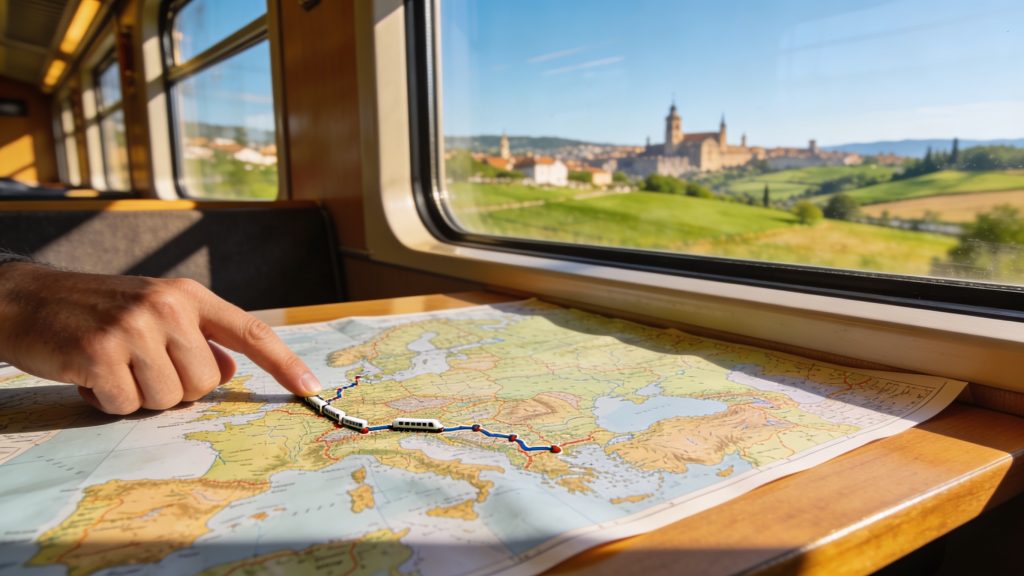
A train road trip to Copenhagen is a relaxed and conscious alternative to flying, allowing you to reach the north of Europe directly from the Netherlands. The journey takes you via Hamburg through Schleswig-Holstein to the Danish capital, with opportunities for hygge-style stops in charming stations and towns along the way. Discover below which route is best for you.
The most efficient route to Copenhagen
There is no direct train connection from the Netherlands to Copenhagen. The practical route therefore runs via Hamburg, where you change onto a EuroCity train towards Denmark. From Dutch cities such as Amsterdam, Utrecht or Rotterdam you first travel to Hamburg Hauptbahnhof, which takes around five to six hours.
From Hamburg there are several direct trains a day to Copenhagen, with a journey time of about 4.5 to 5 hours. The total door-to-door travel time is between 11 and 15 hours, depending on your starting point and transfer time. This makes the route suitable for travellers who value comfort and good planning.
If you are interested in more comparable connections across Europe, you will find extensive information on other cross-border train journeys under international train routes.
‘ The station is easy to navigate and transfer times are generally easy to plan. ’
Why Hamburg is a logical transfer point
Hamburg acts as a hub between western Europe and Scandinavia. The station is easy to navigate and transfer times are generally easy to plan. Ideally, book at least 30 minutes for changing trains to allow for delays, especially if you are travelling with Deutsche Bahn.
The city itself also offers plenty of sights for a stopover of a few hours or an overnight stay. Think of the Speicherstadt, the Elbphilharmonie or a walk through the port area. For those who spread the journey over several days, Hamburg is highly recommended as a first stop.
The train journey from Hamburg to Copenhagen
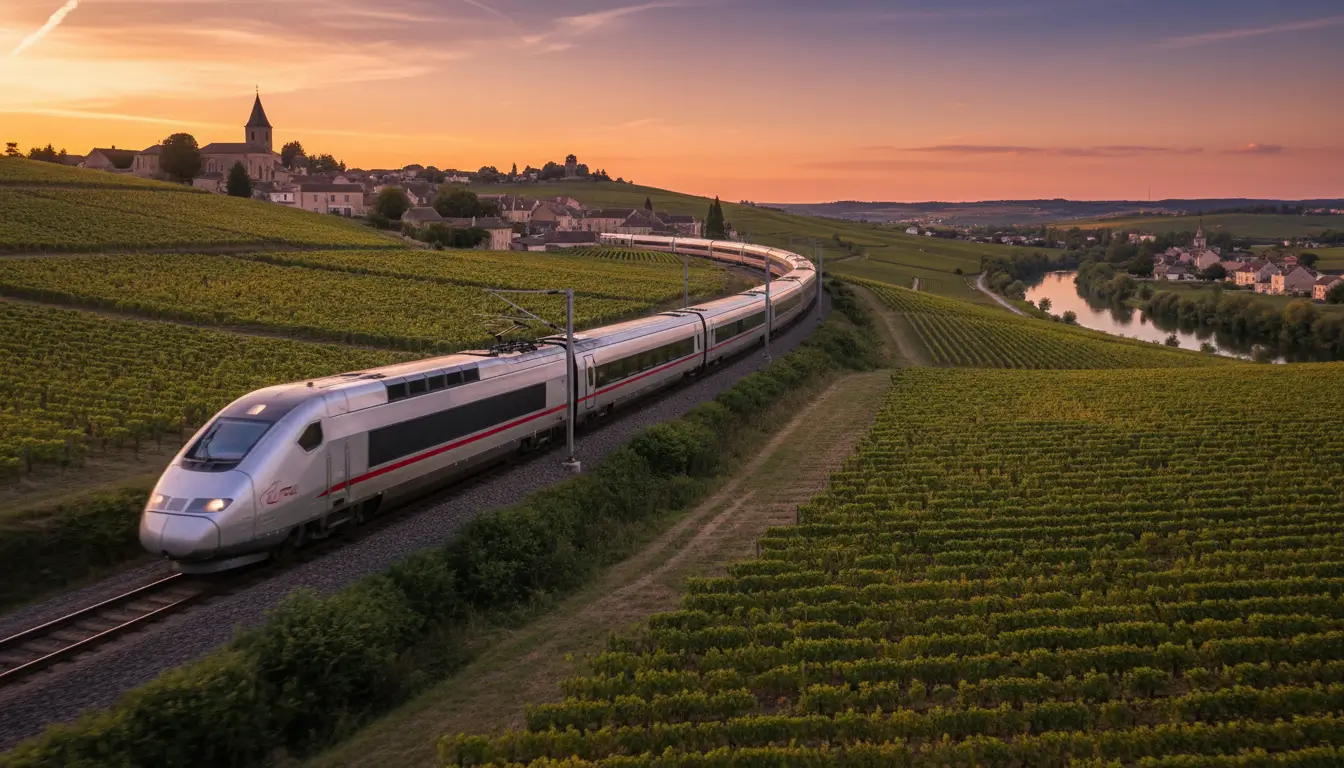
The EuroCity train between Hamburg and Copenhagen runs through northern Germany and Denmark and along the way offers views of the rolling landscape of Schleswig-Holstein. The train passes smaller German stations such as Elmshorn and Neumünster before you cross the Danish border.
A special moment on the route is the crossing via the Vogelfluglinie, a combination of railway line and ferry service. The train is transported on board a ferry across the Baltic Sea between Puttgarden and Rødby. This takes around 45 minutes and gives you the chance to get off for a bit, breathe in the fresh sea air and explore the deck.
After the crossing the train continues through Denmark via stations such as Nykøbing Falster and Ringsted, before you arrive at Københavns Hovedbanegård, Copenhagen’s central station.
Ferry integration and practical details
The train crossing by ferry is fully integrated into your ticket. You do not need to arrange or pay anything extra. Do stay alert to announcements on the train about when you may get off during the ferry crossing. Some travellers stay on the train, others make use of the opportunity to explore the ship.
Bear in mind that the ferry can be affected by weather conditions and may occasionally cause delays. Therefore, avoid a tight schedule if you have an onward appointment or connection in Copenhagen.
Stopovers that are worth it
For those who want to turn the journey into a full-fledged train road trip, various places between Hamburg and Copenhagen offer interesting options for stopovers. These stops add extra experience to your journey and make getting from A to B part of the holiday.
Hamburg
As mentioned earlier, Hamburg is ideal for a longer stopover. The city combines a port atmosphere with culture, architecture and good connections. An overnight stay gives you the space to continue your journey well rested and to explore the city.
Aarhus
Aarhus is not directly on the Hamburg–Copenhagen route, but can easily be reached via a detour or as an extension. Denmark’s second city is known for its vibrant cultural scene, the ARoS art museum and the old district Den Gamle By. It is a pleasant place for anyone wanting to experience Danish hygge culture without the hustle and bustle of the capital.
Roskilde
Roskilde is only 30 minutes by train from Copenhagen and is famous for its Viking ships and impressive cathedral. This makes it an excellent day trip from the capital or a short stopover if you have the time.
‘ On international trains, bicycle transport is not always guaranteed and you often have to reserve in advance. ’
Combining bike and train towards Denmark
Many travellers wonder whether it is possible to take a bike with you on the train journey to Copenhagen. The answer is yes, but there are restrictions and costs involved. On international trains, bicycle transport is not always guaranteed and you often have to reserve in advance.
Different rules apply for bikes on trains in Germany and Denmark. With Deutsche Bahn you pay for a separate bike ticket and reservations are compulsory on long-distance trains. In Denmark you can usually take a bicycle on regional trains without a reservation, but this is limited on international connections.
An alternative is to rent a bike at your destination. Copenhagen is known as a bike-friendly city and offers excellent rental facilities. This saves you the hassle of transporting a bike and gives you flexibility once you are there.
Best time and planning for the journey
Book your tickets as early as possible to benefit from the best fares. International train tickets vary widely in price depending on the date and how far in advance you book. A flexible travel plan can save you hundreds of euros.
Travellers who want to take the route several times or continue on to other Scandinavian cities might consider using an Interrail Pass. This gives access to unlimited train travel within a given period and makes it easier to plan stopovers.
In terms of season, spring and summer are the most popular for a train road trip to Copenhagen. The days are longer, the weather is more pleasant and many sights are easily accessible. Do bear in mind that trains can be busier during this period.
Travelling further north from Copenhagen
Copenhagen is an ideal base for further train journeys through Scandinavia. The Øresund Bridge connects the Danish capital with Malmö in Sweden, which can be reached in less than an hour. From Malmö you can continue on to Gothenburg, Stockholm or even Oslo.
This connection makes Copenhagen a strategic starting point for anyone planning a longer northern European train road trip. The rail infrastructure in Scandinavia is well developed and offers reliable connections between major cities and areas of natural beauty.
‘ Although Denmark is part of the Schengen area, random checks may take place, especially at the border. ’
Practical tips for the journey
Take enough food and drink with you, especially for the stretch between Hamburg and Copenhagen. Although there is often a restaurant car on board, the selection is limited and prices are higher than in the supermarket.
Download offline maps and travel information before you leave. Not all stretches have a stable internet connection, especially during the ferry crossing. Apps such as DB Navigator and DSB (Danish Railways) are useful for real-time information and any changes to your travel schedule.
Before departure, check that you have a valid passport or ID card with you. Although Denmark is part of the Schengen area, random checks may take place, especially at the border.
Discover more on Traveler Tips
A train road trip to Copenhagen is just one of many ways to explore Europe consciously and in comfort. On the Traveler Tips website you will find extensive information about routes, destinations, practical preparation and tips for the journey. Whether you are looking for other train connections, road trips through Europe or advice on combining different modes of transport, there is much more to discover to help you plan your next trip smartly.
Frequently asked questions
For a flexible and cost-effective train road trip to Copenhagen, an **Interrail Global Pass** or **Interrail One Country/Benelux + separate tickets for Germany/Denmark** are usually the most attractive, because you have multiple travel days and can spontaneously add stops (such as Hamburg or Malmö). If you are only travelling there and back once, **Deutsche Bahn Sparpreis/Super Sparpreis tickets booked early** in combination with a Dutch international ticket are often the cheapest option, but less flexible (fixed train, limited options to change). An Interrail Pass gives you more freedom to adjust your route along the way, but is particularly good value if you are planning multiple travel days and destinations in northern Europe.
Nice stopovers on the route to Copenhagen include **Hamburg** (port atmosphere, Speicherstadt, Elbphilharmonie) and **Roskilde** with its famous cathedral and the Vikingeskibsmuseet. A slightly less obvious ‘hidden gem’ is **Lübeck**, with its medieval old town and maritime history. Also consider **Malmö** as a detour via the Øresund Bridge: a compact city with charming districts such as Gamla Väster.
Ensure maximum comfort by booking a seat with a table, wearing comfortable layered clothing and getting up regularly to move around in the aisle. Take a neck pillow, eye mask and earplugs so you can relax or sleep even when it is busy. A well-filled water bottle, snacks and possibly a light meal mean you are not dependent on what is available on the train. Do not forget a power bank, headphones, paper tickets/ID and, if you like, a small toiletries bag (toothbrush, wet wipes, hand sanitiser).
In each country, check the journey planner in advance (e.g. Deutsche Bahn or DSB) and save your route offline so you do not have to search during short transfers. In Germany, always plan generous transfer times (preferably at least 30 minutes) because of possible delays. Pay attention to the train type and carriage number on the boards, as long international trains are sometimes split or coupled. Ideally travel via the clear-cut route Netherlands – Hamburg – Copenhagen, so you only have to make one major international transfer.
The best time to travel for a train road trip to Copenhagen is from late spring to early autumn (May to September), when the days are long and you can get the most out of your stopovers. In summer you can fully enjoy terraces in the Nyhavn harbour, boat trips, picnics in parks such as the Tivoli Gardens and festivals. In spring, bike rides through the city and a day trip to Roskilde or Malmö are particularly appealing thanks to the milder weather and fewer crowds. In autumn, the combination of colourful parks, cosy hygge indoor life and still reasonable travel times creates an atmospheric but slightly quieter experience.