 NL
NL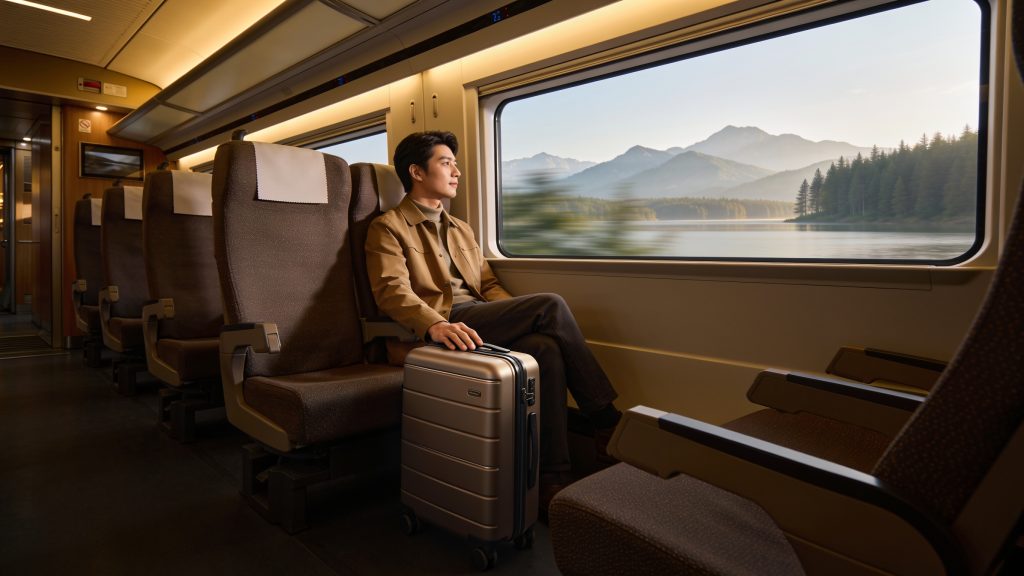
On long international train journeys, the right luggage is the difference between stressful connections and relaxed travel. If you pack smart and take into account the differences between Thalys, ICE and SBB, you save yourself hassle and enjoy the journey more. Read on and discover how to keep your luggage to a minimum, create comfort and turn the journey itself into a pleasant part of your holiday.
Luggage rules by train operator
Each international train operator has its own rules for luggage. Most carriers are flexible, but there are differences in number of items, dimensions and special conditions. For anyone planning international train routes with extra gear such as a tent or bike, it is important to check those details in advance.
On Thalys you may take two pieces of luggage as standard, plus a handbag or rucksack. Each piece of luggage may be a maximum of 85 centimetres high. A folding bike in a cover up to 135 centimetres is allowed without an extra reservation. Different rules apply for a regular bike and you must book a special bike space, which is not possible on all services. A tent usually counts as regular luggage, as long as it is packed compactly and you stay within the two permitted items.
For the ICE and other international trains, Deutsche Bahn applies the principle that you can take anything you can carry yourself. Luggage is not weighed or measured in advance. However, it must fit in the luggage racks above the seats or in the special areas at the beginning or end of the carriage. A tent in a compact bag is usually no problem. For a bike you need a bike reservation, which you have to request separately when booking. Note: not every train has space for bikes.
SBB, the Swiss railways, also allows you to take several pieces of luggage without a weight limit. You must store luggage safely without blocking the aisles. For a bike, you reserve a bike space via the SBB app or website. On busy routes and in popular seasons this is quickly fully booked. Camping equipment such as a tent may be taken as hand luggage, as long as it is packed compactly.
Packing list for long train journeys
A thoughtful packing list prevents you from dragging along too much or missing important items on the way. Think in layers: what do you need right away, what can be stored, and what can you leave at home?
Essentials in your hand luggage
- Travel documents and train tickets, both digital and on paper
- Medication, glasses or contact lenses
- Charger for your phone and possibly a power bank
- Small toiletry bag with toothbrush, wipes, hand sanitiser and lip balm
- Snacks and a refillable water bottle
- Neck pillow, eye mask and earplugs to rest on the way
What is better left at home
- Heavy hard-shell suitcases that are difficult to lift when changing trains
- Extra shoes or clothes that you are unlikely to wear
- Large toiletries that you can also buy at your destination
- Valuable items that you do not need immediately
Useful checks for each route
- Are there plug sockets on the train, and do they work on your route?
- Is there a restaurant car or do you need to bring enough food and drink yourself?
- How long are your transfer times and are the stations accessible with a lot of luggage?
- Are there specific conditions for special luggage such as skis or instruments?
Seat choice for optimal comfort
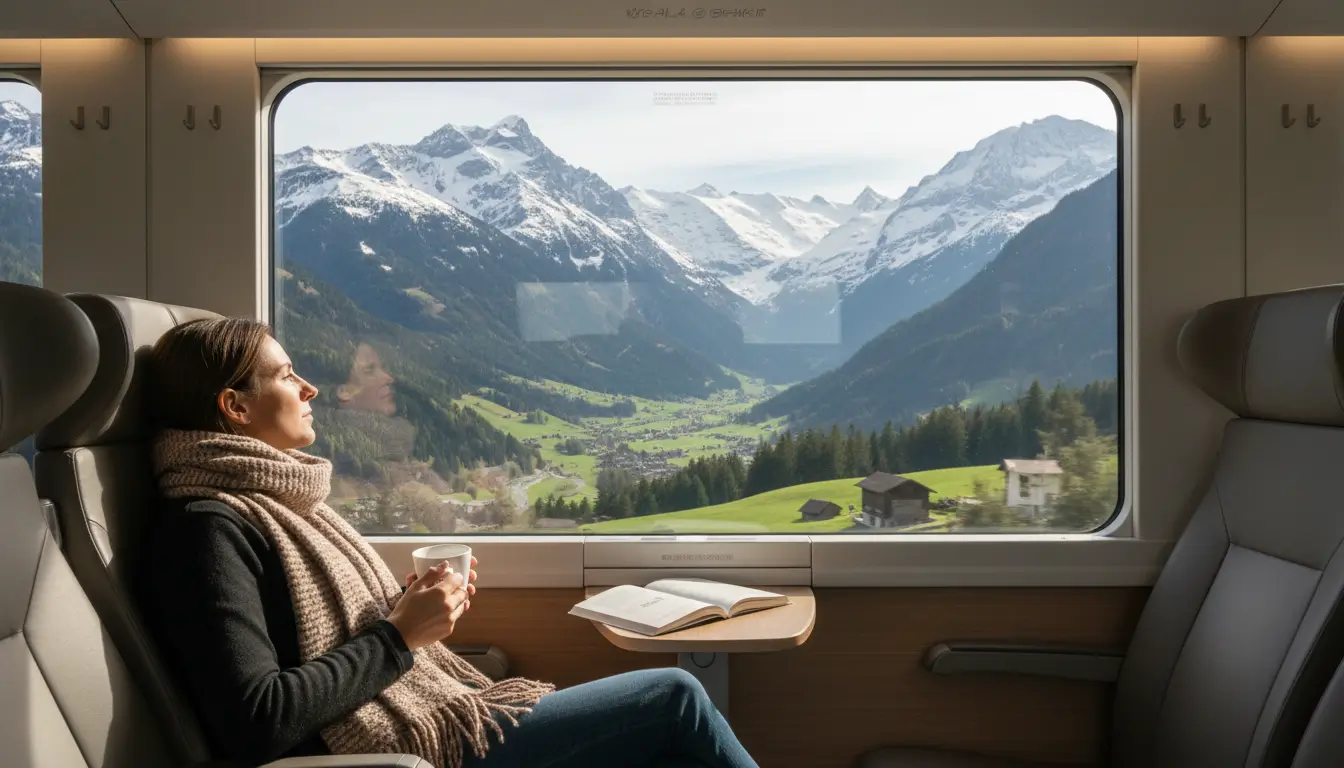
Where you sit has a big impact on your comfort during a journey of eight hours or more. Ideally, reserve a window seat with enough legroom. Many trains offer seats with a table, which is handy for eating, drinking or working on the way. Avoid seats close to the toilets or doors, where there is more foot traffic and noise.
On Thalys and ICE you can often choose between first and second class when booking. First class offers more space, quieter carriages and sometimes free coffee or tea. In second class you sit closer together, but the price is considerably lower. For night journeys, consider a sleeper or couchette, where you can lie flat. This increases comfort and makes longer stretches easier to cope with.
On European night trains such as the ÖBB Nightjet, sleeper compartments are available in various categories. A couchette shares the compartment with five other travellers and is the most economical option. A sleeper carriage offers more privacy and beds with bedding. Book this type of berth early, as they sell out quickly on popular routes.
Food and drink on long stretches
Food and drink on long train journeys require some preparation. Not every train has a restaurant car, and where there is one, prices are often high and the choice limited. So make sure you bring enough yourself.
What works well as train food
- Sandwiches, wraps or salads that you can eat cold and that do not crumble
- Fruit such as apples, bananas or grapes that are easy to rinse
- Nuts, crackers or energy bars for in between meals
- A refillable water bottle that you can top up at taps in train stations
- Hot drinks in a thermos flask for cold nights or early morning journeys
Avoid dishes with strong smells that may bother other travellers, such as egg, fish or certain cheeses. Also avoid food that spoils quickly, such as fresh dairy without refrigeration. Plan your stops and check whether there are shops or cafés where you can pick something up.
‘ Yet with the right preparation you can still get good rest. ‘
Sleeping comfortably on a night train
Sleeping on a train is different from sleeping in your bed at home. The movement of the train, noises from fellow passengers and changing light make it harder to sleep deeply. Even so, with the right preparation you can still get good rest.
Take a neck pillow that supports your neck. Earplugs muffle ambient noise and an eye mask blocks light from lamps or station signs. Wear comfortable clothes in layers, so that you can easily adjust to changing temperatures. Trains can be chilly at night, especially near doors or air conditioning systems.
Store valuables safely in a bag that you keep close to you, for example under your head or between your legs. In compartments with several travellers it is sensible to secure your luggage to the rack with a small lock or chain. This prevents someone from accidentally or intentionally walking off with your bag during an intermediate stop.
Layers of clothing for changing conditions
The temperature on trains can vary greatly. In one carriage the heating is turned up high, in another the air conditioning is at full blast. So wear clothes in layers that you can easily put on and take off.
Start with a light shirt or T-shirt as a base layer. Add a jumper or cardigan that you can take off quickly. Bring a light jacket or fleece for extra warmth. A scarf or fleece blanket helps on cold nights and also serves as an extra pillow. Make sure your shoes are comfortable and easy to loosen, so you can relax your feet from time to time.
Electricity supply and devices on the way
Many international trains have plug sockets by the seats, but this is not guaranteed. On older trains or busy routes, sockets may be occupied or not working. Always take a charged power bank with enough capacity for your phone, tablet or e-reader.
Check in advance which type of plug you need. On European trains, most sockets are suitable for European plugs, but some older trains have different fittings. A universal travel adapter ensures you can always charge your devices, regardless of the type of socket. Charge your devices during longer stops at major stations, where public charging points are often available.
‘ A small toiletry bag with the basics makes a big difference. ‘
Personal care and freshness on long journeys
After eight hours on a train you often feel less fresh. A small toiletry bag with basic items makes a big difference. Take a small toothbrush and toothpaste so that you can freshen up after a meal or before arrival. Hand sanitiser and wet wipes help keep your hands and face clean without having to go to the toilet all the time.
Lip balm and hand cream prevent dry skin caused by air conditioning. A small bottle of deodorant keeps you fresh. Make sure your toiletries comply with the rules for liquids, although these are less strict on trains than on planes. It is still useful to keep everything in a removable pouch, so you can quickly reach your things without having to dig through your entire rucksack.
Changing trains with a lot of luggage
Changing trains with a tent, bike or several bags requires planning. Check the transfer time and the layout of the station in advance. Some stations have long walking distances between platforms or require stairs and lifts. Allow at least ten to fifteen extra minutes if you have heavy or bulky luggage.
Label your luggage clearly with your name and contact details. This helps if a bag gets lost or is taken by someone else by mistake. Preferably use a lightweight bag or rucksack that you can carry yourself without help. Hard wheeled suitcases are heavier and less manoeuvrable on crowded platforms or in narrow corridors.
On TravelerTips you will find much more information about international train travel, from routes and destinations to practical tips for on the way. Discover how to plan more smartly, travel with less stress and get more enjoyment from your journey.
Frequently asked questions
For international trains, the rule is usually that you may take several pieces of luggage free of charge, as long as you can carry them yourself and they are not in the way; this often works out at about two larger pieces plus one item of hand luggage, with sometimes stricter limits on high-speed trains. Always check the specific rules for each operator and pay extra attention to special luggage such as bikes, skis or large musical instruments. Optimise your packing strategy by travelling light with a rucksack or soft bag, only taking what you actually use and arranging your luggage logically. Keep documents, valuables, chargers, snacks and medication in a separate, easily accessible handbag.
A soft holdall or rucksack is usually the most suitable, as these are lighter and easier to store in the luggage racks or under the seat than hard suitcases. They are more flexible in shape, so you can slide or stack them more easily into tight spaces.
Essential comfort items are layered clothing, a neck pillow, eye mask and earplugs for rest, plus snacks, water and a small toiletry bag (toothbrush, wipes, hand sanitiser, lip balm). Take a power bank and chargers, and keep important items (documents, medication, valuable electronics) in a small bag within easy reach. Choose light, easy-to-carry luggage and pack only what you really need, so that changing trains and getting on and off go smoothly. Reserve a seat if possible and try to plan rest moments, for example reading, listening to music or short walks in the aisle.
Create a clear daily schedule with fixed times for meals, rest and entertainment, so that your rhythm on board feels predictable and relaxed. Go for varied, light meals and enough water, and limit heavy or very sugary snacks to keep your energy level stable. Plan sleep periods with aids such as a neck pillow, eye mask and earplugs, and avoid bright screens just before sleeping. Combine passive entertainment (films, music, reading) with short movement or stretching exercises to stay comfortable both mentally and physically.