 NL
NL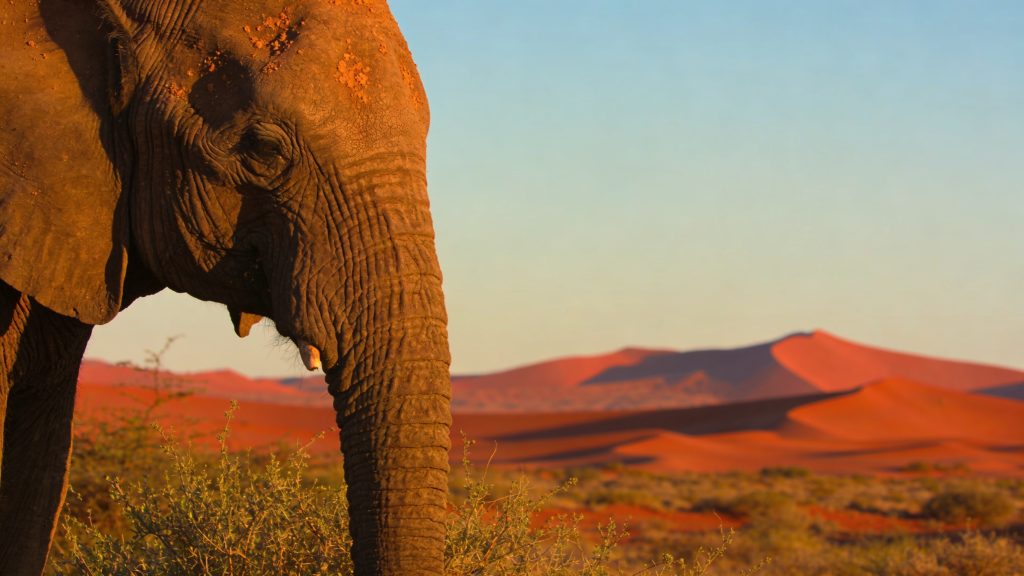
Namibia’s desert elephants are among Africa’s most exceptional wildlife experiences. On a self-drive safari you track them down yourself. These animals have adapted to one of the most extreme environments on earth. They are only found in the remote Kunene region in the northwest of the country. For travellers who want to sit behind the wheel themselves, there are concrete routes, waterholes and practical tips to increase the chances of an encounter. Read on and discover how to prepare properly for this expedition.
Where can you find desert elephants in Namibia?
The desert-adapted elephants live mainly in Damaraland, a vast area between the Brandberg Mountain and the Skeleton Coast. This rugged desert landscape is part of the Kunene region. The animals move along dry riverbeds in search of water and food.
If you drive along the C35 and pass the Brandberg, you will see a striking road sign with an elephant. This officially marks the start of the desert elephants’ habitat. From here the main riverbed systems begin where the animals are found.
The most important dry riverbeds
The best locations for self-drivers are the following dry rivers:
- Ugab River: directly north of the Brandberg, popular because of the vegetation along the riverbed
- Huab River: a very promising route with regular sightings
- Hoanib River: a larger area, generally suitable for two days of exploration
- Hoarisib River: part of the wider network
- Uniab River: accessible after registration and payment of a conservancy fee
These dry riverbeds form the lifeline for the elephants. During the dry season they dig down into the sandy riverbed for groundwater. Along the banks, enough vegetation grows for them to survive.
What vehicle do you need for a self-drive safari?
A four-wheel drive vehicle (4WD, car with drive on all wheels) is not optional but essential. The sandy, unmarked tracks through the riverbeds are impassable for ordinary cars. Check that your vehicle is well maintained and take the following with you:
- At least two spare tyres in good condition
- Enough fuel for long distances without petrol stations
- Plenty of water for yourself and for any cooling
- GPS equipment, as many roads are not marked
It is strongly recommended to travel with at least two vehicles. If you get stuck in the sand or break down, you will be in a remote area with no coverage or emergency services nearby.
How do you prepare your route?
Standard road maps are not available for these areas. When you register, you receive maps with basic information about the riverbeds. The maps are roughly drawn. For up-to-date information on elephant locations and road conditions there are local lodges. Palmwag Lodge and Grootberg Lodge can help you on your way.
For some areas, such as the Hoanib River, you must register and pay a conservancy fee. The costs are about N$100 per person plus N$100 per vehicle per day. A two-day expedition will therefore cost around N$600 per group.
Route options and length of trip
A typical route departs from Swakopmund or Henties Bay. From there you head north towards the Brandberg or along the Skeleton Coast. You then follow the riverbeds from west to east, for example from the Huab to the Ugab. Spending two to ten days in this area is common, depending on your plans.
When you drive here you will not encounter other people, vehicles or animals for hours. The remoteness makes this a true wildlife holiday, but also demands thorough preparation and self-reliance.
What are the rules when you encounter elephants?
If you come across desert elephants, strict rules of conduct apply. These animals are wild and can react unpredictably, especially if they feel threatened. Follow these guidelines:
- Keep at least several hundred metres away from waterholes
- Always stay in your vehicle when elephants are present
- Give the animals enough space and do not disturb their natural behaviour
- Never drive between a mother elephant and her calf
When you arrive in protected areas, you will be informed about specific rules. These guidelines are designed to safeguard both your safety and the welfare of the animals.
‘ This makes spotting them without a guide a real challenge. ’
How likely are you to see elephants?
Desert elephants do not follow man-made roads. They have a very large home range. They move over hundreds of kilometres and their movements are hard to predict. This makes spotting them without a guide a real challenge.
Your chances of an encounter are greater if you drive early in the morning or late in the afternoon, when the animals are more active. Watch out for fresh tracks in the sand. Droppings and broken branches also point to their presence. Around waterholes your chances are higher, especially in the dry season.
Why consider a guided tour?
Self-driving offers freedom. A guided tour, in addition, has important advantages. Local guides know the current elephant locations and understand their behaviour patterns. Some elephants wear GPS tracking devices that allow conservation organisations to monitor their movements. Guides often have access to this data. That enables them to predict likely locations.
Various lodges offer three-hour drives or longer expeditions. This way you combine the self-drive experience with the expertise of professionals. Your chances of successful sightings increase significantly as a result.

What else can you expect in Damaraland?
The landscapes along the way are impressive. They offer more than just wildlife spotting. You drive through barren plains with camel thorn trees (Vachellia erioloba). These are resilient trees. They survive extreme drought and provide shade and food for the elephants.
Areas such as Desolation Valley showcase the raw beauty of northwestern Namibia. The absence of human activity and the endless horizons make this a unique experience. It is ideal for travellers in search of peace and unspoilt nature.
What should you take for a multi-day expedition?
Be completely self-sufficient for a multi-day adventure. Take ample supplies of water and food, as there are no shops or facilities in the area. Campsites are available, but facilities are minimal.
Many travellers use a roof tent for extra comfort and safety. It keeps you off the ground and offers protection from nocturnal animals. Prepare for basic conditions. Also be prepared for extreme isolation.
- Water: at least 5 litres per person per day
- Non-perishable food for all days plus a reserve
- Cooking equipment and fuel
- Warm clothing for cold desert nights
- A complete first-aid kit
‘ In the dry season (May to October) the elephants concentrate around the scarce waterholes. ’
When is the best time to go?
The best time to travel depends on seasonal factors and water availability. In the dry season (May to October) the elephants concentrate around the scarce waterholes. This increases your chances of an encounter. The landscape is barer then, making animals easier to spot.
During the wetter season (November to April) the elephants spread out over larger areas. More water sources are available. Temperatures are higher and some tracks can become more difficult to drive due to unexpected rainfall.
For up-to-date information on elephant movements and road conditions, contact specialised lodges. Tour operators in the region can advise you as well. They can recommend the optimal time to travel and inform you about the current situation.
Practical tips for a successful safari
A self-drive expedition to the desert elephants requires good preparation. Take means of communication with you, for example a satellite phone. There is often no mobile reception. Always inform someone of your route and expected return.
Check your vehicle for problems before departure. A breakdown en route can have serious consequences. Take tools with you for minor repairs. Make sure you know how to change a tyre in sand.
Respect nature and do not leave any rubbish behind. The fragile desert environment recovers slowly from human impact. By travelling responsibly, you help preserve this remarkable area and the animals that live there.
On the Traveler Tips website you will find much more information about self-drive safaris, route planning and camping equipment. You will also find other nature destinations there. Discover more about how to organise your next trip yourself and how to get the most out of it.
Frequently asked questions
The most commonly used self-drive route to look for desert elephants runs through the Kunene region/Damaraland, past the Brandberg and then into the dry riverbeds, especially those of the Ugab, Huab and (for experienced drivers) Hoanib rivers. Many travellers start from Swakopmund or Henties Bay, drive via the Brandberg towards Damaraland and then spend a few days exploring these river courses. For this route, a well-equipped 4×4 with high ground clearance is essential, preferably an off-road vehicle with low-range gearing, two spare tyres and enough fuel and water supplies. In practice, a double-cab 4×4 pick-up or a comparable off-road SUV with roof tent is the most commonly used and most suitable vehicle type.
Essential preparations include hiring a well-maintained 4WD with (preferably several) spare tyres, enough fuel, water and food for several days, plus GPS/navigation tools and information and rough maps obtained in advance from local lodges or land managers. Ideally travel with at least two vehicles, register where required and pay the conservation fees for access to riverbeds such as the Ugab, Huab or Hoanib. Safety tips include: always keep plenty of distance from waterholes and elephants, stay in the car during encounters, drive slowly and disturb the animals as little as possible. Emergency provisions include extra water and fuel reserves, basic tools and a tyre repair kit, a first-aid kit, communication devices (satellite phone or emergency beacon) and equipment to camp in basic conditions in remote areas.
The best time to travel to spot desert elephants in Namibia is generally during the cooler, dry months (roughly May to October), when animals more often move along the dry riverbeds and are easier to see. Ideally choose early morning and late afternoon drives, when temperatures are lower and the elephants are more active. Ensure a responsible encounter by always keeping enough distance, staying in your vehicle, never blocking water sources and following the instructions of local guides or conservancy rules to the letter. For an unforgettable and ethical experience it is highly recommended to head out with a local guide or lodge focused on conservation, rather than searching completely on your own.
The best sources of reliable, up-to-date information on accommodation options, petrol stations and water points along the routes to the desert elephants are local lodges and campsites in the region, such as Palmwag Lodge and Grootberg Lodge. They usually have the most recent knowledge about fuel stops, drinking water and (wild) camping spots in the surrounding riverbeds. Combine this with detailed paper maps and recent GPS maps/apps that work offline, as many roads are poorly marked. Shortly before departure, always check again with these local accommodations or tour operators whether there have been any recent changes in infrastructure or water sources.
Always keep a large distance from the elephants and water sources (several hundred metres) and never approach or block them with your vehicle. Stay in your vehicle when elephants are nearby and always give them a clear escape route. Follow only existing tracks in the dry riverbeds so as not to damage vegetation and the fragile habitat. Do not leave any rubbish behind, camp only in permitted places and follow the specific rules and instructions of local conservancies and lodges.