 NL
NL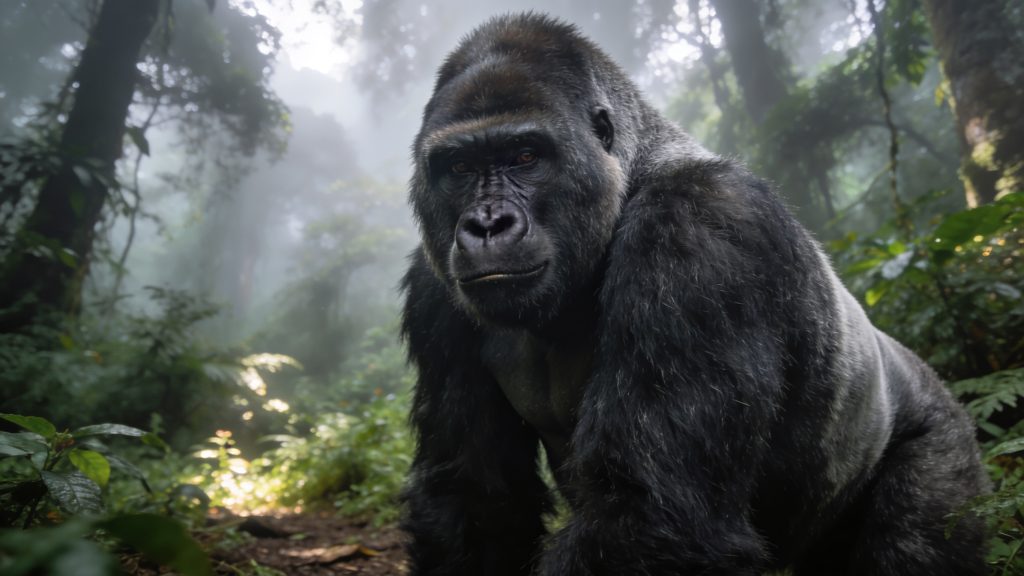
Observing mountain gorillas in the wild is one of the most rewarding wildlife experiences in the world, but the practical preparation determines whether your trek is a success. From reserving your permit in time to physical fitness and choosing between Bwindi Impenetrable Forest and Volcanoes National Park: every part requires careful planning. This guide gives you the concrete information you need to make your gorilla trekking go smoothly.
Where to find mountain gorillas in Uganda and Rwanda
Mountain gorillas live only in two regions in East Africa. In Uganda you trek in Bwindi Impenetrable Forest National Park or Mgahinga Gorilla National Park. In Rwanda this takes place in Volcanoes National Park, located in the Virunga Mountains. With 17 habituated gorilla groups, Bwindi is the main location and offers the most trek options. The park consists of dense rainforest with steep slopes. Mgahinga has lighter bamboo forest but the terrain is also challenging with steep trails.
Volcanoes National Park in Rwanda covers 160 square kilometres of rainforest between the volcanoes, with altitudes from 2,400 to 4,507 metres. The terrain is more open due to bamboo vegetation and meadows, which makes navigation easier than in Bwindi. All treks start from one central visitor centre. The gorilla groups are allocated based on your fitness level and the distance you prefer to walk. Within this park you will also find animal species that are typical for wildlife holidays, such as colobus monkeys and golden monkeys, and are highly sought-after.
‘ Rwanda charges 1,500 dollars per permit. ’
How to reserve a gorilla permit
A permit is compulsory for every trek and gives you access to one hour of observation with a gorilla group. A maximum of eight people can join each group. In Uganda a permit costs 700 dollars and this will increase to 800 dollars from July 2024. Rwanda charges 1,500 dollars per permit. The prices are set by the Uganda Wildlife Authority and the Rwanda Development Board respectively.
Book well in advance, especially for the dry seasons between June and September and December to February. Uganda has more permits available because of the larger number of groups in Bwindi. Rwanda has fewer permits available and is quickly fully booked, especially in high season. You reserve through official authorities or recognised tour operators who arrange the booking for you. Always check that the permit is in your name and keep the document safe until the trek.
Physical requirements and preparation for the trek
A gorilla trek lasts on average between two and seven hours, depending on where the gorillas are. You hike through dense rainforest, over muddy trails and steep slopes. The vegetation in Bwindi is particularly thick, so guides sometimes use machetes to get through. In Rwanda the routes are at higher altitude and the terrain is more open, but the greater height requires adjustment.
A reasonable basic level of fitness is necessary. Train beforehand with walks on uneven terrain and practise walking with height differences if possible. You do not need to be an athlete, but you must be able to keep walking with regular short breaks. Take the following items with you:
- Sturdy walking boots with good grip and ankle support
- Rain jacket and waterproof rucksack
- Enough water and light snacks
- Long trousers and a long-sleeved shirt to protect against insects and thorny bushes
- Insect repellent and, if applicable, malaria prophylaxis
- Camera without flash function
- Gloves for grip on wet surfaces
In Rwanda you may not take part if you are younger than fifteen years old. This age limit applies to reduce health risks for the gorillas. Wash your hands before starting the trek, as mountain gorillas are sensitive to human diseases. Walking sticks are available at the starting point and help you maintain your balance on slippery sections.
The differences between Uganda and Rwanda
In addition to the permit price, the two countries differ in accessibility and infrastructure. From Kigali in Rwanda you drive for about two hours to Volcanoes National Park on well-maintained roads. Helicopter options are available for faster transfers. Uganda requires more travel time: from Entebbe to Bwindi you should allow eight to ten hours of driving. Fly-in options to local airstrips shorten this distance considerably.
Accommodation in Rwanda is mainly high-end with exclusive lodges. Uganda offers more budget-friendly options alongside more expensive accommodation. The country also has more variety in additional activities, such as safaris in Queen Elizabeth National Park and chimpanzee tracking in Kibale Forest. Rwanda focuses more strongly on gorillas as the main attraction and has a more stable security context.
In terms of difficulty, Bwindi is more demanding due to the dense jungle and mud. The trek feels more adventurous and can take an entire day. Rwanda’s routes are physically easier due to the more open terrain, but the altitude of 2,400 metres and higher can be challenging for some people. If you are sensitive to altitude, consider a medicine against altitude sickness such as Diamox, after consulting your doctor.
‘ Gorillas remain traceable whatever the season, as rangers monitor their location daily. ’
Best time of year for gorilla trekking
Gorilla trekking is possible all year round because the animals do not migrate. Mountain gorillas move on average less than a kilometre per day and stay within their territory. The dry seasons from June to September and December to February are the most popular. During these periods the terrain is less muddy and the trails are easier to walk. The risk of malaria is also lower during dry months.
The rainy seasons run from March to May and October to November. Treks are wetter and more slippery, but permits are cheaper and it is less crowded. The vegetation is lusher and more attractive for photography, although sightlines can be more limited. Gorillas remain traceable whatever the season, as rangers monitor their location daily.
Ethical guidelines while observing
During the hour with the gorillas there are strict rules to protect both you and the animals. Keep at least seven metres away from the gorillas. If a gorilla approaches you, stay calm and follow your guide’s instructions. Do not make sudden movements and avoid direct eye contact, which can be perceived as threatening.
Eating and drinking is not allowed in the vicinity of the gorillas. Smoking is prohibited throughout the entire trek. If you are ill, even with a cold or flu, you are not allowed to join. The risk of transmitting human diseases to gorillas is real and can be fatal to the animals. Do not use flash when taking photos, as this causes stress.
Speak softly and keep noise to a minimum. Stay together as a group and follow the guide. These professionals know the behaviour of the specific gorilla group and know how to ensure safe observation. The observation hour starts as soon as you reach the group and is strictly limited to minimise disturbance.
Combining with other activities
Many travellers combine gorilla trekking with additional safari experiences. Uganda offers excellent opportunities for classic wildlife parks such as Queen Elizabeth National Park for elephants and lions, or Murchison Falls for hippos and crocodiles. Chimpanzee tracking in Kibale Forest or Budongo Forest adds a second primate experience to your trip.
Rwanda’s compact size makes it easy to combine Volcanoes National Park with Akagera National Park for savannah wildlife or Nyungwe Forest for colobus monkeys and canopy walks. The short distances between parks save travel time. In both countries you can add cultural visits to local communities, who often benefit directly from gorilla tourism through employment and community projects.
‘ The reward is always the moment you find yourself face to face with a silverback, or watch a young gorilla family. ’
Practical tips for a successful trek
Set off early from the visitor centre, usually around seven or eight o’clock in the morning. After a briefing you are assigned to a gorilla group based on your fitness level. Listen carefully to the instructions and ask questions if anything is unclear. Take enough memory cards for your camera, as you are not allowed to use flash and therefore need longer exposure times in the dim forest.
Staff such as porters are available to carry your rucksack or camera equipment. This supports local employment and makes your trek more comfortable. Tips are appreciated but not obligatory. Prepare mentally for changing conditions: sometimes you find the gorillas within an hour, other times it takes considerably longer. The reward is always the moment you find yourself face to face with a silverback, or watch a young gorilla family.
On the Traveler Tips website you will find extensive information on planning safaris, national parks in East Africa, health preparation for tropical journeys and practical route tips for independent travellers. Discover more about how to plan and prepare your wildlife experience to get the most out of it.
Frequently asked questions
You arrange permits directly via the Uganda Wildlife Authority (UWA) for Bwindi/Mgahinga and via the Rwanda Development Board (RDB) for Volcanoes National Park, or through a local, registered tour operator who handles the application and payment for you. In Uganda you can usually still find spaces a few months in advance, but in high season (June–September and December–February) it is advisable to book 4–6 months ahead. In Rwanda, where there are fewer permits and the price is higher, booking 6–12 months in advance is sensible, especially for the dry seasons. Only finalise your international flights and accommodation once you have received your permit confirmation, so that your dates match.
You can expect long travel days and sometimes poor roads in Uganda (8–10 hours’ drive from Entebbe to Bwindi or Mgahinga, with sections that are muddy and bumpy), while access roads in Rwanda are generally shorter and better maintained (around 2 hours from Kigali to Volcanoes National Park). In both countries you must arrange gorilla permits well in advance and be on time at the visitor centre, which makes planning overnight stops along the route important. Comfortable routes include, for example, a fly-in to an airstrip near Bwindi combined with a short 4×4 transfer, or a direct, paved drive from Kigali to Volcanoes National Park. In Uganda you can also combine the road trip with other parks and safari routes, but take into account extra travel time and sometimes basic infrastructure.
In Uganda the trekking is generally more adventurous and strenuous, with denser jungle, longer walking distances and a more “rugged” wilderness feel, while Rwanda is more accessible, with easier paths and a more compact, better organised park. The overall trip to the gorillas is usually cheaper in Uganda but requires more travel time (long drives or domestic flights) and lends itself well to combinations with other safari and primate parks. Rwanda, with its short travel time from Kigali and higher price level, offers a more exclusive, luxury-focused experience. In Bwindi and Mgahinga the surroundings feel primarily like remote rainforest, while in Volcanoes National Park they feel more like a mountain and volcano landscape with open bamboo zones and far-reaching views.
Make sure you have a reasonable level of fitness so that you can walk for several hours on steep, sometimes muddy mountain trails at altitude. Wear broken-in, high walking boots with good tread, and long trousers and long sleeves to protect against insects and plants. Take a lightweight rain jacket, enough water, snacks, sun protection and insect repellent. Use a sturdy daypack; walking poles and gloves are strongly recommended for extra support and grip in the dense, wet forest.
You can combine gorilla trekking in Uganda with safaris in Queen Elizabeth or Murchison Falls National Park and a chimpanzee trek in Kibale Forest for a varied primate and big five experience. In Rwanda, a trek in Volcanoes National Park combines well with culture in Kigali (Genocide Memorial, art and gastronomy) and a visit to Nyungwe Forest for chimpanzees and canopy walks. For a mix of landscapes in Uganda, you can pair rugged Bwindi with the crater lakes near Fort Portal or Lake Victoria. It is usually best to plan the gorilla trek in the middle or towards the end of your trip, so that you are used to the climate and altitude.