NL
NL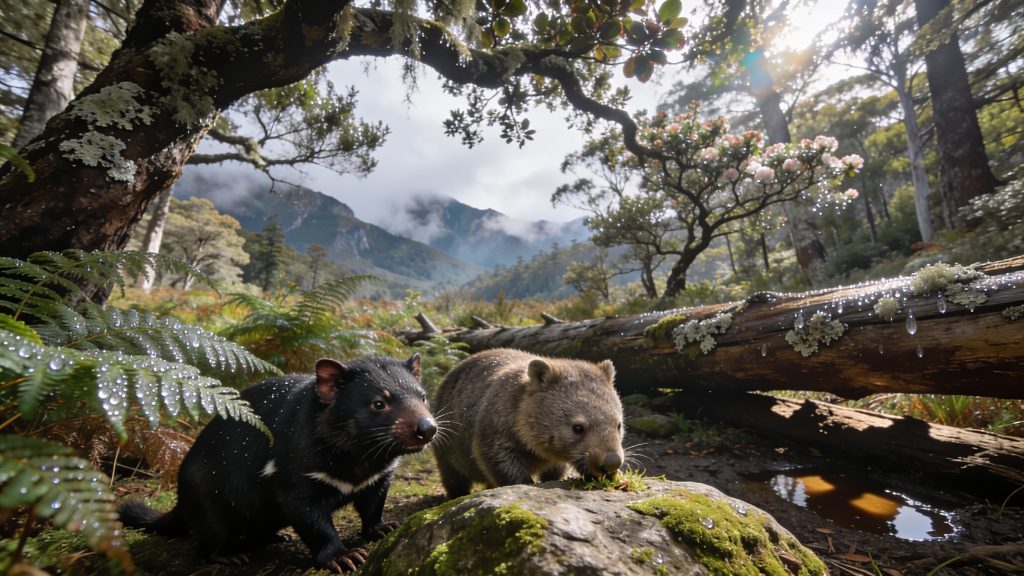
In the remote natural areas of Tasmania, two of Australia’s most unique marsupials roam: the powerful Tasmanian devil and the stocky wombat. Both marsupials share the same habitats and are active at dusk, making them favourite targets for lovers of wildlife holidays. With the right preparation and knowledge, you can spot these animals during your road trip around this southern island.
Tasmanian devils: endangered carnivores of the island
The Tasmanian devil is Australia’s largest carnivorous marsupial. These shy yet powerful hunters weigh up to 8 kilograms, reach a length of 65 centimetres and can briefly sprint at up to 13 kilometres per hour. They have one of the strongest bite forces in the animal kingdom and eat anything within reach, from carcasses to small prey. Despite their fearsome name, they rarely attack humans unless they feel threatened.
Since 2001, the population has declined dramatically by 60 percent due to devil facial tumour disease, a contagious cancer that spreads through bites. Devils survived in Tasmania because dingoes never occurred there, whereas on the mainland they were wiped out by these wild dogs. In the past they were also hunted because farmers saw them as a threat to livestock. Today, conservation programmes focus on safeguarding the species through breeding initiatives in wildlife parks.
Looking in the right places gives you the best sightings. Devils are nocturnal and solitary, but sometimes gather around food sources. They are most active at dusk and at night.
‘ Wombats also have a remarkable defence method: their thick, tough rear end protects them from enemies such as devils and eagles. ’
Wombats: compact diggers with a unique defence
Wombats are herbivores and are among the largest burrowing mammals in the world. They are closely related to the koala and reach a length of around 1 metre and a weight of up to 35 kilograms. The Tasmanian subspecies is slightly smaller: on average 85 centimetres and 20 kilograms. Although they look lumbering, wombats can sprint at up to 40 kilometres per hour when they feel threatened.
Their most striking feature is their backwards-facing pouch. This prevents the young from being buried while the mother digs extensive burrow systems. Wombats also have a remarkable defence method: their thick, tough rear end protects them from enemies such as devils and eagles. When a predator enters a burrow, they press the attacker against the ceiling of the tunnel.
Two of the three wombat species are threatened by habitat loss and competition with introduced animals such as sheep and rabbits. In most Australian states they are protected, and in Tasmania there are targeted breeding programmes in wildlife parks and sanctuaries.
Cradle Mountain: top location for wildlife and walks
Cradle Mountain National Park is one of the best destinations to see devils and wombats in their natural environment. The park lies in north-west Tasmania and offers extensive walking tracks through alpine landscapes, rainforests and high plateaus. The combination of protected nature and active wildlife management makes it an ideal destination for nature lovers.
Wombats often graze here along the tracks, especially in the early morning and late afternoon. They are less shy than devils and can sometimes be observed at close range. Devils mainly appear at dusk and at night, often near roadkill or feeding sites that have been specially set up by park management. Many travellers combine their visit with walks such as the Dove Lake Circuit or the Overland Track.
What you need to know before you visit
- Keep sufficient distance: devils have a powerful bite and wombats can crush attackers with their strength
- Bring a torch for night walks
- Do not bring food to viewing areas or enclosures
- Stay on the marked tracks to avoid disturbing burrows
- Consider hiring a car with high ground clearance for access to remote areas
Visiting sanctuaries and conservation programmes
In addition to spotting them in the wild, sanctuaries offer the chance to see devils and wombats up close. These rescue centres play an important role in the conservation of threatened species. Many sanctuaries in Tasmania run breeding programmes for devils, wombats and quolls. Animals are prepared for reintroduction into the wild, helping maintain genetic diversity.
In these centres you can see the animals at close quarters and receive explanations about their behaviour, diet and the threats they face. Some sanctuaries offer guided tours where you learn more about disease-resistance programmes and ethical wildlife watching. This is a valuable addition to your trip, especially if you have limited time or do not want to go out at night.
When choosing a centre, look for those that are transparent about their conservation work and focus on animal welfare rather than commercial gain. Many sanctuaries work with research institutes and contribute to scientific knowledge about these threatened species.
‘ This calls for extra caution and patience. ’
Marrawah and the west coast: rugged wilderness with wildlife
Marrawah lies on the north-west coast of Tasmania and offers a quieter alternative to Cradle Mountain. The area is known for its dramatic coastlines, rugged landscapes and rich wildlife. Jeffs Run is a popular spot where travellers regularly see devils and wombats together in the wild, especially at sunset and during the night.
The west coast of Tasmania is less visited than the interior, which means that animals here are less used to human presence. This calls for extra caution and patience. Allow plenty of time and do not expect instant results. The coastal areas are also rich in other fauna, such as quolls and wallabies, increasing your chances of wildlife sightings.
The combination of coastal driving and wildlife makes Marrawah ideal for a road trip. You can link different natural areas together.
Make sure you check the weather forecast, as the west coast has changeable conditions with a lot of wind and rain.
Best time to travel and practical tips for devils and wombats
The best time to visit Tasmania for wildlife is during autumn and winter, from March to September. In this period the animals are more active at dusk and night tours are more effective. Temperatures are cooler, which also means that devils and wombats are likely to be out earlier in search of food.
Plan your visits to national parks for early morning or late afternoon. Bring a good torch or head torch for night walks. Travellers report that patience is an important factor: sometimes it takes hours before you see a devil, while wombats are often easier to find as they sometimes graze during the day.
For a road trip around Tasmania, having flexibility with a car is important. Many wildlife hotspots lie off the standard routes. Adjust your plans based on local tips and allow for weather conditions. Book accommodation near national parks so that early-morning and late-evening visits are possible without long drives.
Checklist for your wildlife road trip
- Torch or head torch with strong battery
- Warm clothing for evening and night tours
- Binoculars for long-distance observation
- Camera with good low-light performance
- Offline maps and park information
- Plenty of patience and time at each location
Safety and responsible wildlife watching
Although devils and wombats do not actively seek out people, they can react aggressively when they feel threatened. Devils have powerful jaws and can cause serious injuries. Wombats use their weight and strength to crush threats. Never approach the animals and do not attempt to feed them.
Responsible observation also means not disturbing their natural behaviour. Keep your distance, do not use flash and avoid sudden movements. Respect restricted areas and follow the instructions of park management. This protects not only you, but also the animals and their habitat.
If you book guided tours, choose guides who place strong emphasis on ethical observation. Ask about their working methods and how they deal with animal welfare. Good guides keep group sizes small and make sure animals are not chased or cornered for photos.
‘ On the Traveler Tips website you will find extensive information on planning your road trip, the best routes, accommodation tips and practical regulations for travelling in Australia. ’
Discover more on Traveler Tips
Tasmania offers much more than devils and wombats, from rugged coasts and alpine areas to historic sites and local culinary experiences. On the Traveler Tips website you will find extensive information on planning your road trip, the best routes, accommodation tips and practical regulations for travelling in Australia. Before you leave, download offline maps of the national parks and check the opening hours of wildlife hotspots.
Frequently asked questions
The best region to see both Tasmanian devils and wombats is the island of Tasmania, particularly around Cradle Mountain–Lake St Clair National Park and the north-west coast near Marrawah. A great road trip route, for example, runs from Hobart via Cradle Mountain to the rugged west and north-west coast (including Marrawah/Jeffs Run). In Cradle Mountain you have a good chance of grazing wombats during the day and at dusk, while along the same routes you can spot Tasmanian devils in the evenings and at night. Along these stretches you can also stop at wildlife sanctuaries with breeding programmes for devils and wombats.
The ideal time of year to see Tasmanian devils and wombats active is from roughly March to September, so during the Australian autumn and winter. In this period they are particularly active around dusk and at night. Plan mainly evening or night tours and walks around sunrise and sunset.
Always observe Tasmanian devils and wombats from a distance, use binoculars or a camera zoom, and never feed or stroke them in order to prevent bites and disturbance. Stay quiet, use a weak (red) torch at night, and do not follow animals or approach their burrows. Drive slowly at dusk and during the night to avoid collisions and stay away from roadkill where devils may be feeding. Ideally, choose certified guides or sanctuaries with conservation programmes and follow their instructions carefully.
Recommended places include Cradle Mountain–Lake St Clair National Park in Tasmania, where you have a high chance of seeing wombats in the wild and sometimes Tasmanian devils at dusk. For almost guaranteed encounters, you can visit Tasmanian wildlife parks and sanctuaries where breeding and conservation programmes for Tasmanian devils and wombats are run. Marrawah (Jeffs Run) in north-west Tasmania offers good chances of spotting both species in the wild, especially during night or dusk outings. There is never a 100% guarantee in the wild, but in the sanctuaries mentioned you are almost certain to see them.
Tasmanian devils are shy and mainly nocturnal, but can become fierce and aggressive when they feel threatened, so always keep your distance and do not try to feed or approach them. Their bite is extremely powerful, so it is important to stay calm, avoid sudden movements and never corner them. Wombats may look slow and placid, but they can run fast and defend themselves fiercely, including with their strong hindquarters, so stay on the tracks and do not approach them. Never disturb their burrows and do not use bright lights or loud noises when observing these animals in the wild.