NL
NL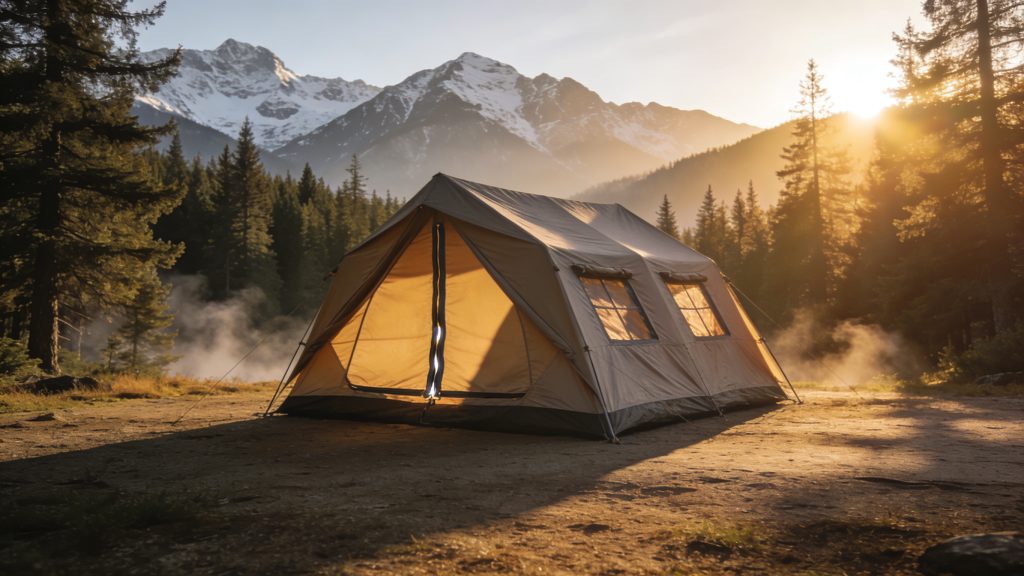
Wild camping is only responsible if you know the local rules, choose a safe spot and always have a back-up plan. The freedom to sleep under the stars comes with responsibility: for your own safety, for nature and for the surrounding area. Many novice wild campers underestimate the risks of changeable weather, unsuitable sleeping spots or contact with animals. With the right preparation, you make sure your wild camping experience is not only memorable, but above all safe.
Check the regulations for each country and region first
Before you pitch your tent, it is important to know whether wild camping is allowed at the spot you have in mind at all. The rules vary greatly from country to country and sometimes even from region to region. In the Netherlands, wild camping is prohibited, except at designated pole camping sites (paalkampeerplekken). In Belgium you can use bivouac areas, and in Germany there are often special trekking or bivouac sites.
Ignoring these rules can lead to fines or being forced to move in the middle of the night. Check online in advance where you are allowed to spend the night legally. Many countries offer bivouac areas, trekking spots or other official options that are safe and legal. This way you avoid problems and your wild camping adventure stays carefree.
‘ Don’t pitch your tent under loose branches or dead trees. ’
Choose a flat, sheltered spot without hazards
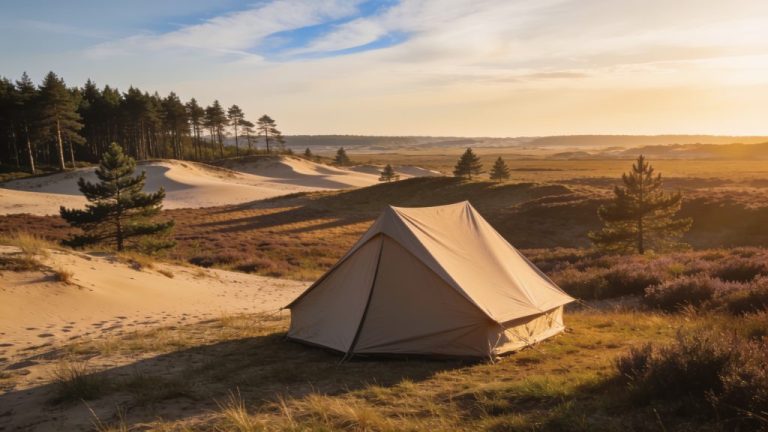
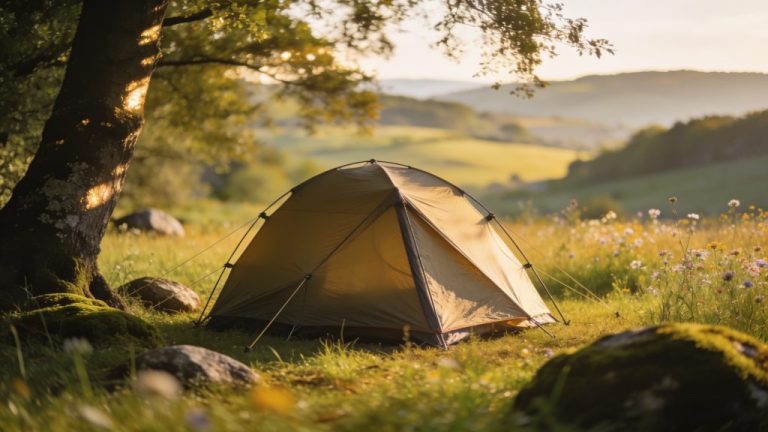
The location where you pitch your tent largely determines how safe your night will be. Always look for a flat spot, well away from steep slopes, loose rocks or unstable ground. Avoid hollows and banks that can flood in sudden rainfall. A commonly mentioned guideline is to pitch your tent at least 150 metres from open water, not only to prevent pollution but also to safeguard your safety.
Also pay attention to natural shelter. A spot out of the wind behind vegetation or rocks offers comfort. Don’t pitch your tent under loose branches or dead trees. Open spots with strong wind pull out your tent pegs and disturb your night’s rest. Look for a balance between shelter and accessibility, so that you can leave quickly in an emergency.
Keep a close eye on the weather
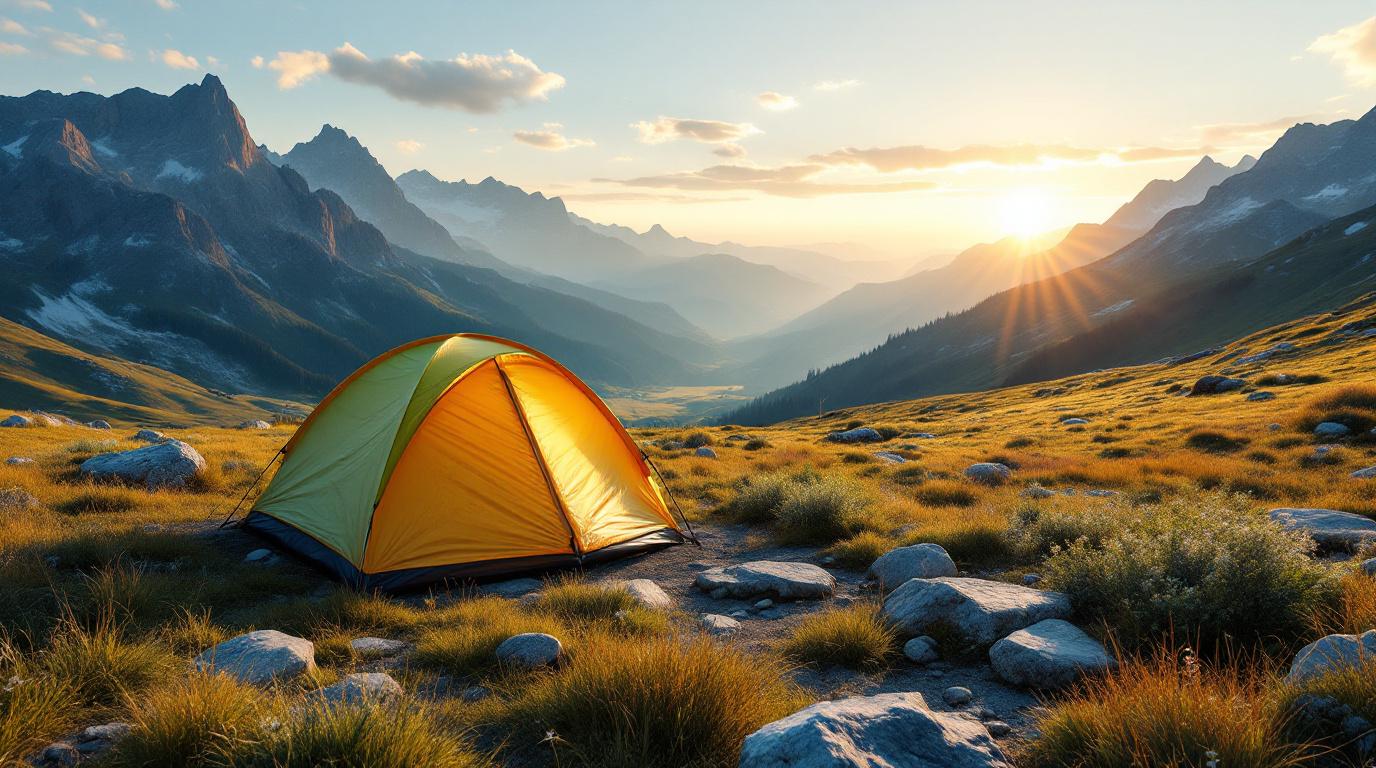
The weather changes quickly, especially in mountain areas or coastal regions. Always check the weather forecast shortly before departure and keep an eye on updates during your trip. A clear day can turn into a heavy storm at night, with all the associated dangers.
In rain or stormy weather, it is important to secure your tent well and make sure water cannot run under it. Is the weather becoming too dangerous? Then leave your spot and move to a campsite, bivouac area or other safe place to spend the night. Always have a plan B ready: an address or location where you can go if the situation becomes unsafe.
Avoid open fire without a proper fire pit
For many, a campfire is part of the wild camping experience, but open fire is one of the biggest risks in nature. In many areas, open fire is not allowed, especially in periods of drought or in protected nature reserves. Fire can spread extremely quickly, with serious consequences for nature and your own safety.
Only use fire if it is explicitly allowed and there is a suitable, safe fire pit. Some campers take a foldable fire bowl with them to limit the risk. Even then, the rule is: in dry conditions, do not light a fire. Never leave a fire unattended and always extinguish it completely before you go to sleep or leave. For cooking, it is better to use a camping stove, which is safer and easier to control.
‘ You have no one to fall back on if something goes wrong, and help is often far away. ’
Be extra alert when travelling alone
Wild camping alone offers peace and freedom, but also comes with additional risks. You have no one to fall back on if something goes wrong, and help is often far away. Therefore always let someone know where you are sleeping and when you will be back. Share your location using a map or GPS coordinates and agree on a fixed contact time.
For solo overnight stays, choose a spot that is not too remote. A location close to a hiking trail or access road gives you a better chance of help if needed, without losing the sense of peace. Make sure you can leave quickly if the situation becomes unsafe. Pack your gear so that you can break down your tent and leave within a short time.
Keep your distance from animals and store food safely
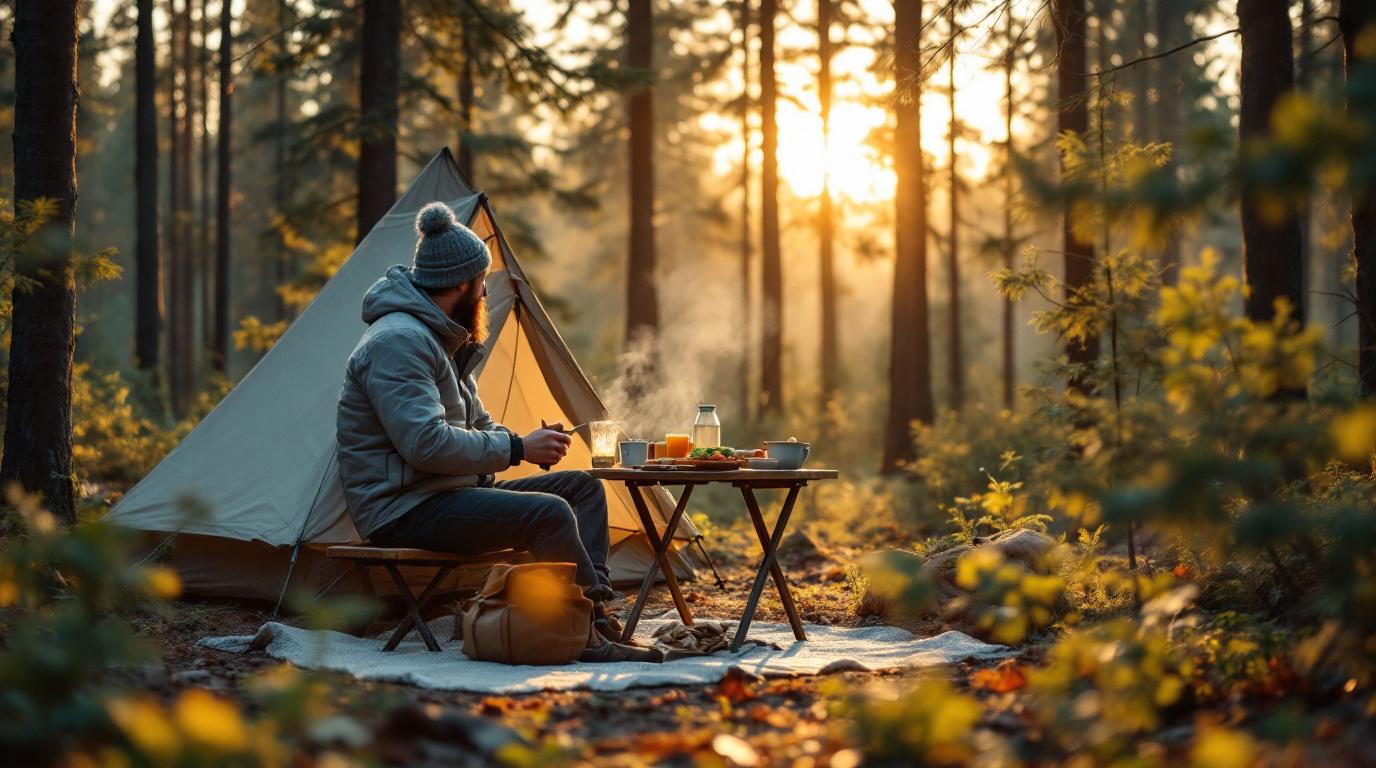
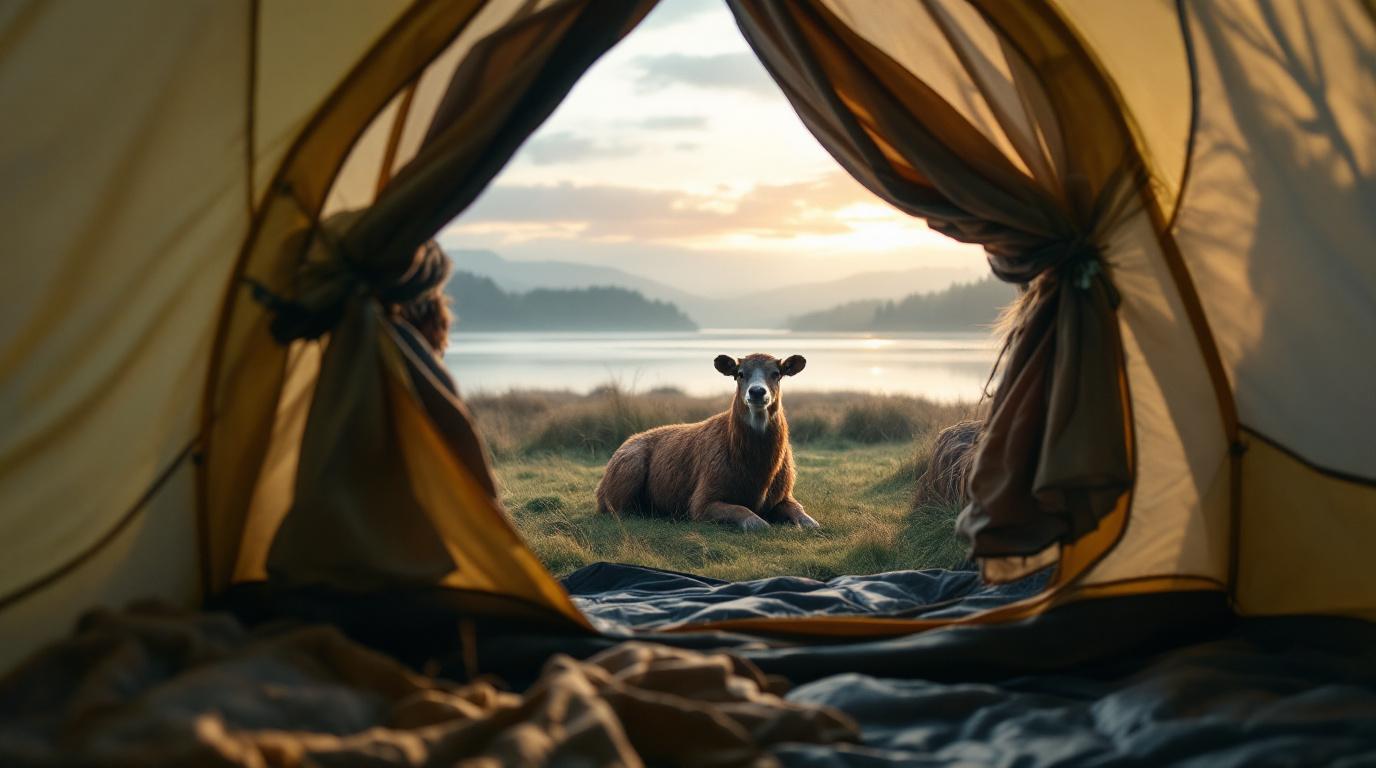
Animals can react curiously or aggressively to human presence, especially when they smell food. Avoid spots on animal tracks or in pastureland with livestock. Cows, horses or sheep can become restless if tents are pitched close to them. Store food sealed and at a distance from your tent in areas with wild animals such as wild boar, deer or even bears.
Do not leave food scraps behind and minimise food odours by packing everything well. Take all your rubbish with you and leave the spot cleaner than you found it. This prevents contact with animals and shows respect for nature and for other campers who come after you.
Always take basic safety equipment with you
Good preparation starts with the right equipment. Make sure you have a reliable sleeping bag and sleeping mat that are suitable for the expected temperatures. A head torch is indispensable for orientation in the dark. Take enough drinking water with you or a water filter to purify water on the spot.
A camping stove with gas cartridge makes you independent of open fire. Also pack a first aid kit with basic items such as plasters, painkillers and disinfectant. Make sure your phone is charged and consider taking a power bank with you. In remote areas, a whistle or emergency signal can make all the difference in an emergency.
Prepare yourself with a practical checklist
Before you leave, it is best to run through a short checklist so that you don’t forget anything. This helps you check in a structured way whether your trip can proceed safely and legally:
- Is wild camping allowed at this spot?
- Is there a bivouac area, trekking spot or other legal option nearby?
- Does someone know where you are and when you will be back?
- Is the weather stable enough for the night?
- Is your spot far enough from water, steep edges and dangerous vegetation?
- Do you have enough water, light and warmth with you?
- Can you take your rubbish and food with you or store it safely?
- Do you have an alternative if the spot turns out not to be suitable?
With this checklist in mind you are well prepared and can enjoy your night in nature without unnecessary worries.
Safety and respect go hand in hand
Safe wild camping is all about conscious choices: choosing the right spot, keeping an eye on the weather, handling fire carefully and always having a way out. Plan carefully and prepare yourself well. This way you turn your wild camping experience into an unforgettable and safe trip. Respect nature, local regulations and your own limits.
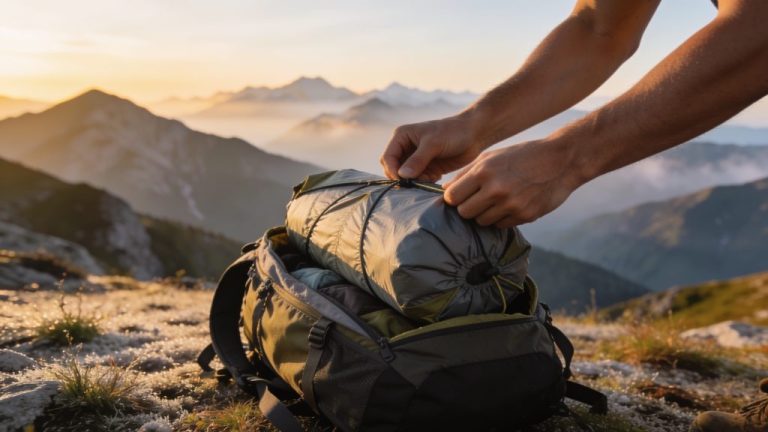
On the Traveler Tips website you will find many more practical tips about nature holidays, routes and smart travel preparation. From advice on packing your rucksack to sights along the way: discover more and plan your next trip with confidence.
Frequently asked questions
First check whether wild camping is legal in the area and, if applicable, look for official bivouac areas or trekking spots that make sense along your route. Plan your day stages so that you reach a potential sleeping spot well before dark and still have time to move on to an alternative (campsite or other legal place). Choose a sheltered, flat spot away from water, steep edges, livestock and houses, which you can also leave safely in bad weather. Let someone know roughly where you are going to spend the night and take the weather forecast into account when deciding on your location.
Essential for your safety are a solid tent, warm sleeping bag and mat, sufficient water (or a water filter), food, head torch, navigation tools (map/GPS/phone with power bank) and a basic first aid kit. Let someone know where you are and when you expect to return, and check regulations and weather forecasts in advance. Choose a camping spot out of the wind, not in hollows or directly alongside water, and avoid dangerous trees or steep edges. Store food well sealed, do not leave any rubbish behind and always have a plan B (for example a nearby campsite or bivouac area).
You can recognise potential dangers by checking the local weather forecast in advance, paying attention on the spot to dark clouds, suddenly rising wind and thunderstorms, and by observing the tracks, sounds and paths of animals (avoid obvious animal tracks and fields with livestock). Choose a camping spot away from water, steep edges and dead branches above you, and in unstable weather stay away from open areas and valleys where water can collect. If you hear animals close by at night or see aggressive behaviour, stay calm, make your presence calmly known with your voice, do not move closer and keep food and rubbish well sealed at a distance from your sleeping place. If the weather suddenly changes (thunderstorms, strong winds, torrential rain), break camp as quickly and safely as possible and move to a safer, lower but not lowest-lying and easily accessible place or to an official campsite/shelter.
Stay reachable by taking a charged phone with you with a power bank and, where possible, a local SIM card or eSIM with coverage in the area. Consider a satellite phone or a personal locator beacon (PLB or satellite messenger) for areas without mobile coverage. Always share your route and expected return time with someone at home beforehand, so that emergency services can be alerted if you remain unreachable. Before departure, check the coverage maps of providers and save important emergency numbers locally on your device.
Choose a discreet but legal place (bivouac area/trekking spot), out of sight of roads, with shelter from wind and rain and sufficient distance from water. Let someone know roughly where you are staying, but keep your exact sleeping spot to yourself so you can feel free and undisturbed. Store food in a way that limits smells and is safe, and keep light and noise to a minimum so you stand out less and do not attract animals. Finally, make sure you have a plan B (nearby campsite or bivouac area) so that you can move quickly and without stress in case of unsafe weather or a bad feeling.