 NL
NL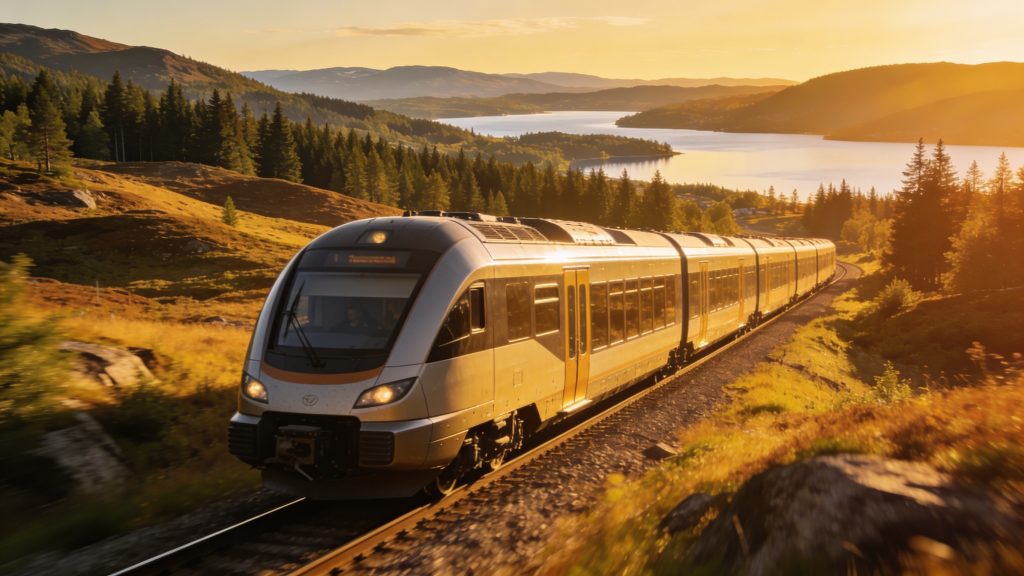
The season determines how you experience Scandinavia by train. Summer gives you almost endless daylight and green landscapes, while winter brings snow-covered mountains and the chance of seeing the northern lights. But both seasons require a different kind of preparation: think of timetables that change, routes that temporarily stop and daylight hours that vary greatly. Knowing what to expect makes the difference between a smooth journey and unexpected setbacks.
Why the season affects your train holiday
The season not only determines what you see, but also how practical a route is. In summer the days are long, especially above the Arctic Circle. That gives you more time to enjoy the scenery and to plan stopovers. In winter the days are short and the light is limited, but that gives you those classic winter scenes with snow-covered forests and frozen lakes.
A train holiday in Scandinavia requires adjustments in both seasons. Timetables differ in winter due to weather conditions, and some routes only run in summer. It is important to check in advance which connections are available and how flexible your route needs to be.
Tour operators and travel specialists emphasise that many routes in Norway, Sweden and Denmark are accessible all year round, but the experience differs greatly. Summer is ideal for those seeking comfort and variety, winter for those who mainly value snow and atmosphere.
Summer: maximum daylight and accessibility
For many travellers, summer is the most practical season. You have more daylight, which makes it easier to combine multiple stops. That makes longer routes through Norway and Sweden more manageable and comfortable.
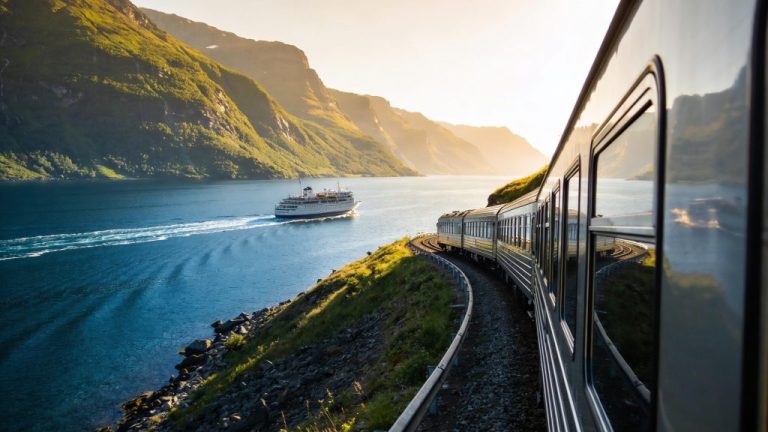
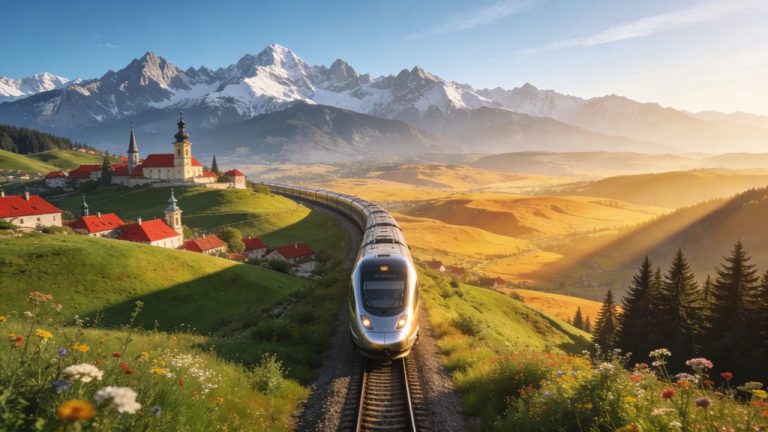
The landscape is greener and more accessible in summer. This really adds to panoramic routes through mountain areas and fjord regions. You see more details, nature is livelier and you have better visibility of the scenery passing by your window.
Another advantage is that multi-country routes are easier to plan. Combining Germany, Denmark, Norway and Sweden within one train trip is quite feasible in summer. It is, however, important to book in good time, because demand from holidaymakers and families travelling with children is higher during this period.
Practical advantages of travelling in summer
- More daylight for longer routes and better visibility
- Greener landscapes with better access to natural areas
- More stable timetables with less chance of weather-related disruptions
- More options to combine several countries within one journey
Winter: atmospheric landscapes that need more logistical attention
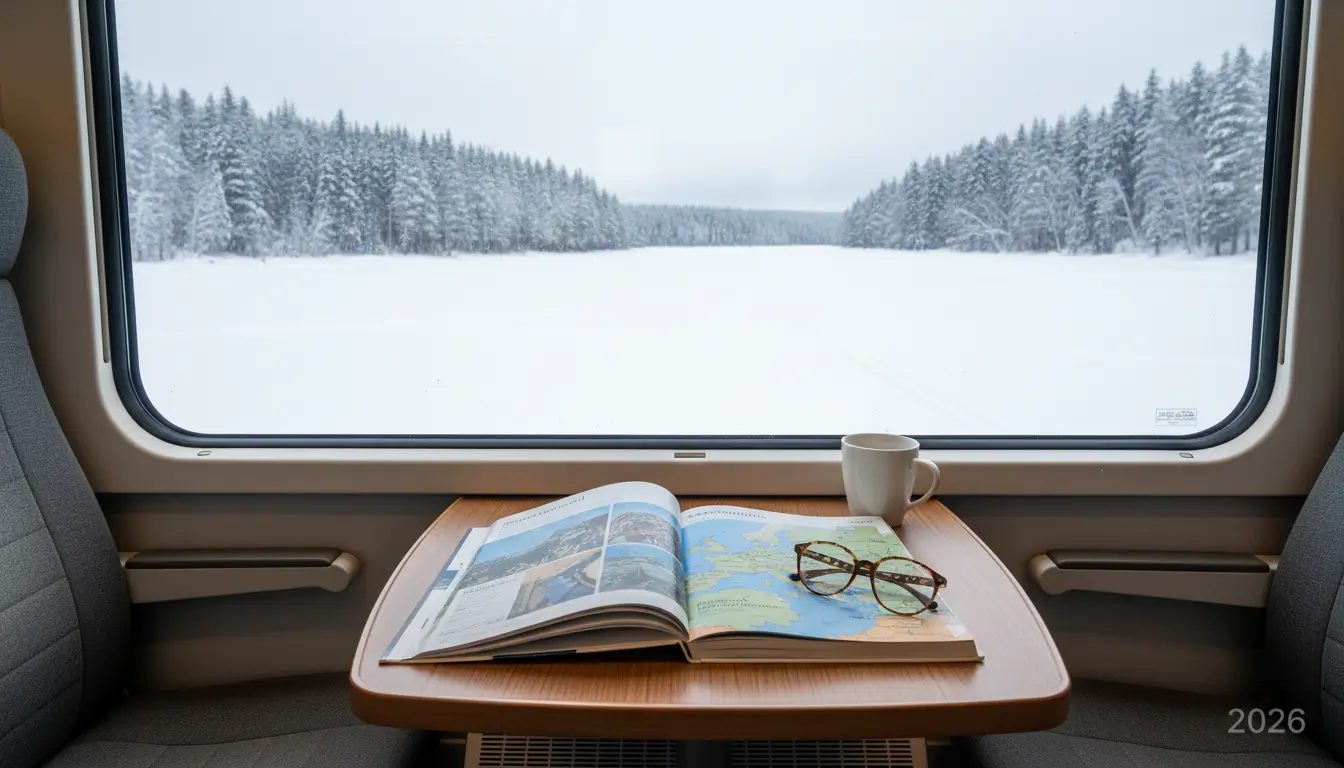
Winter offers a completely different travel experience. Snow-sure landscapes, dark forests and the contrast between white and darkness make winter routes visually very striking. For travellers mainly looking for atmosphere and quieter surroundings, this season is attractive.
Train journeys in Norway and neighbouring countries remain comfortable and scenically impressive in winter, especially towards the fjords and areas above the Arctic Circle. But you do need to take into account shorter days and limited daylight. That means you have less time to make stops along the way and part of the scenery will pass by in the dark.
In winter the weather affects your travel plans more quickly. Delays due to snow, ice or cold temperatures occur more often than in summer. This calls for flexibility and longer transfer times between connections. It is sensible to plan extra time for changes and to check for any alterations to the timetable.
What you need to know about travelling in winter
- Shorter days with limited daylight, especially in northern areas
- Snowy landscapes and frozen lakes that create a wintry atmosphere
- Greater chance of disruptions due to weather and temperature
- Night trains can be more practical to make up for limited daylight hours
Which routes are season-sensitive
Not all routes in Scandinavia are equally accessible in every season. Some routes through mountain areas or to remote fjord regions only run in summer, or have an adjusted timetable in winter. It is important to check this beforehand, so you are not faced with surprises during your trip.
Panoramic routes through Norway and Sweden are often mentioned as highlights of a Scandinavian train holiday. These routes are particularly spectacular in winter because of the snow and winter light, but they do require more preparation. Check the current timetable and take into account possible stops or diversions.
Routes that go via Copenhagen and the Øresund connection to Norway or Sweden are popular for multi-country journeys. These connections operate all year round, which makes them suitable for both summer and winter trips. In these types of routes, Denmark is often a logical and practical link.
How to prepare for each season
In summer, making reservations is more important. Demand for trains is higher, especially on popular routes and in school holiday months. Book your seats well in advance, particularly if you want specific seats with the best views.
In winter, flexibility is more important than early booking. Delays or adjustments due to weather occur more frequently. So plan longer transfer times between connections and make sure you have alternatives in case a service is cancelled or delayed.
In both seasons, having a good seat is important. Users and providers often emphasise that the side of the train you sit on determines your view. Ask in advance which side offers the best views of fjords, mountains or coastlines.
Tips for smooth planning
- Check the timetable beforehand and pay attention to seasonal changes
- Book early in summer for popular routes and specific seats
- Plan longer transfer times in winter for changes and connections
- Choose your seat deliberately for the best views along the route
- Combine city breaks in Copenhagen, Stockholm or Oslo with panoramic journeys for a balance between comfort and experience
What travellers appreciate about Scandinavian train journeys
Travel experiences and providers show that Scandinavia by train really stands out because of its varied landscapes. Fjords, mountains, forests and coastlines alternate, which creates visual variety and a relaxed travel experience. That makes train holidays an attractive alternative to domestic flights or long car journeys.
The combination of comfort, views and route options makes Scandinavia suitable for different types of trip. A summer round trip with many stops and variety, or a winter themed journey focused on snow and northern lights: both are easy to organise by train, as long as you take the practical differences between the seasons into account.
On the Traveler Tips website you will find more information about routes, preparation tips and practical regulations for train travel across Europe. Discover which destinations suit your travel style best and how to plan your holiday more smartly.
Frequently asked questions
In summer, the days in Scandinavia are long (in the north almost 24 hours of daylight), so you see a lot of scenery while travelling and can usually manage with lighter, airy clothing, supplemented with layers for cooler evenings. In winter, the days are short and it is often dark during your train journeys, with cold to very cold weather and snow, which makes warm, windproof and waterproof clothing, thermal layers, hat, scarf and gloves essential. In spring and autumn the weather changes quickly and daylight hours are limited to an average European level, which calls for flexible layers, a good waterproof jacket and sturdy closed shoes. For all seasons, a sleep mask (midnight sun), power bank, warm socks and possibly a scarf or jumper for cool train carriages are useful.
In winter (roughly November to March) you may have a chance of seeing the northern lights from the train in northern Norway and northern Sweden above the Arctic Circle, especially on routes towards Lapland. In summer (around June and July) you can experience the midnight sun in these same northern areas, when it remains light even in the middle of the night. In winter, routes through the Norwegian and Swedish mountains also offer vast snowy landscapes and frozen lakes along the tracks. In summer, by contrast, you will see green valleys, crystal-clear blue lakes and long dusky evenings, with extensive views of fjords and mountain scenery.
Yes, extreme winter weather conditions such as heavy snowfall and severe frost can affect the reliability, frequency and sometimes the accessibility of train routes in Scandinavia, especially in northern and mountainous regions. In winter, flexibility in your planning is more important, because delays and diversions occur more often. In summer, by contrast, train routes are generally easier to access, with less risk of weather-related disruptions. However, train travel remains generally quite feasible in all seasons, albeit with seasonal points to watch.
The best combination of low costs, fewer crowds and good availability of accommodation is usually in the shoulder seasons: late May–June and September. In July and early August, both trains and accommodation are busier and more expensive due to the high season. In mid-winter (December–February), some routes and smaller accommodation options are more limited, although prices outside school holidays can be lower. That is why the shoulder months around summer generally offer the best balance between price, tranquillity and choice.