NL
NL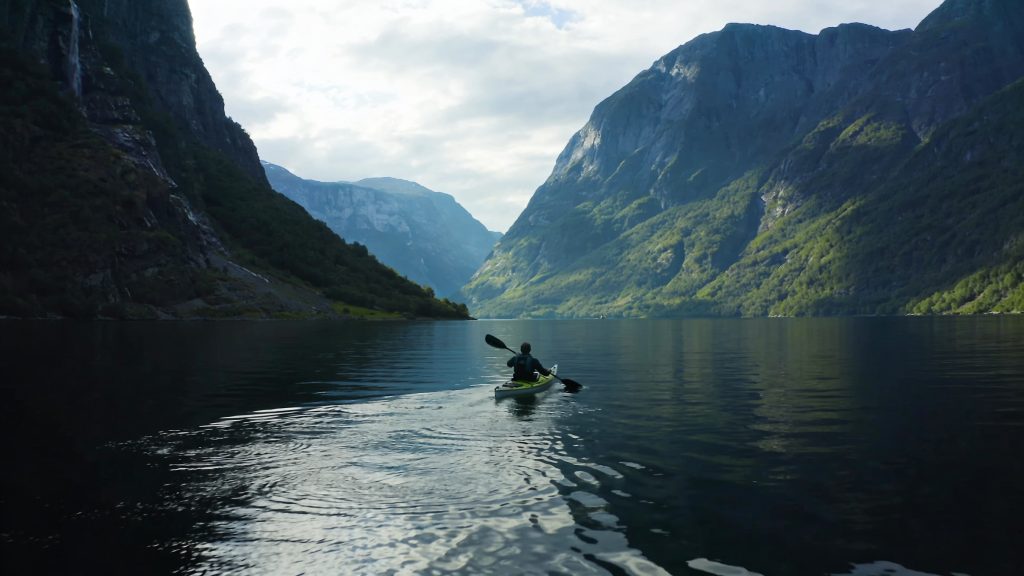
Paddling between steep mountain walls and calm waters offers a unique way to discover the Norwegian fjords. Kayaking gives you access to peace, space and nature that you simply don’t experience from the road or a cruise ship. In this article you’ll discover which fjords are best suited to a kayaking trip, how to combine an organised trip with a cruise, and what you need to arrange if you head out with your own gear. Read on and get ready for a journey where the experience itself is central.
Why kayaking in Norwegian fjords is special
Norway’s fjords offer landscapes on a UNESCO scale. The water is often calm, the mountain walls are steep and distances are manageable. That combination makes kayaking more accessible than you might think. You travel at your own pace, choose where to stop and experience the surroundings from the water.
The silence stands out. There’s no engine, no noise from other means of transport. You only hear your paddle, the water and occasionally a waterfall in the distance. For anyone seeking nature and tranquillity, this is an attractive choice. On top of that you can reach places that are inaccessible to larger boats or cars.
Most travellers choose a multi-day trip in the summer months. The weather is more stable then and the nights are light. A canoe and kayak holiday in this region calls for proper preparation, but offers a rich experience in return.
‘ For experienced kayakers this is an interesting area, but it requires more knowledge of navigation and weather conditions. ’
Which fjords are suitable for kayaking trips?
Not all fjords are equally accessible or suitable for kayaking. The following areas are regularly mentioned by operators and experienced kayakers.
Nærøyfjord and Sognefjord
The Nærøyfjord is a narrow side arm of the Sognefjord and is on the UNESCO World Heritage List. The fjord is narrow, the walls are steep and the water is calm. This makes it an ideal place for multi-day trips. The Sognefjord itself is wider and longer, with more scope to vary your route.
Many organised trips start in the area around Flåm or Gudvangen. From there you paddle through narrow waters, pass waterfalls and camp along the shore. The distances are manageable and the infrastructure is well organised.
Geirangerfjord
The Geirangerfjord is also on the World Heritage List. The area is more compact than the Sognefjord but offers impressive views. Famous waterfalls such as the Seven Sisters are clearly visible from the water. This fjord is popular for day trips and shorter expeditions.
Note: in high season it can be busier due to cruise ships and tourist boats. Plan your trip early in the day or choose a quieter period in June or September.
Coastal region around Bergen
The coast near Bergen offers access to smaller fjords and islands. The water here is more influenced by the sea, which means wind and tide play a role. For experienced kayakers this is an interesting area, but it requires more knowledge of navigation and weather conditions.
The advantage is how easy it is to reach. Bergen is well connected with the rest of Europe and there are several operators offering organised kayaking trips in the area.
Organised trips or going it alone?
You have two options: book an organised kayaking trip or put together your own journey. Both have advantages and disadvantages.
Organised kayaking trips
On an organised trip most things are taken care of. You get a kayak, paddle, life jacket and often instruction as well. The guide chooses the route, takes the weather into account and ensures safety. This is a good choice if you have little experience or don’t want to bring your own gear.
Most operators schedule trips of three to eight days. A very common length is five to seven days, during which you cover between 80 and 120 kilometres. You camp en route in tents, sometimes on official campsites, sometimes in wild spots where wild camping is permitted.
Pay attention to the conditions. Some operators set requirements for age, swimming ability and fitness. A minimum age of 16 and basic swimming certificates are common.
Kayaking independently
If you have experience and bring your own gear, you can plan a route independently. This gives you more freedom in planning and pace. You decide where you stop, how long you paddle and which detours you make.
Note: transporting your kayak to Norway requires preparation. By car this is easiest, but train or ferry are also possible. Make sure your gear is properly secured and that you comply with any regulations for transport.
Check in advance where camping is allowed. Wild camping in Norway is permitted under certain conditions, but not everywhere. Take into account protected areas and private land.
Combining a cruise and kayaking trip
A popular option is to combine a cruise with kayaking. Hurtigruten and other operators offer packages where you cover part of the route by boat and disembark at certain places for a kayaking trip. This gives you the comfort of a cruise with the immersive experience of kayaking.
The advantage is that you see several fjords in a short time without having to move your gear around each time. You sleep on board, eat on the ship and head out onto the water during the day with a guide. This is an accessible way to combine kayaking with other activities such as hiking or visiting villages.
The kayaking trips in these packages are usually short: a few hours to half a day. They’re not expeditions, but you still get a good impression of the fjord landscape from the water.
‘ This calls for good clothing and flexibility in your planning. ’
When is the best time to go kayaking?
The summer months are the most suitable. July and August are the warmest months with the most hours of daylight. The water is at its calmest then and the chances of stable weather are highest. Many operators run trips from June through to September.
June and September are quieter, but the weather can be more changeable. Temperatures are lower and there is a higher chance of rain. This calls for good clothing and flexibility in your planning.
For multi-day trips July or early August are recommended. The nights are light then, which is handy when setting up camp and for navigation.
What do you need to bring and arrange?
Even if your gear is provided by an operator, there are things you need to bring yourself. Think of:
- Quick-drying clothing in several layers
- Warm fleece or softshell, even in summer
- Waterproof clothing with good seals
- Waterproof bag for your belongings
- Sun protection and sunglasses
- Your own sleeping bag and sleeping mat, unless these are included
Don’t forget that you’ll spend a lot of time on the water. Even in summer it can be chilly, especially when it’s windy. Clothing that dries quickly and retains warmth is important.
Book your trip in good time. Especially in high season places fill up quickly. Many operators work with fixed departure dates and small groups, so booking early increases your chances of travelling in your preferred period.
Safety and skills
Kayaking in fjords is generally safe, provided you take the conditions into account. The water is calm, but wind can pick up quickly and the water temperature remains low, even in summer.
On organised trips you receive instruction and guidance. The guide adapts the route based on the weather and the level of the group. This makes it accessible for people with limited experience.
If you are going independently, make sure you have mastered the basic skills. Think of paddling straight ahead, steering and braking. Knowledge of rescue techniques is also useful, such as climbing back into your kayak after capsizing.
Check the weather forecast daily and be prepared to adjust your plans. If you’re in doubt about wind or visibility, it’s wise to wait or choose a shorter route.
‘ Discover which destinations suit your way of travelling and plan your next trip with reliable tips. ’
Discover more on Traveler Tips
Kayaking in the Norwegian fjords is one of many ways to travel consciously and actively. On the Traveler Tips website you’ll find more information on nature holidays, travel routes, camping and preparation for active trips. Discover which destinations fit your way of travelling and plan your next journey with reliable tips.
Frequently asked questions
The best period to go kayaking in the Norwegian fjords is in summer, roughly from June through to September. For the most favourable combination of weather, water temperature and stability, July and August are especially recommended. In these months the days are long, the chance of pleasant weather is highest and most organised kayaking trips are available. As a result you usually get the most comfortable and complete fjord experience on the water.
Essential equipment for a self-organised kayaking trip in the Norwegian fjords includes a sea kayak with spray deck, paddle, well-fitting life jacket, warm and quick-drying layered clothing and a waterproof set of spare clothes. In addition, take dry bags, map/GPS, first-aid kit, emergency signals (whistle, lamp) and enough food and water. As a safety measure, always check the weather forecast, plan a conservative route based on your experience and fitness, and preferably don’t kayak alone. Make sure you can swim well, that someone on shore knows your plan and return time, and that you always carry a charged phone or VHF radio in a waterproof case.
Combine your road trip along fjords such as the Sognefjord, Nærøyfjord and Geirangerfjord with 1–3 day kayaking trips that you book in advance with local operators, so that equipment, guide and route are taken care of. Plan your route so that you drive between the fjords by car and have a fixed base each time, for example in villages like Flåm, Gudvangen or Geiranger. Alternate overnight stays on campsites (for wild camping with a tent or cabins) with simple hotels or cabins along the fjords. When planning, allow for travel times on mountain roads, ferries and the weather, so that you have buffer days in case a kayaking trip has to be postponed.
For beginners, calm, sheltered fjords such as the Nærøyfjord (as a short, guided day trip) and easier sections along the Sognefjord or around the coast near Bergen are most suitable, ideally as part of an organised tour with a guide. Experienced kayakers can opt for longer multi-day routes in the Sognefjord or combination trips in, for example, the Geirangerfjord, where more open water, longer distances and changeable weather offer more challenge. Beginners experience nature best with short stages, plenty of time for stops and explanations about the landscape and wildlife, while advanced paddlers tend to find a deeper nature experience on remote routes with wild camping. In all cases, the summer months (July–August), starting early in the day and planning flexibly according to the weather provide the most impressive nature experience.
In general, you don’t need a special permit to go kayaking in the Norwegian fjords, as long as you follow local rules and safety regulations. In protected areas and national parks there may be additional restrictions, such as access or seasonal limits, designated landing spots and quiet zones for wildlife. You are required to take account of weather, currents and shipping, and wearing a life jacket is often strongly recommended or made compulsory by operators. Always check the rules in advance with the local tourist information office, park authority or kayak rental company.