 NL
NL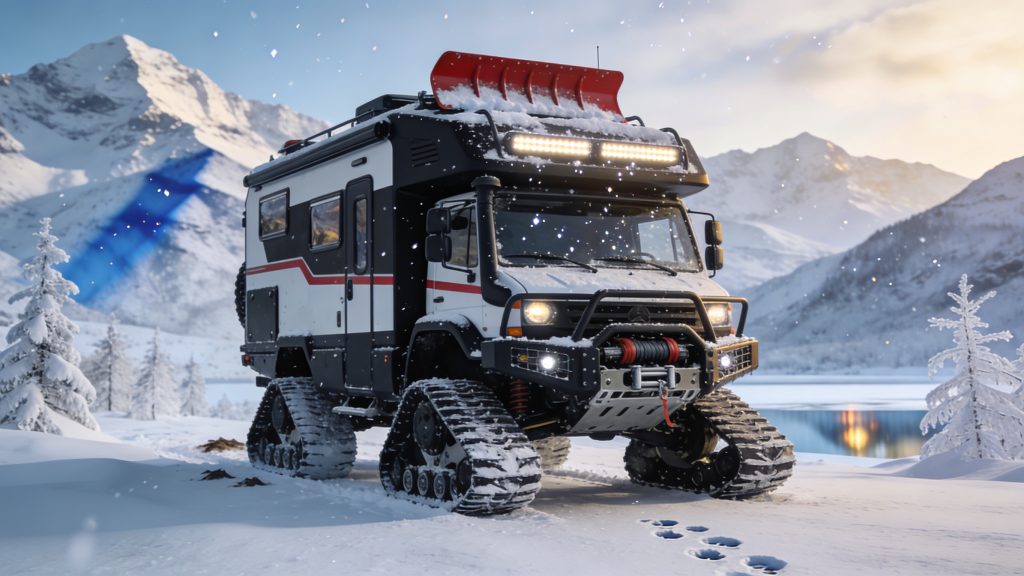
An expedition motorhome with 4×4 drive, thick insulation and autonomous facilities makes winter camping in northern Europe possible, even in extreme freezing conditions. With the right equipment and preparation you can camp comfortably and safely in the most challenging winter conditions, from Scandinavia to far beyond the Arctic Circle. Discover how to make your motorhome winterproof and which specifications really make the difference.
What makes an expedition motorhome suitable for winter?
An expedition motorhome is a vehicle that is specially built for travelling in extreme conditions. For winter camping this means your motorhome has to function at temperatures well below zero. The main difference compared with standard motorhome types lies in the construction and insulation.
The base is a 4×4 chassis that provides grip and stability on snowy and icy surfaces. This is not a luxury but a necessity when you are driving through northern Sweden, the Norwegian county of Finnmark or Finnish Lapland. These areas have long periods with deep snow cover and frozen roads where two-wheel drive simply falls short.
Hard-walled motorhomes are preferable to soft-top constructions. The reason is simple: better insulation means less heat loss and less strain on your heating system. Modern winter motorhomes are tested by cooling the interior down to 0°C for at least ten hours, after which it is checked whether the heating system functions reliably in freezing and thawing conditions.
Best 4×4 models for Scandinavian winters
The chassis determines where you can go and how your motorhome behaves on difficult surfaces. For winter camping in Scandinavia there are specific features you need to consider when choosing a 4×4 model.
Four important characteristics of a suitable winter chassis:
- Sufficient ground clearance for driving through deep snow
- Reliable 4×4 drive with diff-lock for grip on ice
- Diesel engine that can cope with cold starts in freezing temperatures
- Strong construction that can carry the weight of extra insulation and equipment
You can often configure these motorhomes entirely to your liking for extreme weather conditions. The best models have reinforced suspension and wheels suitable for winter tyres with studs, which are mandatory or strongly recommended in some Scandinavian countries.
Double floors and insulation systems
Insulation is the core of a functional winter motorhome. Double floors form a buffer between the frozen ground and your living space. This construction consists of an air cavity between two floor layers, often filled with insulating material.
The benefits go further than heat retention alone. Double floors provide space for systems such as pipes and tanks, which are protected from freezing. That said: winter camping usually means dry camping, where you do not use water pipes because they would freeze.
The walls and roof require similar attention. Good expedition motorhomes use insulation material with a high R-value, a measure of thermal resistance. The higher this value, the less heat escapes. Also pay attention to insulation around windows and doors, as cold bridges often occur there.
How do you equip a motorhome for freezing conditions?
The right equipment makes the difference between a comfortable winter trip and an exhausting survival trek. It starts with a diesel heater, the beating heart of your winter set-up.
A diesel heater works independently of the engine and can heat the entire motorhome while you are parked. These heaters are reliable in extreme cold and efficient in their fuel consumption. The system must not only keep the main interior warm, but also protect storage spaces from frost where your water supply and sensitive equipment are stored.
Ventilation prevents moisture problems
While you keep the motorhome warm, another problem arises: condensation. When you dry wet winter clothing and used ski socks, a lot of moisture is released in a small space. Without good ventilation this condenses on cold surfaces.
So install sufficient ventilation openings that allow air circulation without losing too much heat. Modern systems work with adjustable vents. You adjust these to the conditions. This way you maintain a healthy indoor climate without wasting energy.
‘ The less you use, the longer you can remain self-sufficient. ’
Off-grid winter camping with solar panels
Autonomy is valuable when you camp for days on end above the Arctic Circle. Solar panels may seem a strange choice for a Scandinavian winter, but even in these areas they generate power, albeit less than in summer.
During winter days there is little daylight, sometimes only a few hours. Even so, solar panels capture enough light to recharge your batteries, especially when snow reflects the sunlight. Make sure the panels are installed at an angle so that snow slides off easily.
Combine solar panels with sufficient battery capacity. Lithium batteries perform better in the cold than traditional lead-acid batteries and lose less capacity at low temperatures. Plan for at least 200 to 300 ampere-hours of capacity for a winter trip of several days without an external power source.
Additional power supply for long trips
For trips of ten to forty-five days through northern Europe you may need extra power supply. A diesel generator or an additional alternator on the engine provides back-up when solar panels do not produce enough.
Also think about your energy consumption. LED lighting, energy-efficient fridges and a well-insulated living space significantly reduce the demand for power. The less you use, the longer you can remain self-sufficient.
Practical considerations for winter trips
In addition to the technical equipment, there are practical adaptations that make your trip more comfortable. Think of extra storage space for thick winter clothing, ski gear and spare parts.
Important items for winter camping:
- Sufficient diesel supply for heater and engine
- Antifreeze for all fluids still in use
- Jerrycans for manual water supply
- Snow chains and winter tyres with studs
- Shovel and sand for when you get stuck in snow
- Spare parts for critical systems
Make sure you have sanitary facilities suitable for dry camping. This often means a cassette toilet that is frost-resistant. In addition, you need a system to collect grey water without an external connection. Plan your route with knowledge of where you can empty tanks and fill up with fresh water.
Destinations suitable for winter camping
With a well-equipped expedition motorhome, the most beautiful winter regions of northern Europe are within reach. Lapland and northern Scandinavia offer unspoilt natural areas with vast forests, mountains and frozen lakes covered with thick layers of snow.
These regions are accessible for all types of motorhomes. A 4×4 vehicle offers significant advantages. You can drive further into the landscape, away from standard routes, and you have the assurance that you can safely continue when the weather changes.
Take into account the number of hours of daylight per day. Above the Arctic Circle, days in winter are extremely short, sometimes only a few hours of twilight. This affects your planning and energy management. On the other hand, you get the chance to see the northern lights, an experience that more than justifies the extra preparation.
‘ The reward is access to some of Europe’s most impressive landscapes, with virtually no other campers around. ’
Winter camping takes preparation but pays off
Making an expedition motorhome suitable for winter camping requires investment in insulation, heating and autonomous systems. The reward is access to some of the most impressive landscapes in Europe, with virtually no other campers.
Start with the basics: a 4×4 chassis, good insulation and a reliable diesel heater. Add autonomous facilities such as solar panels and sufficient battery capacity. Test your systems before you leave and make sure you know how everything works in extreme cold.
On the Traveler Tips website you will find much more information about motorhome trips, routes through Scandinavia, regulations for different countries and practical tips for on the road. Discover more about planning your perfect winter adventure and how to prepare your trip in the best possible way.
Frequently asked questions
Essential are a very well-insulated body (floor, walls, roof and windows) in combination with controlled ventilation to prevent damp and condensation. In addition, you need a powerful, reliable heating system that heats not only the interior but also storage areas and frost-sensitive parts (pipes, tanks). Dry camping with empty water tanks and an alternative water supply prevents pipes from freezing. A hard-walled body on a robust (preferably 4×4) chassis increases comfort and safety in extreme cold.
An expedition motorhome, usually on a 4×4 chassis with strong insulation and winter-proof heating, can reach snow-covered mountain roads, remote tracks and polar regions where a regular motorhome has to give up due to lack of grip, ground clearance and frost resistance. This allows you to drive safely on unpaved, snowy or icy routes and still spend the night comfortably in prolonged frost. Preparations include ensuring excellent insulation and ventilation, a powerful and frost-proof heating system (also for storage spaces), winter tyres and possibly snow chains. In addition, you often travel “dry” (empty water tanks to prevent freezing) and take extra fuel, emergency equipment, suitable winter clothing and products to combat condensation and damp.
The main cost items are the purchase or conversion of the base vehicle (4×4 chassis), insulation and heating (diesel or gas heating, extra insulation material), energy system (batteries, solar panels, inverter) and winter equipment such as suitable tyres, snow chains and possibly extra storage for ski and winter gear. In addition, you have to factor in recurring costs for maintenance (engine, heating, tyres), insurance, road tax, storage and higher fuel costs due to extra weight and winter weather. Planning smartly in budgetary terms means first determining a maximum total budget and dividing it into one-off investments (purchase and conversion) versus annual costs (maintenance, insurance, fuel), so that you do not spend everything at once. Finally, draw up a multi-year plan (for example 5 years) in which you set aside a reserve each year for unexpected repairs and replacement of tyres or batteries.
Indispensable driving skills are calm, anticipatory driving, keeping a large following distance, taking bends and braking gradually and being able to switch between driving modes such as 4×4 and low gearing on slippery surfaces. It is also important to have experience correcting skids, driving defensively and assessing snowdrifts, sheets of ice and poor visibility. Essential safety equipment includes suitable winter tyres (preferably with the snowflake symbol), snow chains, shovel, tow rope, traction aids (e.g. sand ladders), jump leads and a good ice/snow scraper. In addition, an emergency kit with warm clothing and blankets, first aid kit, emergency food and water, torch, warning devices (such as cones or reflective triangle) and a reliable means of communication should be part of your standard kit.