 NL
NL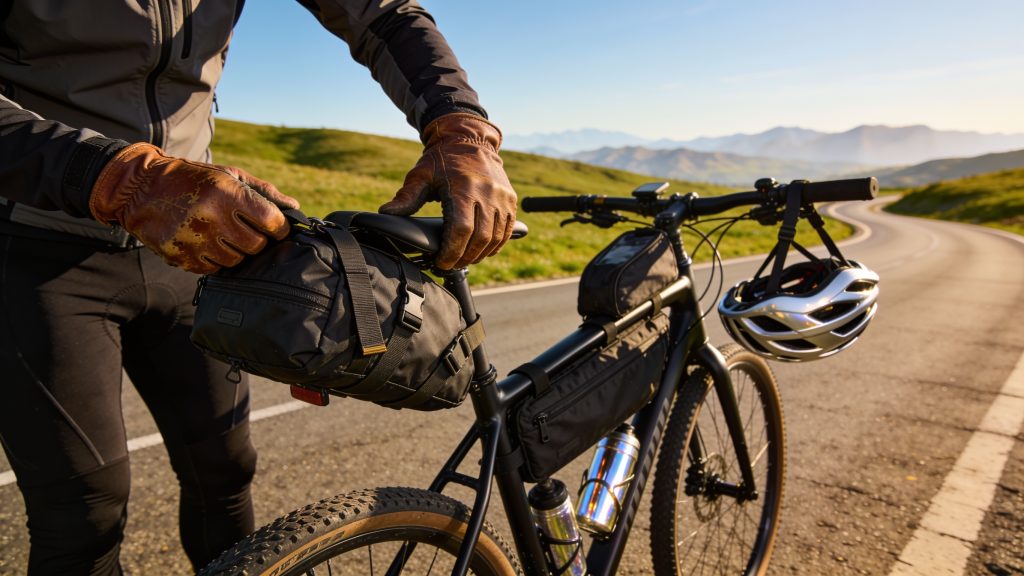
A cycling holiday is only a success if you are on the road safely and without problems. Traffic signs, lighting requirements, and traffic laws vary by country, and those who do not remain alert are at risk of accidents or theft. For those planning a cycling holiday in Belgium or the Netherlands, it is good to know the rules in advance, check your equipment, and know how to protect your bike while on the road. In this article, you can read what you need to arrange and which rules apply in each country.
What do you need to arrange before going on holiday?
A safe cycling holiday does not begin on the bike, but at home. Check your bike thoroughly before departure. Check the brakes, tyres, cables, and lights. Test that everything functions properly and replace parts prone to wear and tear.
Ensure your fitness and saddle comfort are in order. Take a few longer rides beforehand to get used to the distance and the weight of your luggage. This prevents fatigue and injuries on the road.
Register your bike with its frame number and take photos of the frame and any distinguishing features. This helps in case of theft or loss. Always use a sturdy lock, even during short stops. In addition, take a repair kit, first aid kit, and sufficient water and food. Note down important telephone numbers for emergencies, such as the emergency services of the country you are travelling to.
Check if your bike and luggage are adequately insured under your travel insurance. For expensive bikes, e-bikes, or sporty cycling trips, additional coverage may be necessary.
‘ Drivers must in many cases give priority to cyclists, but do not assume it blindly. ’
Traffic rules for cyclists in the Netherlands
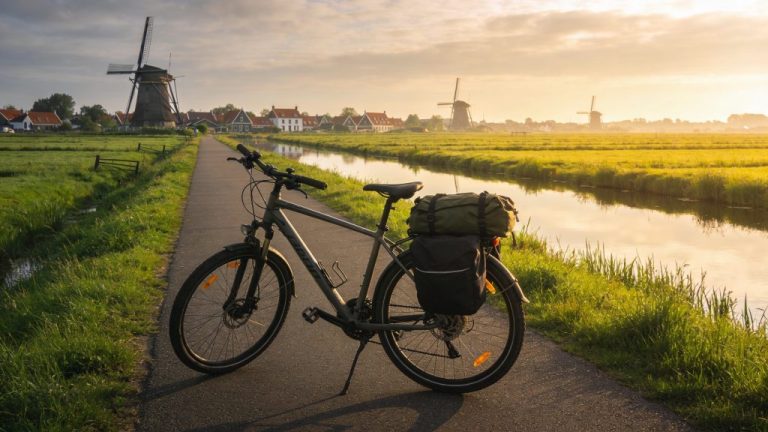
In the Netherlands, cyclists are subject to specific rules intended to ensure safety and traffic flow. Bike lighting is mandatory between sunset and sunrise, and during the day when visibility is poor. You need a white or yellow lamp at the front and a red lamp at the rear. Reflectors are also mandatory.
There is no mandatory helmet law in the Netherlands, but a helmet is strongly recommended for e-bikes and longer trips. Cyclists must use the cycle path if one is available. You may only cycle on the carriageway if there is no cycle path. On cycle paths, you may not ride side-by-side if it hinders other road users.
Pay attention to priority rules at intersections and roundabouts. Drivers must in many cases give priority to cyclists, but do not assume it blindly. Ride defensively and make eye contact where possible. Use hand signals when turning or changing direction.
Traffic rules for cyclists in Belgium
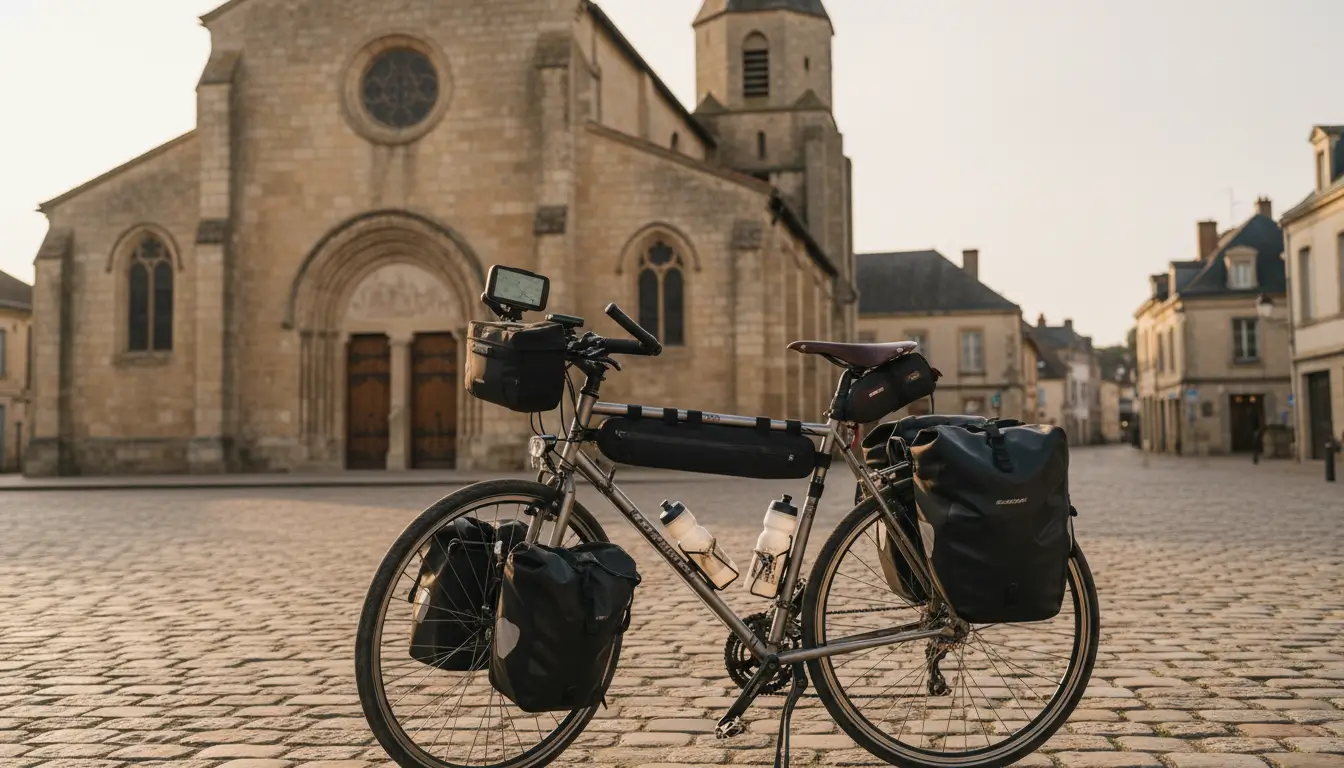
Belgium applies different rules to the Netherlands, especially regarding lighting and visibility. Bike lighting is mandatory when visibility is poor and between sunset and sunrise. You need a white or yellow lamp at the front and a red lamp at the rear. Both lamps must be visible from at least 30 metres away.
Reflectors are mandatory: a white reflector at the front, a red one at the rear, and orange reflectors on the pedals and wheels. A reflective vest or armbands are not mandatory for cyclists but are highly recommended, especially on roads outside built-up areas.
In Belgium, you are allowed to cycle side-by-side, provided you do not hinder other road users. On cycle paths, this is often permitted; on regular roads, only in certain situations. Use the cycle path if one is available. Helmet laws do not apply to recreational cyclists, but for fast e-bikes (speed pedelecs), a helmet is mandatory.
Note that priority rules in Belgium may differ from those in the Netherlands. Study the signs and markings at intersections and roundabouts. Be extra alert in traffic and do not assume that drivers will always yield priority.
How to stay visible and safe on the road?
Visibility is one of the most important safety factors during a cycling holiday. Wear bright, preferably light-coloured clothing. Add reflective elements to your clothing or bag, especially at dusk or in bad weather.
Always use lights, even during the day if visibility is limited by rain, mist, or tunnels. Check regularly that your lamps are still working and carry spare batteries or a rechargeable lamp. A broken lamp can lead to a fine, but more importantly: it increases the risk of accidents.
Ride predictably and stay alert. Do not let yourself be distracted by your phone, navigation, or the view. Use hand signals and make eye contact with other road users wherever possible. Adjust your speed on descents, bends, and unfamiliar roads. Brake well in time and always maintain control over your bike.
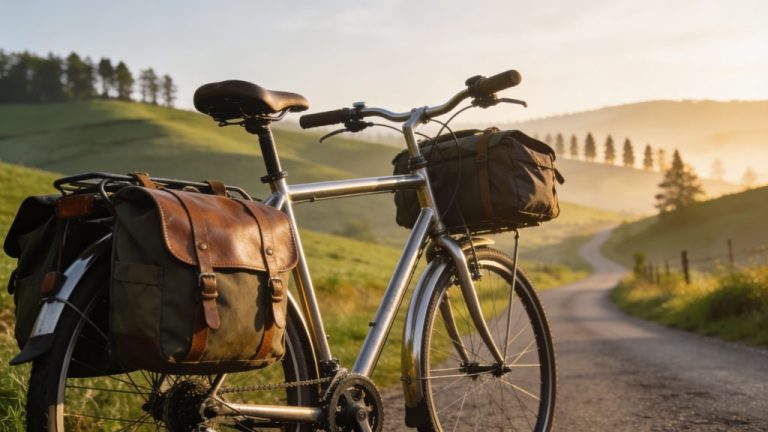
Ensure stable luggage distribution. Heavy or lop-sided panniers affect your handling and can throw you off balance. Use sturdy bike bags or a well-attached luggage rack.
‘ Make sure you have enough water and energy bars with you, especially on longer stages without facilities. ’
What equipment and documentation should you take with you?
Besides your bike and luggage, it is wise to carry certain documents and equipment. Bring proof of identity, insurance papers, and, if applicable, a copy of your bike registration. Keep these in a safe, dry place.
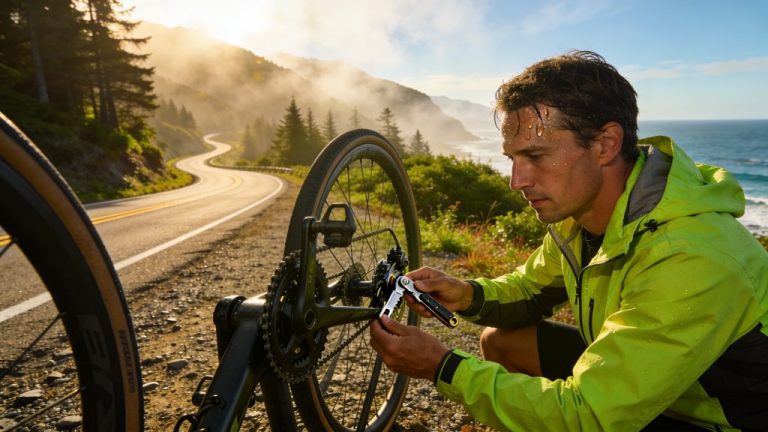
Pack a repair kit with tyre patches, spare inner tubes, tyre levers, a multi-tool, and lubricant. Also bring a first-aid kit with plasters, bandages, painkillers, and any personal medication. Make sure you have enough water and energy bars with you, especially on longer stages without facilities.
A cycling map or navigation device will help you stay on route. Download maps offline for areas with poor mobile reception. Before leaving, note down the emergency numbers of the country you are visiting. In the Netherlands, call 112; in Belgium, likewise 112. It is also useful to have the number of your accommodation, bike rental service, or travel insurance company close at hand.
How to protect your bike against theft?
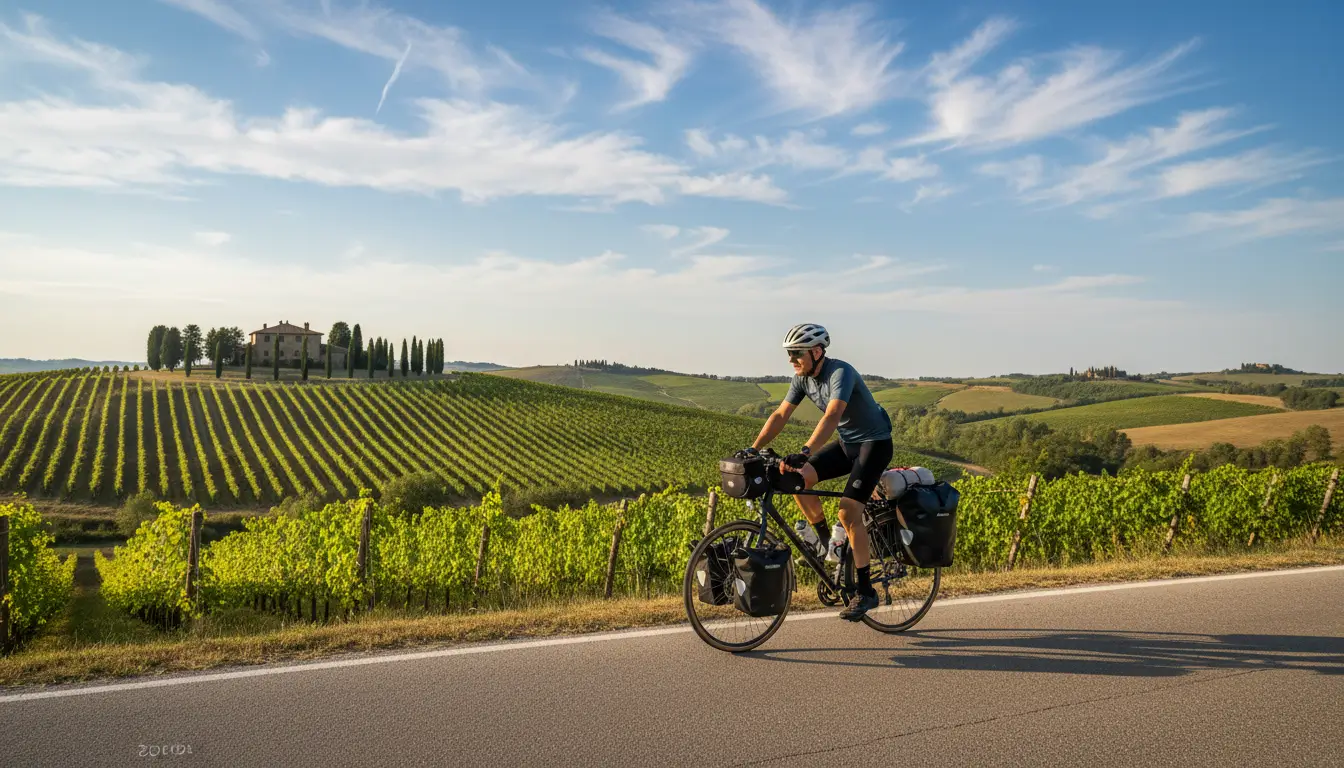
Theft is a real risk during cycling holidays, especially in busy cities and tourist areas. Always use a sturdy lock, even for short stops. Preferably choose an ART-certified lock or a combination of a chain lock and a D-lock.
Secure your bike to a fixed object, such as a bike rack or lamp post. Do not leave valuables visible on the bike. Always take your GPS, phone, and wallet with you when leaving the bike unattended.
Choose accommodation where your bike can be stored indoors or where a locked bike storage area is available. Many hotels and campsites offer this facility. Ask about this when booking. Keep your bike locked at night, even on enclosed premises or in a shed.
Pay attention to your surroundings and be alert to suspicious situations. Do not leave your bike unattended in remote places for long periods. Take photos of your bike and register the frame number before departure so that in the event of theft, you can file a report and the bike is easier to recover.
What to do in an emergency or in case of a breakdown?
Breakdowns or accidents can happen anywhere, even on a well-planned cycling holiday. Stay calm and get yourself and others to safety. If possible, move your bike to the side of the road and use your warning lights or vest to remain visible.
In the event of a flat tyre or technical issue, try to resolve it yourself using your repair kit. If that fails, call a local bike repair shop or contact your travel insurance company. Many insurers offer breakdown assistance for cyclists.
In the event of an accident involving injury, always call 112. Clearly state your location and describe the situation. Wait for help and only move if it is safe to do so. Take photos of the scene for your insurance and note down any witnesses.
Always keep a list of emergency contacts to hand: emergency services, accommodation, bike rental, and travel insurance. Keep these both on paper and digitally, so you can always access them, even if your phone battery dies.
‘ Avoid busy roads and choose quiet cycle paths and rural routes where possible. ’
Where to find safe routes and junctions?
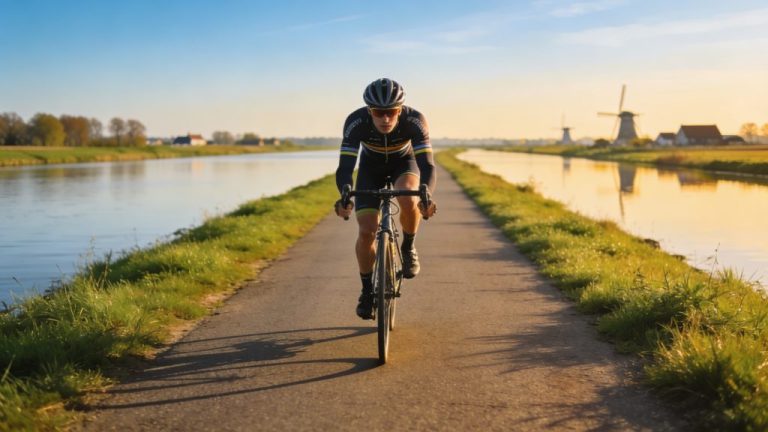
Both the Netherlands and Belgium have extensive cycling networks with numbered junctions. These junctions make it easy to plan and follow a route without needing complex navigation. You cycle from junction to junction and can easily change your route along the way.
In the Netherlands, you will find these junctions spread across the entire country, especially in tourist areas like the Veluwe, Limburg, and coastal regions. In Belgium, junction networks are available in Flanders, with extensive routes through the Kempen, the Flemish Ardennes, and along the coast.
Choose routes that suit your level and fitness. Avoid busy roads and choose quiet cycle paths and rural routes where possible. Check in advance whether the route is suitable for your type of bike, especially for mountain bikes or e-bikes.
Use a cycling map or app to find junctions and routes. Websites such as route.nl and fietsknooppunt.be offer extensive information on routes, distances, and sights along the way. Plan sufficient breaks and resting points, especially on hot days or long stages.
A cycling holiday with safety as a priority provides peace of mind and enjoyment on the road. On the Traveler Tips website, you will find much more information about cycle routes, accommodation, practical tips, and the most beautiful destinations for your next cycling holiday. Discover more and plan your trip with confidence.
Frequently asked questions
In popular cycling destinations outside the Netherlands, stricter helmet laws often apply (for example, mandatory on certain roads or for children), whereas in the Netherlands, a helmet is usually not mandatory. Rules for visibility and equipment can also be stricter, such as the mandatory wearing of reflective vests at dusk or in tunnels. In some countries, different minimum distances that cars must maintain from cyclists apply, and priority rules differ from the Dutch situation. As a result, cyclists must research local rules in advance rather than assuming Dutch habits.
Essential safety equipment includes an approved helmet, powerful front and rear lighting, reflective (rain) clothing, a sturdy lock, a first-aid kit, and a basic repair kit with a pump and suitable spare tyres for your terrain (road, gravel, MTB). Ensure durable tyres with enough tread for unpaved paths and wet weather, reliable brakes, and stable luggage racks or panniers. Prepare by thoroughly checking your bike beforehand, studying the route and elevation gain, and building up your fitness, especially for hilly or mountainous terrain. Plan clothing in layers (including a windproof and waterproof layer), sufficient water and energy-rich snacks, and always check the local traffic rules and weather forecast.
Use specialised route planners and apps (such as the Fietsersbond Routeplanner, Komoot, or BRouter) with filters for “low-traffic,” “cycle paths,” road surface type, and elevation profile, and zoom in on the map to check if the route runs along dedicated cycle paths. Combine this with OpenStreetMap/Street View or Mapillary to visually verify the actual road quality, width, traffic density, and existing signposting. Consult local cycling networks (junction routes, LF routes, EuroVelo) and tourist websites, as they often explicitly indicate safe, well-signposted routes. Finally, read recent experiences from other cyclists (reviews, forums, Strava segments) to see if the chosen route is experienced as safe and clearly marked in practice.
Adhere to the principle of defensive and predictable cycling: use clear hand signals, make eye contact, and never assume automatically that you have priority, even if the rules say so. Many local road users expect cyclists to ride in a straight line and not stop, swerve, or turn suddenly without warning. Ensure you are always clearly visible with lighting and conspicuous clothing, especially in bad weather, in tunnels, or at dusk. Check local rules regarding helmets, lighting, and road positioning beforehand, so you do not cause irritation or dangerous situations through deviant behaviour.