NL
NL
A standard travel insurance policy provides insufficient protection for an expedition cruise to remote areas. Because of the extreme locations and limited medical facilities en route, you need cover for medical evacuation, cancellation and accidents during Zodiac trips. Find out what you need before you set off.
Why a regular travel insurance policy falls short
An expedition cruise is fundamentally different from a regular cruise. You travel to Antarctica, the North Pole, the Galápagos Islands or remote archipelagos where medical assistance is scarce and evacuations are complex and expensive. Your basic health insurance often only reimburses up to the Dutch tariff abroad, which means that you have to pay the difference yourself in the case of expensive treatments or evacuations.
In addition, expedition cruises often fall outside the standard travel routes. The duration of the trip regularly exceeds the limit of many policies, and activities such as Zodiac excursions, walks on glaciers or visits to wildlife areas require additional cover that is not automatically included. A helicopter evacuation from a cruise ship in Antarctic waters can cost tens of thousands of euros.
Always check whether your insurance offers worldwide cover, does not exclude regions and is suitable for the duration and nature of your expedition. Many standard policies do not cover trips outside the EEA or have a maximum trip length of 60 days, while expedition cruises sometimes last 90 days or more.
Medical evacuation and repatriation as core coverages
Medical evacuation is the most important type of cover for an expedition cruise. If you become seriously ill or injured during the trip, you may need to be transported by helicopter or special aircraft to a hospital. On a cruise ship in remote waters, the medical facilities are limited to a small onboard clinic, suitable for first aid but not for complex treatments.
A good insurance policy covers:
- Transport to the nearest suitable hospital
- Helicopter or aircraft costs for evacuation from the ship
- Medical assistance during transport
- Repatriation to the Netherlands for further treatment or recovery
Bear in mind that evacuation from Antarctica or the North Pole may mean that you are first taken to Chile, Argentina or Norway before continuing on to the Netherlands. This significantly increases the costs. Check whether your policy has a sufficiently high maximum amount for evacuation, preferably at least 500,000 euros.
Repatriation also covers the transport of your remains if the worst happens. Although it is unpleasant to think about, the costs are high and this must be included in your policy.
Cover for Zodiac accidents and shore excursions
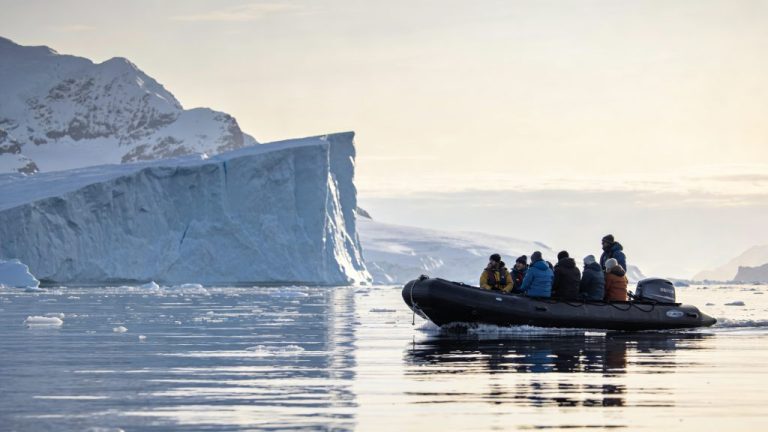
During expedition cruises you use Zodiacs, small inflatable boats that take you to shore or allow you to observe wildlife up close. These activities involve risks: cold and rough sea conditions, slippery rocks when going ashore and contact with wild animals. Not all policies automatically cover these activities.
Explicitly ask your insurer whether the following activities are covered:
- Zodiac trips in open water and polar regions
- Walks on ice, glaciers or in nature reserves
- Kayaking in polar waters
- Wildlife watching at close range
- Snorkelling or diving in cold waters
If in doubt, take out an additional sports or adventure module. Some insurers offer special cruise or expedition cover that automatically insures these activities. Read the policy conditions carefully to check whether your planned activities are explicitly excluded.
Cancellation cover for unforeseen circumstances
Expedition cruises are expensive. Costs range from several thousand to tens of thousands of euros per person, often paid months before departure. If you have to cancel due to illness, a death in the family or other unforeseen circumstances, you do not want to bear those costs entirely yourself.
A cancellation insurance policy reimburses your paid travel and accommodation costs if you cannot depart. Take out this cover immediately after booking your cruise, not shortly before departure. Many insurers only cover situations that arise after the policy has been taken out.
Also check whether the insurance provides cover for:
- Delay or cancellation of connecting flights causing you to miss the ship
- Cancellation of the cruise by the shipping company due to weather conditions or technical problems
- Interruption of the trip if you have to return home en route
On expedition cruises, weather conditions or drifting ice can mean that the ship cannot follow the planned route or that departure is delayed. Not all cancellation insurance policies cover this type of change, so check this with your insurer.
‘ Get written confirmation that your specific route and destination are covered under the policy. ’
Align worldwide cover and trip length with your expedition
Your policy must be valid in all areas you visit. Expedition cruises sail through international waters, often far beyond the European Economic Area. Always choose worldwide cover without excluded regions for this reason. Some insurers exclude certain countries or regions, such as the polar regions or specific archipelagos.
Also pay attention to the maximum trip length of your policy. Many standard insurance policies cover trips of up to 60 or 90 days. If your expedition cruise lasts longer or you combine the cruise with pre- or post-travel, you need a policy that covers this total duration. Some providers offer extended cover or separate long-term policies.
Contact your insurer if you are unsure about the coverage area. Get written confirmation that your specific route and destination are covered by the policy. This prevents disputes afterwards if you need to file a claim.
Medical expenses above the Dutch tariff
Your Dutch health insurance usually only covers medical expenses abroad up to the tariff that is customary in the Netherlands. In countries such as Chile, Argentina, Norway or the United States, the costs of medical care are often significantly higher. You pay the difference between the Dutch tariff and the actual costs yourself, unless your travel insurance covers this.
Check whether your travel insurance offers generous cover for medical expenses. A maximum amount of at least 1 million euros is recommended for expedition cruises, given the potentially high costs of hospitalisation and evacuation. Some policies have a lower maximum or apply an excess, so read the conditions carefully.
Also make sure that dental costs and specialist treatments are covered. If you develop dental problems during the cruise or an existing condition worsens, you do not want to be faced with unexpected bills.
Considering special cruise or expedition cover
Some insurers offer specially tailored insurance for cruises or expeditions. These policies are designed specifically for this kind of trip, with cover that matches the particular risks and conditions. They are specifically developed for the risks and conditions of this type of travel and often provide broader cover than a standard travel insurance policy. They may include extra modules for Zodiac activities, polar travel or long-duration cruises.
An expedition cover can include the following, among other things:
- Automatic cover for Zodiac trips and shore excursions
- Increased limits for evacuation and repatriation
- Cover for missed connections due to delay of an earlier flight or cruise
- Baggage and equipment cover for cameras and technical gear
Compare different providers and request quotes for both standard policies and specialised expedition cover. Sometimes the price difference is small, while the cover is substantially better. When comparing, look not only at the premium but also at the conditions, excesses and maximum reimbursement amounts.
Checking the conditions before departure
Take out your travel insurance before you make the first payment for your cruise. That way you are covered immediately for cancellation and changes. Read the policy conditions thoroughly and pay particular attention to:
- Excluded areas or activities
- Maximum trip length and the possibility of extension
- Amount of the excess
- Maximum amounts for medical expenses, evacuation and cancellation
- Procedure for submitting a claim
- Contact details for the emergency assistance centre
Keep the policy numbers and contact details of your insurer both digitally and on paper. Make sure your travel companions also have access to this information. In an emergency at sea or in a remote area, you need to be able to act quickly.
Take your insurer’s medical questionnaire seriously. Concealed medical history can lead to rejection of a claim. If you have pre-existing conditions, declare them and ask whether they are covered or whether you need to pay an additional premium.
Discover more on Traveler Tips
A well-arranged travel insurance policy gives you the peace of mind to fully enjoy your expedition cruise. On the Traveler Tips website you will find much more information about cruises, trip preparation, destinations and practical tips for every type of journey. Discover how to plan your next adventure smartly and consciously.
Frequently asked questions
Standard travel insurance policies often do not (or only partially) cover medical costs above the Dutch tariff, expensive medical evacuation by ship/helicopter and repatriation from very remote areas. Risky excursions (such as Zodiac trips or certain outdoor activities) and trip durations that exceed the standard maximum term also regularly fall outside the cover. Necessary additions are therefore: worldwide cover, extensive medical expenses cover, cover for medical evacuation and repatriation, and specific cover for expedition/cruise activities. Also check whether the maximum trip length of the policy matches the full expedition cruise.
A travel insurance policy with worldwide cover can reimburse the extra high medical costs in remote areas by covering medical expenses above the Dutch tariff. In addition, a good policy can also cover medical evacuation and repatriation, for example transport by helicopter or special ship to a suitable hospital or back home. For expedition cruises in the polar regions it is essential that the conditions explicitly state that medical assistance and evacuation in remote regions are included in the cover. The maximum trip length of the insurance must also be sufficient for the entire expedition.
Not automatically: standard travel insurance policies do not always cover all activities on an expedition cruise. Excursions such as Zodiac landings, kayaking or snorkelling in remote areas may fall under special or high-risk activities. You must explicitly check in the policy conditions whether these activities are included in the cover and, if necessary, take out additional cover. If in doubt, contact the insurer in advance to have the cover confirmed in writing.
For an expensive expedition cruise, comprehensive cancellation insurance is crucial, with at least cover for high travel sums and specific cancellation reasons such as serious illness or accident. Also make sure that the policy provides (partial) reimbursement in the event of unexpected cancellation, rebooking or route changes by the cruise company itself. This is not automatically included under every cancellation insurance, so explicitly check the conditions. Preferably choose a policy that explicitly states cruises or expedition cruises as a covered type of trip.
A regular annual travel insurance policy is often not sufficient for an expedition cruise, especially because of medical evacuation, remote areas and specific activities. In many cases an (additional) specific single-trip policy or supplementary module is needed to provide adequate worldwide cover, higher medical costs and repatriation. Always check the policy conditions of your annual insurance on these points. If this cover is missing or limited, a separate single-trip expedition or cruise insurance policy is advisable.