NL
NL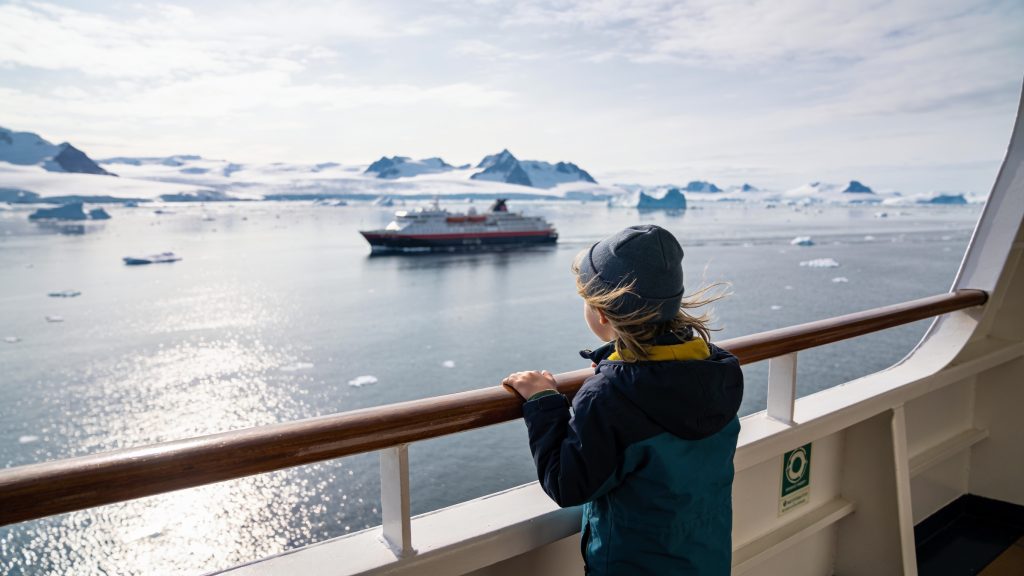
An expedition cruise with children is no longer an exception nowadays, provided your child has reached the age of approximately 8 to 12 years and the cruise line offers family-oriented programmes. The trip revolves around nature, small groups, weather conditions, and education, which requires something different from parents and children than a classic family cruise. The best experiences come from a conscious choice: a route, ship, and schedule that suits your child’s age, curiosity, and energy. How do you prepare and what should you look out for when planning?
Are expedition cruises suitable for families with children?
Many parents wonder if an expedition cruise is a sensible choice for a family holiday. The answer depends on the age, personality of your child, and the destination. Expedition cruises are particularly suitable for curious children who love seeing animals, ice, volcanoes, islands, or extraordinary landscapes. The focus is on discovery and learning, not on entertainment and swimming pools.
When choosing an expedition cruise, you must take into account that there is less entertainment on board than on a resort cruise. The trip focuses more on excursions, expert explanations, and outdoor activities. Young children must be able to handle changing days, lots of impressions, and sometimes long transfers or landings by tender.
Choose the destination first and only then the ship. With expedition cruises, the route and sailing area strongly determine what you can do on board and ashore. Check in advance if the cruise line permits children and from what minimum age, because age rules for cruises differ per company and route.
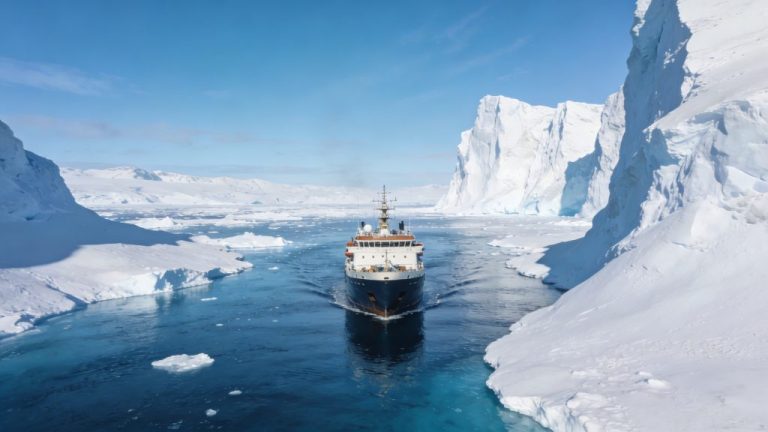
‘ Antarctica cruises often have stricter requirements because conditions are more challenging: cold, wind, waves, and longer excursions in rugged environments. ’
Age requirements for expedition cruises to Antarctica and other destinations
Most cruise lines offering expedition cruises set a minimum age that varies between 8 and 12 years, depending on the destination and the ship. Antarctica cruises often have stricter requirements because conditions are more challenging: cold, wind, waves, and longer excursions in rugged environments.
Some cruise lines do not allow children under 8 on Antarctica routes. Other companies make exceptions, but then expect children to participate in adjusted activities and parents to take responsibility during landings and excursions.
For routes to other areas such as the North Cape, Iceland, Greenland, or the Galápagos Islands, the requirements are often slightly less strict. However, this varies strongly per cruise line. Always ask in advance what the minimum age is and whether there are conditions for participating in land activities.
What activities do expedition cruises offer for families?
Cruise lines that focus on families often offer a special family programme on board. This programme includes educational lectures adapted for children, workshops on animals and nature, and guidance during excursions such as hikes and landings.
Children often find the animals and outdoor activities the most impressive. Spotting whales, penguins, polar bears, or birds is a discovery and motivating, depending on the destination. The combination of learning and experiencing makes the trip an educational experience.
Typical activities for children on an expedition cruise include:
- Guided hikes with nature guides
- Lectures on animals, ice formation, volcanoes, or ecosystems
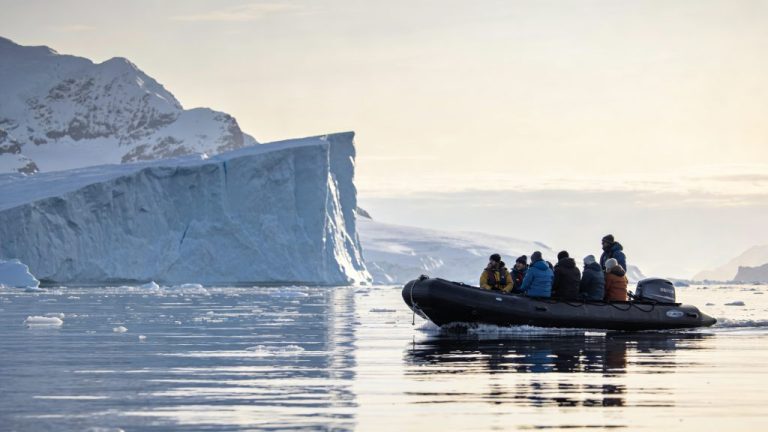
- Zodiac trips along icebergs or coastlines
- Workshops on photography or scientific research
- Games and craft activities in children’s areas
Please note: not all ships have extensive children’s facilities. Choose a ship that explicitly welcomes children and has facilities such as a play area, child-friendly meals, and flexible excursion options. This prevents boredom on days with little activity.
What should you bring for children on an expedition cruise?
Layered clothing is, according to expedition cruise operators, the most important clothing rule for cold regions. For children, this applies even more strongly, as they cool down faster and are less able to signal when they are cold.
Always pack:
- A waterproof outer layer
- Fleece or wool mid-layer
- Thermal underwear
- Warm hat, gloves, and thick socks
- Extra sets of clothes for wet or muddy excursions
In addition, practical items are indispensable. Pack snacks, medicines, entertainment, and familiar comfort items for children, as days can be unpredictable. Think of:
- Dry snacks such as crackers, biscuits, or fruit
- Medication for seasickness and other ailments
- Headphones, colouring materials, or games for waiting moments
- A small backpack for excursions
Keep important documents, identification, and travel essentials in a carry-on set for the first few hours on board, as your luggage is not always immediately available.
Safety and agreements on board with children
Safety is paramount on an expedition cruise. Agree on safety rules with your children in advance. Important rules are:
- Do not run on wet decks
- Do not climb over railings
- Always stay together in crowded areas
- Listen to instructions from the crew
A buddy system works well, especially if children interact with other children or when you are moving on an expedition deck or in small groups. Always keep track of where your child is, especially during landings or excursions outside the ship.
Expect your routine to be different than at home. Flexibility, according to personal accounts, is one of the success factors when cruising with children. Expedition cruises are highly dependent on weather, ice, nature, and sailing schedules. Sometimes excursions are cancelled or moved.
How do you keep children occupied between excursions?
Between excursions, children need moments of rest, but also distraction. Many cruise ships offer children’s meals or child-friendly options, such as pasta, pizza, and chips. This helps keep the routine familiar for children.
Parents recommend considering an outside cabin or balcony cabin. It gives you a bit more space and peace when a child is sleeping. A balcony also offers the possibility to look outside without having to go to the deck immediately.
Where possible, choose a ship with children’s facilities. Otherwise, boredom may strike on days with little excursion activity. A well-stocked backpack with snacks, medication, headphones, colouring materials, and familiar games makes the trip much smoother.
Is an expedition cruise suitable for babies and toddlers?
On regular cruises, babies are often only admitted from a certain age. On expedition cruises, requirements can be stricter for safety and logistical reasons. Most cruise lines do not allow children under 6 on expedition cruises.
For babies and toddlers, an expedition cruise is usually not a suitable choice. The trip demands a lot from parents and children: changing conditions, long days, limited children’s facilities, and little rest. Wait until your child is older and benefits more from the educational and exploratory elements of the trip.
For babies, always bring enough formula, nappies, and wipes if you decide to go anyway, even if basic facilities are available on board. Check whether a cabin with a balcony is sensible or not, depending on your child and your travel style.
‘ If your child has these traits, an expedition cruise is a valuable experience that goes beyond an ordinary holiday. ’
What makes an expedition cruise memorable for children?
For children who love to explore, take photographs, or be outdoors, an expedition cruise can be more powerful and memorable than a standard cruise. The combination of nature, animals, and education stays with them for a long time. Children learn about ecosystems, climate, science, and respect for vulnerable areas.
Parents report that the best experiences occur when children are actively involved in the trip. Let your child keep a travel diary, take photos, or ask questions to the nature guides. This increases engagement and the learning effect.
Depart with the mindset that not everything goes according to plan. Expedition cruises require flexibility, patience, and curiosity. If your child has these traits, an expedition cruise is a valuable experience that goes beyond an ordinary holiday.
On the Traveler Tips website, you will find more information about cruises, preparation, travel destinations, and practical tips for families who organise their holiday themselves. Discover what else is possible and plan your next trip with confidence.
Frequently asked questions
Ensure a child-friendly route and cruise line (minimum age, pace, excursions) and prepare children well for what an expedition cruise entails: fewer slides, more nature, and learning. Take layered clothing, waterproof outer layers, enough snacks, medicines, and familiar games so you can respond to changing weather and unpredictable days. Agree on clear safety rules (do not run on wet decks, do not hang on railings, always stay together) and, if necessary, use a buddy system. Make it educational and unforgettable by actively involving children in lectures, spotting animals, and keeping a travel diary or photo project.
It is essential that you choose the right ship, route, and season in advance based on the age, stamina, and interests of your children, because you can deviate much less spontaneously during an expedition cruise than on a road trip. Additionally, plan per day what you need in a permanent daypack (layered clothing, waterproof layers, snacks, medicines, entertainment), because you cannot simply stop at a shop or petrol station. Ensure that you make clear safety and togetherness agreements before departure, because children cannot move as freely on and around the ship as during a car trip with many stops. Finally, it is smart to build in buffer and rest moments into your excursion choices, instead of wanting to grab every offer as you might do more quickly on a flexible road trip.
Do not just compare the base fare, but calculate the **total costs per day per person** including excursions, tips, transfers, equipment rental, and any children’s discounts. Then check which company offers the most included (expeditions, lectures, children’s activities, photography, equipment) so you do not get hit with expensive extras on the spot. Evaluate the value from your children’s perspective: how many real nature moments, animals, landings, and educational guidance do they get per day in proportion to the price. Finally, read experiences of other families on the same route and include their mentioned highlights and “bad buys” in your choice.
The most suitable expedition destinations for families are areas with many animals and relatively mild conditions, such as the Galápagos, Alaska, Iceland/Norway (fjord area), and for example the Azores. Routes with short sailing days, many land excursions, and a clear focus on animals (whales, seabirds, penguins, sea lions) combine adventure with a child-friendly experience. Preferably choose sailing areas where zodiacs/landing boats make short crossings and hikes are easy to shorten for young children. Avoid extremely rugged or very long sea passages as the main component of the route when travelling with young children.
An average day on an expedition cruise with children often consists of a quiet breakfast, an excursion in small groups (for example, with a zodiac to the shore or to spot animals), followed by relaxing on board with food, playing, or a short lecture, and another outdoor activity later in the day if the weather permits. In between, there are moments for rest, playing in the cabin or on (parts of) the deck, and looking at the horizon or animals together. Comfort for children comes primarily from family cabins, child-friendly meals, sufficient warm and practical clothing, familiar snacks, and personal entertainment such as games or colouring materials. For entertainment, nature experiences, explanations by guides, spotting animals, and being outdoors often provide much more than classic cruise facilities like large swimming pools or slides.