 NL
NL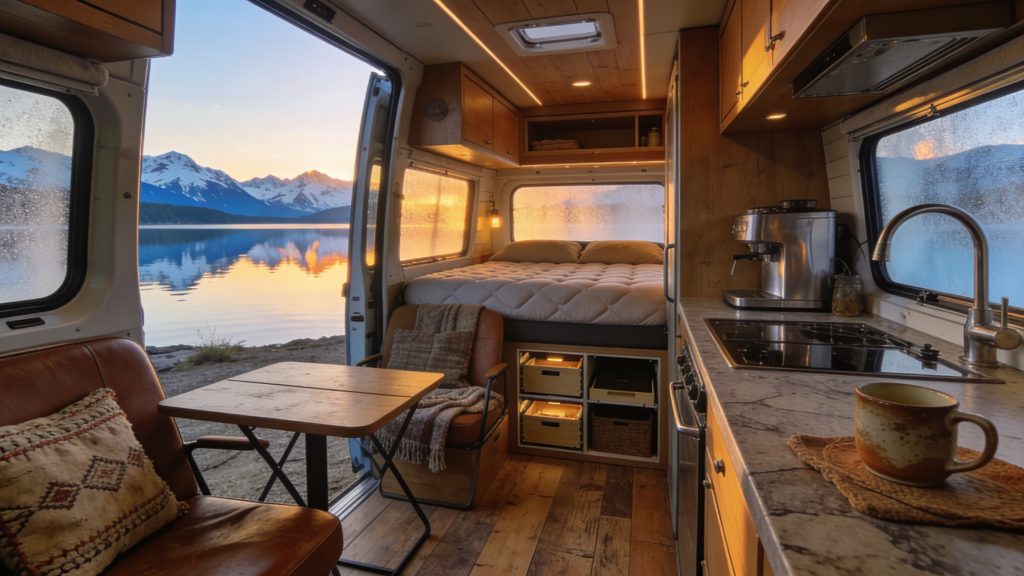
A permanent sleeping area, a comfortable seating area and enough storage space: that’s what most couples need in a motorhome. Whether you are heading off for a weekend or travelling for weeks on end, the layout determines how pleasant your journey is. Compact without losing comfort, and logically arranged so you don’t have to convert everything every evening. Which layout suits you best?
Why the layout of a motorhome for couples is different
A motorhome for two people doesn’t need to be big to feel comfortable. Precisely because you are travelling as a couple, you often choose a compact layout that still offers enough living space. Families need extra sleeping places and more seats, but couples can focus on what really matters: a good bed, a pleasant seating area and smart storage.
The ideal motorhome layout for couples depends on your travel style. Active travellers who change location regularly benefit from a layout where everything is quickly ready without daily converting. Couples who stay longer in one place often value a spacious seating area and extra workspace more. The different motorhome types all offer their own solutions, from compact campervans to more spacious semi-integrated models.
Many couples opt for a fixed bed at the rear of the motorhome. This gives you direct access to your sleeping area without having to move the table or rearrange cushions. A queen bed of around 140 to 160 centimetres wide offers enough space for two people. Some models have a fixed double bed in the form of a French bed, which is slightly narrower at the foot end but still comfortable.
‘ A fixed bed is the most practical choice for many couples. ’
What makes a sleeping solution suitable for two people?
The sleeping area is the starting point for every motorhome layout. A fixed bed is the most practical choice for many couples. You don’t have to convert anything, the mattress stays in place and the bedding doesn’t need to be put away every day. That saves time and effort, especially if you often arrive late or want to leave early.
A drop-down bed or fold-up bed can be a good option if you want more living space during the day. The bed hangs against the ceiling or folds up, leaving the space underneath free. This works well for couples who spend a lot of time indoors and appreciate a large seating area. The downside is that you have to lower the bed every evening and stow it away again every morning.
An alternative is a bed made up from the seating area. In this case, the table is lowered and the cushions are levelled to form a double bed. This solution is compact and efficient, but requires daily converting. For longer trips this is less comfortable than a fixed bed.
Which seating area works best for couples?
The seating area determines how you use the motorhome during the day. For two people there are various layouts, each with its own advantages. A face-to-face layout has two benches opposite each other with a table in between. This creates a spacious, modern feel and invites you to eat, work or relax together.
An L-shaped lounge combines a long bench with a short bench in a corner. This gives a cosy and comfortable feel and often offers more seating than a half dinette. The L-shaped lounge works well if you often sit indoors and want a place to read, work or simply relax.
A half dinette is the classic motorhome seating area: a small bench with a table that can be folded against the wall. This is an efficient solution that takes up little space, but it feels less open than a face-to-face or L-shaped lounge. For couples who mainly sit outside and use the motorhome primarily as a place to sleep, a half dinette can be perfectly adequate.
Lounge layout for relaxed road trips
More and more motorhomes have a lounge layout where the seating area is not only functional but also invites you to unwind. Think of spacious benches, a low table and plenty of room to move. This type of layout is popular with couples who are on the road for longer periods and use the motorhome as a full living space.
A lounge layout works well in combination with a fixed bed at the rear. During the day you have a comfortable seating area and in the evening you simply walk to the back to sleep. No hassle with converting, and all the space remains available.
How important is the kitchen layout?
The kitchen in a motorhome for two people doesn’t have to be big, but it does need to be practically laid out. A good kitchen has enough worktop space, a hob with two or three burners, a sink and a fridge. Most motorhomes have a kitchen unit that runs along the side wall, but there are also L-shaped kitchens that offer more workspace.
Pay attention to the position of the kitchen in relation to the seating area and the bed. If the kitchen is too close to the seating area, it can be difficult to cook and sit at the same time. If the kitchen is too far to the rear, you end up walking back and forth a lot. A good layout ensures that the walking route is logical and that cupboard doors don’t block each other.
The size of the fridge and the water storage is also important. Wild campers and couples who stay off-grid for longer benefit from a larger fridge and an extra water tank. Those who mainly stay on campsites with facilities can manage with a smaller fridge and less water storage.
‘ It’s tight, but functional. ’
What do you need to know about the bathroom area?
The bathroom area in a motorhome is often a compromise between comfort and space. For couples who travel around a lot, a compact wet room is usually enough. This is a small space with a toilet, a washbasin and a shower head. It’s tight, but functional.
Those who stay in one place for longer or want more comfort opt for a slightly larger bathroom with a separate shower area or a bigger washbasin. This takes up more space but makes it more pleasant to use.
In some compact motorhomes, couples keep the sanitary facilities to a minimum and use the space for extra living or storage. This works especially well on campsites with sanitary facilities.
Where do you store everything in a motorhome for two?
Storage is an often underestimated part of the motorhome layout. Couples need fewer sleeping places and seats, which frees up space for wardrobes, pantries and storage for travel gear. Well-organised storage ensures that you can store everything without the motorhome feeling cluttered.
Many motorhomes have storage under the bed, above the cab and in cupboards along the walls. Think in advance about what you will take with you. Decide where you want to store it. Clothes are best hung up or stored in drawers. Heavy items such as water tanks, batteries and gas bottles should be placed low down in the motorhome to keep the balance right.
Outdoor storage is also important. Bikes, chairs, tables and other large items need space. Some motorhomes have a bike rack on the back or a large garage under the bed. This is handy for couples who like cycling or take a lot of outdoor gear with them.
Choosing a layout based on your travel style
The best motorhome layout for couples depends on how you travel. Weekend trippers benefit from a compact layout with little converting work and enough storage space. A fixed bed and a simple seating area are often enough.
For longer road trips, comfort is more important. A fixed double bed, a spacious seating area and a well-designed kitchen make all the difference. A comfortable bathroom and sufficient water storage are also valuable.
Winter travellers and couples who are on the road in bad weather need a more pleasant indoor space. A lounge layout, a large table and sufficient heating ensure that you can comfortably stay indoors even when it’s raining.
Those who work on the road need a good workspace. A face-to-face seating area or an L-shaped lounge with a large table offers enough space for a laptop and documents. Good lighting and plenty of sockets are also important.
‘ Plan your next adventure with confidence. ’
Discover more about motorhome holidays on Traveler Tips
On the Traveler Tips website you’ll find much more information about motorhomes, layouts, routes and practical tips for your trip. Whether you are looking for the best motorhome for your situation, handy checklists before departure or inspiration for your next road trip: discover it all on Traveler Tips and plan your next adventure with confidence.
Frequently asked questions
Preferably choose a fixed bed lengthways or transverse at the rear, so you don’t have to convert it every day and the mattress can remain comfortable. Position the bed so that there is enough space to walk around it and use tall cupboards or half-height partitions to create a clear separation between sleeping and living areas. Use blackout curtains, sliding doors or a folding screen to create visual privacy without making the space feel cramped. Integrate under-bed storage and soft lighting so the sleeping area stays calm and uncluttered.
Make full use of the height in the motorhome with overhead cupboards with sliding or tambour doors and hanging nets or pockets for light items. Under the bed and benches, fit pull-out drawers on runners or modular crates so you can use the full depth without having to unpack everything. Use multifunctional furniture, such as a bench with storage, a table with compartments and a bed with sections for seasonal items. Finally, use magnetic strips, hooks and slim door or wall racks in the kitchen and bathroom to keep small, frequently used items organised and within easy reach.
Create zones with furniture instead of walls: a continuous space in which kitchen, dining area, seating and workspace flow smartly into each other. Use multifunctional furniture (a folding dining table that doubles as a desk, a bench with storage) and keep walkways clear. Work with light colours, good lighting in each zone and as much concealed storage as possible so it looks calm. Limit the number of large pieces of furniture and preferably choose slim, raised furniture on legs to keep the floor visible and the space feeling airy.
Yes, layouts with a fixed bed at the rear and an open seating area (for example face-to-face or L-shaped) usually provide the best flow and liveability for a couple. A permanent sleeping area prevents daily converting and keeps walkways free. An open seating area creates a spacious feel, makes sitting, eating and working together pleasant and limits crossing each other’s paths. In addition, smart, tall storage spaces and a compact wet room help to keep the living area free.
A fixed, comfortable bed so you don’t have to convert it every day and can still get a good night’s sleep. A cosy, ergonomic seating area (for example face-to-face or L-shaped) with enough table space to eat, read or work. A practical kitchen with sufficient worktop, a good fridge and well-thought-out walkways. Spacious, logically arranged storage for clothes, gear and supplies so everything has a fixed place and is easy to find.