NL
NL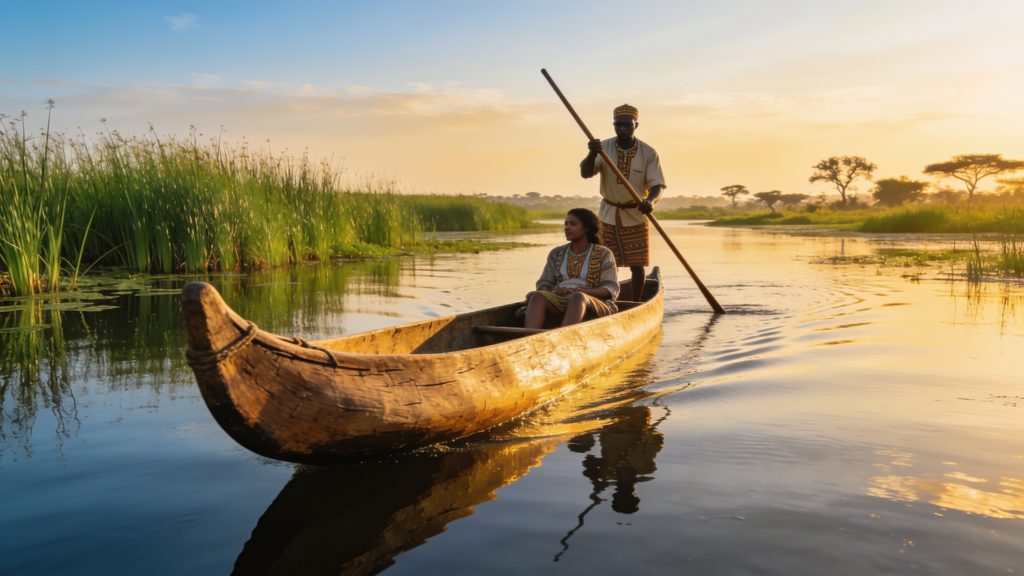
A mokoro safari through the Okavango Delta is one of Africa’s most special wildlife experiences. You glide silently through narrow channels, between reeds and waterlilies, while hippos, elephants and dozens of bird species calmly go about their daily routine. This traditional canoe trip offers a slow pace and an intense experience of nature that you won’t find anywhere else. What makes this experience so unique, and how do you prepare?
What is a mokoro?
A mokoro is a traditional canoe that used to be used by local communities in the Okavango Delta as a means of transport. Originally, mokoros were hollowed out from tree trunks, but these days most are made from moulded fibreglass. This switch reduces pressure on the forest and gives the boat a longer lifespan.
The mokoro is propelled with a long pole by an experienced guide who stands at the back of the narrow boat. You sit low on a cushion or bench, bringing you close to the water’s surface. This gives you an intimate perspective on the wetland landscape and the animals you pass. The silence is striking: no engine, just the soft sounds of water and birds.
For travellers planning wildlife holidays, a mokoro safari is a valuable addition to traditional game drives. You experience nature in a different way, with the emphasis on peace and observation instead of distance and speed.
What can you see on a mokoro safari?
The Okavango Delta is a UNESCO World Heritage Site and is known for its rich biodiversity. It is a vast freshwater wetland in the middle of the Kalahari, fed by seasonal floods from Angola. This body of water attracts large numbers of animals, especially in the dry season.
During a mokoro trip you may encounter various species:
- Elephants wading through the channels or drinking along the banks
- Hippos resting in pools or grazing on land in the evening
- Crocodiles warming themselves on sandbanks
- Antelope such as lechwe, impala and waterbuck
- Monkeys and baboons in the trees along the banks
- Hundreds of bird species, including kingfishers, herons, fish eagles and African jacanas
Wildlife sightings are never guaranteed. The chance of seeing certain animals depends on the season, water levels and the concession. You depart from a specific area within the Delta. A mokoro safari is especially suitable for bird lovers and photographers who value patience and a keen eye.
Best time for a mokoro safari in the Okavango Delta
The season determines which animals you see and how many channels are navigable. The Okavango Delta has a unique hydrological rhythm: the water from Angola reaches the Delta during Botswana’s dry season, between May and October. Floods and drought therefore run opposite to each other. This makes the choice of your travel period crucial.
The best period for a mokoro safari is from June to September. In these months the water levels are high enough to travel through many channels. At the same time, the dry weather draws animals to the water sources. Wildlife concentrations are then at their highest. On top of that, daytime temperatures are pleasant and there are fewer mosquitoes.
From October to April it is the rainy season. Many waterways are navigable then. However, animals spread out over larger areas because water is available everywhere. This makes sightings less predictable. The vegetation is more lush and the Delta looks greener, offering a different kind of beauty. Bird lovers appreciate this period because migratory birds are present and many species are breeding.
Check current water levels before you book. They can vary from year to year and from area to area within the Delta. Not all concessions and lodges offer mokoro safaris year-round.
How do you book a mokoro safari?
You usually book a mokoro safari as part of a stay in a lodge or camp within the Okavango Delta. Most accommodations offer mokoro trips as a day activity, often combined with game drives and walking safaris. Some lodges organise multi-day mokoro expeditions, where you spend the night in mobile camps on remote islands.
You can also book a day trip from Maun, the gateway to the Delta. These trips often include a 4×4 transfer to a departure point on the water, followed by a mokoro trip of several hours. This is an accessible option if you are not staying in the Delta but still want a first introduction.
When booking, pay attention to the following points:
- Check whether the mokoro safari is included in your stay or charged as a separate activity
- Ask about the duration of the trip and the departure time
- Find out the maximum group size per mokoro
- Check whether a walk on an island is part of the trip
- Ask which concession will be visited, as this affects your chances of seeing certain animals
Ideally, book through recognised safari operators or directly with lodges that have good reviews. Guides and equipment can vary enormously in quality. Some providers work with inexperienced guides or poorly maintained mokoros. Always check reviews from previous guests.
‘ A mokoro safari is all about silence. ’
Practical tips for your mokoro safari
A mokoro is a small, narrow boat with little room to move. If you are well prepared, you will sit comfortably. If you set off unprepared, the trip may turn into a tiring experience.
Clothing matters. Wear light, neutral colours such as beige, green or grey. Bright colours can scare or irritate animals. Choose clothing that dries quickly, as splashes of water may enter the boat. Long sleeves and trousers protect you from the sun and insects. A sun hat with neck protection is essential.
Bring a good sunscreen with a high protection factor. The water reflects sunlight, so you burn faster than you might expect. Don’t forget your neck and hands.
For photography, a camera with a good zoom lens is ideal. Protect your equipment with a waterproof bag or cover. Binoculars help you observe birds and animals at a distance.
Take a refillable water bottle. Drink enough water, especially on longer trips. Snacks are useful, but keep the packaging with you so you don’t leave any litter behind.
Move calmly and speak softly during the trip. A mokoro safari is all about silence. You observe without disturbing. Listen to your guide’s instructions on how to behave during wildlife encounters.
Combining a mokoro safari with other activities
Combine your mokoro safari with other activities in the Delta. That way you see more animals and experience different landscapes. The activity complements game drives because you see different animals and gain a different perspective on the Delta.
Walking safaris are a logical combination. Many mokoro trips end on an island where you take a guided walk with an armed guide. You read tracks, study plant life and observe large mammals, all from a safe distance.
Game drives take you to areas that are not accessible from the water. They increase your chances of seeing predators such as lions, leopards and wild dogs. A combination of mokoro, walk and game drive gives you a complete picture of the Delta.
Motorboat trips are an alternative for longer distances or deeper water. They are faster than a mokoro, but less quiet. Some lodges offer sunset cruises with drinks, which is a different experience from the morning stillness of a mokoro.
Why a mokoro safari is worth it
The Okavango Delta is a unique ecosystem, and a mokoro safari is the most authentic way to experience it. You move forward naturally, without an engine. Your perspective is low. The silence is complete. You see how animals behave without disturbance, you hear the sounds of the reeds and smell the fresh water and vegetation.
If you plan your trip carefully and you are looking for more than just ticking off a list of animals, this activity is truly rewarding. You need patience and an open mind. In return, you experience not only the animals, but also how the ecosystem functions and how silence sharpens your powers of observation.
On the Traveler Tips website you will find more information on planning nature holidays, safari accommodation and travel routes through southern Africa. Discover how to prepare smartly and responsibly for your next trip to the Okavango Delta or other exceptional destinations.
Frequently asked questions
Plan your mokoro safari as a 1–2 night stay in or near the Okavango Delta (for example from Maun) as a rest point in the middle of your road trip, so you can alternate game drives and long driving days with a slow water-based experience. With your own vehicle, you usually drive to an agreed pick-up point (in Maun or a gateway community such as Boro or Etsha), where you park your car safely and continue by mokoro/transfer. Take seasonal water levels into account, as not all parts of the Delta are always reachable and booking ahead with a camp or community project is essential. Beforehand, check the condition of the (often sandy) roads, fuel range and whether a 4×4 is necessary for the final stretch to the Delta access point.
Essential preparations include bringing light, neutral and quick-drying clothing, good sun protection (hat, sunscreen, sunglasses), waterproof protection for camera/phone and checking the season and water levels in the Okavango Delta in advance. It is also wise to opt for an early start and to follow the safety instructions of your guide, especially regarding hippos and crocodiles. The experience is unique because you move in silence and at a slow pace through narrow channels, reeds and waterlilies, allowing you to get very close to nature and birds without intrusive engine noise. This slow, almost meditative perspective on the Delta makes a mokoro safari an intensely memorable addition to classic game drives for many travellers.
The best time to travel for a mokoro safari in the Okavango Delta is during the local dry months, when the seasonal flood has properly filled the Delta and water levels are favourable; always check current water levels per area. Ideally, book directly via local operators or camps in or around the Delta (for example from Maun), so you can choose between a day trip and a multi-day trip. If you are on a tighter budget, simple camps or community-run mokoro excursions are often cheaper than luxury lodges, while still offering the same authentic experience on the water. When booking, check what is included (transfers, guide, meals, overnight stay) so you can compare prices properly.
A mokoro safari works best as a half- to full-day activity, or as a 1–2 night element within a stay in the Okavango Delta. Use the mokoro mainly as a calm, nature-focused complement to game drives and possibly walking safaris. In a broader Botswana itinerary, this fits well after more classic safari areas (for example Chobe or Moremi), so you can plan the Delta as the more relaxed, water-focused finale to your trip. Make sure you stay in the Delta for a few days, so you can alternate mokoro, game drives and possibly a boat safari in a logical way.